2025-01-20 03:07
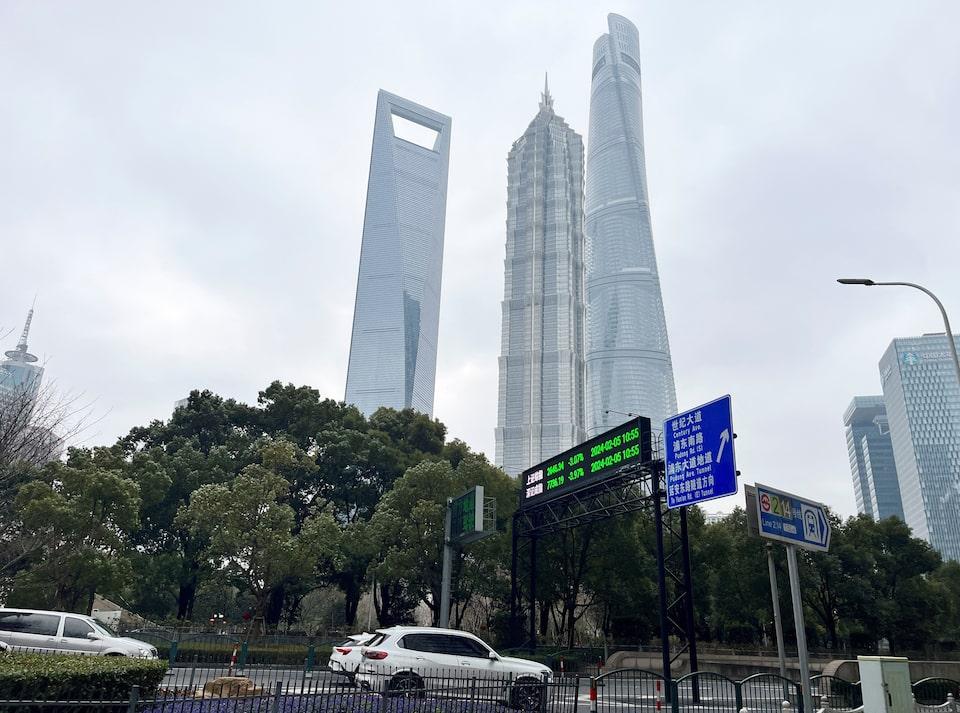
MUMBAI, Jan 20 (Reuters) - The Indian rupee is likely to kick off a pivotal week on a slightly positive note, assisted by the recovery of the Chinese yuan in the lead-up to Donald Trump's inauguration. The 1-month non-deliverable forward indicated that the rupee will open at 86.50-86.52 to the U.S. dollar on Monday, compared with its close of 86.61 in the previous session. Hopes of U.S.-China negotiations lifted the offshore yuan by 0.2% to 7.3220 per dollar, after the currency slipped past 7.36 last week. The yuan will likely be the main driver of the rupee and other Asian currencies ahead of Trump's inauguration as U.S. President later in the day. Trump told advisers he wants to travel to China after he takes office, the Wall Street Journal reported. The hope that Trump would extend TikTok's ban deadline provided a further boost. Trump has indicated that one of his priorities would be to impose additional tariffs on China, which, in turn, would prompt the yuan to depreciate. How quickly Trump moves on tariffs and their size will dictate the direction of the yuan and other Asian currencies. "This week will be very headline driven and at the centre of it all will be Trump," a currency trader at a bank said. The rupee "should move in line" with the yuan, although a rally will have less of an impact than a decline, he added. The rupee has been under incessant strain due to equity outflows, higher U.S. Treasury yields, uncertainty around Trump's policies and speculators piling on wagers against the Asian currency. Unless "the worst-case scenario plays out regarding tariff rhetoric, (the rupee) might take a breather in the coming days", Srinivas Puni, managing director at QuantArt Market Solutions, said. KEY INDICATORS: ** One-month non-deliverable rupee forward at 86.75; onshore one-month forward premium at 22.50 paisa ** Dollar index dips to 109.18 ** Brent crude futures down 0.1% at $80.7 per barrel; up 8.4% month-to-date ** Ten-year U.S. note yield at 4.62% ** As per NSDL data, foreign investors sold a net $502 mln worth of Indian shares on Jan. 16 ** NSDL data shows foreign investors sold a net $97.2 mln worth of Indian bonds on Jan. 16 Sign up here. https://www.reuters.com/markets/currencies/yuan-recovery-lead-up-trumps-inauguration-help-rupee-2025-01-20/
2025-01-20 02:49
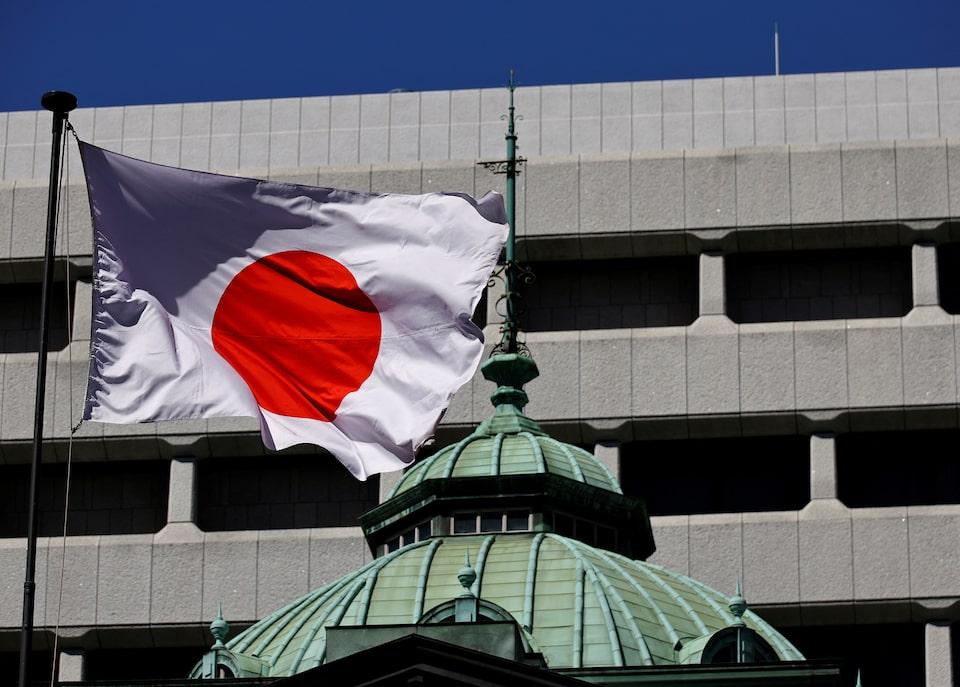
BOJ meets Jan 23-24, decision expected 0330-0430GMT Friday Board likely to raise short-term rates to 0.5% from 0.25% BOJ seen raising price forecast, flag brightening wage outlook Markets focusing on hints on pace, timing of subsequent hikes Governor Ueda to brief media 0630GMT Friday TOKYO, Jan 20 (Reuters) - The Bank of Japan is expected to raise interest rates on Friday barring any market shocks when U.S. President-elect Donald Trump takes office, a move that would lift short-term borrowing costs to levels unseen since the 2008 global financial crisis. A tightening in policy would underscore the central bank's resolve to steadily push up interest rates, now at 0.25%, to near 1% - a level analysts see as neither cooling nor overheating Japan's economy. At the two-day meeting ending on Friday, the BOJ is likely to raise its short-term policy rate to 0.5% unless Trump's inaugural speech and executive orders upend financial markets, sources have told Reuters. In a quarterly outlook report, the board is also expected to raise its price forecasts on growing prospects that broadening wage gains will keep Japan on track to sustainably hit the bank's 2% inflation target. A hike by the BOJ would be the first since July last year when the move, coupled with weak U.S. jobs data, shocked traders and triggered a rout in global markets in early August. Keen to avoid a recurrence, the BOJ has carefully prepared markets with clear signals by Governor Kazuo Ueda and his deputy last week that a rate hike was on the cards. The remarks caused the yen to rebound as markets priced in a roughly 80% chance of a rate increase on Friday. There were also hints of near-term action last month. While the BOJ held off raising rates at the Dec. 18-19 meeting, hawkish board member Naoki Tamura proposed pushing up rates. Some of his colleagues also saw conditions fall into place for an imminent rate hike, minutes of the meeting showed. With a policy tightening this week seen as a near certainty, market attention is shifting to Ueda's post-meeting briefing for clues on the timing and pace of subsequent increases. As inflation has exceeded the BOJ's 2% target for nearly three years and the weak yen has kept import costs elevated, Ueda is likely to stress policymakers' resolve to continue raising interest rates. But there is good reason to tread cautiously. While the International Monetary Fund raised its forecast for global growth in 2025, Trump's policies risk destabilising markets and stoking uncertainty about the outlook for Japan's export-reliant economy. Domestic political uncertainty could heighten, too, as Prime Minister Shigeru Ishiba's minority coalition may struggle to pass budget through parliament and win an upper house election scheduled in July. The economic damage caused by past ill-fated rate hikes also haunt BOJ policymakers. The BOJ ended quantitative easing in 2006 and pushed short-term rates to 0.5% in 2007, moves that triggered a storm of political criticism as delaying an end to deflation. The BOJ cut rates from 0.5% to 0.3% in October 2008, then to 0.1% in December of that year, as the global financial crisis pushed Japan into recession. Since then, various unconventional steps have kept borrowing costs stuck near zero. "Japan had a permanently low growth rate, inflation rate and lower level of interest rates. So policymakers, investors and the business community still ask - have we really broken free from that?," said Jeffrey Young, chief executive officer of DeepMacro. "The BOJ is going to have to explain very carefully that they're raising rates to move away from the extraordinary policy that they adopted." Sign up here. https://www.reuters.com/markets/asia/bank-japan-poised-raise-rates-highest-17-years-2025-01-20/
2025-01-20 00:09
Hedge funds charged $1.8 trillion in fees since 1969 Largest most expensive hedge funds share more winnings with investors Group as a whole keeps roughly half of their gains LONDON, Jan 20 (Reuters) - Hedge funds have charged their investors $1.8 trillion in fees from 1969 to the end of December 2024, according to data from hedge fund investor LCH Investments on Monday. Over the past 55 years, hedge funds have kept roughly half of the money they make from trading profits, according to LCH Investments, an investor in hedge funds which is part of Edmond de Rothschild. The top twenty performing hedge funds charge higher fees, but deliver better returns and have fewer outflows, the report said. This group took less, around 34.3% of their gains before fees over this period, according to the data. "When hedge funds make losses, the performance fee paid on the way up is not refunded. So if the fund then closes down, or investors redeem before the fund recovers the losses, investors end up incurring disproportionately high fees," said Rick Sopher, chairman of LCH Investments on a phone call with Reuters. Last year, 326 hedge funds closed in the first three quarters, according to hedge fund research firm HFR. Smaller managers struggle to recover poor performance and investor outflows over time as losses one year must be made up the next. “What comes out of our research is that the fees paid by investors as a proportion of hedge fund gains are very high,” said Brad Amiee, head of research at LCH Investments. The top 20 best performing hedge fund managers returned $93.7 billion net of fees in 2024, said the report. Multi-strategy hedge fund, D.E. Shaw, saw its best year ever on this list, returning the highest amount, $11.1 billion, to investors after fees, said LCH. British hedge fund Marshall Wace posted its first appearance in the top twenty, returning $4.5 billion to its investors. D.E. Shaw and Marshall Wace declined to comment. Sopher said that LCH as a fund would close sometime later this year but that Edmond de Rothschild would continue to invest in hedge funds through other funds within the Group. LCH, the world’s first fund of hedge funds, was founded in 1969 and returned an average of roughly 10% a year since inception. Sign up here. https://www.reuters.com/business/finance/hedge-funds-have-charged-almost-2-trillion-fees-since-1969-says-lch-2025-01-20/
2025-01-20 00:04
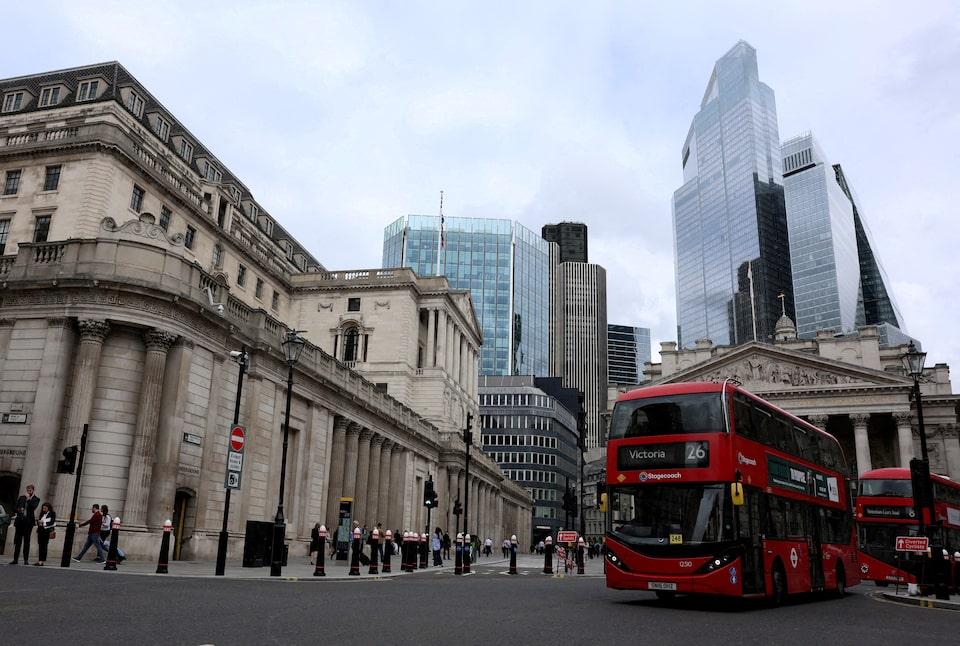
LONDON, Jan 20 (Reuters) - Average asking prices for newly listed homes in Britain had their biggest start-of-the-year increase since 2020 but uncertainty about the pace of interest rate cuts is hanging over the market, property website Rightmove said on Monday. The average price of properties coming to market rose by 1.7% between Dec. 8 and Jan. 11 to 366,189 pounds ($445,944), 9,000 pounds below a peak hit in May last year, Rightmove said. Compared with the same period a year ago, asking prices were 1.8% higher, it said. Britain's housing market gained some momentum last year on hopes that borrowing costs would continue their fall although slower-than-expected rate cuts sapped some demand. Rightmove said the number of new properties coming to market since Dec. 26 was up 11% from a year earlier while the number of buyers contacting agents about properties for sale was 9% higher and agreed sales rose by 11%. Colleen Babcock, head of partner marketing at Rightmove, said despite the positive start to the year many buyers were struggling to afford a new home due to high mortgage rates. April's expiry of a lower rate of property purchase tax on less expensive homes represented another test for buyers. "The market needs a boost for that momentum to be sustained, in the form of early and ongoing Bank Rate cuts, which should hopefully help to reduce mortgage rates," Babcock said. The Bank of England is widely expected to cut its benchmark Bank Rate from 4.75% to 4.5% on Feb. 6 after its next scheduled monetary policy meeting. ($1 = 0.8212 pounds) Sign up here. https://www.reuters.com/world/uk/uk-home-asking-prices-show-biggest-early-year-rise-since-2020-rightmove-says-2025-01-20/
2025-01-19 23:47
SYDNEY, Jan 20 (Reuters) - Australia's Labor government on Monday pledged A$2 billion ($1.24 billion) in production credits to help support the country's four aluminium smelters switch to renewable power before 2036. Aluminium is one of the most polluting nonferrous metals to make, as its current production is mostly powered by coal. Green aluminium usually refers to metal produced using solar, wind or hydropower. The country's four aluminium smelters are run by Rio Tinto (RIO.AX) , opens new tab(RIO.L) , opens new tab and Alcoa (AA.N) , opens new tab. Prime Minister Anthony Albanese, in his latest election pitch, said the smelters would receive government support for each metric ton of low-carbon aluminium they produce. His centre-left government has made renewable energy a major theme ahead of a national election, which must be called by May. The Australian government is targeting 82% of power supply to come from renewables by 2030, but remains well short of the target, at 40% now, even after pledging to underwrite new wind, solar and battery projects with more than A$40 billion. "We want Australian workers to make more things here," Albanese said in a statement. "We've got all the ingredients right here for a world-leading metals industry - from the best solar and wind resources, to the critical minerals and facilities, as well as a highly skilled workforce." The Australian Aluminium Council said it had been seeking production credits for the aluminium sector, the sixth-largest producer of the metal in the world, to attract private capital and ensure the industry remains globally competitive amid rising costs and longer regulatory processes. "These new aluminium production credits should provide some of the transitional support needed as Australia's energy infrastructure and systems develop, and energy pricing returns to competitive levels," Council CEO Marghanita Johnson said. ($1 = 1.6134 Australian dollars) Sign up here. https://www.reuters.com/sustainability/climate-energy/australian-government-pledges-124-billion-green-aluminium-push-2025-01-19/

2025-01-19 21:57
Jan 20 (Reuters) - A look at the day ahead in Asian markets. Signs of life being breathed back into China's economy and a strong rally on Wall Street on Friday bode well for Asian markets on Monday, although nervousness around President-elect Donald Trump'sinauguration could temper the optimism. U.S. markets will be closed for Martin Luther King Jr. Day, so global liquidity will be lighter than usual, and U.S. debt ceiling jitters are back in sharp focus. Further reason, perhaps, for investors in Asia to tread lightly. Investors have broadly welcomed the 'market-friendly' parts of Trump's expected agenda like tax cuts and deregulation. But other parts, like tariffs and mass deportations, could rekindle inflation and slow the pace of Fed rate cuts. Furthermore, higher-for-longer rates could damage growth and stoke 'stagflation' concerns, making the Fed's job even more difficult. His inauguration speech could be laden with market-moving policy pledges, directives and executive orders. In that context, the saga surrounding TikTok is being closely watched for clues on Trump's policymaking and approach to China. His latest position is he will revive the China-owned social media app's access in the U.S. by executive order after he is sworn in, but wants it to be at least half owned by U.S. investors. Back in the markets, the dollar and Treasury yields eased off Monday's historic highs and ended last week lower, providing a welcome easing of financial conditions for Asian and emerging markets. The 10-year yield clocked a 16-month high of 4.80% but fell 17 basis points on the week and the dollar index hit a 27-month high to register only its second weekly loss in 16 weeks. The catalyst seems to have been relatively tame U.S. inflation data and dovish remarks from Fed Governor Christopher Waller, who floated the idea of three or four quarter-point rate cuts this year. The S&P 500 rose 3% last week - its best week in 10 - the Nasdaq climbed 2.4% and the MSCI World rose 1.7%. Asian stocks underperformed though - the MSCI Asia ex-Japan index rose 0.8%, Chinese stocks edged up only 0.3%, while Japan's Nikkei 225 fell. China's 'data dump' last week was more encouraging than analysts had expected. Overall growth in the fourth quarter was 5.4%, meaning Beijing met its annual GDP growth goal of around 5%. The People's Bank of China sets interest rates on Monday. It is expected to ease policy slowly and cautiously in the first quarter of this year, but not necessarily starting on Monday. Investors in Japan, meanwhile, are gearing up for a possible rate hike from the Bank of Japan on Friday. The latest signals from BOJ officials are pointing firmly in that direction, and markets have reacted accordingly - the yen has rallied, and Japanese stocks have fallen. Here are key developments that could provide more direction to markets on Monday: - China interest rate decision - Japan machinery orders (November) - Malaysia trade (December) Sign up here. https://www.reuters.com/markets/asia/global-markets-view-asia-graphic-2025-01-19/