2026-02-09 16:23
Feb 9 (Reuters) - Cleveland-Cliffs (CLF.N) , opens new tab shares tumbled over 17% on Monday afternoon, after the steelmaker's fourth-quarter revenue came in below Wall Street estimates. The company's shares were trading down at $12.22, and were on pace for their biggest single-day drop since October 21. Sign up here. CEO Lourenco Goncalves said Cleveland-Cliffs' performance in 2025 was affected by weak production levels in the automotive sector, the termination of a 5-year slab supply contract with ArcelorMittal (MT.LU) , opens new tab and the impact from the Trump administration's sweeping metal tariffs on the company's Canadian operations. "Canada became a dumping ground for producers trying to avoid US tariffs, and downstream Canadian manufacturing was negatively impacted as well," Goncalves said. Despite the tariffs bolstering U.S. steel spot prices, commercial contracts have lagged, as the industry adjusted to an older pricing index, resulting in lower selling prices during the fourth quarter. The tariffs further hurt sales in the automotive sector, comprising 28% of Cleveland-Cliffs' quarterly steelmaking revenue, as the bottom line of U.S. automakers take a hit from higher costs of production. The company's quarterly revenue marginally decreased to $4.31 billion from a year ago, below analysts' expectations of $4.59 billion, according to data compiled by LSEG. Its 2025 total revenue also fell to $18.61 billion from $19.19 billion in 2024. The steel producer, however, posted a narrower-than-expected quarterly loss. Its adjusted loss was 43 cents per share in the quarter ended December 31, compared with 68 cents a year ago. Analysts on average had expected a loss of 60 cents. Goncalves said the company is expected to incur higher costs in the upcoming quarter owing to the "recent spike in utilities costs and change in (product) mix," before normalizing into Q2, along with improving steel pricing and shipment volumes. The company is looking to finalize a deal with Korean steelmaker Posco (005490.KS) , opens new tab in the first half of 2026. LSEG compiled median price target of 15 brokerages covering Cleveland-Cliffs stood at $13. In 2025, the stock had gained 41.3%. https://www.reuters.com/business/cleveland-cliffs-slumps-after-quarterly-revenue-misses-estimates-2026-02-09/

2026-02-09 16:06
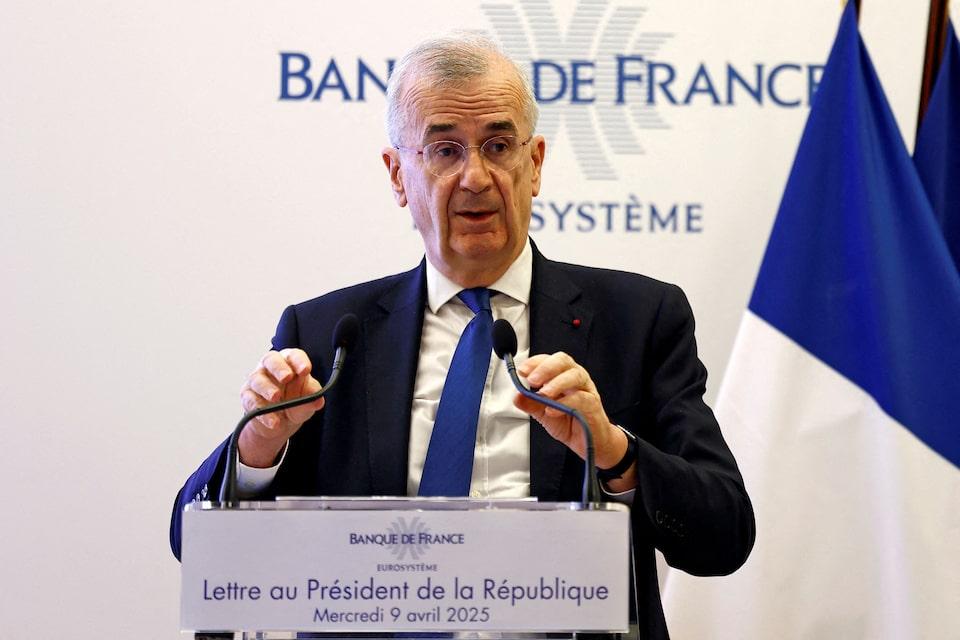
Villeroy leaves more than a year early ECB loses outspoken dove, but exit not seen affecting policy ECB seen on hold amid rare policy consensus FRANKFURT, Feb 9 (Reuters) - The surprise resignation of Francois Villeroy de Galhau as French central bank governor is unlikely to change the European Central Bank's steady policy course at a time of rare unity among the euro zone's top rate setters. Villeroy's announcement on Monday that he will step down in June, over a year before his term ends, also means that French President Emmanuel Macron will get to appoint a new central bank chief ahead of a 2027 presidential election, which polls show could be won by the eurosceptic far-right. Sign up here. Villeroy has been one of the ECB Governing Council's most outspoken policy doves as he consistently warned for months about the downside risks to inflation, including from a stronger euro. But his departure was not seen as having an immediate impact on the ECB, which unanimously decided to keep interest rates on hold last week and is expected to stay put through this year barring major shocks from the geopolitical or trade environment. "The resignation won't have any immediate implications for the market," said Marco Brancolini, head of euro rates strategy at Nomura, who praised Villeroy's communication with investors. Two sources told Reuters that current Banque de France director Bertrand Dumont or past head Emmanuel Moulin would be good candidates, as well as deputy governor Agnes Benassy-Quere or former ECB policymaker Benoit Coeure, both of whom have had positions in the Treasury. Former OECD Chief Economist Laurence Boone, currently at Spanish bank Santander, was also seen as a possible candidate to replace Villeroy, both sources said. RARE HARMONY Eric Dor, director of economic studies at the IESEG School of Management, said whoever replaces Villeroy was likely to be a centrist with dovish inclinations - referring to a preference for lower interest rates - given France's problems with high public debt. "Governors at the end of the day are hawkish or dovish depending on the state of their national economy," Dor said. "If you are the governor of the central bank of a very indebted country - so if you are French, if you are Italian - necessarily, you have to take account that too high an interest rate is a very big problem for the public finance of your country." But whoever France chooses to replace Villeroy was unlikely to shift the balance atop the euro zone's central bank, where a rare harmony has been reigning for a few months. This was likely the result of recent personnel changes as well as ECB President Christine Lagarde's more collegial management style compared to her predecessor, Mario Draghi. In Austria, Robert Holzmann, an outspoken hawk who was often a lone dissenter when the ECB cut rates in 2024-25, was succeeded by the more moderate Martin Kocher at the helm of the Austrian central bank. Dovish Portuguese central banker Mario Centeno was replaced by a centrist in Álvaro Santos Pereira. The Netherlands' new central bank chief Olaf Sleijpen has also toed the official line in ways his predecessor Klaas Knot sometimes didn't, particularly during the ECB's era of ultra-loose policy. The broad consensus means that the change of any one single governor could not tip the scales. "The variance of opinions has decreased, it is easier to reach a consensus," Dor said. "So, I don't think that the change of another governor is a big challenge now." https://www.reuters.com/business/finance/french-central-bank-governors-departure-unlikely-shift-ecb-policy-course-2026-02-09/
2026-02-09 15:47
MSCI LatAm FX index notches record high, up 0.7% Mexico stocks touch record high after CPI data Brazil central bank head stresses policy calibration ahead of expected rate cuts Feb 9 (Reuters) - Most Latin American currencies and stocks opened the week on a positive note on Monday, buoyed by rising commodity prices that lifted the resource-rich region's assets as investors prepared for a data-heavy week that could reshape rate expectations. A benchmark index for Latin American currencies (.MILA00000CUS) , opens new tab climbed 0.7% to record highs, while a gauge tracking regional equities (.MILA00000PUS) , opens new tab rose 2.3%. Sign up here. The Mexican peso strengthened 0.3% against the U.S. dollar following data showing inflation accelerated in January, validating the Bank of Mexico's decision last week to pause its rate-cutting cycle. The data could provide additional momentum for the peso, which lagged broader emerging-market currency gains last year. Mexico's benchmark stock index (.MXX) , opens new tab jumped 0.9% to a record high. "While we don't think this will prompt Banxico to end its easing cycle... it's clear that the easing cycle is in its final stage," said Kimberley Sperrfechter, emerging markets economist at Capital Economics. Mexico's inflation print effectively opened the week's data deluge, with January inflation figures from Brazil and Argentina due Tuesday. Those readings will be closely watched not just for what they say about price pressures, but for how they shape inflation expectations this year, and the region's carry appeal, a key ingredient behind Latin America's market outperformance last year. Brazil's real rose 0.6%. The country's inflation data on Tuesday may draw extra scrutiny after the central bank chief emphasized calibration and a data-dependent approach, which signals policymakers want to move carefully even as they indicated easing could begin in March. The benchmark index (.BVSP) , opens new tab was 1.9% higher. Separately, the country announced its first dollar bond sale in 2026. In Argentina, the peso gained 1.2%, while equities (.MERV) , opens new tab fell 0.2%. COMMODITIES LIFT RESOURCE-HEAVY MARKETS Precious metals, base metals and oil prices all advanced on Monday, providing a tailwind for Latin America's commodity-dependent economies. "Gold and equities continue to correlate positively," said Bob Savage, BNY's head of markets macro strategy. "The weekend's news on a continuation of Iranian talks with U.S. and hopes of a March Ukraine deal kept the geopolitical support for precious metals and energy in check." Weakness in the U.S. dollar also helped commodity prices as markets braced for a heavy slate of U.S. data releases this week. Chile's peso appreciated 0.6% to its highest level since September 2023, while stocks (.SPIPSA.) , opens new tab rose 0.4% as copper prices surged. Colombia's peso jumped 0.3%, with the country's benchmark stock index (.COLCAP) , opens new tab advancing 1.2%, helped by rising oil prices. Data on Friday showed the consumer price index rose 1.18% in January compared with December. Latin American markets ended last week with modest gains following a turbulent stretch marked by sharp volatility in precious metals and a tech-led selloff that rattled global equities. Key Latin American stock indexes and currencies: https://www.reuters.com/world/americas/latam-fx-firms-stocks-rise-ahead-packed-week-inflation-readings-2026-02-09/
2026-02-09 14:55
MEXICO CITY, Feb 9 (Reuters) - Mexico's President Claudia Sheinbaum said the country's oil shipments to Cuba are currently halted as her government seeks to support Cuba without triggering reprisals from Washington. Mexico was Cuba's largest supplier after Venezuelan shipments ceased in December following a U.S. blockade. Washington has threatened tariffs on countries that send oil to the Caribbean island. Sign up here. https://www.reuters.com/business/energy/mexican-oil-shipments-cuba-currently-halted-president-says-2026-02-09/

2026-02-09 14:05
MEXICO CITY, Feb 9 - Inflation in Mexico sped up in January, data from the national statistics agency showed on Monday, supporting the central bank's decision last week to hold its interest rate as it sees inflation taking longer to reach the bank's target. Consumer prices rose 3.79% in the year through January, above December's rate of 3.69% and slightly under the 3.82% forecast by analysts polled by Reuters. Sign up here. The closely watched core index, which strips out highly volatile prices, rose to 4.52% up from 4.33% in December and the highest level since March 2024. In the month of January alone, consumer prices (MXINFL=ECI) , opens new tab rose 0.38%, according to non-seasonally adjusted figures, driven by the increase in core prices, which rose 0.60% during the month (MXCPIX=ECI) , opens new tab. The new year brought new taxes rolled out by the government alongside a boosted minimum wage and new tariffs on China and other mainly Asian countries that Mexico does not have a free trade agreement with. Cigarettes and bottled soft drinks, targets of the tax hikes that took effect at the year's start, saw the largest price increases. Last Friday, the Bank of Mexico held its benchmark interest rate at 7.0% after 12 consecutive interest rate cuts. It also forecast inflation hitting the bank's 3% target in the second quarter of 2027, a notable extension from its previous forecast of the third quarter this year. President Claudia Sheinbaum's administration rolled out new taxes on products deemed unhealthy, including soda, cigarettes and video games, as part of its effort to narrow Mexico's fiscal deficit while keeping a pledge to expand social programs and support the finances of heavily indebted state oil company Pemex. Sheinbaum has said a deep fiscal reform is avoidable. Members of the central bank's governing board have said they expect the government's new taxes and tariffs to push up prices, although likely temporarily, and that time is needed to assess their impact on inflation. "We believe the effects of the tariffs that took effect at the beginning of the year will gradually impact merchandise inflation throughout 2026. However, these upward pressures will be partially offset by currency appreciation, low producer price inflation (1.5% year-on-year in January), and modest economic growth," Banamex said in a note after the inflation report. https://www.reuters.com/world/americas/mexico-inflation-speeds-up-january-after-new-taxes-go-into-effect-2026-02-09/
2026-02-09 13:47
BRASILIA, Feb 9 (Reuters) - Brazil's central bank chief on Monday defended the institution and its board over the handling of Banco Master's liquidation, saying he was grateful to have overseen the process under President Luiz Inacio Lula da Silva. Speaking at an event in Sao Paulo, Gabriel Galipolo said Lula had reinforced the autonomy of the central bank and the federal police in the case, providing the necessary reassurance for authorities to carry out their work independently. Sign up here. SMALL BANK, NOISY LIQUIDATION Banco Master held under 1% of Brazil's banking assets, but its collapse last November drew scrutiny after the commercial lender expanded rapidly by selling high-yield debt marketed as covered by the FGC deposit guarantee fund. Privately-owned FGC estimated it will pay 40.6 billion reais ($7.8 billion) to around 800,000 investors following the bank's liquidation in November. In the week that it failed, Banco Master had only 4 million reais in cash against 120 million reais in upcoming debt repayments and had failed to make more than 2.5 billion reais in compulsory deposits to the central bank, Galipolo said. He said the case prompted the central bank to examine tighter enforcement of asset‑liability matching rules for banks. Addressing questions over oversight of a lender long viewed as risky, Galipolo praised the central bank's supervision director, Ailton de Aquino, and Renato Gomes, who was the central bank's financial system organization director at the time of Banco Master's collapse. Galipolo denied the central bank asked the FGC to extend a credit line to Banco Master in 2025, saying the fund had begun honoring guaranteed debt as it would under a liquidation. That position contributed to a drop of 9.2 billion reais in FGC‑backed funding to Banco Master last year, he said. Non‑guaranteed funding fell by 2 billion reais in 2025, while shareholders injected more than 2 billion reais, according to Galipolo. The central bank chief said coordinated action with the FGC supported the decision to block BRB's planned acquisition of Banco Master in September and to back the bank's liquidation. ($1 = 5.2036 reais) https://www.reuters.com/world/americas/brazil-central-bank-head-stresses-policy-calibration-ahead-expected-rate-cuts-2026-02-09/