2026-01-05 00:32
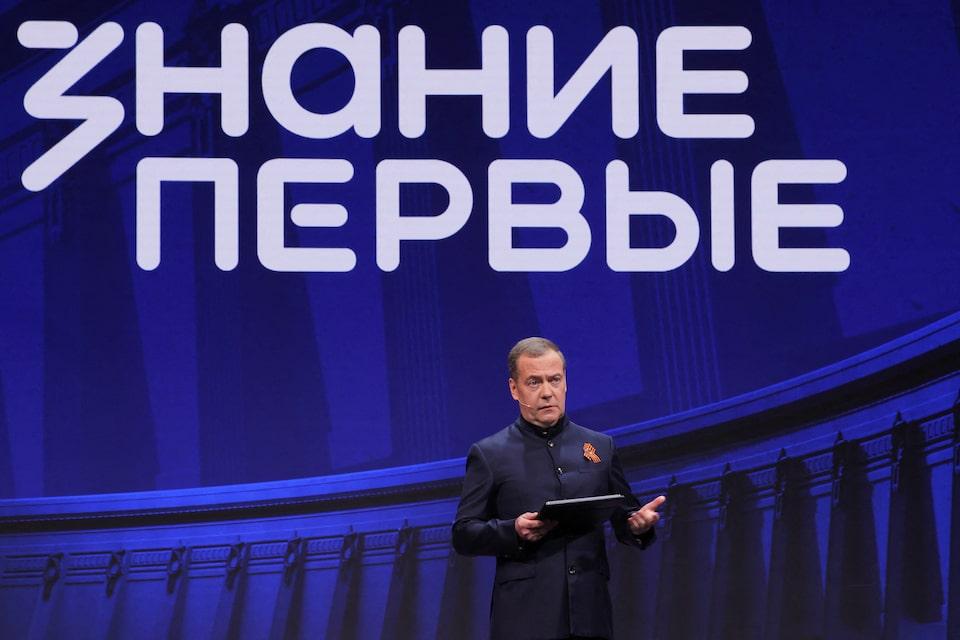
MOSCOW, Jan 4 (Reuters) - Russia’s Security Council deputy chairman Dmitry Medvedev and a senior lawmaker said over the weekend that U.S. President Donald Trump’s actions in Venezuela were unlawful and destabilising, while portraying them as a blunt assertion of U.S. interests. The comments followed Trump’s statement that the United States struck Venezuela and that Maduro and his wife were captured and taken out of the country, prompting international reaction and calls for urgent UN discussions. Sign up here. Medvedev told TASS on Sunday that Trump’s behaviour was illegal but internally coherent because it pursued U.S. interests. “It must be acknowledged that, despite the obvious unlawfulness of Trump’s behaviour, one cannot deny a certain consistency in his actions. He and his team defend their country’s national interests quite harshly,” Medvedev was quoted as saying. Medvedev said Latin America was viewed as the United States’ “backyard” and suggested Trump was seeking leverage over Venezuela’s oil supplies. “Uncle Sam’s main motivation has always been simple: other people’s supplies,” Medvedev said, according to TASS. He added that if such an operation were carried out against a stronger country, it would be seen as an act of war. Alexei Pushkov, a Russian senator who chairs a Federation Council commission on information policy, said the operation and Trump’s rhetoric might prove less effective than their dramatic impact. “One cannot deny that Trump’s actions and especially his statements are striking. Their effectiveness is another matter,” Pushkov said on the Telegram messaging app. He compared the episode to what he called premature U.S. declarations of victory in Iraq, Afghanistan and Libya, arguing that initial “triumphs” later turned into defeat or prolonged crises. Pushkov said the United States, by attacking Venezuela and seizing its president, had violated norms and “alarmed the whole world,” returning it to “the wild imperialism of the 19th century” and reviving a Wild West right to act at will in the Western Hemisphere. “But what will the final result be? Will this ‘triumph’ not turn into a catastrophe?” he said. Russia has long maintained close ties with Venezuela, spanning energy cooperation, military links and high-level political contacts, and Moscow has backed Caracas diplomatically for years as both countries seek to deepen trade and investment. https://www.reuters.com/world/americas/russian-politicians-say-trump-strike-venezuela-unlawful-destabilising-2026-01-05/
2026-01-05 00:06
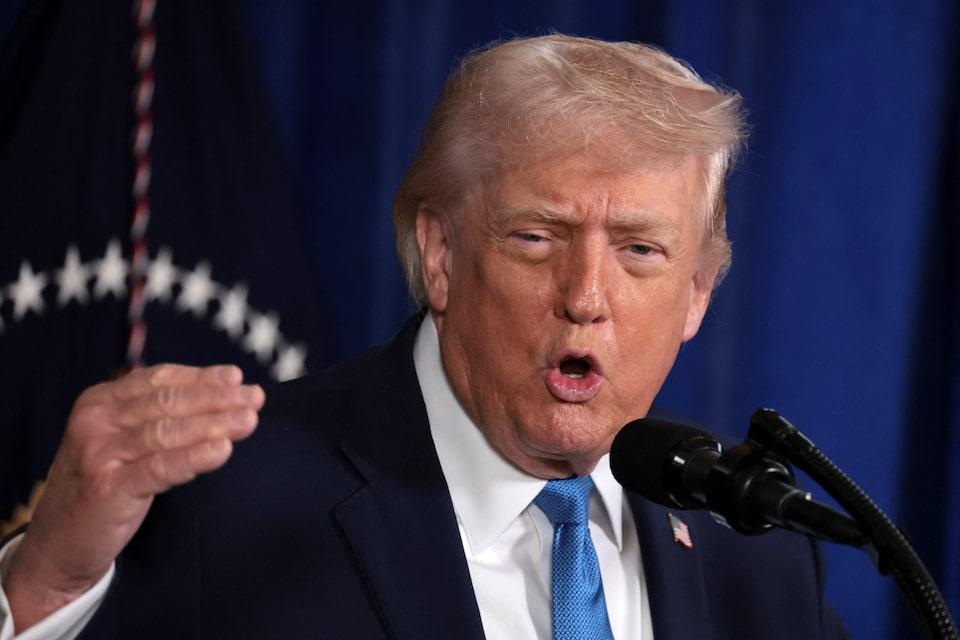
MAGA sees Maduro capture as a quick win despite skepticism of regime change A few conservative voices blast move as a break with Trump's “America First” pledge Political analysts warn Trump could lose support if U.S. role in Venezuela drags on Jan 4 (Reuters) - Supporters of U.S. President Donald Trump have largely praised the capture of Venezuelan leader Nicolas Maduro as a swift, painless win, though political analysts warn support could wane if the operation drags on and echoes past foreign interventions. While a handful of conservative figures criticized the attack on Venezuela and detainment of Maduro as a betrayal of Trump's "America First" pledge to avoid foreign entanglements, most of the president's Republican allies fell in line. Sign up here. The early support came even after Trump said the United States would temporarily "run" Venezuela and work to tap its oil reserves, raising the possibility of the kind of open-ended foreign entanglement he and the MAGA base have long opposed. For now, the base appears willing to cheer on the removal of Maduro, seeing little risk of an escalation into a years-long quagmire like the wars in Afghanistan and Iraq, political analysts said. "This is too recent for there to be significant MAGA-base push back," said Joshua Wilson, a professor of political science at the University of Denver. "There are many questions about how things will develop, and so this could become another test of Trump's ability to frame events and control his base." The military action comes amid a slump in Trump's approval ratings, with a Reuters/Ipsos poll last month showing that just 39% of U.S. adults approved of his job performance, largely reflecting disappointment over his handling of the economy. Historically, presidents usually only gain a short-lived political boost from military action, according to Matthew Wilson, a political science professor at Southern Methodist University. That means the risk for Trump and Republicans is on the downside heading into November's midterm elections, when control of Congress is at stake. "If it goes well, it will largely be forgotten, I suspect, by the time of the midterms," Wilson said. "If it goes poorly, it will be an albatross." Before Saturday's events, the last time the United States took action to remove the ruler of a Latin American country was the 1989 invasion of Panama that ousted dictator Manuel Noriega. That was the first of two quick, relatively successful military actions under U.S. President George H.W. Bush, who also orchestrated the 1991 Gulf War, yet he still lost his re-election bid to Bill Clinton in 1992 primarily due to a weak economy. GREENE, OWENS CRITICIZE ATTACK Democrats have widely criticized the Trump administration's actions in Venezuela as ill-advised and potentially unlawful given they were carried out without approval from Congress. The party's leader in the Senate, Chuck Schumer, said Trump risked dragging the U.S. "into another costly foreign war." The Democrats have been joined by Representative Marjorie Taylor Greene, a longtime Trump supporter who had a public falling out with the president this year. Speaking on NBC's "Meet the Press" program on Sunday, the Republican described Maduro's arrest as a betrayal of Trump's pledge during the 2024 presidential campaign to steer clear of foreign conflicts. "This is the same Washington playbook that we are so sick and tired of that doesn't serve the American people," she said. Candace Owens, a right-wing podcaster known in part for spreading conspiracy theories, was also critical of Maduro's capture, writing on X that the CIA had staged "another hostile takeover of a country at the behest of a globalist psychopaths [sic]." Yet most of Trump’s political supporters — and even some critics — either backed the attack or declined to weigh in. Steve Bannon, a former Trump aide and prominent voice in the Make America Great Again movement, praised the raid as "bold and brilliant" on his podcast hours after the operation, embodying the hawkish tone prevalent across the president's base. Trump administration officials have gone to lengths to characterize Saturday's operation as a law enforcement action against Maduro, who has been indicted on drug-related charges and has a court hearing on Monday in New York. Some MAGA influencers said they also supported Trump's stated goal of asserting U.S. dominance in the Western Hemisphere. Right-wing activist Laura Loomer argued on social media that the United States must exploit Venezuela's vast oil reserves rather than allow adversaries such as Iran, China, Russia and Cuba to benefit from them and finance attacks on the West. "We will exert our power and take the oil and financially starve the axis of evil," Loomer wrote on X, in a broadside against Representative Thomas Massie, one of the few Republicans to question the legal basis for the strikes on Venezuela. Nikki Haley, who lost to Trump in the Republican primary of 2024, called Maduro a "brutal socialist dictator" in a post on X and said the Venezuelan people "deserve freedom". Republican Senator Rand Paul, a longtime opponent of overseas military interventions, did not explicitly criticize Trump's actions in a social media post, but cautioned that "time will tell if regime change in Venezuela is successful without significant monetary or human cost." Matt McManus, a political science professor at Spelman College, said it would be incorrect to cast the MAGA movement as strictly isolationist, when it has long been comfortable in projecting power. He pointed to Trump backers' support of the U.S. strikes on Iranian nuclear sites in June and of Trump's various threats against other countries during his first term. "MAGAdom has never really been defined by a great concern for ideological consistency," McManus said. "It very much takes its cues from the leading figures... And of course, right now, Trump is signaling very heavily that Venezuelan intervention is what's good for America." But McManus and other experts agreed that a prolonged intervention in Venezuela would test Trump's grip over his party and the MAGA movement, especially if U.S. troops are deployed - a possibility the president has not ruled out. "I guess Venezuela will be the acid test that answers the question is MAGA whatever Donald Trump says it is," said Dante Scala, a political science professor at the University of New Hampshire. https://www.reuters.com/world/us/trump-political-base-sets-aside-isolationism-cheer-maduro-capture-2026-01-05/
2026-01-05 00:05
Traders focus on US economic data over Venezuela events Dollar index retreats from early gains Investors await Trump's Fed chair pick, expect lower US rates NEW YORK/LONDON, Jan 5 (Reuters) - The dollar retreated from a near four-week high against major currencies on Monday as traders turned their focus to a raft of key U.S. economic data this week for clues on the monetary policy outlook. Markets are largely shrugging off events in Venezuela, after a U.S. raid led to the capture of President Nicolas Maduro and his wife, Cilia Flores. Sign up here. The closely watched U.S. monthly employment report, due on Friday, will be key in shaping expectations for the outlook for monetary policy - an arguably weightier factor for the dollar. The dollar pared gains and was down 0.16% against the Swiss franc at 0.79135 francs. The euro rebounded from losses in early trade and was up 0.05% at $1.17265 against the dollar. "The dollar fell against major currencies in December but it really bottomed around Christmas and so I think we are going to have an upside correction of the dollar ahead of the jobs data on Friday," said Marc Chandler, chief market strategist at Bannockburn Global Forex LLC. U.S. manufacturing activity contracted more than expected in December, extending its slump to 10 straight months. The Institute for Supply Management said on Monday that new orders fell again and input costs kept grinding higher as the sector continues to bear the imprint of Trump's import tariffs. "I think between Friday's jobs data, next week's CPI, industrial production and retail sales, it will just drive home the message that the U.S. economy is not deteriorating further and the Federal Reserve will be on hold through Q1," Chandler said. The dollar index hit its highest since December 10 but eased and was last down 0.3% at 98.262. The dollar index lost 1.2% in December, its weakest performance since August. Traders currently expect two U.S. rate cuts this year, according to LSEG calculations based on futures. Maduro pleaded not guilty in a New York federal court on Monday to four criminal counts: narco-terrorism, cocaine importation conspiracy and possession of machine guns and destructive devices. Flores also pleaded not guilty. The implications for the dollar from the U.S. action in Venezuela will partly depend on whether the mission is successful, Macquarie analysts led by Thierry Wizman said in an investor note. "A cursory examination of the real value of the USD over several decades suggests that a stronger USD is associated with 'successful' U.S. engagement abroad," the analysts said. LOWER US RATES AHEAD Investors are also awaiting Trump's choice for the next Fed chair, with Jerome Powell's term ending in May. Trump has said he would announce his pick this month, and that Powell's successor would be "someone who believes in lower interest rates, by a lot". Meanwhile, Bank of Japan Governor Kazuo Ueda said on Monday that the BOJ would continue to raise rates if economic and price developments moved in line with its forecasts. It is a view he has reiterated several times in recent months, including after December's as-expected decision to raise rates to a three-decade high. The dollar was down 0.37% against the yen at 156.190. It was down 0.31% against the Australian dollar at $0.6714 and down 0.35% versus the New Zealand kiwi at $0.5789. https://www.reuters.com/world/americas/dollar-firmer-venezuela-raid-hangs-over-sentiment-2026-01-05/
2026-01-04 23:51
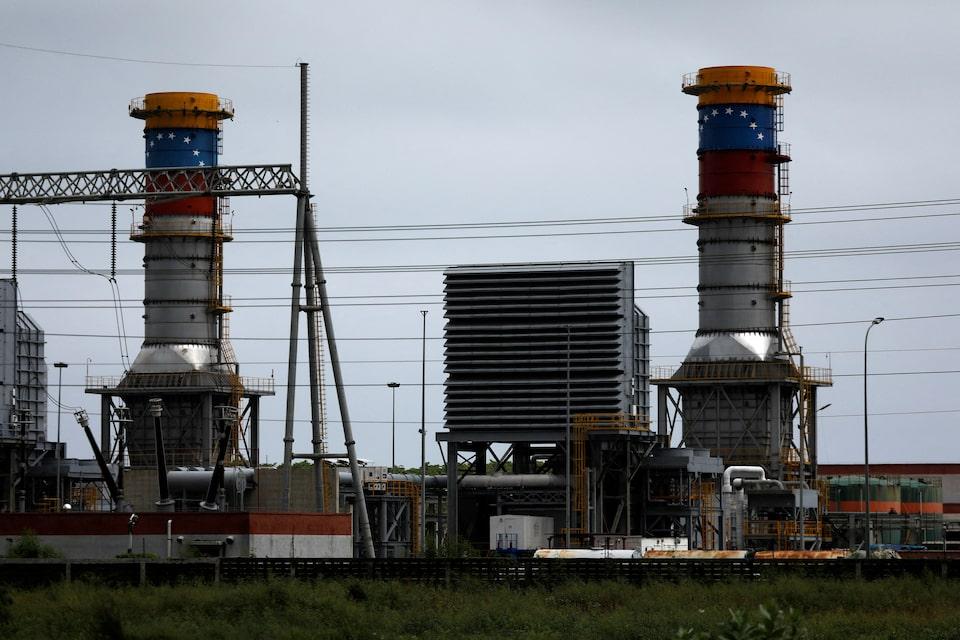
SINGAPORE, Jan 5 (Reuters) - Crude output in Venezuela is set to increase over a period of time following the dramatic U.S. strike and capture of its president, likely raising global supply and weighing on prices longer-term, oil analysts said. American forces seized Venezuelan President Nicolas Maduro from Caracas over the weekend, and U.S. President Donald Trump said Washington would take control of the oil-producing nation and that the U.S. embargo on all Venezuelan oil remained in full effect. Sign up here. The Organization of the Petroleum Exporting Countries (OPEC) member holds about 17% of global oil reserves, or 303 billion barrels, ahead of OPEC leader Saudi Arabia, according to the London-based Energy Institute. Venezuela was producing as much as 3.5 million barrels per day (bpd) of crude in the 1970s, which at the time represented over 7% of global oil output. Production fell below 2 million bpd during the 2010s and averaged some 1.1 million bpd last year, or just 1% of global production. JPMorgan analysts led by Natasha Kaneva said in a note that with a political transition, Venezuela could raise oil production to 1.3-1.4 million bpd within two years and potentially reach 2.5 million bpd over the next decade, up from about 800,000 bpd currently. "These dynamics are currently not reflected in the back end of the oil futures curve," the note added. Goldman Sachs analysts led by Daan Struyven said in a January 4 note that any recovery in production would likely be gradual and require substantial investment. The analysts estimated a $4 per barrel downside to 2030 oil prices in a scenario where Venezuela crude production rises to 2 million bpd. In the short term, Venezuela's oil production outlook this year will depend on how U.S. sanctions policy evolves, the Goldman analysts said. "We see ambiguous but modest risks to oil prices in the short run from Venezuela depending on how U.S. sanctions policy evolves," they added. Goldman's 2026 oil price forecasts remained unchanged, with Brent's average at $56 and West Texas Intermediate at $52 a barrel while Venezuela's 2026 oil production is forecast to stay flat at 900,000 barrels per day. https://www.reuters.com/business/energy/us-sanctions-policy-determine-venezuelas-oil-production-outlook-goldman-says-2026-01-04/
2026-01-04 23:23
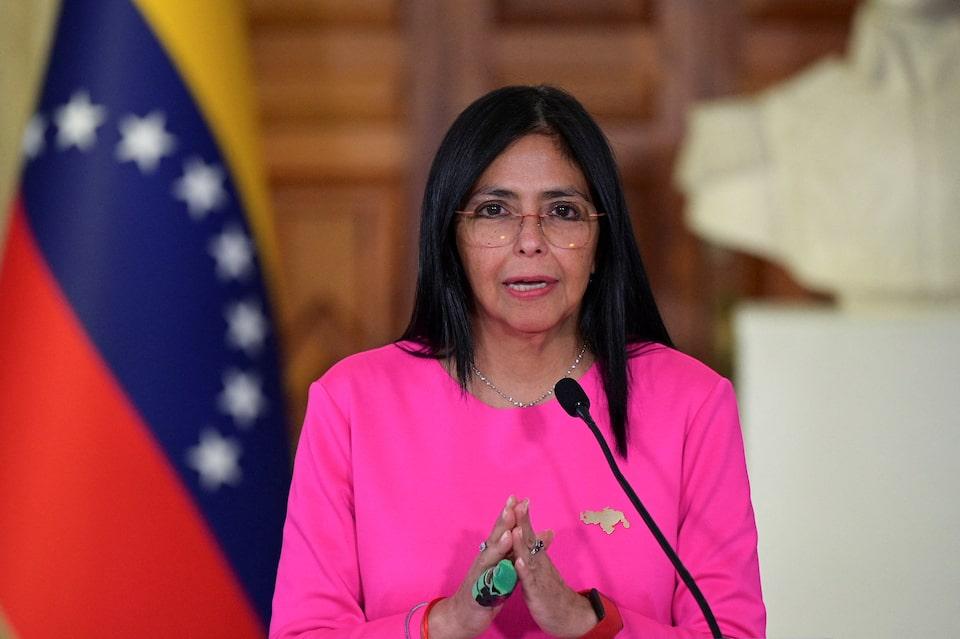
Jan 4 (Reuters) - Delcy Rodriguez, declared the interim president of Venezuela after Nicolas Maduro's capture by U.S. forces, is one of the iron fists in Venezuelan politics, a practitioner of economic orthodoxy who has strived to build relationships with the private sector and who is known for her taste for luxury. Over more than a decade in public life, the 56-year-old Rodriguez has amassed significant influence, earning her the nickname "the tsarina," while Maduro has called her a "tigress" for her staunch defense of his socialist government, which has presided over a deep economic crisis, alleged torture and arbitrary detentions and the exodus of some 8 million migrants. Sign up here. She has been vice president since 2018, simultaneously serving first as finance minister and then as oil minister. Before that she was communications minister, foreign minister and the head of a pro-government legislature. She works closely with her brother, Jorge Rodriguez, who is the head of the National Assembly. The Rodriguez siblings are the children of leftist guerrilla fighter Jorge Antonio Rodriguez, who founded the revolutionary Socialist League Party and was arrested in 1976 for his alleged involvement in the kidnapping of an American businessman. He died in police custody due to what his family alleges was torture and Maduro has praised him as a hero of the Venezuelan left. Delcy, a lawyer specializing in labor law, spent nine years in France and England pursuing postgraduate studies. She participates in table tennis competitions with her brother, which they often share on social media. In public appearances, she's often seen wearing luxury clothing brands. As vice president, after years of hyperinflation amid U.S. sanctions, she implemented orthodox policies including cutting public spending, limiting credit and a fixed dollar-bolivar rate, which helped lower triple-digit inflation. She has managed to keep oil production at an average of about 1.1 million barrels per day last year, and her role has put her in close contact with foreign oil companies like Chevron. Sometimes described by industry leaders as a "workaholic," Rodriguez attends many private sector events, something other public officials neglected to do for years. She is the Venezuelan official who travels most frequently to China, Russia, and Turkey, some of Venezuela's allies. https://www.reuters.com/world/americas/who-is-tsarina-delcy-rodriguez-acting-president-venezuela-2026-01-04/
2026-01-04 22:32
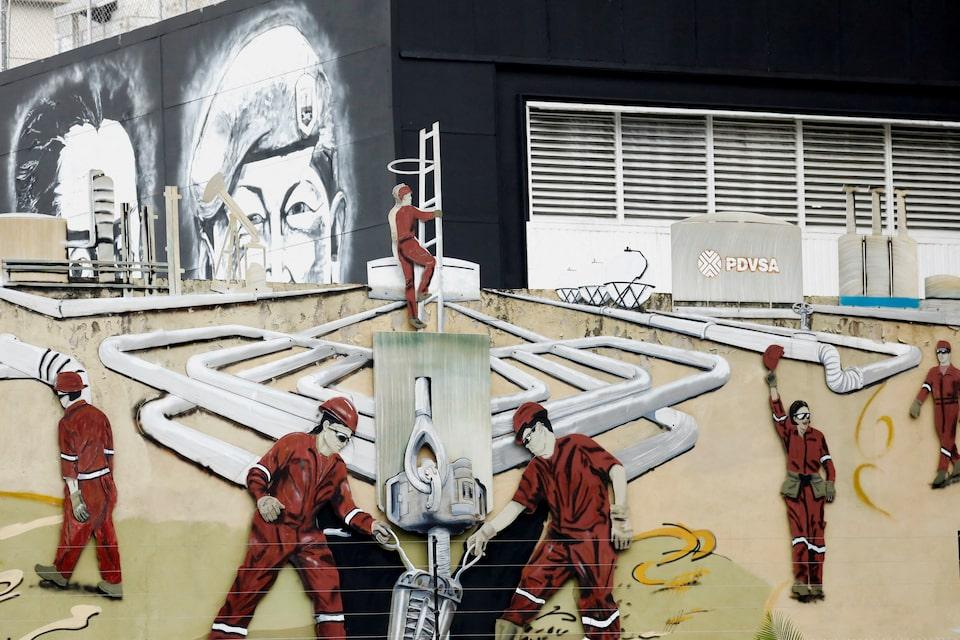
Govt wants US oil giants to finance investment to revive Venezuelan oil sector Security, legal and political risks challenge Venezuela's oil sector revival HOUSTON, Jan 4 (Reuters) - White House and State Department officials have told U.S. oil executives in recent weeks that they would need to return to Venezuela quickly and invest significant capital in the country to revive the damaged oil industry if they wanted compensation for assets expropriated by Venezuela two decades ago, according to two people familiar with the outreach. In the 2000s, Venezuela expropriated the assets of some international oil companies that declined to give state-run oil company PDVSA [RIC:RIC:PDVSA.UL] increased operational control, as demanded by late Venezuelan President Hugo Chavez. Sign up here. U.S. oil major Chevron was among companies that negotiated to stay in the country and form joint ventures with state-run PDVSA, while rivals Exxon Mobil (XOM.N) , opens new tab and ConocoPhillips (COP.N) , opens new tab left and filed for arbitration. President Donald Trump said on Saturday that American companies were prepared to return to Venezuela and spend to reactivate the struggling oil sector, just hours after President Nicolás Maduro was captured and removed by U.S. forces. In the recent U.S. administration discussions with oil executives in the scenario that Maduro was out of power, officials have said that U.S. oil companies would need to front the investment money themselves to rebuild Venezuela's oil industry. That would be one of the preconditions for them eventually recovering debts from the expropriations. That would be a costly investment for firms such as ConocoPhillips, the sources said. Conoco for years has tried to recover some $12 billion from the Chavez-era nationalization of its Venezuela assets. Exxon Mobil also filed international arbitration cases, trying to recover $1.65 billion. Trump began making public reference to the Venezuelan expropriations when he ordered a blockade of sanctioned oil tankers last month. CONDITIONS FOR A RETURN Whether or not the companies return would depend on how executives, boards and shareholders evaluate the risk of renewed investment in Venezuela, the sources said. "ConocoPhillips is monitoring developments in Venezuela and their potential implications for global energy supply and stability. It would be premature to speculate on any future business activities or investments," a company spokesperson said in emailed comments to Reuters on Saturday. The company reiterated the statement on Sunday when asked about discussions with administration officials for this story. Exxon did not immediately respond to questions from Reuters on Sunday. Politico first reported on the recent discussions on Saturday. Even if companies do agree to return to the country, it could be years before there is a meaningful boost to oil output. The South American country has one of the largest estimated reserves in the world, but production has plummeted over past decades amid mismanagement, lack of investment and U.S. sanctions. Besides uncertainty surrounding the contract framework for any operations there, companies considering a return would also need to deal with security concerns, poor infrastructure, questions about the legality of the U.S. operation to capture Maduro and the possibility of long-term political instability, analysts have told Reuters. Venezuela, a founding member of OPEC, produced as much as 3.5 million barrels per day in the 1970s, which at the time represented over 7% of global oil output. Production fell below 2 million bpd during the 2010s and averaged around 1.1 million bpd last year, or just 1% of global production. https://www.reuters.com/business/energy/us-pushes-oil-majors-invest-big-venezuela-if-they-want-recover-debts-2026-01-04/