2025-01-17 16:07
IMF cuts forecasts for Germany, France Fund warns against protectionist measures Headline inflation seen declining to 4.2% this year WASHINGTON, Jan 17 (Reuters) - The International Monetary Fund on Friday raised its forecast for global growth in 2025 by one-tenth of a percentage point, with stronger-than-expected growth in the U.S. offsetting downward revisions in Germany, France and other major economies. In its latest World Economic Outlook, the IMF projected global growth of 3.3% in both 2025 and 2026, and said global headline inflation was set to drop to 4.2% in 2025 and 3.5% in 2026, allowing a further normalization of monetary policy and ending the global disruptions of recent years. But it said global growth remained below the historical average of 3.7% from 2000-2019, and warned countries against unilateral measures such as tariffs, non-tariff barriers or subsidies that could hurt trading partners and spur retaliation. Such policies "rarely improve domestic prospects durably" and may leave "every country worse off," IMF chief economist Pierre-Olivier Gourinchas said in a blog released Friday. The new IMF forecast comes days before the inauguration of U.S. President-elect Donald Trump, who has proposed a 10% tariff on global imports, a 25% punitive duty on imports from Canada and Mexico until they clamp down on drugs and migrants crossing borders into the U.S., and a 60% tariff on Chinese goods. "An intensification of protectionist policies, for instance in the form of a new wave of tariffs, could exacerbate trade tensions, lower investment, reduce market efficiency, distort trade flows and again disrupt supply chains," the IMF said, noting growth could suffer both in the near and medium term. Gourinchas told Reuters there was clearly "tremendous uncertainty" about future U.S. policies that was already affecting global markets, but the global lender needed to wait for specifics to draw clearer conclusions. Rising confidence and positive sentiment in the U.S. could boost demand and spur near-term growth, but excessive deregulation especially in the financial sector could "generate boom-bust dynamics for the United States in the longer term, with repercussions for the rest of the world," the IMF wrote. DIGITAL CURRENCY OVERSIGHT Gourinchas said the IMF would be looking carefully at any moves by the incoming U.S. administration to deregulate digital currencies, noting the need to ensure adequate oversight of cross-border payments to avert future "runs" on the system. "The payment system is the blood that irrigates the economy, and if there is the emergence of alternative forms of payments, and these become important in the economy, you also have the potential for collapses or runs," he said. "This is a very fluid environment, but there is a need to be careful if there is a concentration of risks, if a few actors become critical for the payment system," he said. Tariffs could make it harder for businesses to get needed inputs, leading to higher prices, and immigration restrictions - also promised by the incoming Trump administration - could lead to labor constraints, which could also raise costs, he said. Higher inflation would prevent the Federal Reserve from cutting interest rates as initially planned, he told reporters, adding that new U.S. policies would also likely strengthen the U.S. dollar and tighten financial conditions elsewhere. Looser U.S. monetary policy, driven by tax cuts and other expansionary measures, could boost economic activity in the near term, but could require bigger fiscal adjustments later on that could then weaken the role of U.S. Treasuries as a global safe asset and lead to fiscal vulnerabilities, the IMF said. "The increase in U.S. long-term yields, despite the Federal Reserve easing, reflects some market nervousness about future policies," Gourinchas told a news conference. DIVERGENT TRENDS The IMF said it raised its growth forecast for the United States to 2.7% based on robust labor markets and accelerating investment, an increase of half a percentage point from its October forecast, with growth to taper to 2.1% next year. It cut its euro area forecast by 0.2 percentage points to 1.0% for 2025, and by 0.1 percentage point to 1.4% for 2026, citing weaker-than-expected momentum in manufacturing and heightened political and policy uncertainty. Gourinchas said the divergence between the United States and Europe was due to structural factors, reflecting stronger U.S. productivity growth particularly in the technology sector. It would linger, unless issues such as the business environment and deeper capital markets were addressed. The IMF nudged its China growth forecast up by 0.1 percentage point to 4.6%, and by 0.4 percentage point to 4.5% for 2026, citing a fiscal stimulus package unveiled in November. Gourinchas said China notified the IMF late on Thursday that its economy grew by 5% in 2024, a "positive surprise" compared to the IMF's forecast of 4.8%. But he said Beijing said still needed to make domestic demand a bigger engine of its growth and stop relying solely on external demand. The IMF cut the forecast for the Middle East and Central Asia region by 0.3 percentage point to 3.6% in 2025 and by the same amount to 3.9% for 2026, largely due to a downward revision for Saudi Arabia given recent voluntary oil production cuts. DISINFLATION CONTINUING The IMF said progress on lowering inflation was expected to continue, helped by the gradual cooling of labor markets and an expected decline in energy prices. But new inflationary pressures fueled by increased trade tensions could arise that could result in higher-for-longer interest rates and strengthen the dollar. In a blog accompanying the outlook, Gourinchas said central bankers had successfully reassured consumers they would keep a grip on inflation during the last surge, but expectations could become de-anchored if price pressures emerged again so soon after the recent surge. That meant monetary policy would need to be more "agile and proactive," he said. "The danger is that some of that ... credibility capital may have been eroded," he said, noting that households could be "very cautious and very reactive" if prices started rising again. Sign up here. https://www.reuters.com/markets/us/imf-lifts-us-outlook-warns-countries-against-protectionism-subsidies-2025-01-17/
2025-01-17 15:46
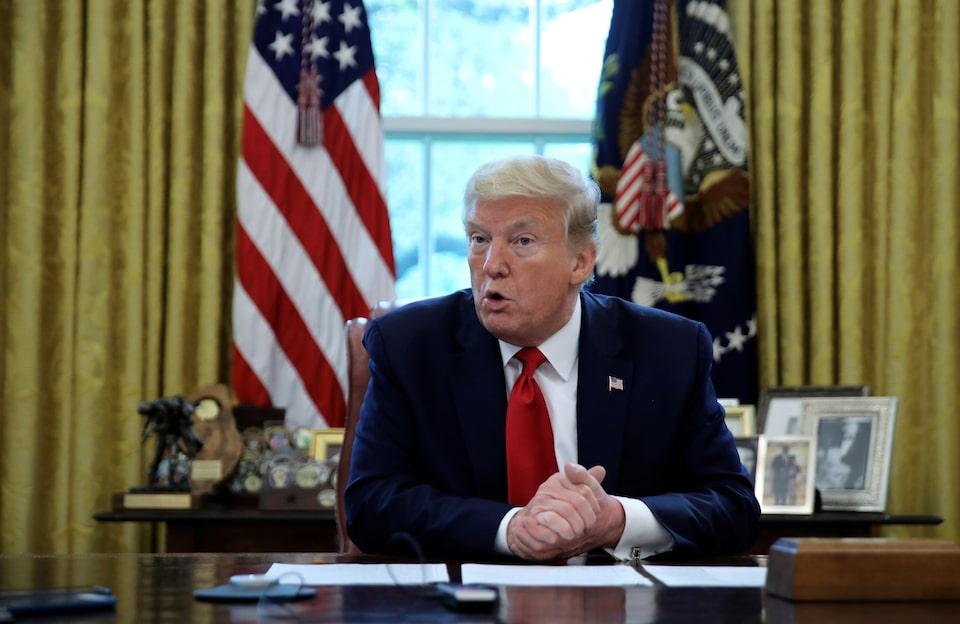
Some economists see tariffs as potential negotiation tool China's growth strategy involves debt and yuan depreciation World Bank warns tariffs could slow global growth by 0.3 pp Jan 17 (Reuters) - As investors the world over brace for a global trade war with U.S. President-elect Donald Trump returning to the White House next week, several economists and strategists believe his proposed hefty tariff hikes could well be a negotiation tool. Even as China remains at the forefront of that risk, the consequences for global trade may not be as severe as is being currently priced in, they told the Reuters Global Markets Forum , opens new tab (GMF). "According to what (Trump) had done during the previous term, tariff hikes could end up being a negotiation tactic," said Carie Li, global market strategist at DBS Bank, Hong Kong. Trump's team is figuring out how to avoid a spike in inflation, which "makes sense to me," as inflation remains a key problem facing the U.S., Li said. Trump has pledged tariffs of 10% on global imports, 60% on Chinese goods and a 25% import surcharge on Canadian and Mexican products, duties that may upend trade flows, raise costs and draw retaliation. Even as proposed tariffs could destroy demand, Minxiong Liao, senior economist and director at GlobalData.TS Lombard APAC, said, "at least, it can be good negotiation tool to get a better deal with trade partners," which means not all of the planned tariffs may get implemented in the end. The World Bank has even warned that U.S. tariffs of 10% can reduce global economic growth of 2.7% in 2025 by 0.3 percentage points (pp) if trading partners retaliate. Tianchen Xu, senior economist at the Economist Intelligence Unit, believes the weighted average tariff rate for China could increase by as much as 20 pp between 2025 and 2027, while for the rest of the world, they won't exceed 5 pp. China's latest plan to maintain a forecast-beating 5% growth level by going deeper into debt and even allowing the yuan to depreciate to counter the impact from tariff hikes has prompted concerns that structural problems in the world's no. 2 economy may intensify in 2025. "Depreciation can help exports and mitigate some of the tariff impact, (but it) hurts investor confidence in the currency and the Chinese economy," Xu said, forecasting 7.5 yuan/dollar as "an absolute red line" for China's central bank in 2025. "Nobody wants to hold a devaluating asset." If the PBOC does slightly loosen its grip on the RMB market, "USD/CNH may be at risk of testing 7.5000," according to DB Bank's Li. The onshore yuan has fallen about 3% against the dollar, in line with weakness across major currencies, since Trump's election win in early November. (Join GMF, a chat room hosted on LSEG Messenger, for live interviews: https://lseg.group/3KFHrhe , opens new tab) Sign up here. https://www.reuters.com/markets/trumps-tariff-plan-could-be-gambit-win-leverage-strategists-say-2025-01-17/
2025-01-17 13:31
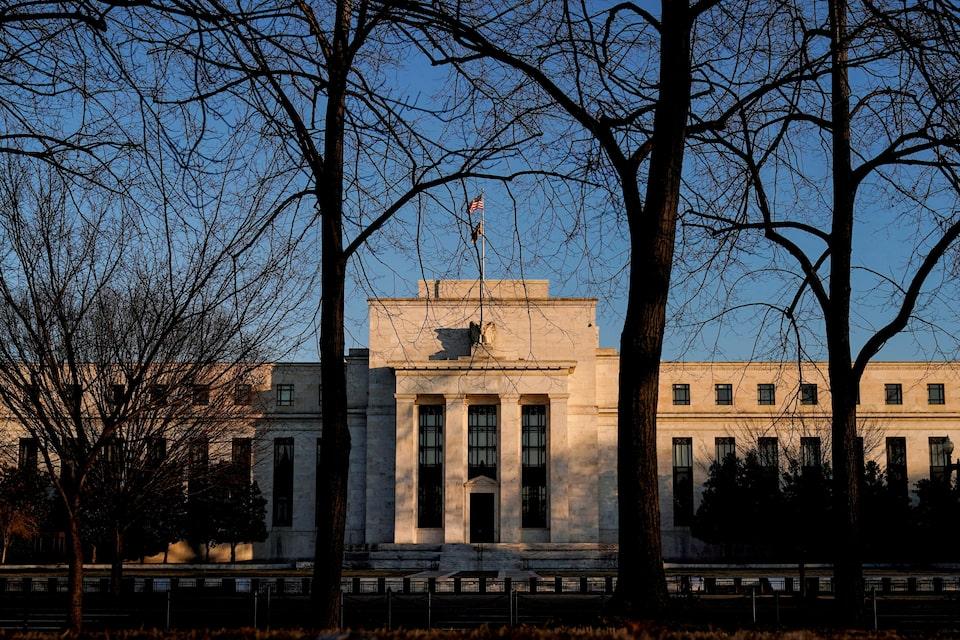
BENGALURU, Jan 17 (Reuters) - The U.S. Federal Reserve will hold interest rates steady on Jan. 29 and resume cutting in March, according to a slim majority of economists polled by Reuters, as policymakers digest an expected barrage of new economic policies from Washington. The latest survey, taken in the week before U.S. President-elect Donald Trump's inauguration on Jan. 20, also suggests lingering inflation pressures may only allow the Fed to cut rates once more. Concerns around Trump's pledges, ranging from across-the-board tariffs, extending tax cuts, to deportations of illegal immigrants, have already contributed to a dramatic rise in U.S. Treasury yields before he takes office. The outlook for an already-strong economy and the Fed's future rate path will depend on how aggressively the incoming administration follows through on those pledges. "If they deliver anything close to what they promised on the tariff front, then we are going to probably see a stalling of disinflationary pressures, where the Fed is not going to be cutting," said Jonathan Millar, senior U.S. economist at Barclays. "At least at a minimum, not as rapidly as they did in the last fall, but also the possibility they could be on hold for quite a while." Millar was one of the top forecasters , opens new tab for the U.S. in Reuters polls last year, according to LSEG StarMine calculations. Since the Fed last cut rates in December by a quarter-percentage-point inflation has fallen and the job market had a blowout month in December, suggesting further economic stimulus may not be required for an economy which is already firing on all cylinders. All 103 economists in the survey predicted the Federal Open Market Committee (FOMC) would keep its key interest rate steady at 4.25%-4.50% at the Jan. 28-29 meeting. A near-60% majority of economists, 61, expected the Fed to cut in March. Nearly 65% of economists, 65 of 102, anticipated two or fewer rate cuts this year. That flipped from three or more, a view economists had held on to since August 2024. Interest rate futures pricing has reversed in recent weeks to just one Fed rate cut this year with chances of a second one hanging on a knife's edge from expectations for at least three a month ago. According to the poll, the fed funds rate will be 3.75%-4.00% by end-2025, much higher than 3.00%-3.25% predicted a few months ago. But the chances of a prolonged pause are increasing amid concerns potentially imminent policies, especially big tariffs on the country's largest trading partners, could reignite inflationary pressures. While poll medians showed inflation would remain above the Fed's target of 2% at least until 2027, a strong majority of economists - 40 of 49 - said inflation would more likely be higher than they expected this year rather than lower. "We expect the FOMC to be confronted with a pickup in inflation associated with the new administration's tariff, immigration and fiscal policies," said James Egelhof, chief U.S. economist at BNP Paribas. "Coming right on the heels of the high inflation of the post-pandemic recovery, we see (an) elevated risk that above-2% inflation becomes entrenched in the economy, leaving the FOMC pursuing a more cautious path to manage this risk." The U.S. economy will expand 2.2% this year and 2.0% in 2026, faster than what Fed officials currently see as the non-inflationary growth rate of 1.8% over the coming years, the poll found. Still, an overwhelming majority of respondents, 43 of 49, said a Fed rate hike is unlikely this year. "Strong growth ought to add to the inflationary pressure from tariffs and immigration restrictions, putting rate hikes firmly back on the table. But this should be more of a story for 2026, with a wait-and-see approach more appropriate this year," said George Brown, senior U.S. economist at Schroders. (Other stories from the Reuters global economic poll) Sign up here. https://www.reuters.com/markets/us/fed-hold-rates-jan-trumps-policies-stir-inflation-worries-2025-01-17/
2025-01-17 13:00
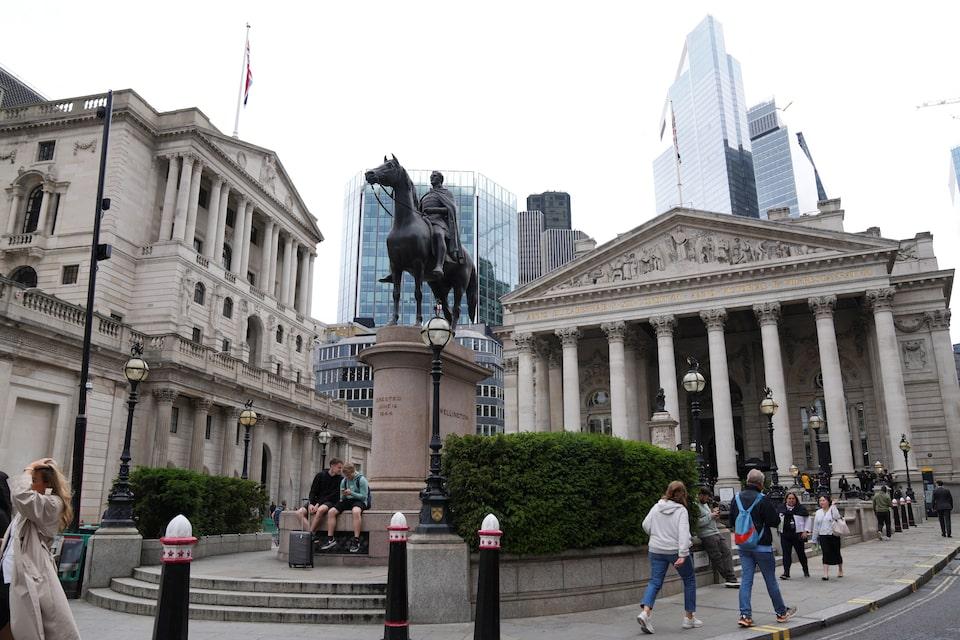
'Basel endgame' rules have faced fierce opposition in US Reforms face uncertain future under Trump presidency Bank of England says 'greater clarity' needed European Union says it is considering next steps LONDON, Jan 17 (Reuters) - The Bank of England said on Friday it would delay tougher bank capital rules by a year to January 2027 to get clarity on what the United States will do under Donald Trump as president, prompting the European Union to say it would also weigh its options. The standards written by the global Basel Committee are the final set of international reforms designed to make the banking system safer after the 2008 global financial crisis, and are meant to be implemented by member jurisdictions. The European Union - which currently plans to implement the reforms a year earlier from January 2026 - said it would consider its next steps, but said it was in "everyone's interest" to implement them fully and on time. "(The EU) is now considering which steps to take on this in light of developments in other jurisdictions, including the US and the UK," a European Commission spokesperson said. An EU official, who declined to be named, expressed surprise and disappointment at the BoE's delay, given its long-standing insistence on high standards, but said it raised level playing field issues that needed to be considered. John Cronin, a financials industry analyst at SeaPoint Insights, said: "While EU policymakers have been holding a firm line... the competitive position of the EU banking sector overshadows ideals - and the EU will, in my view, follow the US and UK's lead." The reforms have faced fierce opposition from U.S. banks, and analysts have said they could be watered down or scrapped under Donald Trump's incoming administration, after the departure of top banking regulator Michael Barr. Britain's Labour government has been pressuring British regulators to do more to promote growth, with finance minister Rachel Reeves reiterating on Thursday that watchdogs had a key role to play. MODEST GAINS BY BRITISH BANKS' SHARES Shares in British banks made modest gains after the BoE announcement, with Barclays (BARC.L) , opens new tab up 1.8%, Lloyds (LLOY.L) , opens new tab up 1.5% and HSBC (HSBA.L) , opens new tab up 0.7%, compared to a 1.3% gain for the wider FTSE 100 index. Gary Greenwood, an analyst at Shore Capital, said bank share reactions were likely to be muted as the BoE had played down the potential impact of the reforms on bank capital requirements. The BoE's statement was published by its regulatory arm, the Prudential Regulation Authority (PRA), having made the decision in consultation with Britain's Treasury. The PRA said it had taken into account competitiveness and growth considerations. Implementation of the reforms in Britain had previously been delayed last summer by about six months to January 2026. Bank lobby group UK Finance welcomed the fresh delay. "Given the cross-border nature of banking, international coordination on capital rules is important," said Simon Hills, director of prudential policy at UK Finance. Bank of England Deputy Governor Sam Woods said earlier this month that Britain should avoid participating in a "race to the bottom" on financial regulation. Sign up here. https://www.reuters.com/business/finance/boe-delays-basel-bank-capital-rules-by-one-year-2025-01-17/
2025-01-17 12:50
Jan 17 (Reuters) - SLB (SLB.N) , opens new tab buoyed its quarterly dividend and boosted share repurchases on Friday after the oilfield service provider posted better-than-expected fourth-quarter profit helped by higher demand for its drilling equipment and technology. The firm raised its quarterly dividend by 3.6%, and said it has initiated an accelerated share repurchase to buy back $2.3 billion of the company's stock. "While upstream investment growth will remain subdued in the short term due to global oversupply, we anticipate the oil supply imbalance will gradually abate," said SLB Chief Executive Officer Olivier Le Peuch, adding that the company believes its stock is undervalued relative to the strength of its business. SLB's shares rose 2.3% to $42 in premarket trading. Revenue from its international segment, which accounts for about 80% of its total revenues, grew 3% in the quarter, helped by its business in the Middle East and Asia. North America revenue grew 7%. Total revenue of $9.28 billion beat analysts estimates of $9.18 billion, according to data compiled by LSEG. Excluding charges and credits, SLB posted a profit of 92 cents per share for the quarter, compared with the average analyst estimate of 90 cents. The charges included a restructuring related charge of $223 million. Sign up here. https://www.reuters.com/business/energy/slbs-quarterly-profit-beats-international-business-strength-2025-01-17/

2025-01-17 12:37
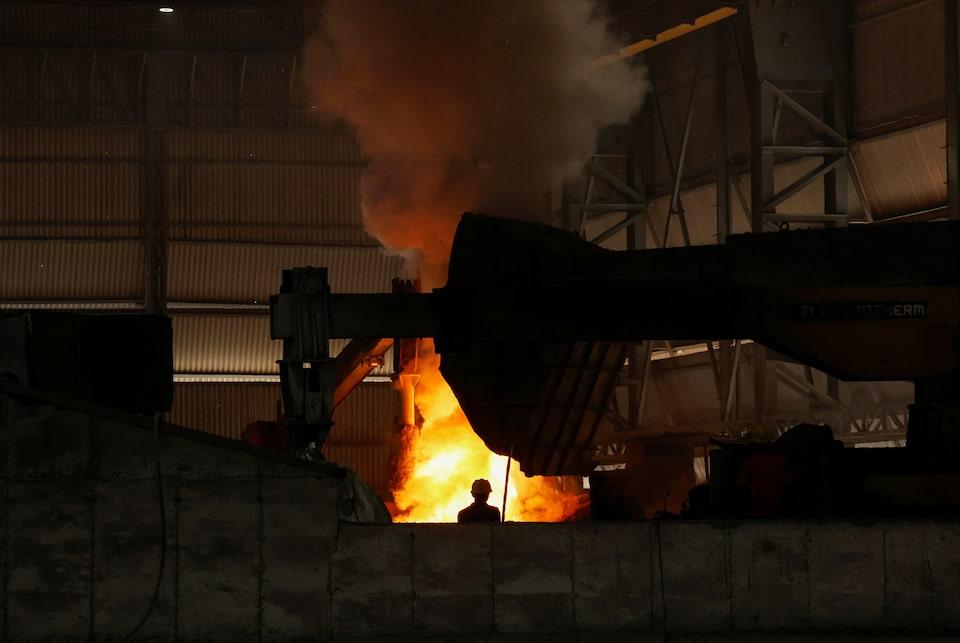
NEW DELHI, Jan 17 (Reuters) - India's investigation to determine safeguard measures is ongoing, the country's steel minister H D Kumaraswamy said on Friday. India's finished steel imports hit at least a six-year high in the first nine months of the financial year that started in April 2024, provisional government data reviewed by Reuters showed. Sign up here. https://www.reuters.com/world/india/india-steel-minister-says-probe-determine-safeguard-measures-ongoing-2025-01-17/