2025-01-17 03:44
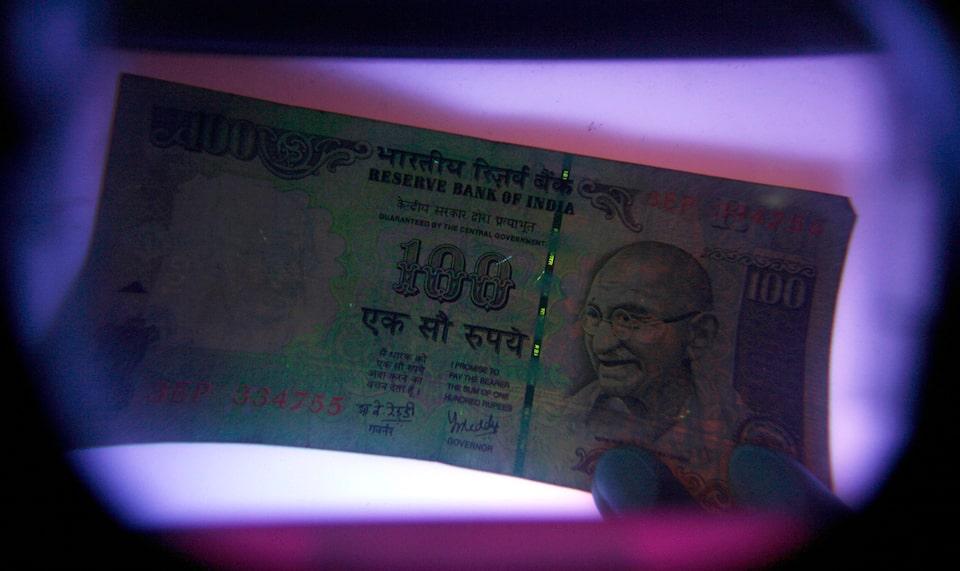
MUMBAI, Jan 17 (Reuters) - The Reserve Bank of India likely sold U.S. dollars before the local spot market opened on Friday to support the rupee, without which the currency would have hit a new all-time low, traders said. The rupee was at 86.5675 per dollar at 9:06 a.m. IST, marginally lower than the previous session. On the interbank order matching system, the currency had declined to 86.64 before the local spot market opened at 9.00 a.m.. That was a whisker away from its lifetime low of 86.6475. If it were not for the central bank "making sure of a soft opening", we would be at least at 86.70, a currency dealer at a private bank said. Sign up here. https://www.reuters.com/markets/currencies/indias-rbi-sells-dollars-support-rupee-before-market-open-traders-say-2025-01-17/
2025-01-17 02:59
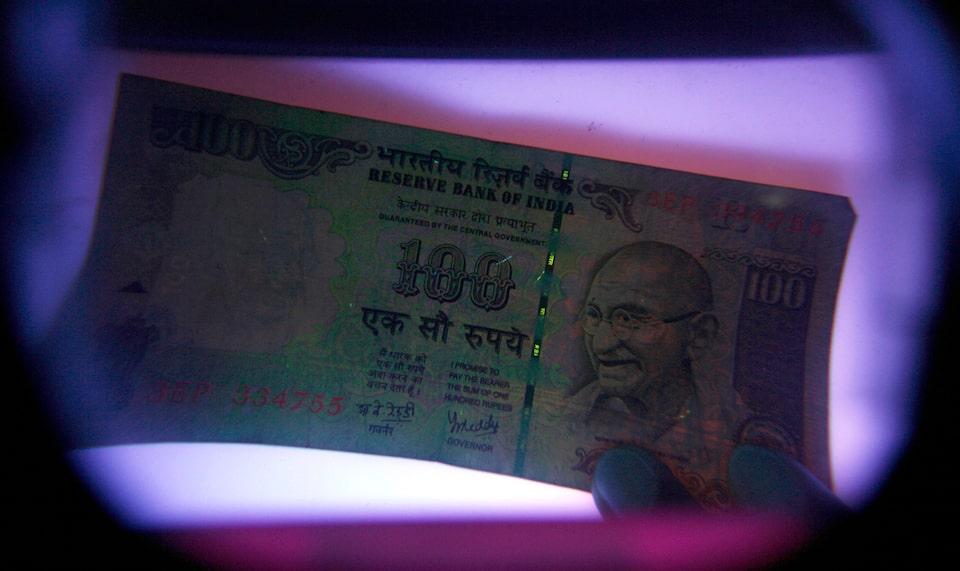
MUMBAI, Jan 17 (Reuters) - The Indian rupee, on Friday, will likely get support from remarks by a Federal Reserve official that the central bank may deliver more rate cuts this year than forecasted in December, which spurred a further dip in U.S. Treasury yields. The 1-month non-deliverable forward indicated that the rupee will open unchanged-to-marginally higher from its close of 86.55 per U.S. dollar in the previous session. Asian currencies were mostly higher, with the Chinese yuan ticking higher as the country's economic growth beat forecasts. There are "a few positives" for the rupee to begin the day with, a currency trader at a bank said. However, "the big risk (U.S. President-elect Donald Trump) is now here" and "it's difficult to see" rupee recovering by much, he said. Trump's inauguration is on Jan. 20. The rupee is down 0.7% since last Friday, heading for its eleventh straight weekly decline. Since Trump's election victory in early November, the rupee has slid nearly 3% amid near non-stop stress. India's weak growth in the September quarter, expectations that the Reserve Bank of India may cut borrowing costs soon, and a central bank that seems more willing to allow the currency to depreciate have extenuated the rupee's plight. The rally in oil prices to kick off 2025 has given investors one more reason to avoid the rupee. Among the multiple headwinds, there was good news recently, with U.S. core inflation, retail sales and initial jobless claims data renewing hopes that the Fed may cut rates more than the two times that they projected in December. Fed Governor Christopher Waller said three or four rate cuts this year are still possible if economic data weakens further. KEY INDICATORS: ** One-month non-deliverable rupee forward at 86.82; onshore one-month forward premium at 22 paisa ** Dollar index down at 108.92 ** Brent crude futures up 0.4% at $81.6 per barrel ** Ten-year U.S. note yield at 4.61%; down 16 basis points this week ** As per NSDL data, foreign investors sold a net $508.3 mln worth of Indian shares on Jan. 15 ** NSDL data shows foreign investors sold a net $61 mln worth of Indian bonds on Jan. 15 Sign up here. https://www.reuters.com/markets/currencies/prospect-fed-rates-cut-help-rupee-amid-trump-worries-2025-01-17/
2025-01-17 00:26
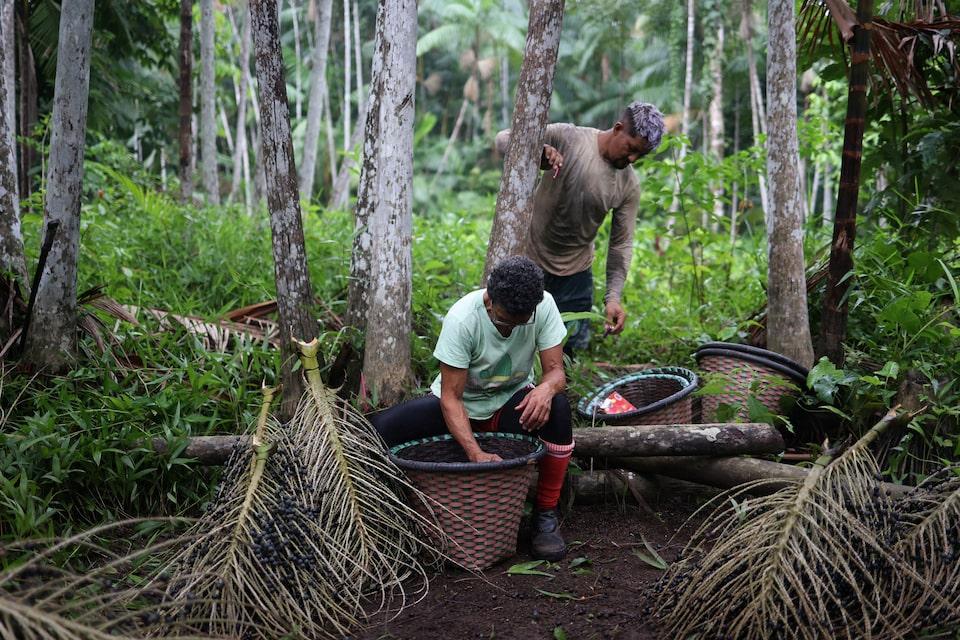
SAO PAULO, Jan 15 (Reuters) - In the tiny community of Ilha da Jussara, at the northern tip of the Brazilian Amazon, growing acai berries - a superfood known for its nutritional benefits - is a major source of income. Production has grown around 50% in the last decade, driven by a dozen or so women in the village who fought to secure sources of credit. "At first, the husbands took care of the product, of the production," said Edna dos Anjos Nascimento Siqueira, known as Bezinha, as she stripped the small dark fruit from acai palm tree branches and placed them in a basket. "Then we, the women, started to move." Bezinha, now 60, grew up following her father climbing the acai berry trees of Ilha da Jussara to harvest the tart fruit, used globally in juices, cosmetics and supplements. She was the first woman to participate in meetings to discuss funding to grow the village business. According to Emater, a government sustainable development agency, the involvement of women in such small-scale businesses has grown fast in rural Brazil. In 2021, almost half of the rural credit from a federal program overseen by Emater that supports smallholder farmers benefited female producers, it said. The initial investment in projects like the acai of Ilha da Jussara is around 20,000 reais ($3,300), said Lucival Solim Chavez, an agronomist at Emater. "After that, the land is financially self-sustaining," he said. More widely, acai berry production in Brazil grew 15% between 2020 and 2023, according to government statistics. Para state, where Ilha da Jussara is located, accounts for 94% of the country's output, and is a top exporter of the fruit to food and cosmetics companies around the world. In the community around Ilha da Jussara, some 200 people are dedicated to the production of organic acai. Combined sales from communities in the area total approximately 1.37 million reais ($225,000) a year - over 85% of their income, according to government numbers. During the harvest, families in the village can make fourfold the region's minimum wage. "We've achieved a lot," Bezinha said. "My friends that are part of it... they have their own little house, their own little stove, their own bathroom. For us it has been a big thing." ($1 = 6.0559 reais) Sign up here. https://www.reuters.com/world/americas/amazon-women-lead-efforts-grow-acai-berry-production-2025-01-15/
2025-01-16 23:59
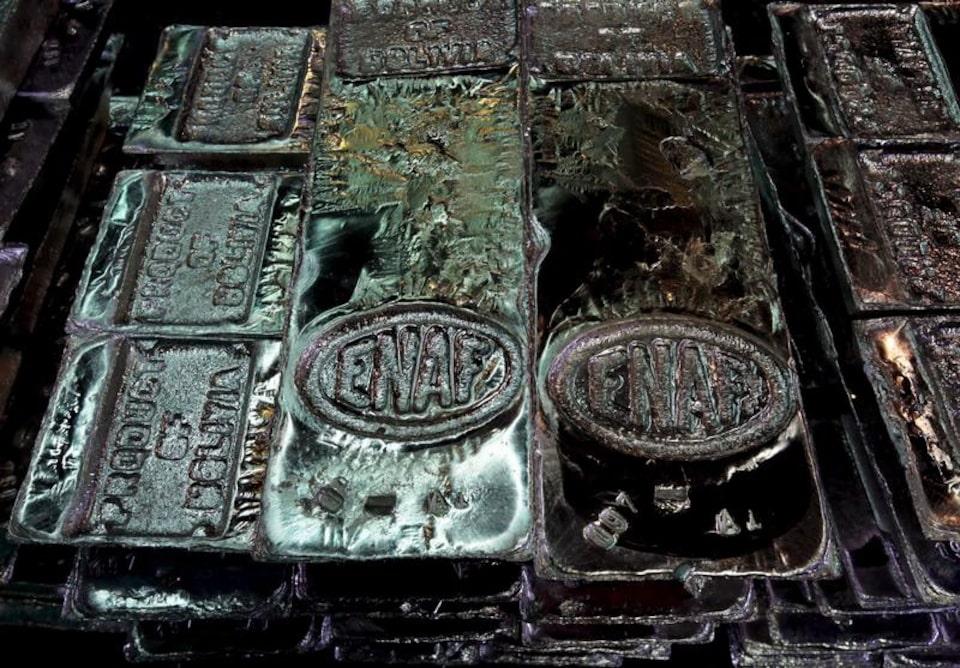
LONDON, Jan 16 (Reuters) - Investors lost faith in tin's bull narrative towards the end of 2024, slashing bets on a further rally and helping crash the price. Tin had been the star performer among the London Metal Exchange (LME) base metals pack until then with year-to-date gains of over 40% in both April and July. By the end of December, the yearly gain was just 15%. Tin was still the best LME performer but only by a narrow margin over zinc. Disappointed bulls had been hoping for much more, maybe even a re-run of the super-charged rally of 2022, when LME three-month tin hit an all-time high of $51,000. It didn't happen. Tin rose as far as $36,050 in April and never revisited that level despite repeat attempts in both May and July. Bulls were focused on tin's troubled supply picture but the demand side of the price equation turned out to be equally problematic. Tin's fortunes this year will be down to which recovers fastest. BULLS BAIL OUT Funds were net long of LME tin to the tune of 3,319 contracts (16,600 metric tons) at the end of the third quarter last year. It amounted to the largest bull commitment since 2018, when the LME first started publishing a Commitments of Traders Report. By the close of the year the investment net long had shrunk to just 521 contracts as frustrated bulls threw in the towel and bears sold into the resulting price weakness. The case for higher prices looked solid with production falling in both Indonesia and Myanmar, the world's second and third largest producers respectively after China. Yet there was no indication the market was short of metal. Indeed, Shanghai Futures Exchange (ShFE) stocks of tin rose to an all-time high of 17,818 tons in May. LME stocks eased lower in the first half of the year then stabilised in a 4,000-5,000-ton range in the second half. DEMAND SLUMP Why were stocks so stubbornly high when supply was so constrained? The answer came only in October when the International Tin Association (ITA) released the results , opens new tab of its annual survey of tin users, a rare insight into the state of demand in an under-researched market. The result was a shocker. Usage had slumped by 3.9% in 2023, a far weaker outcome than the 1.9% contraction users had expected in the previous year's survey. Factoring in usage of tin in unrefined form, the 2023 demand slump was even deeper at 4.9% relative to 2022. Moreover, survey participants, accounting for around 42% of global metal usage, expected only a modest 3.0% recovery over the course of 2024. Tin usage in new energy applications such as solar ribbon soldering remains strong but insufficient to offset weakness in more cyclical sectors such as consumer electronics and construction. Look no further to understand why there was no physical tin shortage despite the supply hits in Indonesia and Myanmar. FRAGILE SUPPLY Tin's supply problems are still there. Indonesia, the world's largest exporter of refined tin, saw shipments fall by 33% to 46,000 tons in 2024. The country's mine production fell by 28% last year due to restrictions on mining quotas for all metals and specific regulatory focus on the tin sector, according to the ITA. Production in the Wa State of Myanmar fell even harder by 40% due to the continued closure of the Man Maw mine. The mine accounted for 7-8% of global supply before its suspension in August 2023, which was ostensibly part of a broader audit of minerals in the ethnic group's autonomous jurisdiction. Other smaller tin mines have since been allowed to restart operations, which makes the continued inactivity at Man Maw something of a mystery. The flow of ore across the border to China's smelters has steadily declined in recent months after the last stocks at Man Maw were shipped. China's imports from its neighbour fell from an average of 55,000 tons per month in the first half of 2024 to an average 4,000 tons in the July-November period. China has stepped up raw materials imports from other suppliers but not sufficiently to compensate for the loss of Man Maw. Total imports of ore and concentrates fell by 35% last year relative to 2023. The prolonged loss of feed is finally showing signs of constraining Chinese metal production, causing the domestic market to tighten. The Shanghai stocks mountain has been steadily eroded and now stands at just 6,353 tons. China has also stepped up imports of refined metal, flipping the country from net exporter in the first half of 2024 to net importer in the second half. DEFICIT TOMORROW Tin supply remains highly concentrated and the industry is not investing enough , opens new tab in new mines, according to Tom Langston, senior market analyst at the ITA. The Association is forecasting a global supply deficit of 13,000 tons by 2030 as tin soldering demand gets a twin booster from green energy and artificial intelligence sectors. There was, however, no sign of market shortfall in 2024, which is why bullish fund managers capitulated over the closing months of the year. Market balance this year will hinge on whether the demand recovery is extended and on whether either Indonesian or Myanmar production improves. It is tin's misfortune that its prospects are beholden to policy-makers in the United Wa State Army. The opinions expressed here are those of the author, a columnist for Reuters. Sign up here. https://www.reuters.com/markets/commodities/tin-falls-back-earth-supply-problems-havent-gone-away-andy-home-2025-01-16/
2025-01-16 23:46
Jan 16 (Reuters) - Colonial Pipeline has made progress in identifying the source of a leak on its main gasoline artery and estimates Line 1 will restart on Friday, earlier than previous expectations, the company said on Thursday. Line 1, one of two mainlines on the more than 5,500-mile (8,850-km) Colonial system, was shut on Monday night after Colonial received reports of a gasoline release in Paulding County, Georgia. The company earlier expected the line, which supplies about half of the U.S. East Coast's demand for motor fuel, would remain shut through Friday. "On-site work to identify the source of a release and begin repairs on our gasoline pipeline, Line 1, in Paulding County, Ga., have progressed," Colonial Pipeline said in a statement on Thursday. The line should restart on Friday if site conditions remain stable and repairs proceed as planned, the statement added, without providing a specific time. The restart is currently expected to be at 8 a.m. Central Time (1400 GMT), a person familiar with the matter said. A spokesperson for the company declined to answer questions about the cause and size of the leak. Line 1 delivers 1.5 million barrels of gasoline each day from Houston, Texas, to storage tanks in Greensboro, North Carolina, from where the motor fuel is distributed locally or shipped to other markets all the way up to the New York Harbor. It is almost always chock-full of gasoline, making it one of the most crucial parts of the domestic U.S. gasoline supply chain. Sign up here. https://www.reuters.com/business/energy/colonial-pipeline-expects-line-1-restart-earlier-than-expected-friday-2025-01-16/

2025-01-16 23:39
Jan 16 (Reuters) - President Joe Biden's administration on Thursday moved to put more of Alaska's Arctic National Wildlife Refuge off limits to oil and gas development, in a last-minute bid to complicate President-elect Donald Trump's efforts to boost drilling in the area. The Interior Department, which manages ANWR, said it had identified areas , opens new tab of the refuge for protection to preserve fish and wildlife used by subsistence hunters there. "Fish and wildlife have provided food for Alaska Native people in this region for millennia and, based on the information we received and our legal mandate, we have concluded it is necessary to commence a process to ensure its protection," said Interior Acting Deputy Secretary Laura Daniel-Davis. It is unclear if the move would cordon off any acreage that is particularly attractive to the oil and gas industry, which has largely withdrawn from new Arctic projects due to high costs and other constraints, and which shied away from auctions in the refuge this year and in 2021. Trump has vowed to maximize U.S. oil and gas production, already at record highs, including by opening up ANWR. His pick for Interior Secretary, Doug Burgum, said on Thursday at his nomination hearing that restricting U.S. energy output means production will occur in other countries with fewer environmental safeguards. Sign up here. https://www.reuters.com/world/us/biden-administration-moves-protect-more-alaska-refuge-drilling-2025-01-16/