2025-01-16 23:29
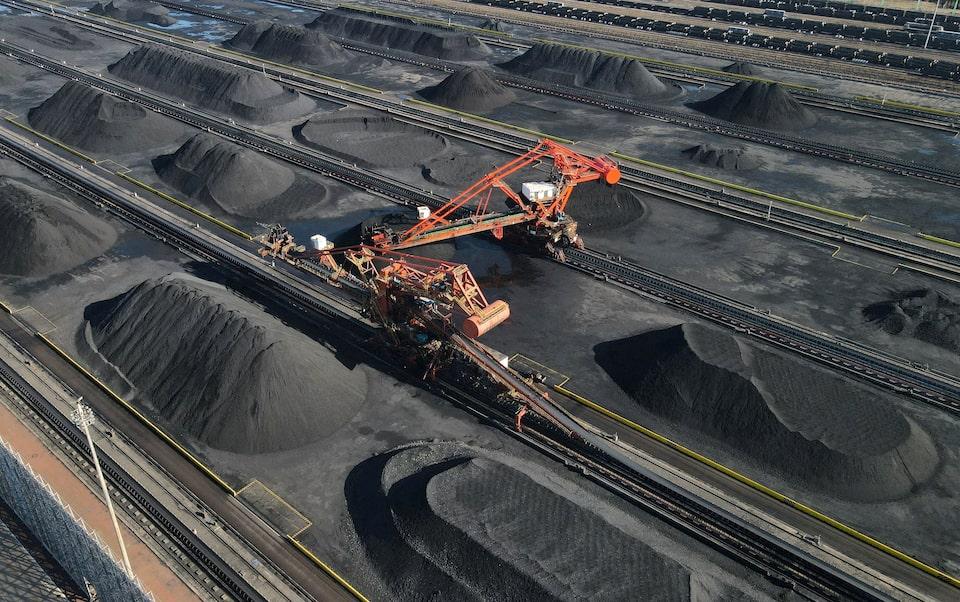
China's coal imports hit record 542.7 million metric tons in 2024 China's imports account for 41% of global coal imports, says LSEG coal markets IEA, Argus forecast Chinese coal imports will shrink in near future SINGAPORE/BEIJING, Jan 16 (Reuters) - China, the world's biggest coal consumer, extended its lead in imports over No. 2 buyer India last year to the widest since at least 2013, customs data shows, cementing its hold on global coal markets and helping to curb a slide in prices. Global thermal coal prices have retreated from record highs hit after Russia's 2022 invasion of Ukraine, but are 50% higher than the average during the 2017-19 period, according to the International Energy Agency (IEA). "China's appetite is causing prices to remain in the current range. If not, prices will really go down," Ramli Ahmad, president director at Indonesian miner Ombilin Energi, told Reuters. Chinese coal imports hit a record 542.7 million metric tons in 2024, customs data showed, more than double the 250.2 million tons imported by India, expanding what had been a narrowing gap in the four years before the pandemic, when China's lead averaged 26%, customs and shipping data showed. Purchases by China this year translated to a record 41% of global imports, said Toby Hassall, research lead for coal markets at LSEG. While the IEA and information provider Argus expect Chinese coal imports to shrink in the near future, the IEA warned that "Chinese imports have repeatedly come in higher than expected in recent years". Argus said it expects relaxations in stock building requirements for Chinese power plants and coal's decreasing share in power generation to reduce imports of the polluting fuel in 2025, but said volumes would still be close to 2024 levels due to steady demand from industries. CHINA VERSUS INDIA Chinese buyers showed increased preference for foreign coal last year due to discounts to domestic prices, while India's coal production is more competitively priced due to low production costs, industry players said. Both China and India have sought to boost production in order to lower import bills, but frequent mine inspections in China have slowed output growth in the country. Indian imports of thermal coal - a power generation fuel - fell about 3% last year, while in China they rose 13% in the first 11 months of 2024. Coking coal imports by India grew by 4.7% in 2024, according to consultancy Bigmint, while Chinese imports of the fuel used in steelmaking rose 23% in the 11 months ended November, customs data showed, partly due to disruptions from mine accidents in the key producing hub of Shanxi. Indian buyers gravitated towards cheaper Indonesian and South African thermal coal at the expense of Russian and Australian cargoes, Bigmint data showed. "As Russian coal became less price-competitive, countries like Indonesia and South Africa have regained their positions as major suppliers to India," said Vasudev Pamnani, director at India's I-Energy Natural Resources. China boosted procurement of thermal coal from neighbouring Russia and Mongolia in 2024, cutting dependence on top exporter Indonesia. "Any reduction in Chinese demand will likely impact smaller Indonesian suppliers first, before rolling onto other marginal suppliers such as Colombia or South Africa," Argus said in its annual report. Sign up here. https://www.reuters.com/markets/commodities/china-extends-coal-imports-lead-over-india-widest-more-than-decade-2025-01-16/
2025-01-16 23:15
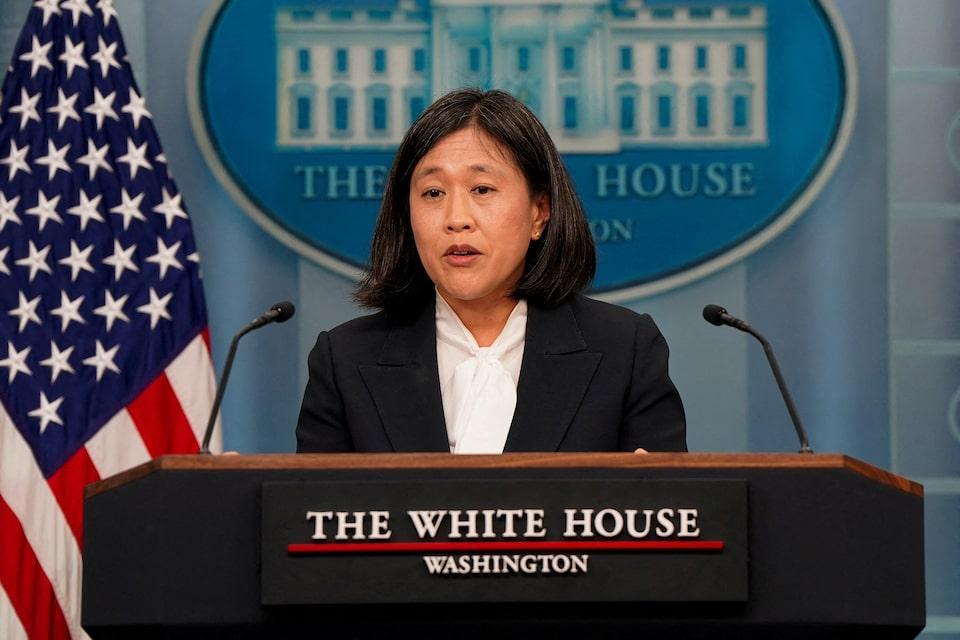
USTR finds China's maritime dominance 'actionable' under US law Trade probe leaves decisions on penalties to Trump administration USTR Tai calls for urgent action to invest in US supply chains WASHINGTON, Jan 16 (Reuters) - The U.S. Trade Representative's office on Thursday said it has found China's targeted dominance of the global shipbuilding, maritime and logistics sectors is "unreasonable" and is "actionable" under U.S. trade law. The findings of a USTR probe, first reported by Reuters on Tuesday, did not include a specific recommendation of penalties against Beijing, leaving next steps up to President-elect Donald Trump, who takes office on Monday. USTR said its report "supports a determination that China's targeting of the maritime, logistics, and shipbuilding sectors for dominance is unreasonable and burdens or restricts U.S. commerce and thus is actionable." China's embassy in Washington said its development in those industries "is the result of technological innovation and active market competition of enterprises, thanks to its complete industrial manufacturing system and huge domestic market." "The U.S. blames China for its own problems, which lacks factual basis and goes against economic common sense," embassy spokesperson Liu Pengyu added. U.S. Trade Representative Katherine Tai launched the probe in April 2024 at the request of the United Steelworkers and four other U.S. unions under Section 301 of the Trade Act of 1974, which allows the U.S. to penalize foreign countries that engage in acts that are "unjustifiable" or "unreasonable," or burden U.S. commerce. Section 301 is the law used by both Trump and President Joe Biden to impose steep tariffs on Chinese imports since 2018. Tai said in a statement that the U.S. commercial shipbuilding sector has fallen to less than five ships a year from 70 in 1975, while China now builds 1,700 ships annually. "Beijing’s targeted dominance of these sectors undermines fair, market-oriented competition, increases economic security risks, and is the greatest barrier to revitalization of U.S. industries, as well as the communities that rely on them," Tai said. "These findings under Section 301 set the stage for urgent action to invest in America and strengthen our supply chains," she said. United Steelworkers International President David McCall welcomed the report as "a firm and undeniable indictment, requiring a swift, decisive response" from the incoming administration and noting Trump had indicated a willingness to hold China accountable. No comment was immediately available from the Trump transition team. The report found that China's effort to dominate the shipbuilding, maritime and logistics sectors is due to Beijing's "extraordinary control" over enterprises in the sector and deprives market-oriented firms of commercial opportunities. This in turn reduces competition and increases dependence on China. The Chinese sectors benefit from China's lack of effective labor rights, excess capacity in steel production and control over digital logistics services, the report found. U.S. Senator Mark Kelly, said the report illustrated the need to revitalize U.S. shipbuilding and maritime industries, including through his legislation to achieve that. "The PRC's unfair trade practices are enabling China's dominance over the oceans, while hurting American workers and our national security," Kelly said, using an acronym for the People's Republic of China. Sign up here. https://www.reuters.com/markets/commodities/us-trade-representative-says-chinas-shipbuilding-sector-hurts-us-is-actionable-2025-01-16/
2025-01-16 23:05
China's Q4 GDP growth seen at 5.0%, vs 4.6% in Q3 2024 growth estimated at 4.9%, largely meeting official target GDP, Dec activity data due 0200 GMT on Friday 2025 outlook clouded by trade tensions as Trump returns Policymakers pledge to ramp up stimulus this year BEIJING, Jan 17 (Reuters) - China's economy likely rebounded in the fourth quarter as several rounds of policy stimulus kicked in, enabling the government to largely meet its 2024 growth target, though the risk of new U.S. tariffs could hold back a broader recovery. A Reuters poll predicts gross domestic product (GDP) grew 5.0% in October-December from a year earlier, quickening from the 4.6% pace in the third quarter. Full-year economic expansion was expected to come in at 4.9%, largely meeting the official target of around 5%, the poll found. The economy grew 5.2% in 2023. Larry Hu, chief China economist at Macquarie, said Beijing's policy pivot in September underscored its resolve to defend the growth target. Beijing has rarely missed its growth targets in the past. "Thanks to this, GDP growth in the fourth-quarter may rebound above 5% year-on-year, so that full-year GDP growth could reach the target of around 5%," Hu said in a note. "If 2025 GDP target is set at around 5% again, how much policymakers will do to stimulate the weak track (consumption/property) will depend on the impact from tariffs on the strong track (exports/manufacturing)." On a quarterly basis, the economy is forecast to grow 1.6% in the fourth quarter, versus the 0.9% pace in July-September. Policymakers have rolled out a blitz of stimulus measures since September, including interest rate cuts, cash injections and steps to tackle hidden debt of local governments. They have also expanded a trade-in scheme for consumer goods such as appliances and autos, helping to revive retail sales. The world's second-biggest economy has struggled for traction since a post-pandemic rebound quickly fizzled out, with a protracted property crisis, mounting local debt and weak consumer demand weighing heavily on activity. Exports, one of the few bright spots, could lose steam as President-elect Donald Trump, who has proposed hefty tariffs on Chinese goods, is set to return to the White House next week. But even as strong exports propelled the country's trade surplus to a record high of $992 billion last year, the yuan currency has come under selling pressure. A dominant dollar, sliding Chinese bond yields and the threat of higher trade barriers have pushed the yuan to 16-month lows. TOUGH BATTLE AHEAD At an agenda-setting meeting in December, Chinese leaders pledged to increase the budget deficit, issue more debt and loosen monetary policy to support economic growth in 2025. Leaders have agreed to maintain an annual growth target of around 5% for this year, backed by a record high budget deficit ratio of 4% and 3 trillion yuan ($409.2 billion) in special treasury bonds, Reuters has reported, citing sources. Such a target could be more ambitious than last year given the economy's slowing trajectory and increased external headwinds. China's economic growth is likely to slow to 4.5% in 2025 and cool further to 4.2% in 2026, according to the poll. The government is expected to unveil growth targets and stimulus plans during the annual parliament meeting in March. China's central bank is expected to deploy its most aggressive monetary tactics in a decade this year as it tries to revive the economy, but in doing so it risks quickly exhausting its firepower. Separate data on December activity, to be released alongside GDP data, is expected to show consumption picked up while factory output growth steadied. Retail sales, a key gauge of consumption, are forecast to grow 3.5% in December from a year earlier, versus a 3.0% rise in November. Factory output is seen growing 5.4% in December year-on-year, matching November's rise. ($1 = 7.3315 Chinese yuan) Sign up here. https://www.reuters.com/markets/asia/china-expected-hit-2024-gdp-target-tariffs-loom-2025-01-16/

2025-01-16 21:47
SAO PAULO, Jan 16 (Reuters) - The final version of the Brazilian tax reform sanctioned on Thursday by Brazil President Luiz Inacio Lula da Silva is slightly higher than the one approved by the lower house before it went to the senate, special secretary for tax reform Bernard Appy said. The final tax rate keeps the essence of the text approved by congress, he said, adding that all vetoes were justified by technical adjustment or a constitutionality question. Estimates from the Ministry of Finance indicate that the standard rate of the new consumption tax will be around 28%, he added. Sign up here. https://www.reuters.com/world/americas/brazil-final-tax-rate-slightly-higher-than-one-approved-by-congress-special-tax-2025-01-16/

2025-01-16 21:46
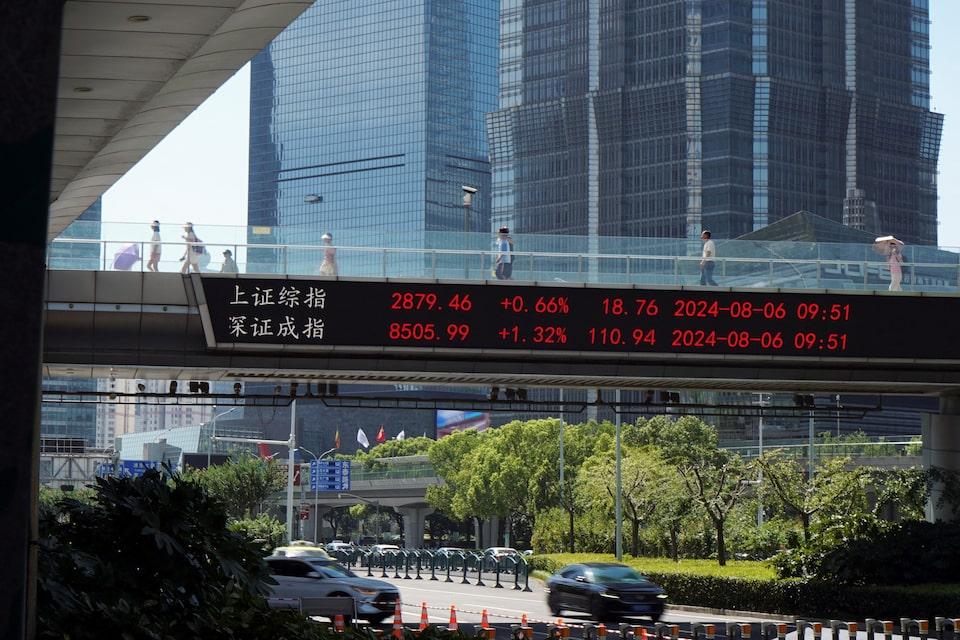
Jan 17 (Reuters) - A look at the day ahead in Asian markets. Relief from the positive U.S. and UK inflation surprises this week appears to have evaporated, at least as far as equity markets are concerned, even as Treasury yields and the dollar continue to drift lower into the last trading day of the week. Asian markets open on Friday against a mixed global backdrop. Yields are softening and Fed Governor Chris Waller on Thursday again signaled his willingness to cut rates, while U.S. bank earnings are beating expectations. But more evidence is needed that the global bond and inflation respite is anything other than temporary, and investors are nervy ahead of U.S. President-elect Donald Trump's inauguration on Monday. Investors in Asia, therefore, could be forgiven for playing safe, minimizing exposure to risky assets ahead of the weekend, especially as it is a three-day break in the U.S. where markets are closed Monday for Martin Luther King Jr. Day. But the monthly Chinese 'data dump' lands on Friday. Beijing releases the December readings of house prices, industrial production, fixed-asset investment and retail sales, all of which will contribute to the big one: fourth-quarter and full-year GDP. Citi's China economic surprises index is currently in positive territory, lifted by the series of policy pledges and market-boosting measures announced since September. But that boost has faded, and the index is its lowest in two months. Could Friday's raft of indicators stop the drift? It's possible that some, like export and new loans data released earlier this week, are on the strong side as businesses and households ramp up activity before tariff-threatening Trump takes office. On the other hand, the wider trend suggests negative surprises are more likely, and it's worth noting that December was characterized by strong capital outflows, sluggish stock markets, and the biggest fall in bond yields since December 2008. Investors will also be keeping an eye on the TikTok saga for signs of how cool or otherwise U.S.-Sino relations are ahead of Trump's return to the White House. The Chinese-owned video app, which is used by more than 170 million Americans monthly, is set to be banned on Sunday under a law mandating that it find a non-Chinese owner. But Trump's incoming national security adviser said on Thursday the new administration will keep TikTok alive in the U.S. if there is a viable deal, in a potential reprieve for the firm. Currency volatility in Asia, meanwhile, is ticking higher after two central bank policy surprises this week from South Korea and Indonesia, and as the Japanese yen rallies strongly ahead of a possible Bank of Japan rate hike next week. Here are key developments that could provide more direction to markets on Friday: - China 'data dump' (December) - China GDP (Q4, full-year 2024) - New Zealand manufacturing PMI (December) Sign up here. https://www.reuters.com/markets/asia/global-markets-view-asia-graphic-2025-01-16/
2025-01-16 21:39
WASHINGTON, Jan 16 - Homeowners in areas most at risk of damage from hurricanes, wildfires and other climate perils pay far more for insurance than those who live in the least exposed areas, according to a U.S. Treasury Department study released on Thursday. The survey found homeowners living in areas most at risk paid an average annual premium of $2,321, 82% higher than those who lived in areas least likely to be hit by damaging weather events. Those living in the riskiest areas also were more likely to be dropped by their insurers, the study of more than 246 million homeowners insurance policies between 2018 and 2022 found. Insurance prices have risen broadly across the United States in recent years, as the industry has grappled with rising construction costs and a rise in extreme weather events linked to rising global temperatures. Climate change is . The Treasury Department study found that average homeowner premiums increased 8.7% faster than the rate of inflation between 2018 and 2022. Wildfires have ravaged large swaths of Los Angeles over the past week, killing at least 25 people and destroying more than 12,000 homes. Analysts estimate as much as $45 billion in insured losses, and insurance premiums are expected to rise in the wake of the disaster. Hurricanes also ravaged wide swaths of the southeastern United States last fall. Previous disasters have thrown state insurance markets into turmoil, with residents of Florida and Louisiana struggling to find affordable coverage. Sign up here. https://www.reuters.com/world/us/us-home-insurance-costs-rose-more-steeply-areas-climate-risk-us-treasury-dept-2025-01-16/