2026-01-04 22:01
Energy storage could be game changer for lithium - analyst says Demand bolstered by China power sector reforms, data centre boom BEIJING/SINGAPORE, Jan 5 (Reuters) - A boom in battery storage has bolstered the demand outlook for lithium in 2026, driving hopes for an accelerated turnaround for an industry struggling with oversupply. The lithium market has been grappling with a supply glut since the second half of 2022, with demand failing to keep pace with surging supply fuelled by a furious price surge that year ignited by an electric vehicle battery boom. Sign up here. But China's power sector reforms helped to fuel stronger than expected demand for lithium used in batteries for power system storage in the second half of 2025, supporting a cautiously optimistic view of prospects for the new year. The data centre building boom in China and globally has also driven growing power storage demand for lithium, said Jinyi Su, a Wuxi-based analyst at consultancy Fubao, adding that rapid growth in lithium demand from energy storage in the second half of 2025 has surpassed expectations. "Looking ahead, energy storage is likely to become a game changer for lithium, improving its fundamentals, but too high a price could undermine the economics of energy storage, keeping a lid on prices," Su said. Battery storage systems have emerged as China's most lucrative clean-tech export, with nearly $66 billion in sales for the first 10 months of 2025, followed by around $54 billion in EV exports. Morgan Stanley forecasts a deficit of 80,000 metric tons of lithium carbonate equivalent (LCE) in 2026, while UBS estimated a deficit of 22,000 tons, compared with an expected surplus of 61,000 tons in 2025. Three other Chinese analysts said they expect a narrower lithium market surplus this year. Global lithium demand will grow by 17% to 30% in 2026 while supply is expected to rise by 19% to 34%, according to a range of forecasts by four analysts, who declined to be identified as they are not authorised to speak to media. Analysts forecast a price range of 80,000-200,000 yuan ($11,432-$28,580) per ton in 2026, versus 58,400-134,500 yuan in 2025. TURNING POINT? Lithium prices continued falling in the first half of 2025, hitting a low for 2025 of 58,400 yuan on June 23, squeezing margins and share prices for miners globally and forcing some to curb output. But Beijing's July pledge to crack down on overcapacity across several sectors including lithium and the August production halt at Chinese battery giant CATL's (300750.SZ) , opens new tab Jianxiawo mine, accounting for around 3% of global supply, sparked a global price surge. Lithium carbonate prices on the Guangzhou Futures Exchange soared by 130% from this year's low to their highest since November 2023 at 134,500 yuan per ton on December 29. Spot prices assessed by information provider Fastmarkets surged by 108% over the same period. Lithium demand for energy storage is expected to grow by 55% in 2026, following a jump of 71% in 2025, according to a Reuters calculation based on UBS data. Broker Guotai Junan projected lithium carbonate equivalent demand from energy storage will account for 31% of overall consumption in 2026, up from 23% in 2025, eating into market share dominated by electric vehicle batteries. But a potentially quicker-than-expected migration to sodium-ion battery technology for storage systems as well as slowing EV sales could reduce demand, while supply growth will limit the price upside, said analysts. In December, the head of China's passenger car association warned of a slump in first quarter lithium battery demand, partly from an expected drop in EV sales as tax incentives are phased out. ($1 = 6.9980 Chinese yuan) https://www.reuters.com/sustainability/climate-energy/energy-storage-boom-strengthens-demand-outlook-beaten-down-lithium-2026-01-04/

2026-01-04 19:47
PDVSA's move includes shutting down oilfields, well clusters as onshore stocks mount Petrolera Sinovensa preparing to disconnect up to 10 clusters Chevron's joint ventures asked to cut, but no reductions applied yet More than 17 million barrels of oil remain stuck in ships Jan 4 (Reuters) - Venezuela's state-run oil company PDVSA has begun cutting crude production because it is running out of storage capacity due to an ongoing U.S. oil blockade that has reduced exports to zero, piling more pressure on an interim government trying to hang on to power in the face of U.S. threats of more military action. Caracas is in political crisis under an interim government after President Nicolas Maduro and his wife were captured by U.S. forces on Saturday. The OPEC country's oil exports, its main source of revenue, are now at a standstill following a U.S. blockade on tankers under sanctions and the seizure of two oil cargoes last month. Sign up here. Chevron's (CVX.N) , opens new tab cargoes bound for the U.S. had been an exception, continuing to move, because the company has a license from Washington for its operations. But even those have stopped since Thursday, shipping data showed on Sunday. As part of his announcement of Maduro's detention and a government transition overseen by the U.S., President Donald Trump said on Saturday that an "oil embargo" on the country was in full force. PDVSA's move includes shutting down oilfields or well clusters as onshore stocks mount and the company runs out of diluents to blend Venezuela's heavy crude for shipment. The company requested output cuts to joint ventures including China National Petroleum Corporation's (CNPC) Petrolera Sinovensa, Chevron's Petropiar and Petroboscan and Petromonagas, the sources said. Petromangas, previously operated by PDVSA and Russian state-run Roszarubezhneft, is being run solely by PDVSA. PDVSA and CNPC did not immediately reply to requests for comment. Chevron said on Sunday it continues to operate "in full compliance with all relevant laws and regulations," without providing details. Workers at Sinovensa on Sunday were preparing to disconnect up to 10 well clusters at PDVSA's request, one of the sources said, after an over-accumulation of extra heavy crude and a diluents shortage. However, the wells could be quickly reconnected in the future, the person added. A portion of Sinovensa's oil output is typically delivered to China as debt service payment. But two China-flagged supertankers that were approaching Venezuela to load oil stopped at the end of December, LSEG shipping data showed. At Petromonagas, workers began reducing output late last week until diluent supplies through pipeline resume, another source said. On its side, Chevron has not cut product output yet as it has some room to keep storing, particularly at Petropiar, and tankers have not stopped loading. However, its vessels have not left the country's waters since Thursday and storage capacity is limited at Petroboscan, which could ultimately lead to cuts, another source said. DOMINO EFFECT Even though its infrastructure was not targeted by U.S. strikes on the weekend, PDVSA is struggling to keep operations running amid the U.S. pressure. On top of the ship blockade and forced price discounts in consequence, the company has not fully recovered systems from a cyberattack in December, workers said. Crude production cut backs, which could have a domino effect on other operations including refining and domestic fuel supply, are bad news for an interim government that will need revenue to remain in power and secure domestic stability. Venezuela's oil minister Delcy Rodriguez, who is now Venezuela's interim president, said last month the country would continue producing and exporting oil despite the U.S. measures. But the U.S. pressure has forced PDVSA to store oil in vessels since late December and slow down cargo deliveries at its main port, Jose. If loaded tankers cannot depart, company executives and experts view more output cuts as unavoidable. After filling more than 45% of its 48-million-barrel onshore storage capacity and sending fuel oil to open-air waste pools, PDVSA two weeks ago began loading tankers with crude and fuel as floating storage. There are now more than 17 million barrels in ships waiting to depart, according to TankerTrackers.com. No tankers were docked on Sunday at Jose to load either for export or domestic supply, TankerTrackers.com added. The company, which in the second half last year ramped up imports of much needed naphtha and light oil to dilute its extra heavy crude output, in December began having problems receiving cargoes from Russia amid the U.S. blockade. Venezuela produced about 1.1 million barrels per day (bpd) of oil in November and exported 950,000 bpd that month, but the U.S. measures knocked shipments down to around 500,000 bpd last month, according to preliminary figures based on ship movements. https://www.reuters.com/business/energy/venezuelas-pdvsa-asks-some-joint-ventures-cut-back-oil-output-sources-say-2026-01-04/
2026-01-04 19:25
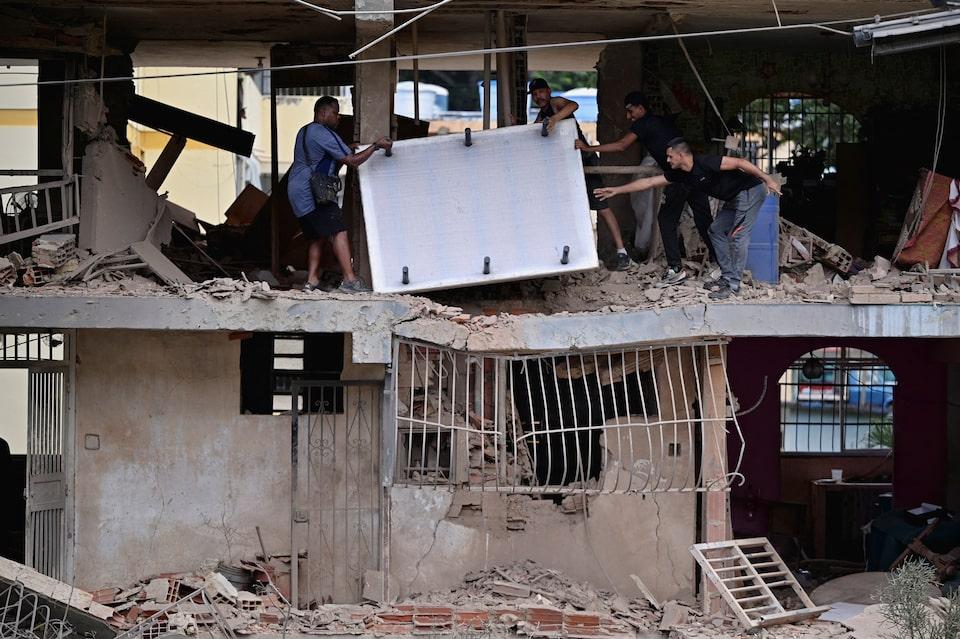
Jan 4 (Reuters) - Some homes in the town of Catia La Mar near Venezuela’s capital Caracas were damaged or destroyed in the U.S. military operation that captured President Nicolas Maduro, residents told Reuters on Sunday, while officials reported an unspecified number of deaths. Jonatan Mallora, a 50-year-old motorcycle taxi driver, and his neighbor Angel Alvarez, a young street vendor, said they woke on Saturday to explosions in their community in La Guaira state, about 31 kilometers (19 miles) north of Caracas. Sign up here. Venezuelan authorities have said the U.S. hit areas in La Guaira, Caracas and the neighboring states of Miranda and Aragua and that soldiers, civilians and much of Maduro's security team were killed, though they have not offered specific figures on dead and injured. The small Romulo Gallegos neighborhood, where Mallora and Alvarez live, was damaged in the U.S. attack on a nearby naval academy. “It's sheer luck they didn't kill my kids,” Mallora said amid the rubble of his apartment, where the roof was destroyed. He said he fled and escaped unharmed along with his 24-year-old daughter and 22-year-old son. Alvarez surveyed shrapnel damage to his apartment wall and water tank — vital in a country where water supply is unreliable. He said he was relieved to have a spare tank and his home remained standing, unlike Mallora's. “We really didn’t know what to do,” Alvarez said, recalling how he ran back and forth after waking to the deafening noise. “I would never wish on anyone" the experience of an attack, he added. “We’re alive by a miracle.” https://www.reuters.com/world/americas/venezuelan-houses-destroyed-us-attack-no-official-figures-deaths-2026-01-04/
2026-01-04 19:14
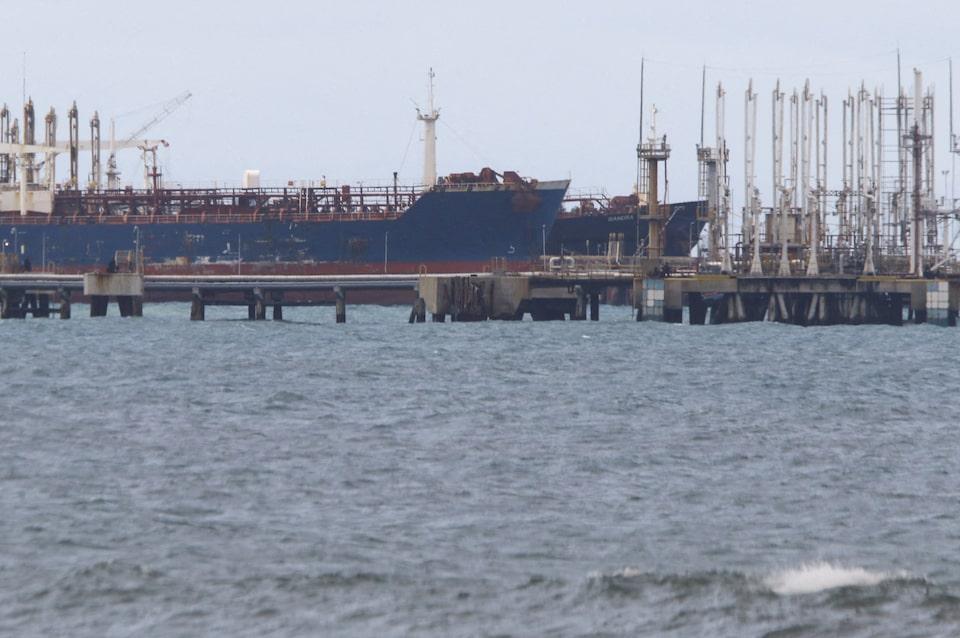
US to take control of Venezuela, oil embargo in full effect, Trump said Venezuelan oil exports halted since early-Jan due to embargo State oil firm PDVSA begins output cuts as storage fills OPEC+ to maintain oil output policy SINGAPORE, Jan 4 (Reuters) - Oil prices are likely to move higher when benchmark futures resume trading later on Sunday on concern that supply may be disrupted after the United States snatched Venezuelan President Nicolas Maduro from Caracas at the weekend and President Donald Trump said Washington would take control of the oil-producing nation. There is plentiful oil supply in global markets, meaning any further disruption to Venezuela's exports would have little immediate impact on prices, analysts said. Sign up here. The U.S. strike on Venezuela to extract the country's president inflicted no damage on the country's oil production and refining industry, two sources with knowledge of operations at state oil company PDVSA said at the weekend. Since Trump imposed a blockade of sanctioned oil tankers entering or leaving Venezuelan waters and seized two cargoes last month, exports have fallen and have been completely paralysed since January 1. That has left millions of barrels stuck on loaded tankers in Venezuelan waters and led to millions more barrels going into Venezuelan oil storage. The OPEC member's exports fell to around 500,000 barrels per day in December, around half of what they were in November. Most of the December exports took place before the embargo. Since then, only exports from Chevron of around 100,000 bpd have continued to leave Venezuela. The global oil major has U.S. authorisation to produce and export from Venezuela despite sanctions. The embargo prompted PDVSA to begin cutting oil output, three sources close to the decision said on Sunday, because Venezuela is running out of storage capacity for the oil that it cannot export. PDVSA has asked some of the joint ventures that are operating in the country to cut back production, the sources said. They would need to shut down oilfields or well clusters. Trump said on Saturday that the oil embargo on Venezuelan exports remained in full effect. If the U.S. government loosens the embargo and allows more Venezuelan crude exports to the U.S. Gulf, there are refiners there that previously processed the country's oil. The weekend's events were unlikely to materially alter global oil markets or the global economy given the U.S. strikes avoided Venezuela's oil infrastructure, said Neil Shearing, group chief economist at Capital Economics. "In any case, any short-term disruption to Venezuelan output can easily be offset by increased production elsewhere. And any medium-term recovery in Venezuelan supply would be dwarfed by shifts among the major producers," he said in a note. Trump also threatened on Friday to intervene in a crackdown on protests in Iran, another OPEC producer, ratcheting up geopolitical tensions. Trump on Friday said "we are and ready to go", without specifying what actions he was considering against Tehran, which has seen a week of unrest as protests over soaring inflation spread across the country. "Prices may see modest upside on heightened geopolitical tensions and disruption risks linked to Venezuela and Iran, but ample global supply should continue to cap those risks for now," said Ole Hansen, head of commodities research at Saxo Bank. On Sunday, the Organization of the Petroleum Exporting Countries and their allies agreed to maintain steady oil output in the first quarter, OPEC+ said in a statement. Both Venezuela and Iran are members of OPEC. Several other members of OPEC+ are also embroiled in conflict and political crises. The producer group has put increases in production on pause for the first quarter after raising output targets by around 2.9 million barrels per day from April to December 2025, equal to almost 3% of world oil demand. Brent and U.S. crude futures settled lower on Friday, the first day of trading of 2026, as investors weighed oversupply concerns against geopolitical risks. Both contracts closed 2025 with their biggest annual loss since 2020 marked by wars, higher tariffs, increased OPEC+ output and sanctions on Russia, Iran and Venezuela. VENEZUELA "The political transition in Venezuela adds another major layer of uncertainty, with elevated risks of civil unrest and near-term supply disruptions," said Jorge Leon, head of geopolitical analysis at consultancy Rystad Energy and a former OPEC official. "In an environment this fragile, OPEC+ is choosing caution, preserving flexibility rather than introducing new uncertainty into an already volatile market." Trump said on Saturday that the U.S. would control the country until it could make an orderly transition, but an interim government led by vice president and oil minister remains in control of the country's institutions, including state energy company PDVSA, with the blessing of Venezuela's top court. A top Venezuelan official said on Sunday that the country's government would stay unified behind Maduro amid deep uncertainty about what is next for the Latin American country. Trump said that American oil companies were prepared to reenter Venezuela and invest billions of dollars to restore production there. Venezuela is unlikely to see any meaningful boost to crude output for years even if U.S. oil majors do invest the billions of dollars in the country that Trump has promised, analysts said. "We continue to caution market observers that it will be a long road back for the country, given its decades-long decline under the Chávez and Maduro regimes, as well as the fact that the U.S. regime change track record is not one of unambiguous success," Helima Croft, RBC Capital's head of commodities research, said in a note. https://www.reuters.com/business/energy/oil-prices-likely-move-higher-venezuelan-turmoil-ample-supply-cap-gains-2026-01-04/
2026-01-04 16:11
FRANKFURT, Jan 4 (Reuters) - A fire in southwest Berlin that has left tens of thousands in the German capital without electricity was likely the result of a far-left extremist attack, officials said on Sunday. Grid company Stromnetz Berlin said on Saturday that the suspected arson attack could leave up to 45,000 households without power until January 8. Sign up here. On Sunday, it said efforts to restore power were ongoing, with around 35,000 households and 1,900 commercial entities still affected. Following the attack, local media published a letter purportedly from a far-left activist organisation called the Volcano Group that claimed responsibility for the incident, saying its actions were directed at the fossil-fuel based energy industry. "The letter claiming responsibility has been classified as authentic by the security authorities," Iris Spranger, Berlin's interior affairs minister, said in a post on x. "I condemn this inhumane attack on Berliners and visitors to the city in the strongest possible terms. The investigation is ongoing." In September, a suspected arson attack on two pylons left around 50,000 households in Berlin without power in an incident local media said bore similarities to Volcano Group's high-profile attack on the power supply of Tesla's (TSLA.O) , opens new tab gigafactory in Gruenheide in 2024. https://www.reuters.com/business/energy/berlin-power-grid-attack-caused-by-extreme-leftists-officials-say-2026-01-04/

2026-01-04 15:38
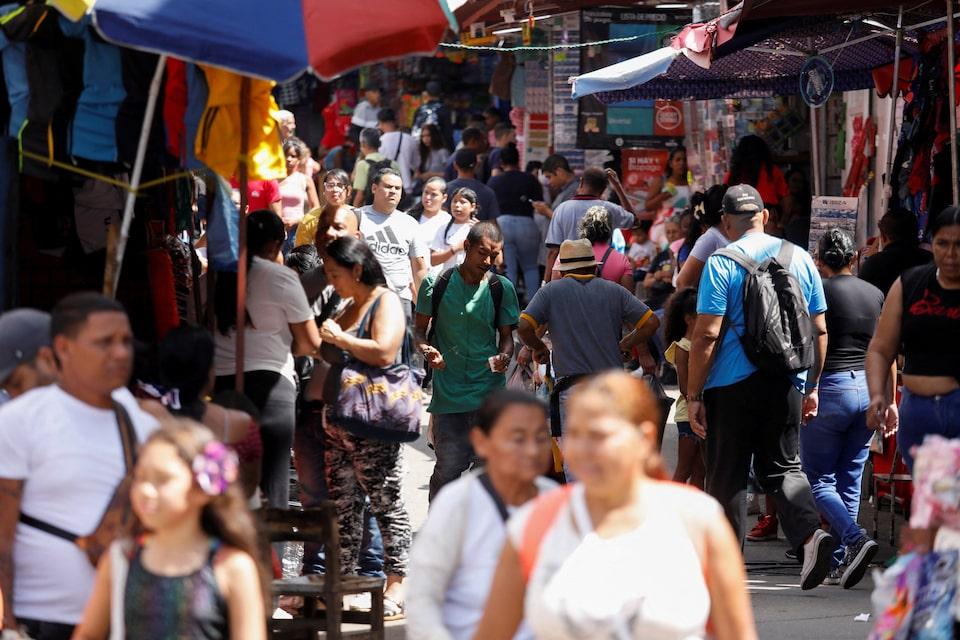
NEW YORK/LONDON, Jan 4 (Reuters) - The toppling of President Nicolas Maduro has thrust Venezuela's debt crisis - one of the world's largest unresolved sovereign defaults - into the limelight. Following years of economic crisis and U.S. sanctions that severed the country from international capital markets, Venezuela defaulted in late 2017 after missing payments on international bonds issued by the government and state oil company, Petroleos de Venezuela, known as PDVSA. Sign up here. Since then, accumulated interest and legal claims tied to past expropriations have added to unpaid principal, swelling total external liabilities far beyond the face value of the original bonds. Venezuela's distressed debt has rallied since U.S. President Donald Trump came to power in January 2025 as speculators bet on the possibility of political change. Below is a look at which entities owe money, what could be included in a restructuring and who might be knocking on Caracas' door to collect. HOW MUCH DOES VENEZUELA OWE? Analysts estimate that Venezuela has about $60 billion of defaulted bonds outstanding. However, total external debt including PDVSA obligations, bilateral loans and arbitration awards stand at roughly $150-$170 billion, depending on how accrued interest and court judgments are counted, according to analysts. The International Monetary Fund estimates Venezuela's nominal GDP at about $82.8 billion for 2025, implying a debt-to-GDP ratio of between 180%-200%. A PDVSA bond originally maturing in 2020 was secured by a majority stake in U.S.-based refiner Citgo, which is ultimately owned by Caracas-headquartered PDVSA. Citgo is an asset now at the center of court-supervised efforts by creditors to recover value. WHO HOLDS WHAT? Years of sanctions, including a prohibition on trading Venezuela’s debt, have made it hard to keep tabs on ownership. The largest share of commercial creditors likely consists of international bondholders, including specialist distressed-debt investors, sometimes called vulture funds. Among the creditors is a group of companies awarded compensation through international arbitration after assets were expropriated by Caracas. U.S. courts have upheld multi-billion-dollar awards to ConocoPhillips and Crystallex among others, turning those claims into debt obligations and allowing creditors to pursue Venezuelan assets to make themselves whole. A growing pool of court-recognized claimants is competing for recovery from Citgo’s parent company through U.S. legal proceedings. A Delaware court registered about $19 billion in claims for the auction of PDV Holding, Citgo's parent, which far exceeds the estimated value of Citgo's total assets. PDV Holding is PDVSA’s wholly-owned subsidiary. Caracas also has bilateral creditors, primarily China and Russia, which extended loans to both Maduro and his mentor, former president Hugo Chavez. Precise numbers are hard to verify since Venezuela has not published comprehensive debt statistics in years. A DISTANT RESTRUCTURING? Given the plethora of claims, legal proceedings and political uncertainty, a formal restructuring is expected to be complex and lengthy. A sovereign debt workout could be anchored by an IMF program setting fiscal targets and debt-sustainability assumptions. However, Venezuela has not had an IMF annual consultation in nearly two decades and remains locked out of the lender’s financing. U.S. sanctions are another obstacle. Since 2017, restrictions imposed under both Republican and Democratic administrations have sharply limited Venezuela's ability to issue or restructure debt without explicit licenses from the U.S. Treasury. It is unclear what will happen with U.S. sanctions. For now, President Donald Trump has said the U.S. will "run" the oil-producing nation. WHAT ARE RECOVERY VALUES? Bonds have returned some 95% at the index level in 2025. Many of them currently trade between 27-32 cents on the dollar, MarketAxess data shows. Citigroup analysts in November estimated that a principal haircut of at least 50% would be needed to restore debt sustainability and satisfy potential conditions from the IMF. Under Citi’s base case, Venezuela could offer creditors a 20-year bond with a coupon of around 4.4%, alongside a 10-year zero-coupon note to compensate for past-due interest. Using an exit yield of 11%, Citi estimates the net present value of the package in the mid-40s cents on the dollar, with recoveries potentially rising into the high-40s if Venezuela were to hand out additional contingent instruments such as oil-linked warrants. Other investors sketch a wider range. Aberdeen Investments said in September it had initially assumed recoveries of around 25 cents on the dollar for Venezuelan bonds, but that improved political and sanctions scenarios could lift recoveries into the low-to-mid-30s, depending on the structure of any deal and the use of oil-linked or GDP-style instruments. WHAT IS VENEZUELA'S ECONOMIC SITUATION? Recovery assumptions sit against a grim backdrop. Venezuela’s economy shrank dramatically after 2013 when oil production fell off a cliff, inflation spiraled and poverty surged. Although output has stabilized somewhat, lower global oil prices and discounts to Venezuela's crude prices limit revenue gains, leaving little room to service debt without deep restructuring. The recent U.S. blockade of sanctioned oil tankers has exacerbated the situation. Trump said American oil companies were prepared to tackle the difficult task of entering Venezuela and investing to restore production but details and timelines remain unclear. Chevron is the only American major currently operating in Venezuela's oil fields. https://www.reuters.com/world/americas/venezuelas-billions-distressed-debt-who-is-line-collect-2026-01-04/