2025-01-16 21:01
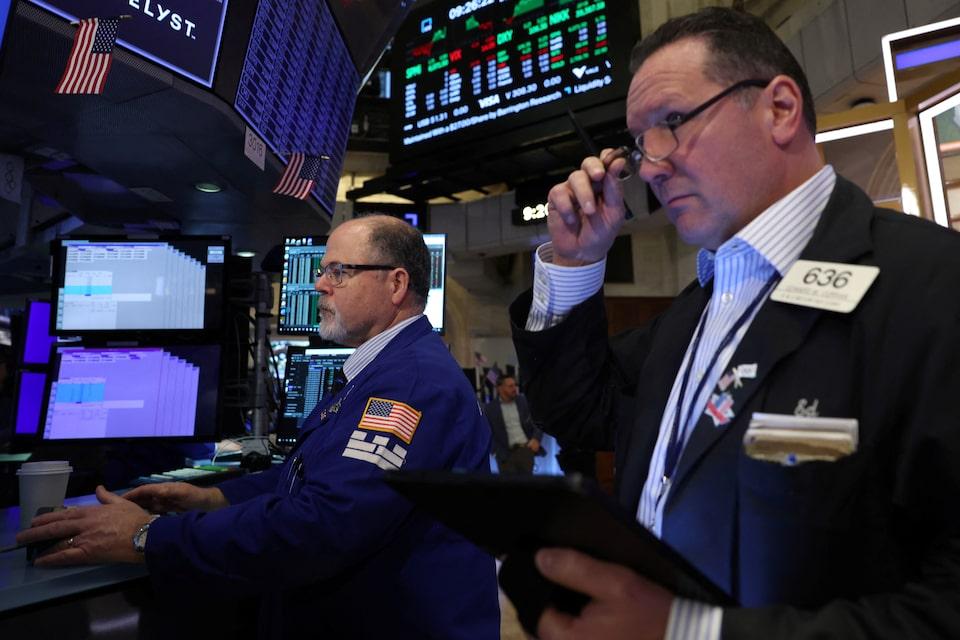
Morgan Stanley up after higher Q4 profits UnitedHealth falls on missing quarterly sales estimates Investors parse retail sales, jobless claims data Indexes off: Dow 0.16%, S&P 0.21%, Nasdaq 0.89% NEW YORK, Jan 16 (Reuters) - U.S. stocks dipped on Thursday as a jump in the prior session cooled, while investors eyed the most recent corporate earnings and gauged economic data to determine the path of Federal Reserve rate cuts. A benign reading on inflation calmed fears about a renewal in price pressures and strong bank earnings helped the three major U.S. indexes notch their biggest one-day percentage gain since Nov. 6 on Wednesday. But stocks swayed between modest gains and losses on Thursday after economic data on Thursday indicated consumer spending remains strong, while the labor market is also on solid footing, giving the Fed room to maintain a slow pace in cutting interest rates this year. "The market breathed a pretty good sigh of relief yesterday. Now January's undecided, but at least on a little bit better footing to see where we end up, and we can look at some more data and some earnings and see how that's all going to turn out," said Rick Pitcairn, chief global strategist at Philadelphia-based Pitcairn. "The bank earnings have been strong, and those are bellwether earnings, and to the extent that you've got a steepening yield curve, you've got some strong earnings come out of the banks, they're looking forward and not talking their numbers down. The market's taken a little courage from that." Morgan Stanley (MS.N) , opens new tab advanced 4.03% after the lender said earnings increased in the fourth quarter, propelled by a wave of dealmaking, while Bank of America (BAC.N) , opens new tab shares declined 0.98%. The country's second-largest bank predicted higher interest income in 2025. The Dow Jones Industrial Average (.DJI) , opens new tab fell 68.42 points, or 0.16%, to 43,153.13, the S&P 500 (.SPX) , opens new tab lost 12.57 points, or 0.21%, to 5,937.34 and the Nasdaq Composite (.IXIC) , opens new tab lost 172.94 points, or 0.89%, to 19,338.29. Investors also focused on comments from Fed Governor Christopher Waller, who said the central bank could cut rates sooner and faster than expected as inflation is likely to continue to ease, which helped push Treasury yields lower. The yield on the 10-year Treasury note was last down 3.8 basis points (bps) to 4.615% and rate futures were pricing in a greater chance for the Fed to cut rates by at least 25 bps at the central bank's May meeting. Stocks have struggled following a post-U.S. election rally, with the S&P 500 falling in four of the previous five weeks, but are on pace currently for a weekly gain. A resilient economy, nagging inflation and comments from Federal Reserve policymakers have fanned worries about the central bank being less aggressive in cutting interest rates than previously anticipated. Concerns linger about potential tariffs from President-elect Donald Trump, scheduled to take office on Monday, that would further stoke inflation. Trump's pick for Treasury Secretary, Scott Bessent, said the dollar should remain the world's reserve currency, the Federal Reserve should stay independent, and that he is ready to impose tougher sanctions on Russia's oil sector, while warning of an "economic calamity" if Trump's 2017 tax cuts expired at the end of this year. UnitedHealth (UNH.N) , opens new tab fell and weighed heavily on the Dow, accounting for just over 201 points to the downside after the health insurer reported fourth-quarter revenue below estimates. The Nasdaq was dragged lower in part by a 4.04% drop in Apple (AAPL.O) , opens new tab after data from research firm Canalys showed the iPhone maker was overtaken as China's biggest smartphone seller in 2024 by rivals Vivo and Huawei. Advancing issues outnumbered decliners by a 1.81-to-1 ratio on the NYSE, and by a 1.07-to-1 ratio on the Nasdaq. The S&P 500 posted 21 new 52-week highs and nine new lows, while the Nasdaq Composite recorded 58 new highs and 101 new lows. Volume on U.S. exchanges was 14.31 billion shares, compared with the 15.75 billion average for the full session over the last 20 trading days. Sign up here. https://www.reuters.com/markets/us/futures-inch-up-ahead-more-bank-earnings-economic-data-2025-01-16/
2025-01-16 20:53
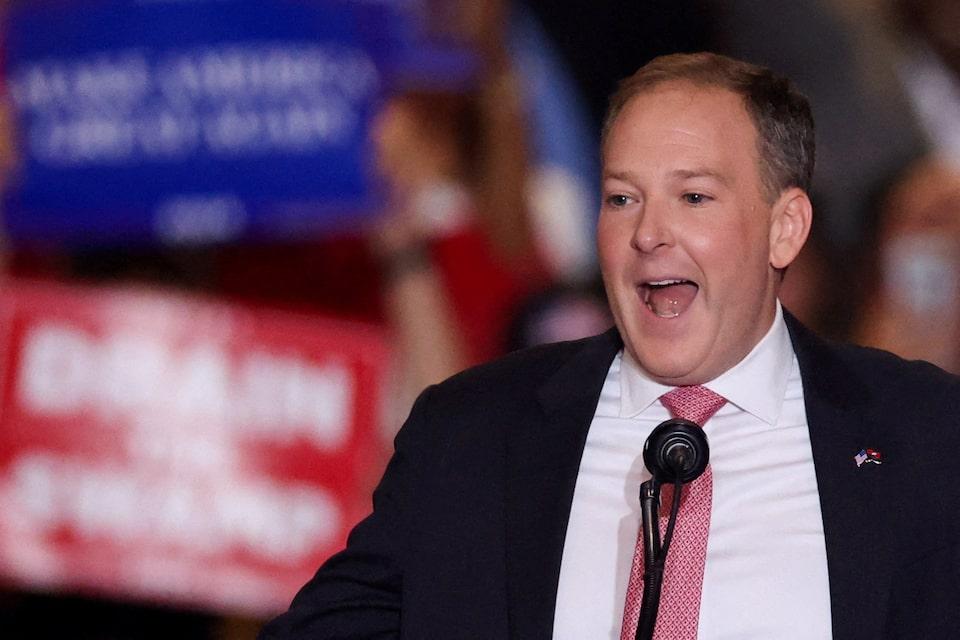
Zeldin says climate change is real Zeldin says EPA has authority to regulate CO2 but not an obligation Zeldin denies that industry will influence his EPA's rules WASHINGTON, Jan 16 (Reuters) - U.S. President-elect Donald Trump's pick to lead the Environmental Protection Agency on Thursday said he believes climate change is real and a threat but that the agency he is poised to oversee is just authorized, not required, to regulate carbon dioxide emissions. Former New York Congressman Lee Zeldin, speaking at his Senate confirmation hearing, said a 2007 decision by the Supreme Court gave the agency statutory authority to regulate the heat-trapping greenhouse gas but did not obligate the EPA to take action. Zeldin told the hearing that he believes climate change is real, a departure from his predecessors who led the EPA during the first Trump administration from 2017 to 2020 and from Trump himself, who has repeatedly called climate change a hoax. "I believe that climate change is real," he told the committee, but did not respond directly to questions about whether the U.S. needs to reduce its reliance on fossil fuels, a major driver of carbon emissions. The outgoing administration of President Joe Biden had prioritized climate policies and tied them to economic growth and job creation. Trump has vowed to roll back the Biden administration's climate-focused agenda, including EPA regulations aimed at slashing carbon dioxide, methane and other emissions from cars, power plants and other industrial sources. Zeldin said he favored an approach that favors all energy sources and stressed in his opening statement that the incoming administration has a mandate from American voters to protect the environment, but without harming economic growth. "The American people elected President Trump last November in part due to serious concerns about upward economic mobility and their struggle to make ends meet," Zeldin said. "We can, and we must, protect our precious environment without suffocating the economy." Zeldin touted his record focusing on protecting the Long Island Sound as well as his support for bipartisan legislation to clean up ocean plastic. The Republican, who represented a section of New York's Long Island, often voted against legislation on green issues including a measure to stop oil companies from price gouging. In his final year in Congress in 2022, Zeldin earned a 5% rating by the League of Conservation Voters scorecard that tracks the voting records of members of Congress on environmental issues. Throughout the hearing, Democratic senators pressed Zeldin on climate change and sought assurances that he would not cave in to pressure from fossil fuel and other industry groups that want to ease regulations on air and water. Watchdog groups have flagged that Zeldin's consulting firm had been paid to write op-eds on environmental policies for fossil fuel companies and interests. Zeldin rejected the suggestion that he could be influenced by special interests. "There is no person who has every provided any level of support to me...who has any special influence with me," he said. One of the top targets of industry groups and Trump is the EPA's clean vehicle rules, which aim to cut tailpipe emissions by 50% from 2026 levels by 2032 and encourage the shift to more electric vehicles, as well as the agency's approval of California's even stricter clean car mandate. When asked whether he would move to rescind those rules, Zeldin said it was too early to say. "I plan on following my obligations under the law to ensure that throughout my tenure, if confirmed as EPA Administrator, that I never prejudge outcomes heading into that process," he said. Sign up here. https://www.reuters.com/world/us/trumps-pick-lead-epa-says-agency-not-required-regulate-carbon-emissions-2025-01-16/
2025-01-16 20:51
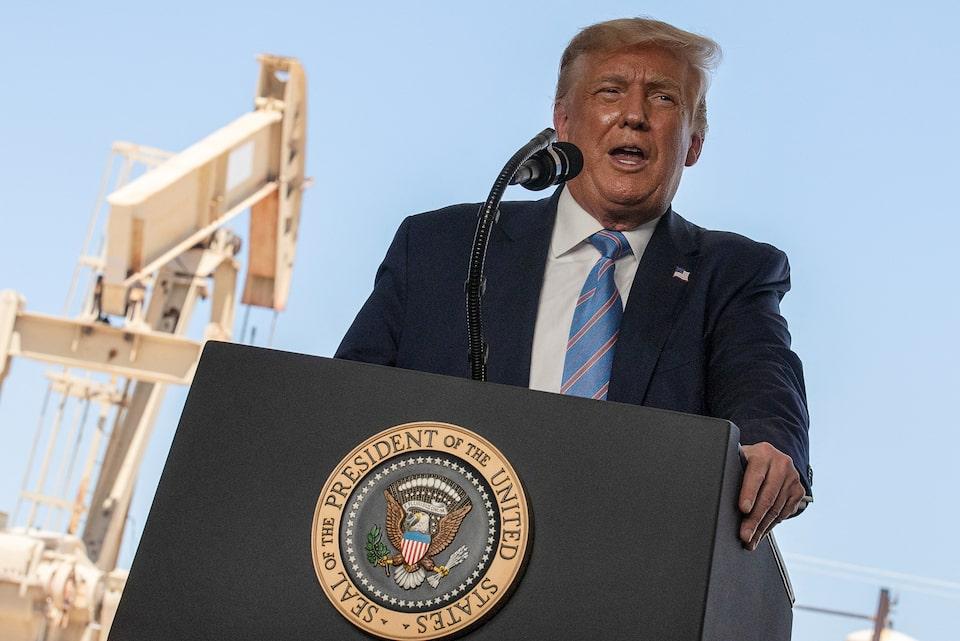
Risk of bond vigilantes returning if Trump's policies misfire, some experts say U.S. debt-to-GDP ratio nearing 100%, raising market concerns Trump adviser Laffer says focus is on growth, not deficits Former Treasury Secretary Rubin: risk bond market could force Trump's hand NEW YORK/LONDON, Jan 16 (Reuters) - When Bill Clinton began his first term as president in 1993, he faced a challenge to his authority from an unexpected adversary: bond traders. Low taxes and high defense spending over the prior decade had contributed to U.S. debt doubling as a share of economic output. Clinton and his advisers worried that 'bond vigilantes' – so called because they punish governments' profligacy – would target the new Democratic administration. A run on U.S. Treasury bonds, they feared, could sharply raise borrowing costs, hurting growth and jeopardizing financial stability. A frustrated Clinton was forced to make the unpopular decision to raise taxes and cut spending to balance the budget. "He went away pretty disgusted with the idea that here he had just won an election by a pretty nice margin in a difficult three-way race, and now he was subservient to a bunch of bond traders," said Alan Blinder, one of Clinton's closest economic counselors who later served as the vice chair of the Federal Reserve. "A lot of us are wondering if the bond market vigilantes are going to come back for a second chapter." As Donald Trump takes office on January 20, concerns over bond vigilantes in the United States , opens new tab have resurfaced, according to several market experts. And this time, the economic indicators are even more alarming, they said. The U.S. debt-to-GDP ratio is pushing 100%, double the level in Clinton's time. Left unchecked, by 2027 it's projected to exceed the records set after World War II, when the government borrowed heavily to fund the war effort. Bond yields, which move inversely to prices, have been climbing. The yield on 10-year U.S. Treasury bonds has risen more than a percentage point from a September low, a whopping increase for a measure where even hundredths of a percent matter. Like Clinton before him, Trump now faces the prospect of bond vigilantes becoming a potent check on his policy agenda, according to several former U.S. and foreign policymakers who faced market turmoil while in office. Reuters interviewed nearly two dozen policymakers, economists and investors – including Trump advisers, a former Italian prime minister and former Greek and British finance ministers – and examined bouts of bond market routs around the world since the 1980s to assess the risk of turbulence after Trump takes office. The review found several indicators watched by bond traders are flashing red. U.S. federal debt has increased to more than $28 trillion, from less than $20 trillion when Trump took office in 2017. Debt is also piling up in other countries, with the world’s total public debt expected to cross $100 trillion for the first time in 2024, leaving investors nervous. "There's a risk of the bond vigilantes stepping up," said Matt Eagan, portfolio manager at Loomis Sayles, a fund manager with $389 billion under management. "The unanswerable question is when that would occur." The experts believe Trump has some cover, thanks to the dollar's status as the global reserve currency and the Fed's now well-established ability to intervene in markets in moments of crises, which means there are always buyers of U.S. debt. Other nations may be at more imminent risk, partly because of worries that Trump's trade policies would dampen their growth, the experts said. Some of Europe's biggest economies, including Britain and France, have come under pressure in bond markets recently. The Reuters analysis of past crises showed it's hard to predict what will spark a bond market selloff. Part of the problem is market signals are open to interpretation. But once panic sets in, conditions can quickly spiral out of control, often requiring sizable intervention to re-establish stability. Robert Rubin, Clinton's Treasury Secretary and a former co-chairman of Goldman Sachs, said the bond market "could very quickly make it very difficult" for Trump to do what he wants if a steep rise in interest rates triggered a recession or financial crisis. "Unsound conditions can continue for a long time until they correct, rapidly and savagely. When the tipping point might come, I have no idea," he said. Trump has said he wants to lower taxes and stimulate economic growth, but many of the policymakers, economists and investors who spoke to Reuters viewed with skepticism his promises for draconian cuts to government spending and pay for his plan with trade tariffs. Combined with worries that Trump might weaken U.S. institutions like the Fed, these people said, the Republican's policies could provoke a violent market reaction that would force him to reverse course. Stephen Moore, a longtime Trump economic adviser, singled out the risk of "massive tariffs" that could harm global growth as one possible trigger. Anna Kelly, a spokesperson for Trump's transition team, said in a statement: "The American people re-elected President Trump by a resounding margin, giving him a mandate to implement the promises he made on the campaign trail, and he will deliver by ushering in a new Golden Age of American Success on day one." She did not answer specific questions about current bond market conditions and the risk of a flare-up from Trump's plans. BETTING ON TAX CUTS Economist Ed Yardeni, who coined the term bond vigilantes, said Trump had bought some time by promising to cut spending and naming market-savvy people to his team such as his Treasury Secretary pick, Scott Bessent, a long-time hedge fund manager familiar with debt markets. Such people could play the same role that Rubin did for Clinton, Yardeni said, "in making him realize that whatever he does, it's got to come out as relatively fiscally conservative on balance." Bessent did not respond to requests for comment for this story. In June, he said he'd urge Trump to slash the federal deficit to 3% of economic output by the end of his term, from 6.4% last year. Testifying at his confirmation hearing in Congress on Thursday, Bessent praised Trump's 2017 tax cuts but said the federal government "has a significant spending problem" and lamented the high deficit, which he said meant there was less capacity to borrow heavily to combat a crisis. "With this amount of debt, it’s a very fragile equilibrium that we sell bonds in," Bessent told the hearing, saying he would want to survey market participants before taking any steps to eliminate the U.S. debt ceiling, which Trump had called for in December. "The United States is not going to default on its debt if I'm confirmed." However, another long-time economic adviser to Trump, the economist Arthur Laffer, said the budget deficit is not the right focus. His Laffer Curve theory, dating back to the 1970s, posits that tax cuts can actually lead to higher tax revenues in the future by stimulating economic activity. Laffer said the recent rise in bond yields was a positive sign for the new administration: it reflected bets that Trump's policies would boost growth. "They're going to borrow the funds they need to borrow to increase the productivity of goods and services in the U.S. economy and encourage work, effort and productivity, and participation rates," Laffer said. "That's what we did under Reagan, and that's what Trump [will do] right now." Laffer was an economic adviser to former President Ronald Reagan, whose tax cuts and higher spending in the 1980s caused deficits to balloon – policies that Clinton had to reverse. Bill Gross, a prominent bond investor who was in the vigilante posse that faced down Clinton, dismissed Laffer's prediction that growth would resolve the substantial U.S. deficit. "Didn't happen. Won't happen now," Gross said in an email. "ATMOSPHERE OF CHAOS" Reuters' review of bond vigilantism since the 1980s showed that once markets stop having confidence in policy, politicians can quickly lose control. Alarm over unfunded tax cuts in the UK budget – meant to spur economic growth - roiled Britain's debt markets in the fall of 2022. Gilts suffered their biggest one-day rout in decades and the pound sank to record lows, forcing the Bank of England to intervene. "My main recollection was the atmosphere of chaos," said then-finance minister Kwasi Kwarteng, who was fired by his boss, prime minister Liz Truss, after only 38 days in his job. "The market essentially forced the prime minister to remove me, and also as a consequence of that, I mean she just couldn't hold the line, and she resigned literally six days later," Kwarteng said. Truss, the shortest serving prime minister in British history, did not respond to an interview request. She has defended her budget, saying she tried to implement the right policies. Traders' decisions to buy or sell debt reflect a range of factors such as what they think of a country's growth prospects, inflation trajectory and the supply and demand for bonds. Some metrics are now suggesting that lending money over a longer period is getting riskier, prompting investors to charge more interest on bonds. One such metric is how a country's borrowing costs compare to its growth potential. If they are higher than growth in the long term, the debt-to-GDP ratio would increase even without new borrowing, meaning it risks becoming unsustainable over time. The Fed sees long-term U.S. real growth at 1.8%, which translates to 3.8% in nominal terms once the central bank's inflation target of 2% is taken into account. The U.S. 10-year bond yields are already higher, at around 4.7% currently. If that continues, it would suggest the current growth trajectory will not be enough to sustain the debt levels. The story is similar in Europe. For example, Britain's budget watchdog estimates real growth averaging 1.75% in the long term, which including a 2% inflation target would lag the 10-year gilt yield of around 4.7%. US POLICY, GLOBAL IMPACT Much rides on how bond markets respond to the Trump administration. A surge in interest rates in the United States – the world's biggest economy and the lynchpin of the global financial system – would send shockwaves globally. Sovereign debt markets are already jittery. In recent days, the UK has come under pressure from bond traders who at one point pushed the yield on 30-year British government bonds to a 26-year high. The additional yield France pays for 10-year debt over Germany rose in November to the highest since 2012 when Europe was engulfed in a sovereign debt crisis. Higher borrowing costs for governments trickle down to consumers and companies, curtailing economic growth, increasing debt defaults and leading to sell offs in stock markets. Regaining the confidence of bond markets can require painful steps that hit Main Street - such the series of austerity measures that Greece had to implement, starting in 2010, to stem the European sovereign debt crisis. Mario Monti, an economist who was tapped in 2011 as prime minister to rescue Italy from financial implosion, said a major difference now is that the largest European economies are under pressure, whereas in the past it was the smaller ones. Monti said the leadership of the United States, under then-President Barack Obama, was vital to help contain the euro zone crisis. In May 2012, Obama held a two-hour meeting with Monti, and his German and French counterparts at Camp David, in Maryland, during a G8 gathering. "Curiosity and pressure from Obama was extremely helpful," Monti said. TRIGGER POINTS Economists disagree over to what extent higher U.S. bond yields are currently being driven by factors like growth and inflation expectations, versus the demand and supply of new bonds, or the sustainability of government debt. Moore, the Trump adviser, attributed the rise in yields to investors getting nervous about inflation creeping up. He blamed that on the Fed's move to cut rates at the end of last year: he said that had sent a message to the market that the central bank was not serious about bringing inflation down to its 2% target. Fed officials have repeatedly said they want to hit that objective. Moore said that some investors' worries about government spending were weighing on yields, too, and that it was unclear how effective the Elon Musk-led Department of Government Efficiency would be. "There's some concern about whether Republicans are serious about cutting spending," Moore said. Musk has acknowledged that his goal of cutting $2 trillion in spending from the $6.2 trillion federal budget is a long shot. Bond markets are waiting to see the impact of Trump's spending cuts and tax reductions, and disappointments could trigger the vigilantes, several experts said. Persistent wrangling over the U.S. debt ceiling, further downgrades to the U.S. credit rating or a fall in foreign demand for U.S. Treasuries due to reasons like sanctions and wars could make matters worse. "There are many possible sparks," said Ray Dalio, the founder of macro hedge fund firm Bridgewater Associates, in an email. Sign up here. https://www.reuters.com/markets/rates-bonds/how-bond-vigilantes-could-check-trumps-power-2025-01-16/
2025-01-16 20:48
Talks were brief and did not go anywhere, source says A deal could form world's biggest listed miner Rio would likely be interested in Glencore's copper assets but not its coal, analyst says Click here for a factbox on the companies' mining operations Jan 17 (Reuters) - Glencore (GLEN.L) , opens new tab approached Rio Tinto (RIO.AX) , opens new tab, (RIO.L) , opens new tab late last year about combining the two big copper producers but the discussions are no longer active, a person familiar with the matter said. The talks between Rio, the world's No. 2 miner, and Glencore, one of the world's biggest producers of coal and base metals, were brief and did not go anywhere, the person added. Bloomberg News reported on Thursday that the two were in early-stage merger talks. A merger between the firms has the potential to be the largest ever in the mining industry. They have a combined market value of around $158 billion, surpassing BHP's (BHP.AX) , opens new tab $126 billion. Rio and Glencore declined to comment. Global miners have been sizing each other up as they look at ways to bolster their position in metals such as copper that are set to be in high demand as industries shift to cleaner forms of energy. That was the rationale behind BHP's (BHP.AX) , opens new tab $49 billion bid for smaller peer Anglo American (AAL.L) , opens new tab last year but which failed due to issues with the deal's structure. Portfolio manager Ben Cleary at Tribeca Investment Partners, which has its largest position in Glencore, said that if Rio was interested, it would have to pay a significant premium. Glencore, which was last trading at roughly 3.5 pounds per share, is expected to reward shareholders with capital returns this year following a $34 billion merger of its Viterra unit with Bunge (BG.N) , opens new tab. "Anything under 5 pounds wouldn't make sense for Glencore given ... material capital returns this year," he said adding that Glencore's commodity mix was perfectly leveraged to Chinese stimulus. He also noted a "definite culture clash" between the more conservative Rio Tinto and the more aggressive Glencore. Rio's U.S.-listed shares fell 0.5% in extended trading after the Bloomberg report, while Glencore's American Depository Receipts closed up 2.4% after jumping nearly 9% at one point. Rio and Glencore have discussed combining their operations in the past. In 2014, Rio rejected a merger offer from Glencore, saying that it was not in the best interests of shareholders. RBC analyst Kaan Peker said in a note to clients that a deal for Glencore would provide a clean exit for large investors including its largest shareholder and former CEO Ivan Glasenberg who owns a 9.93% stake. He added that combining their marketing and sales operations could potentially result in $1 billion in savings. Peker said Rio would likely be attracted to Glencore's tier-one copper assets starting with Collahuasi in Chile and Antamina in Peru but may be less keen on its copper assets in the Democratic Republic of Congo or its coal business, a sector Rio exited last decade. The talks extend a years-long streak of merger and acquisition activity among mining companies as they rework their portfolios amid the transition to cleaner energy forms. Rio last year agreed to buy U.S.-listed lithium producer Arcadium (ALTM.N) , opens new tab for $6.7 billion with the world's top producer of iron ore seeking to transform itself into a processor of high-end, low-carbon raw materials. Glencore bought Teck Resources' steelmaking coal unit last year for $6.9 billion. Sign up here. https://www.reuters.com/markets/deals/rio-tinto-glencore-are-said-discuss-potential-merger-bloomberg-news-reports-2025-01-16/

2025-01-16 20:38
CDC advises testing within 24 hours for hospitalized flu patients Risk to public from bird flu remains low, no known person-to-person spread USDA has spent $1.5 billion on bird flu response, 300 personnel involved Jan 16 (Reuters) - People hospitalized for flu should be tested for bird flu within 24 hours, the U.S. Centers for Disease Control and Prevention said on Thursday, in an expansion of the agency's efforts to tackle increasing infections in humans. The advisory is intended to prevent delays in identifying human cases of avian influenza A (H5N1) viruses amid high levels of seasonal influenza. The risk to the general public from bird flu is low, and there has been no further evidence of person to person spread, the agency said. Still, influenza A-positive patients, particularly those in an intensive care unit, should be tested ideally within 24 hours of hospitalization to identify the viral subtype and determine whether they have bird flu, the agency said. Prior to Thursday's guidance, hospitals generally sent batches of samples to labs for subtyping every few days. Faster testing also aims to help doctors identify how people became infected and provide their close contacts with testing and medicine more quickly, if needed, said Nirav Shah, the agency's principal deputy director, on a call with reporters. The CDC does not believe it has been missing bird flu infections in people, Shah said. No surveillance system detects 100% of cases, he added later. "The system is working as it should," said Shah, adding that health officials want results sooner in case any public health action is needed. "What we need is to shift to a system that tells us what's happening in the moment." Nearly 70 people in the U.S., most of them farmworkers, have contracted bird flu since April, as the virus has circulated among poultry flocks and dairy herds. Three people have tested positive without a clear source of exposure to the virus, according to CDC. Most infections in humans have been mild, but one fatality was reported in Louisiana last week. The U.S. Department of Agriculture has more than 300 personnel working on its bird flu response and has spent $1.5 billion on its efforts to curb the spread among poultry and dairy cattle, said Eric Deeble, a deputy undersecretary at the agency. The USDA last week said it would rebuild a bird flu vaccine stockpile for poultry. USDA officials have met several times with the transition team of the incoming Donald Trump administration to try to ensure a smooth handoff on agency actions to curb the spread of the virus, including a tabletop exercise at the White House on Wednesday, Deeble said. Officials at the Department of Health and Human Services, which encompasses CDC, have also repeatedly met with the transition team on Zoom calls and have shared their bird flu playbook, officials said on the press call. HHS said on Thursday it plans to put $211 million toward mRNA-based vaccine technology to better respond to emerging infectious diseases such as bird flu. Sign up here. https://www.reuters.com/business/healthcare-pharmaceuticals/us-cdc-recommends-faster-testing-bird-flu-hospitalized-patients-2025-01-16/

2025-01-16 20:28
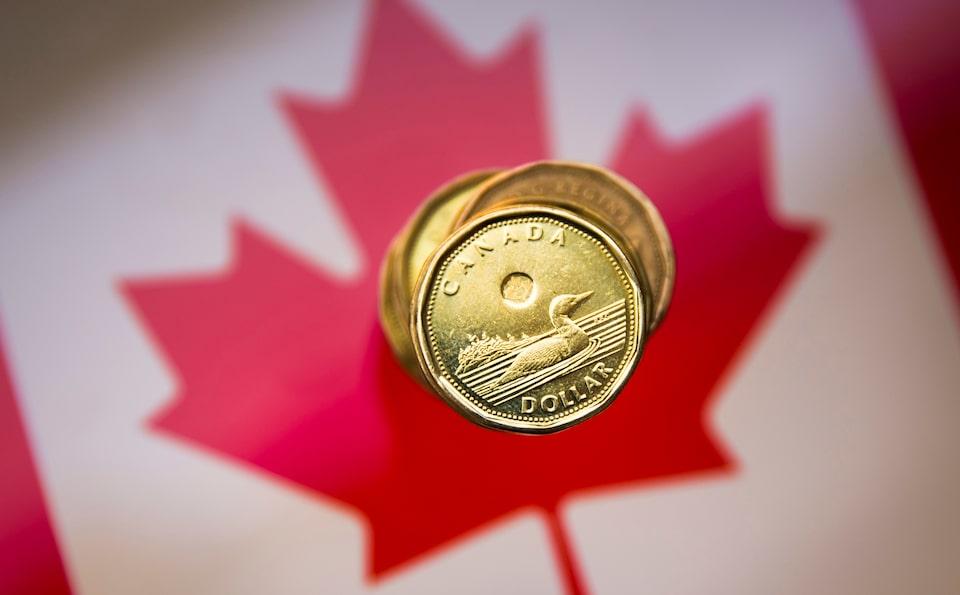
Loonie weakens 0.4% against the U.S. dollar Trades in a range of 1.4323 to 1.44 Price of U.S. oil settles 1.7% lower 10-year yield falls 10.2 basis points to 3.317% TORONTO, Jan 16 (Reuters) - The Canadian dollar weakened against its U.S. counterpart on Thursday and bond yields eased, as investors braced for expected U.S. trade tariffs and the Bank of Canada said it would end its quantitative tightening program in the coming months. The loonie was trading 0.4% lower at 1.4392 per U.S. dollar, or 69.48 U.S. cents, after trading in a range of 1.4323 to 1.44. It was the weakest performer among the Group of 10 currencies. The Mexican peso posted an even sharper decline. U.S. President-elect Donald Trump takes office on Monday and has threatened to impose a 25% tariff on imports from Canada as well as Mexico. "There hasn't been a realization in markets that Bank of Canada pricing doesn't really incorporate much of a tariff premium yet," said Andrew Kelvin, head of Canadian and global rates strategy at TD Securities. "It's possible that with the inauguration in the United States drawing ever closer, markets are starting to price in maybe a little bit more of a risk that Canada has a negative economic event due to trade policy." The Bank of Canada will cut interest rates by 25 basis points to 3.00% on Jan. 29, according to a Reuters poll of economists, but many were not confident about the outlook beyond that given uncertainty around tariffs. Deputy Governor Toni Gravelle said that the BoC expects to announce the end of QT and the associated restart of its normal asset purchases in the first half of this year. The price of oil, one of Canada's major exports, settled 1.7% lower at $78.68 a barrel on expectations that Yemen's Houthi militia will halt attacks on ships in the Red Sea. Canadian bond yields tumbled for a second straight day, with the 10-year down 10.2 basis points at 3.317%. Sign up here. https://www.reuters.com/markets/currencies/canadian-dollar-posts-biggest-decline-among-g10-currencies-2025-01-16/