2025-01-16 17:39
Jan 16 (Reuters) - The Federal Reserve should stay independent, Trump's pick to be U.S. Treasury Secretary told a Senate panel on Thursday. "I think on monetary policy decisions, the FOMC should be independent," Scott Bessent told the U.S. Senate Finance Committee, referring to the Fed's monetary policysetting panel, the Federal Open Market Committee. "President Trump is going to make his views known," Bessent said, just as senators do when they disagree with what the Fed does with interest rates, but the notion that Trump believes he should have influence over Fed's policymaking by being in the room is "highly inaccurate." Sign up here. https://www.reuters.com/world/us/fed-should-stay-independent-trumps-pick-us-treasury-secty-says-2025-01-16/
2025-01-16 16:47
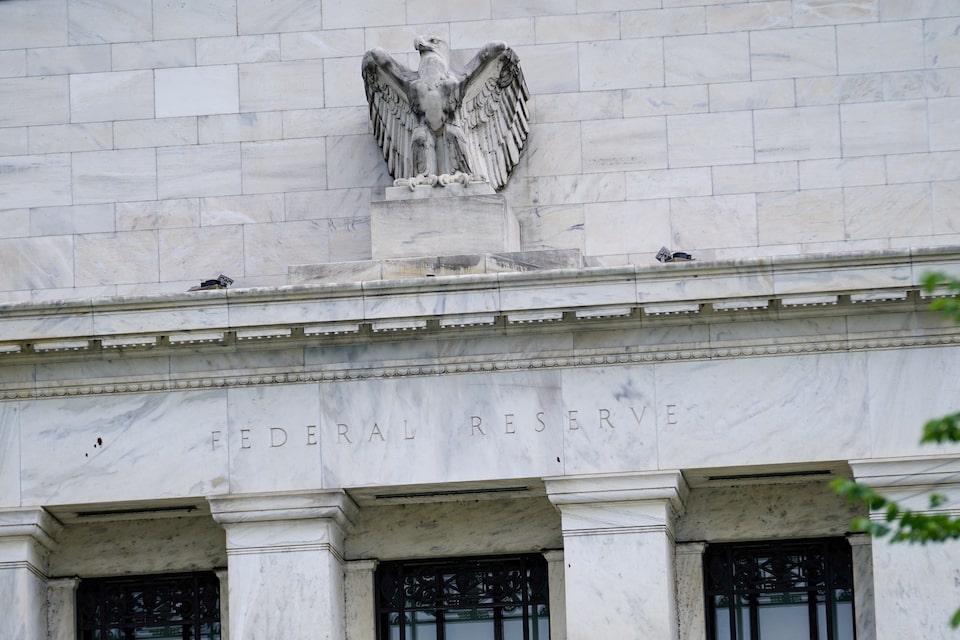
Waller's inflation outlook sees a faster return to 2% target He says a rate cut at Fed's March meeting cannot be ruled out Investors see two cuts as more likely in 2025 after his remarks WASHINGTON, Jan 16 (Reuters) - Inflation is likely to continue to ease and possibly allow the U.S. central bank to cut interest rates sooner and faster than expected, Federal Reserve Governor Christopher Waller said on Thursday in comments that pushed against recent market moves that anticipate a shallower Fed rate path. Inflation "is getting close to what our 2% inflation target would be," Waller said on CNBC, citing estimates indicating that one key measure of underlying inflation, the Personal Consumption Expenditures Price Index excluding food and energy costs, has been close to the Fed's target for six of the past eight months. The next monthly PCE report will not be released until Jan. 31, two days after the end of the Fed's upcoming policy meeting, but analysts expect the monthly increase in core inflation may translate to an annual rate of less than 2%. "If we continue getting numbers like this, it is reasonable to think rate cuts could happen in the first half of the year ... I am optimistic that this disinflationary trend will continue and we will get back closer to 2% a little quicker than maybe others are thinking," Waller said, adding that as many as three or four quarter-percentage-point rate reductions could still be possible this year depending on how inflation behaves. "If inflation is down and the labor market stays solid, you could think about restarting rate cuts several months from now ... I don't think March could be completely ruled out," Waller said, referring to the Fed's March 18-19 policy meeting. "If we make a lot of progress, you could do more." Waller's somewhat dovish narrative, coming near the Fed's blackout period on public comments ahead of the Jan. 28-29 meeting, shifted market expectations about where the central bank stands at the start of the incoming Trump administration. The Fed is anticipated to hold its benchmark overnight rate steady in the 4.25%-4.50% range at its meeting later this month, but investors had expected the pause to last until perhaps June, with only a single rate cut this year. After Waller's remarks investors shifted toward a view of two rate cuts as more likely, with a good chance the first comes as early as May. Bond yields also fell. 'STILL RESTRICTIVE' The Fed is trying to reconcile relatively strong economic data with the need for inflation to fall somewhat further. Some analysts have looked at things like strong retail sales and a relatively low unemployment rate to argue Fed policy is not restricting the economy as much as thought, with a new surge of inflation possible. But "you are not seeing a labor market that is starting to overheat or accelerate ... Things are still restrictive," Waller said. The Fed is also trying to assess how President-elect Donald Trump's policies may influence the performance of the economy in coming months. Trump will begin his second term in the White House on Monday. Waller anticipates any influence on prices from increased tariffs on imports, for example, would be fleeting. "I don't think tariffs would have a significant impact or persistent effect on inflation," Waller said. Sign up here. https://www.reuters.com/markets/us/feds-waller-cuts-could-come-sooner-than-later-if-disinflation-meets-expectations-2025-01-16/
2025-01-16 15:29
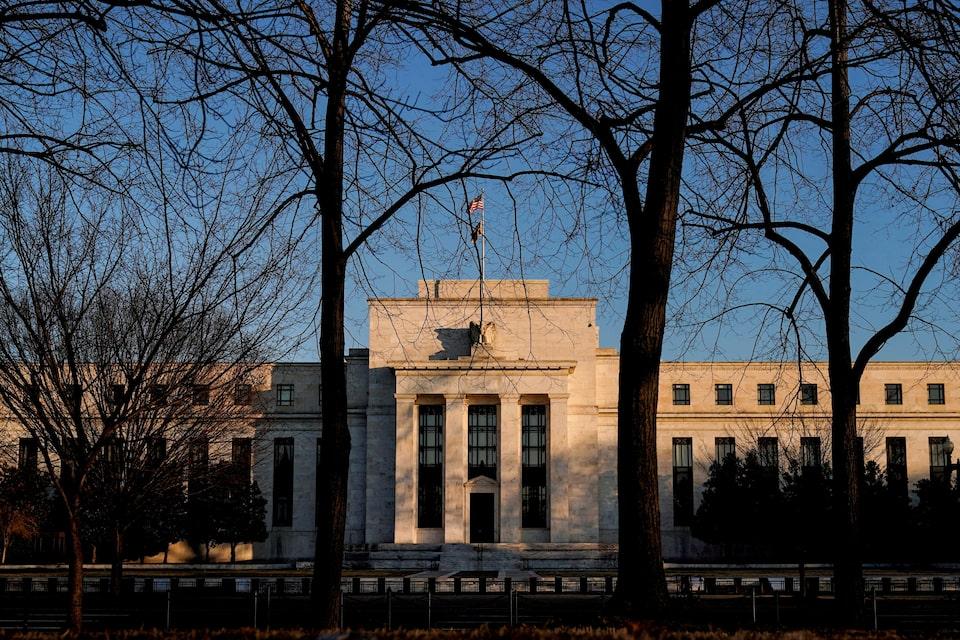
JOHANNESBURG, Jan 16 (Reuters) - South Africa's rand slipped on Thursday, after data out of the world's biggest economy showed U.S. weekly jobless claims rose. By 1520 GMT, the rand traded at 18.83 against the dollar , about 0.4% weaker than its previous close. The dollar was little changed a basket of currencies. A sturdy labour market, sticky inflation and uncertainty over the potential impact of President-elect Donald Trump's tariffs plans has led the Federal Reserve to project only two interest rate cuts this year from the four it had previously forecast. "For now, it is evident that the rand's movement will largely be dictated by expectations around U.S. monetary policy," said Zain Vawda, market analyst at MarketPulse by OANDA. There are no major domestic economic releases due in South Africa this week. On the Johannesburg stock market, the blue chip Top-40 (.JTOPI) , opens new tab index closed about 0.2% up. South Africa's benchmark 2030 government bond was weaker, with the yield up 4 basis point to 9.205%. Sign up here. https://www.reuters.com/markets/currencies/south-african-rand-weaker-after-us-jobs-data-swayed-by-feds-rate-path-2025-01-16/

2025-01-16 15:19
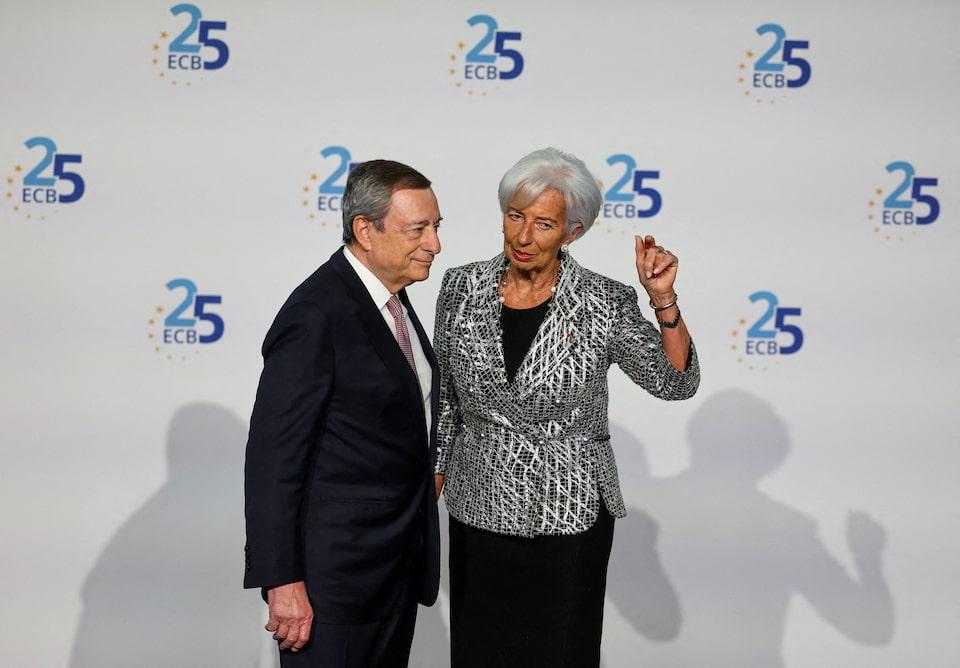
FRANKFURT, Jan 16 (Reuters) - The European Central Bank's President Christine Lagarde can move financial markets with a frown, while her predecessor, Mario Draghi, used a smile to reinforce his message, a new study has found. Traders are known to hang on to central bankers' every word for cues on the direction of interest rates. But an academic paper entitled "The Emotions of Monetary Policy" has found that even a change in facial expression or tone can affect market prices. Researchers from Giessen University in Germany used the latest technology to recognise and classify Draghi's and Lagarde's facial expressions and vocal emotions during the press conferences that follow the ECB's interest rate decisions. Professor Peter Tillmann and colleagues then ran a machine-learning model on the transcripts of those media conferences to gauge whether the message delivered in any given minute was dovish (hinting at lower rates ahead), hawkish (hinting at higher rates) or neutral. They found that Draghi's messages -- be they dovish or hawkish -- had a bigger impact on government bond yields, the euro and euro zone stocks if they was accompanied by a smile. "It seems that Draghi 'kills with kindness' - his words have the intended effect if spoken with a happy face," the six researchers wrote in their paper published this week. Lagarde, by contrast, could boost her market impact with an angry expression. "For President Lagarde... more anger on her face magnifies the hawkish impact on bond yields," the study said. Other results showed Lagarde showed more emotion than her predecessor but both were more likely to express anger the farther inflation in the euro zone strayed, in either direction, from the ECB's 2% target. The authors hope the results will make policymakers and traders more aware of the importance of non-verbal communication and emotional undertones. In the last couple of years, similar studies found that stocks rose when the chair of the Federal Reserve used a positive tone of voice, or that asset prices fell when he or she expressed emotions such as anger, disgust or fear. The findings will resonate with financial historians: in the early 20th century, Bank of England governors were said to have only needed a raised eyebrow to discipline a banker during private conversations. Sign up here. https://www.reuters.com/markets/europe/ecbs-lagarde-moves-markets-with-frown-draghi-with-smile-study-finds-2025-01-16/
2025-01-16 14:37
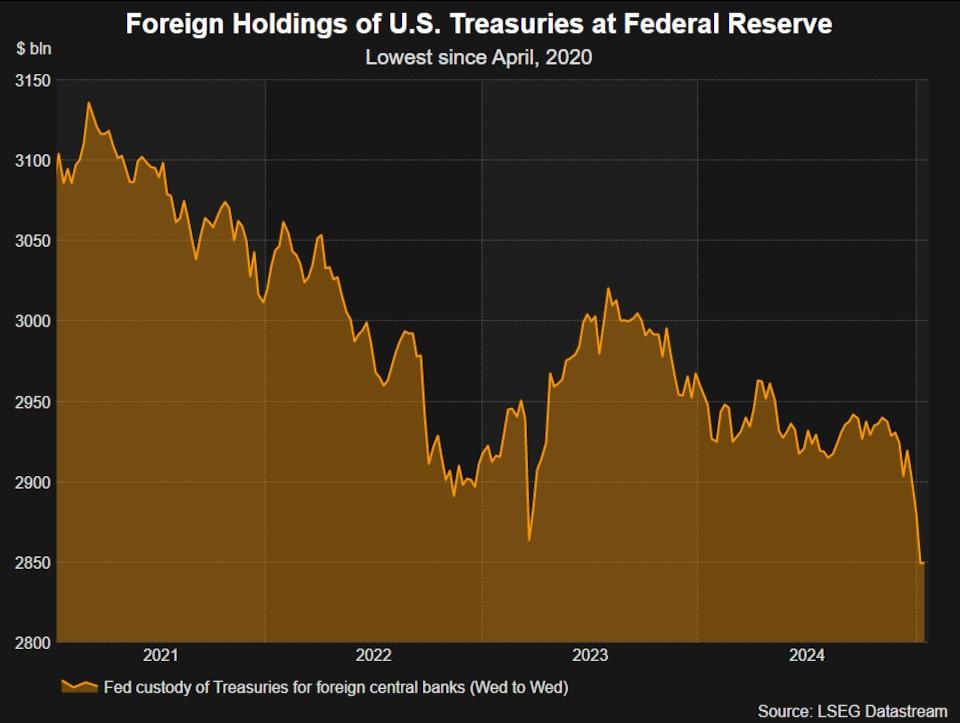
ORLANDO, Florida, Jan 16 (Reuters) - Spiking Treasury yields and the 'wrecking ball' dollar are creating a negative feedback loop that monetary authorities around the globe may be helping to sustain. The U.S. bond market selloff that began after the Federal Reserve started cutting interest rates four months ago has been as powerful as it has been surprising, splitting expert opinion on what is driving it. Potential culprits include strong U.S. growth, sticky inflation, debt and deficit fears, as well as uncertainty surrounding incoming U.S. President Donald Trump's trade, immigration and 'America First' economic agenda. What has garnered less attention, however, has been the role of foreign central banks, particularly in emerging economies. Rising U.S. yields have lifted the dollar and simultaneously pushed down many emerging currencies, sometimes to record lows, prompting many central banks to intervene in the foreign exchange market to support their currencies. This typically involves selling FX reserves, often U.S. Treasury bonds or bills, and buying local currency. The latest New York Fed breakdown of U.S. Treasury 'custody' holdings on behalf of foreign central banks, is revealing. Custody holdings last week stood at $2.85 trillion, the lowest since April 2020. They have fallen almost $100 billion from the $2.94 trillion in mid-September when the Fed started cutting interest rates, and this decline has gathered pace since the U.S. presidential election in early November. Central bank selling has been a key component of the recent bond rout, according to research , opens new tab by Rashad Ahmed, senior economist at the Office of the Comptroller of the Currency, and Alessandro Rebucci, professor at Johns Hopkins University. They note that the decline in foreign FX dollar reserves beginning in September "aligns precisely" with the steep rise in 10-year yields. They estimate that foreign central banks' dollar reserves have fallen by a combined $113 billion, including foreign repo deposits, just as yields have rocketed by more than 100 basis points. This selling has often been met with weak demand from counterparties, most notably domestic and foreign private investors, they argue. "It is possible for even a small reduction in the U.S. dollar share of foreign reserves to have a significant short-run impact on U.S. Treasury markets," they wrote on Wednesday. ROCK & A HARD PLACE Many central banks, especially in emerging economies, thus find themselves between a rock and a hard place. Selling dollar-denominated Treasuries helps shore up a deteriorating domestic currency, but all else being equal, also helps lift U.S. yields, which burnishes the dollar's allure and sustains the negative feedback loop. Official data from India, Brazil and China, three of the biggest emerging economies and holders of FX reserves, show that all have reported notable declines in their FX reserves recently. India's FX reserves topped $700 billion in September but have since fallen by $60 billion, or around 8.5%, as the central bank has fought to defend the rupee, which has fallen to record lows against the dollar. Brazil's reserves tumbled $28 billion in December alone, a record nominal fall and the biggest monthly percentage decrease in almost two decades. This heavy central bank intervention occurred after a perfect storm of global and local issues pushed the real to an all-time low against the dollar. And China's reserves, the most closely watched of all, fell $64 billion, or 2%, in December, the most since April 2022. Again, this decline was prompted by the central bank's need to counter strong capital flight and a depreciating currency. One of the fears shrouding the global financial system in the 2000s was the threat of China dumping its vast holdings of Treasuries if U.S.-Sino relations deteriorated sharply. This 'balance of financial terror', as former U.S. Treasury Secretary Larry Summers labeled it, never tipped over the edge, and the threat today is probably not as severe. China's nominal holdings of Treasuries are the lowest since 2009, the U.S. bond market has swelled to $28 trillion, and Beijing's share of that market is the lowest since 2002. Still, if Ahmed and Rebucci are right, foreign central banks can wield meaningful power over the U.S. bond market even if they have no intention to push up yields. This vicious cycle may not lead to 'financial destruction, but it could create a decent amount of financial pain in the months ahead. (The opinions expressed here are those of the author, a columnist for Reuters.) Sign up here. https://www.reuters.com/markets/rates-bonds/em-central-banks-cool-treasuries-stoking-bond-yield-heat-mcgeever-2025-01-16/
2025-01-16 13:30
TORONTO, Jan 16 (Reuters) - Canadian housing starts fell 13% in December compared with the previous month as groundbreaking decreased on multiple unit and single-family detached urban homes, data from the national housing agency showed on Thursday. The seasonally adjusted annualized rate of housing starts fell to 231,468 units from a revised 267,140 units in November, the Canadian Mortgage and Housing Corporation (CMHC) said. Economists had expected starts to fall to 245,000. For 2024, starts were up 2% compared to 2023, helped by historically high rental construction levels. Sign up here. https://www.reuters.com/world/americas/canadian-housing-starts-fall-13-december-cmhc-2025-01-16/