2025-01-16 11:24
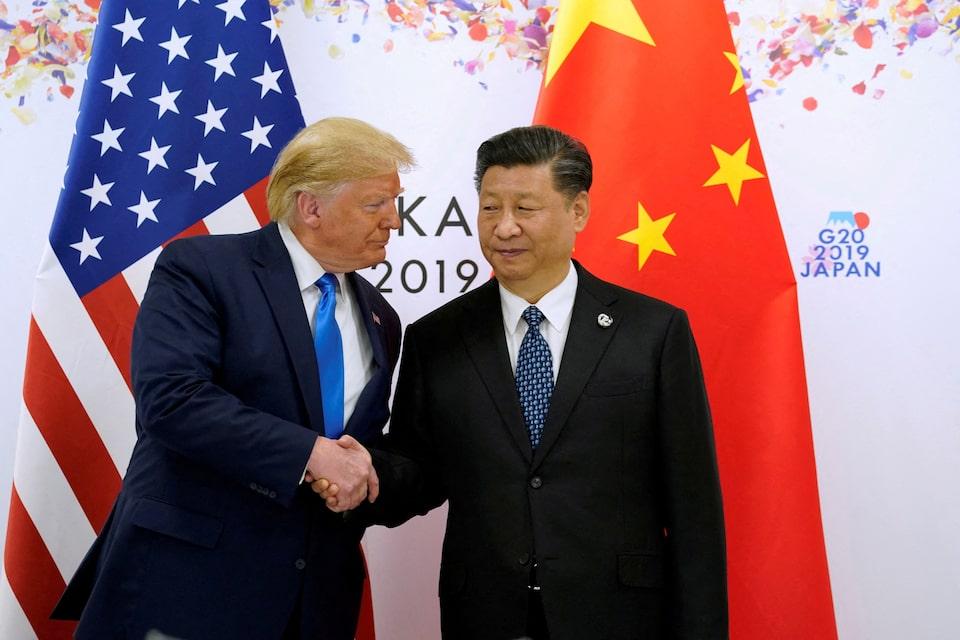
US trade deficits rose despite Trump's first-term tariffs Companies shifted US imports from China to Mexico, Vietnam Trump shattered decades of political support for free trade US-China trade war cost American soybean growers export market share China remains dominant supplier of US consumer technology imports WASHINGTON, Jan 16 (Reuters) - Donald Trump came to Washington eight years ago vowing to rewrite U.S. trade relationships, shrink a massive goods trade deficit and rebuild America's industrial base with new tariffs. The president-elect is about to embark on an even more aggressive effort in his second term, pledging to impose 10% duties on all U.S. imports and 60% on goods from China. Just how that will play out is unclear, but data from his first run at upending the trade landscape show it did shift U.S. imports away from China to other countries, especially Mexico and Vietnam. Still, the U.S. trade deficit continued to grow, topping $1 trillion over the last four years, and factory employment has flatlined amid an overall jobs boom since the COVID-19 pandemic. STEEL SLIDE Steel producers in the U.S. benefited the most from Trump's tariffs, winning a 25% global duty while aluminum producers saw a 10% duty. Those were somewhat diminished after Trump's first administration negotiated quota deals with Mexico and Canada and the Biden administration followed up with quota deals for the European Union, Britain and Japan. Meanwhile, China's dominance of these sectors globally has kept prices low, contributing to lower capacity use rates. Some plants initially revived by the duties, including a U.S. Steel mill in Granite City, Illinois, visited by Trump in 2018 to herald the industry's resurgence, have shut down blast furnaces. A Missouri aluminum smelter revived by the tariffs also was idled last year by Magnitude 7 Metals. Trump's biggest first-term trade impact was to shatter decades of political consensus favoring ever-lower trade barriers that had allowed China to become the world's largest goods producer. Indeed, when Trump left office in 2021, the theme was taken up and amplified by President Joe Biden. "Waking the world up to the economic threat from China was one of the top accomplishments of Trump's first-term trade agenda, as was the renegotiation of some of our major trading relationships," including a North American free trade deal, said Kelly Ann Shaw, a trade adviser during Trump's first term. "We're now having a healthy debate in America about what industries we want to keep, which supply chains are critical and where we should focus our trading relationships," said Shaw, a trade lawyer at law firm Hogan Lovells in Washington. Trump's tariffs of 25% on $370 billion of Chinese imports helped reduce the U.S. trade deficit with China from $418 billion in 2018 to $279 billion in 2023. But as companies shifted production elsewhere, new winners emerged: Mexico and Vietnam. The growth of their U.S. trade surpluses more than made up for China's decline. RETALIATION, PRICING COSTS This shift came at considerable cost. China hit back with retaliatory tariffs of 25% on U.S. soybean exports and largely shifted aircraft purchases away from Boeing (BA.N) , opens new tab to rival Airbus (AIR.PA) , opens new tab for years. U.S. whiskey distillers were hit by EU retaliation over metals tariffs, but exports rebounded when those tariffs came off, said Chris Swonger, CEO of the Distilled Spirits Council of the United States. In the 2020 "Phase 1" trade deal that ended the U.S.-China trade war, Beijing pledged to boost its purchases of U.S. goods and services by $200 billion over two years, but failed to do so as COVID-19 hit. China's promised increases in U.S. soybean volumes instead went to Brazil and Argentina. Scott Gerlt, the chief economist for the American Soybean Association, said that's a permanent shift. "We never recovered the volume of China soybean exports since that trade war," Gerlt said. "A lot of land came into production in Brazil. Brazil surpassed us in exports to China." The shift could help China weather a new trade war, but the crop remains the top U.S. export to China. Commercial aircraft once held the top spot but have been slow to recover, while motor vehicle shipments to China also declined as China's electric vehicle industry has surged. Displacing them is crude oil, going from zero a decade ago to $13 billion in 2023. The U.S. remains highly dependent on China for technology imports, including smartphones, laptop computers and video game consoles. Many of these products were spared Trump's first-term tariffs, but duties of 60% or more would raise costs considerably. China's vast scale and efficiencies in sectors such as electronics and toys cannot be easily replicated elsewhere, creating difficult choices for companies facing steep tariffs, said Mary Lovely, a trade economist who is a senior fellow at the Peterson Institute for International Economics. "These are enormous enterprises. How do you recreate that in another country that's a tenth of the size of China? You don't," Lovely added. Trump's first-term tariffs did not cause a spike in consumer price inflation, but they were limited in scope and caused only one-time price increases, said Doug Irwin, an economics professor at Dartmouth College who specializes in trade. "Tariffs are just a tax, and so they lead to a one-off level increase in the price of those goods," Irwin said. "They're not this continuous rise in the general price level, which is inflation." The price impact from further tariffs also depends on factors such as U.S. fiscal and monetary policy that may lift the dollar's value, trade retaliation that could lower other domestic goods prices, and whether or not importers or exporting firms absorb some of the tariff costs. TARIFF REVENUE Trump also has pledged to pay down U.S. debt with tariff revenues. On Tuesday, he promised to create an "External Revenue Service" to collect tariffs, duties and all revenue from foreign sources. Collections from his punitive duties since 2018 suggest a vast increase would be needed to make a dent in U.S. deficits now approaching $2 trillion a year before an expected extension of expiring tax cuts, estimated to add more than $4 trillion in new debt over a decade. Total collections from the China, steel, aluminum and solar panel tariffs have totaled $257 billion over seven years, a rounding error amid cumulative deficits of $12.57 trillion during that time. The conservative-leaning Tax Foundation estimates , opens new tab that a 10% universal Trump tariff would raise about $1.7 trillion over 10 years, including accounting for a negative impact on economic growth. Sign up here. https://www.reuters.com/markets/us/trump-upended-trade-once-aims-do-so-again-with-new-tariffs-2025-01-16/
2025-01-16 11:23
Google to buy 100,000 T of offsets from Indian carbon removal projects Indian developer to convert agricultural waste into CO2-rich charcoal Carbon dioxide removal market set to grow as firms look for offset opportunities SINGAPORE, Jan 16 (Reuters) - Google (GOOGL.O) , opens new tab will buy carbon credits from an Indian initiative that turns large amounts of agricultural waste into biochar - a form of charcoal that removes carbon dioxide from the atmosphere and returns it to the soil, it said on Thursday. The deal - signed by Google and Indian supplier Varaha - is one of the biggest ever involving biochar, and is the tech giant's first foray into India's carbon dioxide removal (CDR) sector. Google is one of a number of big tech companies looking to offset emissions through CDR, which refers to a range of interventions designed to remove CO2 already in the atmosphere and oceans. While some developers are looking at expensive new technologies that extract CO2 directly from the air, solutions like biochar could prove a cheaper near-term option. "Biochar is a promising approach to carbon removal because it has the ability to scale worldwide, using existing technology, with positive side effects for soil health," said Randy Spock, Google's carbon removal lead. Varaha will buy waste from hundreds of smallholder farms in India and build reactors to convert it into biochar, which can sequester CO2 for hundreds of years. It will also be supplied to farmers as an alternative to fertilisers. Google will buy 100,000 tons of carbon credits from now until 2030. Varaha's chief executive Madhur Jain said there was scope for rapid growth, with waste from India's farms capable of generating enough biochar to store more than 100 million tons of CO2 every year. CDR accounts for only a fraction of global carbon trading but is expected to grow rapidly as countries and corporations seek new ways to offset emissions. However, critics say CDR is no substitute for emission cuts. They also warn that solutions like biochar offer no guarantee the CO2 will be removed permanently. "We are going to face peak warming," said Jain. "Even if something just reduces (CO2) or removes it for only 20 to 40 or 50 years, I feel that we need to do everything that we can." Sign up here. https://www.reuters.com/technology/google-signs-deal-buy-carbon-removal-credits-indian-farms-2025-01-16/

2025-01-16 11:13
A look at the day ahead in U.S. and global markets from Mike Dolan Wall Street's best day of the year so far was rooted in inflation relief and a boom in bank stocks reporting bumper earnings, with a retail readout up next on Thursday. After Tuesday's sub-forecast producer price data, the December consumer price index also surprised and the annual 'core' CPI inflation rate showed disinflation resuming. With key price components on shelter and services better behaved, the 6-month annualised core CPI rate is now back below the Federal Reserve's 2% target to its lowest in four years. That news sparked a significant rally in troubled U.S. Treasuries and global sovereign bonds, with 10-year Treasury yield recoiling by a whopping 15 basis points on the day before steadying overnight about 4.66%. The chance of a second Fed interest rate cut this year, off the radar so far this year, was back priced at 50% in futures markets. The dollar (.DXY) , opens new tab fell back with them, with the dollar/yen pair retreating to a new year low as speculation about another Bank of Japan interest rate rise next week builds. The relief spread out across U.S. stock indexes (.SPX) , opens new tab, (.IXIC) , opens new tab, (.RUT) , opens new tab too, with bumper fourth-quarter earnings from the big U.S. banks adding to the whoosh. Goldman Sachs (GS.N) , opens new tab, Citi (.C.N) , opens new tab and Wells Fargo (WFC.N) , opens new tab all gained more than 6% on the day and the S&P 500 bank index (.SPXBK) , opens new tab, which has outperformed the wider market right through January, added another 3.4%. And in the backdrop there was also some relief in the geopolitical picture with Wednesday's announcement of a complex ceasefire accord between Israel and Hamas - although that did little to rein in crude oil hovering near 6-month highs in a tightening energy market. With another sweep of bank reports due on Thursday, Wall Street futures have retained most of the prior day's rally. And for bond markets in particular, today delivers another stream of important economic soundings ahead of next week's inauguration of Donald Trump for a second four-year presidential term. The December retail sales report will give a glimpse of holiday season activity, but weekly jobless claims numbers will also be watched closely after last week's latest "hot" payrolls report. The Philadelphia Fed's January business sentiment survey is also out. Wednesday's release of the Fed's Beige Book on prevailing economic conditions showed activity increased slightly in late November and December, with employment ticking up and prices rising moderately. But a heavy slate of Fed speakers noted that while the latest inflation data was helpful, uncertainty was high about the coming months as they await policies from the incoming Trump administration. To that effect, Thursday's Senate hearing for Trump's Treasury Secretary pick Scott Bessent will be watched very closely for clues about what happens next. On Wednesday, Trump's choice to oversee the federal budget, Russell Vought, defended the president-elect's goal of cutting spending by refusing to spend money that Congress has already authorized. Vought, who also headed the Office of Management and Budget during Trump's first term, questioned the constitutionality of a 1974 law governing how Congress can review presidential refusal to spend, a process called "impoundment." Overseas, Wednesday's Treasury recovery was outpaced by equally agitated British "gilts" after UK inflation also surprised to the downside and both GDP and industrial reports for November undershot forecasts too on Thursday. The 30-year gilt has fallen back some 20bps from Monday's 27-year peak with Bank of England easing speculation re-ignited. The pound , also slipped again. BoE interest rate setter Alan Taylor said on Wednesday he expected the central bank to cut four times in 2025, twice the pace priced into financial markets. Global stock markets followed Wall Street higher on Thursday, with European stock indexes (.STOXXE) , opens new tab also gaining almost 1% as German and other euro inflation updates showed price pressures remained contained last month. China and Hong Kong shares edged up to join a broader rally in Asia, with sentiment buoyed by state media reports of potential easing measures from Beijing in coming weeks. State media reported that China's central bank may cut banks' reserve requirement ratio before the Spring Festival at the end of this month. Key developments that should provide more direction to U.S. markets later on Thursday: * US December retail sales, weekly jobless claims, Philadelphia Federal Reserve's January business survey, NAHB Jan housing index, Dec import/export prices, November retail/business inventories; Canada Dec housing starts * US corporate earnings: Bank of America, Morgan Stanley, M&T Bank, UnitedHealth, US Bancorp, PNC Financial, JB Hunt * Senate confirmation hearing for U.S. Treasury Secretary nominee Scott Bessent * European Central Bank board member Mario Centeno speaks; Turkey's finance minister Mehmet Simsek speaks in London Sign up here. https://www.reuters.com/markets/us/global-markets-view-usa-2025-01-16/

2025-01-16 11:06
Dollar up about 10% since Sept; investors see more gains Futures traders positioned for dollar strength Investors await Trump inauguration NEW YORK, Jan 16 (Reuters) - U.S. President-elect Donald Trump's imminent return to the White House and fading hopes for aggressive interest rate cuts have driven the dollar to multi-year highs, and investors see this strength continuing, aided by the new administration's pro-growth and inflationary policies. The dollar index (.DXY) , opens new tab, which measures the greenback's strength against six major currencies, has surged nearly 10% from its late-September lows to a more than two-year high. Much of these gains have occurred since Trump's victory in the November election, as investors raced to prepare portfolios for the new administration's trade and tariff policies, which are expected to offer near-term dollar support while pressuring other economies and currencies. Tariffs with their potentially inflationary pressures could prompt the Fed to be cautious with rate cuts, even as trade tensions darken the global economic growth outlook and send more investors seeking the safe-haven dollar. The longer U.S. interest rates remain higher than yields in other developed economies, the greater the buck's appeal for investors. While Trump has often complained that the dollar's excessive strength blunts U.S. export competitiveness and hurts U.S. manufacturing and jobs, his policies are often viewed by the market as boosting the dollar. During Trump's first term, the dollar rallied about 13% from February 2018 to February 2020 when he implemented tariffs against several countries, including China and Mexico. In a further nod to the importance of dollar policy for the incoming administration, Scott Bessent, Trump's choice to head the Treasury Department, on Wednesday said he would ensure that the dollar remains the world's reserve currency. Traders in currency futures markets appear positioned for further dollar strength with net bets on the dollar rising to a near six-year high of $34.28, according to Commodity Futures Trading Commission data. Against a weighted basket of several currencies, the dollar is the most overvalued it has been in 55 years, according to BofA Global Research. Typically, such a significant rally would attract dollar bears anticipating a reversal, but few investors currently believe it is wise to challenge the rising dollar. "We continue to see the dollar as fundamentally overvalued, but, at least in the near term, it is hard to come up with catalysts that would make the dollar weaken," said Brian Rose, senior U.S. economist at UBS Global Wealth Management. The presidential inauguration on Monday is one big reason holding back dollar bears, investors said. While the buck has rallied on expectations for broad tariffs, their details remain unclear. "We don't know how strong they're going to be, how intense, how broad, how high," said John Velis, head of FX and macro strategy for the Americas, at BNY Markets. Clarity on these fronts could further boost the dollar, making it perilous to bet against the currency even at these lofty levels. Investors experienced how sensitive the dollar can be to tariff-related news on Jan. 6, when the dollar dropped about 1% against a basket of currencies following a Washington Post report suggesting that Trump's aides were considering limited tariff plans. The dollar quickly rebounded after Trump denied the story. So long as the tariff uncertainty lingers, investors will have a hard time abandoning their bullish dollar bets. "I think people are waiting, at least for those important policy announcements, to get out of the way before closing out positions," said Thierry Wizman, Global FX & Rates strategist at Macquarie. On Monday, Goldman Sachs strategists, who forecast the dollar rising another 5% this year, said the buck could rally even more if the U.S. economy continues to outperform despite higher tariffs, and markets begin to price in possible Fed rate hikes instead of cuts. Trump's election campaign platform of aggressive tariffs and deportation of some immigrants has already sparked concerns among policymakers about inflation, minutes of the Fed's meeting last month showed. "You have had a pretty obvious shift in tone coming from the Fed towards more hawkishness," Macquarie's Wizman said. In the interim, the dollar is well supported with a perfect storm of positive catalysts including significant improvement in the U.S. growth outlook and pared back expectations for Fed rate cuts. Recent data showing U.S. job growth unexpectedly accelerated in December reinforced the Fed's cautious approach to rate cuts this year, but inflation data on Wednesday offered signs of underlying price pressures subsiding, prompting financial markets to bet on a rate cut in June. "The U.S. is outperforming both in terms of high yields and better growth," said Aaron Hurd, senior portfolio manager, currency, at State Street Global Advisors. Treasury yields have risen in recent weeks with the U.S. 10-year yield surging to a 14-month high on strong economic data and expectations the Fed may be about done with rate cuts as it braces for the implementation of Trump's policies. While Hurd is positioned for dollar weakness in the three- to five-year timeframe, he is not ruling out further near-term gains for the U.S. currency. "There is still a little bit of room for dollar strength here," Hurd said. Sign up here. https://www.reuters.com/markets/currencies/dollar-rules-investors-eye-trumps-economic-policies-2025-01-16/
2025-01-16 11:00
Sterling falls sharply versus yen BoJ to debate raising rates next week Bank of England expected to ease monetary policy Analysts say could be too soon to expect sterling rebound Jan 16 (Reuters) - Sterling dropped sharply against the yen and also weakened versus the dollar and the euro on Thursday as investors focused on monetary policy divergence after last week's sell-off in gilts and the pound. Money markets priced in around 50 bps of rate hikes by the Bank of Japan in 2025 IRPR after Governor Kazuo Ueda said on Wednesday the bank will debate whether to raise interest rates next week. The Bank of England is expected to ease its monetary policy, leading sterling to drop 0.77% versus the Japanese currency at 190, hitting a fresh 1-1/2-month low at 189.72. In Britain, heavy government bond supply and concerns about UK fiscal challenges pressured asset prices last week, driving UK borrowing costs to their highest since 2008. Yields on 10-year UK government bonds fell 2 basis points (bps) after dropping 14.5 bps the day before on weak inflation data on both sides of the Atlantic. Bond yields move inversely with prices. Analysts said it was too soon for optimism about a sterling rebound, but the recovery in the bond market was a positive. "Sterling found some short-term stability, which is warranted, and inflation numbers were helpful from this point of view," said Paul Mackel, global head of forex research at HSBC. "However, fiscal dynamics will remain in focus and we still see sterling struggling versus the dollar," he added. British inflation slowed unexpectedly last month, and core measures of price growth, tracked by the Bank of England, fell sharply, according to official data. The pound fell 0.25% to $1.22. It hit $1.2097 on Monday, its lowest level since November 2023. The U.S. dollar steadied on Thursday as investors focused on Donald Trump's inauguration. Britain's economic output returned to growth in November but expanded by less than expected. Markets increased their bets on future Bank of England rate cuts, pricing 59 basis points in 2025. IRPR The Bank of England should move quickly to bring down rates given signs of a slowdown in Britain's economy, said rate setter Alan Taylor, adding he expected the central bank to cut interest rates four times in 2025. The single currency rose 0.3% to 84.31 pence. It hit 84.50 pence on Wednesday, its highest level since mid-September. Sign up here. https://www.reuters.com/markets/currencies/sterling-drops-against-yen-dollar-euro-2025-01-16/

2025-01-16 10:38
MUMBAI, Jan 16 (Reuters) - To encourage the use of the rupee and other currencies to settle cross-border transactions, India's central bank took steps to further liberalise regulations under the foreign exchange management act, it said in a release on Thursday. Indian exporters will now be able to open accounts in any foreign currency overseas to settle trade transactions, including receiving export proceeds, and use these proceeds to pay for imports, the Reserve Bank of India said. The RBI will permit overseas branches of authorised banks to open rupee-accounts for anyone residing outside the country and looking to settle all permissible current account and capital account transactions with someone residing in India. Those residing outside the country will also be permitted to settle bona fide transactions with other non-residents by using the balance in their repatriable INR accounts. The RBI has also allowed non-resident Indians to use such balances for foreign investments, including foreign direct investment in non-debt instruments. Sign up here. https://www.reuters.com/world/india/india-central-bank-liberalises-fx-rules-promote-cross-border-trade-2025-01-16/