2025-01-16 05:49
A look at the day ahead in European and global markets from Ankur Banerjee Global stocks and non-dollar currencies found some respite from their inflation-related anxieties, buoyed by a strong start to the earnings season and a softish U.S. core inflation reading that revived hopes for Fed rate cuts this year. But the relief rally may be short-lived, with U.S. inflation still looking a bit too warm for comfort - and potentially facing upward pressure if the incoming Trump administration pursues aggressive policies on tariffs and taxes. Cartier-owner (CFR.S) , opens new tab Richemont's sales report on Thursday will be the main event during European hours, giving the first insight into the health of high-end demand as luxury firms pin their hopes on U.S. consumers, while weakness persists in China. Investors will also keep a wary eye on developments in the Middle East after Israel intensified strikes on Gaza hours after a ceasefire and hostage release deal was announced to end fighting that began 15 months ago. While the just-about-soft U.S. core inflation figure for December lifted sentiment, dragging Treasury yields lower and boosting stocks, analysts cautioned that the annual rate of 3.2% was still a bit on the high side, with the Fed likely to stay on hold for a while longer. Also boosting sentiment were strong earnings from U.S. banks Goldman Sachs (GS.N) , opens new tab, JPMorgan Chase (JPM.N) , opens new tab, Wells Fargo (WFC.N) , opens new tab and Citigroup (C.N) , opens new tab. Wall Street CEOs voiced confidence that the incoming U.S. administration would be business-friendly and good for banks. Bank of America (BAC.N) , opens new tab and Morgan Stanley (MS.N) , opens new tab will report results on Thursday. European chipmakers (.SX8P) , opens new tab may also take cues from an earnings report by Taiwan Semiconductor Manufacturing Co (2330.TW) , opens new tab, which showed profits broadly met estimates. TSMC, whose customers include Apple (AAPL.O) , opens new tab and Nvidia (NVDA.O) , opens new tab, is closely watched for indications of AI-related chip demand. The yen was the biggest mover in the currency market on Thursday, surging to a one-month high in Asian hours following comments by Bank of Japan Governor Kazuo Ueda that encouraged market bets on a rate hike next week. An overwhelming majority of economists surveyed by Reuters expect the BOJ to raise interest rates at one of the two meetings this quarter, with most leaning towards a January move. A BOJ hike would be contingent on markets staying calm when Donald Trump returns to the White House next Monday. His inauguration speech will be a focus for politicians and policymakers across the world to gauge his likely policy steps. Analysts expect Trump's actions to boost growth but add to inflationary pressures, keeping the dollar well-supported. So much so, in fact, that the dollar index has risen 5% in the two months since the U.S. election on expectations that the Fed will keep rates higher for longer. Scott Bessent, Trump's choice to head the Treasury Department, vowed to ensure that the dollar remains the world's reserve currency as he laid out a vision for a "new economic golden age" in prepared testimony for the U.S. Senate Finance Committee. Elsewhere, South Korea's central bank unexpectedly left its policy interest rate unchanged and signalled it needs to wait for the domestic political turmoil weighing on the currency to stabilise before it can make further rate cuts. Key developments that could influence markets on Thursday: - Germany inflation data for Dec - UK GDP estimate for Nov - Euro zone trade balance for Nov Sign up here. https://www.reuters.com/markets/europe/global-markets-view-europe-2025-01-16/
2025-01-16 05:45
SEOUL, Jan 16 (Reuters) - South Korea is interested in importing more U.S. oil and gas to diversify energy sources and ensure stable supplies given tensions in the Middle East, the country's industry minister Ahn Duk-geun said on Thursday. The government may need to increase support for the purchase of non-Middle East oil, he said. His comments come as U.S. President-elect Donald Trump, who takes office on Jan. 20, has vowed to impose tariffs of 10% on global imports into the U.S., and has said the European Union should step up U.S. oil and gas imports or face tariffs on the bloc's exports, including on goods such as cars and machinery. South Korea has deepened its reliance on crude oil imports from the Middle East, which accounted for 72% of total imports in 2023, up from 60% in 2021, according to the energy ministry. On liquefied natural gas (LNG), South Korea imported 47.2 million metric tons of the super-chilled fuel in 2024, of which 5.7 million metric tons were from the U.S., according to data from analytics firm Kpler. Other LNG importing countries such as Vietnam could also buy from the U.S. to ease its large trade surplus with the world's top economy, said a senior Hanoi-based diplomat. The U.S. is the world's top LNG exporter. Sources said that Trump plans to make it easier for some LNG producers to seek export permit renewals, while his pick to head the U.S. Energy Department told senators that his first priority is expanding domestic energy production, including LNG. Sign up here. https://www.reuters.com/markets/commodities/south-korea-looking-buying-more-us-oil-gas-energy-minister-says-2025-01-16/
2025-01-16 05:44
MUMBAI, Jan 16 (Reuters) - The Indian rupee weakened on Thursday as dollar demand from importers, including oil companies, outweighed the impact of a pullback in U.S. bond yields after lower-than-expected inflation renewed hopes of U.S. rate cuts. The rupee declined to 86.4850 against the U.S. dollar as of 11:00 a.m. IST, down 0.1% on the day. Likely portfolio inflows helped the currency post its best single-session gain in over seven months on Wednesday, after it hit an all-time low of 86.6475 in the previous session. The dollar index was hovering around the 109-handle after data showed that core U.S. consumer prices rose less than expected in December, fanning hopes that the Federal Reserve will be able to cut interest rates this year. Investors are now pricing in nearly 38 basis points of Fed rate cuts in 2025, against 31 bps before the inflation data. "The (inflation) trend remains too hot for comfort and the Fed is likely to extend its well telegraphed pause in rate cuts beyond March," ING Bank said in an note. The bank expects the Fed to deliver a total 75 bps of rate cuts over 2025. The inauguration of U.S. President-elect Donald Trump on Jan. 20 and central bank policy decisions lined up globally are "expected to heighten market volatility", said Amit Pabari, managing director at FX advisory firm CR Forex. Trump's inauguration is likely to herald a more volatile period for markets. Measures related to trade tariffs will be in focus with China's yuan, a closely tracked peer of the rupee, at risk. China's top leaders and policymakers have considered allowing the yuan to weaken in 2025 as they brace for higher U.S. tariffs, Reuters reported in December. Sign up here. https://www.reuters.com/markets/currencies/oil-companies-dollar-bids-push-rupee-lower-even-us-yields-retreat-2025-01-16/
2025-01-16 05:37
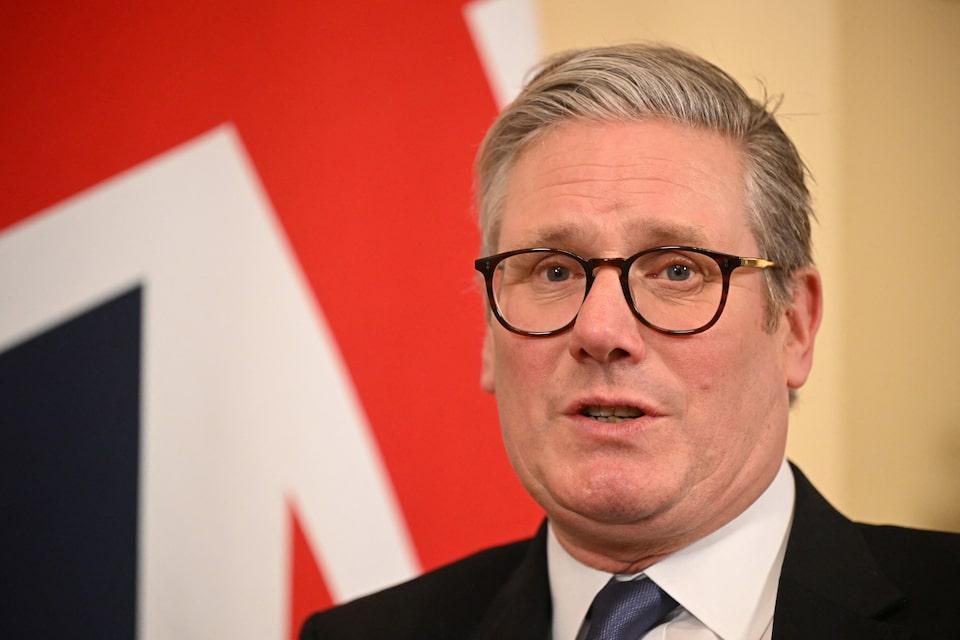
Starmer in Ukraine for first visit since becoming UK PM Promises to find robust security guarantees Signs 100-year partnership deal Visit comes days before Trump's inauguration KYIV, Jan 16 (Reuters) - British Prime Minister Keir Starmer pledged on Thursday to work with Ukraine and allies to offer Kyiv robust security guarantees if a ceasefire is negotiated with Russia, offering more support to President Volodymyr Zelenskiy with a 100-year partnership deal. In his first trip to Ukraine since becoming prime minister in July last year, Starmer was keen to underline Britain's support for the nation just days before Donald Trump returns to power in the United States. In talks punctuated by the sound of a loud explosion from Ukraine's air defences shooting down a Russian drone above the presidential palace, Zelenskiy said he had spoken to Starmer about Kyiv's desire for Western peacekeeping troops to be deployed in Ukraine in the event of peace. Zelenskiy, in his nightly video address, said Britain had undertaken to provide Ukraine with more than $3 billion in annual military aid. The pact, he said, included assistance in a wide variety of spheres, including education and technology. He added that there was a "secret section" of the agreement. "All things that add to our resilience and development potential", he said. At an earlier press conference alongside Zelenskiy, Starmer said Britain would look at "the practical ways to get a just and lasting peace ... that guarantees your security, your independence and your right to choose your own future", but declined to go into any details of which measures he supported. "We will work with you and all of our allies on steps that would be robust enough to guarantee Ukraine's security," Starmer said. "Those conversations will continue for many months ahead." Pressed in an interview with Sky News on whether Britain would contribute troops to any peacekeeping force, Starmer said: "I've been discussing this with a number of allies, including, of course, (French) President Macron, including President Zelenskiy here today, and we will play our full part." Starmer's visit comes two days after German Defence Minister Boris Pistorius also travelled to the country, with European leaders weighing what security guarantees they can provide as part of any peace agreement that may be pushed by Trump. Trump's return to the White House has drawn concerns that a bid to end Moscow's war could force Ukraine to cede large parts of the country to Russia for the foreseeable future. Zelenskiy said he had also spoken to France, Poland and the Baltics about a possible peacekeeping deployment to deter Russia from mounting any future attack after a ceasefire and expressed frustration at opposition to Ukraine's bid to become a member of the U.S.-led military NATO alliance. Starmer urged Ukraine and the West not to lose focus on the most pressing need to "ensure that Ukraine is in the strongest possible position" in 2025 to fight Russia. "We're a long way into this conflict. We mustn't let up." PARTNERSHIP DEAL As the war against Russia approaches its three-year mark, Ukraine is on the back foot. Ukrainian forces are suffering from manpower shortages and have been losing ground in the eastern Donetsk region as Russia's troops continue their advance. Since Russia's invasion in 2022, Britain has been a vocal supporter of Ukraine, with Starmer's predecessors visiting Kyiv in the early days of their tenure. It took a little longer for Starmer to make the trip, but he came armed with a 100-year partnership with Kyiv to deepen security and cultural ties. The treaty and political declaration aim to boost military cooperation to strengthen security in the Baltic Sea, Black Sea and Sea of Azov and deter Russian aggression. The treaty will also cover areas such as energy, critical minerals and green steel production, Starmer's office said. "Putin's ambition to wrench Ukraine away from its closest partners has been a monumental strategic failure," Starmer said in a statement. "Instead, we are closer than ever, and this partnership will take that friendship to the next level." Britain has provided 12.8 billion pounds ($16 billion) in support to Ukraine since 2022, a sum dwarfed by Washington's $63.5 billion in security assistance, underscoring the importance of Trump's actions over Ukraine. The partnership announced on Thursday, which provides 40 million pounds for Ukraine's economic recovery, includes additional support around grain verification and trade with Ukraine's thriving technology sector that has produced battle-ready equipment. ($1 = 0.8185 pounds) Sign up here. https://www.reuters.com/world/uk-pm-starmer-travel-ukraine-sign-new-treaty-2025-01-16/
2025-01-16 05:32
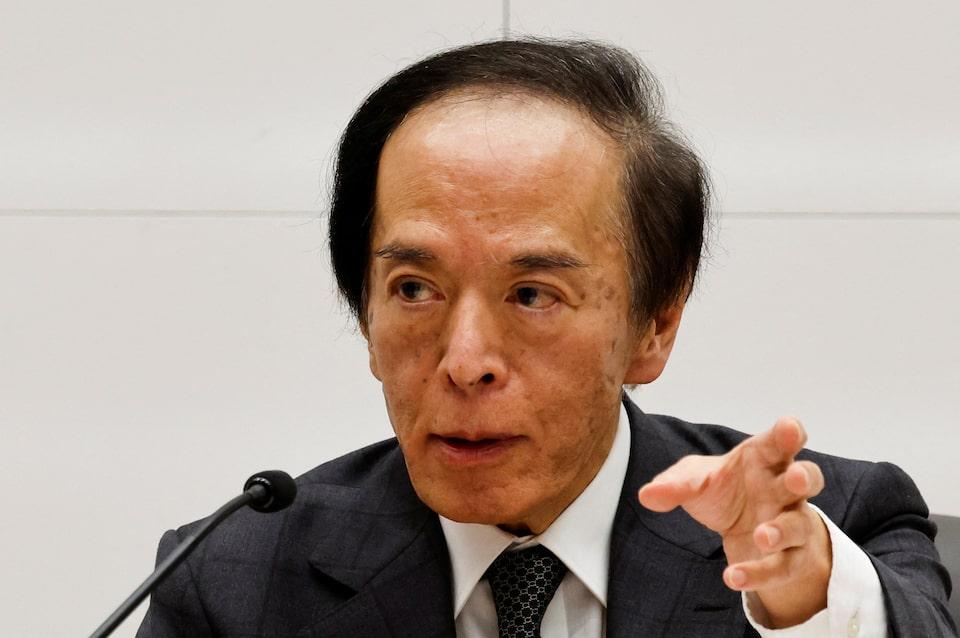
TOKYO, Jan 16 (Reuters) - The Bank of Japan will raise interest rates again at one of the two meetings this quarter to 0.50%, an overwhelming majority of economists surveyed by Reuters said, with most leaning toward a January move. The findings show the BOJ's determination to take further steps toward more normal monetary policy after years of radically accommodative settings, raising rates even as most of its global peers still tilt toward cuts. In a Jan. 8-15 poll released on Thursday, all but two economists surveyed, 59 of 61, said the BOJ would raise borrowing costs again, to 0.50% by end-March. Among 32 who expect a hike this quarter and specified which month, just under two-thirds, 20, said at the Jan. 23-24 meeting, while the rest said March. Since policymakers held rates in December, analysts have been speculating about when the BOJ will raise rates again, given uncertainty about domestic wages and economic plans from U.S. President-elect Donald Trump, who moves back to the White House on Jan. 20. BOJ Governor Kazuo Ueda and Deputy Governor Ryozo Himino said earlier this week the central bank will debate whether to raise rates at its next meeting. Strong domestic wage momentum and new price pressures support the case for a January hike, said Ayako Fujita, chief Japan economist at JPMorgan Securities. "If the inauguration of incoming U.S. President Trump does not cause major market turmoil, delaying the interest rate hike until March is seen as excessively increasing market volatility risk," Fujita said. The BOJ said last week wage hikes were spreading to firms of all sizes and sectors, signalling conditions for a near-term hike were continuing to fall into place. Having ended negative interest rates in March 2024, the central bank last raised its short-term policy target, to 0.25%, in July. It signalled a readiness to hike again if wages and prices move as projected and heighten its conviction that Japan will durably hit 2% inflation. All but one of 22 economists who answered an extra question said it was more likely for inflation in Japan to swing higher than their predictions this year. "There is a higher risk of inflation rising than of it falling, due to the risk of the yen weakening for longer than expected over factors such as a delay of interest rate cuts in the U.S.," said Harumi Taguchi, principal economist at S&P Global Market Intelligence. Additionally, the median of 23 economists who offered their view on the rate of pay increases at this year's spring labour-management negotiations was 4.75%, slightly up from 4.70% in a poll last month. It was below last year's 5.1% but still higher than 3.58% in the prior year. Given growth and inflation are moving in line with BOJ's forecast and import prices are believed to have turned positive year-on-year in December, the BOJ is facing a situation that cannot overlook the weak yen, said Atsushi Takeda, chief economist at Itochu Research Institute. The weak Japanese currency - which has pushed up import costs and inflation - was among the factors that led to the BOJ's decision to begin raising interest rates. In the poll, two-thirds of respondents, or 14 of 21, said the Japanese authorities will intervene in the currency market if the yen falls to 165 against the U.S. dollar. Nearly 20%, or four, said 160 yen. (Other stories from the Reuters global long-term economic outlook polls package) Sign up here. https://www.reuters.com/markets/rates-bonds/boj-raise-rates-by-end-march-most-analysts-lean-toward-january-hike-2025-01-16/
2025-01-16 05:31
SEOUL, Jan 16 (Reuters) - South Korea's central bank governor said on Thursday that the most important factor determining the health of Asia's fourth-largest economy in the next few months was whether recent political turmoil would stabilise. "Previously, the biggest variable was U.S. monetary and trade policy. Now, more than that, the biggest factor determining the economy is whether the political process proceeds stably, as we all want, in the next few months," Bank of Korea Governor Rhee Chang-yong told a news conference. "That is why a normalisation of the political process is way more important than lowering interest rates a month earlier or later," said Rhee, speaking after the Bank of Korea unexpectedly held policy interest rates steady at 3.00% on Thursday. The policy decision is the first since President Yoon Suk Yeol's attempt to impose martial law in early December triggered the country's biggest political crisis in decades. The turmoil prompted the government to cut its 2025 economic growth forecast to 1.8% from 2.2%. Rhee also said the decision not to cut rates reflected a need to support the won "which in part has been weakening due to political reasons." The central bank governor said, however, that the political event that took place on Wednesday provided support to the won, apparently referring to the arrest of impeached President Yoon. Yoon's arrest - the first of a sitting president - was fairly orderly amid fears violence could flare as more than 3,000 police officers marched on his residence. A previous attempt to arrest him on Jan. 3 failed after an hours-long standoff between investigators and Yoon's personal security. "The dollar-won exchange rate fell today, thanks to the U.S. inflation report, but what happened yesterday also affected it in a comprehensive manner," Rhee said, when asked about movements of the won in relation to domestic political turmoil. On Wednesday, the won briefly strengthened after news of Yoon's arrest broke. The currency extended gains on Thursday to hit its strongest level since Jan. 8 at 1,449.6 per dollar. Yoon's arrest may have ended one chapter in South Korea's political crisis, but is unlikely to mark the end. Yoon did not intend to take part in a second day of questioning on Thursday, his lawyer said, further stonewalling a criminal probe into whether he committed insurrection with his martial law bid as he fights for his political survival. Sign up here. https://www.reuters.com/markets/asia/bank-korea-governor-says-resolving-political-turmoil-key-economy-2025-01-16/