2025-01-15 11:43
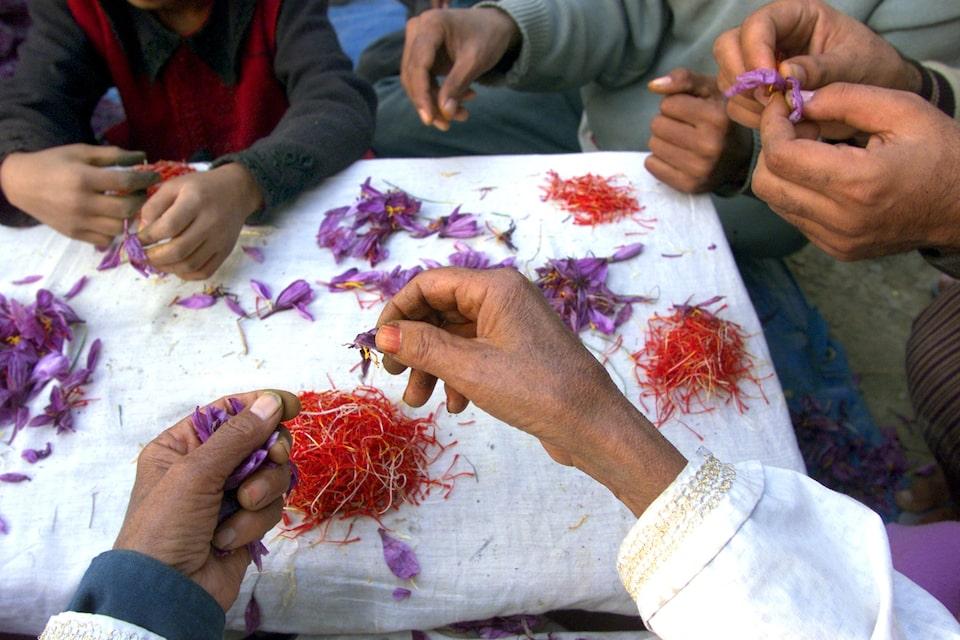
PAMPORE, India, Jan 15 (Reuters) - Tucked in a valley beneath the snow-capped Himalayas of the Indian Kashmir region is the town of Pampore, famed for its farms that grow the world's most expensive spice - the red-hued saffron. This is where most of saffron is farmed in India, the world's second-largest producer behind Iran of the spice, which costs up to 325,000 rupees ($3,800) a kg (2.2 pounds) because it is so labour-intensive to harvest. Come October, the crocus plants begin to bloom, covering the fields with bright purple flowers from which strands of fragrant red saffron are picked by hand, to be used in foods such as paella, and in fragrances and cloth dyes. "I am proud to cultivate this crop," said Nisar Ahmad Malik, as he gathered flowers from his ancestral field. But, while Malik has stuck to traditional farming, citing the "rich colour, fragrance and aroma" of his produce through the years, some agrarian experts have been experimenting with indoor cultivation of the crop as global warming fears increase. About 90% of India's saffron is produced in Kashmir, of which a majority is grown in Pampore, but the small town is under threat of rapid urbanisation, according to the Indian Council of Scientific & Industrial Research (CSIR). Experts say rising temperatures and erratic rainfall pose a risk to saffron production, which has dropped from 8 metric tons in the financial year 2010-11 to 2.6 metric tons in 2023-24, the federal government told parliament in February, adding that efforts were being made to boost production. One such programme is a project to help grow the plant indoors in a controlled environment in tubes containing moisture and vital nutrients, which Dr. Bashir Ilahi at state-run Sher-e-Kashmir University of Agricultural Sciences said has shown good results. "Growing saffron in a controlled environment demonstrates temperature resistance and significantly reduces the risk of crop failure," said Ilahi, standing in his laboratory between stacks of crates containing tubes of the purple flower. Ilahi and other local experts have been helping farmers with demonstrations on how to grow the crocus plant indoors. "It is an amazing innovation," said Abdul Majeed, president of Kashmir's Saffron Growers Association, some of whose members, including Majeed, have been cultivating the crop indoors for a few years. Manzoor Ahmad Mir, a saffron grower, urged more state support. "The government should promote indoor saffron cultivation on a much larger scale as climate change is affecting the entire world, and Kashmir is no exception," Mir said. Sign up here. https://www.reuters.com/sustainability/climate-energy/kashmirs-saffron-growers-experiment-with-indoor-farming-climate-pressures-mount-2025-01-15/
2025-01-15 11:30
Net-zero emissions goal was an aspiration, not a promise, JBS chief sustainability officer says JBS faces criticism for not controlling supply-chain emissions Investors fail to penalize JBS despite sustainability concerns SAO PAULO, Jan 15 (Reuters) - The world's largest meatpacker, JBS, became in 2021 the first of its peers to commit to cutting or offsetting all its emissions by 2040, and to ending illegal deforestation across its long supply chain that starts in the heart of the Brazilian Amazon. It used terms such as "commitment" and "pledge," and a slogan that "anything less is not an option," to describe its plan on calls with investors about a sustainable bond issue and in marketing materials, including for its beef. Nearly four years later, Jason Weller, global chief sustainability officer at the company in which the Batista family is the largest investor, told Reuters in a rare interview that its emissions goal was merely an "aspiration." "It was never a promise that JBS was going to make this happen," Weller said about the net-zero emissions pledge. He also said JBS (JBSS3.SA) , opens new tab cannot control how farms operate, although they are encouraging voluntary change. The company had pledged in 2021 to end illegal Amazon deforestation by its cattle suppliers by 2025. In a written statement to Reuters after the interview, JBS said: "Our climate ambitions have not changed. Any assertion otherwise is completely untrue." Reuters found that investors have achieved little in holding JBS to its pledges in the last five years, with no shareholder proposals being put forward about the environment, few voting against the Batistas on any issue and hardly any questions about sustainability on earnings calls. Profits are soaring on strong meat demand, helping drive JBS' Sao Paulo-listed stock last month to a record high. Deforestation by cattle farmers is pushing the Amazon closer to a tipping point at which the world's largest rainforest will gradually stop locking away climate-warming carbon dioxide. Brazilian cattle ranchers are responsible for 80% of current Amazon deforestation, according to researchers. The difficulty of reducing the environmental damage related to JBS and other agriculture companies could undermine President Luiz Inacio Lula da Silva as he prepares to host global climate talks in November. Oil majors Shell and BP are also among global companies to have softened their climate pledges. "There are far too few investors using their shareholder influence to engage with this issue," said Vemund Olsen, a senior analyst for sustainable investments at Norway-based Storebrand Asset Management, which sold its JBS stock in 2017. "It's an issue to which the entire industry needs to find common solutions, and which also requires improved regulation and enforcement of legislation in countries like Brazil." In October, Brazil's environmental protection agency fined ranches and meatpackers, including JBS, for raising or buying cattle on illegally deforested Amazon land. SUPPLY CHAIN CHALLENGE Environmental activists have calculated that 97% of JBS' emissions stem from greenhouse gases released through deforestation, biodiversity loss and pollution. In emissions accounting, these are called emissions from changes in land use. JBS has called these calculations flawed. While JBS reports indirect emissions across its supply chain, it excludes emissions related to changes in land use. "There is not an approved format today on how to calculate land-use-change emissions for which we have confidence," Weller said. JBS instead focuses on emissions from its own operations, including slaughterhouses. Other global companies, including packaged food company Mars and grain traders Archer Daniels Midland and Bunge, have begun disclosing change-of-land-use emissions. "We do not have the ability to mandate or force a change on farms, nor do we have the ability to mandate and change how our customers use our products," Weller said. Because of these limits, he said JBS had "zero operational, contractual or legal control of its supply chain." The executive, however, added that "despite not having any mandate, we're acting on our supply chain, investing, and driving real change." LITTLE PRESSURE Morningstar Sustainalytics, an independent sustainability ratings agency, places JBS in the 95th percentile among the companies it analyzes, with a "severe-risk" rating attached to its environmental performance. Reuters found in interviews with investors and reviews of company filings that the fast-growing company faced little pressure even as evidence mounted that it was on track to miss sustainability targets. The company's 20 largest investors declined requests to discuss the company even as demands from European companies to stop deforestation mounted. Morningstar data showed that 17 funds labeled as "sustainable" hold JBS stock. All declined to discuss their engagement with the company or their investment rationale, or did not respond to requests for comment. Weller said JBS is committed to improving transparency and engagement with investors on sustainability. The ability of private investors to influence the company is already limited as the Batistas hold almost half of the company's stock. Another 21% is owned by Brazilian development bank BNDES, which has sided with management in votes. Non-public advice to investors last year from proxy advisor Glass Lewis showed JBS scored low on climate risk mitigation and board accountability, while proxy advisor ISS also raised concerns over management and "egregious governance practices in the context of corruption." During the broad anti-corruption investigation known as Operation Car Wash, which began in 2014 and included companies across Latin America, a court banned brothers Wesley and Joesley Batista from holding management positions. It came after they admitted bribing approximately 2,000 Brazilian regulators, government officials and politicians, including a former president, over a span of 10 years. Last April, the Batista brothers rejoined JBS's board following a shareholder vote. Sign up here. https://www.reuters.com/sustainability/brazilian-meatpacker-jbs-says-net-zero-emissions-pledge-was-never-promise-2025-01-15/
2025-01-15 11:30
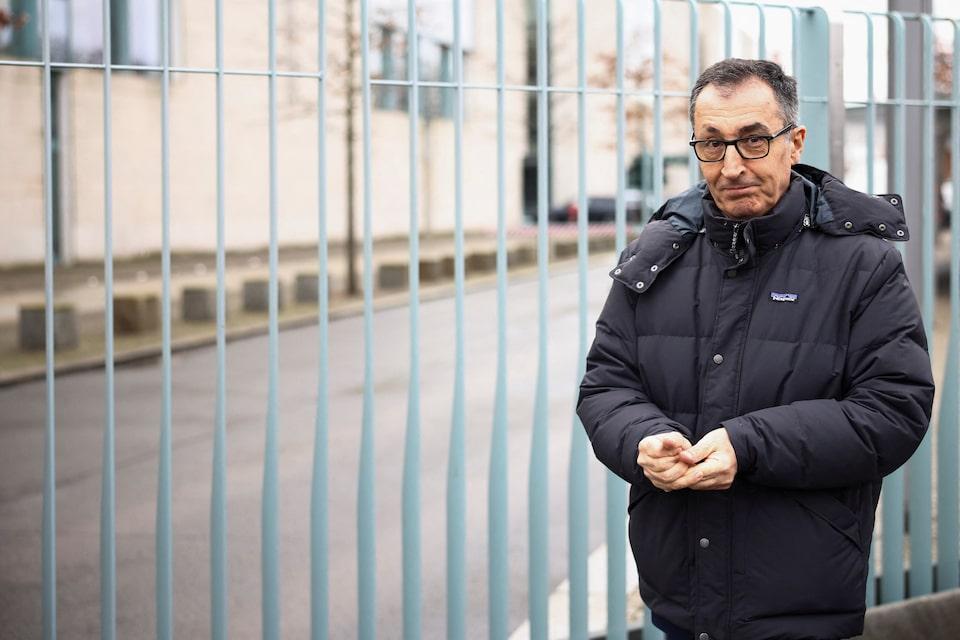
BERLIN, Jan 15 (Reuters) - Germany has not found any further cases of foot-and-mouth disease, agriculture minister Cem Oezdemir said on Wednesday, adding that experts were working day and night to establish the source of the country's first outbreak of the disease in decades. "The most important task now ... is to ensure that we get this disease under control," Oezdemir told reporters in Berlin. The government is also working to keep export markets open for German meat and dairy produce, especially in the European Union. This depends on no more cases being found, Oezdemir said. Germany announced the country's first outbreak of foot-and-mouth disease in nearly 40 years on Jan. 10 in a herd of water buffalo on the outskirts of Berlin in the Brandenburg region. The disease hits cloven-hoofed ruminants including cattle, pigs, sheep and goats and in past decades needed major slaughtering campaigns to eradicate. Measures to contain the highly infectious disease, which poses no danger to humans, often involve bans on imports of meat and dairy products from affected countries, with Britain, South Korea and Mexico among countries imposing import bans on Germany this week. Germany's government said on Wednesday it had been informed that the European Commission, the executive arm of the European Union, had decided Germany’s action to impose quarantine zones of about 10 kilometres (6.21 miles) around the farm where foot-and-mouth was discovered is sufficient to permit the use of the "rationalisation" trade principle. Under this rule, imports of meat and dairy products are only restricted from the region where the disease has been confirmed and not from the whole of the affected country. "We have now managed thank God, to reach the first step of an agreement with the European Union and make it clear that rationalisation applies," Oezdemir told reporters. "But the precondition of this is that we do not have any more cases of foot-and-mouth disease." German authorities are working day and night to find the source of the outbreak and how the infection managed to get into Germany, the minister said. Sign up here. https://www.reuters.com/world/europe/germany-has-no-more-foot-and-mouth-cases-source-outbreak-still-being-sought-2025-01-15/
2025-01-15 11:20
PARIS, Jan 15 (Reuters) - Britain's Octopus Energy acquired on Wednesday the French business of Sweden-based OX2 that develops solar power plants on agricultural land, with Octopus planning to retain the French team and add to the current solar portfolio in development. Delays in obtaining permits among other issues have caused France to lag other European countries in building solar farms over the past years, and recent turmoil in government has delayed a comprehensive national energy plan that could streamline the process. Octopus Energy has a plan to spend more than 1 billion euros ($1.03 billion) in France's clean energy infrastructure by the end of 2025, with multiple deals in the pipeline, the press release on the acquisition said. "We're acquiring their team and we will be working with them to further develop solar in France in the future," a spokeswoman for Octopus Energy told Reuters. The acquired company had plans to develop 500 megawatts (MW) of solar energy generation in France by 2031, using agricultural land to host the solar panels, the press release said. This marks Octopus' largest deal in France to date, and comes just after the purchasing of a portfolio of rooftop solar projects on top of French farms, the press release said. Octopus Energy did not immediately comment on the cost of the acquisition. ($1 = 0.9699 euros) Sign up here. https://www.reuters.com/business/energy/octopus-energy-acquires-ox2s-french-solar-unit-boost-development-2025-01-15/

2025-01-15 11:13
KAMPALA, Jan 15 (Reuters) - The Ugandan shilling firmed on Wednesday, boosted by inflows of hard currency from exporters of commodities like coffee, cocoa and gold, traders said. At 1030 GMT, commercial banks quoted the shilling at 3,689/3,699, compared to Tuesday's close of 3,692/3,702. Sign up here. https://www.reuters.com/markets/currencies/ugandan-shilling-draws-support-commodity-flows-2025-01-15/

2025-01-15 11:13
BUKAVU, Democratic Republic of Congo, Jan 15 (Reuters) - A Congolese court has sentenced three Chinese citizens to seven years in prison after they were arrested in possession of gold bars and $400,000 in cash and found guilty of illegal activities linked to the artisanal mining sector. The trio are the first Chinese nationals to stand trial since Democratic Republic of Congo launched its latest push to crack down on the unlicensed extraction of the many precious and strategic minerals buried in its conflict-torn east. "This is an educational trial that should normally serve as a wake-up call to all Chinese nationals who think they can leave China, arrive in Kitutu, Kibe, Lugushwa, Kamituga or Mwenga and behave as if they were in their own room, without even paying the hotel fees," said Christian Wanduma, a lawyer representing local communities in the trial. The judge in a court in Bukavu, the capital of eastern South Kivu province, found the defendants guilty on Tuesday of money-laundering, illegal purchase and possession of mineral substances, and other charges. In addition to the prison sentence, the judge ordered them to pay a fine equivalent to $600,000, and permanently banned them from Congo once their sentences are served. He acquitted them of charges including fraud and illegal mineral extraction for lack of evidence. The defendants had pleaded guilty to four of the seven charges against them, but said throughout the trial that they had not known they were breaking Congolese law before they were arrested on Jan. 4. Their lawyers said they would appeal the ruling. Congo has struggled to stop unlicensed companies and local armed groups exploiting its rich reserves of cobalt, copper, gold and other minerals. Protesters took to the streets of Bukavu last week after Chinese men arrested on suspicion of illegal mining in a separate case were released. "Our minerals are being plundered by companies that are mostly Chinese-owned and our people remain in extreme poverty, the roads are very dilapidated, we have difficulty accessing drinking water, health care, education, electricity, employment," civil society leader Nene Bintu said at the demonstration. "This situation has gone on for too long and must end now." In 2021, the authorities banned six small Chinese-owned mining companies, who it accused of operating illegally. Sign up here. https://www.reuters.com/world/africa/congo-jails-three-chinese-citizens-illegal-mining-crackdown-2025-01-15/