2025-01-15 06:14
Dollar weaker after CPI print Yen appreciates on rising prospect of BOJ hike British inflation unexpectedly slows, boosting sterling China's yuan holds close to daily downside limit NEW YORK, Jan 15 (Reuters) - The dollar pared some losses against major peers on Wednesday but stayed weaker as cooler-than-expected data eased fears that inflation was accelerating and increased the chances the Federal Reserve could cut interest rates twice this year. The Bureau of Labor Statistics showed consumer prices rose 2.9% in the 12 months through December, in line with economists' expectations. Core inflation, which excludes food and energy prices, came in as expected, but lower than the previous month. Softer core reading coupled with producer prices data on Tuesday triggered an immediate decline in the dollar. The dollar index , which measures the greenback against six other units, was down 0.1% at 109.07. It hit a 26-month high of 110.17 on Monday. "The cooler inflation print was a sign for traders to cut some long positions in the dollar, said Joseph Trevisani, senior analyst at FX Street in New York. Trevisani thinks the Fed will be very wary about resuming rate cuts until there's absolute certainty that inflation is headed back down. He doesn't think it. With President-elect Donald Trump returning to the White House next week, analysts expect some of his policies to boost growth as well as increase price pressures. John Velis, head of FX and macro strategy for the Americas, at BNY Markets, said going forward markets will be watching future inflation reports to see if they confirm the slow disinflation progress. But the new incoming administration will likely enact policies that upend many baseline expectations for the first part of the year, he added. "We expect the Fed to stand pat on January 29th, and rate cuts not to resume until much later in the year, pending disinflation's progress," said Velis. Meanwhile the dollar was down 0.93% on the Japanese yen at 156.49 yen. The yen strengthened on Wednesday after comments from the Bank of Japan Governor Kazuo Ueda, who said the central bank would raise interest rates and adjust the degree of monetary support if improvements in the economy and price conditions continue. Meanwhile, a cooling in British inflation offered relief to the pound. Data showed inflation slowed unexpectedly last month and core measures of price growth - tracked by the Bank of England - fell more sharply - welcome news for finance minister Rachel Reeves after a market selloff. The British pound was last seen up 0.1% at $1.2229 against the dollar, while the euro was down 0.15% at $1.0299 . "Dollar strength is not going to end because of this (CPI)number," said Peter Vassallo, FX portfolio manager at BNP Paribas Asset Management. "It's going to probably become more nuanced, and we might see the dollar continue to be strong against the European currencies, but not as strong against the yen." Israel's shekel rose as much as 0.8% against the dollar to its strongest in a month and was last up 0.4% at 3.61 per dollar, after a Gaza ceasefire deal was reached on Wednesday. International government bonds issued by Israel and Jordan rose on the news. Eyes were also on China, where the onshore yuan stayed flat on the day and was last at 7.3319 per dollar, overall maintaining a generally weak bias despite a persistently firmer than expected official guidance fix and signs of tightness in domestic money markets. Sign up here. https://www.reuters.com/markets/currencies/dollar-rally-pauses-ahead-us-inflation-test-2025-01-15/
2025-01-15 06:10
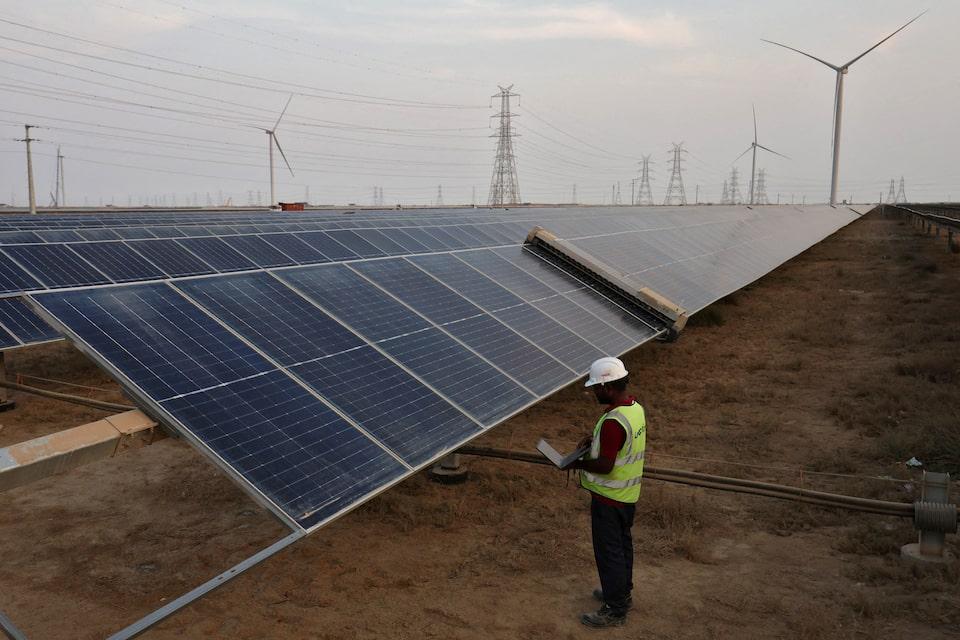
LITTLETON, Colorado, Jan 15 (Reuters) - Asia has widened its renewable energy capacity lead over all other regions, adding a record 450,000 megawatts (MW) of new renewable capacity in 2024, according to data compiled by LSEG. That capacity addition dwarfs the roughly 109,000 MW added in Europe and the 93,000 MW added in North America last year, and cements Asia's position as the main global hub for renewable energy generation. Asia's total installed renewables generation footprint is now roughly 2,500,000 MW, compared to around 1,000,000 MW in Europe and 700,000 MW in North America, and means Asia is now home to just over half of all renewable generation capacity. And Asia's capacity lead looks set to widen going forward as diminished political cohesion in Europe and a swing to a climate-sceptic administration in the United States potentially slows the pace of renewables growth in those markets. Trade spats between China - the world's top producer of renewable power production components - and Europe and the United States may also accelerate Asia's renewables build-out, by forcing China to focus more on local markets for growth. POWER PRICE IMPACT Sustained renewables capacity growth in Asia just as capacity expansions slow in Europe and North America could spark a divergence in power price trends between those regions. If Asian power systems steadily increase the share of renewables within generation mixes, local power prices could be driven lower by the resulting increases in output from solar and wind farms that can produce power more cheaply than fossil fuel power plants. At the same time, continued high reliance on natural gas for power generation in Europe and North America could keep power costs in those markets on a potentially rising trajectory. This is especially likely in Europe, where gas plants that previously ran on pipelined supplies from Russia must now be fed by imported liquefied natural gas (LNG), which can cost sharply more than pipelined gas. Gas prices in North America could also trend higher, especially if the United States ramps up gas exports in the form of LNG to feed the gas demand in other regions, and tightens domestic gas supplies as a result. The legacy networks of gas pipelines, power plants and ancillary industries that use gas as a feedstock are also powerful forces within Europe and North America, and are effective at thwarting policies that may undermine their status. These industries are also major local employers and so could spur broad societal disruption if they come under threat. In contrast, several major economies throughout Asia are intent on reducing their dependence on imported fossil fuels for energy production, and are committed to expanding home-grown power production that is enabled by renewable sources. CHINA'S SKEW China accounts for roughly two-thirds of Asia's renewables capacity footprint and looks set to remain the world's fastest developer of renewable power generation. China's mammoth manufacturing base also looks set to remain the largest producer of solar parts and other key components tied to renewables generation, which China plans to export throughout the world. Local Asian markets are likely to be willing buyers of those China-made parts and products, as several economies in Asia are experiencing rapid growth in energy consumption that can be supplied relatively cheaply and quickly by renewables sources. In contrast, Europe and the United States are liable to slow their uptake of China-made energy products due to ongoing trade disputes, even if those products are among the lowest cost available and are effective in lifting power supplies. That discrepancy in appetite for China-made renewable energy parts and systems may further accelerate the divergence in clean power capacity trends between Asia and other regions, and amplify the resulting power price trends. The re-routing of global manufacturing supply chains away from China - in response to ongoing trade disputes with Beijing - may also serve to accelerate Asia's renewables adoption. Many of the alternative factory locations are likely to be in low-cost Asian nations that have large workforces, while many of the products and parts they assemble will remain tied to the energy transition due to the widespread appeal of clean energy production systems. Emerging economies across Asia are also keen to wean their energy systems off high-cost and high-polluting fossil fuels, and so are expected to undertake major investments in building out clean energy generation that helps to create jobs and spur economic growth. In sum, these trends may serve to speed up Asia's collective adoption of renewable energy production over the coming years, just as Europe and North America are poised to potentially reduce the pace of renewables adoption due to their own political and industrial priorities. The opinions expressed here are those of the author, a market analyst for Reuters. Sign up here. https://www.reuters.com/business/energy/asias-yawning-renewables-lead-may-only-grow-here-maguire-2025-01-15/
2025-01-15 06:00
US core CPI rises 3.2% on a yearly basis in December Dollar down 0.1% against its rivals Trump to begin his second term next week Jan 15 (Reuters) - Gold prices extended gains on Wednesday, as the dollar dipped after U.S. core inflation data came in softer than expected, abating inflation pressures and rekindling expectations that the Federal Reserve's easing cycle may not be over yet. Spot gold gained 0.6% to $2,693.63 per ounce by 02:23 p.m. ET (1923 GMT). U.S. gold futures settled 1.3% higher at $2,717.80. Excluding volatile food and energy components, core CPI increased 3.2% on an annual basis, compared with an expected 3.3% rise, the U.S. Bureau of Labor Statistics said on Wednesday. "Core CPI came in a little bit below expectations. This is a bit of a positive for gold... The corollary to this is that the Fed will not necessarily exclude the possibility of cutting rates," said Bart Melek, head of commodity strategies at TD Securities. "The probability of a rate cut in January is kind of nothing, but we are pricing some rate cuts by the end of the year here." Markets now expect the Fed to deliver 40 basis points (bps) worth of rate cuts by year-end, compared with about 31 bps before the inflation data. The dollar index (.DXY) , opens new tab eased 0.1%, making bullion more attractive for other currency holders. The benchmark 10-year Treasury yields also slipped. Investors are worried that the potential for tariffs after Donald Trump re-enters the White House next week could stoke inflation and limit the Fed's ability to lower rates to a greater extent. Non-yielding bullion is considered a hedge against inflation, although higher rates diminish its appeal. However, the uncertainties around Trump's tariffs and trade policies for the global economy and their potential impact on growth are likely to sustain safe-haven demand for gold, said Zain Vawda, market analyst at MarketPulse by OANDA. Spot silver firmed 2.6% to $30.66 per ounce, platinum rose 0.2% to $937.58, and palladium added 2.6% to $962.98. Sign up here. https://www.reuters.com/markets/commodities/gold-eases-spotlight-shifts-us-inflation-data-2025-01-15/
2025-01-15 05:39
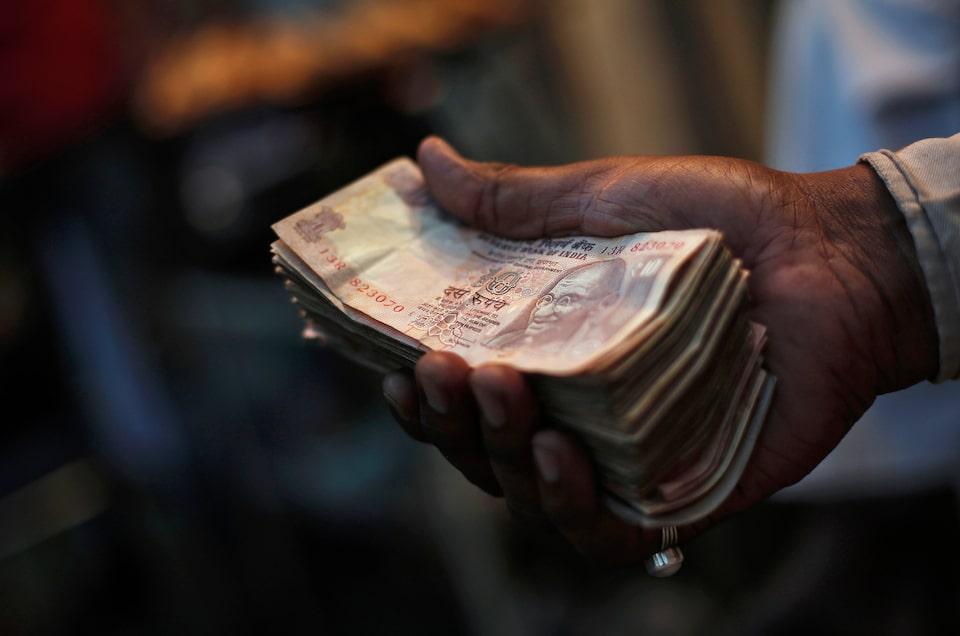
MUMBAI, Jan 15 (Reuters) - The Indian rupee rose on Wednesday, aided by a broadly softer dollar ahead of closely watched U.S. inflation data, while the dollar-rupee implied volatility signalled that the currency is poised to experience sharper swings going ahead. The rupee was at 86.48 as of 11:00 a.m. IST, up nearly 0.2% on the day. The currency had weakened to yet another all-time low of 86.5825 in the previous session, pressured by dollar bids spurred by the maturity of positions in the non-deliverable forwards market. On Wednesday, though, a pullback in the dollar index from an over two-year peak supported the rupee, which has logged multiple record lows over the last few months. The currency's pace of big-figure declines has ramped up as it fell to 86 from 85 in less than a month. In comparison, it took the unit about two months to weaken to 85 from 84, while the decline to 84 from 83 took about 14 months. Amid these declines, the rupee's implied volatility, a gauge of future expectations, has risen across tenors. The 1-month implied volatility is hovering near a 16-month peak, while the 6-month and 1-year gauges have also moved higher. "The recent equity market correction, FII (foreign institutional investor) outflows and overvaluation of the INR suggest that the rupee will continue to face downward pressure in the near term," ING Bank said in a note. Foreign investors have net sold over $4 billion of local stocks and bonds so far in January, while the benchmark Indian equity indexes are over 10% below their record highs hit in late September. Persistent strength in the dollar and caution about the potential impact that incoming U.S. President Donald Trump's trade policies may have on currency markets has also added to the pain. Amid these headwinds, sources told Reuters that India's central bank will be more judicious in its use of foreign exchange reserves to mitigate currency volatility. Sign up here. https://www.reuters.com/markets/currencies/rupee-finds-breathing-room-volatility-expectations-shift-higher-2025-01-15/
2025-01-15 05:39
BEIJING, Jan 15 (Reuters) - A joint venture of Shell (SHEL.L) , opens new tab and CNOOC (600938.SS) , opens new tab plans to expand its petrochemical facility in south China's Guangdong province in a project targeted for completion in 2028, it said on Wednesday. CSPC, or CNOOC and Shell Petrochemicals Co, will add a third ethylene cracker with a production capacity of 1.6 million metric tons per year at the site in Daya Bay, Huizhou. Ethylene is used to make plastics. The joint venture will also build a facility to produce 320,000 tons per year of speciality chemicals such as polycarbonates, which are used to make impact-resistant plastics, and carbonate solvents, a component of lithium-ion batteries. Currently, the site produces 2.2 million tons a year of ethylene and 6 million tons of chemical products. The new capacity will primarily cater to the domestic Chinese market. Sign up here. https://www.reuters.com/business/energy/shell-cnooc-joint-venture-expand-south-china-petrochemical-complex-2025-01-15/

2025-01-15 05:34
A look at the day ahead in European and global markets from Stella Qiu Bond investors may have drawn some comfort from the benign miss in U.S. producer price data but a duo of CPI reports from Britain and the U.S. is set to decide whether the relentless selling in the global bond market resumes. And the risks to inflation seem squarely to the upside, with Donald Trump set to return to the White House and release a blizzard of executive orders next Monday. Some analysts warned that even a consensus result for U.S. CPI will not relieve the bearish pressure on bonds. In Asia, shares struggled for direction. MSCI's broadest index of Asia-Pacific shares outside Japan (.MIAPJ0000PUS) , opens new tab eased 0.1%, while Japan's Nikkei (.N225) , opens new tab swung between gains and losses, but was last flat. U.S. equity futures were flat, while Pan-European STOXX 50 futures edged up 0.1% and UK FTSE futures were 0.2% higher ahead of British consumer price data due at 0700 GMT. Headline inflation is expected to remain steady at 2.6% in December, while the core measure is seen easing a tad to 3.4% from 3.5% the prior month, according to a Reuters poll. Anything higher would offer the perfect excuse for speculators to short gilts, where yields have soared to 16-year highs amid worries about Britain's fiscal health under the leadership of finance minister Rachel Reeves. It will also pile pressure on the pound, which is pinned near a 14-month trough and testing a key chart level of $1.2056. The next hurdle, probably more significant, for investors is the U.S. CPI data. Forecasts are for a monthly rise of 0.2% in the core measure, with the range tight at 0.2% to 0.3%. A reading of 0.3% or more would trigger another bout of heavy selling in Treasuries, with 10-year yields headed to the 5% mark, lifting the dollar and pummelling stocks. Traders will further pare back expectations for policy easing from the Federal Reserve this year, from the current 29 basis points. A reading of 0.2% or below will likely see risk appetite return a little and a relief rally in bonds. U.S. fourth-quarter 2024 earnings will also kick off in earnest on Wednesday, with results from some of the biggest U.S. banks - including Citi (C.N) , opens new tab and JPMorgan (JPM.N) , opens new tab. Lenders were expected to report stronger earnings, fuelled by robust dealmaking and trading. Given lofty expectations, the risk to miss is high. Key developments that could influence markets on Wednesday: -- UK CPI for December -- France CPI for December -- Euro zone industrial production figures for November -- US CPI for December -- Fed's New York President John Williams delivers a speech, as well as Chicago President Austan Goolsbee and Richmond President Thomas Barkin Sign up here. https://www.reuters.com/markets/europe/global-markets-view-europe-2025-01-15/