2026-01-04 11:18
PARIS, Jan 4 (Reuters) - The French government - looking to quell a farmers' protest movement - will take new steps to protect the country's industry by stopping imports of some products, said Prime Minister Sebastien Lecornu on Sunday. French farmers have been protesting in the last month over issues such as a planned European trade deal with the South American Mercosur bloc, as well as against the government's handling of an animal disease that has affected livestock. Sign up here. Lecornu wrote on X that a government decree would be issued soon announcing the suspension of imports of some products containing residues of substances banned in Europe. "Avocados, mangos, guavas, citrus fruits, grapes, and apples from South America or elsewhere will no longer be allowed to enter the national territory," said Lecornu. "This marks a first step to protect our supply chains, our consumers and to fight against unequal competition, which is a real issue of justice and fairness for our farmers," he added. Germany and Spain back the Mercosur deal, but opponents in France say the trade arrangement would lead to cheap imports of South American commodities, notably beef, that do not meet the European Union's environmental and food safety standards. https://www.reuters.com/business/france-take-new-steps-help-its-farmers-amid-mercosur-opposition-2026-01-04/
2026-01-04 11:09
Venezuelan officials vow unity after U.S. captures Maduro Maduro allies still run country Venezuela must align with U.S. interests, Rubio says Streets quiet amid anxiety over next developments Jan 4 (Reuters) - A top Venezuelan official declared on Sunday that the country's government would stay unified behind President Nicolas Maduro, whose capture by the United States has sparked deep uncertainty about what is next for the oil-rich South American nation. Maduro is in a New York detention center awaiting a Monday court appearance on drug charges. U.S. President Donald Trump, who went golfing on Sunday, ordered his seizure from Venezuela on Saturday and said the U.S. would take control of the country. Sign up here. But in Caracas, top officials in Maduro's government, who have called the detentions of Maduro and his wife Cilia Flores a kidnapping, were still in charge. "Here, the unity of the revolutionary force is more than guaranteed, and here there is only one president, whose name is Nicolas Maduro Moros. Let no one fall for the enemy’s provocations," Interior Minister Diosdado Cabello said in an audio recording released by the ruling PSUV socialist party. Images of the 63-year-old Maduro , opens new tab blindfolded and handcuffed on Saturday stunned Venezuelans. The operation was Washington's most controversial intervention in Latin America , opens new tab since the invasion of Panama 37 years ago. Without providing specifics, Defense Minister General Vladimir Padrino said on state television the U.S. attack killed soldiers, civilians and a "large part" of Maduro's security detail "in cold blood." Venezuela’s armed forces have been activated to guarantee sovereignty, he said. Vice President Delcy Rodriguez — who also serves as oil minister — has taken over as interim leader with the blessing of Venezuela's top court, though she has said Maduro remains president. Because of her connections with the private sector and deep knowledge of oil, the country's top revenue source, Rodriguez has long been considered the most pragmatic member of Maduro's inner circle. But she has publicly contradicted Trump's claim she is willing to work with the United States. Trump said Rodriguez may pay a bigger price than Maduro "if she doesn't do what's right," according to an interview with The Atlantic magazine on Sunday. The Venezuelan communications ministry did not immediately respond to a request for comment on that remark. 'A QUARANTINE ON THEIR OIL' U.S. Secretary of State Marco Rubio said Venezuela's next leader should be aligned with U.S. interests. Those include keeping Venezuela's oil industry out of the hands of U.S. adversaries and stopping drug trafficking. He cited an ongoing U.S. blockade on tankers under sanctions as leverage. "That means their economy will not be able to move forward until the conditions that are in the national interest of the United States and the interest of the Venezuelan people are met," he said on ABC's "This Week." The Venezuelan government has said for months Trump was seeking to take the country's vast natural resources, especially its oil, and officials made much of his comment on Saturday that major U.S. oil companies would move in. “We are outraged because in the end everything was revealed — it was revealed that they only want our oil,” added Cabello. Once one of the most prosperous nations in Latin America, Venezuela's economy tanked in the 2000s under President Hugo Chavez and nosedived further under Maduro, sending about one in five Venezuelans abroad in one of the world's biggest exoduses. MUTED STREETS Some Maduro supporters gathered at a government-sponsored protest march on Sunday afternoon in Caracas. Once ruled by Spain, Venezuela's "people must not surrender, nor should we ever become a colony of anyone again," said demonstrator Reinaldo Mijares. "This country is not a country of the defeated.” Maduro opponents in Venezuela have been wary of celebrating his seizure, and the presence of security forces seemed, if anything, lighter than usual on Sunday. Despite a nervous mood, some bakeries and coffee shops were open and joggers and cyclists were out as usual. Some citizens were stocking up on essentials. “Yesterday I was very afraid to go out, but today I had to. This situation caught me without food and I need to figure things out. After all, Venezuelans are used to enduring fear," said a single mother in oil city Maracaibo who bought rice, vegetables and tuna. To the disappointment of Venezuela's opposition, Trump has given short shrift to the idea of 58-year-old opposition leader and Nobel Peace Prize winner Maria Corina Machado taking over, saying she lacked support. Machado was banned from standing in the 2024 election but has said her ally Edmundo Gonzalez, 76, who the opposition and some international observers say overwhelmingly won that vote, has a democratic mandate to take the presidency. LOOMING QUESTIONS It is unclear how Trump plans to oversee Venezuela and he runs the risk of alienating some supporters who oppose foreign interventions. U.S. Senate Democratic leader Chuck Schumer said the White House has failed to say how long the U.S. intends to be in Venezuela and how many American troops might be required. "The American people are worried that this is creating an endless war — the very thing that Donald Trump campaigned against," Schumer said on ABC's "This Week." He said lawmakers would weigh a measure to constrain further Trump administration action in Venezuela, though its prospects could be uncertain given that Congress is controlled by Trump's Republicans. While many Western nations oppose Maduro, there were many calls for the U.S. to respect international law and questions arose over the legality of seizing a foreign head of state. In a statement on Sunday, U.S. Attorney General Pam Bondi, echoing the message put forth by the Trump administration since Maduro's capture, described the action as a "law enforcement mission" to force him to face U.S. criminal charges filed in 2020, including narco-terrorism conspiracy. Maduro has denied criminal involvement. The U.N. Security Council planned to meet on Monday to discuss the attack. Russia and China, both major backers of Venezuela, have criticized the U.S. https://www.reuters.com/world/us/venezuelas-maduro-custody-trump-says-us-will-run-country-2026-01-04/
2026-01-04 10:58
Eight OPEC+ members reaffirm existing policy US seizes Venezuelan President Maduro, plans transition Analysts doubt quick boost in Venezuelan oil output DUBAI/LONDON, Jan 4 (Reuters) - OPEC+ kept oil output unchanged on Sunday after a quick meeting that avoided discussion of the political crises affecting several of the producer group's members. Sunday's meeting of eight members of OPEC+, which pumps about half the world's oil, came after oil prices fell more than 18% in 2025 — their steepest yearly drop since 2020 — amid growing oversupply concerns. Sign up here. Tensions between Saudi Arabia and the UAE flared last month over a decade-long conflict in Yemen, when a UAE-aligned group seized territory from the Saudi-backed government. The crisis triggered the biggest split in decades between the former close allies. And on Saturday, the United States captured Venezuelan President Nicolas Maduro, and U.S. President Donald Trump said Washington would take control of the country until a transition to a new administration becomes possible, without saying how this would be achieved. DRIVEN BY POLITICAL UNCERTAINTY "Right now, oil markets are being driven less by supply–demand fundamentals and more by political uncertainty," said Jorge Leon, head of geopolitical analysis at Rystad Energy and a former OPEC official. "And OPEC+ is clearly prioritising stability over action.” The eight OPEC+ members - Saudi Arabia, Russia, the UAE, Kazakhstan, Kuwait, Iraq, Algeria and Oman - raised oil output targets by around 2.9 million barrels per day in 2025, equal to almost 3% of world oil demand, to regain market share. The eight members agreed in November to pause output hikes for January, February and March due to relatively low demand in the northern hemisphere winter. Sunday's brief online meeting affirmed that policy and did not discuss Venezuela, one OPEC+ delegate said. The eight countries will next meet on February 1, OPEC+ said. NUMEROUS CRISES OPEC has in the past managed to overcome many internal rifts, such as over the Iran–Iraq War, by prioritising market management over political disputes. Yet the group is facing other crises, with Russian oil exports falling due to U.S. sanctions over its war in Ukraine, and Iran facing protests and U.S. threats of intervention. Venezuela has the world's largest oil reserves, bigger even than those of OPEC's leader Saudi Arabia, but its oil production has plummeted due to years of mismanagement and sanctions. Analysts said it is unlikely to see any meaningful boost to crude output for years, even if U.S. oil majors do invest the billions of dollars in the country that Trump promised. https://www.reuters.com/business/energy/opec-keep-oil-output-steady-despite-turmoil-among-members-sources-say-2026-01-04/
2026-01-04 04:56
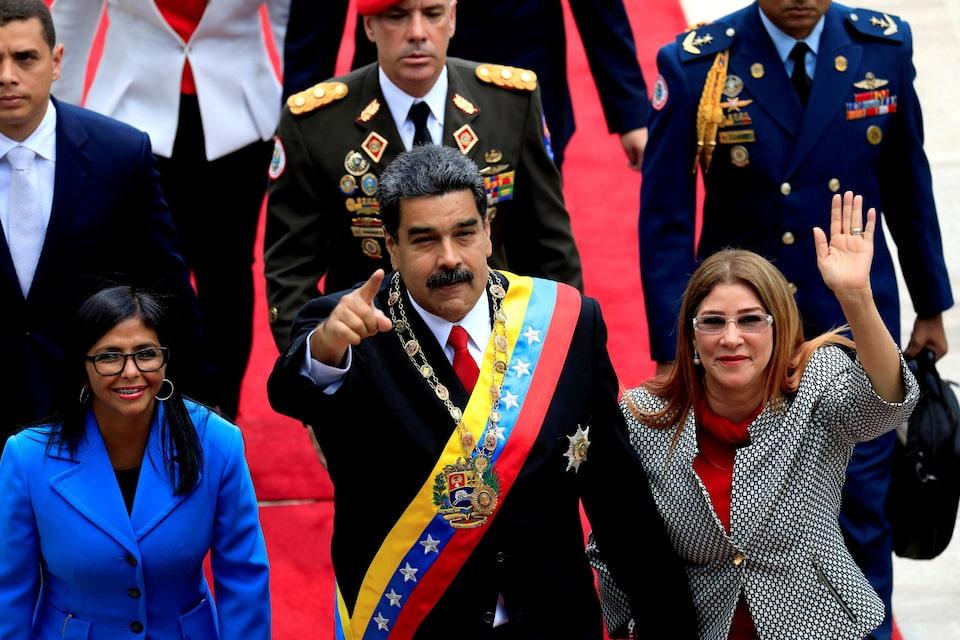
Maduro's ouster leaves fragmented government and uncertain future Real power could rest with chief of intelligence agencies Generals' loyalty secured with profits from illicit trade and smuggling routes Jan 3 (Reuters) - The U.S. capture of Venezuelan leader Nicolas Maduro - praised by President Donald Trump as stunning and powerful - leaves behind uncertainty about who is running the oil-rich country. Trump said on Saturday that Vice President Delcy Rodriguez, part of the powerful cabal at the top of the country's government, had been sworn in after Maduro's arrest and that she had spoken with U.S. Secretary of State Marco Rubio, leading to speculation that she would take the reins. Sign up here. Under Venezuela's constitution, Rodriguez becomes acting president in Maduro's absence and the country's top court ordered her to assume the role late Saturday night. But shortly after Trump's remarks, Rodriguez appeared on state television flanked by her brother, the head of the national assembly Jorge Rodriguez, Interior Minister Diosdado Cabello and Defense Minister Vladimir Padrino Lopez and said that Maduro remained Venezuela's only president. The joint appearance indicated the group that shared power with Maduro is staying united - for now. Trump publicly closed the door Saturday on working with opposition leader and Nobel Prize winner Maria Corina Machado, widely seen as Maduro's most credible opponent, saying she doesn't have support inside the country. After Machado was barred from running in Venezuela's 2024 elections, international observers say her stand-in candidate won the vote in a landslide, despite Maduro's government claiming victory. CIVILIAN-MILITARY POWER BALANCE For more than a decade, real power in Venezuela has been held by a small circle of senior officials. Analysts and officials say though that the system depends on a sprawling web of loyalists and security organs, fueled by corruption and surveillance. Within the inner circle, a civilian-military balance reigns. Each member has their own interests and patronage networks. Currently Rodriguez and her brother represent the civilian side. Padrino and Cabello represent the military side. This power structure makes dismantling Venezuela's current government more complex than removing Maduro, according to interviews with current and former U.S. officials, Venezuelan and U.S. military analysts and security consultants to Venezuela's opposition. "You can remove as many pieces of the Venezuelan government as you like, but it would have to be multiple actors at different levels to move the needle," said a former U.S. official involved in criminal investigations in Venezuela. A big question mark surrounds Cabello, who exerts influence over the country's military and civilian counterintelligence agencies, which conduct widespread domestic espionage. "The focus is now on Diosdado Cabello," said Venezuelan military strategist Jose Garcia. "Because he is the most ideological, violent and unpredictable element of the Venezuelan regime." The United Nations found both SEBIN, the civilian agency, and DGCIM, the military intelligence service, have committed crimes against humanity as part of a state plan to crush dissent. Eleven former detainees - including some who were once security personnel themselves - described electric shocks, simulated drownings, and sexual abuse at DGCIM black sites to Reuters in interviews before Maduro's capture. "They want you to feel like you are a cockroach in a cage of elephants, that they are bigger," said a former DGCIM agent who was arrested and accused of treason in 2020 after having contact with military dissidents. In recent weeks, as the United States mounted its biggest military build-upin Latin America in decades, Cabello has appeared on live TV ordering the DGCIM to "go and get the terrorists" and warning "whoever strays, we will know." He repeated the rhetoric in a state television appearance on Saturday, clad in a flak jacket and helmet and surrounded by heavily armed guards. Cabello has also been closely associated with pro-government militias, notably groups of motorcycle-riding armed civilians known as colectivos. GENERALS CONTROL KEY SECTORS Cabello, a former military officer and a major player in the socialist party, has influence over a meaningful fraction of the armed forces, even though Venezuela's military has been formally run by Defense Minister Padrino for more than ten years. Venezuela has as many as 2,000 generals and admirals, more than double the number in the United States. Senior and retired officers control food distribution, raw materials and the state oil company PDVSA, while dozens of generals sit on the boards of private firms. Beyond contracts, military officials profit from illicit trade, defectors and current and former U.S. investigators say. Documents from an opposition security consultant, shared with the U.S. military and seen by Reuters, say commanders close to Cabello and Padrino are assigned to key brigades along Venezuela's borders and in industrial hubs. The brigades, while tactically important, also sit on major smuggling routes. "There are some 20 to 50 officers in the Venezuelan military who need to go, probably even more, to fully remove this regime," said a lawyer who has represented a member of senior Venezuelan leadership. Some might be considering jumping ship. The lawyer said that around a dozen former officials and current generals had reached out after Maduro's capture, hoping to cut a deal with the U.S. by offering intelligence in exchange for safe passage and legal immunity. But those close to Cabello said he was not currently interested in cutting a deal, the lawyer said. https://www.reuters.com/world/americas/maduro-is-out-its-unclear-who-is-running-venezuela-2026-01-04/
2026-01-04 00:52
Political instability could hinder foreign investment into Venezuela's oil sector Venezuela's oil production historically significant, but now diminished Chevron is the only American major currently operating in Venezuela MIAMI, Jan 3 (Reuters) - Venezuela is unlikely to see any meaningful boost to crude output for years even if U.S. oil majors do invest the billions of dollars in the country that President Donald Trump promised just hours following Nicolás Maduro's capture by U.S. forces. The South American country may have the world's largest estimated oil reserves, but output has plummeted over the past decades amid mismanagement and a lack of investment from foreign firms after Venezuela nationalized oil operations in the 2000s that included the assets of Exxon Mobil (XOM.N) , opens new tab and ConocoPhillips (COP.N) , opens new tab. Sign up here. Any companies that might want to invest there would need to deal with security concerns, dilapidated infrastructure, questions about the legality of the U.S. operation to snatch Maduro and the potential for long-term political instability, analysts told Reuters. American firms won't return until they know for sure they will be paid and will have at least a minimal amount of security, said Mark Christian, director of business development at CHRIS Well Consulting. He also said the companies would not go back until sanctions against the country are removed. Venezuela would also have to reform its laws to allow for larger investment by foreign oil companies. Venezuela nationalized the industry in the 1970s, and in the 2000s ordered a forced migration to joint ventures controlled by its state oil company, PDVSA [RIC:RIC:PDVSA.UL]. Most companies negotiated exits and migrated, including Chevron, while a handful of others did not reach deals and filed for arbitration. THERE IS A LOT THAT COULD GO WRONG "I f Trump et al can produce a peaceful transition with little resistance, then in five to seven years there is a significant oil-production ramp up as infrastructure is repaired and investments get sorted out," Thomas O'Donnell, an energy and geopolitical strategist, told Reuters, adding that heavy crude produced in the country works well with U.S. Gulf Coast refineries and can also be blended with lighter oil produced from fracking. But that would depend on everything going right, and there's a lot that could go wrong. "A botched political transition that has a feeling of U.S. dominance can lead to years of resistance," O'Donnell said, noting armed groups of citizens and guerrilla groups that operate in the country. Chevron would be positioned to benefit the most from any potential oil opening in Venezuela, said Francisco Monaldi, director of the Latin America Energy Program at Rice University's Baker Institute in Houston. Other U.S. oil companies would be paying close attention to political stability and would wait to see how the operational environment and contract framework unfolded, he added. Venezuela - a founding member of OPEC with Iran, Iraq, Kuwait and Saudi Arabia - produced as much as 3.5 million barrels per day in the 1970s, which at the time represented over 7% of global oil output. Production fell below 2 million bpd during the 2010s and averaged around 1.1 million bpd last year, or just 1% of global production. CHEVRON IS THE ONLY US OIL MAJOR OPERATING IN VENEZUELA Chevron is the only American major currently operating in Venezuela. Conoco has been seeking billions for the takeover of three oil projects nearly two decades ago, while Exxon was also involved in lengthy arbitration cases against Venezuela after it exited the country nearly two decades ago. "The company that probably will be very interested in going back is Conoco, because they are owed more than $10 billion, and it's unlikely that they will get paid without going back into the country," Monaldi said. Exxon could also return, but is not owed as much money, he added. "ConocoPhillips is monitoring developments in Venezuela and their potential implications for global energy supply and stability. It would be premature to speculate on any future business activities or investments," a company spokesperson said in emailed comments to Reuters. Chevron, which exports around 150,000 bpd of crude from Venezuela to the U.S. Gulf Coast, has had to carefully maneuver with the Trump administration in an effort to maintain its presence in the country over the past year. CEO Mike Wirth said in December that he had spoken with the Trump administration about what he said was the importance of maintaining an American presence in the country through multiple political cycles. The oil firm has been in Venezuela for over 100 years and said on Saturday that it is focused on the safety and well-being of its employees, in addition to the integrity of its assets. "We continue to operate in full compliance with all relevant laws and regulations,” a Chevron spokesperson said in an emailed response to questions. Exxon did not immediately respond to questions from Reuters. OPEC and allies will meet on Sunday and are expected to maintain current oil output policy. The group has been increasing production since last year, stoking concerns of a global supply glut, but has agreed to pause oil output hikes for January, February and March. Ed Hirs, an energy fellow at University of Houston, said recent events in Venezuela would have little impact on U.S. prices for oil and gasoline for now, with much of the country's production going to Cuba and China at the moment. He also said that history is full of recent examples of American excursions that didn't produce notable results for U.S. companies. "Trump now joins the history of U.S. presidents who have overthrown regimes of oil-rich countries. Bush with Iraq. Obama with Libya. In those cases, the United States has received zero benefit from the oil. I’m afraid that history will repeat itself in Venezuela," Hirs said. Oil tankers chartered by Chevron had been among the few to set sail from Venezuela over the past month, following Trump's December announcement of a " blockade That's perhaps where one quick win could emerge, if Trump is able to restart the flow of Venezuelan crude into the U.S. Gulf, potentially boosting refiners like Valero in the process. At the moment, it appears that just the opposite is happening. https://www.reuters.com/business/energy/no-quick-wins-tapping-venezuelas-oil-reserves-2026-01-04/
2026-01-03 21:35
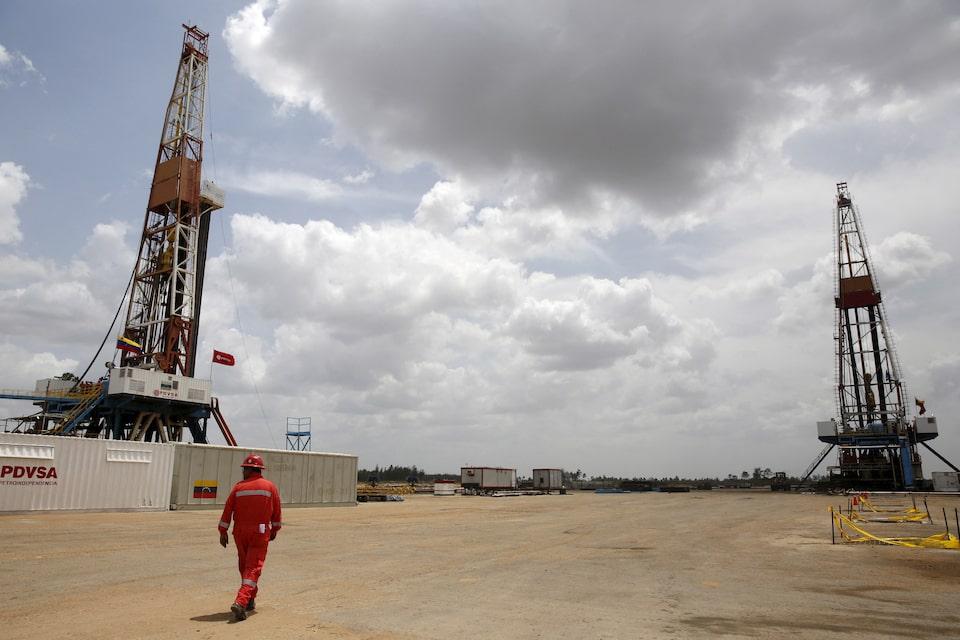
Jan 3 (Reuters) - Venezuela's oil exports, which had fallen to a minimum amid U.S. President Donald Trump's announced blockade of all sanctioned tankers going in and out of the country's waters, are now paralyzed as port captains have not received requests to authorize loaded ships to set sail, four sources close to operations said on Saturday. The paralysis emerges as the U.S. extracted President Nicolas Maduro and his wife from capital Caracas and announced it will oversee a political transition in the South American country. Sign up here. President Trump said on Saturday that an "oil embargo" on the country was in full effect. Several vessels that have recently loaded crude and fuel bound for destinations including the U.S. and Asia have not set sail, while others that had waited to load have left empty, according to monitoring data. No tankers were loading on Saturday at the country's main oil port of Jose, TankerTrackers.com said. A total suspension of oil exports, including tankers chartered by state-run PDVSA's main partner Chevron (CVX.N) , opens new tab, could accelerate the country's need to cut back output at oilfields, since storage tanks and even ships used for floating storage have filled rapidly in recent weeks, according to sources and PDVSA's documents. PDVSA and Chevron did not immediately reply to requests for comment. https://www.reuters.com/business/energy/venezuelas-oil-exports-paralyzed-amid-political-turmoil-sources-say-2026-01-03/