2025-01-15 05:18
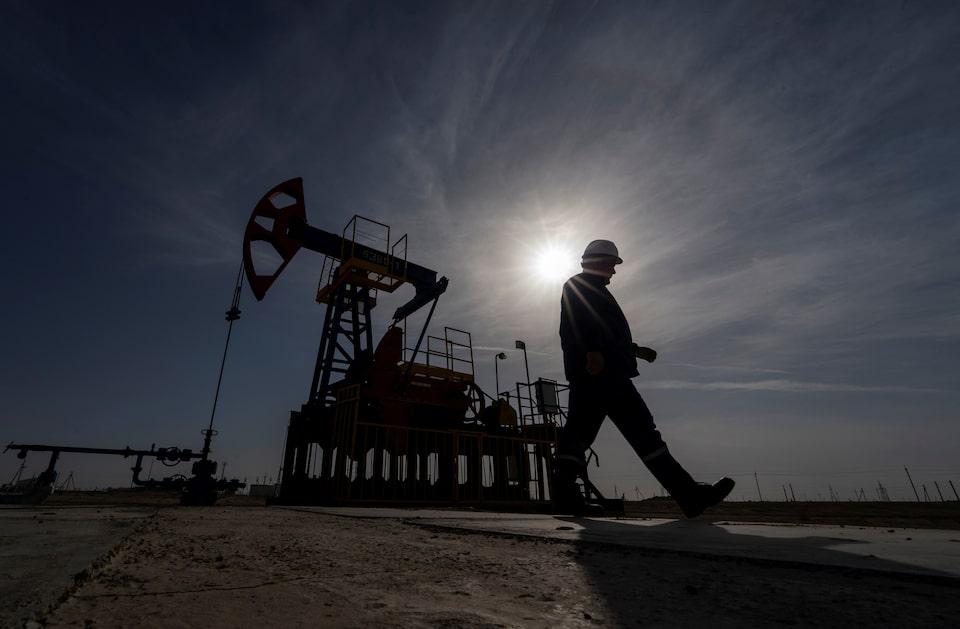
WTI, Brent prices hit highest since July 2024 US crude oil stocks fell last week to their lowest since April 2022, EIA says Israel and Hamas agree to a ceasefire deal, official says IEA says new US sanctions could disrupt Russian supply Jan 15 (Reuters) - Oil prices rose more than 2% on Wednesday, supported by a large draw in U.S. crude stockpiles and potential supply disruptions caused by new U.S. sanctions on Russia, while a Gaza ceasefire deal limited gains. Brent crude futures settled $2.11, or 2.64%, higher at $82.03 a barrel, the highest since August 2024. U.S. West Texas Intermediate crude (WTI) settled up $2.54, or 3.28%, at $80.04 a barrel, the highest since July. In post settlement trade, Brent rose to the highest since July and WTI gained more than $3 a barrel. U.S. crude oil inventories fell last week to their lowest since 2022, the U.S. Energy Information Administration reported, as exports rose and imports fell. Gasoline and distillate inventories rose more than expected. "The crude oil draw was largely on import-export dynamics," said Bob Yawger, director of energy futures at Mizuho. "The exports are hard to believe," he added, pointing to the fact that many were booked before the sanctions announcement. The latest round of U.S. sanctions on Russian oil could disrupt Russian oil supply and distribution significantly, the International Energy Agency said in its monthly oil market report. Jitters over sanctions seem to be supporting prices, said Ole Hansen, head of commodity strategy at Saxo Bank. "Tankers carrying Russian crude seem to be struggling offloading their cargoes around the world, potentially driving some short-term tightness," he added. Limiting the gains, Israel and Hamas agreed to a deal to halt fighting in Gaza and exchange Israeli hostages for Palestinian prisoners, according to an official. Concerns over supply disruption eased with Israel-Hamas ceasefire deal reached, Phil Flynn, analyst at Price Futures Group, said. Investors remained focused on signs of a strengthening economy and oil demand, he added. The dollar index slipped on Wednesday after U.S. data showed consumer prices rose slightly above expectations in December, heightening expectations for more interest-rate cuts by the Federal Reserve. A weaker dollar (.DXY) , opens new tab usually supports oil prices and lower interest rates can boost economic growth. Meanwhile, OPEC expects global oil demand to rise by 1.43 million barrels per day in 2026, maintaining a similar growth rate to 2025, the producer group said. Sign up here. https://www.reuters.com/business/energy/oil-little-changed-falling-us-stockpiles-outweigh-soft-demand-outlook-2025-01-15/
2025-01-15 03:28
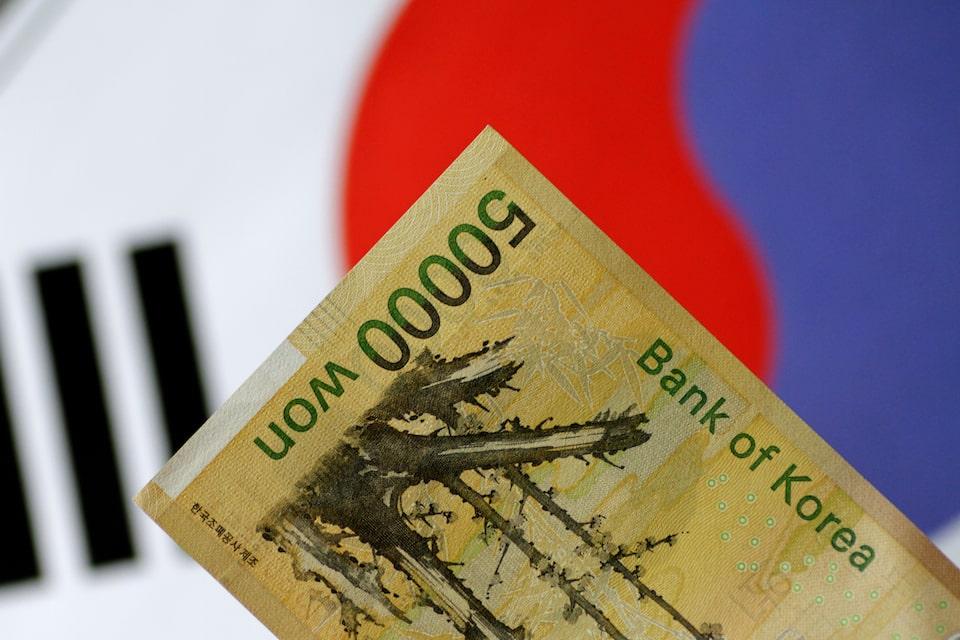
SEOUL, Jan 15 (Reuters) - South Korea's capital markets in December experienced the largest foreign outflows since March 2020 as heightened political uncertainty hit investor sentiment, central bank data showed on Wednesday. Foreigners last month extended their South Korean stock market selloff to a fourth straight month by selling a net $2.58 billion. In the bond market, they turned net sellers for the first time in nine months, with a net outflow of $1.28 billion. The monthly outflow of a combined $3.86 billion was the biggest since March 2020, when global financial markets were hit by the COVID-19 pandemic, according to the Bank of Korea. Last month, the won weakened 5.2% against the dollar, marking its largest monthly decline in 22 months on heightened political uncertainty after President Yoon Suk Yeol's short-lived martial law on Dec. 3. Sign up here. https://www.reuters.com/markets/asia/foreigners-sold-south-korean-equities-last-month-by-most-since-early-2020-2025-01-15/
2025-01-15 03:00
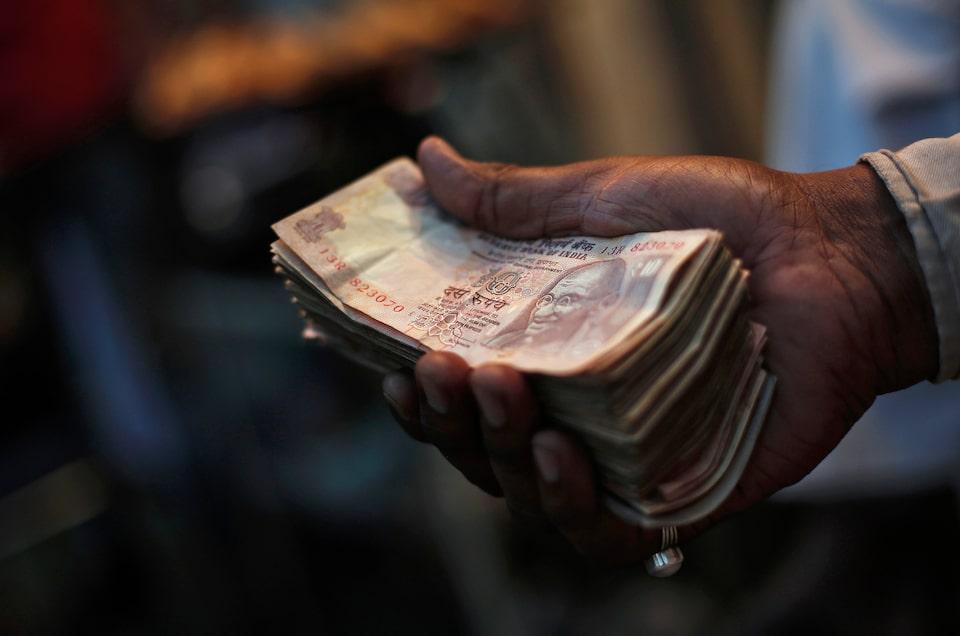
MUMBAI, Jan 15 (Reuters) - The Indian rupee is likely to open marginally higher on Wednesday as the dollar retreats in the lead up to U.S. inflation data that will give cues on the direction of U.S. interest rates. The 1-month non-deliverable forward indicated that the rupee will open at 86.58-86.60 to the U.S. dollar, compared with 86.63 in the previous session, when it hit an all-time low of 86.6475. The currency has declined 1.2% this month. The rupee's fall from 84 to the current level has happened "without any form of correction" and "there is little doubt" it has been very fast, a currency trader at a bank said. "Yes, India's fundamentals and the (U.S. President-elect Donald) Trump's (tariffs threat) situation warrant a weaker rupee. However, I have a sense that we are going to see a sizeable correction very shortly." The dollar index was at 109.24, off nearly 1% from the multi-year high hit two days back. Oil prices, like the dollar, pulled back with Brent crude back below $80 a barrel. US INFLATION DATA EYED The U.S. headline consumer price index (CPI) is likely to have risen by 0.3% month-on-month in December, and the core gauge by 0.2%, per a poll conducted by Reuters. Headline CPI likely rose 3% year-on-year. The data comes days after a blowout jobs report prompted traders to further rein in their expectations of rate cuts by the Federal Reserve. Rate futures indicate only one rate cut this year, half the number the Fed projected last month. The sticky U.S. inflation alongside worries over Trump's planned trade and fiscal policies has prompted investors to reassess the rate path. "This is not the type of report that the Fed thought they would see at end 2024," ING Bank said in a note. KEY INDICATORS: ** One-month non-deliverable rupee forward at 86.86; onshore one-month forward premium at 26 paisa ** Dollar index at 109.24 ** Brent crude futures at $79.9 per barrel ** Ten-year U.S. note yield at 4.78% ** As per NSDL data, foreign investors sold a net $494.7 mln worth of Indian shares on Jan. 13 ** NSDL data shows foreign investors bought a net $23.4 mln worth of Indian bonds on Jan. 13 Sign up here. https://www.reuters.com/markets/currencies/rupee-inch-up-dollar-pullback-before-us-inflation-data-2025-01-15/
2025-01-15 00:32
Rule would have set timelines for zero-emission truck adoption in California Decision certain to resonate across the country Trump has vowed to rescind EPA waiver approvals tied to EVs and emissions standards Jan 14 (Reuters) - California said on Tuesday it has withdrawn its request for a federal waiver to require commercial truckers to transition to zero-emissions vehicles, preempting an expected denial from the incoming administration of President-elect Donald Trump. The withdrawal was among several pollution-fighting waiver requests filed with the Environmental Protection Agency that was dropped by the California Air Resources Board (CARB), according to documents posted on Tuesday. "The withdrawal is an important step given the uncertainty presented by the incoming administration that previously attacked California's programs to protect public health and the climate and has said will continue to oppose those programs," CARB Chair Liane Randolph said in a statement. California's Advanced Clean Fleets rule aimed to set timelines for operators of trucks carrying everything from U.S. mail and UPS packages to 40-foot containers of goods and other cargo, to switch to zero-emissions vehicles such as those powered by electric batteries. California for decades has driven the U.S. toward less-polluting vehicles. It is the only U.S. state with the power to request a waiver from the EPA to set its own, more stringent, vehicle emission regulations because it has struggled with some of the nation's worst air quality. Other states can adopt its rules and automakers sign on to avoid having to produce different vehicles for California, the country's most populous state. CARB's decision to withdraw the EPA waiver request for its clean truck rule is certain to resonate beyond California. Nearly a dozen other states, including New York, New Jersey and Washington, have adopted the more aggressive trucking standards. Beyond that, truck makers already are subject to a separate California rule requiring them to sell more zero-emission trucks. The Specialty Equipment Market Association, representing more than 7,000 businesses nationwide in the automotive aftermarket industry, praised the announcement saying California's plan would "have crippled interstate commerce by implementing harmful EV mandates on the trucking fleets." The California Trucking Association in 2023 legally challenged the truck regulation, which was slated to go into effect at the start of last year, and California put it on hold pending a waiver decision from the EPA. Among other things, it would have required seaport semi-truck operators to have zero emissions by 2035, due to the heavy impact of diesel truck pollution on people living near cargo corridors. Longer distance sleeper cabs would have been required to have zero emissions by 2042. CARB has also withdrawn its request for locomotive and refrigeration unit rules that it said would have sharply reduced emissions. The California agency is now assessing how to continue improving air quality and reducing harmful pollutants that contribute to poor human health outcomes and worsen climate change, Randolph said. The EPA last month approved California's landmark plan to end the sale of gasoline-only vehicles by 2035. The decision in the final weeks of President Joe Biden's administration set up a fight over the future of California's vehicle regulations. Trump has vowed to rescind approvals granted by the EPA to California to require more EVs and tighter vehicle emissions standards. Sign up here. https://www.reuters.com/business/environment/california-withdraws-clean-truck-epa-waiver-request-ahead-trump-inauguration-2025-01-15/

2025-01-15 00:08
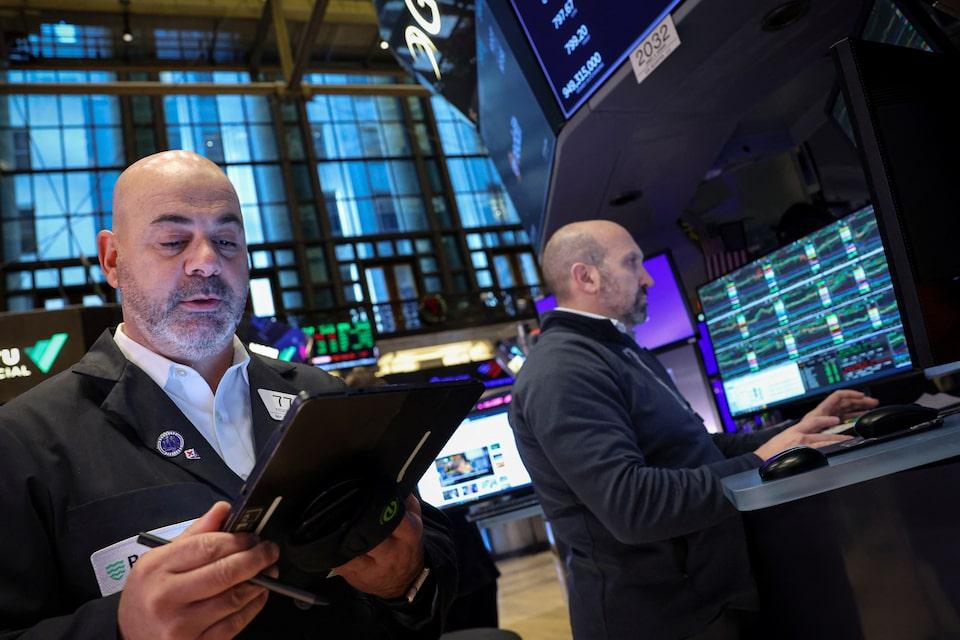
US producer prices rise moderately in December Boeing dips following low 2024 jet deliveries report Eli Lilly falls after weak sales forecast for weight-loss drug Dow up 0.52%, S&P 500 up 0.11%, Nasdaq down 0.23% NEW YORK, Jan 14 (Reuters) - The S&P 500 edged higher while the Nasdaq dipped after a volatile session on Tuesday as investors gauged inflation data and braced for quarterly earnings reports to justify stock valuations and the strength of the U.S. economy. Stocks oscillated between gains and losses throughout the day. Equities received an initial lift from a Labor Department report that showed the producer price index rose less than expected in December, although the report failed to materially affect expectations about the Federal Reserve's likely path of monetary policy this year. Investors awaited Wednesday's consumer price index reading, which will further shape expectations for inflation and the Fed. "There is an inherent level of uncertainty out there about where rates and the Fed is headed," said Chris Fasciano, chief market strategist at Commonwealth Financial Network. "Now we'll see what tomorrow morning brings," he said, referring to the CPI report. The Dow Jones Industrial Average (.DJI) , opens new tab rose 221.16 points, or 0.52%, to 42,518.28, the S&P 500 (.SPX) , opens new tab gained 6.69 points, or 0.11%, to 5,842.91 and the Nasdaq Composite (.IXIC) , opens new tab lost 43.71 points, or 0.23%, to 19,044.39. The market is pricing in about 29 basis points in rate cuts from the Fed by the end of 2025, according to LSEG data, with expectations for a cut of at least 25 bps not rising above 50% until the June meeting. Adding to investor caution, U.S. Treasury yields remained at elevated levels, with the yield on the benchmark 10-year Treasury note at 4.784%, holding near a 14-month high reached on Monday. Quarterly earnings get under way on Wednesday with results from big banks, which are expected to post stronger profits, fueled by robust dealmaking and trading. The S&P 500 bank index (.SPXBK) , opens new tab advanced. Goldman Sachs (GS.N) , opens new tab shares gained 1.52% ahead of its earnings results scheduled for Wednesday and helped keep the Dow in positive territory. The benchmark S&P 500 is trading at valuations well above its historical long-term average and a disappointing earnings season could put further gains for equities in jeopardy. Healthcare (.SPXHC) , opens new tab was among the worst-performing of the 11 major S&P sectors, down 0.94% as Eli Lilly (LLY.N) , opens new tab stumbled 6.59% after it forecast fourth-quarter sales of weight-loss drug Zepbound below estimates. Kansas City Fed president Jeff Schmid said the impact of Trump's policies was an "active conversation" at the central bank and that it would respond if either its inflation or employment goals are pushed off course. After rallying following the U.S. election, stocks have struggled recently, with the S&P 500 falling in four of the previous five weeks as a resilient economy, nagging inflation and comments from Fed policymakers have fueled worries about the central bank being less aggressive in cutting interest rates than previously anticipated. Concerns about potential tariffs from the Trump administration that would further stoke inflation have also lingered. Boeing (BA.N) , opens new tab shed 2.08% after the planemaker's annual deliveries dropped in 2024 to their lowest level since the pandemic. Advancing issues outnumbered decliners by a 2.81-to-1 ratio on the NYSE and by a 1.39-to-1 ratio on the Nasdaq. The S&P 500 posted eight new 52-week highs and six new lows, while the Nasdaq Composite recorded 36 new highs and 132 new lows. Volume on U.S. exchanges was 13.58 billion shares, compared with the 15.72-billion average over the last 20 trading days. Sign up here. https://www.reuters.com/markets/us/futures-climb-investors-eye-inflation-data-quarterly-earnings-2025-01-14/
2025-01-14 23:59
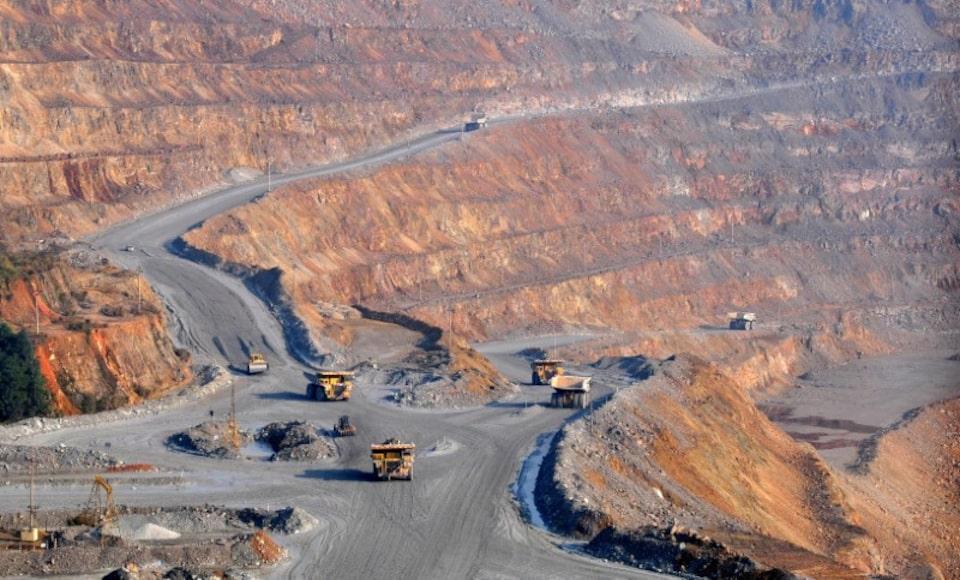
LONDON, Jan 14 (Reuters) - Doctor Copper has started 2025 with a spring in his step after a year when the early bull party was followed by a prolonged hangover. The London Metal Exchange three-month price has risen every day in January and is now up 4.0% from the start of the month, making copper the early outperformer of the LME base metals pack. Market optics have turned more bullish. Exchange copper stocks fell from 600,000 metric tons at the end of August to 430,000 tons at the close of December led by a steep decline in Shanghai Futures Exchange (ShFE) inventory. Dwindling stocks and China's rising import appetite have rekindled optimism that the country is finally turning an economic corner. Fund managers are unconvinced, with investors' long positions only marginally ahead of bearish bets on both the CME and LME copper contracts. The caution is down to the troubling prospect of tariffs and an escalating trade war after U.S. President-elect Donald Trump takes office next week. CME's widening premium to London suggests the copper market is taking the prospect seriously. UNDECIDED, UNCOMMITTED Fund managers ended last year holding a small net short on the CME copper contract. The balance shifted to the long side in the first week of 2025 as copper's price strength shook out some of the bears. However, the net long is a marginal one at just 6,138 contracts with bears and bulls locked in an uneasy stand-off. Outright long positions have held relatively steady since the start of December but are half the levels seen last May, when funds were rushing to join copper's record-breaking rally. Perhaps equally telling is the steady decline in both volumes and open interest on the CME since May, which suggests many investors have left copper in search of hotter returns. Indeed, copper trading volumes fell on all three global exchanges in December as fund money disengaged. Whether it will return will depend on the interplay of copper's positive micro dynamics and an ominous macro outlook. REASONS TO BE CHEERFUL After waiting for most of last year for an economic rebound in China, the world's largest copper buyer, the market is now seeing signs of life. Stubbornly high Shanghai stocks and a rare burst of Chinese refined metal exports deflated copper's bull bubble last year, but inventory and trade trends have turned. ShFE inventory peaked at 337,000 tons in June last year but sank steadily to just 74,000 tons at the close of December. China's imports of refined copper increased from a 2024 low of 276,000 tons in August to 398,000 tons in November and accelerated further to a 13-month high in December. The Yangshan copper premium , a closely-watched gauge of China's import demand, is currently at a one-year high of $75 per ton, indicating China is still hungry for metal. Given China's own production has been expanding, the inference is that the country is experiencing a sharp pick-up in demand. REASONS TO BE GLOOMY The problem is that this sudden growth spurt in China may be all about exporters ramping up production and shipments ahead of any U.S. tariffs. While nobody is quite sure how Trump 2.0 will play out, it's certain that Chinese goods will be in the new administration's tariff sights. That could chill Chinese export demand and, indeed, global demand if the U.S. also takes aim at the European Union. China's giant manufacturing sector is still stuck in neutral while European factory activity has been contracting since the middle of 2022. Tariffs, particularly on metals-intensive sectors such as the automotive industry, are likely to depress global manufacturing yet further. Meanwhile, Trump's promise to roll back some of his predecessor's environmental policies has dampened some of the bullish exuberance around copper's green energy narrative. Strong demand from green sectors such as electric vehicles and solar panels has helped offset weak traditional demand drivers such as the property sector over the last year. The prospect of a combined tariff war and U.S. slowdown in new-energy deployment is not a happy one for Doctor Copper. MIND THE TRUMP GAP The copper market has already reacted to the prospect of tariffs in the form of a widening gap between CME and LME markets. The CME premium to its London peer has ballooned from near zero at the start of 2025 to more than $400 per ton. That makes sense given the CME is a duty-paid customs-cleared contract, making it highly sensitive to any change in import duties. The premium has yet to hit the extreme levels seen last May, when CME shorts got caught in a ferocious squeeze due to extremely low exchange stocks. CME inventory has since increased from under 7,000 tons in June to almost 85,000 tons even as LME and ShFE stocks have been falling. More metal is likely lurking off the market, given U.S. copper imports surged to 345,000 tons in the third quarter of 2024 from 166,000 tons in the prior quarter. The widening arbitrage is an incentive for yet more metal to be shipped to the U.S. before the tariff gate comes down. If it falls on copper, the U.S. premium is likely to become a new volatile component of the global market. If Trump makes good on his threat to tariff everyone, the resulting disruption to global trade is likely to become the defining feature of the copper price this year. Funds are evidently in wait and see mode. The opinions expressed here are those of the author, a columnist for Reuters. Sign up here. https://www.reuters.com/markets/commodities/coppers-early-year-rally-leaves-investors-unimpressed-andy-home-2025-01-14/