2025-01-14 19:59
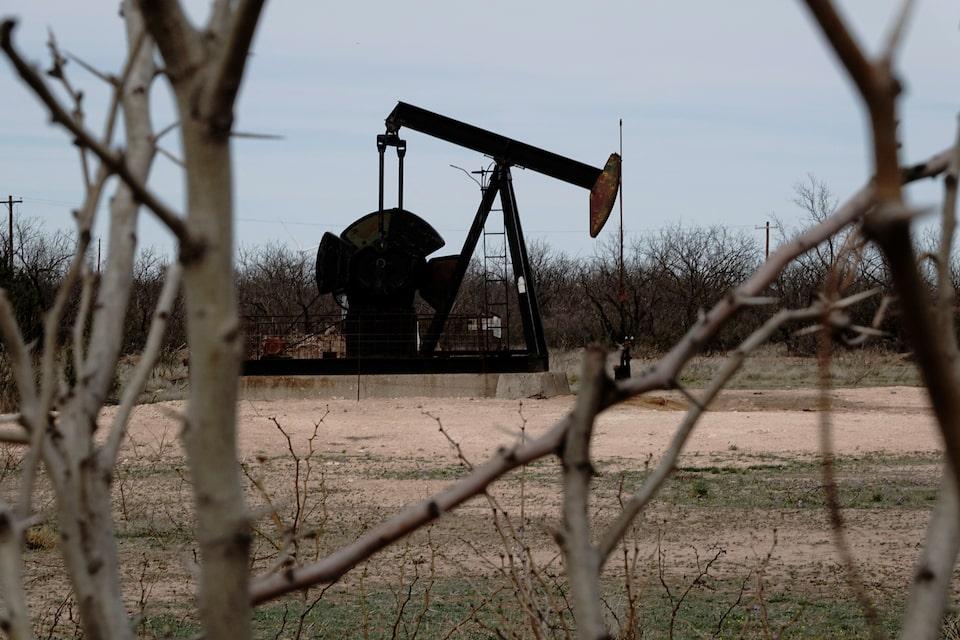
NEW YORK, Jan 14 (Reuters) - Oil prices will be under pressure over the next two years as global production growth outpaces demand, the U.S. Energy Information Administration said on Tuesday in its Short-Term Energy Outlook report. Many analysts expect an oversupplied oil market this year, after demand growth slowed sharply in 2024 in the biggest energy-consuming countries: the U.S. and China. The EIA said it expects Brent crude oil prices to fall 8% to average $74 a barrel in 2025, then fall further to $66 a barrel in 2026. The EIA slightly raised its estimate for record U.S. oil production this year, to 13.55 million barrels per day, from its prior estimate of 13.52 million bpd. U.S. crude prices are expected to average $70 per barrel in 2025 and fall to $62 per barrel next year, said the EIA, the first time it is issuing an outlook for 2026. The share of U.S. supply coming from the Permian Basin of Texas and New Mexico, the world's largest shale oil-producing region, is expected to continue to grow and account for more than half of all of the country's output in 2026, the report said. Globally, oil and liquid fuel production is now expected to average 104.4 million bpd in 2025, up from the prior forecast of 104.2 million bpd, the EIA said. The EIA cited a decision by the Organization of Petroleum Exporting Countries and allies to ease supply curtailments and expectations that non-OPEC producers will increase output. Global demand, meanwhile, is expected to average 104.1 million bpd, down from the prior estimate of 104.3 million bpd, and still lower than pre-pandemic trends, the EIA said. Sign up here. https://www.reuters.com/business/energy/eia-raises-us-oil-production-forecast-2025-lowers-2024-estimate-2025-01-14/
2025-01-14 19:22
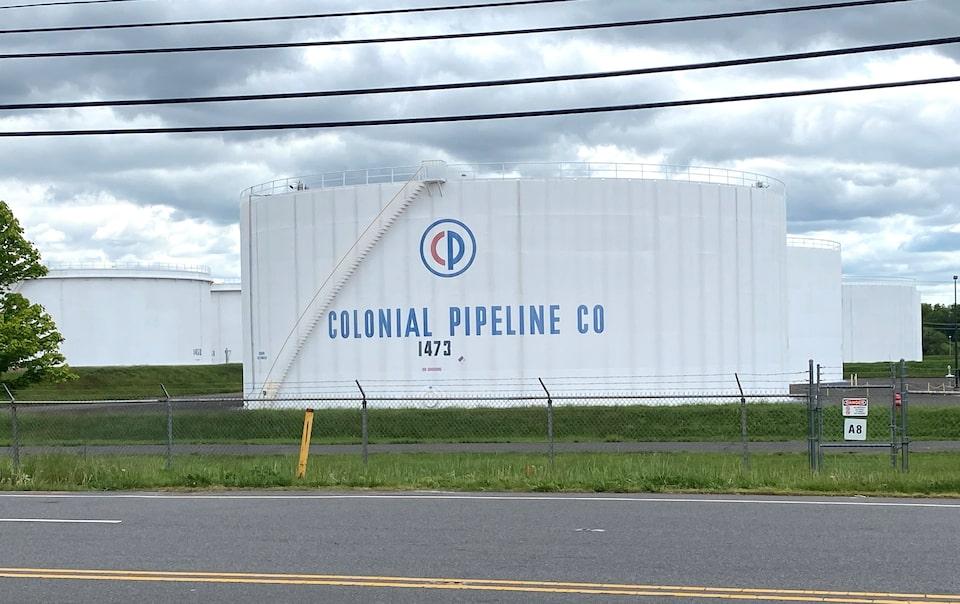
NEW YORK, Jan 14 (Reuters) - Colonial Pipeline, the largest U.S. fuel pipeline operator, said on Tuesday that the main artery moving gasoline from the U.S. Gulf Coast to the East Coast has been shut since Monday night due to a potential spill in Paulding County, Georgia. Line 1 was temporarily shut as operator Colonial Pipeline responds to a potential gasoline release, a company spokesperson said. Crews were on scene in Paulding, Georgia, to coordinate response efforts, they added. Line 1 moves around 1.5 million barrels of gasoline each day from Houston, Texas, to storage tanks in Greensboro, North Carolina, from where it is distributed locally or pumped to other Northeastern markets all the way to the New York Harbor. It is one of two mainlines on the more than 5,500-mile Colonial pipeline system. U.S. gasoline traders widely cited expectations for Line 1 to restart later on Tuesday night, lowering the chances of a major disruption in fuel supplies. "The timeline sounds on par with a best case outcome," Patrick De Haan, head of petroleum analysis at GasBuddy said, adding that it suggests a minor leak and minimal environmental mitigation. Colonial Pipeline declined to provide a restart timeline. Gasoline futures rose 0.43 cents to settle at $2.1046 a gallon on Tuesday, bucking weakness in the broader oil complex. The U.S. Department of Transportation Pipeline and Hazardous Materials Safety Administration (PHMSA) did not immediately respond to a request for comment. Paulding County Sheriff's Office said there was no notification to 911 regarding a gasoline leak. Sign up here. https://www.reuters.com/business/energy/colonial-shuts-pipeline-due-potential-gasoline-leak-2025-01-14/
2025-01-14 18:59
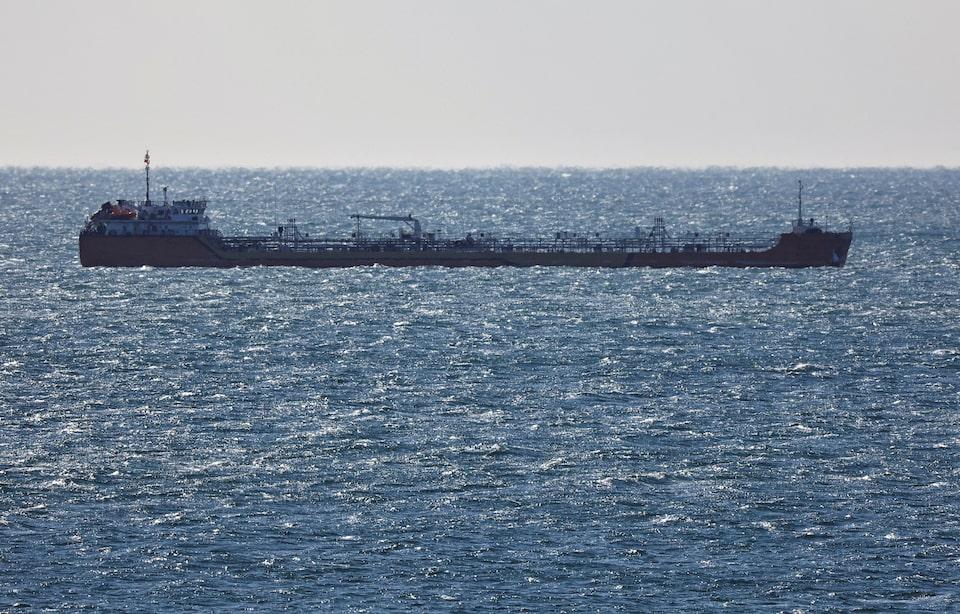
LONDON, Jan 14 (Reuters) - The safety risks posed by unregulated oil tankers are rising, and the so-called shadow fleet is a threat to both the maritime environment and seafarers, the head of the United Nations' shipping agency said on Tuesday. The shadow fleet refers to hundreds of ships used by Russia to move oil, in violation of international restrictions imposed on it over the Ukraine war, as well as by oil exporters such as Iran and Venezuela hit by U.S. sanctions. At least 65 oil tankers dropped anchor this week at multiple locations, including off the coasts of China and Russia, since the United States announced a new sanctions package on Jan. 10. "The risk is growing in relation to the environmental impact and the safety of the seafarers as the shadow fleet grows," Arsenio Dominguez, Secretary-General of the International Maritime Organization (IMO), told a news conference. "We see it by different accidents and events that have taken place." Dominguez, who could not comment on sanctions, said his biggest concern was with ageing tankers, which were "putting people onboard at risk and the environment as well". "The more that ships start looking to ... avoid meeting the IMO requirements, the more that we will have situations like we have been experiencing in the last part of 2024." There have been a number of incidents involving collisions and shadow fleet vessels breaking down in recent months. Dominguez said an IMO meeting would follow up in March on a resolution adopted in 2023 aimed at greater scrutiny of ship-to-ship oil transfers in open seas - a frequent risk with shadow fleet tankers which carry out such transfers with little regard for safety. He said he had also met with smaller flag registry countries, which typically provide flagging for shadow fleet tankers. Commercial ships must be registered, or flagged, with a particular country to ensure they are complying with internationally recognised safety and environmental rules. Shipping industry sources say many of the smaller flag registries are lax about enforcing compliance and also sanctions regulations. "Substandard shipping ...has been on the agenda at IMO for many years," Dominguez said. Sign up here. https://www.reuters.com/markets/commodities/risks-unregulated-tanker-fleet-rising-un-shipping-chief-says-2025-01-14/
2025-01-14 18:24
Weinstein wants to unseat managers at seven UK investment trusts Saba says trusts' performance ranges from 'underwhelming' to 'disastrous' Trusts' managers have urged investors to reject the proposals Weinstein says his proposals have increased investor value LONDON, Jan 14 (Reuters) - U.S. activist investor Boaz Weinstein called on British critics opposing plans to unseat managers at seven underperforming UK investment trusts to stop misleading investors who have lost "enormous value", describing their criticism as "jingoistic". Saba Capital Management, founded and run by Wall Street veteran Weinstein, said last month it wanted to overhaul the boards of seven close-ended investment trusts over performances it said ranged from "underwhelming" to "disastrous". "It's been described, almost in a jingoistic way, that some American is coming in ... to take your precious fund away," Weinstein said on Tuesday in a presentation to elaborate on one of the most ambitious activist campaigns seen in Britain for years. The trusts under scrutiny are Henderson Opportunities Trust (HENT.L) , opens new tab, Baillie Gifford US Growth Trust (USAB.L) , opens new tab, CQS Natural Resources Growth & Income (CYNL.L) , opens new tab, Edinburgh Worldwide Investment Trust (EWI.L) , opens new tab, Herald Investment Trust (HRI.L) , opens new tab, Keystone Positive Change (KPCK.L) , opens new tab and European Smaller Companies Trust (ESCT.L) , opens new tab All the managers concerned have urged investors to vote against Saba's proposals. The trusts hold a range of UK assets for a blend of retail and institutional investors. Weinstein's comments come amid a period of stress for UK assets, with Britain's stock market losing constituents to overseas rivals and UK government bond yields hitting multi-year highs this month on worries about inflation and weak economic growth prospects relative to other major economies. That has sparked concern among some domestic investors that prized UK assets will be scooped up cheaply by international opportunists keen to exploit volatility in the market. 'COSTING MOM AND POP' Weinstein dismissed the concerns, saying his proposals had already made investors millions of pounds through narrower discounts reflected in their market values. "These discounts are not some ephemeral thing. These are costing Mom and Pop - the main investors in these funds - enormous amounts of money year in and year out", Weinstein said. "We are on the same side as you." Saba's plans, which include nominating Weinstein to the board of one fund and one of its lead portfolio managers, Paul Kazarian, to the other six funds' boards, have faced resistance. On Tuesday, managers of Herald Investment Trust raised concerns that Weinstein could destroy shareholder value if he succeeded in his attempt to gain effective control of the trust. Weinstein, whose hedge fund manages around $5 billion in assets and currently owns roughly 23% to 30% of each UK trust Saba is targeting, said he wanted to purchase even more British assets. Saba's activist vehicle, the Saba CEF Opportunities Fund, had a return on investment of just over 24% in 2024 as of Dec. 13, an HSBC research note seen by Reuters said. Weinstein said his firm planned to hire additional people in London, if investors voted in favour of his plan. ($1 = 0.8201 pounds) Sign up here. https://www.reuters.com/world/uk/we-have-made-uk-investors-hundreds-millions-pounds-through-our-actions-says-2025-01-14/
2025-01-14 14:50
ORLANDO, Florida, Jan 14 (Reuters) - While "U.S. exceptionalism" has undoubtedly helped drive Wall Street's record-busting returns in recent years, it should not be confused with isolationism. The fourth-quarter U.S. earnings season that gets underway in earnest this week is a reminder that American firms – magnificent as some may be – still operate in a global marketplace. Weak economies and lackluster demand abroad, combined with a robust dollar, could erode American corporate profitability, calling into question whether the U.S. is so exceptional after all. With the dollar appreciating broadly and rapidly, exchange rates will soon bite into corporate profitability. The question is how deep. Analysts at Apollo Global Management note that more than 41% of S&P 500 firms' revenues come from abroad. That's the highest since 2013 and not far behind the record high of 43.3% in 2011. This leaves these firms vulnerable on two levels. First, sub-par growth in many key economies and trading partners such as China, Canada and Europe should, all else being equal, cause demand for U.S. goods to weaken. And second, revenues accrued abroad will now be worth significantly less in dollar terms than they would have a year ago. The dollar is on a tear. It has risen 10% since late September and is up 7% year-over-year. It is now the strongest it has been in more than two years against a basket of G10 currencies, notching multi-year highs against sterling and the Canadian dollar. There is little sign of this trend reversing any time soon, as resilient U.S. growth and sticky inflation lift Treasury yields and force investors to radically rethink their 2025 Fed outlook. Bank of America economists no longer expect any rate cuts this year and others are even suggesting the central bank's next move may be a hike. In turn, Goldman Sachs analysts on Friday raised their "stronger for longer" dollar forecasts. DOLLAR IDIOSYNCRASY Although much of the classic economic play-book has been ripped up since the pandemic, theory still suggests a 10% year-on-year increase in the dollar should reduce S&P 500 earnings by around 3%, according to BofA. Currently, estimates point to 9.5% growth in aggregate earnings per share for the fourth quarter, and 14% for calendar years 2025, according to LSEG I/B/E/S. But fourth-quarter revenue growth is only estimated at 4.1%, a relatively slow pace in part due to the exchange rate. Revenue "beats" tend to decline in periods of dollar strength compared with periods of dollar weakness, Goldman Sachs equity analysts say. So we can reasonably expect that the share of firms beating consensus sales forecasts this quarter will be lower than the 42% that did so in the previous period, when the dollar's year-on-year rise was only 2%. But even though dollar strength is likely to feature in many CEO and CFO calls this earnings season, its impact on U.S. earnings may be more "idiosyncratic" than widespread, according to Morgan Stanley's Mike Wilson. He has noted that the stocks of companies with "relatively low foreign sales exposure and low sensitivity to a stronger dollar from an EPS growth standpoint" have begun to outperform since the dollar started to strengthen in October. He characterizes "low" foreign exposure as companies that derive less than 15% of their revenues from abroad, giving them "minimal" sensitivity to the dollar's exchange rate. Some of the big names in this camp include United Healthcare, T-Mobile and Home Depot, while some large caps that derive more than 15% of their revenues from overseas include PepsiCo, IBM and Oracle. The dollar's strength is not yet at a level that truly threatens corporate America's competitiveness and profitability. But if it persists, this earnings season could be a taste of what's to come. (The opinions expressed here are those of the author, a columnist for Reuters.) Sign up here. https://www.reuters.com/markets/us/dollar-strength-reminds-wall-street-us-exceptionalism-isnt-isolationism-mcgeever-2025-01-14/
2025-01-14 14:36
Bank wants to be able to meet potential client requests CEO tells ordinary small investors to stay away from crypto CEO says M&A is a distraction, Intesa is better off without MILAN, Jan 14 (Reuters) - Italy's biggest bank, Intesa Sanpaolo (ISP.MI) , opens new tab, has made its first proprietary bitcoin trade, buying 1 million euros ($1 million) of the world's largest digital currency in what CEO Carlo Messina described as "a test". Intesa in 2023 set up a proprietary trading desk for digital assets and last year started handling spot trades with cryptocurrencies. An internal memo seen by Reuters showed Intesa bought 11 bitcoins on Monday. "We won't become a bitcoin player," Messina told reporters after an event to present a new accord with employers' lobby Confindustria to make 200 billion euros in lending available through 2028 for company investments. "As a wealth management company that has the ambition to become like (Swiss rival) UBS, we have very sophisticated clients that may ask for this kind of investment and you can't serve them unless you have a presence (in the market)," he added. Bitcoin more than doubled in value in 2024, driven by the U.S. market regulator's approval for exchange-traded funds tied to its spot price, and optimism over easing regulatory hurdles under incoming U.S. President Donald Trump. As bitcoin flirts with the $100,000 mark, some analysts expect it to more than double in value again this year. Messina said the small trade showed Intesa merely conducted "a test", and added the bank had "very limited" room to invest in crypto assets. "We tested how to handle any potential requests from clients, but there will anyway be very tight limits and clients will need to prove they understand potential risks," he said. Speaking earlier during the conference, Messina urged non-professional investors and in particular households to stay away from crypto investments. "Don't do it," he said. Intesa will perform better than expected this year and work on a new multi-year strategy that it will present to investors in 2026, the CEO added. Intesa can benefit from steering clear of the current round of consolidation in Italian banking and the integration processes they entail, he said, adding: "We don't have those complications to deal with and we don't want them." Monday's Intesa trade was first reported by Italian daily La Stampa. ($1 = 0.9747 euros) Sign up here. https://www.reuters.com/business/finance/italys-intesa-buys-1-mln-euros-bitcoin-first-proprietary-trade-2025-01-14/