2025-01-14 06:59
NEW DELHI, Jan 14 (Reuters) - India's Maha Kumbh Mela, or Great Pitcher Festival, is set to be the world's largest gathering of humanity, with 400 million visitors expected at the six-week event that began this week in the northern city of Prayagraj. Here is a look at how authorities are managing the mammoth crowds at the festival. TENT CITY A temporary city has sprung up across 4,000 hectares (9,990 acres) on the river banks, with 150,000 tents to accommodate devotees and almost an equal number of toilets. About 69,000 LED and solar lights light up the paths through the settlement, kept clean by 15,000 sanitation workers. SECURITY Temporary police stations and checkpoints in Prayagraj include three floating 'water police stations' on the river, while paramilitary troops and bomb disposal squads are also at the ready. More than 50,000 personnel are on guard to ensure the safety of visitors. TECHNOLOGY Authorities are using closed circuit television (CCTV) cameras, drones, and tethered drones to monitor the festival area, along with anti-drone craft to find and remove unauthorised drones. Also in use are underwater drones that can operate in a depth of 100 metres (3,330 ft), equipped with advanced technology to function in low-light conditions. FIRE SAFETY Every tent has been fitted with fire-fighting equipment, while more than 1.3 billion rupees ($15 million) has designated for fire safety in the festival area, with 351 firefighting vehicles and 2,000 trained personnel on hand to immediately stamp out any fires. LOST-AND-FOUND CENTRES To help reunite families separated in the crowd, centres with dedicated sections for women and children have been set up, while loudspeakers installed along the river banks will make continuous announcements about those separated. ($1=86.5650 Indian rupees) Sign up here. https://www.reuters.com/world/india/how-is-india-managing-its-maha-kumbh-festival-worlds-largest-gathering-2025-01-14/

2025-01-14 06:59
JOHANNESBURG, Jan 14 (Reuters) - South Africa's rand firmed against the dollar on Tuesday, as markets looked to U.S. consumer inflation data due on Wednesday for clues on the Federal Reserve's interest rate path. At 1519 GMT, the rand traded at 18.9225 against the dollar , about 0.5% stronger than its previous close. The rand hit a nine-month low on Monday before staging a recovery amid an uncertain outlook for further interest rate cuts by the Fed. Recent U.S. data has underscored the strength of the economy, leading traders to scale back bets for 2025 rate cuts. Data on Tuesday showed U.S. producer prices rose less than expected in December as higher costs for goods were partially offset by stable services prices. Investor focus will now turn towards U.S. consumer price index data due on Wednesday. On the stock market, the Top-40 (.JTOPI) , opens new tab index closed 0.2% higher. South Africa's benchmark 2030 government bond was slightly stronger, with the yield down 1.5 basis points at 9.305%. Sign up here. https://www.reuters.com/markets/currencies/south-african-rand-gains-after-hitting-9-month-low-us-inflation-data-focus-2025-01-14/

2025-01-14 06:51
NEW DELHI, Jan 14 (Reuters) - India's wholesale inflation (INWPI=ECI) , opens new tab accelerated in December to 2.37% year-on-year, from 1.89% in November, government data showed on Tuesday, but in line with market expectations. The wholesale inflation rate, a proxy for producer prices, last month came largely in line with the 2.3% forecast by economists in a Reuters poll. Food prices rose 8.89% last month, compared with an 8.92% increase in November, with vegetable prices climbing 28.65% year-on-year, marginally up from a 28.57% rise in the previous month. Cereal prices rose 6.82% in December as against a 7.81% rise a month ago. Prices of manufactured products, which account for about 64% of the wholesale price index, increased 2.14% from a 2% increase in the previous month. Fuel and power prices in India dropped 3.79% year-on-year, compared with a 5.8% drop in November. Headline retail inflation, the key target for the Reserve Bank of India's monetary policy decisions, eased to a four-month low of 5.22% in December, down from 5.48% in the prior month. The easing rate of retail inflation and a sharp slowdown in India's growth to a four-year low of 6.4% in 2024-25 has increased pressure on the Reserve Bank of India to cut rates in its next monetary policy committee review due in February. Sign up here. https://www.reuters.com/world/india/indias-december-wholesale-inflation-accelerates-237-yy-2025-01-14/

2025-01-14 06:44
LONDON, Jan 14 (Reuters) - High government spending and a growing need among big economies - from the United States to Britain and France - to tap bond markets to fund their outlays have shot up the list of concerns for some policymakers and investors. This year has started with a selloff across global government bond markets, with Britain in particular caught in the crosshairs. France's inability to enact belt-tightening measures due to political instability has also hurt its standing in financial markets. And rising U.S. Treasury yields suggests some sceptism among investors that a new U.S. administration will curb a high budget deficit. No wonder talk of a return of bond vigilantes is growing. WHO EXACTLY ARE BOND VIGILANTES? The term, coined in the 1980s, refers to debt investors who seek to impose fiscal discipline on governments they perceive as profligate by raising their borrowing costs. It can also apply to monetary policy. Investors can demand more compensation to lend money if they think central banks and governments are failing to contain inflation. Higher government borrowing costs can spill over into higher lending rates for consumers and companies, putting economic and financial stability at risk if they spiral out of control. WHERE DID THEY GO AND ARE THEY BACK? Bond markets were placated in the 1990s as U.S. President Bill Clinton's government made balancing the budget a priority after initial spending concerns sparked a jump in Treasury yields. In the following decades, central bank bond buying in the United States and elsewhere played a powerful role in dampening government borrowing costs, particularly after the global financial crisis of 2007-2008. But a surge in inflation since 2021 and a jump in government spending, exacerbated by the pandemic and energy-price spike following Russia's invasion of Ukraine, combined with a retreat of central banks from bond buying, means bond investors now carry more heft. WHAT ELSE HAS CHANGED? The focus today is on the surge in government bond issuance while in the 1980s, it was inflation, says Ed Yardeni, the economist who coined the term back then. Inflation, though sticky, has come down in big economies, while debt is piling up. The U.S. budget deficit grew to $1.833 trillion for the fiscal year 2024, equivalent to 6.4% of economic output, the highest reading outside of the COVID-19 pandemic. Britain's government debt has hit 100% of economic output for the first time in recent history. Germany is the only G7 economy remaining with a debt ratio below 100%. WHERE HAVE THESE VIGILANTES BEEN IN ACTION RECENTLY? The biggest example is Britain. Borrowing costs surged one percentage point within a week in 2022 as bond investors were spooked by plans to slash taxes and raise borrowing at a time the national finances were already under pressure. That forced a policy U-turn and the resignation of then-Prime Minister Liz Truss. On Monday, Britain's long-dated government bond yields hit fresh multi-decade highs as global debt concerns remain in focus. Last year, the premium that bond investors demand to lend money to France over safer German debt briefly hit its highest since 2012 as political turmoil stalled efforts to reduce the budget deficit. Emerging markets face pressure too. Brazil's borrowing costs jumped in December while the real hit fresh record lows against the dollar as markets put government spending plans and a wide budget deficit to the test. SO, THEY REALLY ARE POWERFUL? History suggests so and Yardeni reckons their strength now stems from the fact that outstanding debt has shot up in recent years. U.S. Treasuries outstanding have surged to $28 trillion, from below $20 trillion before the pandemic and less than $5 trillion before the 2007-2008 global financial crisis. Yet bond vigilantes haven't had the sway they've had in Britain elsewhere yet. The U.S. deficit has not declined despite concerns and French politicians torpedoed a belt-tightening budget even though the prime minister warned it could lead to a financial "storm". Still, analysts say that a rise of more than one percentage point in U.S. Treasury yields since late September partly reflects bond investors expressing concern about the spending plans of the incoming Trump administration. But the prospect for interest rates remaining higher amid a strong economy is also raising yields. Sign up here. https://www.reuters.com/markets/rates-bonds/who-are-bond-vigilantes-are-they-back-2025-01-14/

2025-01-14 06:37
Jan 14 (Reuters) - Swiss chocolate maker Lindt & Spruengli (LISN.S) , opens new tab on Tuesday said its sales grew 7.8% organically last year, coming in a touch below market expectations, hit by record high cocoa prices and weakened consumer sentiment. The maker of Lindor chocolate balls said its overall sales were 5.47 billion Swiss francs ($5.97 billion) in 2024. That missed analysts' average forecast of 5.49 billion francs, based on LSEG data. The company said it expected to achieve an operating profit margin of at least 16% for 2024, compared to 15.6% a year before. For 2025, Lindt forecast organic growth of between 7% and 9% and an improvement in its operating profit margin of 20–40 basis points. With cocoa prices having nearly tripled over 2024, analysts are expecting the chocolate market to face an unprecedented cost headwind this year. Cocoa prices rose by almost 180%, a second successive yearly increase after 61% growth in 2023. This has forced Lindt to further hike its selling prices for 2025, it said in the trading statement. It will report full annual results on March 4. ($1 = 0.9158 Swiss francs) Sign up here. https://www.reuters.com/business/retail-consumer/lindt-spruengli-posts-2024-sales-slightly-below-expectations-2025-01-14/

2025-01-14 06:35
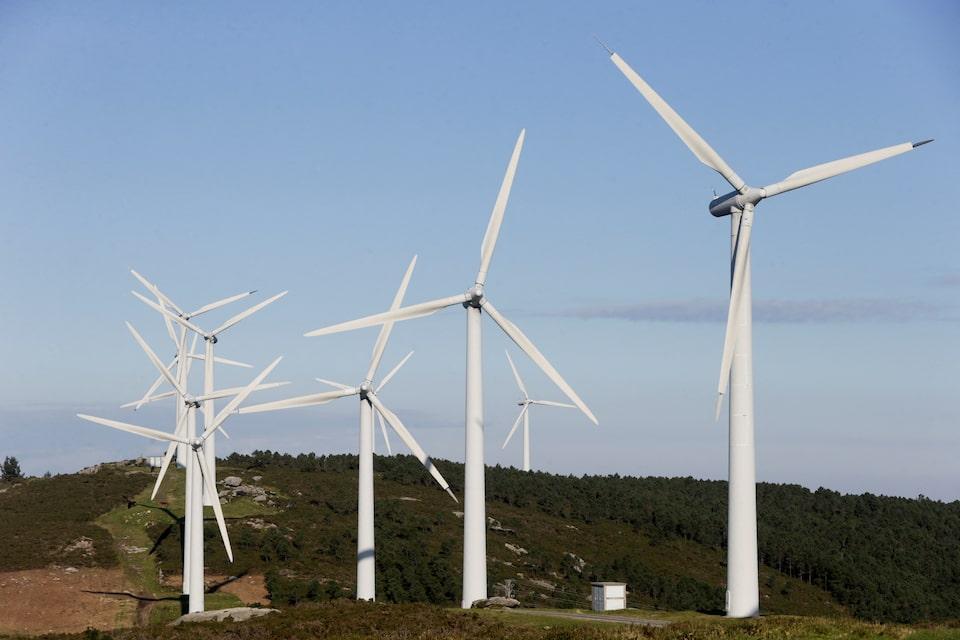
Opponents of wind farms have filed hundreds of lawsuits Poll shows majority of residents want wind farms Local government says it is acting to accelerate projects MADRID, Jan 14 (Reuters) - Jose Maria Cofreces is the owner of a guesthouse in northwestern Galicia, one of Spain's most picturesque regions and a major tourist draw. It is also one of the windiest parts of the country, and that has made it a magnet for developers of giant wind turbines that can stand higher than 50-storey tower blocks. Cofreces is among those at the vanguard of opposition in Galicia. Echoing the tactics of rural communities across Europe, the protesters have used the courts to block plans they say encroach on their way of life and the environment. "Part of what we sell here is the landscape," he said. "Wind farms mean having the mountains drilled, filled with holes and lots of concrete." The wind farm that would loom over his property would comprise 12 170-metre (558 ft) tall turbines, if the developers' hopes materialise. It is one of 72 - with an overall capacity of around 2 gigawatts (GW), based on more than 2 billion euros ($2.04 billion) in investments, that were approved by the regional government. They were then halted by the highest regional court, mostly in the last year, after locals and environmental groups filed hundreds of lawsuits. European governments are under pressure to support the European Union's ambitious green energy targets, including a significant expansion of wind energy capacity. In Europe, Spain is behind only Germany for wind power generation capacity, but its plans to double the amount by the end of the decade have been slowed by the local opposition, as well as licensing bottlenecks. "In Galicia, there's a complete paralysis," Juan Virgilio Marquez, general director of Spanish wind group AEE, said. The region did not install a single megawatt (MW) of new wind capacity in 2022 and 2023 and just 69 MW between 2020 and 2023, the latest available data from AEE show. ENDANGERING HERITAGE Apart from pitching protesters against governments, the opposition is also at odds with many residents, research has found. Three-quarters of Galicians want more wind energy, according to a September poll by Galician market research firm Sondaxe. On the other side of the argument, protesters across Europe have coalesced into organised movements, like those in Galicia, where they have launched sophisticated legal challenges, often financed by crowdfunding campaigns, analysts and industry insiders said. Christoph Zipf of industry association WindEurope said the groups know the weak links in the permitting process and target them, then share successful experiences with each other. That leads "to higher chances for these projects to be stopped," he said. In East German regional elections in September, the far-right AfD party made opposition to renewable energy projects a focus of its successful campaign. On the Italian island of Sardinia, local opposition to wind led the authorities to pass a law in September that renewable developers say rendered more than 90% of the island's territory off limits to their projects. Back to Galicia, 243 lawsuits have targeted 90 of the 137 planned projects with permits, including the 72 stalled so far, according to data from the regional government. Overall, lawsuits and administrative appeals affect 98 wind projects. The copycat legal challenges say the Galician regional government - that awards permits for projects under 50 MW - did not give sufficient weight to environmental risks and did not adequately ensure public participation in the process. In 72 cases, Galicia's highest court ordered precautionary suspensions on procedural or environmental grounds. The regional government has appealed to Spain's Supreme Court. The Galician court also asked the European Court of Justice in June to rule on whether Galician and Spanish laws comply with EU access to information rules in the permitting process. Until a ruling, whose timing is uncertain, developers will be wary of moving forward even with projects that are not suspended, Marquez said. Belen Rodriguez of Galician activist group Adega, which has successfully blocked some 20 projects, said the opposition was the product of "a situation that overwhelmed us". "We had no choice but to go to court," she said, adding that their earlier attempts to make representations in the administrative process were overlooked. 'CRITICAL UNCERTAINTY' Renewable developers with billions of euros in investments at stake are under pressure, as intensive energy users, such as U.S. aluminium giant Alcoa, seek huge volumes of clean energy via long-term supply contracts to ensure competitive and stable prices. Some of the wind parks in legal limbo should have started operating last year, supplying energy to Alcoa's complex in the region that employs nearly a 1,000 people. Alvaro Dorado Baselga, vice president for energy at Alcoa, told Reuters in an emailed statement that competitive and stable power prices are essential for the business and described the delays as a source of "critical uncertainty" threatening its viability. A Deloitte report for the local wind lobby published in October 2023 found that 32 industrial projects planned for Galicia would require over 6 billion euros' worth of investments and create more than 7,000 direct jobs a year largely rely on cheap renewable energy supply. Paula Uria, the regional government's director general for renewable energy, said the 137 parks with permits would add 3 GW of wind capacity. AEE, the Spanish wind group, estimates that the addition of such capacity would generate around 4,800 jobs over five years. The situation in the region is "difficult to understand," Uria said, as the regional court is blocking projects that, under the same rules, have moved forward elsewhere in Spain. From this year, she said developers will be able to request a new, faster approval procedure for parks hit by lawsuits. The regional parliament also approved in December rules it estimates could lead to the replacement of 3,000 ageing wind turbines with as few as 400 modern ones, reducing the impact on the landscape, although it has also exasperated the industry. At an event in Galicia in November, Joaquin Garcia-Boto, Development Director at EDP Spain, summed up the mood: hindering renewables in Galicia, he said, may be "killing the goose that lays the golden eggs". ($1 = 0.9794 euros) Sign up here. https://www.reuters.com/business/energy/how-storm-lawsuits-paralysed-wind-mills-northwest-spain-2025-01-14/