2026-01-03 20:48
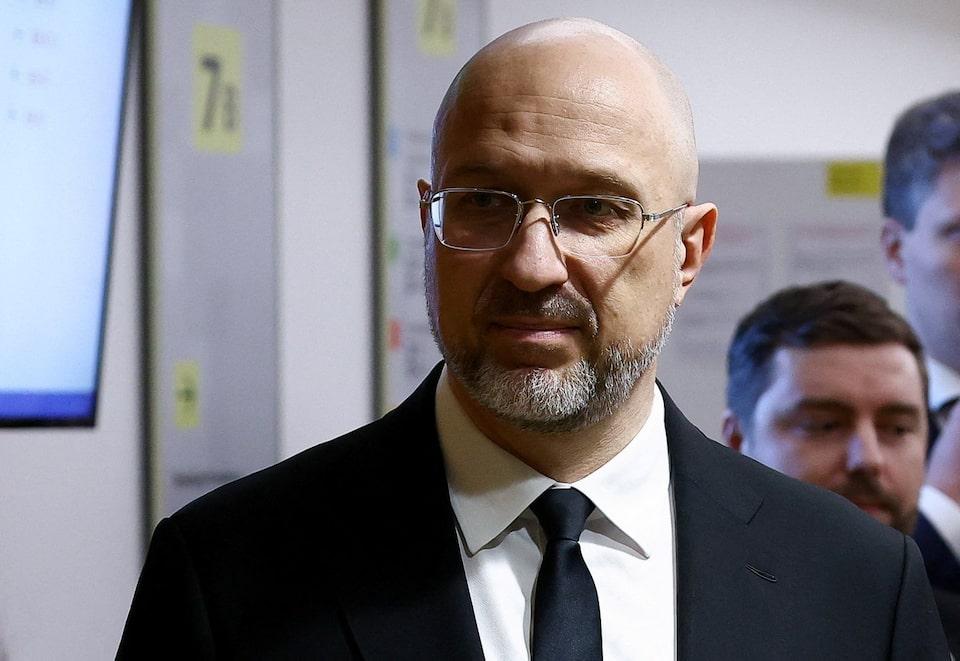
FAA closed Caribbean airspace to US carriers over military moves Agency warns non-US carriers off near Venezuelan airspace Jan 4 (Reuters) - The United States advised airlines on Saturday that its Caribbean airspace curbs would expire at midnight ET (0500 GMT) and flights could resume as schedules are quickly updated, Transportation Secretary Sean Duffy said. The comments on X followed the cancelation of hundreds of flights by major airlines after the U.S. attack on Venezuela and the capture of its president, Nicolas Maduro. Sign up here. Key carriers United Airlines (UAL.O) , opens new tab, American Airlines (AAL.O) , opens new tab, Spirit and Delta (DAL.N) , opens new tab were readying to resume flights to the Caribbean by Sunday. In a statement, United said a flight to San Juan in Puerto Rico was planned for Saturday night, adding, "We expect to operate most scheduled flights to the region for Sunday." Delta Air Lines expects to fly its normal Carribean schedule on Sunday, it said in a statement, but adjusted to reposition resources. American Airlines said in a statement that it was preparing for the Eastern Caribbean airspace to reopen Sunday and had added more than 3,700 extra seats to and from the region on top of resuming scheduled service. It said it was operating extra flights and deploying larger aircraft, including widebodies, to "add as much lift as possible" to help customers affected by the FAA‑mandated closure. Spirit Airlines said in an emailed statement that it had resumed flights to and from the Caribbean on January 4, following the expiration of the FAA's airspace closure directive. Even after the removal of curbs, however, airlines will need several days to restore normal operations, said airline analyst Robert Mann, adding, "They have a day's worth of passengers basically," already stranded in the Caribbean. American Airlines, Delta, United, Frontier Airlines, Spirit Airlines and JetBlue Airways (JBLU.O) , opens new tab began cancelling flights, in line with Federal Aviation Administration airspace closures in the Caribbean. JetBlue canceled 215 flights, an airline spokesperson said. The company said on Sunday it would resume normal operations. In a notice to airmen, the FAA said it closed the airspace to U.S. carriers "due to safety-of-flight risks associated with ongoing military activity." In other security notices for non-U.S. air carriers, the agency warned them away from Venezuelan airspace. It cautioned British operators against "potential risk from anti-aircraft weaponry and heightened military activity" if flying within 100 miles (160 km) of Venezuelan airspace. The FAA declined further comment. NON-U.S. AIRLINES ALSO CANCEL FLIGHTS Several European and South American airlines also canceled flights. The curbs would be lifted "when appropriate," Duffy had said in a post on X. American military activity near Venezuela led to a near mid-air crash in November between a JetBlue airliner and a U.S. aerial refueling tanker, media said. Several carriers waived change fees and fare differences for customers affected by the closures if they postponed travel. Saturday's U.S. military operation captured Venezuela's long-serving President Nicolas Maduro, President Donald Trump said, promising to put the country under American control for now, by deploying U.S. forces if necessary. Air Canada (AC.TO) , opens new tab said its Caribbean and South American operations were normal, under guidance from Transport Canada, and it was monitoring the situation, adding, "We will update as required if the situation changes." Commercial air traffic over Venezuelan airspace appeared to stop after Saturday's attack, records on tracker FlightRadar24 showed. https://www.reuters.com/world/americas/us-airlines-cancel-flights-after-caribbean-airspace-closure-2026-01-03/
2026-01-03 20:24
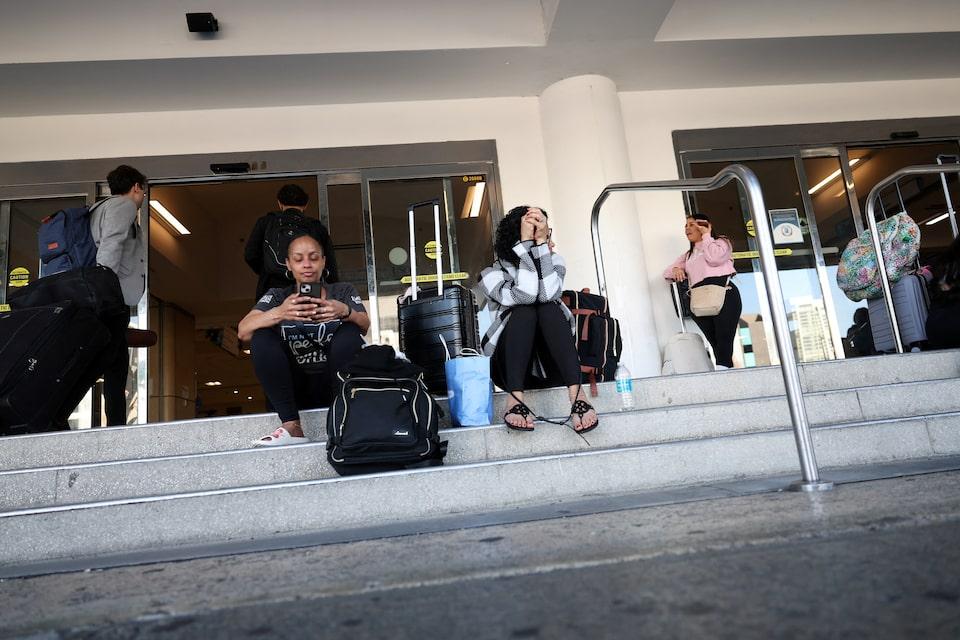
UNITED NATIONS, Jan 3 (Reuters) - The United Nations Security Council is due to meet on Monday after the U.S. attacked Venezuela and deposed its long-serving autocratic President Nicolas Maduro, a move that U.N. Secretary-General Antonio Guterres views as setting "a dangerous precedent." Colombia, backed by Russia and China, requested the meeting of the 15-member council, diplomats said. The U.N. Security Council has met twice - in October and December - over the escalating tensions between the United States and Venezuela. Sign up here. U.S. President Donald Trump said on Saturday that Washington would run Venezuela "until such time as we can do a safe, proper and judicious transition." It is unclear how Trump plans to oversee Venezuela. 'A COLONIAL WAR': VENEZUELA "This is a colonial war aimed at destroying our republican form of government, freely chosen by our people, and at imposing a puppet government that allows the plundering of our natural resources, including the world’s largest oil reserves," Venezuela's U.N. Ambassador Samuel Moncada wrote to the U.N. Security Council on Saturday. He said the U.S. had violated the founding U.N. Charter, which states: " All members shall refrain in their international relations from the threat or use of force against the territorial integrity or political independence of any state." The U.S. military action overnight constitutes "a dangerous precedent," Guterres' spokesperson Stephane Dujarric said in a statement. "The Secretary-General continues to emphasize the importance of full respect - by all - of international law, including the UN Charter. He’s deeply concerned that the rules of international law have not been respected," Dujarric said. The Trump administration has for months targeted suspected drug trafficking boats off the Venezuelan coast and the Pacific coast of Latin America. The U.S. ramped up its military presence in the region and announced a blockade of all vessels subject to U.S. sanctions, last month intercepting two tankers loaded with Venezuelan crude. In October, the U.S. justified its action as consistent with Article 51 of the founding U.N. Charter, which requires the Security Council to be immediately informed of any action states take in self-defense against armed attack. "This is not regime change this is justice," U.S. Ambassador to the U.N. Mike Waltz posted on X on Saturday. "Maduro was an indicted, illegitimate dictator that led a declared Narco-terrorism organization responsible for killing American citizens." https://www.reuters.com/world/americas/un-chief-venezuela-us-action-sets-dangerous-precedent-2026-01-03/
2026-01-03 19:13
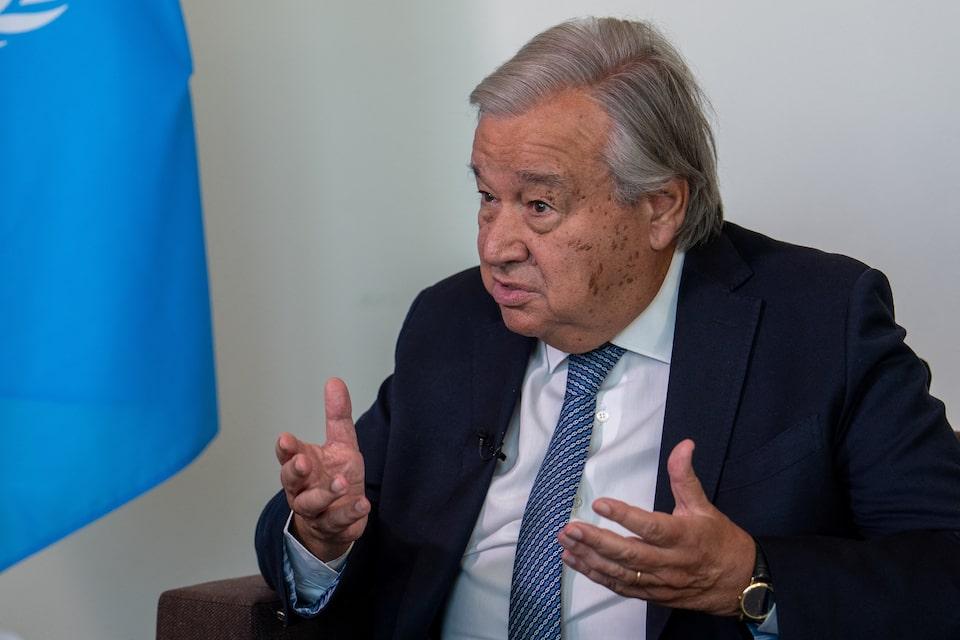
Jan 3 (Reuters) - The United States said it had struck Venezuela and captured its long-serving President Nicolas Maduro on Saturday, after months of accusing him of drug-running and illegitimacy in power, marking a dramatic escalation in geopolitical tensions. "The United States of America has successfully carried out a large-scale strike against Venezuela and its leader, President Nicolas Maduro, who has been, along with his wife, captured and flown out of the country," President Donald Trump said in a Truth Social post. Sign up here. Washington has not made such a direct intervention in Latin America since the invasion of Panama in 1989 to depose military leader Manuel Noriega, over similar allegations. Trump later said at a press conference at his Mar-a-Lago club in Florida that the United States will run Venezuela with a group and Secretary of State Marco Rubio would be working on the details. The U.S. president has also threatened to come to the aid of protesters in Iran if security forces fired on them, days into unrest that has left several dead and posed the biggest internal threat to Iranian authorities in years. Meanwhile, the OPEC+ group of crude oil exporters, which includes Venezuela and Russia, meets on Sunday to discuss output. Below are comments from economists and investors: JAMIE COX MANAGING PARTNER, HARRIS FINANCIAL GROUP, RICHMOND, VIRGINIA: "The overall market reaction will be muted—we might get some market moving news tomorrow during the OPEC meeting. (Shares in) Big Oil and the drillers are likely to get a bid, as speculation could build about the potential benefits of rebuilding the oil industry in Venezuela." HELIMA CROFT, HEAD OF GLOBAL COMMODITY STRATEGY AND MENA RESEARCH, RBC CAPITAL MARKETS, NEW YORK: "This an enormous undertaking, given the decades-long decline of the oil sector, also the U.S. regime change and nation-building track record is not one of unambiguous success." BRIAN JACOBSEN, CHIEF ECONOMIC STRATEGIST, ANNEX WEALTH MANAGEMENT, BROOKFIELD, WISCONSIN: "This was a matter of when, not if. I’m sure people will debate the political and legal angles, but from an investing perspective, this could unlock massive quantities of oil reserves over time. This could also serve as a warning to the leadership in Iran, and perhaps even in Russia, about the president’s willingness and ability (to) effect change. "Markets sometimes swing into risk-off mode on expectations of conflict, but once the conflict starts, they rotate quickly to risk-on. Given how quickly this unfolded, the oil markets might be the only markets to respond. There have been plenty of forecasts of a supply glut in the oil market, and this will just add to that." MARCHEL ALEXANDROVICH, ECONOMIST, SALTMARSH ECONOMICS, LONDON: "The events are a reminder that geopolitical tensions continue to dominate the headlines and drive the markets. From the unresolved trade tensions around U.S. tariffs, to Ukraine, Iran, Taiwan and, now, Venezuela, it is clear that the markets are having to cope with significantly more headline risk than they are accustomed to under the previous U.S. administrations." TINA FORDHAM, FOUNDER AND GEOPOLITICAL STRATEGIST AT FORDHAM GLOBAL FORESIGHT, LONDON: "The sense of almost a bonanza, to me, is likely to follow, even though the history of post-authoritarian transitions is very bumpy and nonlinear. America's track record in the Southern Hemisphere is also fairly patchy. I feel that there's a lot of optimism about a post-Maduro, post-Chavez Venezuela. I think reality is likely to be messier. (For) the Monday open, I think, this is going fuel animal spirits as well as the possibility (of change) in Iran." "We've periodically seen these protests (in Iran), the regime has been unpopular for a very long time. This time, it's gaining momentum. These would be two markets, energy-producing, consumer markets, that have been off limits to international investors, potentially opening up." https://www.reuters.com/world/americas/view-investors-economists-react-us-capture-venezuelas-maduro-2026-01-03/
2026-01-03 16:43
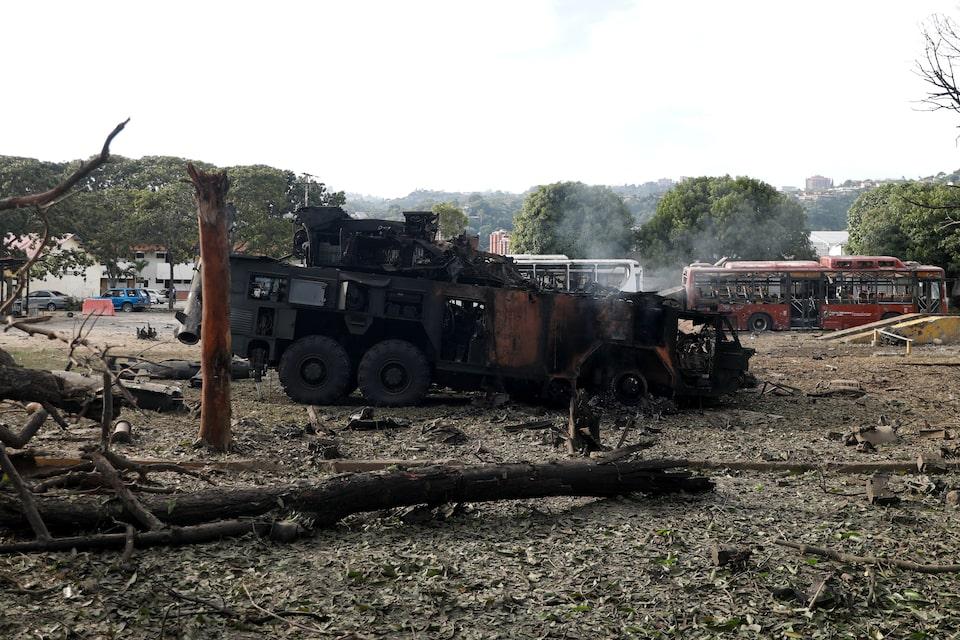
Jan 4 (Reuters) - Following are key facts about the oil and mining sectors of Venezuela, whose President Nicolas Maduro was captured by U.S. forces on Saturday, according to U.S. President Donald Trump. RESERVES Venezuela has the world's largest estimated oil reserves but its crude output remains at a fraction of capacity due to decades of mismanagement, lack of investment and sanctions, official data shows. Sign up here. Venezuela holds about 17% of global reserves or 303 billion barrels, ahead of Organization of the Petroleum Exporting Countries (OPEC) leader Saudi Arabia, according to the London-based Energy Institute. Its reserves are made up mostly of heavy oil in the Orinoco region of central Venezuela, making its crude expensive to produce, but technically relatively simple, according to the U.S. government's energy department. In 2019, Maduro and Delcy Rodriguez, who was then the country's vice president and is now acting president, announced a five-year mining plan aimed at boosting mineral extraction as an alternative to oil production. The year prior, Venezuela's government released data on mineral deposits that used key mining industry terms interchangeably, including reserve and resource. That makes it difficult to ascertain whether Caracas knew its full mining potential. A reserve is an estimate of the volume of a mineral that can be economically produced. A resource is the volume of a mineral estimated in an entire region, whether or not it can be economically produced. The 2018 report, which was billed as a "minerals catalog" for potential investors and published on Venezuela's mining ministry website, estimated coal reserves of roughly 3 billion metric tons and 407,885 metric tons of nickel reserves. That same report estimated a gold resource of 644 metric tons, an iron ore resource of 14.68 billion metric tons - while acknowledging much of that is a speculative estimate - and a bauxite resource of 321.5 million metric tons. In 2021, Venezuela's government published a map of mineral reserves based on data compiled in 2009. That map showed reserves of antimony, copper, nickel, coltan, molybdenum, magnesium, silver, zinc, titanium, tungsten and uranium, although it did not list volumes. The country does not appear to have sizeable reserves of rare earths, a grouping of 17 minor metals used to make magnets that turn power into motion. Rare earths are a subset of critical minerals. PRODUCTION Venezuela was a founding member of OPEC with Iran, Iraq, Kuwait and Saudi Arabia. Its struggles with electricity production have repeatedly hampered mining and oil operations. The country was producing as much as 3.5 million barrels per day of crude in the 1970s, which at the time represented over 7% of global oil output. Production fell below 2 million bpd during the 2010s and averaged some 1.1 million bpd last year or just 1% of global production. That's roughly the same production as the U.S. state of North Dakota. "If developments ultimately lead to a genuine regime change, this could even result in more oil on the market over time. However, it will take time for production to recover fully," said Arne Lohmann Rasmussen from Global Risk Management. If regime change is successful, Venezuela's exports could grow as sanctions are lifted and foreign investment returns, said MST Marquee analyst Saul Kavonic. "History shows that forced regime change rarely stabilises oil supply quickly, with Libya and Iraq offering clear and sobering precedents," said Jorge Leon, head of geopolitical analysis at Rystad Energy. Trump told Fox News on Saturday the United States would be very strongly involved in Venezuela's oil sector. The operational status of the mines tied to Maduro's 5-year plan is not clear. However, Maduro's National Council for Productive Economy last month said national production of gold, coal and iron ore grew in the first three quarters of 2025, without providing figures. Venezuela nationalized its gold sector in 2011. The government also controls iron and steel maker CVG. Reuters reported last October that Venezuela had restarted coal production and aimed to export more than 10 million metric tons of the mineral in 2025. It is not clear if the government hit that target. In 2019, the U.S. Geological Survey estimated that Venezuela produced 100,000 metric tons of coal from 731 million metric tons of reserves. Much of the country's production of minerals, including nickel, bauxite, iron ore, and gold, has fallen alongside oil in the past decade. JOINT VENTURES Venezuela nationalised its oil industry in the 1970s, creating Petroleos de Venezuela S.A. (PDVSA). During the 1990s, Venezuela took steps to open the sector to foreign investment. Following the election of Hugo Chavez in 1999, Venezuela mandated majority PDVSA ownership of all oil projects. Exxon and Conoco departed Venezuela in the 2000s and their assets were expropriated. PDVSA set up ventures in the hope of boosting production, including with Chevron, China National Petroleum Corporation, ENI, Total and Russia's Rosneft. Maduro threatened in 2023 to license mines in a region subject to ownership dispute with neighboring Guyana. Maduro's government since at least 2016 had supported artisanal gold mining in the Venezuelan Amazon to bring in revenue. EXPORTS, REFINING The United States used to be the main buyer of Venezuelan oil but since the introduction of sanctions, China has become the main destination in the last decade. Venezuela owes about $10 billion to China after China became the largest lender under late President Hugo Chavez. Venezuela repays loans with crude transported in three very large crude carriers previously co-owned by Venezuela and China. Two of those supertankers were approaching Venezuela in December when Trump announced a blockade of all tankers going in and out of the country. The vessels are now waiting for instructions, according to PDVSA documents and shipping data, as Venezuelan exports have been mostly halted. Trump told Fox News on Saturday that China would get the oil without elaborating. Russia has also loaned Venezuela billions of dollars but the exact amount is not clear. PDVSA also owns significant refining capacity outside the country, including CITGO in the United States, but creditors are battling to gain control of it through longstanding legal cases in U.S. courts. https://www.reuters.com/business/energy/venezuelan-oil-industry-worlds-largest-reserves-decaying-infrastructure-2026-01-03/
2026-01-03 14:46
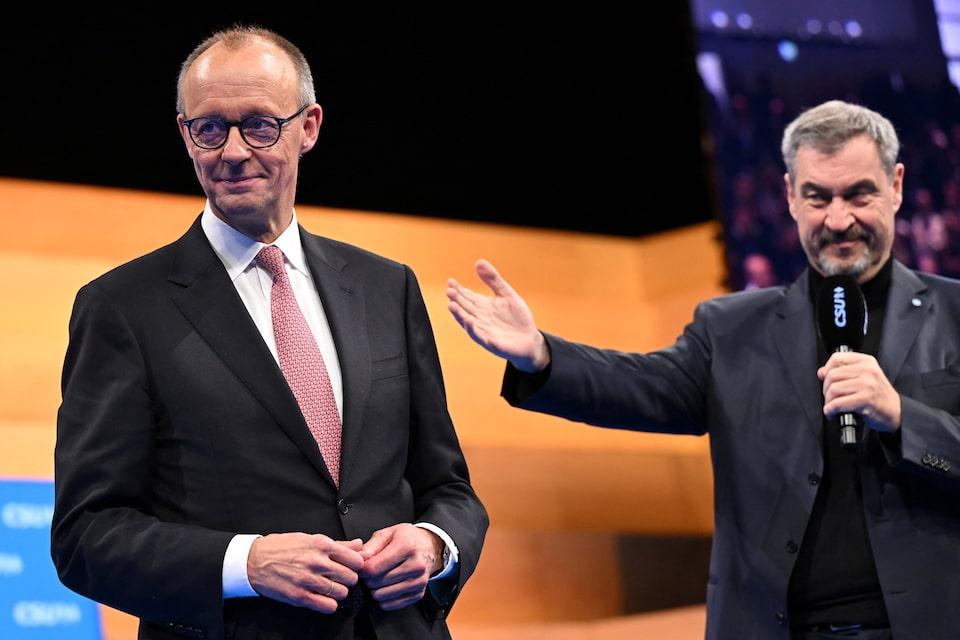
FRANKFURT, Jan 3 (Reuters) - Germany's conservative Christian Social Union (CSU), sister party to Friedrich Merz's CDU, on Saturday said it will help push ahead with the Chancellor's call for a single European stock exchange to support European listings and economic growth. "We support the strengthening of European capital markets and a European bourse in order to keep successful German companies in the country," said a draft internal CSU paper, that was obtained by Reuters. Sign up here. "We intend to take on a clear leadership role in this process and ensure that the headquarters of a European bourse are located in the European Union's biggest economy, Germany," said the paper. It was issued ahead of three-day party meetings starting on Tuesday in the Bavarian town of Seeon. Merz first presented the plan in October saying it would strengthen Europe as a business location. Among backers of a unified market for capital inside the EU are European Central Bank President Christine Lagarde, German finance minister Lars Klingbeil and Bundesbank president Joachim Nagel. Fragmented markets with different exchanges under different rule-books and supervision set the EU at a disadvantage vis-a-vis the United States with its powerful New York Stock Exchange, say backers of the plan. European exchanges say that initial public offerings in Europe are held back by reduced local liquidity pools. https://www.reuters.com/business/finance/germanys-csu-says-it-will-push-ahead-with-european-stock-exchange-plan-2026-01-03/
2026-01-03 14:12
Shmyhal praised for maintaining wartime economic stability Zelenskiy seeks to strengthen Ukraine's resilience Major government shake-up comes after energy sector corruption scandal KYIV, Jan 3 (Reuters) - Ukraine's President Volodymyr Zelenskiy said on Saturday that he has proposed Defence Minister Denys Shmyhal to become the country's energy minister and first deputy prime minister. Zelenskiy called on Ukrainian lawmakers to support Shmyhal, a former prime minister, as the new energy minister, saying his experience was vital to ensure stability in the power sector amid intensifying Russian attacks. Sign up here. "It is crucial that, after each Russian strike, we can quickly restore what has been destroyed, and that the growth of Ukraine’s energy sector remains stable and sufficient to meet the country’s needs," Zelenskiy said, posting a picture of him meeting Shmyhal in the presidential office on Telegram. Russia has pounded Ukraine's energy sector with drones and missiles for consecutive winters since the war began nearly four years ago. In recent months, Moscow has again intensified its strikes on Ukraine's energy infrastructure, forcing long blackouts across the country during critical winter months. Shmyhal, 50, is one of the most experienced government officials in Ukraine, praised by analysts for his skills to maintain economic stability and ensure efficient government operations after Russia's invasion in February 2022. He was Ukraine's longest-serving prime minister, running the government from 2020 until July 2025, when he was appointed defence minister. MAJOR SHAKE-UP IN KEY SECTORS Shmyhal's appointment comes as Zelenskiy launched a major shake-up of the Ukrainian defence sector and security forces. On Friday, Zelenskiy appointed popular military intelligence head Kyrylo Budanov as his chief of staff and also nominated a new defence minister. The reshuffle of Ukraine's top officials overseeing security forces and crucial defence and energy sectors comes weeks after a major energy sector corruption scandal that caused Ukraine's biggest wartime political crisis, resulting in the dismissal of Zelenskiy's previous head of office. Justice and energy ministers also resigned as a result of the scandal. Zelenskiy said the changes were needed to make Ukraine more resilient as the country faces a critical moment in its efforts to end the war with Russia. The government changes come as Ukrainian negotiators press for security guarantees from the United States and European allies as U.S. President Donald Trump pushes both Kyiv and Moscow to find a solution on how to end the war. National security advisors from 18 countries met in Kyiv on Saturday to discuss the details of security guarantees and economic agreements on Ukraine's post-war recovery. Ukraine’s parliament must approve Zelenskiy’s nominations of energy and defence ministers. https://www.reuters.com/world/zelenskiy-proposes-defence-minister-shmyhal-ukraines-new-energy-minister-2026-01-03/