2025-01-13 06:41
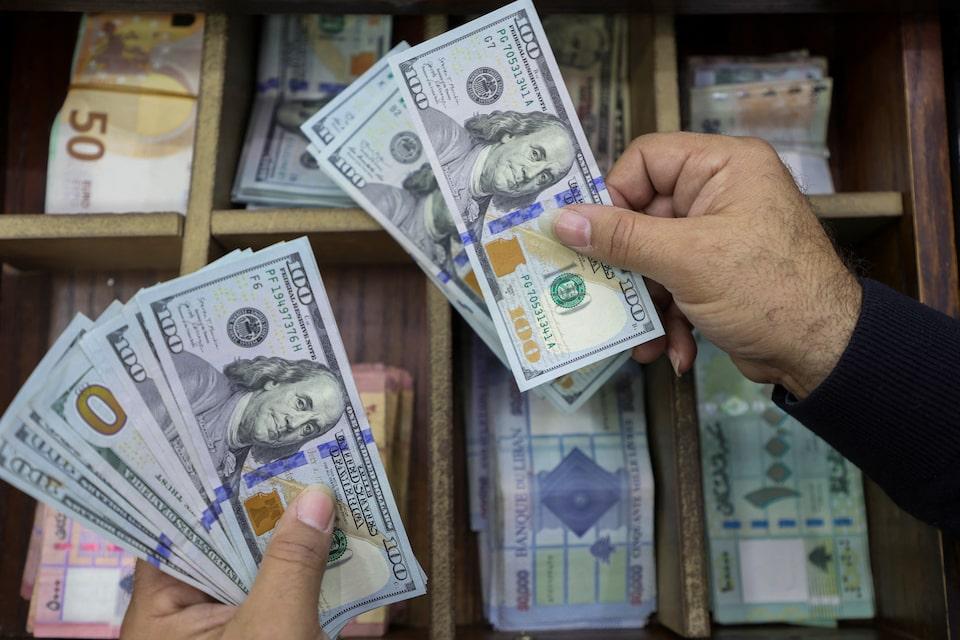
Dollar underpinned by Fed rate outlook Sterling at mercy of gilt market Beijing steps up defence of yuan NEW YORK, Jan 13 (Reuters) - The dollar rose on Monday, driving its peers to multi-year lows, after Friday's blowout U.S. jobs report underscored economic strength and fueled growing doubts about the Federal Reserve cutting interest rates this year. The dollar index, which measures the greenback against a basket of currencies, rose 0.26% to 109.94. Earlier in the session it surged to its highest in more than two years, peaking at 110.17 and extending the recent rally. U.S. jobs growth unexpectedly accelerated in December and the unemployment rate fell to 4.1%, leaving traders heavily scaling back bets of rate cuts this year. Markets are pricing in a 25 basis point cut from the Fed for December, after not fully pricing one in for 2025. With Wednesday's U.S. inflation report up next, any upside surprise could further close the door on future easing. A slew of Fed officials are also due to speak this week. "With markets currently pricing in just over one rate cut by year-end, the reaction to the inflation print may be relatively measured," said Uto Shinohara, senior investment strategist at Mesirow Currency Management in Chicago. "A more critical inflection point is the Trump inauguration this month, after which we'll see if Trump's tariff threats are fully realized or were they a negotiating ploy." President-elect Donald Trump returns to the White House on Monday. His plans for hefty import tariffs, tax cuts and immigration restrictions could stoke inflation, adding to expectations of a less aggressive easing cycle. The euro , down 0.4% at $1.0208, earlier in the session hit its weakest level against the dollar since November 2022. Sterling was last down 0.24% at $1.2167, after sliding to a 14-month low earlier in the day. The pound has been under pressure from concerns over rising borrowing costs and growing unease over Britain's finances. It tumbled 1.8% last week. Marc Chandler, chief market strategist at Bannockburn Global Forex in New York, said the general bullishness toward the dollar stems from diverging central bank policies and the threat of tariffs. "The tariff threat seems to be inflationary in the U.S.," he said, citing the impact it can have on interest rates. "But (it) also seems that tariffs would further destabilize some of our key trading partners, including Europe, Canada, Mexico." After sinking to its weakest since April 2020, the Australian dollar was up 0.13% at 0.615. The New Zealand dollar edged up 0.07% to $0.5559, staying near a more than two-year low. BEIJING STEPS IN The yuan bucked the global trend and rose slightly on Monday after Beijing stepped up efforts to defend the weakening currency by relaxing rules to allow more offshore borrowing and sending verbal warnings. The dollar slipped 0.12% against the offshore yuan , which was trading at 7.3533 per dollar. On Friday, the People's Bank of China suspended treasury bond purchases, which briefly lifted yields and spurred speculation it is stepping up defence of the yuan. The Chinese currency has come under renewed pressure in part due to investors' disappointment over the lack of further stimulus from Beijing to shore up its struggling economy. The dollar is down 0.03% against the yen at 157.7. The yen's decline was mitigated by news that Bank of Japan policymakers could raise their inflation forecast at a policy meeting this month as a prelude to hiking rates again. Sign up here. https://www.reuters.com/markets/currencies/towering-dollar-after-solid-jobs-data-leaves-peers-struggling-2025-01-13/
2025-01-13 06:27
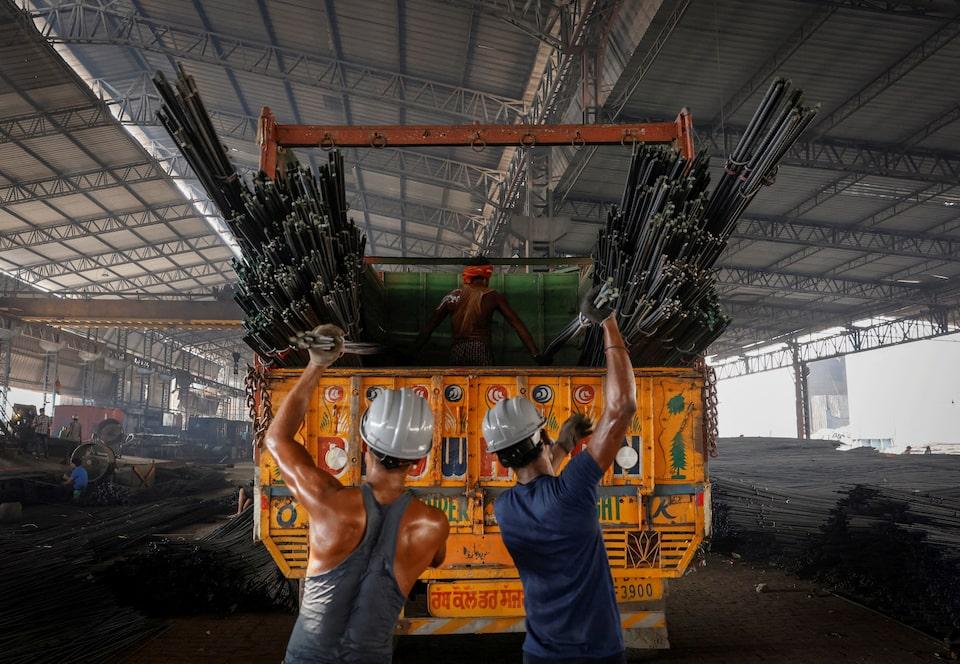
NEW DELHI, Jan 13 (Reuters) - India's finished steel imports hit at least a six-year high in the first nine months of the financial year that started in April 2024, according to provisional government data reviewed by Reuters on Monday. India, the world's second-biggest crude steel producer, had turned a net importer of finished steel products in the previous financial year. The trend has since continued, with shipments from China touching a record high in April-November 2024. China's steel exports in 2024 hit their highest level since 2015 at 110.72 million tons, an annual increase of 22.7%. India last month launched a probe to determine the need for imposition of a safeguard duty or a temporary tax to curtail unbridled steel imports. India imported 7.27 million metric tons of finished steel during April-December, up 20.3% year-on-year, the provisional data showed. The country remained a net importer of finished steel during April-December, with exports slumping 24.6% to an at least six-year low of 3.6 million metric tons, the data showed. The government will detail country-wise trade data later this month. Demand in Asia's third-largest economy has been robust from infrastructure and automotives, while it tapers off overseas. Consumption of finished steel during April-December reached an at least six-year high of 111.25 million tons, up 11.2% from the previous year, the data showed. Sign up here. https://www.reuters.com/markets/commodities/indias-april-december-finished-steel-imports-touch-least-six-year-high-2025-01-13/
2025-01-13 06:08
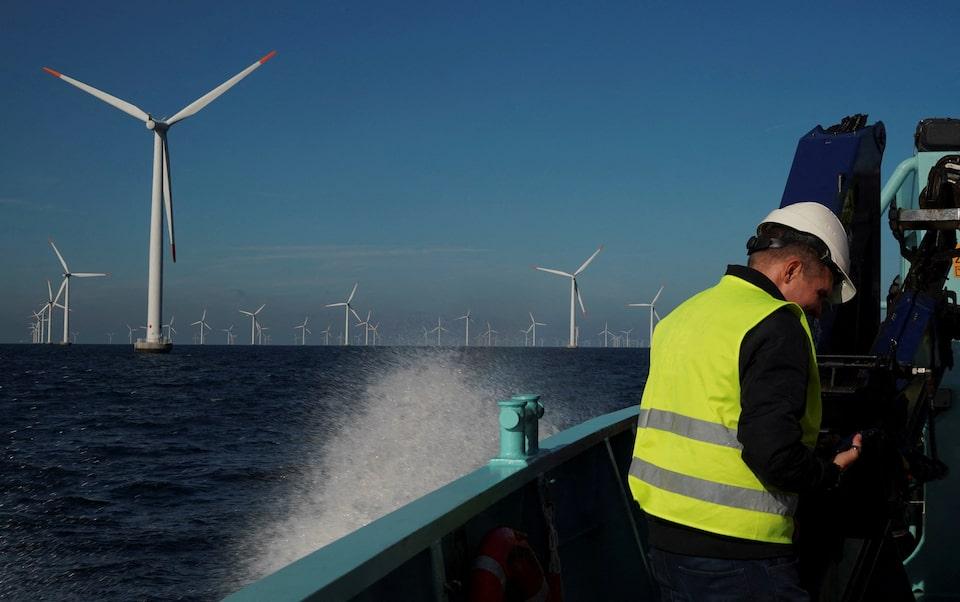
LITTLETON, Colorado, Jan 13 (Reuters) - Europe's wind farms could produce more electricity than the region's coal-fired power plants for the first time in 2025 if the recent pace of output growth in wind production and output cuts in coal generation extends through the year. Total electricity generated by Europe's wind farms was just 4% less than by the continent's coal plants in 2024, at 616 terawatt hours (TWh) versus 641 TWh, according to data from energy think tank Ember. Compared to the year before, coal generation was 7% lower in 2024 while wind generation was 3% higher, and if those output changes are repeated in 2025 then Europe's wind electricity production will surpass coal production by around 6% in 2025. Greater full-year generation by wind farms over coal plants would mark the first time a single source of renewable energy surpassed coal-fired electricity output in any major region, and would be a key energy transition milestone. NARROWING THE GAP The 25 TWh shortfall in wind generation compared to coal-fired generation in 2024 is around half of the amount of electricity produced by Europe's wind farms each month, according to Ember. As a result, that output gap could easily be made up over the course of 2025 by an increase in regional wind generation capacity or by higher average wind speeds at turbine level, or by some combination of both. According to industry group Wind Europe, regional power firms added 15 gigawatts (GW) of wind generation capacity in 2024, bringing the region's total wind capacity to around 287 GW. read more That rise in generation footprint should allow the region's wind farms to lift regional electricity production to a record in 2025, potentially to around 652 TWh if the 6% growth in capacity yields an equal-sized rise in electricity output. KEY RISKS That potential 652 TWh of wind electricity output should be enough to surpass regional coal generation in 2025, even if coal-fired output holds flat this year from 2024's levels. But if coal-fired output in 2025 declines by the same degree as it did in 2024 - by 7% - then wind generation could surpass coal-fired generation by close to 10%, and mark a major turning point in regional energy transition efforts. However, there are several risks facing Europe's power sector this year that could still result in regional coal power remaining above regional wind output. The main potential disruptive factor is the supply of natural gas, which looks set to contract again in 2025 after pipeline flows from Russia to certain European markets dropped from last year's levels. read more Natural gas is the region's main power source, so reduced gas supplies this year could force Europe's utilities to boost coal use in order to offset lower system generation from gas. Just a 1% drop in natural gas-fired electricity generation would require power firms to produce around 10 TWh more electricity from other sources. And if coal-fired plants are the main means of offsetting that lower gas-fired output, then regional coal-fired production could jump back above 650 TWh for the year, and potentially remain above wind output in 2025. Another key risk is an extended run of below-normal wind speeds across Europe's wind farms. In 2024, Europe's monthly wind electricity totals dropped below the year-before total on five occasions, even with the rise in overall generation capacity last year. These year-over-year generation drops came not just during the summer - when wind speeds tend to hit their annual lows - but also during October and November when autumnal winds typically pick up and boost wind electricity output. The low wind speed problem was particularly acute in Germany - the region's top wind producer - and remains a worry for power firms so far in 2025. read more The latest German wind generation forecasts by LSEG call for wind output to remain below the long-term average for the next week or so, but then climb back above normal towards the end of the month. Further spells of low wind speeds throughout the year could curtail overall wind generation in 2025. An additional risk is the region's level of industrial activity, which has been subdued since 2022 due to above-normal energy costs and weak consumer demand. Continued weakness among smokestack plants and factories should keep overall coal use in power generation under pressure, and potentially trigger further cuts to coal use in Europe. However, a synchronized upturn in Europe's industrial activity would trigger a rise in overall energy consumption, which would result in greater output from all power sources as power suppliers try to keep up with demand. Of course, higher overall wind output could help supply much of the extra electricity needed, and help to accelerate the regional power sector pivot away from polluting fuels. But coal will likely remain a key back-up fuel and could enjoy a resurgence in use if wind production becomes stymied through much of 2025. The opinions expressed here are those of the author, a market analyst for Reuters. Sign up here. https://www.reuters.com/business/energy/europes-wind-farms-track-eclipse-coal-output-2025-maguire-2025-01-13/
2025-01-13 06:02
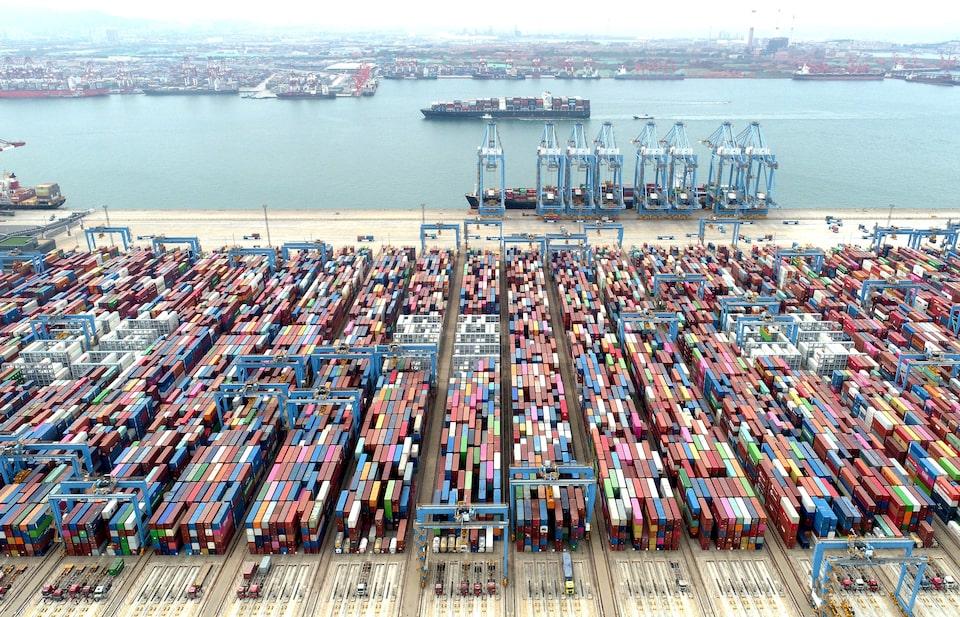
Dec exports +10.7% y/y, versus +6.7% in Nov (Reuters poll +7.3%) Trump trade risks, Lunar New Year prompt frontloading: analyst China's trade surplus rose to $104.8 billion in December BEIJING, Jan 13 (Reuters) - China's exports gained momentum in December, with imports also showing recovery, though strength at the year-end was in part fuelled by factories rushing inventory overseas as they braced for heightened trade risks under a Trump presidency. Exports have been a vital growth engine for the $18 trillion economy, which is still burdened by a prolonged property crisis and shaky consumer confidence. While policymakers can find solace in recent policy measures keeping the economy on track for an "around 5%" growth target, challenges such as potential U.S. tariff hikes cloud the outlook for 2025. U.S. President-elect Donald Trump, set to return to the White House next week, has proposed hefty tariffs on Chinese goods, sparking fears of a renewed trade war between the two superpowers. Adding to the challenges, unresolved disputes with the European Union over tariffs of up to 45.3% on Chinese electric vehicles threaten to hinder China's ambitions to expand its auto exports and help address deflationary overcapacity concerns. "Trade front-loading became more visible in December as a result of both Chinese New Year effects and Donald Trump's inauguration," said Xu Tianchen, senior economist at the Economist Intelligence Unit. China's biggest festival runs from Jan. 28 to Feb. 4. "Import growth could be underpinned by stockpiling of commodities like copper and iron ore, as part of (China's) 'buy low' strategy," he added. Outbound shipments in December rose 10.7% year-on-year, customs data showed on Monday, beating 7.3% growth forecast in a Reuters poll of economists, and improving from November's 6.7% increase. Imports surprised to the upside with 1.0% growth, the strongest performance since July 2024. Economists had expected a 1.5% decline. China's trade surplus grew to $104.8 billion last month, up from $97.4 billion in November. Its trade surplus with the U.S. widened to $33.5 billion over the same period from $29.81 billion a month prior. A Chinese customs spokesperson told reporters there was still "huge" room for China's imports to grow this year. Buoyed by a weakening yuan, Chinese manufacturers managed to find buyers overseas in 2024 to compensate for depressed domestic demand by continually reducing prices, analysts said. As a result, China's exports grew by an annual 5.9% last year, while imports increased just 1.1% over the same period. "The double-digit rise in December exports (led by the U.S. and ASEAN), along with the increase in the PMI new export orders, supports our earlier judgement that the threat of tariffs could affect export patterns in the next couple of quarters, with a potential boost in shipments before the introduction of new tariffs, followed by a drop-off," Barclays analysts said in a note. "Overall, we think the modest increase in imports and easing CPI inflation suggest the recent domestic demand recovery is still too shallow and too weak." Market reaction was muted to the trade data. The yuan hovered near 16-month lows against the dollar, while key share indexes (.SSEC) , opens new tab, (.CSI300) , opens new tab were down. SIGNS OF RECOVERY Signs of stabilisation have emerged following China's recent stimulus push. Factory activity remained in modest expansion for the third consecutive month, while services and construction recovered in December, an official survey showed. South Korea, a key indicator of China's imports, reported a 8.6% increase in shipments to China in December, suggesting resilience in demand for technology products. China's iron ore imports in 2024 rose for a second straight year to hit a new peak, as lower prices spurred buying and demand remained resilient despite the country's protracted property crisis continuing to weigh on steel demand. The world's largest agricultural importer also bought a record amount of soybeans last year, after buyers concerned about U.S.-China trade tensions rushed to secure U.S. soybeans ahead of incoming U.S. president Donald Trump's inauguration. But crude oil imports fell last year, the data showed, marking its first annual decline in the last two decades outside the COVID-19 pandemic-induced falls, as tepid economic growth and peaking fuel consumption dampened purchases. China's top leaders have pledged to loosen monetary policy and adopt a more proactive fiscal policy in 2025, aiming to offset external pressures and revitalise domestic demand. The government is targeting economic growth of around 5% for the year, a goal that had proved challenging to achieve at times in 2024. Sign up here. https://www.reuters.com/world/china/chinas-export-growth-quickens-amid-trade-risks-imports-surprise-2025-01-13/
2025-01-13 06:00
Strong economic data raises prospect of yields surging further Some fear inflation rebound, see risk of Fed hike Higher yields could further wobble stocks Some see 5% yield as threshold for allocation shifts NEW YORK, Jan 10 (Reuters) - A recent surge in U.S. Treasury yields may gain even more momentum after a strong jobs report reinforced expectations that interest rates will stay high for longer and raised the spectre of benchmark 10-year yields hitting 5% — a level that some fear could rattle broader markets. Friday’s jobs report revealed that employers added 256,000 jobs in December, well above economists’ forecasts, while the unemployment rate dropped, bolstering market expectations that the Federal Reserve will maintain elevated interest rates to curb economic overheating. That news dashed investors' hopes for some respite from a sharp rise in Treasury yields that has wobbled stocks since the beginning of the year. The data also re-ignited concerns about inflation, which remains stubbornly above the Fed's 2% target. "The report was obviously negative for inflation," said Felipe Villarroel, partner and portfolio manager at TwentyFour Asset Management. "This is definitely not an economy that is decelerating." Traders are now expecting the central bank will wait until at least June to reduce its policy rate. Before the jobs data, they were betting the Fed would cut rates as early as May with about a 50% chance of a second cut before year end. Both J.P. Morgan and Goldman Sachs pushed , opens new tab their Fed rate cut forecast to June, having earlier projected a cut in March. Concerns over a rebound in inflation have also begun to raise the prospect that the Fed's next move could be a hike - a scenario that would have been unthinkable a few months ago when investors expected interest rates would have declined to about 2.8% by the end of this year. They are now at 4.25%-4.5%. "Our base case has the Fed on an extended hold. But we think the risks for the next move are skewed toward a hike," analysts at BofA Securities said in a note on Friday. Longer-dated U.S. Treasury yields, which move inversely to prices, jumped to their highest levels since November 2023, with the 10-year hitting a high of 4.79%. Yields have gained 20 basis points since the beginning of the year amid a global government bonds selloff that has hit UK government bonds particularly hard, pushing 30-year gilt yields to their highest since 1998. Many in the bond market fear further weakness lies ahead, as fiscal and trade policies under the upcoming Donald Trump administration could lead to more Treasury issuance and a rebound in inflation. A BMO Capital Markets client survey before the jobs report showed 69% of respondents expect 10-year yields will test 5% at some point this year. Next week’s economic reports will feature December’s producer and consumer price inflation data, which could be key for the direction of yields. The yield curve comparing two-year with 10-year yields has steepened in recent weeks because 10-year yields have been rising while shorter-dated ones have remained flat, a so-called "bear steepening" dynamic, bad for long-term bond prices, indicating the market expects interest rates to remain high due to ongoing resilience in the economy. But that could change should inflation rise again, warned Jack McIntyre, a portfolio manager at Brandywine Global. "Look for Treasury market to shift to a bear flattening from its recent bear steepening trajectory," he said in a note. Bear flattening occurs when short-term interest rates rise faster than long-term interest rates, which can happen when investors anticipate central banks will increase interest rates. Outside of bonds, rising U.S. Treasury yields could dampen investor interest in stocks and other high-risk assets by tightening financial conditions and increasing borrowing costs for businesses and individuals. Higher yields can also improve the attractiveness of bonds against equities, "with 5% still seen as a trigger point for asset allocation shifts," said BNY in a recent note. In late 2023, stocks declined when benchmark 10-year yields reached 5% for the first time since 2007, and while they largely shrugged off the increase in yields late last year as the move was linked to an improved economy, stocks tumbled this week as upbeat economic data propelled yields higher. The S&P 500 was down 1% on Friday. "The 10-year yield will remain above 4% this year and as a result it could be quite challenging for the stock market," said Sam Stovall, chief investment strategist of CFRA Research, after the jobs data. "We started the year on the wrong foot." Sign up here. https://www.reuters.com/markets/us/jobs-report-fuels-treasury-yield-surge-markets-brace-5-threshold-2025-01-10/

2025-01-13 05:54
December exports down 24.7% m/m, down 3.3% y/y Exports in 2024 up 6% y/y, highest since at least 2014 December imports down 41.1% y/y, down 14.9% m/m 2024 imports down 24.4% y/y BEIJING, Jan 13 (Reuters) - China's exports of rare earth minerals rose 6% in 2024, customs data showed on Monday, as sputtering economic growth limited domestic demand. The world's largest producer of rare earths last year shipped 55,431 metric tons of 17 minerals used in the making of products ranging from electric vehicles to consumer electronics, General Administration of Customs data showed. That was the highest volume since Reuters' records back to 2014, but the total value of the exports slumped 36% to $488.8 million, the data showed, reflecting falling prices last year amid ample supply. The average spot price of praseodymium oxide in China, for example, fell 26% in 2024, following a drop of 37% in 2023, according to data from information provider Shanghai Metals Market (SMM). China exported 3,326 tons of rare earth minerals in December, down from 4,416 tons in November and 3,439 tons in December 2023. IMPORTS China's rare earth imports last month dropped 41.1% from a year earlier to 9,645 tons, producing a 2024 total of 132,931 tons, down 24.4% from 2023. Analysts say the 2024 fall was mainly due to reduced supplies from the United States and Myanmar, the other two major producers of rare earths. An armed group fighting Myanmar's military regime said last October that it had taken control of a mining hub that is a major supplier of rare earth oxides to China, disrupting shipments. Imports from the U.S. and Myanmar slipped by 14.6% and 31.6% year-on-year respectively in the first 11 months of the year, customs data showed. Sign up here. https://www.reuters.com/markets/commodities/chinas-rare-earth-exports-2024-climb-home-demand-disappoints-2025-01-13/