2025-01-13 05:50
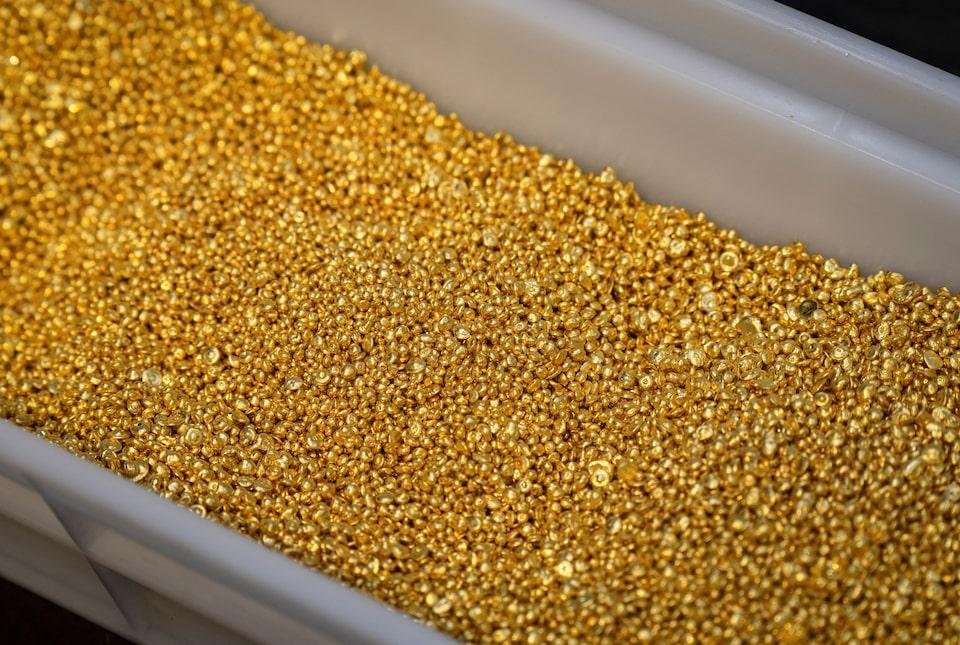
US PPI and CPI data due later in the week Dollar at its highest level in over two years Market sees 25 bps reduction in rate cuts this year Jan 13 (Reuters) - Gold prices dipped on Monday as the U.S. dollar soared to an over two-year high after a robust jobs report last week cemented expectations the Federal Reserve will proceed with caution with cutting interest rates this year. Spot gold fell 1% to $2,661.76 per ounce as of 03:57 p.m. ET (2057 GMT). Prices hit their highest in a month on Friday. U.S. gold futures settled 1.3% lower at $2,678.60. "We had a better-than-expected U.S. job report which strengthened the U.S. dollar and the Treasury yields... (Gold's) move lower here is some follow-through on the stronger than expected report," said Bob Haberkorn, senior market strategist at RJO Futures. There is also some profit-taking after gold had a great week last week, Haberkorn added. The dollar index (.DXY) , opens new tab rose to its highest since November 2022 after the U.S. jobs report underscored the strength of the economy and muddied the Fed outlook. A higher dollar makes bullion more expensive for overseas buyers. Trump will be sworn in as president of the U.S. next week. His proposed tariffs and protectionist trade policies are expected to be inflationary and could spark trade wars, adding to gold's allure as a safe-haven asset. Investors now await U.S. inflation data, weekly jobless claims and retail sales this week for further insights into the economy and the Fed's policy plans. "Should CPI inflation data on Wednesday show signs of persisting, any calls for a rate cut in the first half of the year will be firmly dismissed again," Fawad Razaqzada, market analyst at City Index and FOREX.com, wrote in a note. Currently, markets expect a 25-basis-point cut this year, compared with expectations of 40 basis points last week. Higher interest rates make the non-yielding bullion less attractive. Spot silver lost 2.6% to $29.62 per ounce, platinum dropped 1.4% to $950.90 and palladium shed 0.5% to $943.50. Sign up here. https://www.reuters.com/markets/commodities/gold-holds-steady-amid-trump-policy-uncertainty-upbeat-us-data-2025-01-13/
2025-01-13 05:49
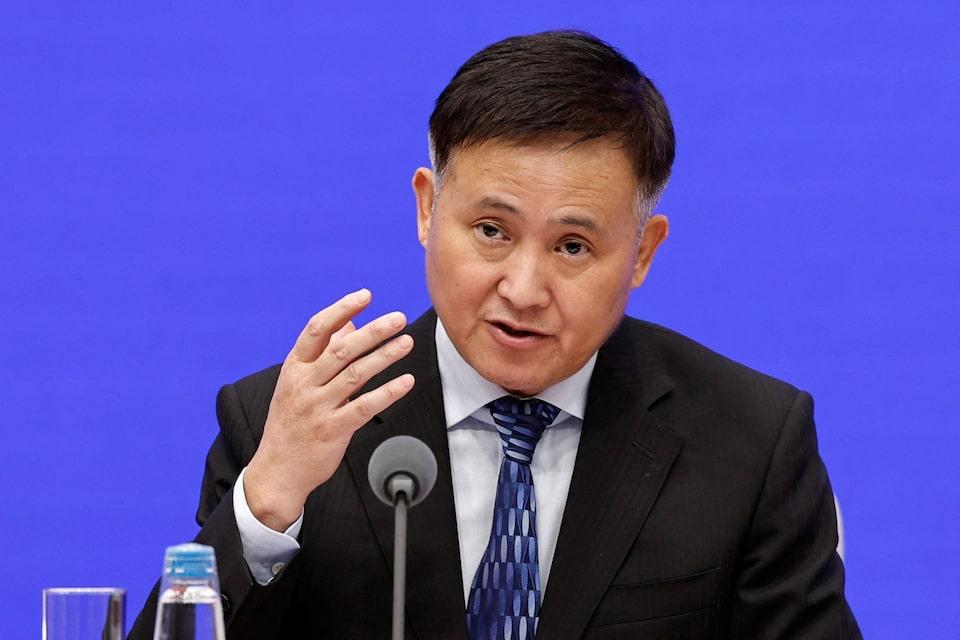
HONG KONG, Jan 13 (Reuters) - China's central bank chief said on Monday the government will support moderately loose monetary policy to maintain ample liquidity as it tries to stimulate the economy and soften the impact of geopolitical uncertainties. Pan Gongsheng, governor of the People's Bank of China, said the central bank will apply various tools such as interest rates and required reserve ratio to supply liquidity in the market. The remark underscores Beijing's commitment to deploy what could be its most aggressive monetary tactics to revive the world's second-largest economy. Pan told the Asia Financial Forum in Hong Kong that the central bank will substantially increase the country's foreign exchange reserves in the area of asset allocation in Hong Kong, without providing details. Beijing will also support the Hong Kong Monetary Authority to use a "swap fund" scheme to replenish the liquidity of the offshore yuan market, the PBOC chief said. The currency swap agreement currently allows Hong Kong to swap up to 800 billion yuan. (This story has been corrected to say 800 billion yuan, not $800 billion yuan, in paragraph 6) Sign up here. https://www.reuters.com/markets/asia/chinas-central-bank-chief-will-use-interest-rates-rrr-keep-ample-liquidity-2025-01-13/
2025-01-13 05:44
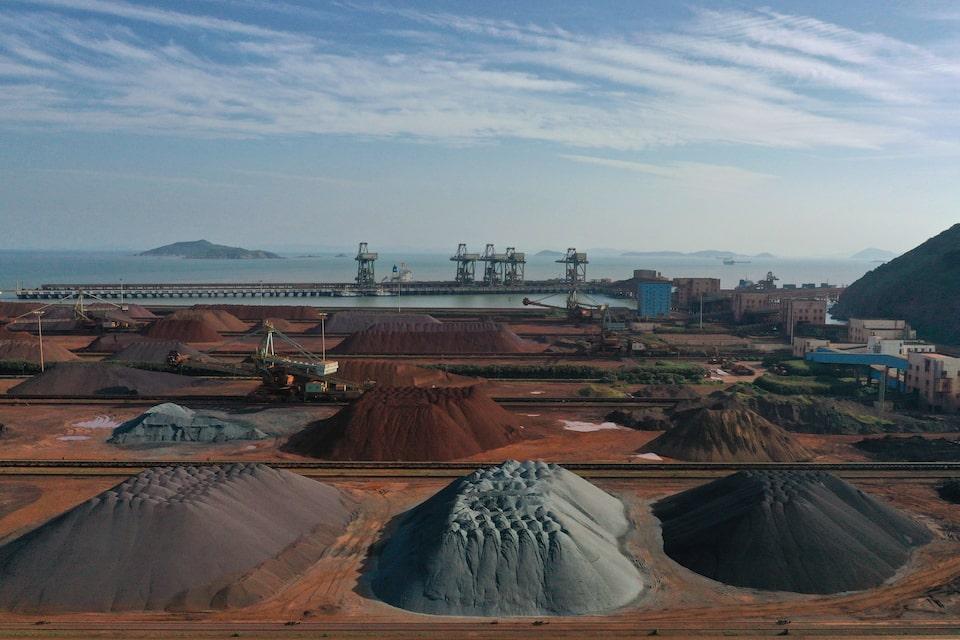
Iron ore imports hit record high in 2024 for second year Steel exports hit nine-year high, stoking trade tensions Dec iron ore imports up 11.5% y/y, up 10.4% m/m BEIJING, Jan 13 (Reuters) - China's iron ore imports in 2024 rose to a record high for a second year, customs data showed on Monday, as lower prices spurred buying while demand remained resilient due in large part to massive steel exports that are inflaming trade tensions. The world's largest iron ore consumer brought in a total of about 1.24 billion metric tons last year, data from the country's General Administration of Customs showed, up 4.9% from 1.18 billion tons in 2023, when it posted an annual increase of 6.6%. China's iron ore imports are also likely to hit a record high in 2025 as traders stockpile cheap ore for the world's top consumer, despite a protracted property crisis continuing to weigh on domestic steel demand. Steel output slid by 2.7% from the year before in the first 11 months of 2024 and was on track for an annual decline, but that largely reflected weak output from electric furnace steelmakers, which supply the troubled construction sector and use scrap steel instead of iron ore as a resource. Demand for iron ore remained solid among China's blast furnace steelmakers, which have been able to maintain cost competitiveness. Many electric furnace steelmakers, however, had to conduct maintenance or scale down production amid persistent constraints on scrap supply. Additionally, traders that bought high-cost iron ore early last year continued purchasing the key steelmaking ingredient to average out their overall production costs and reduce losses, analysts said. An increase in iron ore imports contributed to a price slump and a pile-up in portside stocks , which climbed by 28% year-on-year to 146.85 million tons as of Dec. 27, data from consultancy Steelhome showed. China's imported iron ore prices slid by 31% last year, according to Steelhome data. In December alone, China imported 112.49 million tons of iron ore, up 10.4% from 101.86 million tons in November. The December volume compared to 100.86 million tons in the same month in 2023. China's steel exports hit a nine-year high of 110.72 million tons in 2024, up 22.7% from 2023, stoking global trade tensions. A number of countries, including Turkey and Indonesia, have imposed anti-dumping duties, arguing that a flood of cheap Chinese steel is hurting domestic manufacturers. China exported 9.73 million tons of steel products in December, up 25.9% year-on-year and 4.9% month-on-month. China also imported 621,000 tons of steel in December, bringing the 2024 total to 6.82 million tons, a fall of 10.9% from 2023. Sign up here. https://www.reuters.com/markets/commodities/china-2024-iron-ore-imports-hit-record-resilient-demand-steel-exports-2025-01-13/
2025-01-13 05:38
Lithium supply glut is expected to halve this year, Antaike says China EV subsidies expected to support prices in 2025 Potential policy changes under Trump may pose risks to demand, Merriman says SHANGHAI, Jan 13 (Reuters) - Lithium prices are expected to stabilise in 2025 after two years of steep declines as shuttered mines and robust electric vehicle sales in China soak up an oversupply, although the potential for mines to reopen may cap gains, analysts and traders said. A nearly 86% plunge in prices of the EV battery metal over the past two years from its peak in November 2022 forced companies to mothball mines across the world. But market participants say those closures mean buoyant demand should outpace supply this year as China intensifies policy support to boost sales in the world's largest EV market. The global lithium supply glut is predicted to shrink by half to around 80,000 tons equivalent of lithium carbonate (LCE) from nearly 150,000 last year, according to Antaike, China's state-owned commodity data provider. "We expect to see a price recovery for lithium in 2025 as the curtailments seen in 2024, and the possibility of further curtailments, will significantly reduce the market surplus," said Cameron Hughes, battery markets analyst at CRU Group, referring to mine closures without giving further details. China doubled EV subsidies in July and more than 5 million cars sold as of mid-December had benefited from the incentives. China's EV subsidies contributed to a lithium price rally late last year, and should continue supporting prices in 2025, three analysts and two traders said. "The uptick in lithium trade business in the fourth quarter of 2024 can be undeniably attributed to the policy of providing subsidies," a buyer at a mid-sized cathode material plant in China said on condition of anonymity as the buyer was not authorized to speak to media. Any improvement in prices is likely to be felt towards the end of 2025 as inventories are used up and buyers return to the spot market, said David Merriman, research director at metals research company Project Blue. Project Blue expects prices to stabilize around an average of $11,092 per metric ton in 2025. Guotai Juan, a Chinese broker, forecasts a price range of 60,000 yuan ($8,184) to 90,000 yuan ($12,276). The most-traded lithium contract on the Guangzhou Futures Exchange traded between 68,250 yuan and 125,000 yuan per ton last year. Analysts, however, cautioned that any significant price rise this year is likely to be capped as production can be swiftly scaled up at many closed mines if it proves profitable. Merriman said that potential U.S. policy changes under the incoming Trump administration, including fresh tariffs on EV battery imports from China or slashing domestic EV incentives, may also pose risks to lithium demand. ($1 = 7.3312 Chinese yuan) Sign up here. https://www.reuters.com/markets/commodities/lithium-prices-stabilise-2025-mine-closures-china-ev-sales-ease-glut-analysts-2025-01-13/

2025-01-13 05:32
A look at the day ahead in European and global markets from Wayne Cole. Why bother engineering a soft landing, when you can just keep flying? That's the message from the U.S. payrolls report, which is likely to lift the Atlanta Fed GDP Now estimate from its already above-trend pace of 2.7%. With the labour market so resilient and inflation receding only slowly, markets may be wondering why the Federal Reserve is easing policy at all. A reading above +0.2% for core consumer prices on Wednesday could convince futures to start giving up on even one cut this year. The Treasury market is clearly fretting that cuts are done and the next move might be up, especially if President-elect Donald Trump goes through with universal tariffs, mass migrant deportations and tax cuts. China's reveal of a whopping $105 billion trade surplus with the United States in December only adds ammunition to those arguing for swingeing tariffs. Add in an ever-expanding budget deficit and it would be no surprise to see 10-year Treasury yields test the 5% barrier. That raises the bar for discounting corporate earnings, just as the profit season starts with the big banks on Wednesday. It also makes risk-free debt relatively more attractive compared with other investments including equities, cash, property and commodities. So it's been pretty much a sea of red in Asian stocks so far on Monday. Japan is on holiday but Nikkei futures are down around 1.2%. S&P 500 and Nasdaq futures are both down around 0.5%, and European stock futures have lost 0.1% to 0.3%. There's no trading of cash Treasuries but futures are down 5 ticks or so. The ascent of yields is stoking the dollar's bull run and causing stress across Asia, where central banks have to routinely intervene to prop up their currencies. China's central bank is increasingly rummaging through its policy tool kit to support the yuan, announcing on Monday an increase in the cap on what local companies can borrow abroad. If they can borrow the dollars they require, then there is less need to buy dollars for yuan in the spot market. Another currency under fire is sterling, which hit a fresh 14-month low at $1.2138 as markets fret about the Labour government's financial credibility. On a trip to China, finance minister Rachel Reeves had to reassure the media she would act to ensure the government's fiscal rules are met. Oh, and oil is up another 1.5% as investors ponder the full implications of the latest round of U.S. and UK sanctions on Russian producers. This move could really bite since it sanctions another 160 tankers of Russia's shadow fleet, taking the total to 270. Previous tankers so hit were severely curtailed in where they could travel and some ended up being scrapped. Key developments that could influence markets on Monday: - U.S. Federal budget balance Sign up here. https://www.reuters.com/markets/europe/global-markets-view-europe-2025-01-13/
2025-01-13 05:02
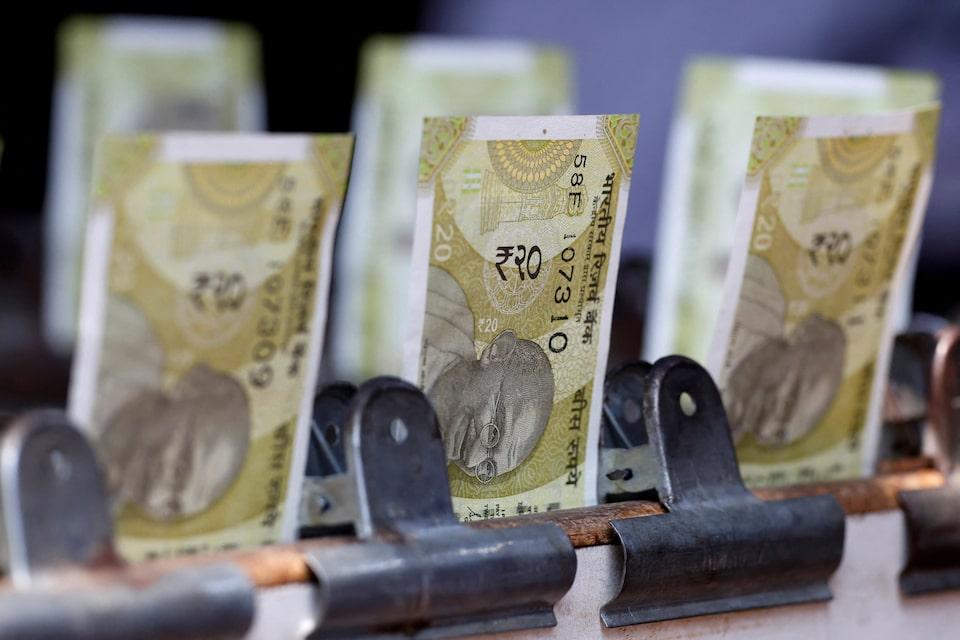
MUMBAI, Jan 13 (Reuters) - The Indian rupee dropped past 86 per U.S. dollar for the first time ever on Monday following a blowout U.S. jobs report that compounded the pressure from weak inflows and higher hedging activity. The rupee declined 0.4% to a lifetime low of 86.3900 per dollar, tracking the weakness in Asian currencies following nonfarm payrolls data that pointed to a healthy U.S. labour market. That followed a report showing an upward surprise on a services and manufacturing gauge, all of which paint a picture of U.S. economic resilience. Weak portfolio flows are compounding the pressure on the rupee. Foreign investors have taken out more than $4 billion from Indian equities so far this month, having withdrawn nearly $11 billion last quarter. Foreigners turning sour on their India portfolios and the uncertainty over Trump's planned policies have prompted speculators to pile on bearish bets on the rupee and increase their hedging activity. PERSISTENT WEAKNESS The rupee has been in a downward spiral for over three months, while its volatility gauges have kicked higher. The momentum "is pretty clear", said Brad Bechtel, global head of foreign exchange at Jefferies. The rupee's continued decline "probably makes a lot of sense" and, considering its REER (real effective exchange rate), it makes all the more sense, he said. The rupee's 40-currency trade REER indicated that the rupee is the most overvalued in at least twenty years. That, alongside a change in leadership at India's central bank, has fuelled expectations of a more flexible exchange rate policy. Jefferies' Bechtel expects the rupee to weaken to 88 in the "near-to-medium" term. ANZ Bank expects that to happen by March. "The loss of the rupee's competitiveness (based on the high REER) has become a pressing issue ... and the moderating business cycle warrants a weaker currency, ANZ said in a note last week. Sign up here. https://www.reuters.com/markets/currencies/india-rupee-declines-past-86usd-resilient-us-economy-weak-inflows-2025-01-13/