2025-01-13 04:33
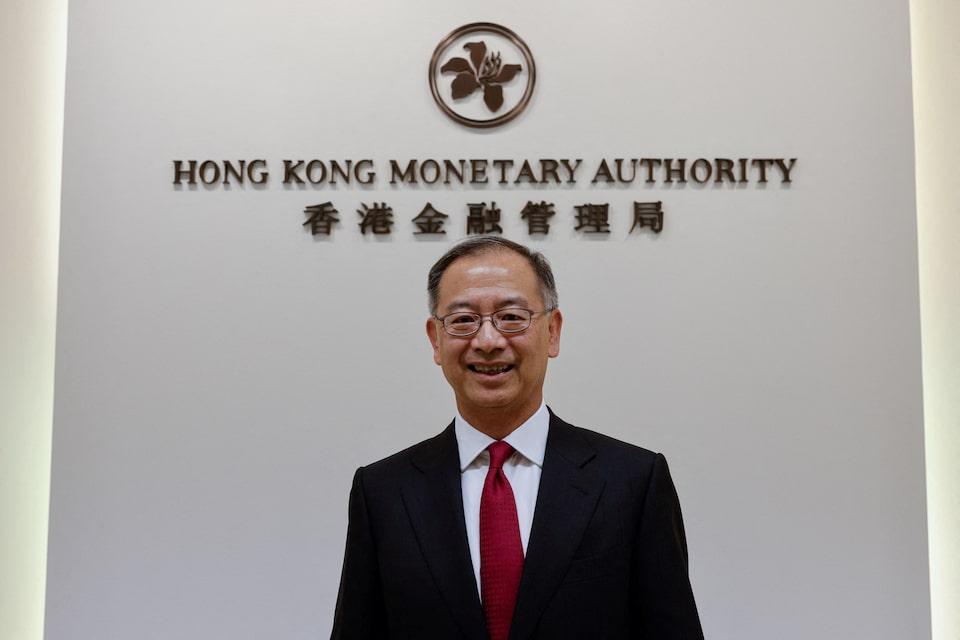
HONG KONG, Jan 13 (Reuters) - Hong Kong will launch a new yuan-denominated trade finance scheme and expand the hours and scope of its Bond Connect program for mainland China investors, Eddie Yue, Chief Executive of the Hong Kong Monetary Authority said on Monday. The announcement came alongside others made by China's central bank Governor Pan Gongsheng at a business conference, including pledges to help Hong Kong provide cheap yuan funding in the territory and measures to support the yuan, which has slid to 16-month lows. Beijing will support Hong Kong in the launch of the trade finance scheme using 100 billion yuan ($13.64 billion) in currency swaps for one, three and six months, Yue, chief of Hong Kong's defacto central bank, told reporters on the sidelines of the Asia Financial Forum in Hong Kong. The two central banks have a currency swap arrangement for a total 800 billion yuan. Under the new facility, banks can exchange their Hong Kong dollars for yuan funding with the HKMA at interest rates linked to onshore rates, providing banks in Hong Kong with a stable source of relatively lower-cost yuan funds, Yue said. Yue said the settlement deadline for the Bond Connect scheme will be extended to 4:30 p.m. (0830 GMT) and expanded to include U.S. dollar and euro-denominated bonds, besides yuan bonds. The HKMA will also promote yuan repurchase agreements, allowing international investors to use onshore bonds as collateral for yuan funds in Hong Kong, from Feb. 10, he said. ($1 = 7.3316 Chinese yuan renminbi) Sign up here. https://www.reuters.com/markets/asia/hong-kong-expand-yuan-trade-finance-bond-connect-schemes-hkma-says-2025-01-13/
2025-01-13 03:07
China raises ratio allowing more overseas borrowing Central bank sends verbal warning to defend weaker yuan Measures expected to have limited impact, analyst says SHANGHAI, Jan 13 (Reuters) - China stepped up its policy measures on Monday to defend a weakening yuan by relaxing rules to allow more offshore borrowing and sending verbal warnings as the Chinese currency hovered around 16-month lows against a strong dollar. The yuan has faced renewed depreciation pressures, weighed down by a triple-whammy of a broadly stronger greenback, falling Chinese yields and rising trade tensions with other economies. The People's Bank of China (PBOC) announced on Monday that borrowing limits would be raised to allow corporates to borrow more from abroad. The ratio under its macro-prudential assessments (MPA) - determining the maximum a company can borrow relative to its net assets - would be raised to 1.75 from 1.5, with immediate effect. The move was to "further improve the macro-prudential management of cross-border financing, continue to increase the sources of cross-border funds for enterprises and financial institutions, and guide them to optimise their asset-liability," the PBOC said in a statement jointly issued with the foreign exchange regulator. Separately, the China Foreign Exchange Committee planned to resolutely keep the yuan exchange rate basically stable at reasonable and balanced levels, the central bank said in another statement. The committee is a forum under the sponsorship of the central bank and the foreign exchange regulator. The committee also said that monetary authorities will increase FX market resilience and strengthen market management. They will also correct pro-cyclical market activities, deal with behaviours that disrupt market orders and prevent exchange rate overshooting risks. And in Hong Kong, PBOC Governor Pan Gongsheng told the Asia Financial Forum on the same day that "China has the confidence, conditions and ability to maintain stable operation of the foreign exchange market." China will keep the yuan exchange rate basically stable at reasonable and balanced levels," Pan reiterated. These measures are "sending a signal to stabilise the yuan," said Ken Cheung, chief Asian FX strategist at Mizuho Bank. "But the actual impact on capital flows and exchange rate is relatively limited, due to the low cost of domestic financing." Cheung said regulators will continue to mainly use the daily midpoint fixing to stabilise the currency and guide market expectations. China's onshore yuan traded at 7.3315 per dollar as of 0247 GMT on Monday, not far from a 16-month low of 7.3328 hit on Friday. It has lost more than 3% to the dollar since U.S. President-elect Donald Trump won the election in November. The central bank has been setting its official midpoint guidance on the firmer side of the key 7.2 level and stronger than market projections since mid-November. Traders and analysts widely interpret this as a sign of rising unease over recent yuan declines. The PBOC said last week that it will sell 60 billion yuan worth of six-month yuan bills in Hong Kong on Jan. 15, the most since the central bank started such bill sales in the financial hub in 2018. Selling these yuan bills will mop up liquidity in the market to reduce speculative bets against the yuan. Sign up here. https://www.reuters.com/markets/asia/china-steps-up-policy-measures-defend-fragile-yuan-2025-01-13/

2025-01-13 00:53
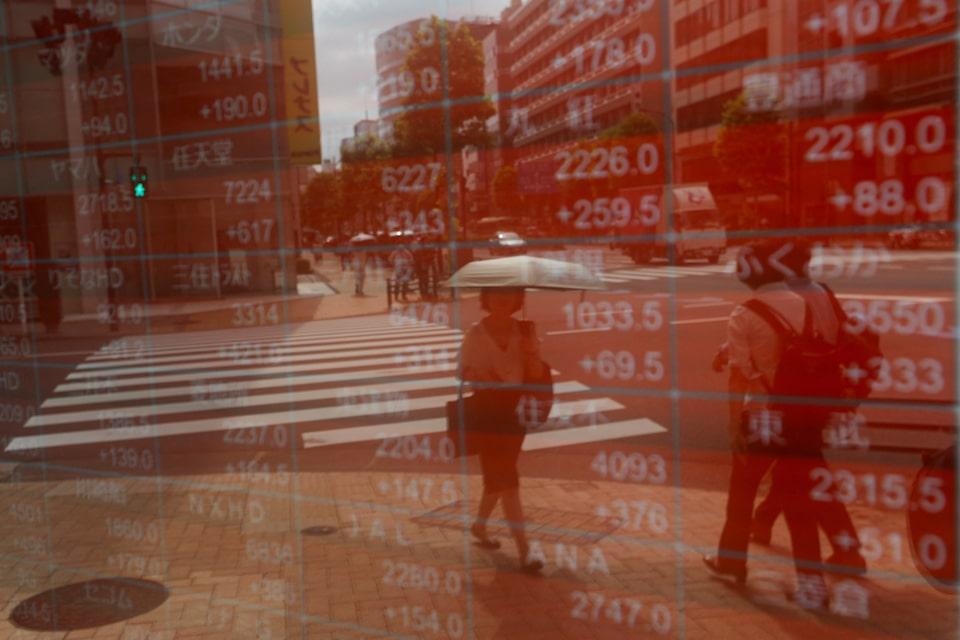
European shares rise 0.5%, Nasdaq futures up 0.7% Bond yields fall slightly after recent surge Inflation data on Weds key for Fed outlook SINGAPORE/LONDON, Jan 14 (Reuters) - European stocks and U.S. futures rose on Tuesday as a sell-off in bond markets moderated, although investors remained cautious ahead of U.S. inflation data on Wednesday and the start of U.S. President-elect Donald Trump's second term in office next week. Nasdaq 100 futures rose 0.7% in the European session after the index (.IXIC) , opens new tab dropped on Monday. S&P 500 futures were 0.51% firmer. European stocks (.STOXX) , opens new tab were up 0.48%, after the index fell 0.55% on Monday as global bond yields continued to rise after strong U.S. jobs data on Friday, which drove concerns about the outlook for central bank rate cuts. Germany's DAX (.GDAXI) , opens new tab climbed 0.67% and Britain's FTSE (.FTSE) , opens new tab eked out a 0.1% gain. Speculation about a slower approach to tariffs was one factor boosting global equities, analysts said, after Bloomberg reported that Trump's aides were weighing ideas including increasing tariffs by 2% to 5% a month to increase U.S. leverage and to try to avoid an inflationary spike. "The market remains focused on Trump and what measures he will present when he is sworn in as president next week," said Elisabet Kopelman, U.S. economist at European bank SEB. "It is still very uncertain how the policy will be shaped." All eyes are on U.S. inflation data due on Wednesday. Any rise in the core figure greater than the forecast 0.2% would threaten to close the door on easing altogether. "It'll be touch and go for the next couple of days until we get the inflation news out of the way," said Peter Cardillo, chief market economist at Spartan Capital Securities in New York. Investors are considering the possibility that the U.S. may have seen the end of rate cuts for now, he said. Benchmark 10-year yields fell 3 basis points (bps) to 4.78% on Tuesday after hitting 4.805% on Monday, the highest since early November 2023. Markets are pricing just 29 basis points of cuts from the Fed this year. JAPAN DIPS, OIL STEADIES In Asia overnight, Japan's Nikkei (.N225) , opens new tab slumped 1.8% and touched a six-week low as investors shed chip stocks and worried about a possible Bank of Japan interest rate hike. Bank of Japan Deputy Governor Ryozo Himino, in a speech to Japanese business leaders, left the door open to a rate hike at the conclusion of the next policy meeting on Jan. 24 . Chipmaker stocks have been under pressure following new U.S. restrictions on exports. The exception has been in China where local manufacturers rallied in anticipation of a boost to their domestic market share and speculation of state help. Oil prices steadied on Tuesday following a jump to four-month highs after Washington stepped up sanctions on Russia. Benchmark Brent futures were last trading at $80.80 a barrel, down 0.26%. The euro ticked up 0.15% to $1.0262, after hitting a more than two-year low of $1.0177 on Monday. Japan's yen was at 157.84 per dollar, down around 0.2%, inching away from the near six-month low of 158.87 it touched last week. The dollar index , which measures the greenback against a basket of currencies, hit its highest in more than two years at 110.17 overnight and was last at 109.57, up 0.15% . The fourth-quarter U.S. earnings reporting season gets underway on Wednesday, with results expected from U.S. banks including Citi (C.N) , opens new tab and JPMorgan Chase (JPM.N) , opens new tab. "The question investors are grappling with is what's more important - strong corporate earnings, which come from a strong economy, or lower inflation, which comes from a weaker economy," said Oliver Pursche, senior vice president, adviser for Wealthspire Advisors in Westport, Connecticut. "Most investors would prefer a strong economy with slightly elevated inflation," he said. Sign up here. https://www.reuters.com/markets/global-markets-wrapup-1-2025-01-13/
2025-01-12 23:49
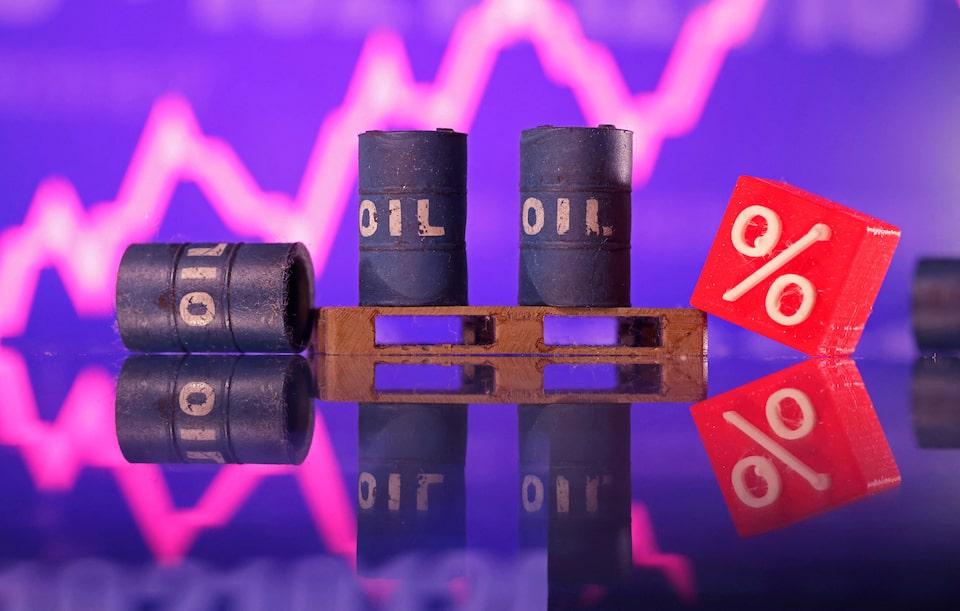
Chinese, Indian refiners seek alternatives to Russian oil Sanctioned oil tankers drop anchor Crude up despite stronger US dollar, possible Gaza truce NEW YORK, Jan 13 (Reuters) - Oil prices climbed about 2% to a four-month high on Monday on expectations that wider U.S. sanctions on Russian oil would force buyers in India and China to seek other suppliers. Brent futures rose $1.25, or 1.6%, to settle at $81.01 a barrel, while U.S. West Texas Intermediate (WTI) crude rose $2.25, or 2.9%, to settle at $78.82. That put Brent on track for its highest close since Aug. 26 and WTI on track for its highest close since Aug. 12, and kept both benchmarks in technically overbought territory for a second day in a row. Moreover, with Brent and WTI front-month prices rising over 6% over the past three trading sessions, the premium of front-month contracts over later-dated futures, known in the energy industry as time spreads, soared to the highest in several months. With interest in the energy market growing, total futures volume in Brent on the Intercontinental Exchange rose to its highest on Jan. 10 since hitting a record in March 2020. Open interest and total futures volumes for WTI on the New York Mercantile Exchange rose to their highest since March 2022. Chinese and Indian refiners are seeking alternative fuel supplies as they adapt to new U.S. sanctions on Russian producers and tankers that are designed to curb the revenues of the world's second-largest oil exporter. "There are genuine fears in the market about supply disruption. The worst-case scenario for Russian oil is looking like it could be the realistic scenario," PVM analyst Tamas Varga said. "But it’s unclear what will happen when Donald Trump takes office next Monday." Goldman Sachs estimated that vessels targeted by the new sanctions transported 1.7 million barrels per day (bpd) of oil in 2024, or 25% of Russia's exports. The bank is increasingly expecting its projection for a Brent range of $70-$85 to skew to the upside. "No one is going to touch those vessels on the sanctions list or take new positions," said Igho Sanomi, founder of oil and gas trading company Taleveras Petroleum. At least 65 oil tankers have dropped anchor at multiple locations, including off the coasts of China and Russia, since the United States announced the new sanctions package. Many of the tankers named have been used to ship oil to India and China after previous Western sanctions, and a price cap imposed by the Group of Seven countries in 2022 shifted trade in Russian oil from Europe to Asia. Some of the ships have also moved oil from Iran, which is under sanctions as well. Six European Union countries called on the European Commission to lower the price cap put on Russian oil by G7 countries, arguing it would reduce Moscow's revenue to continue the war while not causing a market shock. FACTORS WEIGHING ON OIL PRICES In a move that could reduce some of the supply risk premium built up in global oil markets, mediators gave Israel and Hamas a final draft of a deal to end the war in Gaza after a midnight "breakthrough" in talks attended by envoys of both Joe Biden and Donald Trump. The dollar (.DXY) , opens new tab climbed to a 26-month high versus a basket of other currencies following data last week that showed U.S. job growth unexpectedly accelerated in December and the unemployment rate fell to 4.1%, which could lead to higher inflation. That prompted traders to scale back bets on how many interest rate cuts the U.S. Federal Reserve would make this year. Markets were now no longer fully pricing in even one rate cut from the Fed in 2025, down from roughly two quarter-point cuts priced at the start of the year. A stronger U.S. currency could reduce demand for energy by making dollar-priced commodities like oil more expensive for buyers using other currencies. Higher interest rates, used to combat rising inflation, could also reduce demand for energy by boosting borrowing costs and slowing economic growth. Sign up here. https://www.reuters.com/business/energy/oil-hits-more-than-3-month-high-us-sanctions-hit-russia-exports-2025-01-12/
2025-01-12 23:04
DUBLIN, Jan 13 (Reuters) - Air passengers numbers are projected to more than double by 2050, boosting fuel demand and undermining the aviation industry's efforts to cut emissions, a study by climate advocacy group Transport and Environment suggested on Monday. As industry leaders meet at an annual finance conference this week in Dublin where many plane sales are expected, the Brussels-based group urged the European Union to take steps to rein in the sector's growth. "It's time to come back down to earth and put an end to this addiction to growth," Jo Dardenne, the group's aviation director, told Reuters. Steps to tame fast-growing air travel could include limiting airport infrastructure growth and corporate travel while increasing taxation, the report said. The airline industry, which generates about 2.5% of global carbon emissions, has vowed to use more sustainable aviation fuel (SAF) in a bid to reduce emissions and reach net zero by 2050. But scant supply and prices up to five times higher than traditional jet fuel mean little of the greener fuel is used. Monday's report said industry fuel use was forecast to rise 59% by 2050 from 2019 levels as passenger numbers increase. With plane makers Airbus (AIR.PA) , opens new tab and Boeing (BA.N) , opens new tab projecting high growth in coming years and more planes in the sky, emissions are set to increase, despite more efficient jets and use of SAF. "The more they grow, the further away they move from it," said Dardenne. "At this rate, they will still be burning two billion barrels of oil per year in 2050, despite using SAF." Airbus and Boeing did not respond to a Reuters request for comment. The industry has repeatedly rebuffed calls to curtail growth, saying the sector is essential to economic development and global connectivity. "Instead of speculative and selective projections decades into the future, the focus should be on implementing tangible solutions today," a spokesperson for trade body Airlines for Europe told Reuters in response to the report. Such solutions would lower the impact of aviation and preserve benefits, the spokesperson added. Sign up here. https://www.reuters.com/business/aerospace-defense/projected-air-travel-growth-runs-counter-climate-goals-study-says-2025-01-12/
2025-01-12 21:47
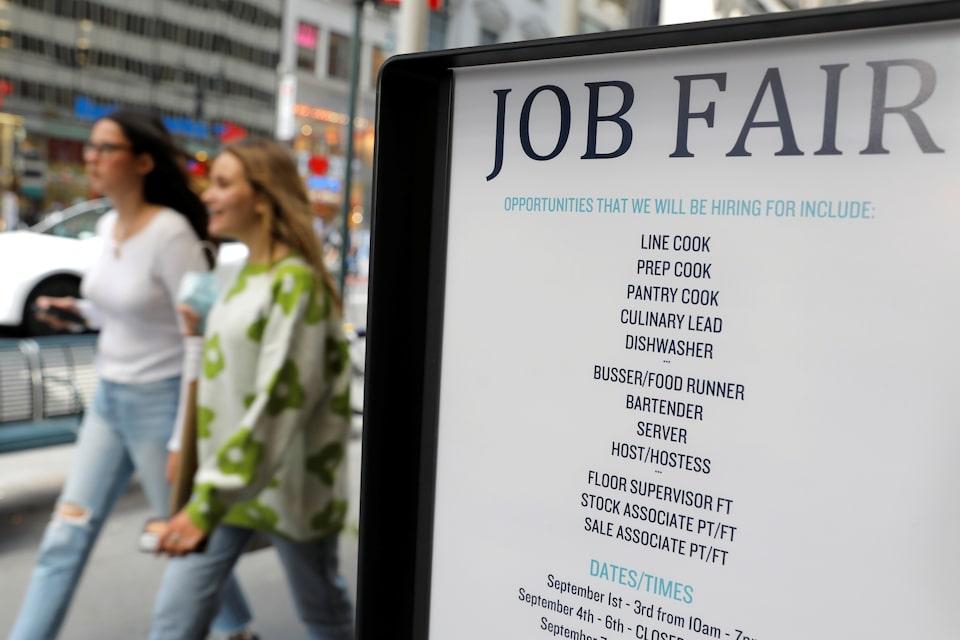
Jan 13 (Reuters) - A look at the day ahead in Asian markets. If the reaction in U.S. stocks, bonds and the dollar to Friday's sizzling U.S. employment report is any guide, Asian markets are in for a bumpy ride on Monday, rocked by another whoosh higher in bond yields and inflation fears. The U.S. economy created over a quarter of a million net new jobs and the unemployment rate fell last month, reflecting a robust labor market. That's good news. But the bad news for asset markets, especially in emerging and Asian economies, is the impact on borrowing costs and the dollar. Treasury yields surged to the highest in over a year, the dollar hit a two-year peak, and traders are now only predicting one quarter-point rate cut from the Fed this year, in September. The S&P 500 fell to its lowest since November 5, the day of the U.S. presidential election, and it looks like soaring bond yields could crush investors' appetite for risky assets like stocks. Japanese futures are pointing to a fall of more than 1% at the open in Tokyo on Monday, and it will be a similar story around the continent. Sentiment is already fragile, as the explosive rise in long-term bond yields has tightened financial conditions everywhere. According to Goldman Sachs, aggregate emerging market financial conditions are the tightest since late 2023. Uncertainty over the potential hit to growth in Asia - especially China - from the incoming Trump administration's 'America First' trade policies is another reason to be cautious if not outright bearish. Trade figures from China on Monday are unlikely to lift the gloom. Economists polled by Reuters expect export growth accelerated in December while imports contracted for a third straight month. December's import figures are likely to garner more attention as they reflect the strength of domestic demand, and can therefore perhaps be seen as an early sign of how successful Beijing's stimulus efforts have been. The trade figures are the first clutch of top-tier indicators from China this week which include house prices, retail sales, industrial production, investment, unemployment and culminate on Friday with fourth-quarter and full-year GDP. Investors will also assess the People's Bank of China's announcement on Friday that it has suspended treasury bond purchases, spurring speculation it is stepping up defense of the yuan. Will this be enough to put a floor under yields and the yuan? The annual Asian Economic Forum opens in Hong Kong, and among the speakers on Monday are Hong Kong Monetary Authority Chief Executive Eddie Yue, China Investment Corp's CIO Liu Haoling, and European Central Bank board member Philip Lane. Meanwhile, Indian inflation on Monday is expected to show that the annual rate cooled slightly in December to 5.3% from 5.5% in November. Here are key developments that could provide more direction to markets on Monday: - China trade (December) - India CPI inflation (December) - Asia Economic Forum Sign up here. https://www.reuters.com/markets/asia/global-markets-view-asia-graphic-2025-01-12/