2026-01-02 17:30
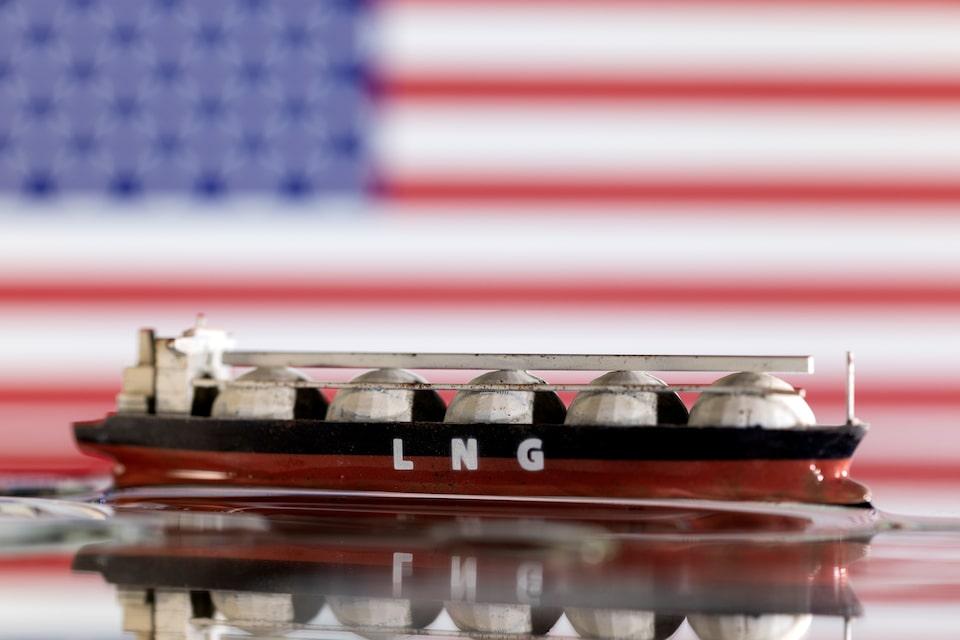
US sets new annual LNG export record US monthly LNG exports rises past 11 mmt Turkey buys more LNG from US than all of Asia in December HOUSTON, Jan 2 (Reuters) - The U.S. in 2025 became the first country to export more than 100 million metric tons (mmt) of liquefied natural gas in a single year, powered by the startup of production from new plants, preliminary data from LSEG showed. The world's largest LNG exporter sold 111 mmt of the fuel, almost 20 mmt more than its nearest rival Qatar and nearly 23 mmt more than it did last year, LSEG data showed. Sign up here. U.S. shipments accounted for roughly a quarter of global LNG exports last year. Venture Global's (VG.N) , opens new tab Plaquemines facility - the country’s second-largest export plant - delivered 16.4 mmt in 2025 after sending its first cargo in December 2024, LSEG data showed. Alex Munton, director of global gas and LNG at research firm Rapidan Energy Group, said the 24% year-on-year growth came down to high utilization across onstream terminals and a rapid ramp up at new facilities. The annual record was supported by a monthly milestone in December when the U.S. exported 11.5 mmt, a record for a single month, the data showed. In 2025, the U.S. set five monthly production records. "It is remarkable that in nine years the U.S. has gone from zero LNG exports to over 100 mmt, and the success validates the U.S. approach of selling free on board and pulling gas off the grid and the reliability of U.S. supplies," Jason Feer, head of business intelligence at shipping firm Poten and Partners, said on Friday. EUROPE REMAINS MAJOR EXPORT MARKET Europe remained the main destination for U.S. LNG, with 9 mmt sold to the continent last month as the Northern Hemisphere winter deepened and Europe reduced its purchases of Russian gas, LSEG ship tracking data show. Turkey, which supplies Europe with some Russian gas, stepped up its purchases of U.S. LNG in December, buying 1.45 mmt. In December, the U.S. sold 1.23 mmt of the superchilled gas to Asia, down from November's 1.75 mmt, the data showed. Egypt continues to buy significant amounts of U.S. LNG cargoes amid its natural gas shortages, buying 0.78 mmt in December, while the Americas region took 0.42 mmt. With Plaquemines targeting full capacity this year, Cheniere's (LNG.N) , opens new tab smaller modular plants expected to either be at full volume or ramping up, and the first train at Golden Pass LNG - a joint venture between QatarEnergy and Exxon Mobil (XOM.N) , opens new tab - set to begin production in the first quarter of 2026, Feer predicts the U.S. could increase its annual production this year by another 20 mmt. https://www.reuters.com/business/energy/us-sets-new-lng-export-records-banner-year-marked-by-new-capacity-2026-01-02/
2026-01-02 16:43
ROME, Jan 2 (Reuters) - A series of avalanches in the Italian Alps killed two people and injured several others on Friday, with strong winds hampering the rescue operations, rescuers said. A first avalanche hit the southwest Alpine Maira Valley, near the French border in the Italian region of Piedmont, killing one person and injuring two others, Alpine Rescue (Soccorso Alpino) said. One of them is in critical condition. Sign up here. Rescue teams set out on foot from lower altitudes after the strong winds prevented helicopter crews from reaching the site, the organisation said in a statement. A second avalanche occurred near Pragelato, a popular ski destination about 60 km (37 miles) west of Turin. A woman caught in the avalanche managed to free herself but was unable to move because of injuries. Rescue teams were working to evacuate her, with helicopters again limited by adverse weather conditions. Authorities said they were monitoring reports of a third avalanche in Piedmont, but details were not immediately available. Separately, in the northeastern Italian region of Veneto, an avalanche on the Vajo Gabene slope in the Small Dolomites killed a 50-year-old ski mountaineer, Italian news agency ANSA said. Rescue teams reached him by helicopter but were unable to save him. A combination of heavy snowfall and strong winds has raised avalanche risks across the Alps in recent days, prompting warnings for skiers and hikers. Local officials urged caution and advised against off-piste excursions as conditions remain unstable. https://www.reuters.com/business/environment/avalanches-kill-two-people-injure-several-others-italys-alps-2026-01-02/

2026-01-02 16:04
SANTIAGO, Jan 2 (Reuters) - Hundreds of miners began a strike on Friday at Capstone Copper's (CS.TO) , opens new tab Mantoverde copper and gold mine in northern Chile after talks between the main union and the company on new labour contracts broke down. In a statement Friday, the Union No. 2 of Mantoverde said it had enough resources to sustain the strike for at least two months, which it claims could generate losses of up to $160 million. Sign up here. The union said its 645 members began the strike at 8 a.m. local time (1100 GMT) after failing to reach an agreement late on Thursday. The union said negotiations fell apart after the company didn't agree to the union's final demands, which had estimated cost of about $500,000 a year, representing about 0.03% of the company's projected income of $1.4 billion. Chile is the world's largest copper producer and the strike comes at a time when global copper prices have soared to record highs. In a statement after the mediated talks failed late on Thursday, Canada-based Capstone said it was open to talks to resolve the dispute, adding that the striking workers represented about half of the workers at the mine and 22% of the company's total workforce. It also expects output to run at up to 30% during the stoppage. Capstone owns 70% of Mantoverde with Mitsubishi Materials owning the remaining 30%. The mine's expected 2025 production is between 29,000 and 32,000 metric tons of copper. In total, Chile's copper production in 2025 was expected to be about 5.5 million tons, according to state copper commission Cochilco. https://www.reuters.com/sustainability/sustainable-finance-reporting/miners-go-strike-capstone-coppers-mantoverde-mine-chile-after-talks-fail-2026-01-02/

2026-01-02 15:52
LONDON, Jan 2 (Reuters) - Billionaire investor Cliff Asness's AQR Capital Management finished last year with double-digit returns across its funds, a person familiar with the matter said on Friday. The $189 billion hedge fund made annual gains of 19.6% in its multi-strategy Apex Strategy, 18.6% in its alternative trend following Helix Strategy and 16.8% in its stock trading AQR Delphi Long-Short Equity Strategy. Sign up here. The returns were net of fees. These results beat a wider collection of systematic hedge funds, whose algorithms ride market trends until they peter out. An index that tracks these kinds of trend funds finished the year with just over 2.5%, according to Societe Generale's (SOGN.PA) , opens new tab indices. https://www.reuters.com/business/finance/aqr-capital-management-posts-double-digit-returns-2025-says-source-2026-01-02/

2026-01-02 12:58
HELSINKI, Jan 2 (Reuters) - Finnish police on Friday said they made progress in the criminal investigation into the damage of an undersea telecommunications cable owned by operator Elisa (ELISA.HE) , opens new tab. Police on Wednesday seized the cargo vessel "Fitburg" while en route from Russia to Israel on suspicion of sabotaging the telecoms cable running across the Gulf of Finland from Helsinki to Estonia. Sign up here. Investigators on Thursday said they had arrested two individuals and imposed a travel ban on two other of the ship's 14 crew members, who were from Russia, Georgia, Kazakhstan and Azerbaijan, and had began questioning them. "The interviews have clarified the course of events and the different roles of the crew members," Detective Chief Superintendent Risto Lohi of Finland's National Bureau of Investigation said in a statement. https://www.reuters.com/business/media-telecom/finland-makes-progress-cable-breach-investigation-police-say-2026-01-02/

2026-01-02 12:48
LONDON, Jan 2 (Reuters) - Britain experienced its hottest and sunniest year on record in 2025, surpassing the previous high set in 2022, the national weather service said on Friday, as persistent high-pressure systems and unusually warm seas drove up temperatures. The Met Office said the average annual temperature was 10.09 degrees Celsius (50.16 degrees Fahrenheit), topping the 2022 average of 10.03 C and marking only the second year since detailed records began in 1884 that the annual mean temperature has exceeded 10 C. Sign up here. The reading also placed four of the last five years in the top five warmest years since 1884, an indication of just how fast the climate is changing, the Met Office said last month when it first flagged the possibility of a new record. "Although it doesn't mean every year will be the warmest on record, it is clear from our weather observations and climate models that human-induced global warming is impacting the UK's climate," said Mark McCarthy, head of climate attribution at the Met Office. All of the top-10 warmest years have occurred in the last two decades, and since the start of the 21st century, a record has been set for UK annual mean temperature six times – in 2002, 2003, 2006, 2014, 2022 and now 2025. The data aligns with global trends, with the World Meteorological Organization saying in 2025 that the last 10 years have been the 10 warmest since records began. The European Union's Copernicus Climate Change Service (C3S) has predicted 2025 will be the world's second- or third-warmest on record in modern data, as extreme weather continued to hit regions around the globe last year. Globally, 2024 was the hottest year on record, as well as the warmest for Europe - the planet's fastest-warming continent. https://www.reuters.com/sustainability/cop/uk-records-hottest-sunniest-year-ever-2025-says-weather-service-2026-01-02/