2025-01-09 18:23
PARIS/FRANKFURT, Jan 9 (Reuters) - Austrian energy company OMV's Romanian business has struck a deal to supply Uniper (UN0k.DE) , opens new tab with gas from its Black Sea project from 2027, three people familiar with the matter told Reuters, as Europe seeks new ways to boost energy security after cutting ties with Russia. The five-year deal for 15 terawatt hours of natural gas from the Neptun Deep project, which has not previously been disclosed, comes after Russia last month stopped delivering gas via Ukraine and a broader winding down of European Union energy purchases from Moscow due to its invasion of Ukraine. The total contract volume represents about 1.5% of Germany's gas imports in 2024 and would be the first deal underpinning the long-awaited deepwater project, more than a decade after gas was first discovered in Romania's section of the Black Sea. Uniper and OMV declined to comment on commercial agreements. Neptun Deep, which is expected to start producing in 2027, holds an estimated 100 billion cubic meters (bcm) of recoverable gas, making it one of the EU's most significant natural gas deposits. Once it comes online, Romania will become the EU's largest gas producer and a net gas exporter for the first time. OMV Petrom (ROSNP.BX) , opens new tab, which is majority-owned by OMV (OMVV.VI) , opens new tab with Romania holding a 20.7% stake, first announced it had discovered 42-84 bcm of gas in the Black Sea in 2012. OMV Petrom said securing gas sales ahead of Neptun Deep's 2027 production was normal given the project's size. OMV Petrom and state-owned producer Romgaz (SNG.BX) , opens new tab, which own the Neptun Deep project in a 51:49 split, approved the project in 2023. Production at the plateau will be about 8 bcm annually for about 10 years, nearly doubling Romania's gas output. The producers plan to sell the gas separately, but under a Romanian law the government will have a pre-emptive first right to gas from the project. Gas producers have said there is huge potential for further discoveries in Romania's Black Sea, where the country has an estimated 200 bcm of reserves that promise to help diversify supply in the region. ($1 = 0.9614 euros) Sign up here. https://www.reuters.com/business/energy/austrias-omv-agrees-supply-romanian-gas-germany-sources-say-2025-01-07/

2025-01-09 18:14
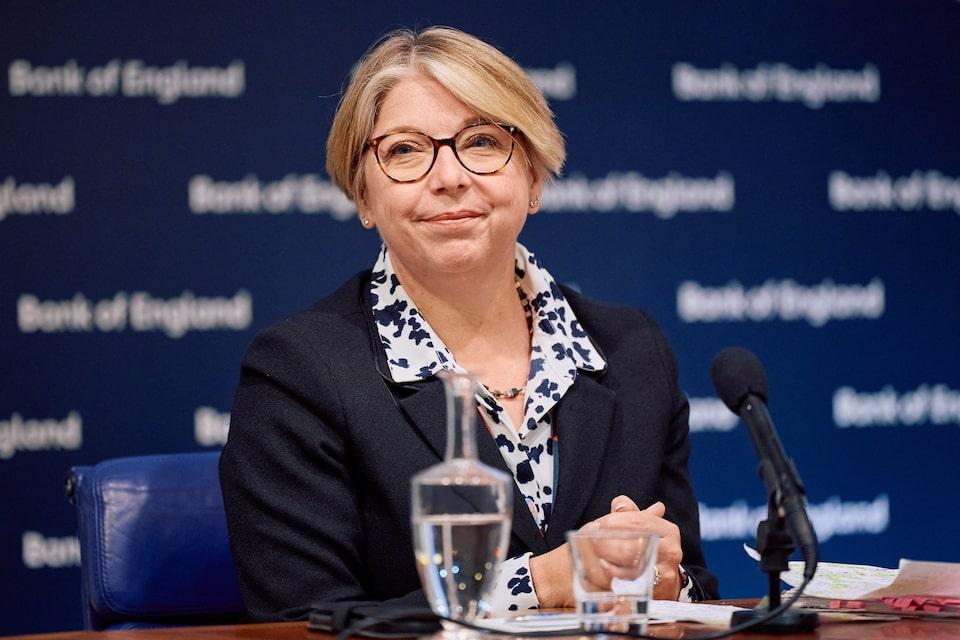
Jan 9 (Reuters) - Bank of England Deputy Governor Sarah Breeden said on Thursday that recent evidence supported the case to cut interest rates gradually but that it was tricky to gauge the right speed of easing. "The recent evidence further supports the case to withdraw policy restrictiveness and I expect to continue to remove restrictiveness gradually over time," Breeden said in a speech , opens new tab at the University of Edinburgh. Breeden, deputy governor for financial stability and viewed as a centrist on the Monetary Policy Committee, said it was "difficult to know" at this stage how quickly interest rates should fall. "To be clear, I expect Bank Rate to come down over time as the effects of the large shocks of the past continue to abate," Breeden said. She said an upside scenario for British inflation that she outlined a year ago, when she said it was her biggest concern, was no longer a "core consideration" in setting policy. There was tentative evidence that the economy had started to weaken, Breeden said, although she added that she was also watching to see how employers responded to the government's Oct. 30 budget announcement of tax hikes. The BoE lowered interest rates to 4.75% from 5% in November but raised its inflation forecasts due partly to the budget measures, which it said would also boost growth in the short run. The central bank has said repeatedly that it will move gradually with further rate cuts. Financial markets are pricing in two quarter-point rate cuts this year, while economists polled by Reuters last month on average expected four. Breeden said the BoE was monitoring Britain's government bond market after the yield on 30-year gilts climbed to a 26-year high in a selloff on Tuesday and Wednesday linked in part to the imminent return to the White House of Donald Trump. "So far the moves have been orderly. We do need to watch this space. So far, so good," Breeden said, adding that the fall in gilt prices, which has pushed up yields, was linked to global factors. Sign up here. https://www.reuters.com/markets/rates-bonds/boes-breeden-hard-know-how-fast-loosen-policy-2025-01-09/
2025-01-09 17:28
Jan 9 (Reuters) - Mexico's headline inflation rate eased more than expected in December, fueling bets that the central bank will keep cutting its benchmark interest rate despite an uptick in the core consumer price index. Annual headline inflation in Latin America's second-largest economy hit 4.21% last month, INEGI data showed, below the 4.28% expected by economists in a Reuters poll and down from the November figure of 4.55%. "Good news," central bank board member Jonathan Heath wrote in a post on X, "since this is the first time (inflation) comes below the 4.26% logged in October 2023." Meanwhile the closely watched core consumer price index, which excludes volatile energy and food prices, accelerated to 3.65% in the 12 months through December from 3.58% the previous month. Economists expected it to come in at 3.62%. Andres Abadia, chief Latin America economist at Pantheon Macroeconomics, said the uptick in core inflation appears temporary and pointed to a drop in non-core inflation, helped by falling food prices due to favorable weather, as a key factor driving the headline decline. Last month the Mexican central bank delivered a 25-basis-point cut to its benchmark interest rate, its fifth in 2024, bringing the rate down to 10.00%. Minutes from the meeting, released later on Thursday, showed most board members were open to considering larger rate cuts going forward. But December's inflation data could diminish that prospect, analysts warned. "The report supports another 25-basis-point rate cut in February but cautioned that sticky core services inflation and external risks, such as U.S. policy uncertainty, may lead Banxico to remain cautious in accelerating rate cuts," said Kimberley Sperrfechter, emerging markets economist at Capital Economics. Sign up here. https://www.reuters.com/world/americas/mexicos-annual-inflation-eases-december-2025-01-09/

2025-01-09 16:30
LONDON, Jan 8 (Reuters) - British markets are among the biggest victims of a global bond selloff that has spilled over into currencies and stocks this week. Yields on long-dated British government bonds are at their highest in decades - putting government finances under pressure - while sterling is struggling and British domestic stocks are underperforming. Britain's Treasury says it will maintain an "iron grip" on the public finances and Treasury minister Darren Jones told parliament the UK bond markets "continue to function in an orderly way." Here are six charts setting out the market impact. GILTS DUMPED Benchmark 10-year government bond yields surged more than 30 basis points in three days to hit 4.925% on Thursday, their highest since 2008, although they later fell back in calmer trading. There was little obvious trigger for the move, which kicked off Tuesday and accelerated Wednesday, but Emmanouil Karimalis, rates strategist at UBS, said Britain's high borrowing levels and the Bank of England's persistent concerns about inflation were factors. He noted Britain's government is borrowing roughly 20 billion pounds ($24.55 billion) more in the first quarter than last year. That represents a front-loading of the roughly 300 billion pounds the government is seeking to borrow through gilt markets this year, the second highest on record behind the pandemic year of 2020-21. “It's obviously not a helpful factor, especially for longer-dated gilts," Karimalis said. "It seems like the market thinks the UK is somehow losing fiscal credibility." STERLING SLUMPS The pound tumbled to a 14-month low against the dollar on Thursday on fears surging UK borrowing costs will force government spending cuts and slow the economy. It has also lost ground against the euro. Traders are braced for a wild ride in sterling, and one-month implied volatility - a measure of expected price swings - has spiked to its highest since March 2023. Sterling may replace the euro as traders' currency of choice to sell short against the dollar, which is surging on expectations of strong U.S. growth and high interest rates, Societe Generale chief FX strategist Kit Juckes said. "We’ve seen a spike higher in (gilt) yields immediately prompting lots of debate about whether we are going to need earlier fiscal tightening, which is going to further slow the economy.” “That has got volatility picking up because it is a change of direction (for the pound).” STOCKS STRUGGLE The bond selloff has spilled over into stocks too. "You saw smaller companies in the UK get hit particularly hard," said Iain Barnes, chief investment officer at Netwealth. "Anything that's trading off the confidence in the UK market combined with interest-rate exposures, has really struggled, so we're avoiding those areas completely." Britain's midcap FTSE250 index (.FTMC) , opens new tab, which includes consumer, real estate, and financial firms that make a high proportion of their revenues in Britain, is down over 3% this week so far, already its biggest weekly drop since August. In contrast, the more international FTSE100 blue chip index (.FTSE) , opens new tab and the broad European stocks benchmark are both up around 1%. (.STOXX) , opens new tab Homebuilders, which typically suffer from higher bond yields as they push up mortgage rates, have fallen over 7% this week. (.FTNMX402020) , opens new tab The macro economic picture is not solely to blame for the weakness in British stocks though. Shares in big retailers have been slumping on disappointing Christmas trading updates. FISCAL PROBLEMS Market selloffs can pose a challenge for governments at the best of times. But the bond aspect is increasing the pressure on Britain's finance minister Rachel Reeves, and could force her to cut future spending. The problems in part stem from Reeves' first budget speech in October, in which she gave herself only a small margin of error for meeting her target of balancing spending on public services with tax revenues by the end of the decade. Higher gilt yields, as well as Britain's sluggish economy, means Reeves might already be off course. "The growing likelihood that the Chancellor will miss her main fiscal rule suggests further spending restraint and/or tax rises may be unveiled in 2025," said analysts at Capital Economics. "That could act as a bigger headwind to economic growth." ($1 = 0.8145 pounds) Sign up here. https://www.reuters.com/world/uk/uk-markets-are-eye-global-bond-storm-2025-01-09/

2025-01-09 16:08
Euro zone yields rise far less than US, UK peers ECB still on course to cut interest rates quickly Euro zone economy stagnant FRANKFURT, Jan 9 (Reuters) - Just as Britain and the United States come under pressure from investors worried about growing debt and sticky inflation, the euro zone seems to be largely escaping the market's wrath -- even if the reasons behind that calm are not all pleasant. The UK and U.S. governments have seen their 10-year bond yields, an indication of how much it costs them to borrow, rise by 100 basis points since September as investors fret about the fiscal plans of Britain's Labour government and Donald Trump's incoming U.S. administration. Germany, the euro zone's largest economy and financial benchmark, has seen its own borrowing costs rise less than half as much despite a looming general election that could see big gains for the far right. Investors are taking comfort from a much lower government debt-servicing burden in Berlin than in Washington or London. "Germany is the only major economy around the world that can afford to issue more debt to finance public spending if they decide to," Francesco Castelli, the head of fixed income at asset manager Banor in London, said. But even for debt-laden Italy and France the rise in bond yields has been much smaller than in Britain or the United States. This might in part reflect some signs of fiscal restraint in Rome and in Paris, where a new government has vowed to get the public finances in order. But there are also less positive reasons why lenders are not charging more to lend to euro zone governments. Economic growth in the bloc, and especially in Germany, is stuck in low gear, courtesy of higher energy costs and a lack of competitiveness in key sectors such as cars and technology. This is likely to push down inflation, keep the economy stagnant and force the European Central Bank to cut interest rates quickly in the coming months. By contrast, the U.S. economy keeps defying expectations with its brisk growth, and economists are becoming increasingly convinced it may well be destined for a structurally higher neutral rate of interest -- the level of borrowing costs that keeps the economy in balance. Protectionist policies from the incoming Trump administration could even add to U.S. inflation by making imports more expensive, forcing the Federal Reserve to keep interest rates high for longer and putting upward pressure on borrowing costs. The Fed is only seen cutting its key rate just once or twice at most over the next year, which would still leave it at around 4.0% The central bank for the 20 countries that share the euro is by contrast seen reducing its policy rate four times over the same period, easing it to 2.0%. "In the United States every bit of good news is taken as evidence that the economy is stronger not just cyclically but structurally, and the neutral rate may be between 3% and 4%," said Frederik Ducrozet, head of macroeconomic research at Pictet Wealth Management. "In Europe there’s little such hope that growth will be good," he added, pointing to an ECB survey that puts long-term expectations for the policy rate at just 2.0%. Of course things could still change - for better or worse - especially given policy uncertainty from Trump, who has said Europe would pay heavily for running a persistent trade surplus with the United States. There were limits to interest rate divergence, too, since high U.S. yields tend to strengthen the dollar and boost imported inflation in Europe, especially via energy prices. "Six straight weeks of rising yields in Europe is the longest sequence since September 2022 and flies squarely in the face of the popular view that the second largest economy in the world is broken and inflation has been vanquished," Societe Generale wrote in a note to clients. On the positive side, Pictet's Ducrozet said Germany could climb out of its economic rut if the next government decided to make use of its fiscal space to invest, boosting its growth and inflation expectations. This would likely result in higher long-term rates, which would be, in this case, "a measure of success" rather than an issue, he said. Sign up here. https://www.reuters.com/markets/europe/good-reasons-bad-global-bond-wobble-passes-over-euro-zone-2025-01-09/

2025-01-09 16:05
Highest profit since central bank set up in 1907 Big gains for stocks and gold boost result First shareholder, government payouts since 2022 ZURICH, Jan 9 (Reuters) - The Swiss National Bank (SNBN.S) , opens new tab will likely report a record full-year profit of around 80 billion Swiss francs ($87.79 billion) for 2024, it said on Thursday, after benefiting from booming equity markets, rising gold prices and a stronger U.S. dollar. The expected profit, according to provisional data, is the highest since the central bank was set up in 1907, comfortably exceeding the previous record of 54 billion francs in 2017. The SNB, which will publish its earnings on March 3, logged an annual loss of 3.2 billion francs in 2023 and a record loss of 132 billion francs in 2022. The 2024 figure is in line with a forecast by UBS economists, and will allow a payout to SNB shareholders as well as the country's central and regional governments for the first time in three years. The SNB made a profit of 67 billion francs from its foreign currency holdings last year, boosted by strong equity markets - the MSCI World Index (.MIWO00000PUS) , opens new tab gained 17% in 2024. The central bank has investments in tech majors such as Apple (AAPL.O) , opens new tab, Microsoft (MSFT.O) , opens new tab and e-commerce giant Amazon (AMZN.O) , opens new tab, among others. The stronger U.S. dollar - in which the SNB holds 39% of its 744 billion francs worth of foreign currency assets also helped boost share valuations and dividends when converted into francs. The SNB made a valuation gain of 21.2 billion francs on the 1.04 million metric tons of gold it holds, as the precious metal's price surged more than 27% in 2024. The central bank's Swiss franc positions - mainly interest payments to banks for money lodged overnight and interest payments on SNB bills - returned a loss of 7.4 billion francs, however. After allocating 11.6 billion francs to foreign currency reserves and paying back the previous losses, the SNB's ongoing profit stood at around 16 billion francs, allowing it to pay out 3 billion francs to central and regional governments and a dividend of 15 francs to shareholders, it said. "The conditions last year were highly favourable for the SNB, with a stronger dollar and higher gold prices, which doesn't normally happen at the same time, while equity markets did very well," said UBS economist Alessandro Bee. "This was a very unusual situation, but a highly favourable one for the SNB’s profits." ($1 = 0.9113 Swiss francs) Sign up here. https://www.reuters.com/business/finance/swiss-central-bank-sees-2024-profit-record-88-billion-gold-stock-prices-jump-2025-01-09/