2025-01-09 06:42
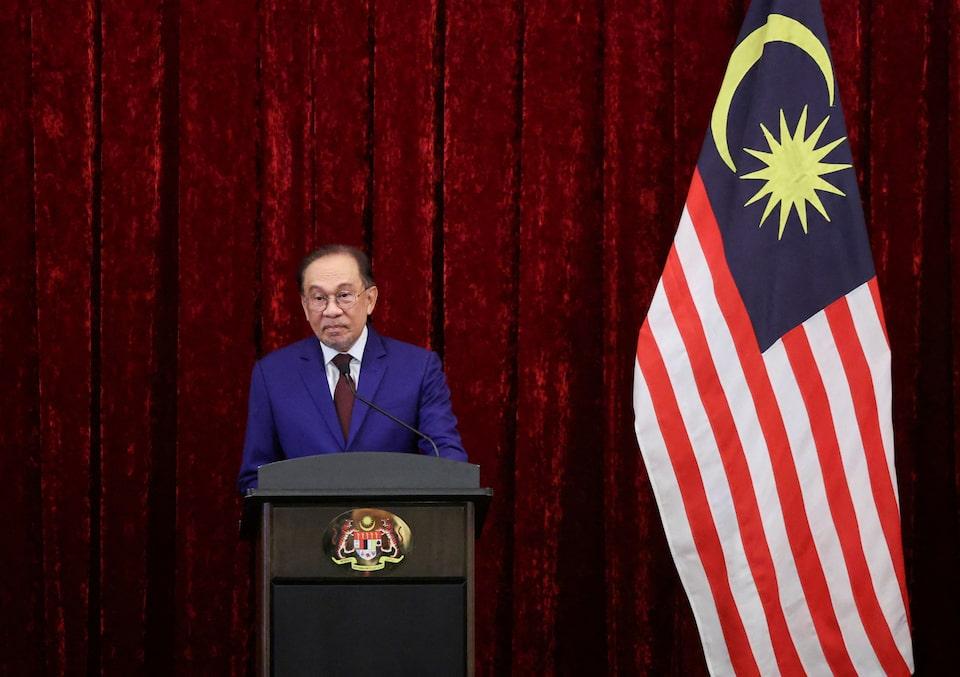
Malaysia looks to produce GPUs, chips in 5-10 years Influx of investments boosting economy, says PM Malaysia's location strategic for supply chain diversification KUALA LUMPUR, Jan 9 (Reuters) - Malaysia wants to leverage its location to become an energy and chip manufacturing hub this year, riding a recent jump in investments and a favourable outlook for the domestic economy, its premier and economic minister said on Thursday. Malaysia is fast becoming a haven in Southeast Asia, with foreign investors returning as improving growth and a stable currency set it apart from peers grappling with political flux and economic uncertainty. Prime Minister Anwar Ibrahim said Malaysia's economy rebounded dramatically last year, spurred by an influx of strategic investments, most substantially in renewable energy and artificial intelligence infrastructure. He added inflation and the ringgit were stable and the stock market was the region's top performer. "In 2025, we want to double down on our geographical centrality, as a conduit for electricity, talent and supply chain diversification," he said at an economic forum. Anwar said Malaysia will now aim to refine its expertise in oil and gas, semiconductors, and Islamic finance to become a global market leader in each field. Economy minister Rafizi Ramli said Malaysia is looking to produce its own graphics processing unit chips as demand for artificial intelligence and data centres grows. "We are hoping that we can start producing made-by-Malaysia GPUs and chips in the next five to 10 years," he said. Malaysia, a major player in the semiconductor industry that accounts for 13% of global testing and packaging, is targeting over $100 billion in investment for the sector. The Southeast Asian country is seen as well placed to attract more business as Chinese chip firms diversify overseas for assembling needs, and has attracted multibillion-dollar investments from leading firms in recent years, including Intel (INTC.O) , opens new tab and Infineon (IFXGn.DE) , opens new tab. Malaysia also received a slew of digital investments from major tech firms last year, including Alphabet's (GOOGL.O) , opens new tab Google, helping to propel its economy with growth beating market expectations in the second and third quarters and the ringgit becoming one of Asia's top performers in 2024. Sign up here. https://www.reuters.com/markets/asia/malaysia-aims-be-conduit-diversification-energy-supply-chains-pm-says-2025-01-09/
2025-01-09 06:17
Sterling slides to 14-month low Investors brace for Trump tariff plans Fed officials signal rate cut caution NEW YORK, Jan 9 (Reuters) - The U.S. dollar strengthened for a third straight session on Thursday as Treasury yields dipped but held at elevated levels on concerns over tariffs under the incoming Trump administration, while sterling's recent weakness persisted. U.S. Treasury yields have been on an uptrend, with the benchmark 10-year note hitting an 8-1/2 month high of 4.73% on Wednesday as a resilient economy and likely tariffs have rekindled inflation concerns and heightened expectations the Federal Reserve will take a slower path of interest rate cuts. Recent economic data has shown a labor market on a solid footing and minutes from the Fed's December meeting showed that policymakers raised new inflation concerns suggesting the new administration's plans may slow economic growth and increase unemployment. Investors will eye Friday's key government payrolls report to gauge how aggressive the central bank will be in cutting interest rates. "Most of the economic readings that have come in have been a little stronger than expected so if we get a non-farm payrolls tomorrow that is stronger than what's expected that's another indicator that the economy is not cooling off and that inflation is going to get more pressures," said Joseph Trevisani, senior analyst at FX Street in New York. "We're also going to get the Trump administration which is going to change all sorts of things," Trevisani added. The dollar index , which measures the greenback against a basket of currencies, rose 0.12% to 109.15, with the euro down 0.16% at $1.0301. Federal Reserve Bank of Boston President Susan Collins said on Thursday that significant uncertainty over the outlook calls for the central bank to move forward cautiously with future rate cuts while Philadelphia Federal Reserve President Patrick Harker said he still expects rate cuts, but any sort of imminent move down is not needed amid considerable uncertainty over the economic outlook. In addition, Kansas City Federal Reserve President Jeff Schmid said he believes rates are near the point where the economy needs "neither restriction nor support," while Fed Governor Michelle Bowman said the incoming administration's future policies should not be prejudged. Sterling weakened 0.46% to $1.2306, on track for a third straight session of declines after hitting its lowest level since Nov. 13, 2023 with Britain's finance minister under pressure as concerns over Trump's policies have pushed the British government's borrowing costs higher. Bank of England Deputy Governor Sarah Breeden said a rate cut was supported by recent evidence, although it was difficult to know how quickly. Erik Nelson, macro strategist at Wells Fargo sees a risk of continued underperformance in the pound while UK gilt yields begin to turn lower. The Japanese yen strengthened 0.17% to 158.06 per dollar. Government data on Thursday showed Japan's inflation-adjusted real wages fell for the fourth straight month in November, weighed down by higher prices even as base pay grew at the fastest pace in more than three decades. Analysts at Goldman Sachs believe the discussions at the January branch managers meeting support their view of a January rate hike from the Bank of Japan. The U.S. stock market was closed on Thursday. U.S. bond markets were set for an early close for former president Jimmy Carter's funeral. Sign up here. https://www.reuters.com/markets/currencies/buoyant-dollar-keeps-pound-euro-yen-under-pressure-2025-01-09/
2025-01-09 06:15
LITTLETON, Colorado, Jan 9 (Reuters) - Texas is dominating the development of renewable energy generation and battery capacity within the United States, and is estimated to have installed nearly 80% more combined solar, wind and battery capacity than the next largest state. The Lone Star state has 42,000 megawatts (MW) of wind power, 22,000 MW of solar farms and 6,500 MW of utility-scale battery capacity in place as of the end of 2024, data from Cleanview and the U.S. Energy Information Administration (EIA) shows. California has the next largest network of renewable generation and battery capacity, while Florida, Arizona and Colorado round out the top 5 list of U.S. states that are deploying renewables and batteries to boost power supplies. Below is a breakdown of the scale and growth rates of solar, wind and battery storage capacity across the United States. THE BIG 3 Texas's emergence as the country's clean energy leader has been fuelled by rapid capacity growth on multiple fronts. Since 2019, Texas power firms have boosted solar generation capacity by 800%, wind capacity by 50% and battery storage capacity by an eye-popping 5,500%, according to energy data portal Cleanview, using EIA and state-level data. In absolute terms, Texas has installed around 19,000 MW of solar, 14,000 MW of wind and 6,200 MW of battery capacity within the past five years. Those installations have resulted in wind and solar farms generating roughly 30% of the state's electricity in 2024, according to Ember, which is up from a combined solar and wind share of around 18% in 2019. California gets around 40% of its electricity from wind and solar sources, up from around 25% in 2019, thanks mainly to an aggressive climb in solar generation. Around 9,000 MW of solar capacity has been added to California's power system since 2019, to bring the state's total solar capacity footprint to around 21,500 MW in 2024. Over the same period, California's utility-scale battery network has grown from around 240 MW in 2019 to over 11,000 MW last year - the largest in the country. California's wind generation footprint has held largely steady at around 6,430 MW in recent years, resulting in a combined solar, wind and battery storage capacity of around 40,000 MW, EIA data shows. Florida has the third-largest footprint of renewables and battery capacity, but has no wind power capacity and so trails the top states in terms of cumulative solar, wind and battery capacity which is a combined 11,500 MW. That said, the state has boosted its solar footprint from less than 50 MW in 2019 to over 10,500 MW in 2024, which indicates strong current momentum for renewables output. Florida's battery capacity is currently around 575 MW, according to EIA, which places the state fifth overall in that category. However, the U.S. Department of Energy recently announced nearly $30 million in investments in battery storage capacity in the state to boost power sector resilience, which should boost overall battery capacity further. GROWTH MARKETS Arizona, Colorado, New Mexico and Nevada are the next largest states in terms of combined grid-scale renewables generation and battery storage capacity. Each of those states has roughly 7,500-8,300 MW of combined solar, wind and battery capacity, and each state's power sector looks set to add to both solar and battery capacity in the coming years. Arizona and Nevada have the largest battery storage networks of the lower-tier states - at around 2,000 MW and 1,125 MW respectively - which should allow local utilities to store surplus solar power for later distribution. In total across the United States, around 62,000 MW of grid-scale battery storage is expected to be deployed between 2024 and 2028, according to a report by consultancy Wood Mackenzie. An additional 10,000 MW of residential storage capacity and around 2,500 MW of commercial and industrial storage is also expected to emerge before the end of the decade. The opinions expressed here are those of the author, a market analyst for Reuters. Sign up here. https://www.reuters.com/business/energy/texas-tops-us-states-renewable-energy-battery-capacity-maguire-2025-01-09/

2025-01-09 05:57
US non-farm payrolls report due on Friday Gold ETFs drew first net inflow in four years in 2024, WGC says Gold hit a near four-week high in the last session Jan 9 (Reuters) - Gold prices rose to a near four-week high on Thursday, supported by safe-haven demand, while investors weighed how U.S. President-elect Donald Trump's policies would impact the economy and inflation. Spot gold inched up 0.4% to $2,672.77 per ounce, as of 1155 GMT. U.S. gold futures rose 0.8% to $2,690.30. "Safe-haven demand is modestly supporting gold, offsetting downside pressure coming from a stronger dollar and higher rates," UBS analyst Giovanni Staunovo said. The dollar index (.DXY) , opens new tab hovered near a one-week high, making gold less appealing for holders of other currencies, while the benchmark 10-year Treasury yield stayed near eight-month peaks. "Market uncertainty is likely to persist with the upcoming inauguration of Donald Trump as the next U.S. president," Staunovo said. Trump is considering declaring a national economic emergency to provide legal justification for a series of universal tariffs on allies and adversaries, CNN reported on Wednesday, citing sources familiar with the matter. Trump will take office on Jan. 20 and his proposed tariffs could potentially ignite trade wars and inflation. In such a scenario, gold, considered a hedge against inflation, is likely to perform well. Investors' focus now shifts to Friday's U.S. nonfarm payrolls for further clarity on the Federal Reserve's interest rate path. Non-farm payrolls likely rose by 160,000 jobs in December after surging by 227,000 in November, a Reuters survey showed. Gold hit a near four-week high on Wednesday after a weaker-than-expected U.S. private employment report hinted that the Fed may be less cautious about easing rates this year. However, minutes of the Fed's December policy meeting showed officials' concern that Trump's proposed tariffs and immigration policies may prolong the fight against rising prices. High rates reduce the non-yielding asset's appeal. The World Gold Council on Wednesday said physically-backed gold exchange-traded funds registered their first inflow in four years. Spot silver rose 0.8% to $30.34 per ounce, platinum was steady at $955.85 and palladium shed 0.1% to $927.75. Sign up here. https://www.reuters.com/markets/commodities/gold-retreats-focus-us-data-cues-feds-policy-path-2025-01-09/
2025-01-09 05:38
A look at the day ahead in European and global markets from Kevin Buckland The British bond market has become the focus of global investor attention, for some unenviable reasons. A 20-basis point spike in benchmark gilts this week to the highest since 2008 is being linked by analysts to a welling crisis of confidence in Britain's fiscal outlook, despite no obvious catalyst for the current wave of selling. Some are mulling the potential for a rout akin to the one that followed former premier Liz Truss' disastrous mini budget of September 2022. To be sure though, while the market views gilts as the centre of the bond storm, there are plenty more reasons to be a seller. The euro zone is bracing for elevated bond supply amid an acceleration in inflation, which helped German bund yields pop to a five-month high on Wednesday. And of bigger global consequence, the uncertain impact of incoming U.S. President Donald Trump's proposed tariffs and immigration curbs on inflation have both investors and Federal Reserve officials concerned. The economic data stateside is already flashing warning signs about the stickiness of price pressures, spurring traders to pare bets for Fed easing this year to just 41 basis points, shy of the 50 basis points Fed officials mooted just last month. Yields on benchmark Treasuries pushed to the highest since April at 4.73% before the notes found buyers. Caution is likely to win out today in Europe, heading into a market holiday in the United States that will shutter Wall Street and shorten Treasuries trading. There is also trade and output data from Germany on tap, along with euro-region retail sales figures. A parade of potentially revelatory central bank speak is in the pipeline as well, with Bank of England Deputy Governor Sarah Breeden giving a speech on the outlook for inflation and monetary policy at the University of Edinburgh business school. Fed Governor Michelle Bowman, Boston Fed President Susan Collins, Kansas City Fed President Jeffrey Schmid, Philly Fed President Patrick Harker and Richmond Fed President Thomas Barkin also take the podium at various venues. That's ahead of the big macro event of the week, which looms on Friday in the form of the monthly U.S. non-farm payrolls report. Key developments that could influence markets on Thursday: Sign up here. https://www.reuters.com/markets/europe/global-markets-view-europe-2025-01-09/
2025-01-09 05:26
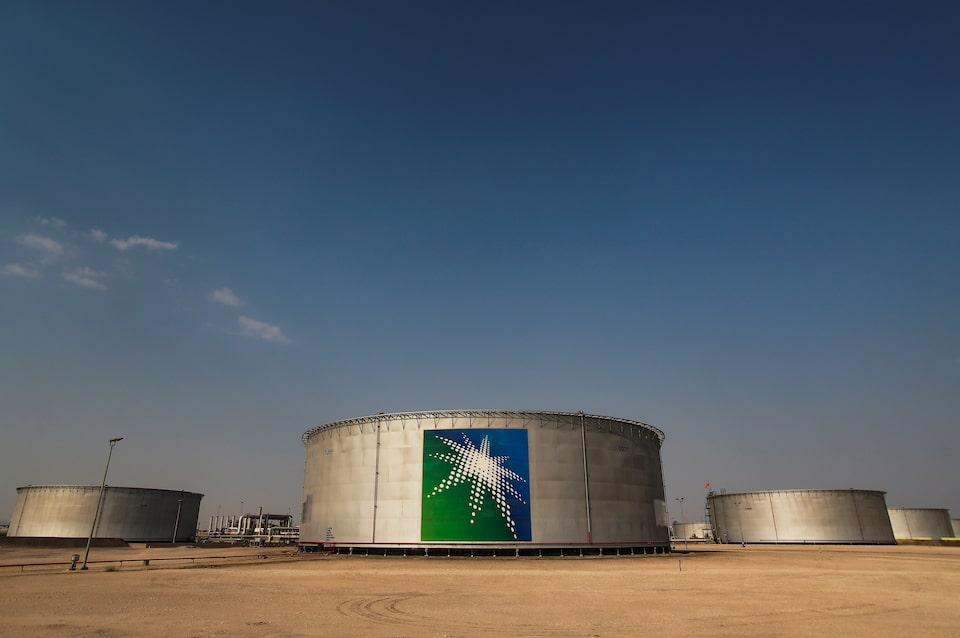
SINGAPORE, Jan 9 (Reuters) - Saudi Arabia's crude oil supply to China is set to decline in February from the month before, trade sources said on Thursday, after the kingdom hiked its prices and as OPEC+ extended production cuts in the first quarter. State oil firm Saudi Aramco (2222.SE) , opens new tab will ship about 43.5 million barrels to China in February, a tally of allocations to Chinese refiners showed, down from January's 46 million barrels, a three-month high. China's state majors CNOOC and PetroChina (601857.SS) , opens new tab and private refiner Hengli Petrochemical (600346.SS) , opens new tab will be lifting less crude in February, while Saudi Aramco will increase its supply to Sinopec (600028.SS) , opens new tab and Sinochem, they said. Aramco declined to comment on its February allocation to China. OPEC+, which pumps about half the world's oil, decided in early December to push back the start of oil output rises by three months until April and extended the full unwinding of cuts by a year until the end of 2026 due to weak demand and booming production outside the group. With tighter supply, Aramco has also increased official selling prices to Asia for the first time in three months. Earlier this week, it raised the official selling price (OSP) for flagship Arab Light crude by 60 cents to $1.50 per barrel above the Oman/Dubai benchmark average, slightly above market expectations. Asian refineries, chiefly China and India, are looking to buy more Middle East grades after wider sanctions by Western countries tightened supplies and pushed up the prices of Russian and Iranian oil. Saudi Arabia is the No. 2 crude supplier to China after Russia. China's crude imports from Saudi Arabia totalled 72.27 million tons (1.44 million barrels per day) for the first 11 months of 2024, down 9.6% from the same period a year earlier, Chinese customs data showed in December. (1 metric ton = 7.3 barrels) Sign up here. https://www.reuters.com/business/energy/saudi-crude-oil-supply-china-set-fall-feb-vs-jan-sources-say-2025-01-09/