2025-01-09 05:04
Big Oil-backed Climate Investment among backers Morgan Stanley's 1GT fund, S2G Ventures also take part To help firm expand operations, develop new services LONDON, Jan 9 (Reuters) - Investors including Big Oil-backed Climate Investment and Morgan Stanley's 1GT fund have invested 115 million euros ($119.20 million) in Irish geophysical data firm XOCEAN to help it expand its operations. The company uses uncrewed surface vehicles to help maintain offshore wind and other energy infrastructure, including checking for pipeline leaks, as well as developing carbon capture and storage projects and conducting civil hydrography. Unlike traditional providers of such services which rely on crewed vessels that cost thousands of dollars a day even when bad weather forces them into port, the firm's technology allows clients to remotely control them and remain on-site for longer. The technology can also be delivered using what XOCEAN said was just 0.1% of the carbon emissions associated with manned vessels. Other backers in the growth equity round - which will help XOCEAN expand its fleet, develop new products and technology, and open new facilities - include Chicago-based venture investor S2G Ventures and CC Industries, owned by the Crown family. "Working with many of the world’s leading energy companies, XOCEAN has reimagined how the geophysical data central to unlocking the blue economy’s potential can be delivered," said Francis O'Sullivan, managing director at S2G, which helped structure the deal. The funding of XOCEAN is the first through the growth equity strategy of Climate Investment, an independent investor launched by members of the Oil and Gas Climate Initiative, some of which, such as Shell(SHEL.L) , opens new tab and BP (BP.L) , opens new tab, are already clients of the firm. "Several customers cited XOCEAN as their surveying 'platform of choice'," said Climate Investment's managing director for growth, Patrick Yip. Founded in Ireland in 2017, the company has more than 240 staff in offices in Ireland, Britain, the United States, Canada, Norway and Australia. ($1 = 0.9648 euros) Sign up here. https://www.reuters.com/sustainability/sustainable-finance-reporting/ocean-data-climate-tech-firm-xocean-raises-115-million-euros-2025-01-09/

2025-01-09 04:54
LAUNCESTON, Australia, Jan 9 (Reuters) - The world's imports of seaborne iron ore rose a modest 3.6% to a record high in 2024, but the increase was almost entirely driven by China, the world's biggest buyer of the key steel raw material. Global seaborne imports of iron ore were 1.707 billion metric tons in 2024, up 60 million tons from the 1.647 billion in 2023, according to data compiled by commodity analysts Kpler. But of that 60 million ton increase, 59.1 million tons were accounted for by China, as its seaborne imports rose 4.9% to 1.274 billion tons. This means China's seaborne imports of iron ore will be at a record high in 2024, a fact that looks somewhat incongruous with the likely decline in steel production. Official data showed that crude steel output in the first 11 months of 2024 was 929.19 million tons, down 2.7% from the same period in 2023. Given that December is likely to have been a soft month for steel production given winter shutdowns and lower seasonal demand, it's likely that full-year output will drop in 2024 from 2023. Nonetheless, China's steel production will come in around the 1 billion ton level for 2024, marking the sixth straight year it has been around this volume. With China's steel output effectively flatlining since 2019, the question for the market is why iron ore imports gained in 2024. There is likely some element of replacing lower-quality domestic production, but the main drivers are probably the lower price trend over the year and the rebuilding of inventories. PRICE TREND The price of iron ore contracts traded on the Singapore Exchange had their 2024 peak very early in the year, hitting $143.60 a ton on Jan. 3. They then declined to a low of $91.10 a ton by Sept. 10, before recovering to end the year at $103.61. But the 28% drop over the year was likely enough to prompt Chinese steel mills and traders to increase purchases, especially in the second half of the year when prices were lower than in the first half. The price has had a soft start to 2025, dropping to $97.36 a ton on Wednesday. This decline is more sentiment driven, given worries about the trade policies of the incoming U.S. administration under President-elect Donald Trump, with the threat of tariffs of up to 60% hanging over steel-intensive industries such as manufacturing. China has also been rebuilding inventories, with port stockpiles monitored by consultants SteelHome ending last year at 146.85 million tons, up from 114.5 million at the end of 2023. That gain of 32.4 million tons is slightly more than half of the total increase in seaborne imports, underscoring the significance of inventory building to China's iron ore demand in 2024. The outlook for China's iron ore and steel sectors is clouded by uncertainty over what actual policies the new Trump administration will implement, and how China and other affected countries will respond. Like other commodity markets, iron ore is largely in a wait-and-see mode ahead of Trump's return to office on Jan. 20. EUROPE, MIDDLE EAST The same uncertainties will also weigh on iron ore demand outside China, but there are some established trends that are likely to continue. Demand in the developed countries of Europe is likely to continue to soften, after 2024 imports dropped to 85.12 million tons from 88.40 million in 2023, with much of the decline concentrated in the United Kingdom. Japan, the world's second-biggest importer, also saw a decline with 2024 seaborne arrivals coming in at 88.19 million tons, down from 98.71 million the prior year. Offsetting the lower imports in Europe and Japan were increases in smaller buyers, especially those in the Middle East and North Africa. Overall, while the composition of seaborne iron demand ex-China is shifting, it's likely that the volumes will remain more or less steady, with the caveat of Trump's policies having only a mild impact on global growth. The views expressed here are those of the author, a columnist for Reuters. Sign up here. https://www.reuters.com/markets/commodities/global-seaborne-iron-ore-had-good-2024-its-all-china-russell-2025-01-09/

2025-01-09 04:45
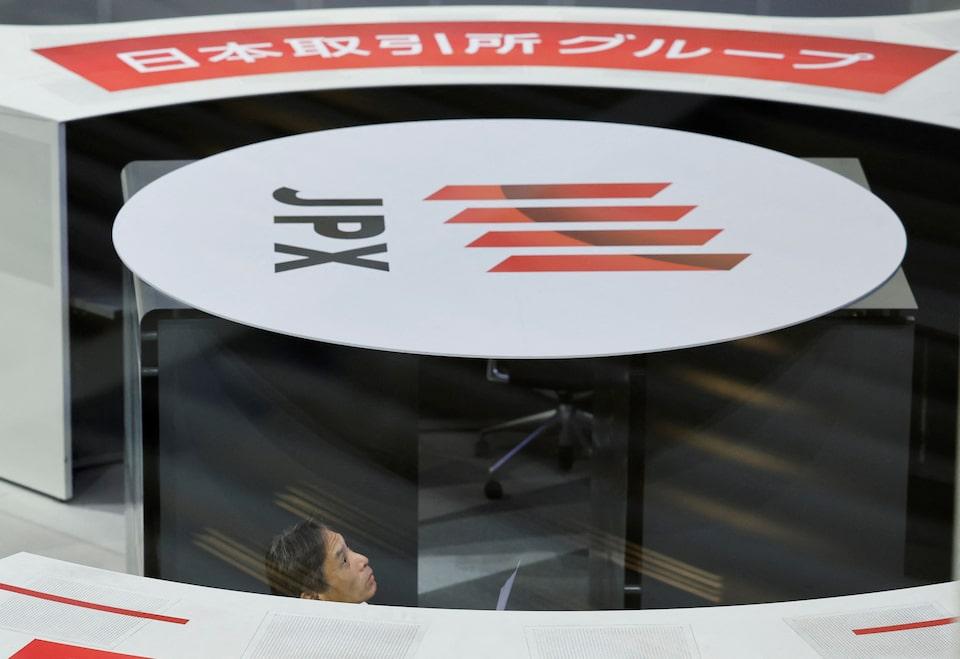
Jan 9 (Reuters) - Foreign investors net sold Japanese stocks in the week ended Jan. 4, taking advantage of 2024 gains while aiming to reduce risks amid an unusually long market closure. Foreigners sold a net 74 billion yen ($468.30 million) worth of Japanese stocks during the week, following net accumulations of approximately 562.7 billion yen in the previous week. They acquired approximately 1.23 trillion yen worth of Japanese stocks in 2024, primarily in the first half of the year and shed around 4.77 trillion yen worth of shares in the second half. The Nikkei index (.N225) , opens new tab posted a 19.22% gain last year, marking its second-best annual performance in 11 years. However, after trading resumed on Monday, the index has dropped by 1.15% this week as investors began locking in profit following the recent rally. Foreigners bought Japanese debt securities worth nearly 227.5 billion yen last week, halting a three-week selling trend. Overseas investors snapped up 154.8 billion yen worth of long-term bonds and 72.7 billion yen worth of short-term instruments. In parallel, Japanese investors added a net 325.1 billion worth of foreign equities, registering a fourth consecutive weekly net purchase. They, however, withdrew out of foreign bonds for a third straight week, with a net 331.8 billion yen worth of selling in long-term and a net 4.9 billion yen worth of disposals in short-term debt securities. ($1 = 158.0200 yen) Sign up here. https://www.reuters.com/markets/asia/foreigners-turn-net-sellers-japanese-stocks-lock-2024-gains-2025-01-09/
2025-01-09 04:40
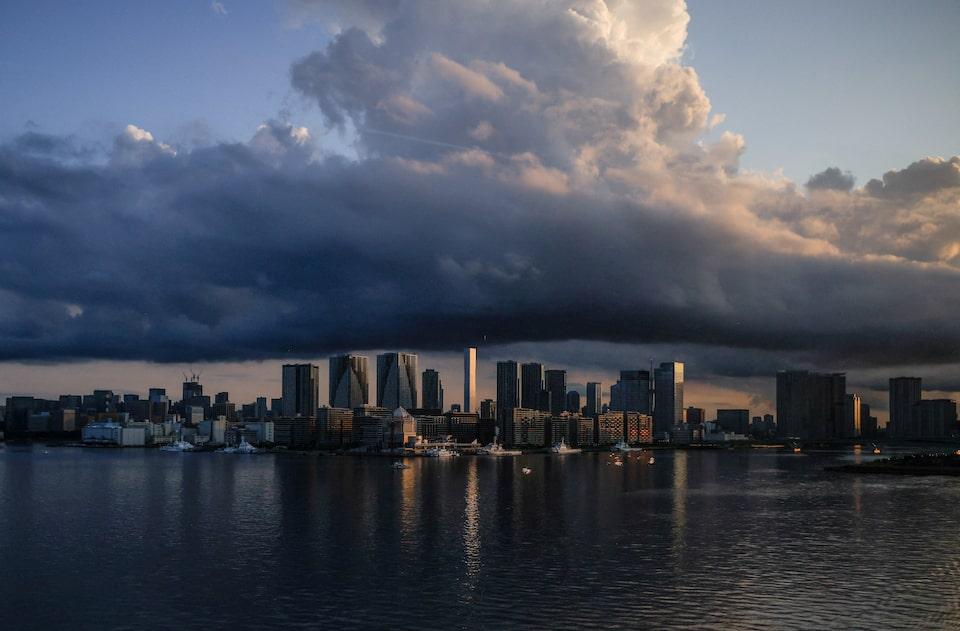
Apollo plans to add 10 staff to Japan team Japan office to be fastest-growing in Asia over next two years Multi-asset manager to start wealth hiring in Korea, Australia HONG KONG, Jan 9 (Reuters) - Apollo Global Management (APO.N) , opens new tab plans to expand in Japan and add staff to its Asia wealth business, its regional top executive said, as global investment firms pump more resources into the region to capitalise on a surge in deals and assets. The New York-based asset manager aims to add around 10 people in Japan to accelerate its expansion in the country, Matthew Michelini, Apollo's Singapore-based partner and Asia-Pacific head, told Reuters. "If I look at the regional leads that we need to hire over the next year or two, most of them we're looking for will be seated in Japan," said Michelini, one of the architects behind Apollo's move to ramp up Asia's contribution to its global business three years ago. Its Tokyo office currently has around 20 to 25 staff including 10 investment professionals and the firm could expand the total to 30 in the next two years, he said. Japan will be Apollo's fastest-growing office in Asia for the next two years, with a setup covering private equity, institutional sales, wealth and credit, Michelini said, adding capital allocation to the country is also likely to rise. Rivals including Warburg Pincus (WP.UL) and Carlyle (CG.O) , opens new tab are also expanding in Japan with more hires. The Japan expansion coincides with a surge in dealmaking over the past two years, making the country a rare bright spot amid a slowdown in mergers and acquisitions, helped by a push for better corporate governance and a weakened yen making assets cheaper. Japan was the largest market for private equity deals in the Asia-Pacific region in 2023 accounting for 30% of total deal value, compared to only 5% to 10% historically, showed data from consultancy Bain & Co. DOUBLE WEALTH STAFFING Meanwhile, the wealth business, launched two years ago and which has garnered over $5 billion in Asia-Pacific assets, will be one of Apollo's regional growth engines where it plans to double staffing over the next two years. Michelini said the firm will start wealth hiring in South Korea and Australia in 2025, adding to teams in Hong Kong, Singapore and Japan, without providing staffing targets. In December, Apollo poached Diane Poon from KKR (KKR.N) , opens new tab as a principal in its wealth team in Singapore. Apollo is among a few private equity firms approached by Japan's Seven & i Holdings (3382.T) , opens new tab about participating in a potential buyout of the retailer, Nikkei reported in November, in what would be the world's largest-ever management buyout. The firm declined to comment on whether it is engaged with parties for a Seven & i deal. Globally, the Nasdaq-listed private equity and corporate credit specialist aims to more than double in size over the next five years. Founded in 1990, Apollo is a multi-asset manager with $733 billion of assets under management as of the end of the third quarter last year. It also provides investment and asset management services to retirees. Sign up here. https://www.reuters.com/business/finance/apollo-boost-staffing-japan-asia-wealth-top-regional-exec-says-2025-01-09/
2025-01-09 00:56
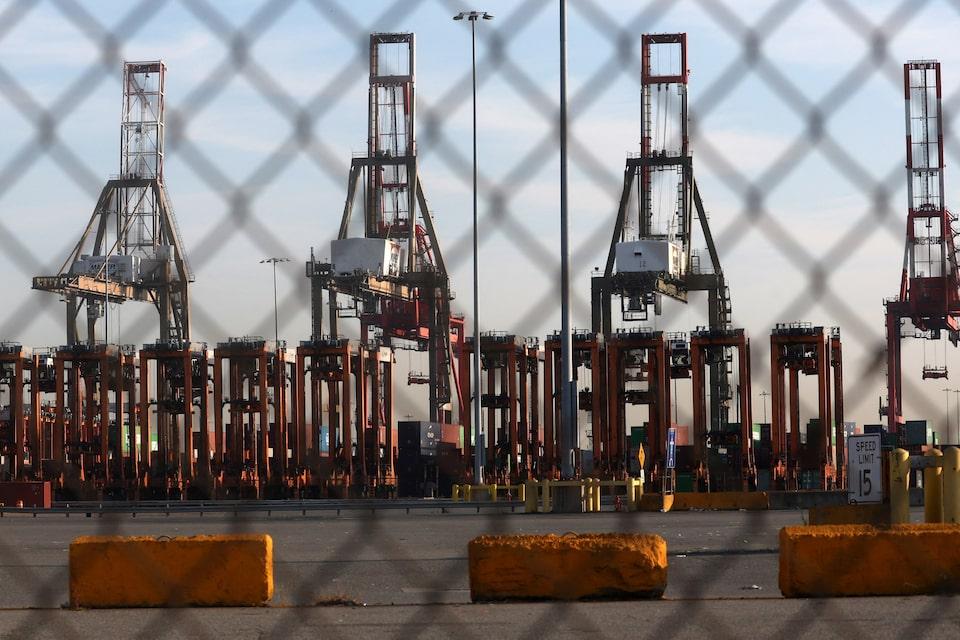
Jan 8 (Reuters) - The union representing 45,000 dock workers on the U.S. East and Gulf Coasts and their employers on Wednesday said they reached a tentative deal on a new six-year contract, averting a strike that could have snarled supply chains and taken a toll on the U.S. economy. It would have been the second strike in just four months by U.S. dock workers. The tentative agreement did not, however, include terms on the use of automation, which has been the thorniest issue of the labor talks. The United States Maritime Alliance (USMX) employer group and the International Longshoremen's Association (ILA), in a joint statement, called the agreement a "win-win." "This agreement protects current ILA jobs and establishes a framework for implementing technologies that will create more jobs while modernizing East and Gulf coast ports – making them safer and more efficient, and creating the capacity they need to keep our supply chains strong," the groups said. Terms of the deal were not disclosed. The two sides extended talks until Jan. 15 to hammer a deal on automation. Shipping industry executives were concerned that the parties would not be able to overcome their impasse, leading to a second ILA strike just days before President-elect Donald Trump's Jan. 20 inauguration. A three-day ILA strike in October triggered a surge in shipping prices and cargo backlogs at the 36 affected ports. Longshoremen returned to work after employers agreed to a 62% wage increase over the next six years. ILA and USMX have agreed to continue operating under the current contract until the union can meet with its full Wage Scale Committee and schedule a ratification vote, and USMX members can ratify the terms of the final contract. Sign up here. https://www.reuters.com/world/us/us-dockworkers-port-employers-reach-tentative-agreement-2025-01-09/
2025-01-09 00:25
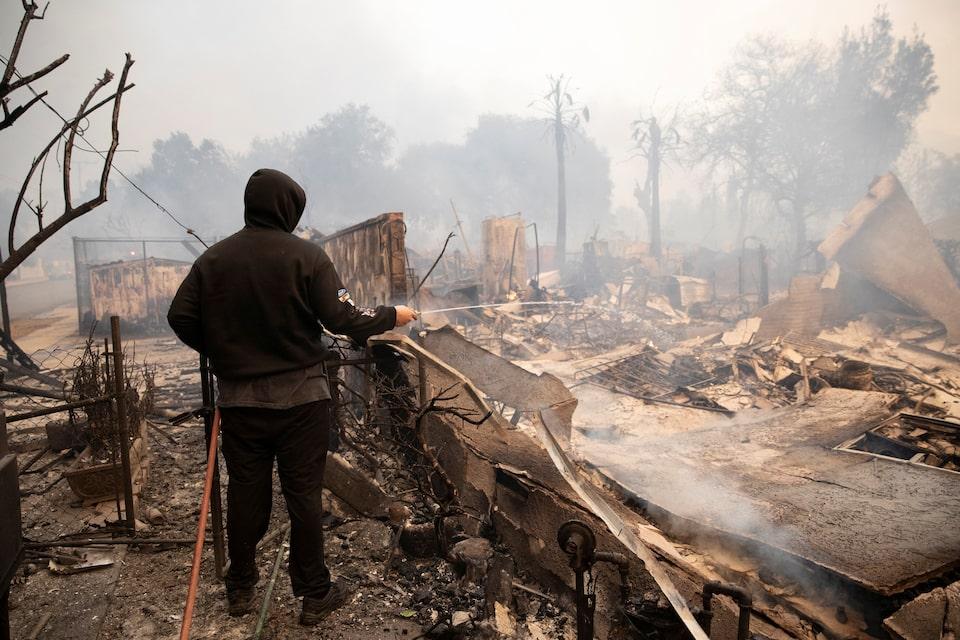
Water systems in LA not designed for wildfire demands 70,000 evacuated, five dead as fires burn unimpeded Experts highlight infrastructure challenges in rapid water delivery LOS ANGELES, Jan 8 (Reuters) - Crews battling multiple wildfires that raged across Los Angeles on Wednesday were up against a near-perfect storm: intense wind, low humidity and, most troubling for residents, inadequate supplies of water to contain the blazes. Los Angeles authorities said their municipal water systems were working effectively but they were designed for an urban environment, not for tackling wildfires. On Wednesday, at least three major blazes burned in LA County communities simultaneously, including a fire in the affluent Pacific Palisades neighborhood, an area west of downtown LA dotted with multimillion-dollar celebrity homes built along steep canyons. Jay Lund, a professor in civil and environmental engineering at the University of California Davis, said city water tanks are typically designed to be able to put out localized fires, not widespread fires like the ones blazing in Los Angeles. "It's not a matter of there's not enough water in Southern California, it's a matter of there's not enough water in that particular area of Southern California just for those few hours that you need it to fight the fires," Lund added. Across the county, more than 70,000 people were ordered to evacuate and at least five were left dead as fierce winds fueled the fires, which have burned unimpeded since Tuesday. The fires have destroyed hundreds of buildings. "A firefight with multiple fire hydrants drawing water from the system for several hours is unsustainable," said Mark Pestrella, director of Los Angeles County Public Works. Janisse Quinones, CEO and chief engineer of the Los Angeles Department of Water and Power, said the demand for water to fight fires at lower elevations was hampering the city's ability to refill water tanks at higher elevations. The lack of water hampered efforts particularly in Pacific Palisades, an upscale coastal enclave where a wildfire has consumed nearly 12,000 acres (4,856 hectares). TANKS FILLED IN ADVANCE The Los Angeles Department of Water and Power said that in advance of the windstorm, it had filled all available water tanks in the city, including three 1-million-gallon (3.8-million-litre) tanks in the Palisades area. The area had exhausted the three water storage tanks by early Wednesday, Quinones said in a press briefing. "We're fighting a wildfire with urban water systems, and that is really challenging," she added, noting that Pacific Palisades experienced four times the normal water demand for 15 hours as firefighters battled the blaze. The department urged Angelenos to conserve water, and said it had deployed 18 water trucks of 2,000 to 4,000 gallons since Tuesday to help firefighters. Lund said the nature of the fires was such that it was nearly impossible to arrange enough water in advance. "If everything catches fire at once, there's not going to be enough water for everybody," he said. "There's just no way that you could fit the pipes to work to move that much water across that area in a short period of time." Gregory Pierce, director of the UCLA Water Resources Group and an adjunct professor at the Department of Urban Planning, said the fires were unusually intense even by Southern California standards. His brother's house burned down, he said. He said the problem was not a lack of water so much as the difficulties in rapidly getting large amounts of water to a specific point where it was needed, which would entail major investments in power and infrastructure. Sanah Chung, a Pacific Palisades resident who spoke to a reporter while hosing down hedges and trees in his front yard, said governments at all levels should have been more proactive in preparing for the fires. "There must be some things we can do to try to mitigate this. Please. Fire hydrants are empty. Firefighters are doing everything they can, but we need to do things more proactively before," Chung, 57, told Reuters. Sign up here. https://www.reuters.com/business/environment/los-angeles-water-runs-short-wildfires-burn-out-control-2025-01-09/