2025-01-09 00:13
US private payrolls growth slows in December - ADP Fed meeting minutes show rising price pressure risk Quantum-computing stocks drop as Nvidia CEO sees long road ahead Indexes: Dow and S&P up 0.16%; Nasdaq down 0.66% Jan 8 (Reuters) - U.S. stocks ended little changed on Wednesday in a session they struggled for a clear direction, as investors digested the impact of two conflicting sets of jobs data and a report that said President-elect Donald Trump was mulling a national economic emergency declaration on inflation. "Inflation is the wild card in 2025. There are lots of things that potentially have the risk to shift inflation back upward," said Charlie Ripley, senior investment strategist for Allianz Investment Management. The minutes of the Federal Reserve's Dec. 17-18 meeting showed on Wednesday that officials saw a rising risk that price pressures may remain sticky as policymakers began wrestling with the impact of policies expected from the incoming Trump administration. Market sentiment was fragile after a CNN report said Trump was mulling building the new tariff program by using the International Economic Emergency Powers Act, which authorizes a president to manage imports during a national emergency. Benchmark 10-year yields peaked at 4.73%, the highest since April 25, to retreat slightly to 4.677% later in the afternoon. Ahead of Trump taking office later in the month, concerns about potential surcharges on U.S. trade partners have kept investors on edge as Trump's policies, including mass deportations and tariffs, could stoke inflation pressures. "If wider tariffs are implemented it could have a short-term impact on inflation," said Thomas Hayes, chairman at Great Hill Capital LLC. "The Fed will sit back and see if he (Trump) does enact punitive tariffs and if he does, how much of that potential inflationary impact will be offset by the cuts in government spending." The Dow Jones Industrial Average (.DJI) , opens new tab rose 106.84 points, or 0.25%, to 42,635.20, the S&P 500 (.SPX) , opens new tab gained 9.20 points, or 0.16%, to 5,918.23 and the Nasdaq Composite (.IXIC) , opens new tab lost 10.80 points, or 0.06%, to 19,478.88. Eight of the 11 S&P 500 sectors posted gains, led by the healthcare index (.SPXHC) , opens new tab up 0.53%. The Russell 200 Index (.RUT) , opens new tab tracking domestically focused small-cap companies dropped 0.52%. Megacaps were mixed with Microsoft (MSFT.O) , opens new tab up 0.52%, while Alphabet (GOOGL.O) , opens new tab and Meta (META.O) , opens new tab fell 0.79% and 1.16%, respectively. Investors also assessed an ADP National Employment Report , opens new tab that showed private payrolls growth slowed sharply in December, although a separate Labor Department report said jobless claims for the previous week fell. On Friday, the government publishes its closely watched employment report for December. The Fed has stayed put on interest rates, and traders now expect the first trim this year in either May or June, according to the CME Group's FedWatch Tool. Fed Governor Christopher Waller said inflation should continue falling in 2025 and allow the central bank to further reduce interest rates, though at an uncertain pace. EBay (EBAY.O) , opens new tab rose 9.86% after Meta Platforms (META.O) , opens new tab said it will launch a test showing the e-commerce firm's listings on Facebook Marketplace. Edison International (EIX.N) , opens new tab dropped 10.18%. Its Californian subsidiary cut power to customers to prevent damage to distribution lines from a wildfire. Quantum-computing stocks Rigetti Computing (RGTI.O) , opens new tab and IonQ (IONQ.N) , opens new tab plunged over 40%, while Quantum Computing (QUBT.O) , opens new tab was down 39% after Nvidia boss Jensen Huang said computers based on the emerging technology are as much as 30 years away. Markets will be closed on Thursday for a national day of mourning to mark the death of former President Jimmy Carter. Declining issues outnumbered advancers by a 1.21-to-1 ratio on the NYSE and by a 1.98-to-1 ratio on the Nasdaq. The S&P 500 posted 4 new 52-week highs and 29 new lows while the Nasdaq Composite recorded 42 new highs and 116 new lows. Volume on U.S. exchanges was 15.86 billion shares, compared with the 12.29 billion average for the full session over the last 20 trading days. Sign up here. https://www.reuters.com/markets/us/futures-edge-up-after-wall-st-selloff-economic-data-awaited-2025-01-08/

2025-01-08 23:30
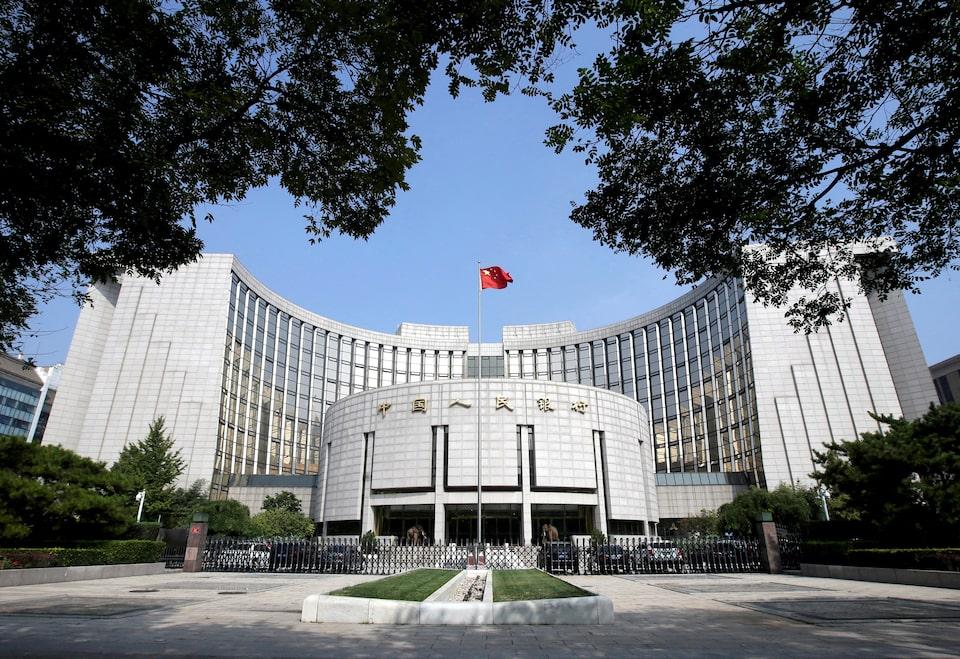
ORLANDO, Florida, Jan 8 (Reuters) - China, the global growth engine for the last 20 years, now boasts lower long-term bond yields than Japan, the former poster child for deflationary economic stagnation. This may signal that the "factory to the world" faces the real risk of "Japanification." China's bond yields have plunged to their lowest levels on record, with the two-year yield about to break below 1.00%, having been 1.50% only a few months ago. Remarkably, China's 30-year yield recently fell below the Japanese Government Bond (JGB) yield for the first time ever. That phenomenon looks set to hit the 10-year tenor, with China's bond yield now less than 50 basis points above its JGB equivalent. It's a situation that would have scarcely been believable to any observer of the global economy over the past 30 years. But here we are. The collapse in Chinese yields is a reminder that the deflation, bad debt dynamics and troubling demographic trends plaguing Asia's largest economy today are strikingly similar to those that hobbled its fiercest regional rival for three decades. CAPITAL FLIGHT Japan has recently begun to free itself from its decades of deflation, sluggish growth and negative interest rates, enabling the Bank of Japan to begin gradually "normalizing" rate policy. Meanwhile, Beijing is struggling to reflate an economy slammed by COVID-19 pandemic shutdowns and a property sector bust. Deflation, lackluster consumer demand and capital flight forced Beijing to announce unprecedented stimulus and liquidity measures late last year. Investors initially cheered Beijing's pledges, but the optimism has faded quickly. Chinese stocks are down 5% so far this year and are underperforming their regional and global peers. The country's foreign exchange reserves also tumbled $64 billion in December, representing nearly 2% of China's total stash. This was the biggest monthly fall since April 2022 and one of the steepest since the yuan slide and capital flight of 2015-2016. Analysts at JP Morgan reckon the sharp drop was a result of Beijing's efforts to mitigate capital outflows in December, which they believe neared $80 billion. China's plight is exacerbated by the very real risk of another U.S.-Sino trade war once President-elect Donald Trump officially begins his second term in the White House later this month. And if UBS economists are right, China's economy will grow just 4.0% in 2025 compared with 4.9% last year. Apart from the pandemic-ravaged years of 2020 and 2021, that would be China's lowest growth since it emerged as a global economic force in the 1990s. Those with a decent memory will recall that it took decades for Japanese property and equity prices to recover their pre-crash peaks following the country's real estate bust in the early 1990s. It's too early to know if a similar fate awaits Chinese assets, but investors right now are unquestionably pessimistic. 'TACTICALLY NEUTRALISING' Consequently, many are reevaluating their relative exposure to these two Asian powerhouses. Societe Generale's asset allocation team said at the end of last year that it was "tactically neutralising" the Chinese equity allocation in its portfolio from overweight, as it increased its exposure to Japan. This week, analysts at HSBC slashed their year-end forecast for China's 10-year yield to 1.2% from 1.8%. The generally pessimistic and optimistic consensus outlooks for China and Japan, respectively, are obviously not without risk. Perhaps Japan won't "normalize" as quickly as many expect. The country has not seen interest rates as high as 0.5% in nearly 20 years, which helps explain Japanese policymakers' caution. Indeed, economists at Barclays recently pushed out their forecast for the next BOJ interest rate hike to March from January and the timing of the subsequent increase to October from July. In the short term, the inverse correlation between Chinese and Japanese bond yields may fizzle out or even reverse, simply because it has been too powerful in recent months to be sustainable. But longer term? Beijing has its work cut out. (The opinions expressed here are those of the author, a columnist for Reuters.) Sign up here. https://www.reuters.com/markets/asia/chinas-tumbling-bond-yields-intensify-japanification-risks-mcgeever-2025-01-08/
2025-01-08 23:18
Jan 8 (Reuters) - CME Group (CME.O) , opens new tab said on Wednesday it plans to launch spring wheat futures and options in the coming months that will compete directly with a historic Minneapolis market now owned by Miami International Holdings. Traders expect CME, which dominates agricultural futures with benchmark grain and soy contracts, may steal trading volume for hard red spring wheat after its launch slated for early in the second quarter. The owner of the Chicago Board of Trade already runs U.S. markets for two other types of wheat, soft red winter wheat and hard red winter wheat. "Market participants will now be able to manage price risk across every major type of wheat on one exchange and all cleared in a single clearing house," said John Ricci, CME's global head of agricultural products. Hard red spring wheat was historically traded at the Minneapolis Grain Exchange, or MGEX, which launched its signature contract in 1883 to trade the high-quality crop used to make bread and frozen dough products. It has the thinnest trading volume of the three U.S. wheat contracts. Miami International Holdings last year renamed the Minneapolis market as MIAX Futures Exchange after buying MGEX in 2020. MIAX plans to transition the trading and dissemination of market data for MGEX products from CME's Globex platform to a platform it is building on June 30, spokesman Andy Nybo said. MIAX is developing its own platform so it can launch new products without asking CME to add them to Globex, he added. "We can control our own destiny," Nybo said. Asked about CME's launch, he said competition is healthy in markets. "We're in it to compete." MIAX said in September it entered a licensing agreement with Bloomberg Index Services and will list a number of equity index products. But exiting Globex will cost it some wheat business. Brian Hoops, president of broker Midwest Market Solutions, said he will shift to CME's product. "Taking it off of Globex, I think, is going to eliminate a lot of the volume from someone like me who's doing brokerage work with clients that are growing spring wheat," Hoops said. "It's kind of the end of the old Minneapolis Grain Exchange product." Commercial traders, such as flour mills and grain elevators, initially might favor the Miami exchange as the established marketplace, or use both trading platforms, said Frayne Olson, an agricultural economist with North Dakota State University. Ultimately, he said, speculative traders will determine which platform dominates. "If you don't have the trading volumes, the liquidity to get into and out of positions, the contract is going to fail," Olson said. "And that is driven by the speculator." Sign up here. https://www.reuters.com/markets/commodities/cme-group-challenges-miami-exchange-with-new-spring-wheat-contract-2025-01-08/

2025-01-08 23:15
CEG set to pay mostly in stock, absorb $12 bln Calpine debt Deal talks advanced, could come as soon as Monday Would be largest U.S. power M&A deal since 2007 Calpine gas plants complement CEG's current nuclear-heavy fleet Jan 8 (Reuters) - Constellation Energy (CEG.O) , opens new tab is nearing a roughly $30 billion deal to acquire power producer Calpine, people familiar with the matter said on Wednesday, a move that would significantly expand Constellation's generation assets at a time of rising U.S. power demand. The transaction could be announced as early as Monday, said the people. Constellation is expected to pay mostly stock, with a small cash component, said one, adding the purchase price would include around $12 billion of Calpine debt which the buyer will absorb. The deliberations are ongoing, the sources said, cautioning that while the talks are advanced, a deal is not guaranteed. Constellation and Calpine did not respond to comment requests. Shares of Constellation, which have more than doubled over the past year, closed down 4.6% on Wednesday, following news of talks with Calpine. The company has a market value of around $76 billion. Reuters was first to report in May that the private equity owners of Calpine were considering various options, including a sale of the company, at a valuation of about $30 billion, including debt. If the talks are successful, a takeover of Calpine would rank as the biggest in the U.S. power industry since TXU Corp's $45 billion leveraged buyout in 2007. For Constellation, a successful acquisition would add significant gas-fired power generation to its existing mix, which is around 60% nuclear and also includes some gas, renewables and oil, according to its website. It would also broaden Constellation's geographic footprint outside of its traditional focus areas of the northeast and Midwest: Calpine has a dozen power plants in Texas, as well as numerous generation assets on the West Coast. The news comes as the boom in artificial intelligence and data centers is driving power demand higher, making generation assets increasingly attractive to buyers. For investors with long-standing bets on the power industry, the backdrop is allowing them to exit profitably. Calpine was taken private in 2017 by buyout firm Energy Capital Partners, Canadian pension fund CPP Investments and Access Industries for a total of $17 billion, including debt. Both Constellation and Calpine are independent power producers and, unlike regulated utilities, can sell power at market prices, allowing them to profit more when demand rises. U.S. power demand is forecast to hit a record this year, building on an expectation of record demand in 2024, according to the U.S. Energy Information Administration. A government-backed report last month said power demand from data centers was expected to triple in the next three years, and consume as much as 12% of the country's electricity. Bloomberg reported on Constellation's talks with Calpine earlier on Wednesday. Sign up here. https://www.reuters.com/business/energy/constellation-nearing-30-bln-deal-calpine-corp-bloomberg-news-reports-2025-01-08/
2025-01-08 21:49
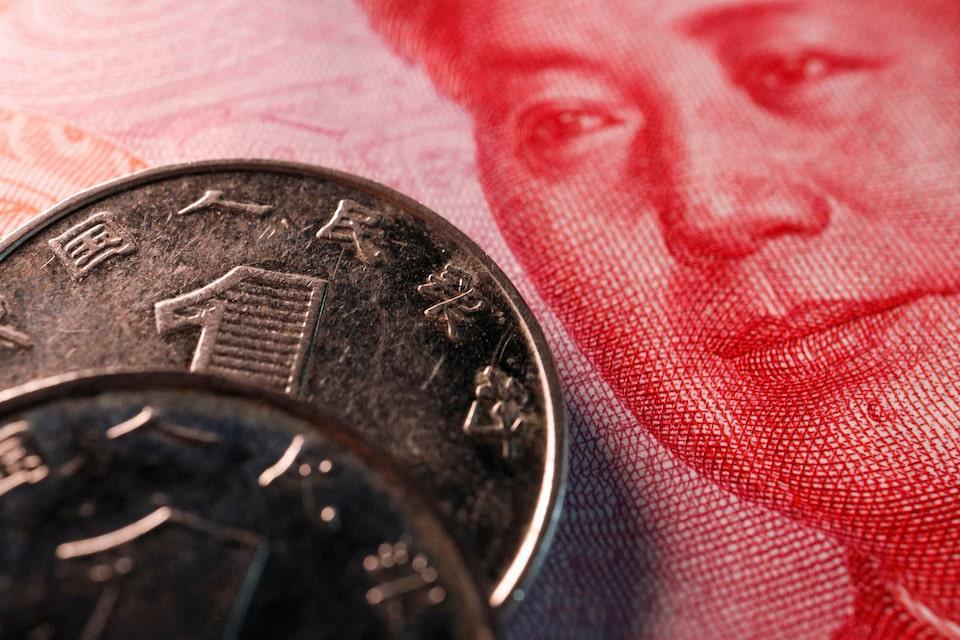
Jan 9 (Reuters) - A look at the day ahead in Asian markets. China's latest inflation figures are out on Thursday, and they could not be coming at a more fascinating - some might say alarming - time for global bond markets. Long-term yields around the world are shooting higher as investors bet that sticky inflation will force the U.S. Federal Reserve and other central banks to dial down or even halt their rate-cutting cycles. The 30-year UK gilt yield is the highest since 1998, the 30-year U.S. Treasury yield is a whisker from 5%, and the U.S. 'term premium' - the risk premium investors demand for lending long to Uncle Sam rather than rolling over shorter-term debt - is the highest in a decade. If this is a reflection of investors' fears that the inflation genie has not been put back in the bottle and central banks are losing control over the long end of the bond curve, policymakers should be worried. Fed Governor Christopher Waller seems relatively relaxed though, saying on Wednesday he still thinks inflation will fall toward the Fed's 2% target, allowing for further rate cuts. But minutes of the Fed's policy meeting last month showed policymakers are wary, particularly around the impact of policies expected from the incoming Trump administration. Money markets are pricing in only 40 basis points of Fed easing this year, and year-on-year oil price rise is the highest in six months. Investors' inflation fears are bubbling up. The global outlier is China, where policymakers are fighting deflation. As Jim Bianco at Bianco Research points out, it is the only major bond market in the world where yields are falling. Annual producer inflation has been negative every month since October 2022, indicating that price pressures across the economy remain deflationary. Annual consumer inflation is close to zero, and hasn't been above 1% for nearly two years. China's producer and consumer price inflation figures for December will be released on Thursday. According to the consensus forecasts in Reuters polls, economists expect annual PPI inflation shifted slightly to -2.4% from -2.5% in November, while annual CPI inflation cooled to just 0.1% from 0.2%. This is the context in which Chinese bond yields are tumbling to their lowest-ever levels. The 30-year yield is already below the 30-year Japanese Government Bond yield, and the 10-year yield is now less than 50 basis points away from going below its 10-year JGB equivalent. HSBC analysts on Wednesday slashed their year-end 10-year Chinese yield forecast to 1.2% from 1.8%. The yuan remains under heavy selling pressure and on Wednesday slipped to a fresh 16-month low. It is now poised to break the September 2023 low of 7.35 per dollar, a move that will take it to levels last seen in 2007. Here are key developments that could provide more direction to markets on Thursday: - China PPI, CPI inflation (December) - Australia retail sales (November) - Taiwan, Australia, Philippines trade (December) Sign up here. https://www.reuters.com/markets/asia/global-markets-view-asia-graphic-2025-01-08/
2025-01-08 21:48
SANTIAGO, Jan 8 (Reuters) - Chile's government on Wednesday denied an environmental permit for the proposed Dominga iron and copper mine, siding with critics concerned over impacts to penguins and parrots at the $2.5 billion project that has sparked debate for a decade. Chile's Committee of Ministers said the plan from privately-owned Andes Iron required special sensitivity due to the area's "unique characteristics" as a home to penguins and species in conservation categories which reduced the tolerance for risk. The project highlights Chile's challenges balancing economic growth with environmental protections and is a reminder of bureaucratic mazes that the mining sector has harshly criticized for stalling projects. The committee's decision came after an environmental court ordered it to re-do a January 2023 vote that had struck down environmental approvals for the project. Chile-based Andes Iron has repeatedly defended the mine as meeting environmental regulations and on Wednesday said it will take legal action. "The action of the Committee of Ministers sets an unfortunate precedent never seen before in the history of Chile in terms of environmental permits," it said in a statement. The company has also accused the government of bias against the project, pointing to the nearby Cruz Grande port that was granted an environmental permit. The committee's decision sends a broader message that could discourage investment, said Juan Ignacio Guzman, head of Chilean mining consultancy GEM. "This decision by the committee means that in reality, abiding by the processes and permits in Chile doesn't guarantee you can make investments happen," he said. The head of Chile's National Mining Society (Sonami), Jorge Riesco, called the ruling a disappointment. "We lost the opportunity to send a strong signal of trust to investors," he said in a statement, adding the project had met all technical requirements. The committee said it considered various citizen complaints, and agreed with concerns over biodiversity impacts and lack of a mitigation plan for potential spills of fuel or iron concentrate. Its analysis noted the unique mix of species in the area, including the Humboldt penguin and aquatic mammals such as dolphins, and said Andes Iron had failed to gauge impacts on two plants that are a food source and habitat for the tricahue, an endangered parrot. "It was not possible to determine or evaluate the real impact on these species," the committee said. Sign up here. https://www.reuters.com/markets/commodities/chile-rejects-environmental-permit-dominga-copper-iron-mine-2025-01-08/