2025-01-08 05:40
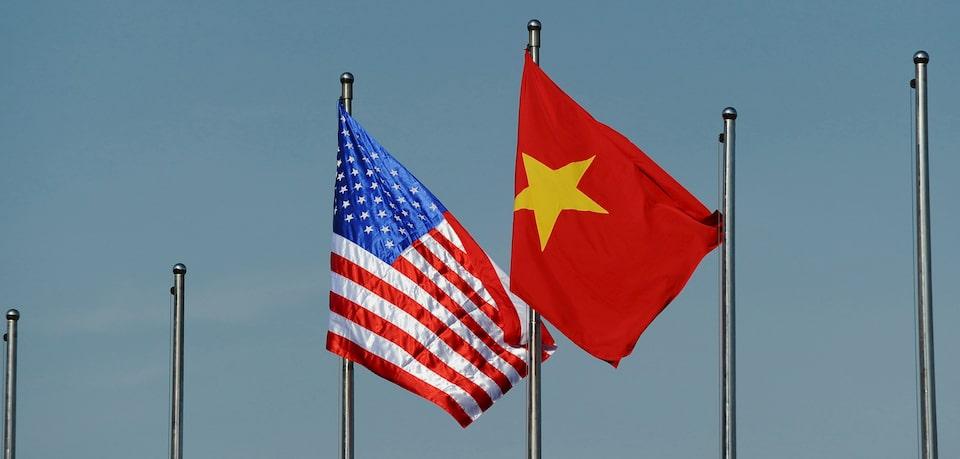
Deficit rose by nearly 18% in Jan-Nov period compared to same period in 2023 Vietnam's dong fell sharply from late Oct to lowest levels against dollar Vietnam has fourth-largest surplus among all US trade partners Communist-run nation is major exporter to US, monitored over currency manipulation risks HANOI, Jan 8 (Reuters) - The U.S. trade deficit with Vietnam exceeded $110 billion in the first 11 months of 2024, latest U.S. figures show, as exports from the Southeast Asian industrial hub grew amid a record fall of its currency against the dollar. The latest reading, released on Tuesday by the U.S. statistics agency, showed a nearly 18% rise in the deficit compared with the same period the previous year. The data confirms the Communist-run country has the fourth highest commercial surplus with the United States, topped only by China, the European Union and Mexico. The large gap is seen by analysts as a major risk for the export-reliant nation amid threats from President-elect Donald Trump to impose tariffs of up to 20% on all U.S. imports. That risk has been compounded by a sharp fall of Vietnam's dong in recent months, with the dong trading near its lowest ever levels against the dollar. The trend is closely watched in Washington as Vietnam is one of the countries under scrutiny for potential currency manipulation. Vietnam, which counts the U.S. as its biggest market, is home to big export-focussed industrial operations of U.S. multinationals such as Apple (AAPL.O) , opens new tab, Google (GOOGL.O) , opens new tab, Nike (NKE.N) , opens new tab and Intel (INTC.O) , opens new tab. Latest seasonally adjusted trade figures show that in the January-November period Vietnam accumulated a commercial surplus with the U.S. of $111.6 billion, up from $94.8 billion in the same period in 2023. Unadjusted data pointed to a larger gap of $113.1 billion. In November, the trade gap expanded by another $11.3 billion, accelerating from October, as Vietnam's exports to the U.S. rose, the adjusted data show, possibly supported by the weak dong. "If the U.S. perceives that Vietnam is deliberately keeping the dong weak to gain an unfair trade advantage, it could trigger renewed accusations of currency manipulation," said Leif Schneider, head of international law firm Luther in Vietnam. Trump ended his first term in the White House with Treasury declarations of Vietnam and Switzerland as currency manipulators over their market interventions to weaken the value of their currencies. Vietnam's central bank has said it was ready to intervene in the foreign exchange market in case of adverse economic impacts from currency moves, and has sold dollars in the past to strengthen the dong. On Tuesday, before new trade figures were released, the bank said it would monitor Trump's policies and adjust accordingly. The dong's most recent depreciation against the dollar is broadly in line with other major currencies. Sign up here. https://www.reuters.com/markets/us-trade-deficit-with-vietnam-soars-beyond-110-billion-weak-dong-boosts-exports-2025-01-08/
2025-01-08 05:32
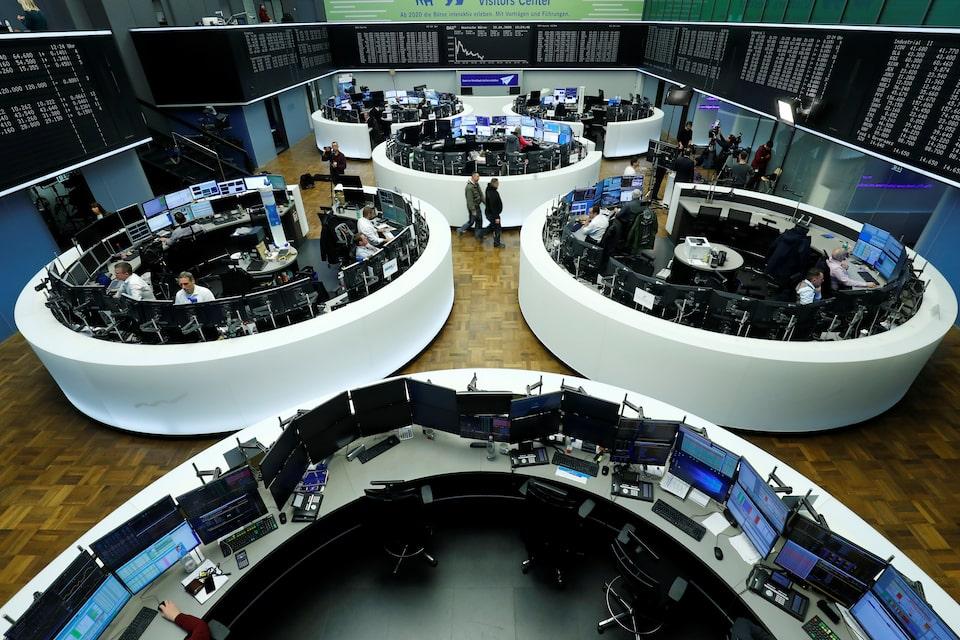
A look at the day ahead in European and global markets from Ankur Banerjee The dollar stood tall on Wednesday boosted by elevated Treasury yields after strong U.S. data rekindled worries of a rebound in inflation, leaving European stocks staring at a weak open as traders brace for diverging policy paths. While traders are getting used to the idea of a measured interest rate cutting cycle from the U.S. Federal Reserve, they expect deep cuts from the European Central Bank even after data on Tuesday showed euro zone inflation accelerated in December. Markets are pricing in 99 basis points of easing from the ECB this year, while they expect the Fed to lower borrowing costs by 37.5 bps by the end of 2025, with the first cut fully priced in only in July. Benchmark 10-year Treasury yields hit an eight-month high on Tuesday after data pointed to a U.S. economy that remained resilient with a stable labour market but showed signs of inflation risk re-emerging. EURO PARITY WORRIES That has left the euro pinned close to the two-year low it touched on the first trading day of 2025. The single currency sank 6% last year as weak economic conditions in the region and political turmoil in France and Germany weighed. Speculators are sitting on bearish positions in euros worth $9 billion, below the four-year-high of $10 billion they were sitting on in early December, showed weekly data from the U.S. markets regulator . A Reuters poll of market strategists last month showed the euro will remain weak in the near term but will likely not fall to parity with the U.S. dollar in the coming months, though the spectre of tariffs from the U.S. looms large. Europe's premier index (.STOXX) , opens new tab will hope to shake off a muted open, having made a steady start to 2025 after rising 6% in 2024. Bond yields, though, may weigh on tech stocks (.SX8P) , opens new tab after they touched a more than five-month high on Tuesday. META REVERSAL In corporate news, Meta Platforms (META.O) , opens new tab on Tuesday scrapped its U.S. fact-checking program and reduced curbs on discussion around contentious topics, its biggest overhaul of its approach to managing political content in recent memory. The change comes as CEO Mark Zuckerberg has been signalling a desire to mend political fences ahead of the administration of President-elect Donald Trump. The changes will affect Facebook, Instagram and Threads, three of the world's biggest social media platforms with more than 3 billion users globally. Key developments that could influence markets on Wednesday: Sign up here. https://www.reuters.com/markets/europe/global-markets-view-europe-2025-01-08/
2025-01-08 05:27
Dec Fed minutes show uncertainty about Trump policies to cloud economic outlook US nonfarm payrolls report due on Friday Fed's Waller: More cuts likely though timing depends on inflation progress Jan 8 (Reuters) - Gold prices hit a near four-week high on Wednesday after a weaker-than-expected private employment report for December provided reassurance for some in the market the U.S. Federal Reserve may be less cautious about easing rates this year. Spot gold rose 0.3% to $2,657.38 per ounce, as of 02:15 p.m. ET (1915 GMT) and hit its highest since Dec. 13. U.S. gold futures settled 0.3% higher at $2,672.40. Weaker private payrolls "is contributing to gold's move, because ultimately, weaker employment numbers imply that the economy has been weaker than many had expected," said Bart Melek, head of commodity strategies at TD Securities. The ADP National Employment report showed the U.S. economy added 122,000 jobs in the private sector last month, compared with economists' estimate of a rise of 140,000. A separate Labor Department report showed jobless claims stood at 201,000 in the previous week, lower than estimates of 218,000. "The bigger factor will be U.S. nonfarm payrolls on Friday, the market is expecting a change of 163 (thousand); anything significantly above that will be negative for gold," Melek said. Traders are on edge ahead of Friday's key U.S. labor data, due at 08:30 a.m. ET, and Donald Trump's Jan. 20 inauguration, with expectations of a flurry of policy moves marking the start of his second presidency. Minutes from the Federal Reserve's Dec. 17-18 meeting revealed officials expect inflation to ease this year but acknowledged the risk of stubborn price pressures, particularly as they assess the potential impact of Trump's policies. Trump's proposed tariffs could stoke U.S. inflation, complicating the Fed's ability to cut rates and potentially weighing on gold prices. However, Fed governor Christopher Waller said inflation should continue to fall in 2025 and allow the central bank to further reduce interest rates, though at an uncertain pace. Bullion is considered an inflationary hedge, but high rates reduce the non-yielding asset's allure. Spot silver added 0.1% to $30.03 per ounce, platinum gained 0.2% to $952.76, palladium lost 0.1% to $925.05. Sign up here. https://www.reuters.com/markets/commodities/gold-inches-lower-us-yields-dollar-rise-strong-data-2025-01-08/

2025-01-08 05:22
India's 2024 power output growth tapers on economic slowdown Coal-fired power growth slows, share in power mix dips Renewables dependence at record despite fall in wind output SINGAPORE, Jan 8 (Reuters) - India's electricity generation grew at its slowest pace in 2024 since the COVID-19 pandemic, an analysis of federal grid regulator data showed, hit by a slowdown in the world's fastest growing major economy. Power output rose 5.8% annually to 1,824.13 billion kilowatt-hours (kWh), an analysis of daily load despatch data from federal grid regulator Grid-India showed. Growth in power generation averaged 2.3% in the year's second half, nearly a quarter of the first half's rise of 9.6%, the data showed. The slackening electricity generation was in line with a softening economy, which grew at the slowest pace in nearly two years during the quarter that ended on Sept. 30. The slowdown has not shown signs of easing significantly, with India's manufacturing activity growing in December at its weakest pace , opens new tab for the year, amid weaker demand. However, analysts expect a pickup in industrial activity and residential power use stemming from adverse weather to drive growth of 6% to 7% in electricity use in 2025. "Demand has already picked up in December, with mercury levels dropping and increased usage of heating systems," said Sooraj Narayan, head of Asia-Pacific power modelling at consultancy Wood Mackenzie. "Combined with increased industrial production activities, we expect the demand growth rate to be higher in 2025." Slowing electricity demand growth and a rise in the share of renewables to a record 12.1% of power generation helped the world's third-largest emitter of greenhouse gas snap a three-year streak of gains in the share of coal. The polluting fuel's share in India's power mix fell to 74.4% in 2024, from 75% in 2023. But the year also saw tepid growth in the renewables sector, with growth of 18.4% in total solar output its slowest since India made international commitments to fight climate change in 2015. Annual wind power output fell for the first time since 2020, the data showed. Output from hydropower, India's second-largest electricity source after coal, rose 4% in 2024, recovering from a plunge of 13.7% in 2023, but its share in total output fell further to 8.6%. In 2025, analysts expect both the share of coal and renewables to rise at the expense of natural gas-fired power, which rose 17.3% last year. "We see a declining share of gas in the generation mix this year due to our forecast of higher year-over-year gas prices," said Kesher Sumeet, senior LNG analyst at Energy Aspects. Sign up here. https://www.reuters.com/business/energy/indias-2024-power-output-growth-is-slowest-since-pandemic-data-shows-2025-01-08/

2025-01-08 05:18
JAKARTA, Jan 8 (Reuters) - Indonesia is encouraging domestic cattle ranchers to import breeding cows, targeting 400,000 head in 2025, to supply meat and milk for the government's free school meals programme, the agriculture ministry said on Wednesday. Indonesia's programme to give free meals to children and pregnant women began this week with 570,000 meals distributed to schools around the country. This will be scaled up, the government has said, with the target of feeding more than 80 million children and expectant mothers, with an estimated total cost of $28 billion. Deputy Agriculture Minister Sudaryono said in a statement that out of the 400,000 cows he hoped ranchers would import this year, half should be dairy cows. In the next five years, Jakarta is targeting to import 2 million breeding cows, so that over time, demand for beef and milk for the school meals programme could be met with local supply, Sudaryono, who goes by one name, said. The ministry did not say what incentive the government would offer ranchers for the imports. Indonesia typically imports cattle from Australia and its top source of milk is New Zealand. Authorities have said it was looking into allowing cattle imports from Brazil. Sign up here. https://www.reuters.com/world/asia-pacific/indonesian-government-tells-ranchers-import-cattle-school-meals-programme-2025-01-08/

2025-01-08 05:03
LONDON, Jan 8 (Reuters) - From China to Europe, Canada to Mexico, world markets are already reeling from Donald Trump's promise to jack up tariffs when he becomes U.S. president in less than two weeks. Trump has pledged tariffs of as much as 10% on global imports and 60% on Chinese goods, plus a 25% import surcharge on Canadian and Mexican products, duties that trade experts say would upend trade flows, raise costs and draw retaliation. The scale and scope remains to be seen, but the road ahead is bumpy. Here's a look at some markets in focus right now. 1/ FRAGILE: CHINA "China is likely to be the primary target of the Trump trade wars 2.0," say Goldman Sachs. Investors are already getting ahead, forcing the country's stock exchanges and central bank to defend a tumbling yuan and stocks. China's tightly controlled currency is at its weakest in 16 months, with the dollar trading decisively above the symbolic 7.3 yuan milestone which authorities had defended. Barclays sees the yuan at 7.5 per dollar by end-2025, and sliding to 8.4 in a scenario in which the U.S. imposes 60% tariffs. Even without tariffs, the currency has been hurt by a weak economy pushing down Chinese government bond yields -- widening the gap with elevated U.S. Treasury yields. Analysts expect China to let the yuan weaken further to help exporters manage the impact of tariffs, but gradually. A sudden plunge would bring lurking fears of capital outflows to the fore, and jolt confidence, already bruised after stocks just saw their biggest weekly fall in two years. Investors in other major Asian exporters such as Vietnam and Malaysia are also nervous. 2/ EURO'S TOXIC MIX The euro has slid over 5% since the U.S. election, the most among major currencies, to two-year lows around $1.03. JPMorgan and Rabobank reckon the single currency could fall to the key $1 mark this year, as tariff uncertainty weighs. The U.S. is the European Union's most important trading partner, with $1.7 trillion in two-way goods and services trade. Markets anticipate 100 basis points of European Central Bank rate cuts this year to bolster a lackluster economy. But traders, speculating that tariffs could boost U.S. inflation, anticipate just 40 bps of Fed rate cuts, enhancing the dollar's appeal over the euro. A weakening Chinese economy also hurts Europe. Tariffs hitting China and the EU at the same time could be a "very toxic mix for the euro", said ING currency strategist Francesco Pesole. 3/ CAR TROUBLE In Europe, auto stocks are also particularly sensitive to tariff-headlines. On Monday, a basket of auto names (.SXAP) , opens new tab briefly shot up almost 5% on a Washington Post report that Trump aides are exploring import duties only for critical imports but then fell as Trump denied the article. The swings highlight investors' touchiness on an already-depressed sector that has seen its shares shed a quarter of their value since an April 2024 peak and their relative valuations plunge. Barclays' head of European equity strategy Emmanuel Cau said autos are among the trade-exposed, consumer sectors he is watching. Others include staples, luxury goods and industrials. A Barclays basket of the most tariff-exposed European stocks is down about 20%-25% relative to the main market in the past six months. Euro zone economic weakness could also prolong European equities' underperformance. The STOXX 600 (.STOXX) , opens new tab rose 6% in 2024, while the S&P 500 index surged 23%. (.SPX) , opens new tab 4/ GOING LOONIE Canada's dollar is near its weakest in over four years, having fallen sharply after Trump in November threatened a 25% tariff on Canada and Mexico until they clamped down on drugs and migrants. It has potential to fall further. Goldman analysts reckon markets may only be pricing about a 5% chance of such a tariff, and while they think this is unlikely to materialise, prolonged trade talks could keep risks alive. A full-fledged trade war necessitating additional Canadian rate cuts could push the loonie to the 1.50 mark against the U.S. dollar, said ING's Pesole. That would imply a further weakening of almost 5% from almost 1.44 now. Canadian Prime Minister Justin Trudeau's resignation further complicates the outlook. 5/ VOLATILE PESO The Mexican peso was already down 16% against the dollar in 2024 when Trump was elected, so a lot of news - both good for the dollar and bad for the peso - was priced in. The peso's 2024 performance, a 18.6% drop, was its weakest yearly showing since 2008. Besides the threat of tariffs from the U.S. - the destination of 80% of Mexico's exports - a controversial judicial reform also affected the currency. Monday's tariff news, later denied by Trump, sent the peso up as much as 2% before it pared gains, highlighting that volatility may continue as trade along the U.S. southern border remains a target for the President-elect. Sign up here. https://www.reuters.com/markets/global-markets-trump-tariffs-graphic-2025-01-08/