2025-01-07 22:00
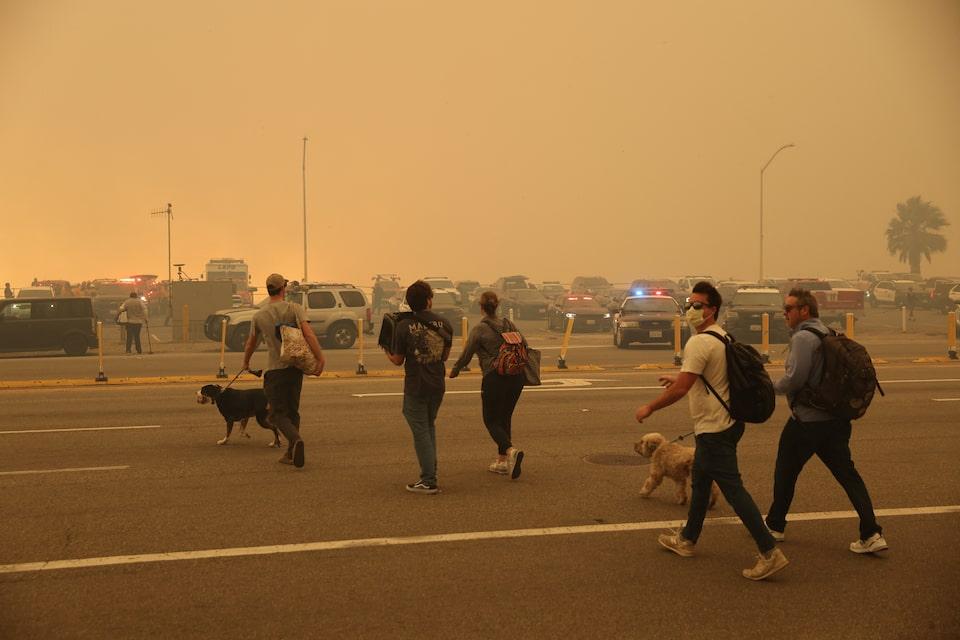
Wildfires rip through upscale Pacific Palisades, Pasadena Strong, dry winds fuel fire forecast to worsen Evacuations cause traffic jams, residents flee on foot National Weather Service warns of extreme fire conditions LOS ANGELES, Jan 7 (Reuters) - A rapidly growing wildfire raged across an upscale section of Los Angeles on Tuesday, destroying numerous buildings and creating traffic jams as more than 30,000 people evacuated, while a second blaze doubled in size some 30 miles inland. At least 2,921 acres (1,182 hectares) of the Pacific Palisades area between the coastal towns of Santa Monica and Malibu had burned by the Palisades Fire, officials said, after they had already warned of extreme fire danger from powerful winds that arrived following extended dry weather. A fire official told local television station KTLA that several people were injured, some with burns to faces and hands. The official added that one female firefighter had sustained a head injury. The second blaze dubbed the Eaton Fire broke out some 30 miles (50 km) inland near Pasadena and doubled in size to 400 acres (162 hectares) in a few hours, according to Cal Fire. Almost 100 residents from a nursing home in Pasadena were evacuated, according to CBS News. Video showed elderly residents, many in wheelchairs and on gurneys, crowded onto a smokey and windswept parking lot as fire trucks and ambulances attended. Fire officials said a third blaze named the Hurst Fire had started in Sylmar, in the San Fernando Valley northwest of Los Angeles, prompting evacuations of some nearby residents. PALISADES FIRE Witnesses reported a number of homes on fire with flames nearly scorching their cars when people fled the hills of Topanga Canyon, as the fire spread from there down to the Pacific Ocean. Local media reported the fire had spread north, torching homes near Malibu. Los Angeles Fire Chief Kristin Crowley had earlier told a press conference that more than 25,000 people in 10,000 homes were threatened. Firefighters in aircraft scooped water from the sea to drop it on the nearby flames. Flames engulfed homes and bulldozers cleared abandoned vehicles from roads so emergency vehicles could pass, television images showed. The fire singed some trees on the grounds of the Getty Villa, a museum loaded with priceless works of art, but the collection remained safe largely because of preventive efforts to trim brush surrounding the buildings, the museum said. With only one major road leading from the canyon to the coast, and only one coastal highway leading to safety, traffic crawled to a halt, leading people to flee on foot. Cindy Festa, a Pacific Palisades resident, said that as she evacuated out of the canyon, fires were "this close to the cars," demonstrating with her thumb and forefinger. "People left their cars on Palisades Drive. Burning up the hillside. The palm trees - everything is going," Festa said from her car. Before the fire started, the National Weather Service had issued its highest alert for extreme fire conditions for much of Los Angeles County from Tuesday through Thursday, predicting wind gusts of 50 to 80 mph (80 to 130 kph). With low humidity and dry vegetation due to a lack of rain, the conditions were "about as bad as it gets in terms of fire weather," the Los Angeles office of the National Weather Service said on X. Governor Gavin Newsom, who declared a state of emergency, said the state positioned personnel, firetrucks and aircraft elsewhere in Southern California because of the fire danger to the wider region, he added. The powerful winds changed President Joe Biden's travel plans, grounding Air Force One in Los Angeles. He had planned to make a short flight inland to the Coachella Valley for a ceremony to create two new national monuments in California but the event was rescheduled for a later date at the White House. "I have offered any federal assistance that is needed to help suppress the terrible Pacific Palisades fire," Biden said in a statement. A federal grant had already been approved to help reimburse the state of California for its fire response, Biden said. Pacific Palisades is home to several Hollywood stars. Actor James Woods said on X he was able to evacuate but added, "I do not know at this moment if our home is still standing." Actor Steve Guttenberg told KTLA television that friends of his were impeded from evacuating because others had abandoned their cars in the road. "It's really important for everybody to band together and don't worry about your personal property. Just get out," Guttenberg said. "Get your loved ones and get out." Sign up here. https://www.reuters.com/business/environment/los-angeles-wildfire-prompts-evacuations-amid-extreme-winds-2025-01-07/
2025-01-07 21:51
Jan 8 (Reuters) - A look at the day ahead in Asian markets. Investors go into Wednesday's market trading in Asia with their appetite for risk smothered by the rise in global bond yields. As ever, U.S. Treasury yields are front and center for markets that are more exposed than most to dollar-denominated debt and U.S. borrowing costs. Especially on medium- to longer-dated maturities. The 10-year U.S. yield is its highest in eight months, the '2s/10s' curve is the steepest in nearly three years, and the 30-year yield is within 10 basis points of 5.00%. It has climbed 60 bps in a month. Longer-dated yields are rising globally even though many central banks are lowering policy rates - Britain's 30-year gilt yield is the highest since 1998. The U.S. Treasury's sale on Wednesday of $22 billion of 30-year bonds could have a major impact on world markets. There are times when signs of U.S. economic resilience lift the global outlook and risk appetite picks up, but the release of surprisingly strong U.S. job opening figures on Tuesday was not one of them. It was a case of 'good news is bad news', U.S. yields and the dollar rose, and stocks tumbled. That's the global backdrop for Wednesday's trading, which is likely to set the tone in Asia given how light the local economic calendar is. There is little sign that Japan's yen or China's yuan is emerging from their recent funk, and currency traders in Asia will be on heightened alert for intervention from Japan after the dollar on Tuesday rose as high as 158.40 yen. That's the highest since July last year and close to the psychologically significant 160.00 yen level, and comes after Japanese finance minister Katsunobu Kato on Tuesday warned against what he said is speculative, one-sided yen selling. Traders will note that a break of the 160 per dollar level prompted yen-buying intervention from Japanese authorities last year. The weak yen helped the Nikkei rise 2% back above 40,000 points on Tuesday but futures are pointing to a fall of as much as 1% at the open on Wednesday. The news flow around China, meanwhile, is still on the bleak side, offering investors little incentive to start buying beaten down Chinese assets. U.S. President-elect Donald Trump on Tuesday doubled down on his commitment to slap hefty tariffs on goods imported from major trading partners, and figures on Tuesday showed China's FX reserves fell by $64 billion in December. That was the biggest monthly fall since April 2022, and one of the steepest since the yuan slide and waves of capital flight in 2015-16 Chinese stocks are down 5% so far this year, significantly underperforming their regional and global peers. The yuan is its weakest against the dollar since September 2023, and Chinese bond yields are collapsing. Here are key developments that could provide more direction to markets on Wednesday: - Australia inflation (November) - South Korea current account (November) - Japan consumer confidence (December) Sign up here. https://www.reuters.com/markets/asia/global-markets-view-asia-graphic-2025-01-07/

2025-01-07 21:41
Pension investors backing resolution have combined assets of more than $86 billion They want information on how strategy is compatible with net zero goal Shell says confident of future role of LNG LONDON, Jan 7 (Reuters) - Shell's (SHEL.L) , opens new tab plans to increase sales of liquefied natural gas (LNG) have been called into question by a by major group of shareholders that has filed a resolution asking whether the strategy is compatible with a goal to cut carbon emissions. Shell is the world's largest LNG trader and CEO Wael Sawan is betting on growing demand, but analysts and climate activists have raised concerns about the implications for climate targets. Shareholders, including Brunel Pension Partnership, Greater Manchester Pension Fund and Merseyside Pension Fund, with combined assets of $86 billion, have asked Shell to provide more information on how its growth assumptions are compatible with global energy demand and its plans to be net zero by 2050. Shell's demand outlook is higher than all scenarios published by the International Energy Agency and has not been materially revised despite major changes in the global energy market, the investor group said. LNG is projected to account for 30% of Shell's upstream hydrocarbon production in 2030, while its demand outlook is 301% higher than the IEA's Net Zero Emissions by 2050 scenario. This raises governance questions and financial risks for investors, said Sarah Brewin, company strategist at the Australasian Centre for Corporate Responsibility, a co-filer of the resolution. Vaishnavi Ravishankar, head of stewardship at Brunel Pension Partnership, said the group is "deeply concerned about the apparent disconnect" between Shell's LNG and climate strategies. "We need to see further transparency to assess Shell's alignment with climate goals, particularly in the context of the recent removal of its interim 2035 climate target," Ravishankar said. In March, Shell weakened its 2030 carbon reduction target, citing expectations for strong gas demand and retired a previous target to reduce its carbon intensity by 2035, following a similar decision by peer BP (BP.L) , opens new tab. A Shell spokesperson said the company's shareholders have "strongly backed our strategy to deliver more value with less emissions at successive AGMs, with the growing role of LNG at the heart of this strategy". "We are confident in the future role of LNG in our strategy," the spokesperson said. The resolution was also supported by 100 independent shareholders represented by UK-based responsible investment NGO ShareAction. Sign up here. https://www.reuters.com/sustainability/climate-energy/shareholders-climate-resolution-challenges-disconnect-shells-lng-strategy-2025-01-07/

2025-01-07 21:37
Jan 7 (Reuters) - Portuguese oil company Galp Energia (GALP.LS) , opens new tab said on Tuesday that Chief Executive Filipe Silva had resigned following a company investigation into an anonymous complaint about an alleged personal relationship between him and a company manager. Galp said the CEO has notified Chairwoman Paula Amorim of his resignation "for family reasons." The new executive leadership will be announced in the coming days, it said in a statement. On Saturday, economic website ECO reported that Galp's ethics committee was reviewing alleged conflicts of interest due to a close and personal relationship, which "had been kept secret," with the female executive who reports to the CEO. Galp's code of conduct requires personal relationships to be communicated to the company's ethics committee when potential conflicts of interest are involved. Silva has worked at Galp for the last 12 years and was chosen as CEO in January 2023 for a four-year term due to end in late 2026. Galp's main business is extracting oil and gas from a rich offshore field in Brazil. The company also runs the Sines refinery in Portugal and renewable energy plants. Sign up here. https://www.reuters.com/business/energy/portugals-galp-ceo-resigns-after-alleged-relationship-probe-2025-01-07/

2025-01-07 21:24
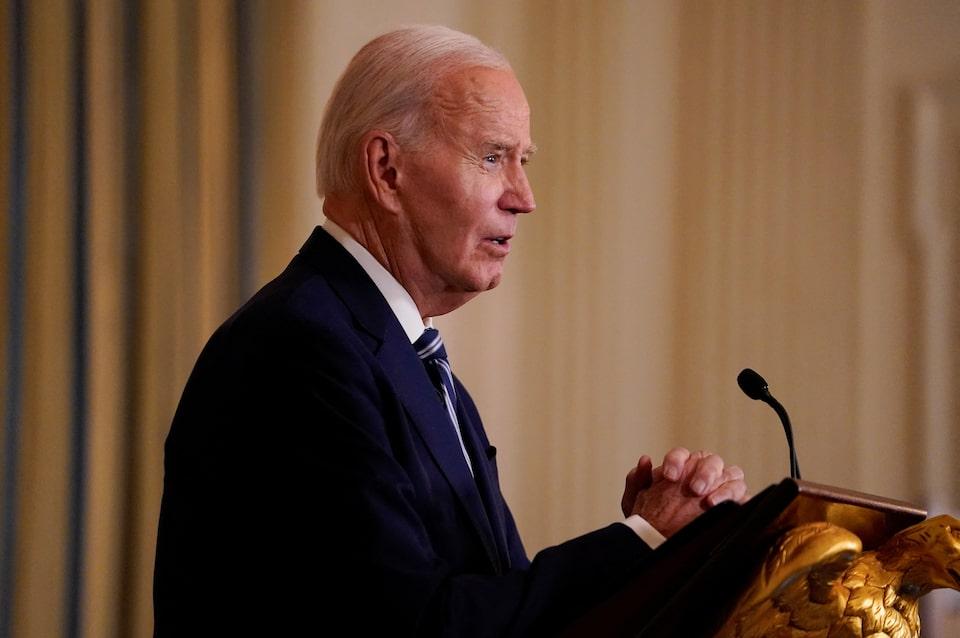
Nuclear fission and fusion, hydropower and geothermal among energy that could qualify Trump has said he will gut IRA climate law to cut costs Biden team says subsidies will help lower energy costs WASHINGTON, Jan 7 (Reuters) - The Biden administration on Tuesday released guidance to help companies secure clean energy tax credits under the 2022 Inflation Reduction Act, finalizing a program to extend subsidies long available for wind and solar to other low carbon sources. The move is part of outgoing President Joe Biden's actions meant to shore up his administration’s broader efforts to fight climate change. They could prove vulnerable once President-elect Donald Trump takes office later this month on a platform of cutting spending and maximizing fossil fuel output. Trump has said he will gut the IRA, Biden’s signature climate law, to save the U.S. budget hundreds of billions of dollars, though doing so would require support from Congress. U.S. officials announcing Tuesday’s guidance said the IRA's technology neutral clean energy program offers as much as 30% tax credits for production and investments in climate-friendly power - a perk that has been available to solar and wind projects for years. The program identifies additional technologies that may be eligible, including marine and hydrokinetic energy, nuclear fission and fusion, hydropower, geothermal and some forms of waste energy recovery. The administration said the program was crucial to decarbonizing the power sector, the source of around a quarter of U.S. greenhouse gas emissions, and expanding electricity capacity when demand from datacenters, industrial users, and electric vehicle owners is surging. Deputy Treasury Secretary Wally Adeyemo said in a call with reporters that repealing the subsidies could lead to higher power prices for consumers by slowing the pace of new power projects and raising costs for developers. "Given the increase in demand for electricity throughout this country, and the fact that one of the things that the American people are the most concerned about is increased costs, removing these tax credits would have significant detrimental impact," he said. An analysis from the Department of Energy showed the credits, along with other IRA and Bipartisan Infrastructure Law provisions, are meant to save U.S. households up to $38 billion on electricity bills through 2030. The Biden administration has issued other measures in recent days to try to cement its climate agenda. They include banning offshore oil and gas drilling in new areas of the Atlantic, Pacific and elsewhere, and finishing guidance on how companies can secure credits for green hydrogen, produced from renewable energy and needed to decarbonize heavy industry and transport. Sign up here. https://www.reuters.com/sustainability/climate-energy/biden-team-wraps-up-expanded-clean-energy-credit-guidance-2025-01-07/
2025-01-07 21:21
Jan 7 (Reuters) - Expand Energy (EXE.O) , opens new tab, the biggest U.S. natural gas producer, remains on track to boost output to around 7 billion cubic feet per day (bcfd) in 2025, CEO Nick Dell’Osso said at the Goldman Sachs Energy, CleanTech & Utilities Conference on Tuesday. With the weather turning extremely cold this week and gas demand and prices rising, Dell'Osso said he has received a lot of questions about whether Expand would boost output faster than previously projected. "The answer is no. Nothing has changed for us," Dell'Osso said. "You don't want to grow for a season, you want to grow for something that is durable over several years." After gas prices collapsed in the first half of 2024, several U.S. energy firms reduced gas output. Those reductions caused annual production in 2024 to decline for the first time since the COVID-19 pandemic cut demand for the fuel in 2020. "So now, we can utilize some of that capacity we (deferred) in 2024 ... to offset declines," Dell'Osso said. "We can level out our production (at) a good level in the range of 7 bcfd." Expand, which was formed by the merger of Chesapeake Energy and Southwestern Energy, said it produced about 6.75 bcfd of gas equivalent in the third quarter of 2024. Shares of Expand were trading around $103.30, their highest since November 2022. The U.S. Energy Information Administration projected total U.S. gas output would rise to 103.7 bcfd in 2025 after declining to 103.2 bcfd in 2024 from a record 103.8 bcfd in 2023. One billion cubic feet of gas can supply about 5 million U.S. homes for a day. After average gas prices at the U.S. Henry Hub benchmark in Louisiana collapsed to a four-year low of around $2.19 per million British thermal units (mmBtu) in 2024, energy analysts forecast prices would rise to a three-year high of $3.44 in 2025. Dell'Osso said U.S. demand for gas for export was on track to rise by around 5.6 bcfd by the end of 2026 as new liquefied natural gas (LNG) export plants enter service. Plants under construction include Venture Global LNG's Plaquemines in Louisiana, Cheniere Energy's (LNG.N) , opens new tab Corpus Christi expansion in Texas and Exxon Mobil (XOM.N) , opens new tab/QatarEnergy's Golden Pass in Texas. The U.S. currently exports about 13% of the gas it produces as LNG. That percentage will likely grow in coming years as more export plants enter service. Dell'Osso said he wants to sell more gas to customers at international prices, noting 15%-20% of total sales would be a good target. But with only one international supply deal and a lot of gas to sell after the merger, he said it would likely take a long time before Expand's international sales reach that level. Sign up here. https://www.reuters.com/business/energy/expand-energy-still-track-boost-us-gas-output-7-bcfd-2025-ceo-says-2025-01-07/