2025-01-07 12:33
SAO PAULO, Jan 7 (Reuters) - Brazilian miner Vale (VALE3.SA) , opens new tab said on Tuesday it has signed a memorandum of understanding with Swedish firm GreenIron to develop initiatives aimed at decarbonizing the mining industry supply chain in Brazil and Sweden. The partnership includes studies on the feasibility of a direct reduction plant to be operated by GreenIron in Brazil and the supply of Vale iron ore to GreenIron's commercial operations in Sandviken, Sweden, the mining giant said in a statement. Sign up here. https://www.reuters.com/markets/commodities/vale-greeniron-explore-decarbonization-projects-brazil-sweden-2025-01-07/

2025-01-07 12:28
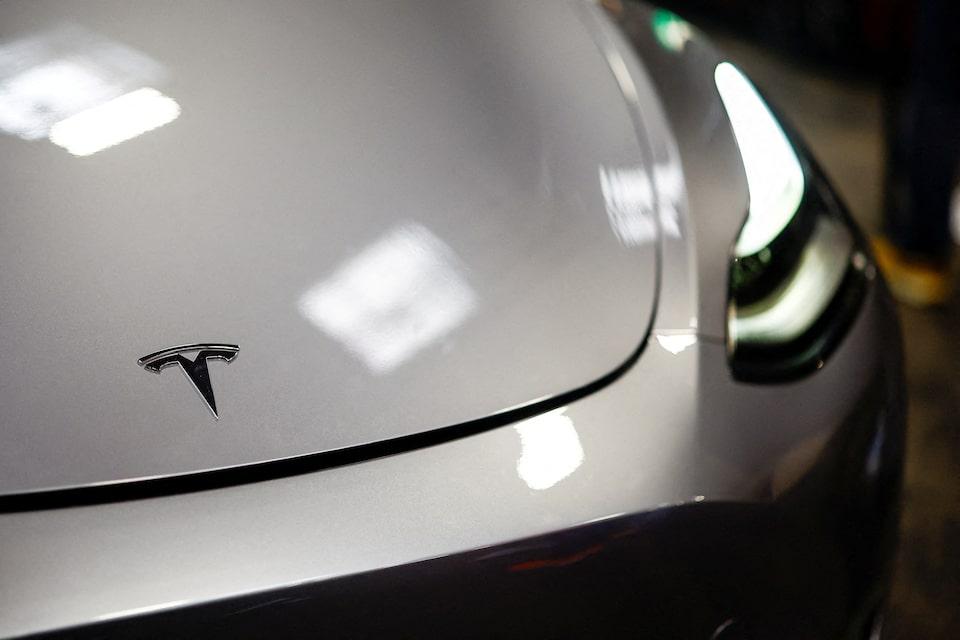
"Pooling" with EV makers lets other manufacturers cut averages Move could save firms hundreds of millions of euros in fines Tesla to sell credit to carmakers including Stellantis Polestar, Volvo Cars, Smart will sell extra credits to Mercedes MILAN, Jan 7 (Reuters) - Automakers facing tougher European Union 2025 emissions rules are planning to buy carbon credits from electric vehicle companies including Tesla (TSLA.O) , opens new tab and Polestar to avoid hefty fines, an EU filing showed on Tuesday. Companies with lower EV sales can "pool" their emissions with segment leaders, purchasing emissions credits from other manufacturers to lower their overall averages. The move could save them hundreds of millions of euros in penalties. Stellantis , Toyota (7203.T) , opens new tab, Ford (F.N) , opens new tab, Mazda (7261.T) , opens new tab and Subaru (7270.T) , opens new tab are planning to pool carbon emissions with U.S. electric vehicle maker Tesla to comply with the EU's 2025 rules, the EU filing showed. Another pool is forming around Germany's Mercedes (MBGn.DE) , opens new tab, with Polestar, Volvo Cars (VOLCARb.ST) , opens new tab, and Smart, the same document showed. Automakers such as Tesla and Polestar, whose sales are 100% fully electric, can sell their surplus carbon credits to other manufacturers pooling with them. For Tesla, carbon credit sales accounted for almost 3% of its $72 billion total revenue in the first nine months of last year. A spokesperson for Polestar told Reuters that Polestar, Volvo Cars and Smart will sell their surplus emission credits to Mercedes. Sweden's Volvo Cars, which is majority-owned by China's Geely (GEELY.UL), declined in a statement to provide financial details of the pooling agreement it was entering. It said it expected to have a 'significant' CO2 surplus this year and was on track to meet the 2025 EU CO2 emission target. "Our global tailpipe emissions per vehicle have reduced by over 40% since 2018," it said. In the January to September period of last year, carbon credit sales made up about 0.3% of Volvo Cars' total revenue. FINES LOOMING According to Renault (RENA.PA) , opens new tab CEO Luca De Meo, who until December chaired European auto lobby ACEA, 2025 rules could cost European car producers some 15 billion euros ($15.6 billion). The carmakers' plans to pool carbon emissions come as ACEA is calling for relief on the EU 2025 rules. Some European governments, including Italy, have also called for a suspension of 2025 fines. The two pools are open to other carmakers, the document said. Potential newcomers will have to apply by Feb. 5 to the Tesla-led pool and by Feb. 7 to the Mercedes-led one. The deals are based on 2025 sales figures. The filing gave no breakdown on the volume of credits being bought by the companies involved. Mercedes said in a statement it was entering a pool to "close the remaining gap and achieve the European CO2 emission targets for our new car fleet in 2025". "Market conditions and our customers will determine the pace of our industry's transformation," it said. A spokesperson for Stellantis said on Tuesday the carmaker's participation in the pool would help it meet its EU targets for 2025 "while optimising our resources". "At the same time, we continue to focus on developing the innovative electric and low-emission technologies that are at the heart of our strategy," the spokesperson said. Stellantis' head of European operations, Jean-Philippe Imparato, last month said the automaker's aim was to pay no EU fines this year. Based on EU rules, Imparato said, the group's EV sales in Europe would have to increase from 12% of the current total to 21%, with potential fines of 300 million euros for any missed percentage point. A spokesperson for Volkswagen (VOWG_p.DE) , opens new tab on Tuesday reiterated that Europe's largest automaker saw 2025 EU emission targets as "particularly challenging", but that it would consider other measures to comply with them, including joining a pool, only at a later stage. Carmakers have to notify the EU Commission of pooling agreements by Dec. 31 of each year. Brussels can request extra information, but it will not assess their commercial terms. Pool participants must not share data or exchange information other than the average specific emissions of CO2, specific emissions target and total number of vehicles registered. ($1 = 0.9621 euros) Sign up here. https://www.reuters.com/business/autos-transportation/stellantis-toyota-ford-mazda-subaru-plan-pool-co2-emissions-with-tesla-2025-01-07/
2025-01-07 12:27
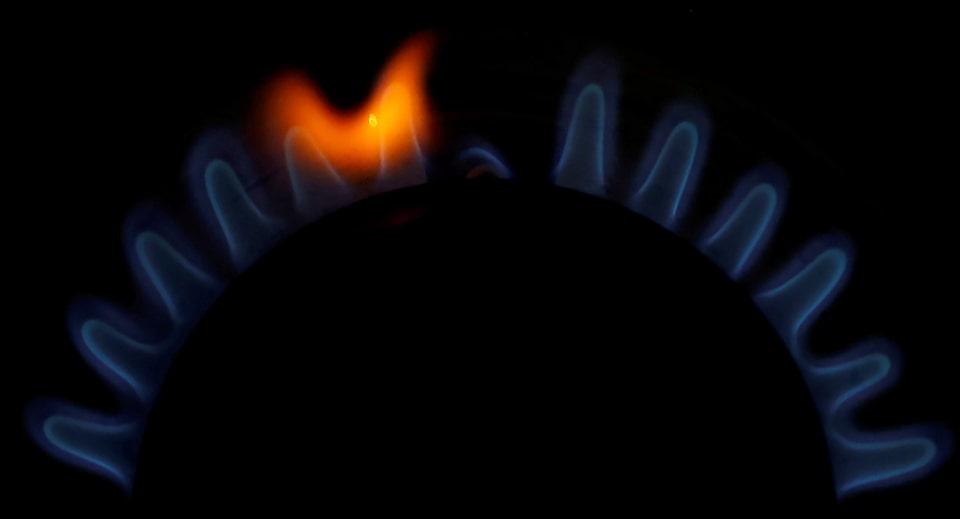
Gas appliances linked to health issues, climate change Republican states counter local gas restrictions with laws Jan 7 (Reuters) - President-Elect Donald Trump is weighing an executive order that seeks to protect gas-powered appliances including stoves and heaters from federal and local regulators who want to phase them out of homes and businesses, two sources familiar with the plans said. Republicans, including Trump, have spent the last few years attacking local Democratic efforts to limit gas-powered appliances in new construction projects amid environmental and health concerns. The U.S. consumer regulator said in 2023 it was reviewing gas appliances and links with respiratory conditions such as asthma, but noted that any regulation would be a lengthy process. Details of the executive order are still under discussion but are likely to mirror Congressional efforts to limit federal dollars for state and local initiatives that restrict gas-powered appliances or impose regulations that would increase their cost, the sources said. Trump's transition team did not respond to requests for comment. Gas-powered stoves, favored by cooks who like fast, high heat, have joined plastic straws in recent years as fodder in the U.S. culture wars between liberals trying to curb climate change by convincing Americans to rethink lifelong habits, and Republicans like Trump and business groups. "It speaks volumes when an order from the White House is needed to stop our own government from banning natural gas furnaces and water heaters," Karen Harbert, president of the American Gas Association, an industry trade group, said in a statement. "Despite the illegal efforts to ban access and use of natural gas, our industry is hard at work to keep life essential energy affordable and reliable especially during the extreme cold we are experiencing right now." Over 75 million U.S. households use natural gas for at least one appliance, mostly for home or water heat, according to the most recent residential energy consumption survey published by the U.S. Energy Information Administration in 2020. The survey found that more Americans are also turning to natural gas to cook and dry clothes. Some 47 million households used natural gas for cooking in 2020, up from 39 million in 2015, the survey found. Roughly two out of every five American homes have a gas stove, the survey found. PREMATURE DEATHS While gas appliances first came under fire for their impact on climate change, over the last few years several studies have shown that gas stoves emit nitrogen oxides that are harmful to human health along with other planet-warming gases. A study last year by researchers at Jaume I University in Castelló de la Plana, Spain, found that exposure to gas stove pollutants was responsible for about 40,000 premature deaths annually in the European Union and Britain. Dozens of Democratic-controlled cities, including San Francisco and Berkeley, California, have sought to restrict new buildings from using gas stoves as a way to reduce greenhouse gas emissions and improve indoor air quality. New York state approved a law last month banning natural gas stoves and furnaces in most new buildings. Those policies have faced legal challenges. Berkeley, the first city to enact such a ban, was barred from enforcing its policy by a U.S. appeals court ruling in 2023. It repealed the rule last year. In response to those policies, legislators in more than 20 Republican-led states have passed laws that prohibit local governments from restricting gas in buildings, according to S&P Global. The Energy Department, under President Joe Biden, proposed a rule requiring both gas and electric stoves and cooktops to use more efficient designs and technologies, but they scaled back the plan amid Republican and industry criticism. Sign up here. https://www.reuters.com/world/us/trump-weighing-executive-order-protecting-gas-stoves-sources-say-2025-01-07/
2025-01-07 12:15
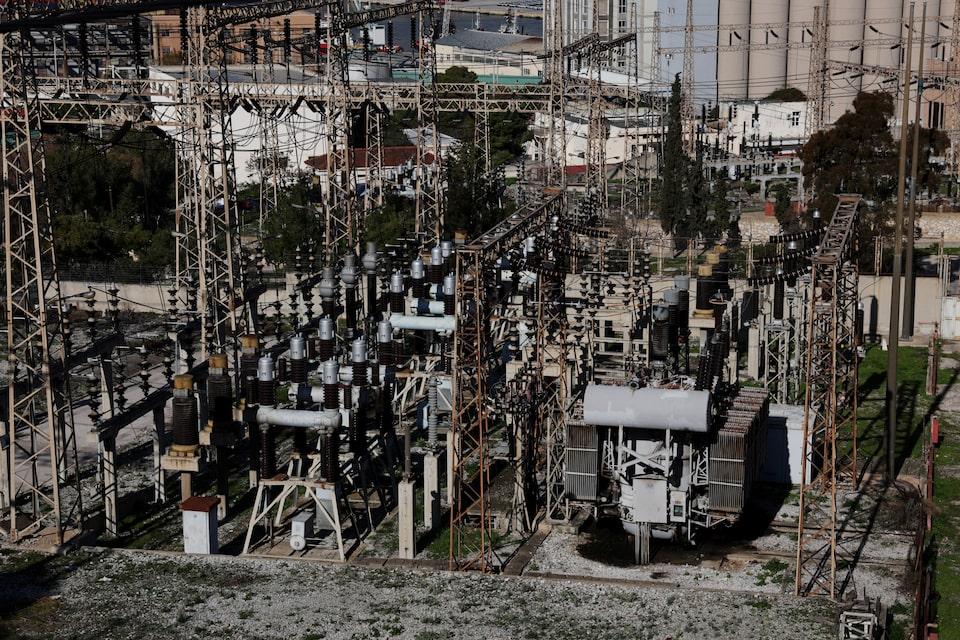
Southeast Europe pays far higher power prices Region has lagged in investing in storage, connections Energy prices bad news for Greece's rebounding economy Greece building gas plants, storage ATHENS/PARIS, Jan 7 (Reuters) - For Athens restaurant owner Christos Kapetanakis, rent has always been high, but now he faces what he calls "a second rent" as soaring electricity bills slash profits and force him to raise prices. Kapetanakis pays between 3,000 and 3,800 euros ($3,083-$3,905) a month on power, up 40% since Russia invaded Ukraine in 2022 and triggered a European energy crisis. Electricity used to amount to 3% of monthly turnover and now it's more like 15%, he said. "The continuous increase in prices, especially in the tourism sector...will lead Greece to become less competitive compared to other Mediterranean countries," he said from his restaurant in the historic Plaka neighbourhood. His predicament has been echoed across the continent since the Ukraine war interrupted Russian pipeline gas supplies to Europe and forced countries like Greece to seek more expensive alternatives. But southeast Europe has felt the impact much more than the northwest. Experts say that will only widen as winter hits, and will have a knock-on effect on economic growth. Wholesale power in Greece and Italy in August were 12 times higher than in Nordic countries and even dwarfed other southern European countries which were experiencing hot weather. HIGHEST IN THE EU Since 2021, Greece has spent 11 billion euros on energy subsidies to try to protect customers. In 2022, the spend amounted to 5.3% of GDP - by far the highest in the EU and double that of second-placed Italy, according to France-based energy consultancy Enerdata. Despite Athens' efforts to shield citizens from the energy cost rises, the situation has exacerbated a cost of living crisis in Greece in the wake of a 2009-18 debt crisis that slashed wages, pensions, and investments in power production and transport. "Increased energy prices and a negative impact on GDP are a tautology," said Nikos Magginas, a senior economist at Greece's National Bank. "Increased prices have a negative impact on household consumption and on the cost structure for industries, airlines and shipping." Much of the contrast between southeast Europe and its neighbours comes down to investment. While the northeast has power and gas lines that allow the easy transfer of energy between nations, as well as a strong mix of renewable sources, much of southeast Europe is fragmented and isolated. Power storage, which is becoming increasingly important in northern European countries, is nonexistent in parts of the southeast. Germany has 1,668 megawatts (MW) of large-scale storage capacity, versus none in mainland Greece, according to data from LCP Delta, an Edinburgh-based power consultancy. "Southeast Europe and the Balkans are lacking in (electricity) interconnects. Whenever there is a power shortage, and renewables output is low, they struggle to import the necessary volumes," said Henning Gloystein, head of energy, climate and resources at Eurasia Group. In contrast, Spain's renewable power generation has skyrocketed in the past decade, in part thanks to EU funding. It generated almost 60% of its electricity from renewable energy in the first half of this year, up from 51% a year before. "If you don't invest, energy prices will stay high," Gloystein said. MORE TO BE DONE Europe's power network is in many ways a great success. In 2022, France increased imports from Germany when nuclear power output dipped. When Russian gas supplies to Europe via Ukraine were halted last week, the price impact was muted because the bloc had found alternatives. But for some, more needs to be done. After power prices spiked in Greece last summer, Prime Minister Kyriakos Mitsotakis wrote to the European Commission demanding a solution to the "unacceptable" differences in electricity costs across Europe. Greece is not alone. Much of the Balkans relies heavily on fossil fuels and the regional power system is weak. Last June, a power outage hit Montenegro, Bosnia, Albania and Croatia when the grid was overloaded by air conditioning needs during a heatwave. Kosovo, which generates more than 90% of its power from coal, is struggling to catch up with the rest of Europe in installing more renewables. In December, it launched an auction to install 100 MW of wind capacity. But the World Bank estimates that it needs 100 times that - at least 10 gigawatts of new capacity - to meet its target of eliminating coal usage by 2050. This transition is estimated to cost Kosovo 4.5 billion euros, a daunting sum for the small economy. Without enough cross-border integration or storage, sometimes there is too much power for one market, forcing producers to curtail supply. "If the target is more concretely to reduce prices, the easiest way to do that is to increase penetration of renewables or nuclear," said Fabian Ronningen, an analyst at consultancy Rystad Energy. While Greece has no nuclear plants, Aristotelis Aivaliotis, secretary general of the Energy Ministry, is upbeat, noting renewable output is on the rise, two new gas-fired power plants set to come online this year, and battery storage to be built by 2028. Plans also call for power links with Italy, Albania and Turkey to be upgraded by 2031 at a cost of about 750 million euros. "Wholesale prices will gradually fall ... and this will definitely get passed on to consumers at some point," Aivaliotis told Reuters. Greek customers are not convinced. Taxiarchis Fekas, who lives in a suburb of Athens, struggles to pay school tuition and allowances for his three children because power bills are so high. He urges his kids to reduce their laptop and tablet use to save power - a tough ask for young children glued to their devices. "We are on the verge of becoming a financially struggling family," he said. "The government needs to pay attention." ($1 = 0.9730 euros) Sign up here. https://www.reuters.com/markets/europe/europes-power-price-divide-hits-southeastern-economies-2025-01-07/
2025-01-07 12:02
Slower manufacturing, investment cited as growth constraints Government and RBI differ on causes of demand slowdown India might trail budget gap estimate for this fiscal year NEW DELHI, Jan 7 (Reuters) - India forecast annual growth of 6.4% in the year ending in March, the slowest in four years and below the lower end of government's initial projection, dragged by a weaker manufacturing sector and slower corporate investments. India's had initially projected a growth rate of 6.5%-7%. The forecast by the National Statistics Office (NSO) follows several disappointing economic indicators in the second half of 2024 - including low growth, high inflation, anaemic capital flows and a record trade gap - that cast doubt on the robustness of the country's growth. Last month, the Reserve Bank of India lowered its growth forecast for the year ending March 2025 to 6.6%, from its earlier forecast of 7.2%, after India reported lower-than-expected growth of 5.4% in July-September, its slowest pace in seven quarters. The full year projection suggests growth will revive somewhat in the second half of the year to 6.7%, said Aditi Nayar, chief economist at rating agency ICRA. In nominal terms, which include inflation, the economy is expected to grow 9.7%, compared with the 10.5% estimate in the annual federal budget announced in February 2024. Nayar added that given the slowdown in government spending earlier this year, India might trail its budget gap estimate of 4.9% for the current financial year. Private consumption, which accounts for nearly 58% of GDP, was seen expanding by 7.3% year-on-year compared to 4% in the previous fiscal year. But private investment is seen rising by 6.4%, lower than 9% growth in the previous year. Government spending is estimated to rise by 4.1% year-on-year in 2024/25, up from a 2.5% increase in the previous fiscal year. Sectorally, growth is seen supported by a pick-up in farm output, which contributes about 15% of GDP and employs more than 40% of the workforce. Farm output growth is seen picking up to 3.8% in the current fiscal year, from 1.4% a year ago, following an abundant monsoon. Manufacturing, which accounts for about 17% of GDP, is projected to expand at 5.3% year-on-year in 2024/25, compared with 9.9% a year ago, while construction output was seen growing by 8.6%, down from 9.9% in the previous year, data showed. The advance estimates will see further revisions and Madhavi Arora, economist at Emkay Global, said the figure might be optimistic. The economy might face "downward pressure, implying a downside risk to the 6.4% estimate," amid weaker investments by companies, she said. GROWTH DEBATE India's central bank said last month the underlying reason for the slowdown in growth was inflation, which has eroded purchasing power of urban consumers. But in a rare comment, the government's latest monthly economic report said the central bank's monetary policy stance and regulatory measures may have caused a demand slowdown. The report added the growth outlook for October to December appeared bright, with rural demand remaining resilient and urban demand picking up. Indicators from corporate earnings have remained mixed. Among the first major corporates to report third quarter earnings, India's Dabur (DABU.NS) , opens new tab, which makes products ranging from honey to toothpaste, estimated its revenue rose in the low single-digit percentage range in the third quarter due to subdued demand for healthcare and beverage products. But jewellery and watch company Titan reported robust demand. Growth in the year beginning April 1, 2025 will be influenced by global and domestic uncertainties, said ICRA's Nayar, projecting GDP growth of 6.5% in the next financial year. Sign up here. https://www.reuters.com/world/india/india-forecasts-202425-economic-growth-64-government-statement-2025-01-07/

2025-01-07 11:52
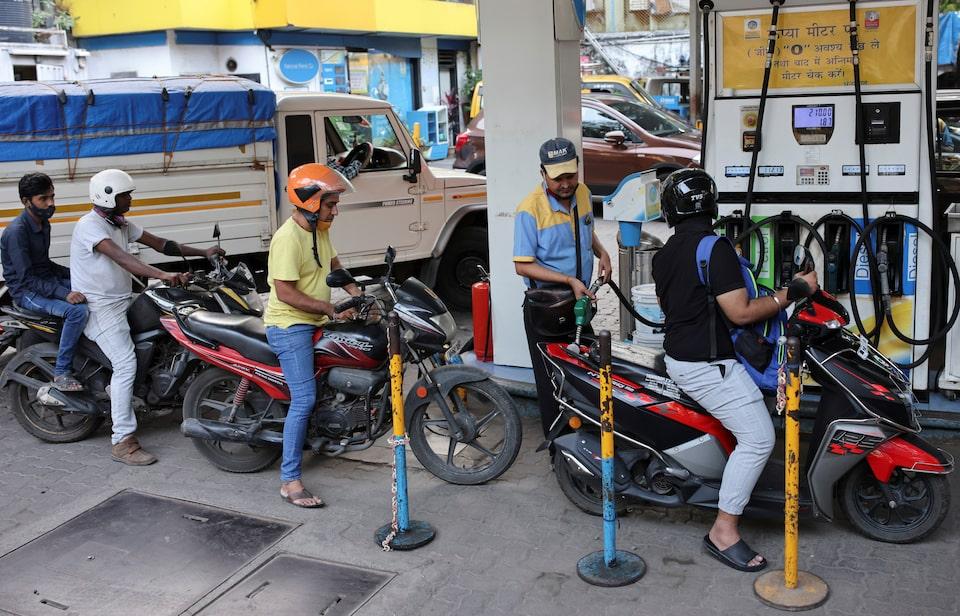
Jan 7 (Reuters) - India's fuel demand rose 2.1% in December compared with the same month in 2023, data from the Petroleum Planning and Analysis Cell (PPAC) of the oil ministry showed on Tuesday. Consumption of fuel, a proxy for oil demand, totaled 20.67 million metric tons, the data showed. Sales of gasoline, or petrol, were up 10.8% from a year earlier at 3.3 million tons. Diesel consumption was up 6% on a yearly basis at 8.1 million tons in December. Cooking gas, or liquefied petroleum gas (LPG), sales increased 5.8% to 2.78 million tons, while naphtha sales fell 22.7% to 1.07 million tons. Sales of bitumen, used for making roads, were 6.6% higher, while fuel oil use rose 1.1% in December. DOMESTIC SALES (in million tons): Sign up here. https://www.reuters.com/business/energy/indias-fuel-demand-december-rose-21-yy-2025-01-07/