2025-01-07 06:32
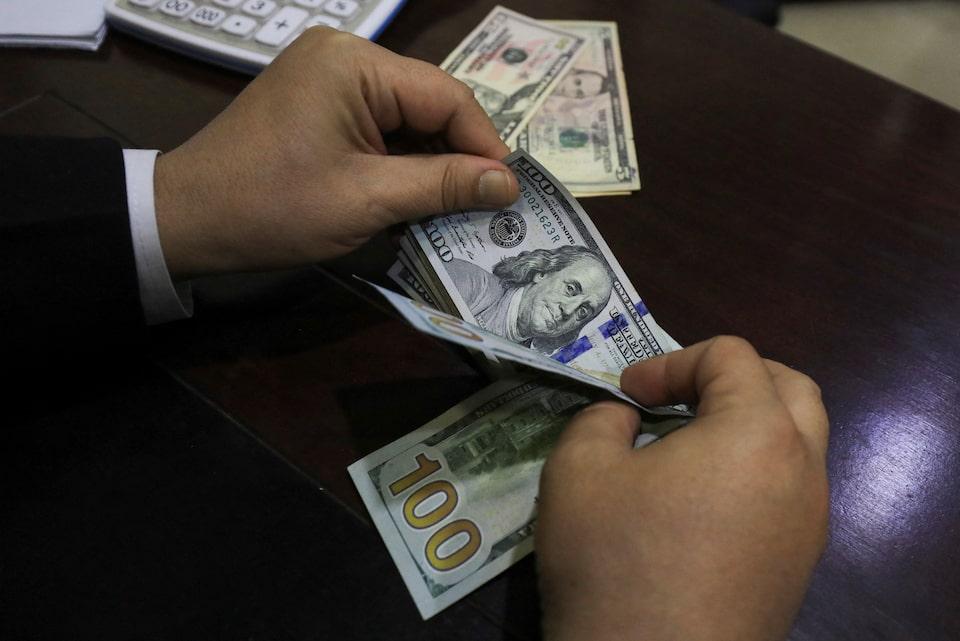
US job openings rise in November, hiring slows US services sector activity increases in December US rate futures price in just one rate cut this year Bitcoin drops more than 5% after hitting three-week high earlier NEW YORK, Jan 7 (Reuters) - The dollar strengthened on Tuesday as U.S. economic data showing a generally stable jobs market and a still robust services sector suggested that the Federal Reserve will likely slow the pace of its current rate-cutting cycle. The greenback rose to a near six-month peak against the yen after the U.S. data. It was last up 0.2% at 157.875 yen . Earlier in the global session, the dollar hit its highest since July of 158.425 yen. Data showed that U.S. job openings unexpectedly increased in November, although hiring slowed during the month. Job openings, a measure of labor demand, rose 259,000 to 8.098 million by the last day of November, according to the Bureau of Labor Statistics' Job Openings and Labor Turnover Survey, or JOLTS report. Hires, however, dropped 125,000 to 5.269 million in November. U.S. services sector activity also accelerated in December, while a surge in a measure of prices paid for inputs to a near two-year high pointed to elevated inflation. The Institute for Supply Management's non-manufacturing purchasing managers index (PMI) increased to 54.1 last month from 52.1 in November. "The really big surprise in the report was the jump in the prices paid index to an eleven-month high of 64.4 in December from 58.2 — perhaps this reflects higher transportation costs or delivery charges in the holiday season," wrote Dave Rosenberg, founder and president of Rosenberg Research, in a note to clients. "Suffice it to say that the (ISM) report was enough to push the markets to now expect a little more than one Fed rate cut for the year, and that has now been delayed to July from June." Following the data, the U.S. rate futures market has priced in a 95% chance of a pause in rate cuts this month, and a 4.8% probability of easing, according to LSEG estimates. Rate futures have also implied just 37 basis points of cuts in 2025, compared with two cuts expected under the Fed's "dot plot" or rate forecasts. Investors are also assessing whether President-elect Donald Trump's actual policies on tariffs will be consistent with his hard-line rhetoric. Market participants have been pricing in a scenario where the implementation of widespread tariffs could boost U.S. inflation, potentially limiting the Fed's ability to cut interest rates and thereby supporting the dollar. But they wondered whether officials are preparing to water down some of Trump's campaign promises. Trump on Monday denied a Washington Post report that said his aides were exploring tariff plans that would only cover critical imports. Karl Schamotta, chief market strategist, at Corpay in Toronto thinks, however, that the market is betting Trump "will ultimately implement a narrower set of tariffs on major trading partners, and is downgrading U.S. inflation and rate expectations in line with that." In afternoon trading, the U.S. dollar index , which measures the currency against six major units, rose 0.2% to 108.55, after dropping as low as 107.74 overnight, its weakest since Dec. 30. On Jan. 2, the index hit a high of 109.58, a more than two-year peak, due to expectations that Trump's promised fiscal stimulus, reduced regulation, and higher tariffs would boost U.S. growth. The euro, on the other hand, fell 0.4% to $1.0352 , extending its fall after the economic numbers. The currency earlier rose after Tuesday's Eurostat data showed inflation in the 20 nations sharing the euro rose to 2.4% last month from 2.2% in November. Meanwhile, euro zone households increased their inflation expectations in November, an ECB poll showed. Inflation in the 20 euro zone nations picked up to 2.4% last month from 2.2% in November, Eurostat said on Tuesday. Investors are also looking to ahead to Friday's U.S. nonfarm payolls report. A Reuters poll showed a consensus forecast of 160,000 in December, down from 227,000 new jobs created in November. "The health of the U.S. labor market is paramount to expectations for the Federal Reserve's actions this year so it's likely that, save for major news on the incoming administration, we could see calmer FX waters through Friday morning," said Helen Given, FX trader, at Monex USA in Washington. In cryptocurrencies, bitcoin tumbled more than 5% to $96,322.43, after earlier hitting a three-week high. Sign up here. https://www.reuters.com/markets/currencies/dollar-trades-near-one-week-low-market-ponders-trump-tariffs-2025-01-07/
2025-01-07 06:22
Dollar was up 0.3% Job openings rose 259,000 to 8.098 million by last day of Nov. US non-farm payrolls report due on Friday Jan 7 (Reuters) - Gold prices pared earlier gains on Tuesday, pressured by a strengthening dollar and Treasury yields after rising U.S. job openings signalled diminishing odds of large rate cuts by the Federal Reserve. Spot gold was up 0.5% at $2,648.76 per ounce, as of 02:07 p.m. ET (1907 GMT), after rising as much as 1% earlier in the session. U.S. gold futures settled 0.7% higher at $2,665.40. "Stronger than expected job openings along with strong services ISM all indicate that the economy is strong, but there is this lingering threat of inflation that will keep the Fed on hold perhaps through March," said Peter Grant, vice president and senior metals strategist at Zaner Metals. The dollar index (.DXY) , opens new tab was up 0.3% following data that showed a stable jobs market and a services sector that remained robust, suggesting that the Fed will likely slow the pace of its rate-cutting cycle. Data showed that U.S. job openings unexpectedly increased in November, although hiring slowed. Job openings rose 259,000 to 8.098 million by the last day of November. Uncertainty surrounding the tariff policy in the run up to Trump's inauguration on Jan. 20 has fuelled concerns about future moves in U.S. policy. Investors have been pricing in a scenario where proposed tariffs could inflame U.S. inflation, limiting the Fed's ability to cut rates and thereby pressuring gold. While bullion is considered a hedge against inflation, high rates reduce the non-yielding asset's appeal. Traders await Friday's U.S. jobs report for policy clues, along with ADP employment and the minutes from the Fed's December meeting on Wednesday. Meanwhile, China's central bank added gold to its reserves in December for a second straight month, official data showed. "(China's purchase is) a development likely to lend continued support to the precious metal's price," said Ricardo Evangelista, senior analyst at ActivTrades. Spot silver gained 0.4% to $30.06 per ounce, platinum added 1.8% to $949.74 and palladium rose 0.3% to $923.25. Sign up here. https://www.reuters.com/markets/commodities/gold-steady-market-awaits-more-us-data-2025-01-07/

2025-01-07 06:13
LAUNCESTON, Australia, Jan 7 (Reuters) - Europe's imports of liquefied natural gas (LNG) surged to an 11-month high in December, but the gain didn't come at the expense of Asia, which also recorded higher arrivals. A total of 10.89 million metric tons of the super-chilled fuel was imported by Europe in December, up 23% from 8.86 million in November and the highest since January's 11.18 million, according to data compiled by commodity analysts Kpler. The sharp increase in Europe's imports came as winter demand rose and ahead of the end of Russian pipeline shipments through Ukraine at the start of 2025. However, the increase in European purchases of LNG didn't come at the expense of arrivals in Asia, the world's top-importing region. Asia imported 25.63 million tons in December, up from 22.64 million in November and the most since the 26.19 million in January, according to Kpler data. However, Asia's December figure was down 3.6% from the 26.58 million tons seen in the same month in 2023. Europe also recorded a drop from December 2023, when imports were 11.75 million tons, or 7.9% higher than the figure for December 2024. A mild start to winter in North Asia coupled with rising spot prices are likely to have curbed importer enthusiasm for LNG. China, the world's biggest buyer of LNG, saw arrivals of 7.66 million tons in December, which was down from 8.20 million for the same month a year earlier. Similar small declines were recorded by Japan and South Korea, the second- and third-biggest importers in Asia. India, Asia's fourth-biggest LNG importer, actually saw a small increase in December arrivals on a year-on-year basis, coming in at 1.94 million tons, versus 1.86 million in December 2023. However, India's LNG imports have been trending weaker since reaching a 2024 peak of 2.60 million tons in June, with the lower arrivals coinciding with rising prices for spot cargoes. The price of spot LNG for delivery to North Asia hit its 2024 low of $8.30 per million British thermal units (mmBtu) in early March. At this price Indian buyers would have been encouraged to book spot cargoes, which would have taken up until June to be delivered. However, the spot LNG price started rising from March onwards, reaching $12.60 per mmBtu by mid-June, $14.10 by mid-August and peaking at $15.10 by late November. It has since eased slightly to end at $14.60 per mmBtu in the week to Jan. 3. Prices above $10 per mmBtu have in the past resulted in India taking fewer spot cargoes, and have even encouraged Chinese buyers to resell LNG. EUROPE DEMAND With Europe experiencing cold weather, it's likely that natural gas prices in the continent will remain supported, especially with storages dropping to stand at just over 70% full last week, which is below the 85% from the same time last year and the 76% five-year average. European prices are high enough to encourage spot LNG cargoes to head to the continent, with the benchmark front-month contract at the Dutch TTF hub ending at 47.17 euros per megawatt hour, equivalent to $14.36 per mmBtu. The loss of Russian pipeline gas through Ukraine and the faster drawdown of inventories means Europe is likely to keep LNG purchases at higher-than-usual levels for coming months, which may prevent spot prices from having their usual seasonal downturn when the northern winter ends. However, there is also the possibility that increased LNG supply, especially from the United States, will be sufficient to meet any lift in European demand. Europe imported 5.22 million tons of U.S. LNG in December, an 11-month high and more than double the 2.30 million from July, which was the softest month in 2024. The world's biggest LNG exporter is expected to increase exports in 2025, with two new plants, Venture Global's Plaquemines and Cheniere's Corpus Christi Stage 3, starting production late in December 2024. The views expressed here are those of the author, a columnist for Reuters. Sign up here. https://www.reuters.com/markets/commodities/europes-lng-imports-surge-not-asias-expense-russell-2025-01-07/

2025-01-07 06:09
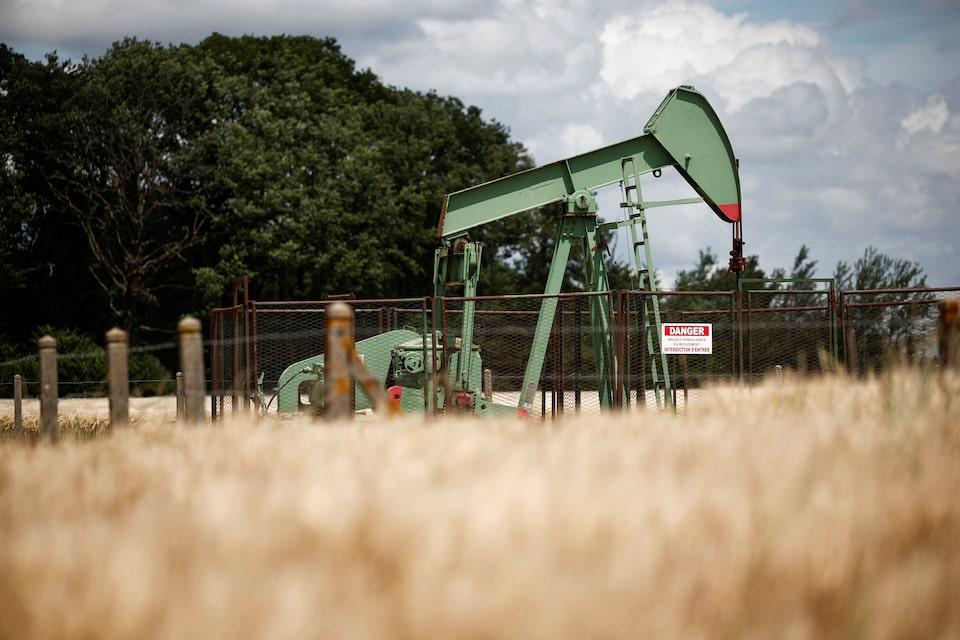
Middle East oil exports to Europe fell 22% in 2024, Kpler data shows US boosts global oil trade share to 9.5% with shale production New refineries and pipelines alter global oil trade dynamics HOUSTON, Jan 7 (Reuters) - The volume of global crude exports in 2024 declined 2%, the first fall since the COVID-19 pandemic, shipping data showed, due to weak demand growth and as refinery and pipeline changes reshuffled trade routes. Global crude flows have been roiled for a second year by war in Ukraine and the Middle East, with tanker shipments rerouted and suppliers and buyers split into regions. Middle East oil exports to Europe declined and more U.S. oil and South American oil went to Europe. Russian oil that formerly went to Europe has been redirected to India and China. These shifts have become more pronounced as oil refineries have shut in Europe amid continued attacks on Red Sea shipping. Middle Eastern crude exports to Europe tumbled 22% in 2024, ship tracking data from researcher Kpler showed. The shift in oil flows "is creating opportunistic alliances," said Adi Imsirovic, an energy consultant and former oil trader, citing closer relationships between Russia and India, China and Iran that are reshaping oil trade. "Oil is no longer flowing along the least cost curve, and the first consequence is tight shipping, which raises freight prices and eventually cuts into refining margins," said Imsirovic. The U.S. with its surging shale production has been a winner in the global oil trade. The country exports 4 million barrels per day, boosting its share of global oil trade to 9.5%, behind Saudi Arabia and Russia. Trade routes have also been reshuffled by startup of the massive Dangote oil refinery in Nigeria, expansion of Canada's Trans Mountain pipeline to the country's west coast, falling oil output in Mexico, a brief halt in Libyan oil exports, and rising Guyana volumes. In 2025, suppliers will keep grappling with falling fuel demand in major consuming centers such as China. Also, more countries will use less oil and more gas, while renewable energy will keep growing. "This kind of uncertainty and volatility is the new normal - 2019 was the last 'normal' year," said Erik Broekhuizen, a marine research and consulting manager at ship brokering firm Poten & Partners. FURTHER ROOM TO FALL Changes in oil demand forecasts have pulled the rug out from historical long-term oil market growth assumptions, Broekhuizen said. "In the past, you could always say that there will be healthy long-term demand growth, and that solves a lot of problems over time. That can't really be taken for granted anymore," he said, citing weaker demand in China and Europe. China's imports fell about 3% last year with gains in electric and plug-in hybrid cars, and growing use of liquefied natural gas in its heavy trucking. In Europe, lower refining capacity and government mandates to reduce carbon have shaved crude imports by about 1%. NEW SUPPLIERS, NEW ROUTES Europe's refiners initially cut Russian imports and increased both U.S. and Middle Eastern oil purchases after Russia invaded Ukraine. Attacks on ships in the Red Sea following Israel's war on Gaza pushed up the cost of shipping from the Middle East. Refiners stepped up imports from the U.S. and Guyana to record highs. Exports from Iraq declined 82,000 bpd and United Arab Emirates exports fell 35,000 bpd in 2024. Europe added 162,000 bpd from Guyana and 60,000 bpd from the U.S. Escalating Middle East conflict around late September and fears of more sanctions from U.S. President-elect Donald Trump led to tighter supply and higher prices of Iranian oil. This prompted Chinese refiners to look at oil from West Africa and Brazil. NEW REFINERIES, PIPELINES Nigeria's new Dangote refinery consumed enough domestic supply to keep around 13% of Nigeria's crude exports in the country in 2024, up from 2% in 2023, according to Kpler. That cut Nigeria's exports to Europe, and Nigeria also imported 47,000 bpd of U.S. WTI, unusual for a major net exporter. New refining capacity ramping up in Bahrain, Oman and Iraq as well as Dos Bocas in Mexico are also likely to soak up oil production in those regions. In Canada, the expanded Trans Mountain pipeline can now ship an extra 590,000 bpd to the Pacific Coast, lifting the nation's waterborne exports to a record 550,000 bpd in 2024. This has had a ripple effect: With increased Canadian crude flowing to the U.S. West Coast, refineries in the region bought less Saudi Arabian and Latin American crude, while direct shipments from Canada to Asian countries have cut re-exports from the U.S. Gulf Coast. While China has been Canada's major buyer, the crude has also found importers in India, Japan, South Korea and Brunei and more Asian refiners are likely to purchase the oil, analysts noted. Trump's proposed 25% tariff on Canadian and Mexican crude, the top two foreign oil suppliers to the U.S., could also change oil flows in 2025, analysts said. Sign up here. https://www.reuters.com/business/energy/global-crude-exports-dip-trade-routes-reshuffle-again-2025-01-07/
2025-01-07 06:02
LITTLETON, Colorado, Jan 7 (Reuters) - Solar electricity generation posted its largest ever annual rise globally in 2024, yet many investors in the solar sector are nursing heavy losses after share prices in major solar firms and exchange-traded funds collapsed. The divergence between generation and returns highlights the challenge facing investors who are looking to benefit from exposure to the world's fastest-growing source of electricity. Owning equity in firms engaged in the production of solar components or in the installation of panel systems at generation sites was considered an effective means of tapping continued growth in renewable energy production and demand. But after the bankruptcy in August of the 40-year old U.S. firm Sunpower - which both produced panels and installed solar systems - several major solar equities racked up hefty losses in 2024, forcing investors to rethink their exposure. Going forward, renewables remain at the heart of planned expansions in electricity output worldwide, and solar systems are still the fastest and cheapest way for utilities, businesses and households to scale up clean energy generation. But solar panel makers and installers still face challenges on numerous fronts - from low-cost competitors, labour shortages and high parts and financing costs - which means the solar sector may still face headwinds in 2025 and beyond. Below are some key themes in the solar space that can help investors understand the main developments that stand to shape clean energy investment return potential going forward. LEADING LIGHTS China remains the main driver of solar electricity production globally, and over the first 11 months of 2024 boosted solar electricity output by a whopping 44% from the same months in 2023, according to energy think tank Ember. The roughly 779 terawatt hours (TWh) of electricity produced by China's solar farms from January through November was by far the highest in any country over that period, and helped China account for a record 41% share of global solar generation. Europe was the second largest market for solar generation in 2024, producing around 338 TWh of solar electricity for the year as a whole (a 17.6% share of global solar output), while the United States generated around 283 TWh (a 14.7% share). Europe and the U.S. both generated record volumes of solar power last year, but both markets recorded declines in their global share of solar production as China's growth rate sharply outpaced all other countries. DOWNSHIFT Solar generation levels are expected to continue growing in 2025 and beyond, but at a slower pace. In China, Beijing has introduced quotas on new solar component production and on generation projects to rein in overcapacity, which should slow solar additions at home. However, as China is by far the world's largest producer of solar parts and systems, further growth in Chinese solar product exports is likely. That may bring the country into further conflict with trade partners, especially in Europe which is the top destination for Chinese solar exports but is where Chinese firms have already been accused of unfair trade practices. Enduring weak economic growth and high living costs are sowing widespread political acrimony across Europe, and are in turn spurring more support for protectionist policies designed to promote economic growth at home and protect local businesses. Further economic weakness in early 2025 could also force cuts to government spending across Europe, which could in turn slow the development pace of renewable energy projects by government-run utilities. RED TAPE REDUCTIONS? While the pace of solar power expansion may slow in Europe and China, the growth outlook in the United States is less clear. Incoming President Donald Trump is a climate sceptic, has called some forms of green energy production a scam, and is a firm supporter of boosting domestic production of oil and natural gas. However, his administration is also expected to speed up approval processes for lifting overall power output. That means that while fossil fuel producers may get the green light to lift output, renewable energy suppliers may also gain from shorter grid-connection times and broad support for projects that can quickly boost electricity output. And as solar projects remain the quickest and cheapest way to boost incremental electricity output across much of the U.S., solar developers may remain in high demand even under a more fossil fuel friendly administration. That means that even with a potential slowdown in solar growth in key markets such as China and Europe, solar will remain a key part of the generation mix in the United States, and solar businesses will see continued demand for their products and services. Stock pickers who can identify the solar firms most likely to win business from firms engaged in boosting U.S. electricity supplies should in turn still have good growth potential in 2025, especially from current historically low valuations. The opinions expressed here are those of the author, a market analyst for Reuters. Sign up here. https://www.reuters.com/business/energy/key-solar-themes-track-after-torrid-2024-investors-maguire-2025-01-07/

2025-01-07 05:55
LAS VEGAS, Jan 6 (Reuters) - Tesla (TSLA.O) , opens new tab supplier Panasonic Energy plans to eliminate its supply-chain dependence on China for electric vehicle batteries made in the United States, a senior executive told Reuters, calling the shift a "No.1 objective". The comments from Allan Swan, President of Panasonic Energy of North America, highlight how incoming President Donald Trump's pledge to raise tariff imports on Chinese goods has forced companies around the world to reassess their manufacturing processes. Panasonic Energy, which supplies batteries to Tesla as well as other automakers, is a unit of Japanese electronics giant Panasonic (6752.T) , opens new tab. Trump has vowed to impose tariffs of 10% on global imports into the U.S. along with a 60% tariff on Chinese goods. In November, he specifically pledged a 25% tariff on imports from Canada and Mexico when he takes office on Jan. 20. The first thing the business has to do in regards to Trump tariffs is "not to have the supply chain dedicated from China," Swan told Reuters in an interview in Las Vegas on Monday at the CES trade show. "We do have some Chinese supply but we don't have a lot," he said. "And we have plans not to have some, as we go forward, and that has accelerated." The bulk of Panasonic Energy's U.S.-made batteries come from overseas suppliers, including ones from Canada, Swan added. Reuters last month reported that Trump's transition team recommended tariffs on battery materials globally. The Washington Post on Monday reported his aides were exploring narrower tariff plans covering critical imports, which Trump later denied. In the United States, Panasonic Energy operates a factory in Nevada and plans to open a second U.S. plant in Kansas this year. Japanese firms are bracing for the uncertainties around the second Trump presidency, especially in his trade policies. Automakers like Nissan (7201.T) , opens new tab and Honda (7267.T) , opens new tab have hinted possible impacts from U.S. tariffs on Mexico, a low-cost production and export hub for the American market. Heavy machinery maker Komatsu (6301.T) , opens new tab last month said a potential U.S.-Canada trade war would be a "one-two punch" on its mining equipment business. Sign up here. https://www.reuters.com/technology/tesla-supplier-panasonic-energy-cutting-china-supply-no1-objective-us-2025-01-07/