2025-01-06 17:45
Transdniestria faces severe gas and heat shortages after Russia-Ukraine gas transit deal expires Moldova blames Gazprom for energy crisis in Transdniestria Russia says Ukraine responsible, accuses Moldova of ignoring problem Moldova says Russia stirring instability before elections Jan 6 (Reuters) - More than 51,000 households were left without gas and 1,500 apartment buildings had no winter heat in Moldova's Moscow-backed separatist enclave, authorities said on Monday, as Moldova and Russia traded blame for an escalating energy crisis. Transdniestria, a mainly Russian-speaking breakaway region along the Ukrainian border, had received Russian gas via Ukraine for decades, using it to generate electricity also sold to the rest of Moldova, providing 80% of the country's power. But that gas was cut off along with flows to Central and Eastern Europe that stopped on New Year's Day, after Kyiv refused to extend a transit deal that had persisted through nearly three years of all-out war between Russia and Ukraine. The Moldovan government blames the energy crisis on Russian gas export giant Gazprom (GAZP.MM) , opens new tab, which it said refused to supply contracted gas to Transdniestria via an alternative and tested Transbalkan route. Gazprom said it would suspend exports to Moldova on Jan. 1 because of unpaid Moldovan debts that Moscow says total $709 million. Moldova disputes that debt and says its position is backed up by an international audit. The Transdniestrian separatist authorities said on Telegram that a total of 122 settlements had lost gas supplies as of Monday morning, and only small amounts were being supplied to some apartments for cooking. Authorities ordered schools not to reopen after the winter holidays, with at least 131 schools and 147 kindergartens left without heat. "There is not a single person in Transdniestria who is guilty of this situation - it's all an external factor," the president in the region's administration, Vadim Krasnoselsky, said on a televised statement. Gas piped via Ukraine has long been the main way Russia supported the separatist region, which broke free of control of Moldova's central government, fought a brief war against government forces in 1992 and still hosts 1,500 Russian soldiers. Russia's foreign ministry said in a statement it was following the deteriorating situation with alarm, blaming the gas cutoff on Ukraine and accusing Moldova of deliberately ignoring the problem. MOLDOVA SAYS RUSSIA STIRRING INSTABILITY Moldova said it had summoned a Russian diplomat and accused Moscow of falsely blaming it for the crisis, which it said Moscow had artificially stoked to undermine Moldova's government before parliamentary elections this year. Moldova, which has a pro-European government that seeks membership in the European Union and has been at odds with Moscow for several years, has alternated between pro-Western and pro-Russian governments since it gained independence during the 1991 break-up of the Soviet Union. "The meaning of all of this is for Russia to create instability in the region but also very importantly to influence the results of the parliamentary elections in Moldova... They want to achieve a pro-Russian government...," Moldovan Prime Minister Dorin Recean said during an online briefing. Disruptions of water supply in Transdniestria had begun on Monday, he added. Since Russian gas was halted with the new year, Moldova has met its power needs by importing about 60% of its energy requirement from neighbouring Romania. The government says it has offered to assist the separatists, but that the offer was rejected. Krasnoselsky has said Moldova's goal is the "strangulation" of the enclave and has urged residents to use firewood. Recean said Moldova's objective was to "reintegrate the country and this should start from the fact that Russia has to withdraw its troops, so that we can properly administer it. We are here to offer a peaceful solution to this conflict." Transdniestrian separatist authorities said late on Monday that their daily regime of rolling power cuts would be doubled to two four-hour stints on Tuesday. Sign up here. https://www.reuters.com/world/europe/thousands-left-without-heat-or-gas-moldovas-pro-russian-separatist-region-2025-01-06/

2025-01-06 16:44
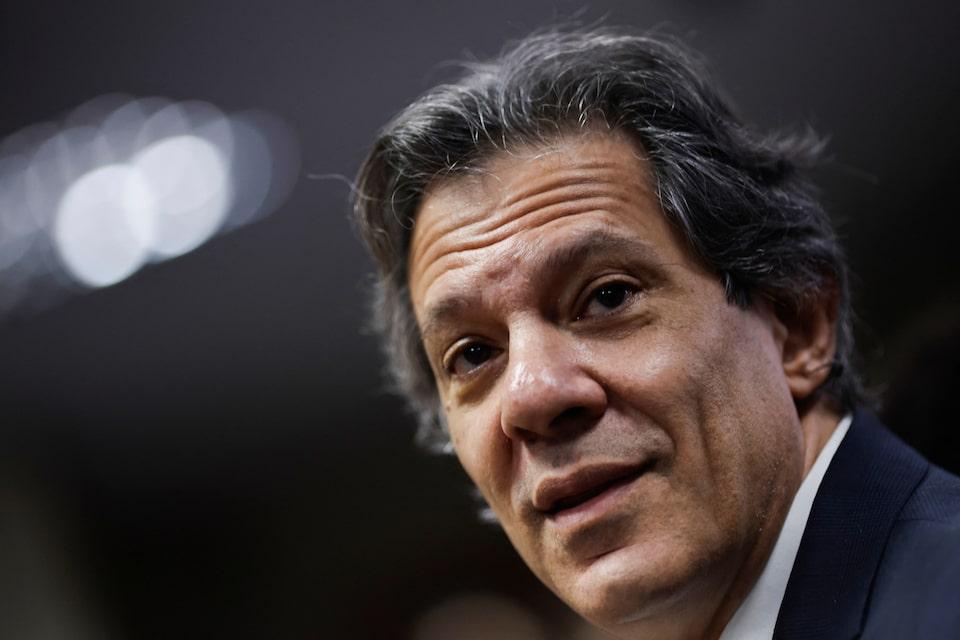
BRASILIA, Jan 6 (Reuters) - Brazil's Finance Minister Fernando Haddad said on Monday that the government has no plans to raise the financial transactions tax, known as IOF, to address U.S. dollar outflow following the sharp depreciation of the Brazilian currency last year. "There is no discussion about changing the exchange rate regime in Brazil or increasing taxes for this purpose," Haddad told reporters. He described the U.S. dollar's recent movements as part of "a natural accommodation process" following stresses caused by both external and domestic factors. The Brazilian real depreciated by more than 20% last year, ranking among the worst-performing emerging market currencies. The decline was driven by the global strengthening of the U.S. dollar following policy promises by President-elect Donald Trump, coupled with a steep increase in risk premiums on Brazilian assets after the government unveiled a fiscal containment package that disappointed investors. After meeting with President Luiz Inacio Lula da Silva earlier on Monday, Haddad said the discussions focused on planning for the year, with the priority being the approval of the 2025 budget proposal. Sign up here. https://www.reuters.com/world/americas/brazils-finance-minister-rules-out-hiking-taxes-curb-dollar-outflow-2025-01-06/
2025-01-06 15:10
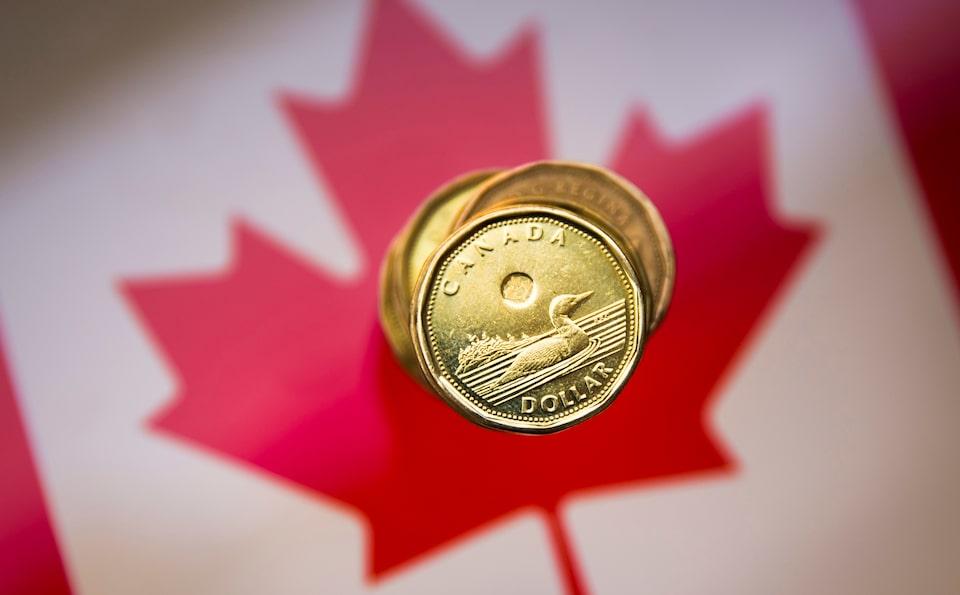
Canadian dollar gains 0.7% against the greenback Touches a near three-week high at 1.4280 Price of U.S. oil increases 1.1% Bond yields rise across a steeper curve TORONTO, Jan 6 (Reuters) - The Canadian dollar rose to a near three-week high against its U.S. counterpart on Monday, as investors weighed the potential for Canada's economy to escape broad-based U.S. tariffs and a report that Canadian Prime Minister Justin Trudeau would resign. The loonie was trading 0.7% higher at 1.4350 to the U.S. dollar, or 69.69 U.S. cents, after touching its strongest intraday level since Dec. 17 at 1.4280. Trudeau will announce on Monday that he intends to step down as Liberal leader but he will stay on in his post until the party has chosen a replacement, CBC News reported, citing sources. Analysts say that investors could welcome greater political clarity after increased calls for Trudeau to step aside since December, as well as the prospect of a more market friendly government. "News that Justin Trudeau will resign is helping to underpin loonie gains," said Nick Rees, senior FX market analyst at Monex Europe Ltd. "Markets have become disillusioned with Trudeau - his administration having presided over a period of economic stagnation." The U.S. dollar (.DXY) , opens new tab slumped against a basket of major currencies after a report said President-elect Donald Trump was mulling tariffs that would only be applied to critical imports, potentially a relief for countries such as Canada that were expecting broader levies. Trump, who is due to take office on Jan. 20, has threatened to impose a 25% tariff on all imports from Canada. The price of oil, one of Canada's major exports, rose to its highest level since mid-October as colder weather spurred buying. U.S. crude oil futures were up 1.1% at $74.74 a barrel. Canadian bond yields rose across a steeper curve, tracking moves in U.S. Treasuries. The 10-year yield was up 1.8 basis points at 3.250%. Sign up here. https://www.reuters.com/markets/currencies/canadian-dollar-jumps-trudeau-tariff-reports-2025-01-06/
2025-01-06 14:23
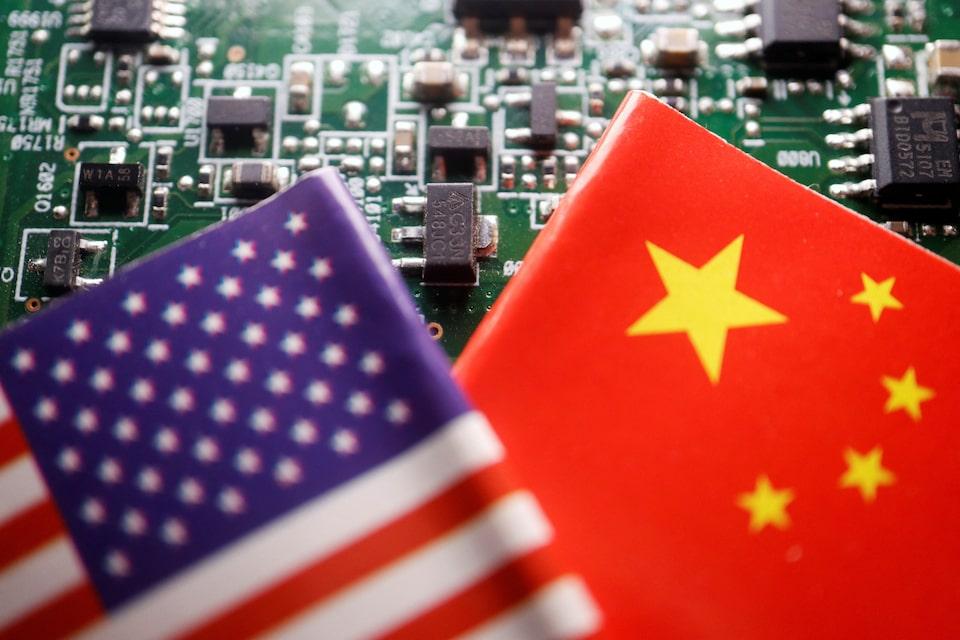
Jan 6 (Reuters) - Antimony prices are likely to hit record levels as consumers seek alternative supplies following China's latest export ban with growing trade tensions changing the dynamics around markets for critical materials. Last month, China banned exports to the United States of critical minerals gallium, germanium and antimony. Prices of antimony , used in semiconductors and military applications, hit all-time highs, currently trading between $39,500-40,000 per metric ton in Rotterdam as of Dec. 31. Prices rose by around 250% in 2024. Traders expect prices to climb above $40,000 a ton following China's ban amid an ongoing global supply shortage. "We have already sold some small quantities for $40,000," a minor metals trader in Europe said. "Non-Chinese sellers...will charge more to maximize profits." China produced nearly 50% of global antimony supplies estimated at 83,000 tons last year, according to data from U.S. Geological Survey (USGS). Traders said China's bans are in line with a strategy to consolidate mineral production internally. "The U.S. has already diversified its supply chains away from China where possible, buying more from southeast Asia," said Ellie Saklatvala, head of non-ferrous metals pricing at Argus. "However, it is unclear in the near-term how they will be able to fill the gap now left by China." China also banned exports of gallium , germanium to the United States, but this will have limited impact as the U.S. has stopped buying these critical minerals from China. "Still markets are made of people and not only of fundamentals, therefore some bullish pressure is expected as traders exploit the ban to move prices up," said Theo D. Ruas, Global Sales Manager, Metals & Compounds at Indium Corporation. "China's ban on raw materials shows how important additional supply outside China is. Being self-sufficient must be a short term goal for the U.S. government." China's dominance in critical minerals has fuelled concern about which other metals could be marked for the next round of export curbs. One trader said China could target Bismuth and Manganese. Sign up here. https://www.reuters.com/markets/commodities/chinas-export-ban-push-antimony-prices-new-highs-2025-01-06/
2025-01-06 12:46
Biden blocked proposed deal on national security grounds Lawsuit alleges Biden influenced national security review for political reasons Separate lawsuit filed against USW president, rival Cleveland-Cliffs and its CEO WASHINGTON, Jan 6 (Reuters) - U.S. President Joe Biden unlawfully blocked Nippon Steel's (5401.T) , opens new tab $14.9 billion bid for U.S. Steel (X.N) , opens new tab through a sham national security review, the companies alleged in a lawsuit filed on Monday. The companies want a federal appeals court to overturn Biden's decision to scuttle the deal so they can secure another shot at approval through a fresh national security review unfettered by political influence. The lawsuit alleges Biden prejudiced the decision of the Committee on Foreign Investment in the U.S. which scrutinizes foreign investments for national security risks, and violated the companies' right to a fair review. The merger had become highly politicized ahead of the November U.S. presidential election, with Democrat Biden and Republican President-elect Donald Trump pledging to kill it as they wooed voters in the swing state of Pennsylvania where U.S. Steel is headquartered. United Steelworkers union President David McCall opposed the tie-up. Trump and Biden both asserted the company should remain American-owned even after the Japanese firm offered to move its U.S. headquarters to Pittsburgh, where the U.S. steelmaker is based, and promised to honor all agreements between U.S. Steel and the USW. Biden sought to kill the deal to "curry favor with the USW leadership in Pennsylvania in his bid for reelection," the companies allege. "As a result of President Biden's undue influence to advance his political agenda, the Committee on Foreign Investment in the United States failed to conduct a good faith, national security-focused regulatory review process," the companies said in a statement. A White House spokesperson defended the review, adding, "President Biden will never hesitate to protect the security of this nation, its infrastructure, and the resilience of its supply chains." The lawsuit, which echoes claims the companies made in a Dec. 17 letter to CFIUS seen by Reuters, shows the companies are making good on their threats of litigation. "We can't back down after being treated unreasonably. We will fight back thoroughly," Nippon Steel Vice Chair Takahiro Mori told Nikkei on Monday. Mori said the CFIUS review process lacked integrity as the Japanese company received no written feedback on the proposed national security agreement. The prospects of the lawsuit, which also names U.S. Attorney General Merrick Garland and Treasury Secretary Janet Yellen, are unclear. Yellen oversees CFIUS. Courts generally give great deference to CFIUS to define national security, experts say. The Justice Department declined to comment and the Treasury Department did not respond to a request for comment. Trump said in a post on his social media platform on Monday: "Why would they want to sell U.S. Steel now when Tariffs will make it a much more profitable and valuable company?" Nippon Steel's partnership with U.S. Steel aligns with Trump's vision of strengthening U.S. manufacturing, Nippon Steel CEO Eiji Hashimoto told reporters on Tuesday in Tokyo. "If we win the case and CFIUS reopens the review ... we will explain once again that this acquisition is beneficial to the United States," Hashimoto said. "And I am sure we will be able to gain the understanding." Nippon Steel shares were down 1.5% at 0114 GMT in Tokyo. CLIFFS, USW ALSO TARGETED The companies also filed a second lawsuit against rival bidder Cleveland-Cliffs (CLF.N) , opens new tab, its CEO Lourenco Goncalves and the USW's McCall "for their illegal and coordinated actions" aimed at preventing the deal. They argue Cliffs, Goncalves and McCall colluded to allow Cliffs to "monopolize the domestic steel markets" by thwarting any other attempts to buy U.S. Steel. Goncalves participated in at least nine calls assuring investors that Biden would scuttle the Nippon Steel merger, according to last month's letter to CFIUS, Reuters reported. Goncalves said in a statement on Monday that "Nippon Steel and U.S. Steel continue to play the blame game in a desperate attempt to distract from their own failures. Today's lawsuits against the U.S. government, the USW, and Cleveland-Cliffs represent a shameless effort to scapegoat others for U.S. Steel's and Nippon Steel's self-inflicted disaster." McCall said the USW would "vigorously defend against these baseless allegations." Last week, Biden blocked the proposed purchase on national security concerns, dealing a potentially fatal blow to the contentious plan after a year of review. U.S. Steel, founded in 1901 by some of the biggest U.S. magnates, including Andrew Carnegie, J.P. Morgan and Charles Schwab, became intertwined with the industrial recovery following the Great Depression and World War Two. U.S. Steel shares closed up about 8% on Monday. The company has been under pressure following several quarters of falling revenue and profit, making it an attractive takeover target for rivals looking to expand their U.S. market share. 'MANIPULATED' REVIEW PROCESS Nippon Steel's December 2023 bid for U.S. Steel faced early challenges. Biden opposed the deal on March 14, before the CFIUS review began, which the companies claim prejudged the outcome and deprived them of due process. McCall endorsed Biden a week later. Biden was later replaced on the 2024 Democratic presidential ticket by Vice President Kamala Harris, who also opposed the deal and was endorsed by the USW. CFIUS normally approves a deal or recommends the president block it, but in rare cases, it refers them to the president, as it did with the Nippon Steel deal on Dec. 23, setting the stage for Biden's move to block. Before that, CFIUS staff were barred from negotiating with the companies on a proposed agreement to address the committee's national security concerns, the statement by U.S. Steel and Nippon Steel alleges, a marked deviation from normal practice. "It is clear that the review process was being manipulated so that its outcome would support President Biden's predetermined decision," the companies said. Sign up here. https://www.reuters.com/markets/deals/us-steel-nippon-steel-file-two-lawsuits-after-biden-blocks-149-billion-deal-2025-01-06/
2025-01-06 12:41
Jan 6 (Reuters) - Canada's Barrick Gold (ABX.TO) , opens new tab said on Monday that it will be forced to temporarily suspend operations at its Loulo-Gounkoto mining complex in Mali in the coming weeks following fresh shipping restrictions. The company said an interim attachment order has been issued against the existing gold stock at its Loulo-Gounkoto mining complex in Mali, which further prevents export and disrupts normal operations. Shipments of gold have been restricted since December , opens new tab and some of the employees have also been imprisoned, the company previously reported. Barrick, the world's second-largest gold miner based on production, and the Mali junta have been in dispute since 2023 over a contract for the company based on the country's new mining rules. Barrick owns 80% of Loulo-Gounkoto, with the Mali government owning 20%. Sign up here. https://www.reuters.com/markets/commodities/barrick-faces-fresh-restrictions-mali-signals-temporary-suspension-coming-weeks-2025-01-06/