2025-01-06 04:22
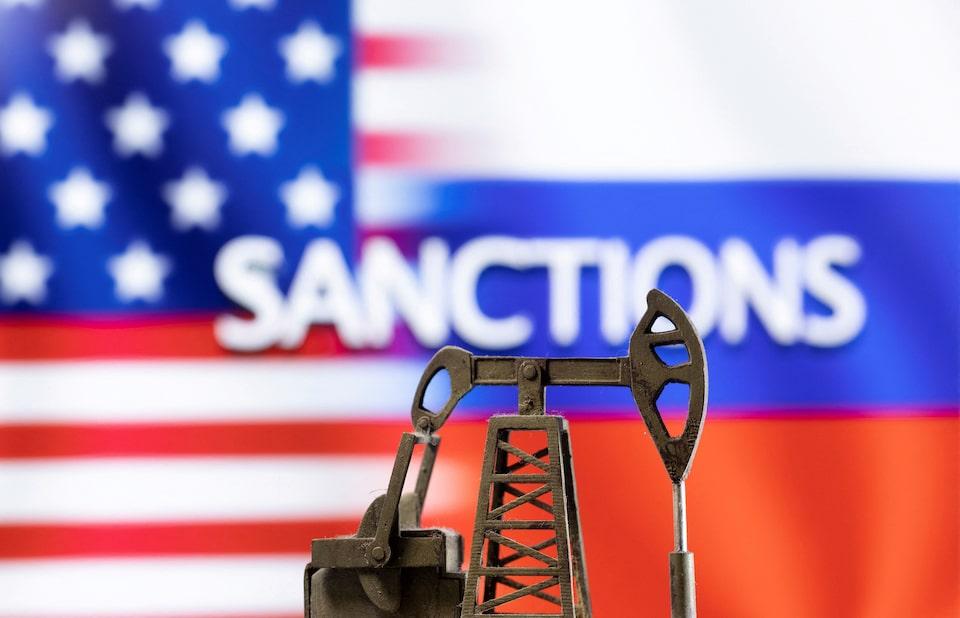
WASHINGTON/NEW DELHI, Jan 5 (Reuters) - The Biden administration plans to impose more sanctions on Russia over its war on Ukraine, taking aim at its oil revenues with action against tankers carrying Russian crude, two sources with knowledge of the matter said on Sunday. President Joe Biden's administration has sought to shore up support for Ukraine before President-elect Donald Trump takes office on Jan. 20 given the Republican leader's frequent complaints about the cost of U.S. support for Ukraine. It is unclear what Trump's approach to sanctions on Russia will be. The Biden administration is planning sanctions targeting tankers that carry Russian oil sold above the West's $60 per barrel price cap, the sources said. Russia has used this so-called shadow fleet of aging ships to evade the cap. Many of the ships are less safe and prone to spilling oil, shipping experts say. Since Russia's February 2022 invasion of Ukraine, the U.S. has sanctioned dozens of these vessels, out of a fleet estimated to be in the hundreds, to reduce its ability to fund the invasion. The cap has led Russia to redirect its oil sales to China and India, who have been willing to purchase Russian crude, which is typically sold at a discount to the overall market even if sold above the price cap. "It is going to be a big package," one of the sources said. The other source said the sanctions would also likely include measures against people involved in some networks trading oil above the price cap. U.S. Treasury Secretary Janet Yellen told Reuters last month that the U.S. is looking at further sanctions on the tankers and would not rule out sanctions on Chinese banks as it seeks to reduce Russia's oil revenue and access to foreign supplies to fuel its war in Ukraine. The Treasury's Office of Foreign Assets Control did not immediately respond to a request for comment on Sunday. The G7, the EU and Australia imposed the $60 cap on Russian oil in late 2022, banning the use of Western maritime services such as transport, insurance and financing for shipments of oil priced at or above the cap. Russia is among the world's top three oil producing countries. Sign up here. https://www.reuters.com/markets/commodities/us-plans-more-sanctions-tankers-carrying-russian-oil-sources-say-2025-01-06/
2025-01-06 03:04
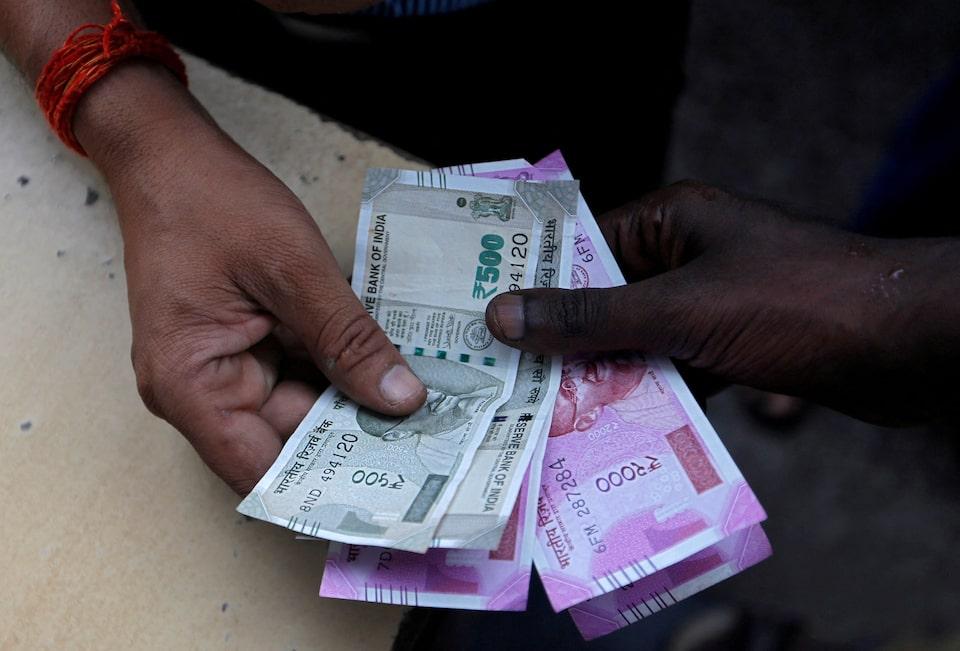
MUMBAI, Jan 6 (Reuters) - The Indian rupee is tipped to stay under pressure on Monday with the U.S. dollar holding near a two-year peak, while traders will keep an eye on whether the Reserve Bank of India will continue with interventions near 85.80. The 1-month non-deliverable forward indicated that the rupee will open flat-to-slightly-lower from its closing level of 85.77 on Friday. The currency had declined to it all-time low of 85.8075 on Dec. 27, prompting strong dollar-selling intervention by the RBI. The central bank had also stepped in last week on multiple occasions to cap the currency's decline near that level. The rupee has faced persistent headwinds over recent weeks, including a stronger dollar and tepid capital flows alongside concerns about India's slowing economic growth. "We expect the rupee to remain on a steady depreciation trajectory," said Abhishek Goenka, chief executive at FX advisory firm IFA Global. "Any retracement in USD/INR towards 85.40 can be used to hedge imports," he said. On the day, other Asian currencies while largely rangebound while the dollar index dipped slightly to 108.8 but continued to hover close to a two-year peak hit last week. Expectations of a hawkish Federal Reserve and anticipated policy changes under U.S. President-elect Donald Trump have kept the dollar on the front foot, hurting emerging market currencies. Given how strong the dollar has been "it only seems like a matter of time that it (rupee) touches 86," a trader at a large private bank said, noting that any sharp declines in the yuan will probably prompt the RBI to allow such a move. The offshore Chinese yuan was last quoted at 7.35 against the U.S. dollar after declining 0.8% last week. KEY INDICATORS: ** One-month non-deliverable rupee forward at 86.01; onshore one-month forward premium at 22.50 paisa ** Dollar index lower at 108.86 ** Brent crude futures up 0.1% at $76.6 per barrel ** Ten-year U.S. note yield at 4.62% ** As per NSDL data, foreign investors bought a net $193.9 mln worth of Indian shares on Jan. 2 ** NSDL data shows foreign investors sold a net $64.7 mln worth of Indian bonds on Jan. 2 Sign up here. https://www.reuters.com/markets/currencies/rupee-stay-under-pressure-all-eyes-central-banks-defence-8580-2025-01-06/
2025-01-06 00:39
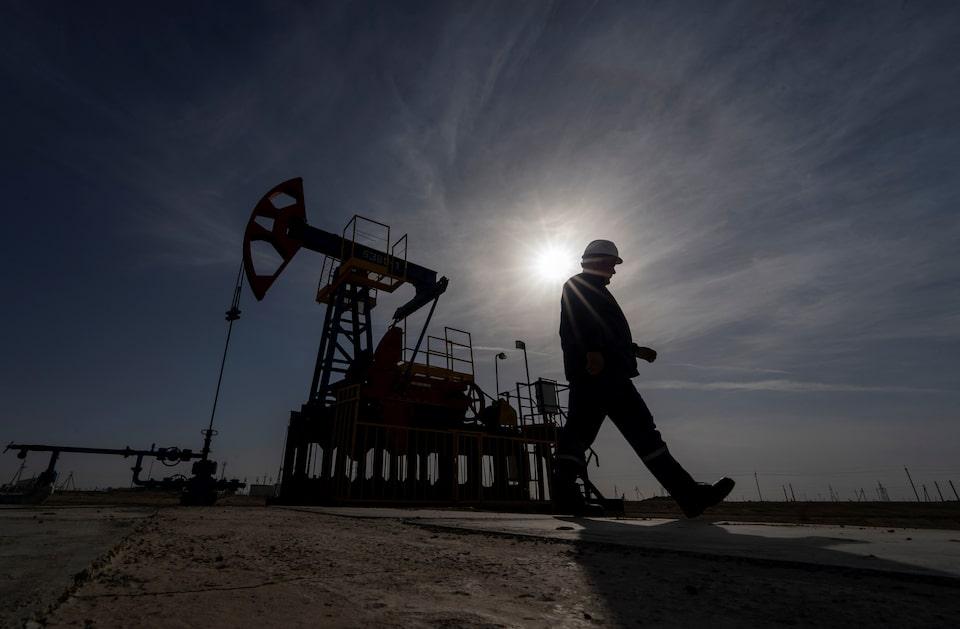
LAUNCESTON, Australia, Jan 6 (Reuters) - Asia's crude oil imports dropped in 2024, the first annual decline in three years, led by weak demand from heavyweight China and other major buyers, with only India managing sparse growth. The world's top importing region saw arrivals of 26.51 million barrels per day (bpd) in 2024, down 1.4% from the 26.88 million bpd in 2023, according to data compiled by LSEG Oil Research. The decline of 370,000 bpd this year marked the first time Asia's crude imports have dropped since 2021, when China's strict lockdown to combat COVID-19 cut demand in the world's biggest oil importer. It was largely a China story again in 2024, with imports likely to have dropped by about 1.9%, or 210,000 bpd, according to official data for the first 11 months of the year and LSEG's estimate for December arrivals. For the first 11 months of the year China imported 11.02 million bpd, according to customs data, while LSEG estimated December arrivals at 11.63 million. If the official number for December is in line with the LSEG estimate, it would mean China's 2024 imports were about 11.07 million bpd, down from the customs figure of 11.28 million bpd for 2023. The weakness in China's crude oil imports has several drivers, including slower economic growth, increasing adoption of electric vehicles and switching trucking to liquefied natural gas. The question for the market is whether these trends are likely to reverse in 2025, or if China's crude oil imports have likely peaked and will decline again this year. It's hard to see China's rapid move to EVs for light transportation being scaled back, and as long as LNG prices remain competitive with diesel, it's also hard to see diesel demand rising. That leaves stronger economic growth as the most likely driver of increased crude demand in China, and that remains uncertain given the likelihood of rising trade tensions with the incoming U.S. administration of President-elect Donald Trump. The International Energy Agency does expect China's oil demand to rise in 2025 by 220,000 bpd as Beijing's stimulus efforts finally result in a stronger economy. But that forecast is likely dependent on China successfully navigating any trade tensions with the Trump administration, and whether this actually turns out to be the case is highly uncertain. With a cloud hanging over China, can the rest of Asia provide some hope for crude oil exporters? INDIA HOPE India, the continent's second-biggest oil importer, is on track to have recorded modest growth in arrivals in 2024, with LSEG data suggesting an increase of around 2.3%, or just over 100,000 bpd, from 2023. It's likely that India's crude imports will rise in 2025, largely due to the South Asian nation increasing refining capacity. However, it's also possible that much of the lift in crude imports will be exported as refined fuels, rather than being used to satisfy domestic consumption. Asia's third- and fourth-ranked importers, South Korea and Japan, are likely to have both recorded small declines in crude imports in 2024, largely reflecting soft economic growth. Given that both South Korea and Japan are exposed to any new trade barriers erected by the United States, it's hard to make a case they will post strong economic growth in 2025, meaning their crude imports are likely to be steady at best. The key theme emerging for 2025 for Asia's oil imports is uncertainty, and it will likely take clarity on what the Trump administration actually does before the picture becomes clearer. The one factor that would no doubt help lift Asia's oil imports would be cheaper prices, but so far members of the OPEC+ group of exporters show no inclination to abandon their policy of restricting output. This discipline has kept global benchmark Brent futures above $70 a barrel for three years, apart from two days in September last year when the contract briefly dipped below that level. The views expressed here are those of the author, a columnist for Reuters. Sign up here. https://www.reuters.com/business/energy/asias-crude-oil-imports-drop-2024-weak-china-weighs-russell-2025-01-06/
2025-01-06 00:27
S&P 500 and Nasdaq finish higher European stocks and currencies rally U.S. dollar index falls Crude prices settles lower NEW YORK, Jan 6 (Reuters) - Global stocks rose while the U.S. dollar index dropped on Monday after President-elect Donald Trump denied a newspaper report that his incoming administration would likely pursue a less-aggressive tariff policy than he previously threatened. European stocks and currencies climbed following a Washington Post report earlier on Monday that Trump aides were exploring tariff plans that would be applied to every country but cover only certain sectors deemed critical to national or economic security. That would mark a significant shift from Trump's campaign pledge for broader tariffs. Trump called the story wrong and "just another example of Fake News" in a social media post. "I think what this highlights is that it's going to be an interesting year," said Matt Orton, chief market strategist at Raymond James in St. Petersburg, Florida. "In addition to that, which is the key piece of my outlook for 2025, is this idea that we are going to have more volatility events because there's so much uncertainty with respect to policy, politics, inflation, and the path of rates." The benchmark S&P 500 index and the Nasdaq finished higher, led by gains in communication services, technology and materials equities. The Dow ended lower, dragged down by consumer staples stocks. The Dow Jones Industrial Average (.DJI) , opens new tab fell 0.06% to 42,706.56, the S&P 500 (.SPX) , opens new tab rose 0.55% to 5,975.38 and the Nasdaq Composite (.IXIC) , opens new tab rose 1.24% to 19,864.98. The pan-European stock index (.STOXX) , opens new tab finished up 0.94% at 512.37, near its session high of 513.08. MSCI's gauge of stocks across the globe (.MIWD00000PUS) , opens new tab rose 1.20% to 857.39. The dollar index , which measures the greenback against a basket of currencies including the yen and the euro, fell 0.68% to 108.22, with the euro up 0.8% at $1.039. The Canadian dollar strengthened 0.78% against the U.S. dollar to 1.43 per dollar after Prime Minister Justin Trudeau stepped down as leader of the ruling Liberals after nine years in office. Yields on long-term Treasury securities, including the benchmark 10-year note and 30-year bond, rose as traders weighed Trump's tariff policy. The 10-year yield rose 1.7 basis points to 4.612%, while the 30-year yield climbed 1.9 basis points to 4.8337%. The 2-year note yield, which typically moves in step with interest rate expectations for the Federal Reserve, fell 1.5 basis points to 4.264%. Oil prices eased in volatile trade. Brent futures fell 0.3% to settle at $76.30 a barrel, while U.S. West Texas Intermediate (WTI) crude fell 0.5% to settle at $73.56. Gold prices lost ground as rising U.S. Treasury yields offset a weak U.S. dollar. Spot gold fell 0.1% to $2,636.35 an ounce. U.S. gold futures settled 0.3% lower at $2,647.40. "We are going through this game where they are going to continue to use trial balloons from other people, giving the president the right to disclaim if he's not happy with the messaging," said Tom Plumb, CEO and lead portfolio manager at Plumb Funds in Madison, Wisconsin. "We are still in the spot where if you look at the top 11 market-cap companies in the S&P 500, they're expected to have 50% earnings growth." Sign up here. https://www.reuters.com/markets/global-markets-wrapup-1-2025-01-06/
2025-01-06 00:03
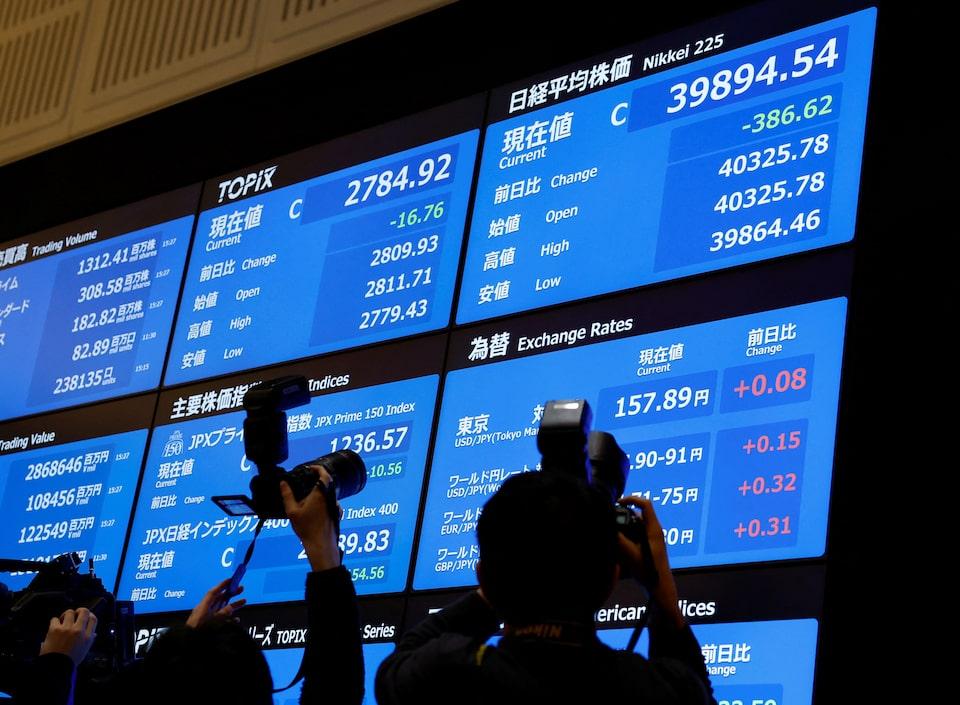
Nippon Steel shares fall 0.75%, down less than Japan's Topix index PM Ishiba wants U.S. explanation as to why there are security concerns Shares could rise in near-term as financing concerns removed -analysts TOKYO, Jan 6 (Reuters) - Japan's Nippon Steel (5401.T) , opens new tab may need to look at a revamp of its growth strategy after U.S. President Joe Biden blocked its proposed $14.9 billion acquisition of U.S. Steel (X.N) , opens new tab, but its share price could bounce back in the near-term, analysts said. Shares in Nippon Steel fell only slightly on Monday in their first trading since Biden on Friday rejected the deal after a year-long review, citing national security concerns. Biden's opposition to the deal had been well-flagged and U.S. Steel shares had been trading far below the offer price as a result. Nevertheless, Japan's largest business lobby said the decision was a cause for concern regarding future U.S. investment. Nippon Steel shares closed down 0.75% at 3,158 yen ($20.03) on Monday, compared with a 1% fall in broader Topix index (.TOPX) , opens new tab. They settled at 3,182 yen on Dec. 30, the final trading day of 2024 on the Tokyo Stock Exchange, which was closed for the remainder of last week for the New Year holiday. "Some investors may view the failure of the U.S. Steel acquisition as alleviating financial concerns due to the substantial amount of money involved in the deal," said Yoshihiko Tabei, chief strategist at Naito Securities. Nippon Steel had not finalised a permanent financing plan for the all-cash deal but said raising equity was among the possibilities. Tabei, however, noted that uncertainty remains, as achieving medium- to long-term growth will likely be challenging without expanding operations in the U.S. With U.S. Steel, Nippon Steel aimed to raise its global crude steel production capacity to 85 million metric tons per year from 65 million tons now, nearing its long-term goal of lifting production capacity to 100 million tons. The proposed deal has not yet been terminated by the companies even after Biden blocked the purchase. In a joint statement, Nippon Steel and U.S. Steel called Biden's decision "unlawful" and said they will take all appropriate action to protect their legal rights. Nippon Steel will owe U.S. Steel a $565 million break fee if it is not completed. Still, some analysts think the failure of the deal could boost shares in Nippon Steel. "Even if the deal does not proceed, Nippon Steel's earnings outlook remains unchanged, with significant growth expected in the next financial year starting in April," Yuji Matsumoto, an analyst at Nomura Securities said in a note. "Additionally, the removal of financing uncertainty related to the acquisition is likely to support a near-term increase in the stock price," he said. POTENTIAL LEGAL ACTION Japan is the biggest investor into the U.S. economy and some business leaders and officials have voiced a concern that the deal's failure may cool down investment flow from the country. Prime Minister Shigeru Ishiba said on Monday that he viewed Biden's decision as a "grave matter" that has led to concerns among Japanese businesses over the future of bilateral investment. "We will strongly request the U.S. government to dash such concerns," he said. "Although (the U.S.) is an allied nation, for the future of our relations, we must insist on an explanation as to why there are security concerns." The government has already conveyed its position to the Biden administration and will consider concrete support measures for Nippon Steel based on the company's response to the decision, Japanese industry minister Yoji Muto said on Monday. Keidanren, the Japanese business lobby, echoed the government's response, adding Biden's decision to block the deal was "extremely disappointing". "Despite the fact that Japan is the U.S.'s largest investor and ally, the decision, which was made on the grounds of economic security, is a cause for concern about the impact on future investment in the U.S. and on Japan-U.S. economic relations," the organisation said in a statement. For both companies, the path forward is unclear. Nippon Steel and U.S. Steel could sue the U.S. government, another buyer could swoop in for U.S. Steel, or Republicans who favour the deal could urge President-elect Donald Trump to find a way to approve it. But some lawyers and consultants have said a legal challenge would be tough. "Even if Nippon Steel is somehow able to resuscitate the deal, it faces a similarly dire prognosis from Trump. He would probably move quickly to kill it," said David Boling, a director at consultants Eurasia Group. On Monday, Nippon Steel President Tadashi Imai told reporters filing a lawsuit against the U.S. government is one of the "important options", Nippon Television reported. Imai said that the U.S. government's reviewing process and the decisions over its acquisition proposal did not seem properly handled, adding Nippon Steel is "entitled to a proper review," according to the report. Imai said that it would not take long for the company to announce countermeasures to the U.S. government's decision, the report said. ($1 = 157.6300 yen) Sign up here. https://www.reuters.com/markets/deals/nippon-steel-president-says-suing-us-government-is-an-option-ntv-reports-2025-01-06/

2025-01-05 22:24
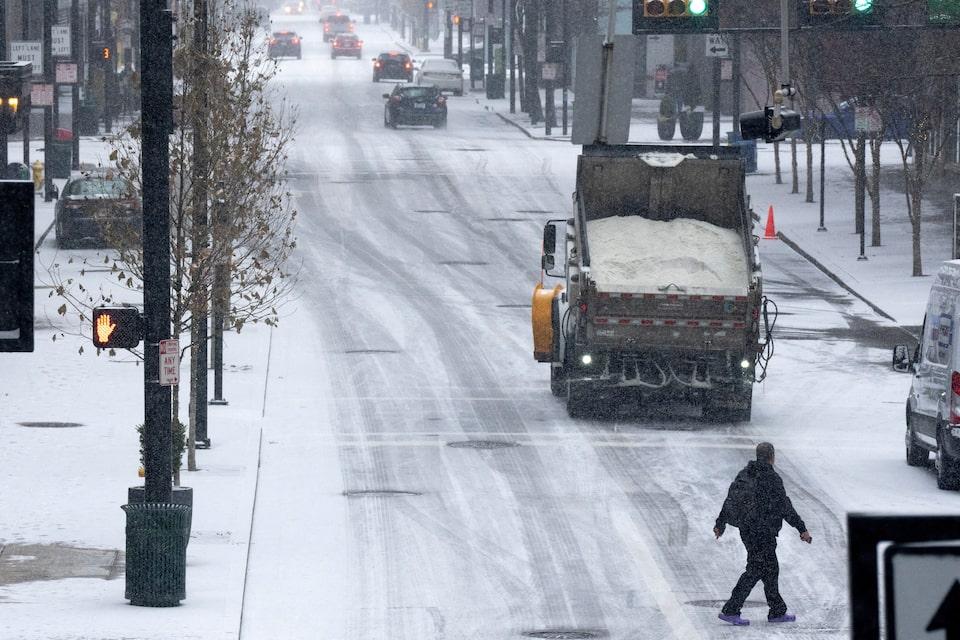
Jan 5 (Reuters) - A winter storm brought snow, ice and freezing temperatures to a broad swath of the U.S. on Sunday, with some 60 million people across more than a dozen states from Kansas to New Jersey under winter weather warnings and advisories. The storm was moving toward the mid-Atlantic, where Washington, D.C. was bracing for heavy snow and bitter cold on Monday, the same day the U.S. Congress is set to meet and formally certify Republican Donald Trump's election as president. Republican House Speaker Mike Johnson told Fox News on Sunday the weather would not prevent lawmakers from carrying out their duties. But federal offices in the nation's capital will be closed, the Office of Personnel Management announced. Kansas and parts of northwestern Missouri were enduring blizzard conditions, the National Weather Service said. Roadways were blanketed in snow and ice, and officials urged residents to avoid travel. Much of the main artery in Kansas, Interstate 70, was closed throughout Sunday due to heavy snow and ice. In Missouri, the state police were sweeping a shut-down stretch of more than 50 miles on Interstate 29, searching for stranded motorists. As of late Sunday afternoon, troopers had responded to nearly 600 stranded drivers and 285 crashes, the agency said on X. Total snowfall of between six and 12 inches (15 to 30 cm) was expected from southern Ohio to Washington. Hundreds of schools announced in advance that they would not open on Monday due to the storm, including public schools in Indianapolis, Cincinnati, Washington and Philadelphia. In northern Kentucky and southern West Virginia, freezing rain and sleet will produce "hazardous ice accumulations," the service said. The back end of the storm system, meanwhile, was producing severe thunderstorms capable of spinning off tornadoes in Arkansas, Louisiana, Mississippi and Alabama. The storm forced the cancellation of hundreds of flights, including more than 275 in both Kansas City and St. Louis, according to the aviation tracking website FlightAware. Governors in several states, including Kansas, Kentucky, Arkansas, West Virginia and Virginia, declared states of emergency. The storm will move offshore on Monday night, but bone-chilling arctic air is set to move in behind it, with daytime temperatures on Monday and Tuesday predicted to be 10 to 20 degrees F below average from the Great Plains to the East Coast, according to the weather service. Sign up here. https://www.reuters.com/world/us/winter-storm-hits-central-us-takes-aim-washington-2025-01-05/