2025-01-03 20:46
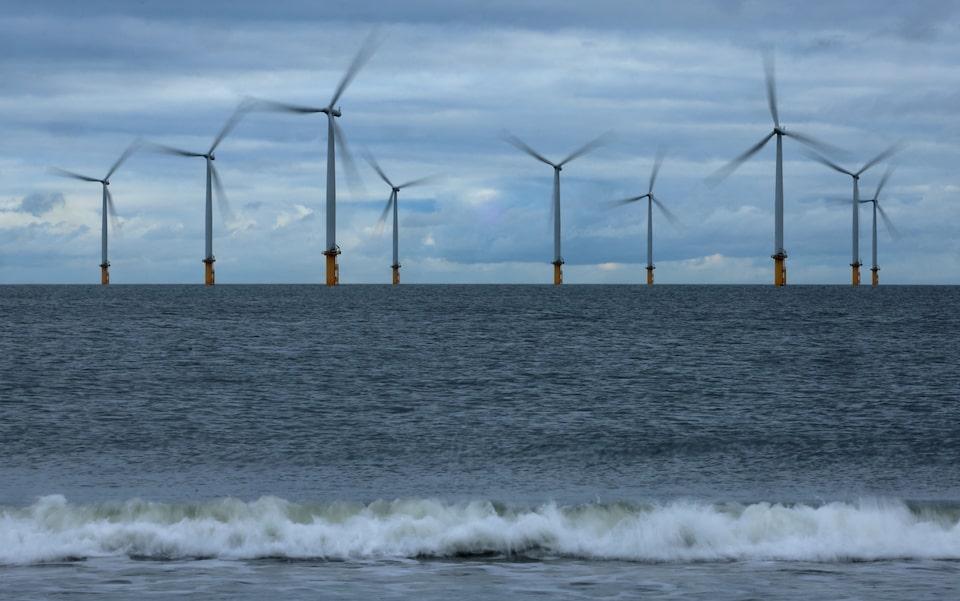
Jan 3 (Reuters) - The British North Sea is one of the world's oldest offshore oil and gas basins where production has been in steady decline since the early 2000s. At the same time, the region has become one of the world's largest and fastest growing offshore wind basins. U.S. President-elect Donald Trump called to "open up" the British North Sea and get rid of what he called windmills in a post on his social media platform Truth Social on Friday. Below are some facts about the North Sea: OIL AND GAS PRODUCTION Exploration for oil and gas in the North Sea started in the 1960s and commercial production started in 1975. The basin reached peak output of 4.4 million barrels of oil equivalent per day (boed) at the start of the millennium. Production has since declined as reservoirs depleted, reaching around 1 million boed in 2024, according to the North Sea Transition Authority (NSTA) regulator. It said output is set to fall to around 660,000 boed by 2029. TAXATION In October, the British government increased a windfall tax on North Sea oil and gas producers to 38% from 35%, bringing the headline tax rate on the sector to 78%, among the highest in the world. The duration of the Energy Profits Levy (EPL) was extended by a year to March 2030. The government wants to use the revenue from oil and gas to raise funds for renewable energy projects. A 25% windfall tax was introduced by the Conservative government in May 2022 following a surge in energy prices linked to Russia's invasion of Ukraine. The tax was increased to 35% in November 2022, and extended by one year in March 2024. INVESTMENTS Oil and gas companies, including Shell (SHEL.L) , opens new tab, Exxon Mobil (XOM.N) , opens new tab and Chevron (CVX.N) , opens new tab, have retreated from the North Sea in recent decades to focus on newer basins. Since the introduction of the EPL, producers have sold assets, merged operations and sought to diversify to other regions. Spending on oil and gas production in the North Sea is expected by the NTSA to decline from 11.7 billion pounds ($14.5 billion) in 2020 to 8.5 billion pounds ($10.55 billion) by 2029. OFFSHORE WIND Britain has almost 15 gigawatts (GW) of offshore wind farms around its coast and a target to quadruple this to reach 60 GW by 2030. The North Sea is host to what will be the world's largest offshore wind farm Dogger Bank. The 3.6 gigawatt (GW) wind farm is being built by Britain's SSE (SSE.L) , opens new tab and Norway's Equinor (EQNR.OL) , opens new tab and Vargronn in three phases. When complete, it will create enough electricity to power around 6 million homes, and a fourth phase that could add a further 2GW is also being considered. ($1 = 0.8059 pounds) Sign up here. https://www.reuters.com/world/uk/fall-uk-north-sea-oil-rise-offshore-wind-2025-01-03/
2025-01-03 20:37
Renewable diesel producers utilization at 77%, highest since July - AEGIS Biodiesel producers utilization rate hit 89% in Oct, highest since June 2023 Better credit prices, stronger diesel demand spurred higher activity - analyst NEW YORK, Jan 3 (Reuters) - U.S. renewable diesel and biodiesel producers ramped up operations in October to multi-month highs, helped by stronger margins for the biofuels, according to data compiled by advisory group AEGIS Hedging. Renewable diesel producers utilized 77% of their total operable capacity in October, the highest since July 2024, the data showed. Biodiesel plant utilization rose to 89%, the highest since June 2023. Rising utilization rates and improving margins are a welcome relief for the biofuels industry, after operators endured a rough start to 2024 as demand growth slowed, leaving the market oversupplied and forcing a number of biodiesel plant closures. Both renewable diesel and biodiesel are more expensive to produce than diesel, making suppliers dependent on government incentives such as tax credits. Among the two, renewable diesel has emerged as the preferred fuel for suppliers, as it reaps better incentives and can substitute diesel entirely. Total biodiesel production capacity fell 4.2% year-over-year to about 2 billion gallons in October, according to data released by the U.S. Energy Information Administration on Tuesday. Renewable diesel output capacity rose nearly 19% year-over-year to 4.58 billion gallons in October, the EIA data showed, as most new biofuel plants opened in the past three years were geared towards it. Still, oversupply pushed renewable diesel output capacity 6% lower in October from a record 4.90 billion gallons in June. In addition to plant closures, profitability for the industry in October was boosted mainly by a surge in the value of credits required for compliance with federal biofuel mandates, said Zander Capozzola, vice president of renewable fuels at AEGIS. D4 Renewable Identification Numbers, issued for biodiesel and renewable diesel production, rose from a low of 56 cents each in September to over 71 cents in October, improving profitability for making the fuels, Capozzola said. Margins were also helped by stronger demand for diesel, which hit a one-year high in October, raising prices for both the conventional fuel and its alternatives, he said. Prices for credits under the Low Carbon Fuel Standard program of California, where most biofuels are consumed in the U.S., also rose from below 60 cents each in Sept to over 70 cents each in October, according to AEGIS. "You really had everything rowing in the right direction in October," Capozzola said. Sign up here. https://www.reuters.com/business/energy/us-biofuel-producers-ramped-up-oct-profitability-improved-data-shows-2025-01-03/

2025-01-03 20:27
Canadian dollar falls 0.3% against the greenback For the week, the currency was down 0.2% Trades in a range of 1.4384 to 1.4463 Bond yields edge lower across the curve TORONTO, Jan 3 (Reuters) - The Canadian dollar weakened against its U.S. counterpart on Friday and extended a streak of weekly declines as investors weighed multiple headwinds for the commodity-linked currency, including a faltering Chinese economy. The loonie was trading 0.3% lower at 1.4440 to the U.S. dollar, or 69.25 U.S. cents, moving closer to a near five-year low that it touched last month at 1.4467. The currency traded in a range of 1.4384 to 1.4463, while it posted a weekly decline of 0.2%. That was its sixth straight weekly decline, the longest such stretch since August 2023. "Much of the Canadian dollar weakness in the last year has been U.S. dollar strength but that's not the case today," said Adam Button, chief currency analyst at ForexLive. "As a global growth proxy, for the Canadian dollar to work in 2025 we need to see a resurgent China and China is struggling." Canada is a major commodities producer so the loonie tends to be sensitive to prospects for global growth. China will sharply increase funding from ultra-long treasury bonds in 2025 to spur business investment and consumer-boosting initiatives, a state planner official said, as Beijing cranks up fiscal stimulus to revitalize the world's second-biggest economy. Additional headwinds for the loonie include the threat of U.S. tariffs on Canadian imports and political uncertainty, say analysts. Canadian Prime Minister Justin Trudeau has been under increasing pressure to quit since his finance minister resigned on Dec. 16. The U.S. dollar (.DXY) , opens new tab fell against a basket of major currencies but was up for the week, its fifth straight weekly gain, on expectations that the U.S. economy will continue to outperform its peers globally this year. Canadian bond yields edged higher across the curve. The 10-year was up 1.2 basis points at 3.233%. Sign up here. https://www.reuters.com/markets/currencies/canadian-dollar-heads-sixth-straight-weekly-decline-2025-01-03/

2025-01-03 19:55
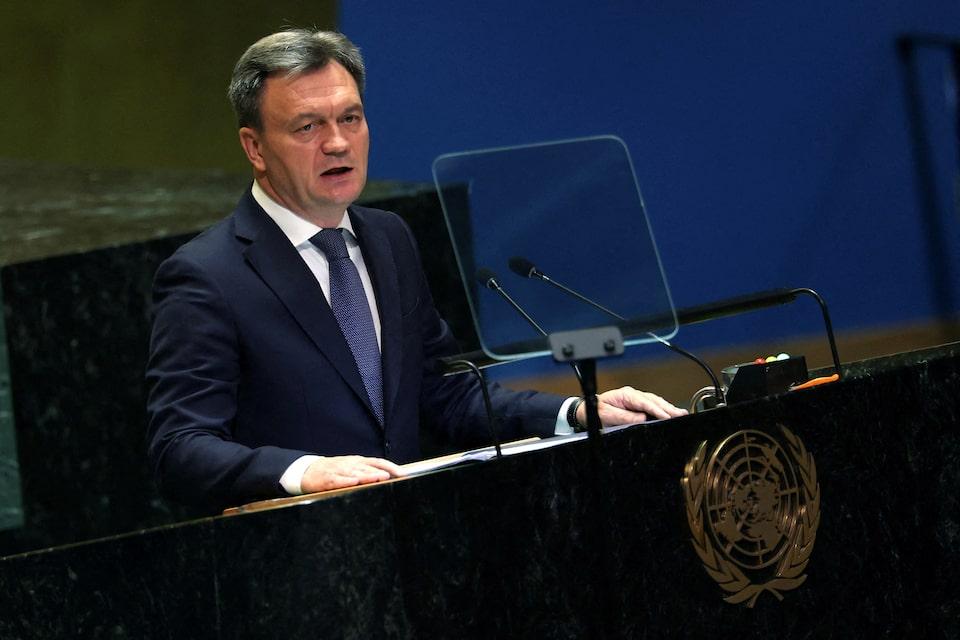
Moldova has alternative electricity supply, prime minister says Country willing to aid Transdniestria region Transdniestria imposes power cuts, halts factories due to gas shortage Russia denies using gas as weapon, blames Kyiv for transit deal failure Regional leader says has 10-20 days of gas supply left KYIV, Jan 3 (Reuters) - Moldova faces a security crisis, Prime Minister Dorin Recean said on Friday after its separatist pro-Moscow Transdniestria region, cut off from supplies of Russian gas, closed factories, restricted central heating and imposed rolling power blackouts. Flows of Russian gas via Ukraine to central and eastern Europe were halted on New Year's Day after a transit agreement between the warring countries expired, and Kyiv rejected doing further business with Moscow. Recean said government-controlled Moldova would cover its own energy needs with domestic production and imports but noted the separatist Transdniestria region had suffered a painful hit despite its ties with Moscow. "By jeopardising the future of the protectorate it has backed for three decades in an effort to destabilise Moldova, Russia is revealing the inevitable outcome for all its allies – betrayal and isolation," Recean said in a statement. "We treat this as a security crisis aimed at enabling the return of pro-Russian forces to power in Moldova and weaponising our territory against Ukraine, with whom we share a 1,200 km (745-mile) border." The official Telegram news channel of separatist Transdniestria said rolling power cuts had gone into effect on Friday evening. It listed districts where power would be cut for an hour or more between 6 p.m. and 10 p.m. "As the Ministry of Economic Development notes, this is in connection with the fact that residents at this time are consuming more power than the system can generate," the channel said. The news channel said a sanatorium, fully heated and with hot water, was sheltering orphans and residents of nursing homes. It accused Moldova's central government of failing to understand or tackle the difficulties facing the region. "Moldovan authorities are completely out of touch with reality and continue to talk about 'the price of freedom from Russian gas,'" the channel said. Transdniestria's residents had already lost hot water and central heating, and all factories except food producers have been forced to stop production. The enclave's self-styled president, Vadim Krasnoselsky, had earlier said power cuts were inevitable. He said the region had gas reserves to cover 10 days of limited usage in the north and twice as long in the south Russia denies using gas as a weapon to coerce Moldova, and blames Kyiv for refusing to renew the gas transit deal. DISPUTE OVER ARREARS Russian gas giant Gazprom (GAZP.MM) , opens new tab had separately said on Dec. 28 that it would suspend exports to Moldova on Jan. 1 because of what Russia says are unpaid Moldovan debts of $709 million. Moldova disputes that, and has put the figure at $8.6 million. The southeast European nation of about 2.5 million people has been in the spotlight since Russia's invasion of neighbouring Ukraine at a time of mounting tensions between Moscow and the West. Its pro-European President Maia Sandu won a second term in an election last year and has pledged to accelerate reform and consolidate democratisation. Moldova plans to hold a parliamentary election this summer. Mainly Russian-speaking Transdniestria, which split from Moldova in the 1990s, received Russian gas via Ukraine. In turn, Moldova used to receive the bulk of its electricity from Transdniestria. But, with Kyiv making clear it would stop gas transit from Russia, the Chisinau government prepared alternative arrangements, with a mixture of domestic production and electricity imports from Romania, Recean said. He said the Moldovan government remained committed to helping the enclave. "Alternative energy solutions, such as biomass systems, generators, humanitarian aid, and essential medical supplies, are ready for delivery should the breakaway leadership accept the support," the government said in a statement. The head of Moldova's national gas company Moldovagaz, Vadim Ceban, said Transdniestrian authorities had turned down an offer to help purchase gas from European countries because the enclave believes Russian gas supplies could still be resumed. Such purchases would be more costly. Gazprom has long supplied gas to the region without demanding payment. Sign up here. https://www.reuters.com/world/europe/moldova-pm-warns-security-crisis-denounces-russian-gas-cut-off-2025-01-03/
2025-01-03 11:56
MUMBAI, Jan 3 (Reuters) - India's foreign exchange reserves (INFXR=ECI) , opens new tab fell for the fourth consecutive week and stood at an eight-month low of $640.28 billion, as of Dec. 27, data from the Reserve Bank of India showed on Friday. The reserves declined by $4.1 billion in the reported week, after falling by a cumulative $13.7 billion in the prior three weeks. Changes in foreign currency assets are caused by the central bank's intervention in the forex market as well as the appreciation or depreciation of foreign assets held in the reserves. The RBI intervenes on both sides of the forex market to curb undue volatility in the rupee. The domestic currency weakened to its all-time low of 85.8075 last week, down nearly 0.3% during the period. Concerns about India's slowing growth and widened trade deficit have hurt the rupee, alongside broad-based dollar's strength amid a hawkish shift in the U.S. Federal Reserve's policy outlook and expectations surrounding the country's President-elect Donald Trump's policies. The RBI has likely been selling dollars via state-run banks to curb weakness in the rupee and prevent a large-scale slump. The rupee settled at 85.77 on Friday. The domestic unit was down 0.2% for the current week, its ninth consecutive weekly fall. The forex reserves also include India's reserve tranche position in the International Monetary Fund. FOREIGN EXCHANGE RESERVES (in million U.S. dollars) --------------------------------------------------------- Dec. 27 Dec. 20 2024 2024 --------------------------------------------------------- Foreign currency assets 551,921 556,562 Gold 66,268 65,726 SDRs 17,873 17,885 Reserve Tranche Position 4,217 4,217 ---------------------------------------------------------- Total 640,279 644,391 ---------------------------------------------------------- Source text: (https://www.rbi.org.in/scripts/BS_PressReleaseDisplay.aspx , opens new tab) Sign up here. https://www.reuters.com/world/india/indias-fx-reserves-drop-eight-month-low-amid-rupee-pressure-2025-01-03/

2025-01-03 11:33
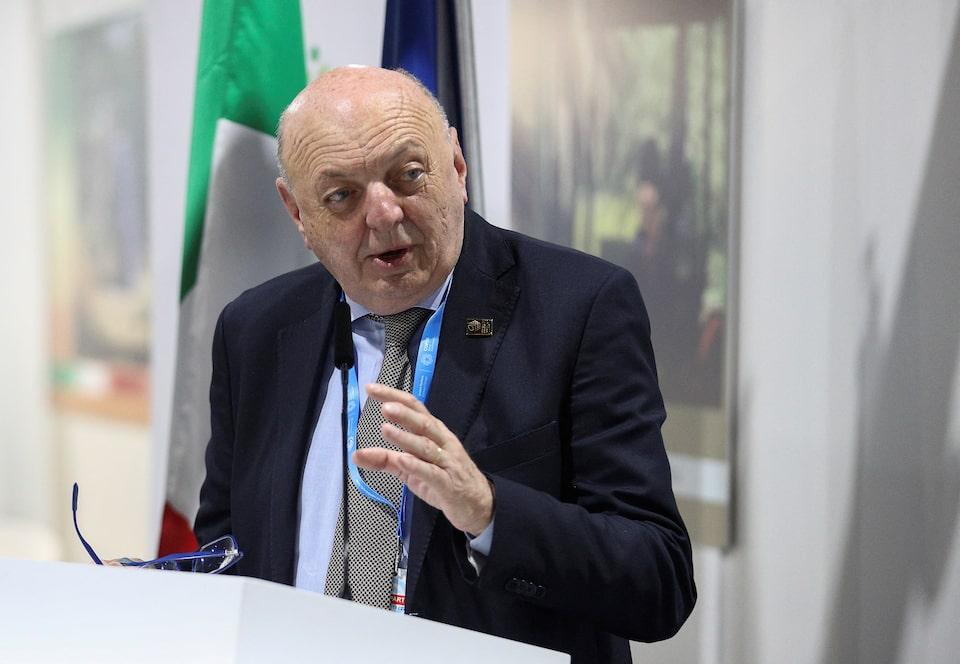
ROME, Jan 3 (Reuters) - The European Union should extend its emergency cap on gas prices and set a ceiling of 60 euros per megawatt hour to prevent a possible energy price shock, Italy's Energy Minister Gilberto Pichetto Fratin said on Friday. Fears of an energy shock have risen after Ukraine refused to renew a gas transit agreement with Russia, marking the end of decades of Moscow's dominance over Europe's energy markets. The EU's existing price cap expires at the end of this month and only applies if European gas prices exceed 180 euros per megawatt hour, a level that has not been reached since the early days of the Russia-Ukraine conflict. "I think the EU should at this point renew the price cap -- and we asked for it -- but not at 180 euros, now it should be set at 50 or 60 euros," the Italian minister said during a radio interview. "This would put a brake on purely financial transactions, which have nothing to do with the raw material but burden households and businesses." The benchmark front-month gas contract at the Dutch TTF hub was up 0.4 euros at 50.17 euros per megawatt hour at 1334 GMT, the highest level in over a year, according to LSEG data. The halt in Russian gas flows and colder-than-average weather could drive the price towards 84 euros, Goldman Sachs said in a report. Italy's energy minister said the country had enough gas reserves to ensure there would be no disruption over the next two months. "I reassure everyone, we have no problems. The country's gas storage system is filled to almost 80%" of its capacity. Italy has gradually increased liquefied natural gas import capacity since 2022 as part of plans to replace Russian supplies. With a new floating terminal due to start commercial operations early April, Italy expects to be able to import up to 28 billion cubic metres of liquefied natural gas a year, the same amount it got via pipeline from Russia in 2021. Total gas demand for the country is estimated at around 61 billion cubic metres for last year, with Algeria and the Nordics among the main suppliers. Sign up here. https://www.reuters.com/business/energy/eu-should-cap-gas-prices-60-euros-per-megawatt-hour-italy-says-2025-01-03/