2025-01-02 05:33
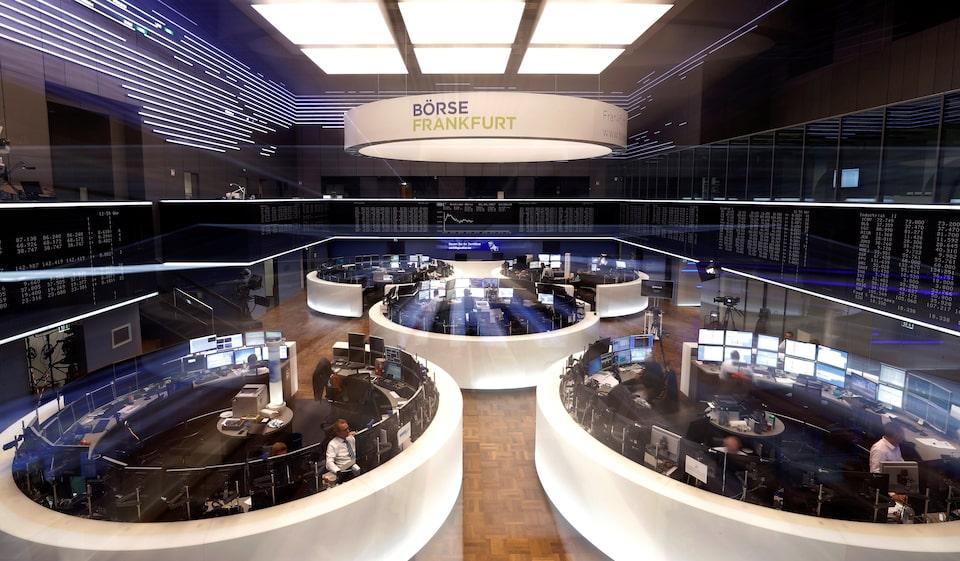
A look at the day ahead in European and global markets from Rae Wee An air of caution lingered over markets on Thursday as Donald Trump's impending return to the White House - and his plans for hefty import tariffs, tax cuts and immigration restrictions - set the tone for the new year. With just over two weeks until the U.S. President-elect's Jan. 20 inauguration, investors were bracing for unpredictability in Trump's economic agenda and what that would mean for the global economy. That uncertainty left shares in Asia vulnerable to a selloff on Thursday, though those in Europe looked set to fare better with futures pointing to a positive open. Chinese stocks in particular fell heavily, as did the yuan which weakened to its lowest level against the U.S. dollar in almost 14 months. Trump's talk of tariffs in excess of 60% on imports of Chinese goods has coincided with central government pledges of proactive policies to promote growth this year, muddying the outlook for an economy that has struggled for momentum. China and other Asian factory powerhouses ended 2024 on a soft note, data on Thursday showed, as expectations for the new year were tainted by growing trade risk from a second Trump presidency and persistently weak Chinese demand. Also plaguing investors was concern that Trump's administration would run the U.S. economy red hot again, with policies market watchers expect will stoke inflation and add to government debt, limiting the scope for the Federal Reserve to ease interest rates. Markets now price in about 42 basis points worth of Fed cuts this year , which is likely to keep the dollar strongly supported well into 2025. In Europe, market focus will likely be on energy shares after Russian gas exports via Soviet-era pipelines running through Ukraine stopped on New Year's Day, ending decades of Russian dominance over European energy markets. Still, the impact is likely to be muted given the long-scheduled stoppage will have limited influence on prices in the European Union - unlike in 2022, when falling Russian supplies sent prices to record highs, worsened a cost-of-living crisis and hit the bloc's competitiveness. Key developments that could influence markets on Thursday: - UK nationwide house prices (December) - France, Germany HCOB manufacturing PMI (December) - U.S. weekly jobless claims Sign up here. https://www.reuters.com/markets/europe/global-markets-view-europe-2025-01-02/
2025-01-02 04:24
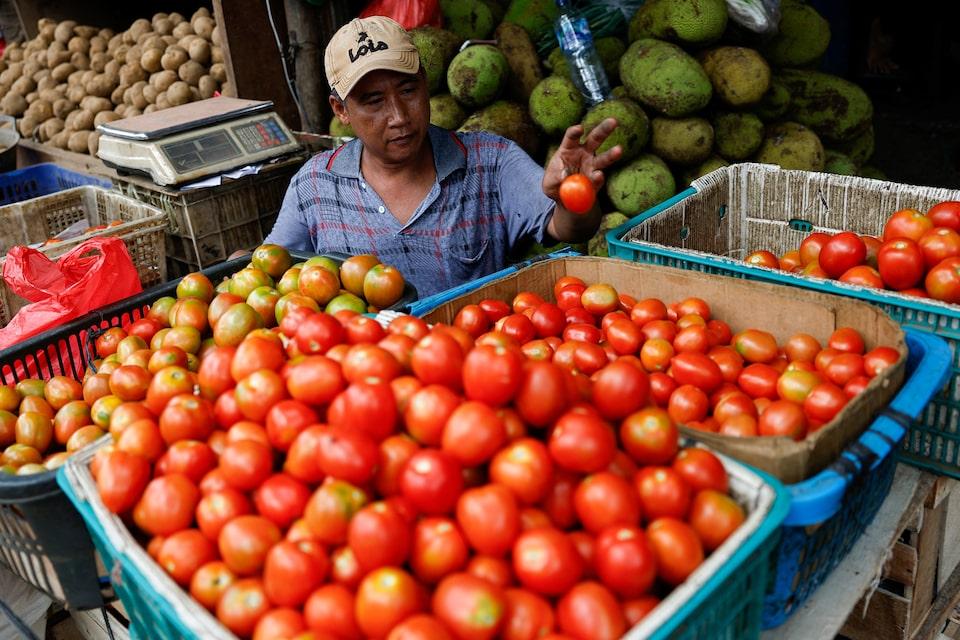
JAKARTA, Jan 2 (Reuters) - Indonesia's annual inflation rate in December was 1.57%, barely changed from 1.55% in the previous month, official data showed on Thursday, and close to economists' estimate of a 1.60% rate in a Reuters poll. The annual core inflation rate, which strips out government-controlled prices and volatile food prices, was 2.26% in December, the same as November and close to the poll forecast of 2.28%. The country's central bank has targeted inflation in 2024 and 2025 to be within a range of 1.5% to 3.5%. Policymakers at Bank Indonesia have repeatedly said they were monitoring global developments to determine the right time to continue easing monetary policy. The central bank cut rates in September, but has since paused despite inflation being at near the lower end of its target range, due to financial market volatility and weakness in the rupiah currency . Sign up here. https://www.reuters.com/markets/asia/indonesias-dec-inflation-157-yy-expected-2025-01-02/
2025-01-02 04:23
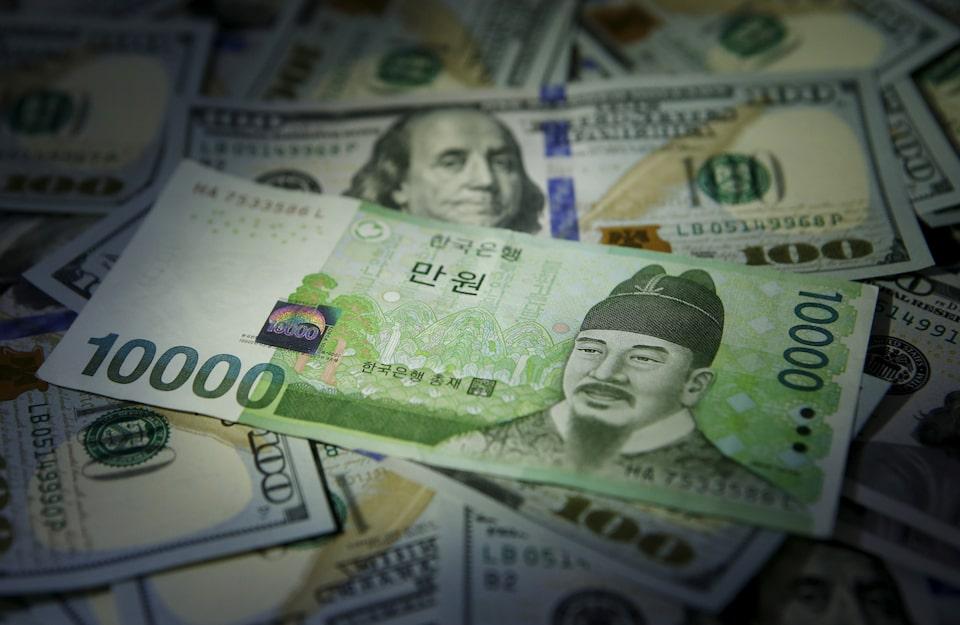
S.Korea govt vows to stabilise markets, consumer confidence Economy seen growing 1.8% in 2025, below potential Central bank says rate cuts will be flexible SEOUL, Jan 2 (Reuters) - South Korea released policy plans on Thursday to spur foreign inflows for stability in financial markets and boost domestic demand amid weakening consumer confidence, as the economy faces heightened uncertainty from an unprecedented political crisis. The finance ministry said in economic policy plans for the year ahead that it would permit registered foreign financial institutions to engage in foreign exchange trading for current transactions, including export and import settlements, from mid-January. South Korea has been gradually implementing measures to widen the use of the won in global markets and allowed foreign institutions to trade the won onshore directly using the domestic interbank system from last year. Allowing Registered Financial Institutions, or RFI, to facilitate foreign exchange deals for trade settlement purposes would be expanding their business scope as they can currently trade the won only for securities trading such as stocks and bonds. The initiative is a step toward enabling investors to trade the won more freely after the government extended trading hours for the onshore won and foreign exchange swap markets to 2 a.m. (1700 GMT) from July, the closing of London business hours. "This means that RFIs are now able to conduct virtually all areas of foreign exchange trading to meet actual demand," finance ministry director You Chang-yeon said. The ministry also said it would deploy contingency plans to stabilise financial markets if needed, and vowed to closely cooperate with major countries abroad to ease volatility. South Korea's KOSPI stock market (.KS11) , opens new tab and won currency were the worst-performers in Asia last year, with declines of 10% and 13%, respectively, as political turmoil took its toll on investor sentiment. HIGH UNCERTAINTY Asia's fourth-largest economy is battling a deepening political crisis after its president briefly imposed martial law in December, which provoked public outrage and led to his impeachment. The government hopes a fresh inflow of investments this year will boost financial markets at a time when the economy's taxpaying population is shrinking due to the world's lowest fertility rate and as robust export growth is threatened by a global trade war. For 2025, the government expects the economy to expand by 1.8%, weaker than the potential growth rate of 2% estimated by the central bank, after growing 2.1% in 2024. It sees inflation at 1.8% this year, slightly below the central bank's target of 2%. "In 2025, there is a possibility that economic growth, financial markets and people's livelihoods will be significantly affected by external and internal uncertainty that is higher than ever before," the ministry said. The government will front-load its budget spending in the first half of the year and loosen regulations to speed it up, the ministry said, adding it will seek additional measures to boost the economy if deemed necessary after reassessing economic conditions in the first quarter. With this year's fiscal spending slashed by the opposition-controlled parliament, economists expect the government will draft a supplementary budget from as early as the first quarter, but the government said on Thursday that was not under consideration for now. To support consumer confidence that has weakened to a more than two-year low, the ministry said it would introduce expanded tax exemptions on spending during the first half of the year, lower taxes on automobile purchases by 30% and prepare tax incentives for firms raising employee wages. On Thursday, the country's central bank also said it would lower interest rates flexibly this year amid the heightened political and economic uncertainty. Sign up here. https://www.reuters.com/markets/currencies/south-korea-spur-foreign-inflows-by-easing-rules-fx-trading-2025-01-02/
2025-01-02 02:55
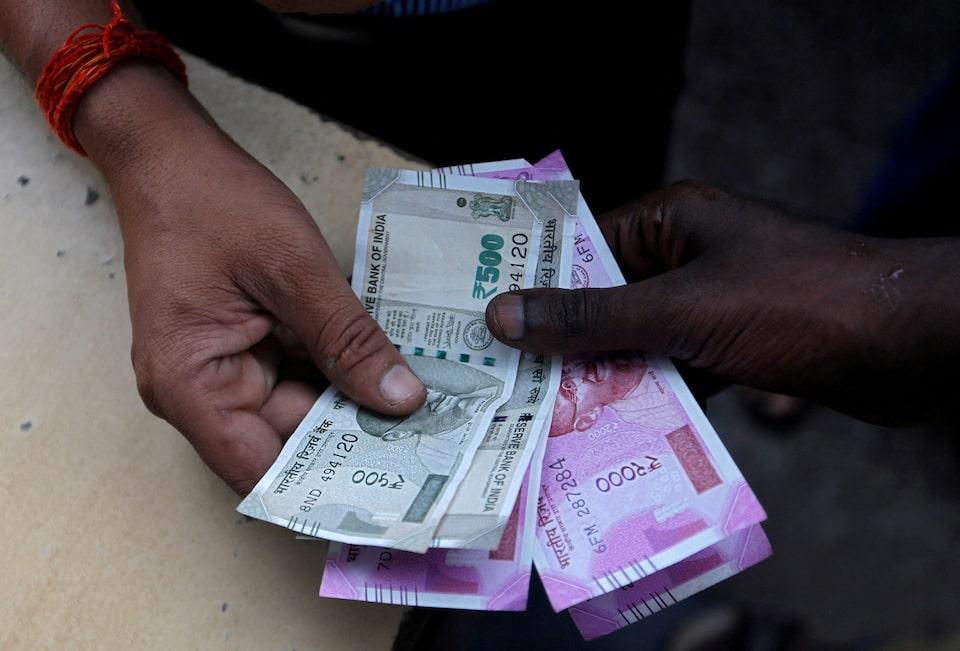
MUMBAI, Jan 2 (Reuters) - The Indian rupee could find some relief on Thursday as most of its Asian peers ticked higher and with the currency near levels at which the central bank had intervened aggressively. The 1-month non-deliverable forward indicated that the rupee will open flat-to-slightly higher from its close of 85.6450 per U.S. dollar in the previous session. The offshore Chinese yuan inched up 0.2%, while the Korean won, the Thai baht and the Philippine peso strengthened by 0.4%. "The way it has been (for the rupee, I am) not sure how much of Asia doing well means. However, any help right now will do," a currency trader at a bank said. "I am watching the level of 85.80", he said, adding that a quick move past that level would be another sign of the extent of the strain on the currency. Last Friday, when the rupee dropped to an all-time low of 85.80-85.81, the Reserve Bank of India intervened quite aggressively. FOCUS ON TRUMP In the first quarter of 2025, a large part of the attention of Asian currency traders will be on what Donald Trump does once he is inaugurated as U.S. president on Jan. 20. He has vowed to impose tariffs on trading partners, including China. The Asian giant's reaction, if any on the potential tariffs, will have a spillover impact on other Asian currencies. "The tariffs could force China into a response in the form of CNH devaluation and other such measures," said Srinivas Puni, managing director at QuantArt Market Solutions. The rupee will "feel the heat" if that happens, he said. He expects 2025 will be a volatile year for the rupee, with a bias towards depreciation. KEY INDICATORS: ** One-month non-deliverable rupee forward at 85.92; onshore one-month forward premium at 24.5 paisa ** Dollar index down at 108.38 ** Brent crude futures up 0.4% at $75 per barrel ** Ten-year U.S. note yield at 4.57% ** As per NSDL data, foreign investors sold a net $625 mln worth of Indian shares on Dec. 31 ** NSDL data shows foreign investors sold a net $55.2 mln worth of Indian bonds on Dec. 31 Sign up here. https://www.reuters.com/markets/currencies/slight-reprieve-rupee-likely-asian-peers-recover-2025-01-02/
2025-01-02 00:39
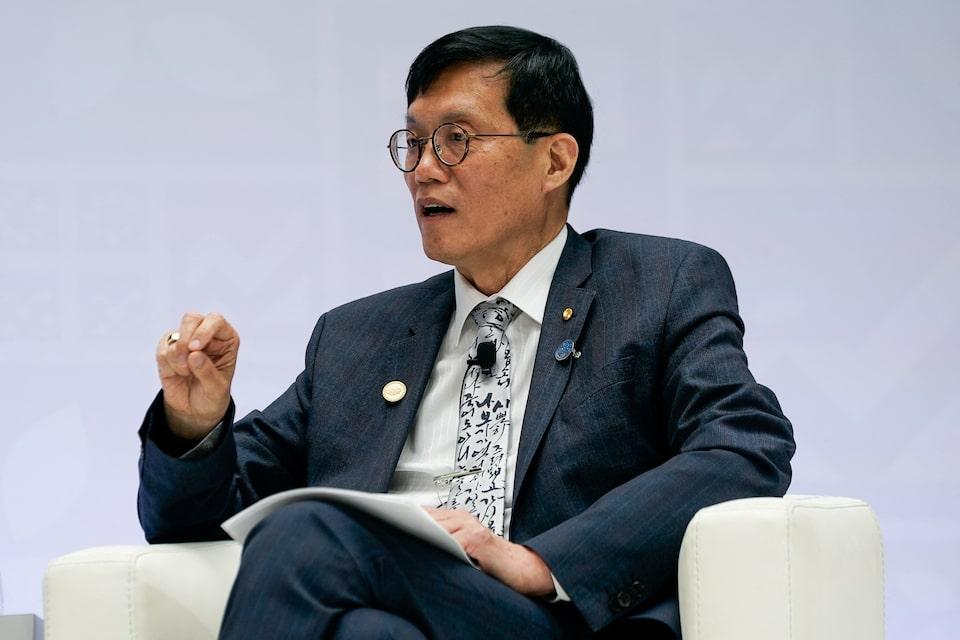
SEOUL, Jan 2 (Reuters) - South Korea's central bank governor said on Thursday the pace of monetary policy easing would need to be flexible this year due to heightened political and economic uncertainty. "This year, conditions surrounding our economy will be more difficult than ever before," Bank of Korea Governor Rhee Chang-yong said in a New Year's address. "Monetary policy needs to be operated with flexibility and agility, as political and economic uncertainty is unprecedentedly high," Rhee said. The pace of interest rate cuts ahead will be flexible, as trade-offs on growth, inflation, foreign exchange and household debt are expected to widen, Rhee added. At its final policy meeting of 2024, the BOK delivered the first back-to-back rate cut since 2009, as policymakers turned wary on trade risks from the incoming U.S. administration of President-elect Donald Trump. Rhee said downside risks to the central bank's economic growth forecast of 1.9% for this year have risen, citing uncertainty over U.S. trade policy and domestic politics. On the won, which weakened more than 12% in 2024 to record the worst year since 2008, Rhee said volatility could persist for a considerable period of time. Sign up here. https://www.reuters.com/markets/asia/bank-korea-governor-says-monetary-easing-this-year-will-be-flexible-2025-01-02/
2025-01-01 17:44
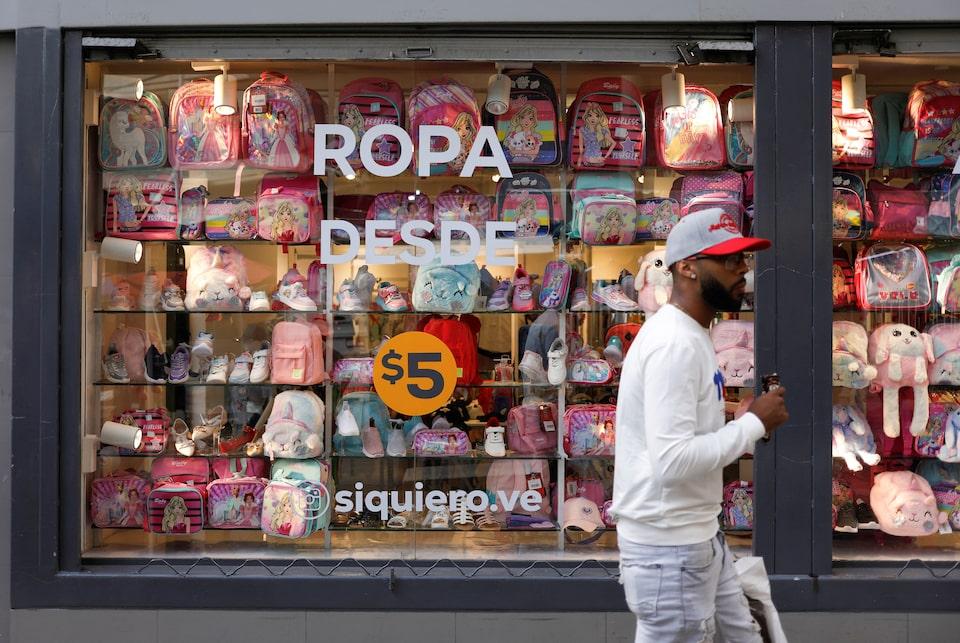
CARACAS, Jan 1 (Reuters) - Venezuela's economy grew over 9% in 2024, President Nicolas Maduro said, according to a transcript of an interview published by Mexican media outlet La Jornada on Wednesday. "In 2023, we had 5.5% (growth). In 2024, according to all scientific, statistical, and technical data, we will surpass 9% growth in gross domestic product, with a very high level of growth in the real economy, as well as in the hydrocarbons sector," Maduro told Spanish journalist Ignacio Ramonet. Venezuela's economy in recent years has experienced a prolonged crisis marked by triple-digit inflation and the exodus of millions of Venezuelans seeking better opportunities elsewhere. In 2019, the government loosened controls on the private sector, allowing for an informal dollarization, which provided a lifeline to key sectors of the economy. However, analysts believe the strategy has not been sufficient for a full economic recovery. The interview with Maduro is set to air on Venezuelan state television on Wednesday evening. Sign up here. https://www.reuters.com/world/americas/venezuela-economy-grew-over-9-2024-president-says-2025-01-01/