2025-01-01 13:41
BEIJING, Jan 1 (Reuters) - Chinese meteorological data shows 2024 was the warmest year for the country since comparable records began more than six decades ago, the second straight year in which milestones were broken. The national average temperature stood at 10.92 degrees Celsius (51.66 Fahrenheit) last year, more than 1 degree higher than 2023, according to weather.com.cn, a service portal run by the China Meteorological Administration. The ten warmest years since records started in 1961 were all in the 21st century, the service portal said. For densely populated Shanghai, China's financial hub, 2024 was the warmest since the Qing dynasty, data from the Shanghai meteorological bureau showed on Wednesday. The city's average temperature stood at 18.8 Celsius, the hottest since Shanghai's meteorological records began in 1873. Last year's warmer weather, accompanied by stronger storms and higher rainfall, led to spikes in power consumption in the world's second-largest economy. Sweltering heat also affected agriculture in regions including the rice-growing south. To safeguard its food security in the face of rising temperatures, China has embarked on research into adapting staple crops to heat. Crop yields are expected to fall if alternatives are not found. Scientists at a Beijing research facility found potatoes, of which China is the world's top producer, weighed less than 50% of typical varieties if they grew in a chamber set at 3 degrees Celsius above the norm. Under current climate policies, the world faces warming of as much as 3.1 degrees Celsius above pre-industrial levels by 2100, according to a United Nations report released in October. Sign up here. https://www.reuters.com/world/china/2024-china-saw-warmest-year-decades-breaking-records-yet-again-2025-01-01/

2025-01-01 11:36
Immediate impact felt from halting of Russian gas supply Breakaway Transdniestria relied on gas pumped via Ukraine Russian-speaking area split from Moldova in 1990s Families told to cover windows and huddle in one room CHISINAU, Jan 1 (Reuters) - The breakaway Moldovan region of Transdniestria cut heating and hot water supplies to households on Wednesday after Russia stopped supplying gas to central and eastern Europe via Ukraine. The severing of the gas flow was felt immediately in the mainly Russian-speaking territory of about 450,000 people, which split from Moldova in the early 1990s as the Soviet Union collapsed. Russia has about 1,500 troops stationed there. "There is no heating or hot water," an employee of local energy company Tirasteploenergo told Reuters by phone. She said she did not know how long the situation would last. The gas supply was cut in the early hours of Wednesday following the expiry of a gas transit agreement between warring neighbours Russia and Ukraine. Transdniestria's leader, Vadim Krasnoselsky, said the situation was "not an easy one, but on the whole, we were prepared". He said the cutoff was rooted in a dispute over payment of arrears between Moldova and Russian gas giant Gazprom (GAZP.MM) , opens new tab. "Things will get better. Think about yourself, your family, your loved ones," he added. The flow of Russian gas through Ukraine stopped when Kyiv refused to extend a transit agreement amid the 34-month-old war. Ukrainian President Volodymyr Zelenskiy on Wednesday described the end of gas transit as "one of Moscow's biggest defeats". He said it was now Europe's "joint task" to support Moldova "in this period of energy transformation". Russia had been pumping about 2 billion cubic metres of gas per year to Transdniestria, including a power plant that provided energy for the whole of Moldova, a country of 2.5 million people that wants to join the European Union. The ex-Soviet state has a long history of gas payment disputes and tense relations with Russia. CUTTING ENERGY CONSUMPTION Moldova says it is taking measures to cut its energy consumption by at least a third. It plans to meet 38% of its needs by domestic production, including 10% from renewable energy, and import the remaining 62% from neighbouring Romania. Government spokesman Daniel Voda said on Wednesday that all Moldovan energy consumers were secure, and that the country's thermal power plants were operating normally. He added that Moldova's gas reserves would suffice for the cold period. Voda said, without providing details, that the government supported residents of Transdniestria and was "looking for alternative solutions to provide them with heat and energy". In Transdniestria, the local energy company's website said the cut-off of heating and hot water took effect at 7 a.m. local time, but some facilities such as hospitals were exempt. It urged residents to dress warmly, gather family members together in a single room, hang blankets or thick curtains over windows and balcony doors, and use electric heaters. "It is forbidden to use gas or electric stoves to heat the apartment - this can lead to tragedy," the company said. The temperature in Transdniestria's main city, Tiraspol, was 4 degrees Celsius (39 degrees Fahrenheit) on Wednesday. Olga, a 42-year-old mother of two who lives in an apartment block in the city, said virtually no heat was coming from the radiators. "We prepared two rooms for this emergency and installed electric fireplaces there for heating, since they promised not to disconnect us from the electricity," she told Reuters. "So we will hold on like this, hoping that this whole situation with gas is temporary." Transdniestria's parliament appealed last month to the Kremlin and the Russian parliament to reach a new agreement with Ukraine to enable gas supplies to continue. Moscow said at the time it would protect its citizens and soldiers in Transdniestria. Sign up here. https://www.reuters.com/world/europe/breakaway-moldovan-region-cuts-heating-hot-water-after-russia-stops-gas-flow-2025-01-01/

2025-01-01 10:17
BENGALURU, Jan 1 (Reuters) - India's cabinet on Wednesday approved a one-time package worth up to 38.50 billion rupees to provide di-ammonium phosphate (DAP) fertilisers at a subsidised price for farmers, the information minister said. Sign up here. https://www.reuters.com/world/india/indias-cabinet-approves-package-subsidise-phosphate-based-fertilizers-2025-01-01/

2025-01-01 10:08
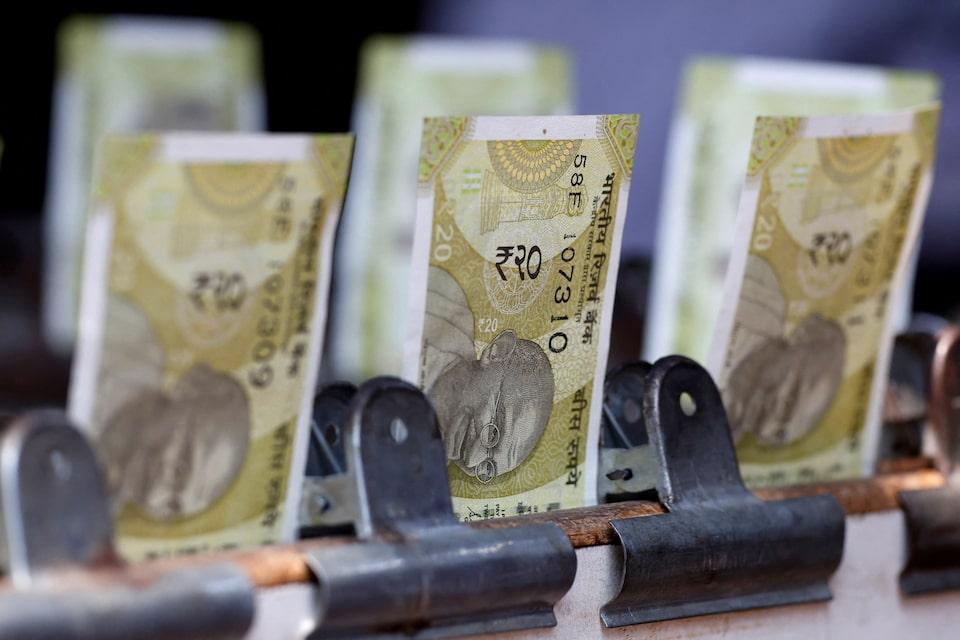
MUMBAI, Jan 1 (Reuters) - The Indian rupee weakened slightly on Wednesday, pressured by dollar bids from importers, which pushed the currency to a record closing low for the seventh consecutive session and affirmed the depreciation bias on the local unit. The rupee closed at 85.6450 against the U.S. dollar, down from its close of 85.6150 in the previous session. Global cues were muted on the day, with most markets shut for the New Year holiday. While the first trading session of 2025 was relatively lacklustre, traders expect the rupee to remain under pressure in the near term due to persistent strength in the dollar and domestic pressure on account of slowing growth and a wider merchandise trade deficit. The dollar index touched a more than two-year peak of 108.58 on Tuesday before settling a tad lower, boosted by the prospect of higher-for-longer Federal Reserve interest rates and potential policy changes under incoming U.S. President Donald Trump. "The rupee is expected to face temporary pressure, likely trading within a range of 85.20 to 85.80," said Amit Pabari, managing director at FX advisory firm CR Forex. The currency declined to an all-time low of 85.8075 on Dec. 27 and weakened for the seventh consecutive year in 2024, largely on the back of a convergence of headwinds in the final quarter of the calendar year. Tepid capital flows have also been a pain point for the rupee. Foreign investors logged net purchases of only $124 million of Indian equities in 2024, down from $20.7 billion in 2023. While inflows into bonds soared to a record high last year, investors reckon they are set to decline in 2025, with central bank interest rate trajectories in India and the United States and moves in the rupee being the key factors to look out for. Sign up here. https://www.reuters.com/markets/currencies/rupee-ends-record-closing-low-seventh-straight-session-2025-01-01/
2025-01-01 09:05
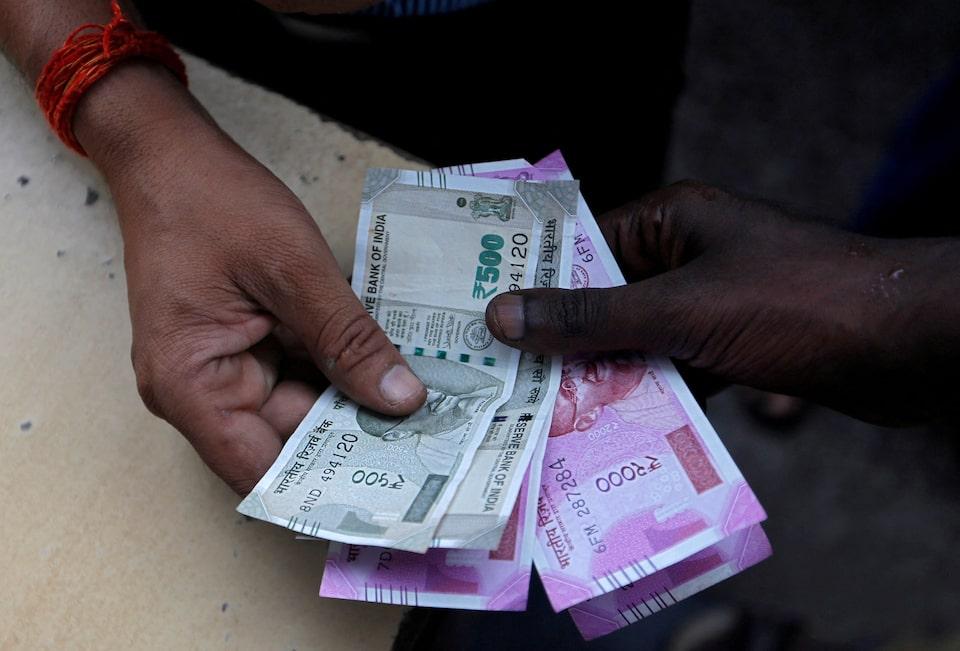
CAIRO, Jan 1 (Reuters) - The Israeli military kept up the pressure on northern Gaza on Wednesday, striking in a suburb of Gaza City, medics said, and told residents in a central part of the enclave to evacuate from an area where militants were firing rockets. Air strikes in Shejaia, a suburb of Gaza City, killed at least eight Palestinians, according to local emergency services. There was no immediate comment from the Israeli military, and it was not immediately clear who was killed in the attack. In al-Buriej, in central Gaza, the Israeli military said it struck a militant operating in an area where rockets had been fired into Israel the previous day. Its Arabic spokesman had ordered people to leave the area before the strike. The Palestinian news agency WAFA said two people were killed in that strike and 15 more in an airstrike in Jabalia. There was no immediate confirmation from Gaza health officials. Israel's military said it killed Hamas fighters in the attack. Much of the area around the northern towns of Beit Hanoun, Jabalia and Beit Lahiya has been cleared of people and razed, fuelling speculation, which Israel denies, that it intends to keep the area as a buffer zone after the fighting in Gaza ends. Israel says its almost three-month-old campaign in northern Gaza is aimed at preventing Hamas militants from regrouping. Its instructions to civilians to evacuate are meant to keep them out of harm's way, the military says. Palestinian and United Nations officials say no place is safe in Gaza and that evacuations worsen the humanitarian conditions of the population. According to the Palestinian civil defence, more than 1,500 tents sheltering displaced people across Gaza were flooded by heavy rains over the past two days, leaving people exposed to the cold, their belongings damaged. Israel's campaign in Gaza has killed more than 45,500 Palestinians, according to health officials in the Hamas-run enclave. Most of Gaza's 2.3 million people have been displaced and much of the tiny coastal strip is in ruins. The war was triggered by Hamas' Oct. 7, 2023, attack on Israel, in which 1,200 people were killed and another 251 taken hostage to Gaza, according to Israeli tallies. Sign up here. https://www.reuters.com/world/middle-east/israeli-strikes-kill-least-17-palestinians-gaza-wafa-reports-2025-01-01/
2025-01-01 07:27
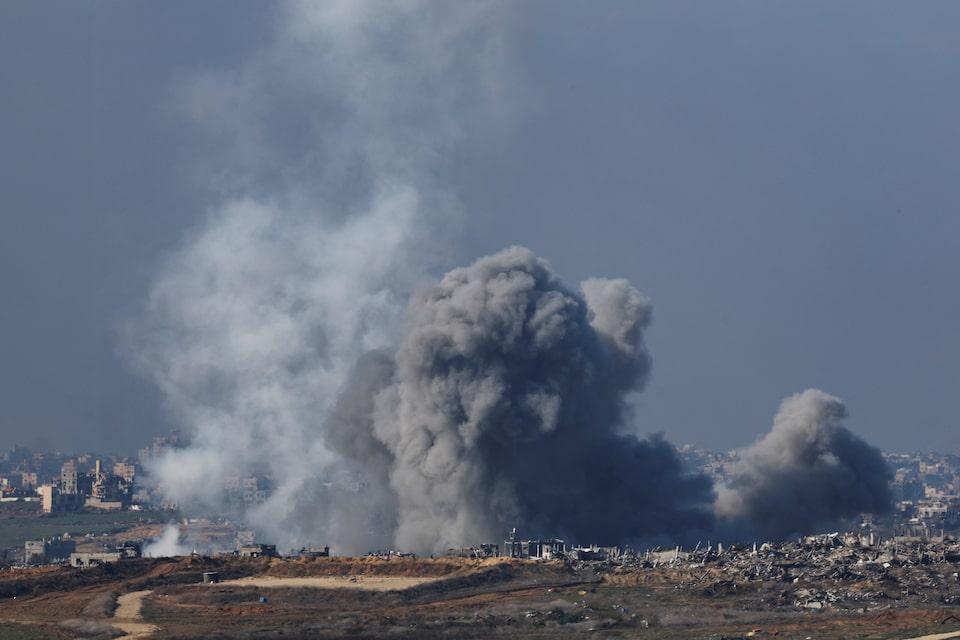
MUMBAI, Jan 1 (Reuters) - Foreign flows into Indian government bonds are set to decline in 2025, after spiking to a record high in 2024 as the debt got added to JPMorgan's emerging market debt index, investors said. Interest rate trajectories in India and the United States and moves in the rupee will influence the pace of flows, they said. "For 2025, foreign inflows into the Indian government bond market are expected to remain strong but may not match the record levels of 2024," said Wei Li, head of multi-asset investments at BNP Paribas SA. Overseas investors net bought 1.24 trillion rupees ($14.5 billion) of Indian bonds under the so-called fully accessible route in 2024, clearing house data showed. Most bonds under the route, which allows unfettered foreign investment, are part of JPMorgan's index. Despite the optimistic outlook, inflation expectations and policy adjustments as well as global market fluctuations could affect capital flows, BNP Paribas' Li said. "Therefore, investors should remain cautious and closely monitor market dynamics." Investors expect rate cuts in India to kick off from February but worry that the easing cycle could be a shallow one. The Federal Reserve has already projected fewer cuts for 2025. How the rupee moves will also sway foreign investors, with the dollar set to rise more as Donald Trump takes charge as the U.S. president. The rupee dropped 2.8% in 2024, and hit a record low of 85.8075 on Dec. 27, while India's benchmark bond yield fell 42 basis points. Currency weakness can temper the momentum of bond inflows, especially in case of persistent depreciation pressure, Dhiraj Nim, an economist and FX rates strategist at ANZ, said. Inflows will continue but at "an erratic and less enthusiastic pace" as the bonds are still relatively attractive, Nim said. Radhika Rao, executive director and senior economist at DBS Bank, sees a gradual pickup in passive monthly inflows as Indian bonds get added by two more index providers this year. She expects the local central bank to cut rates by 25 basis points in February, and by a total of 75 basis points in the cycle. ($1 = 85.5540 Indian rupees) Sign up here. https://www.reuters.com/markets/rates-bonds/foreign-flows-into-india-bonds-come-off-record-highs-2025-2025-01-01/