2026-01-01 11:45
MUMBAI, Jan 1 (Reuters) - India is set to see below-average maximum and minimum temperatures in January, the weather office said on Thursday, raising the prospect of higher yields for key winter-sown crops such as wheat, rapeseed and chickpeas. The country is also likely to experience an above-average number of cold-wave days, particularly across central and eastern India, Mrutyunjay Mohapatra, director-general of the India Meteorological Department, told an online news conference. Sign up here. "Over parts of Vidarbha and adjoining Marathwada, as well as parts of Madhya Pradesh, eastern Uttar Pradesh and Bihar, we expect one to three additional cold-wave days in January," he said. Punjab, Haryana, and Uttar Pradesh states in the north, along with Madhya Pradesh in central India, form the country's top wheat-growing regions. Winter-sown crops such as wheat, rapeseed, and chickpeas are planted from October to December and require cold weather conditions during their growth and maturity stages for optimal yields. In recent years, maximum and minimum temperatures from January to March have been above normal, adversely affecting yields of winter crops. This year, however, minimum temperatures across most parts of the country are likely to stay below average, except in some areas of the northwest and northeast, Mohapatra said. Rainfall in northern and northwestern states is likely to remain below average during January–March, he said. Farmers have so far planted winter-sown crops on 61.4 million hectares since sowing began on October 1, up 1.1% from a year ago, data from the farm ministry showed. "Temperatures in wheat and rapeseed-growing states have been conducive to crop growth, and if they remain normal to below normal, we can certainly expect bumper yields this year," said a Mumbai-based dealer with a global trade house. https://www.reuters.com/business/environment/india-forecast-face-colder-january-says-weather-office-2026-01-01/

2026-01-01 11:00
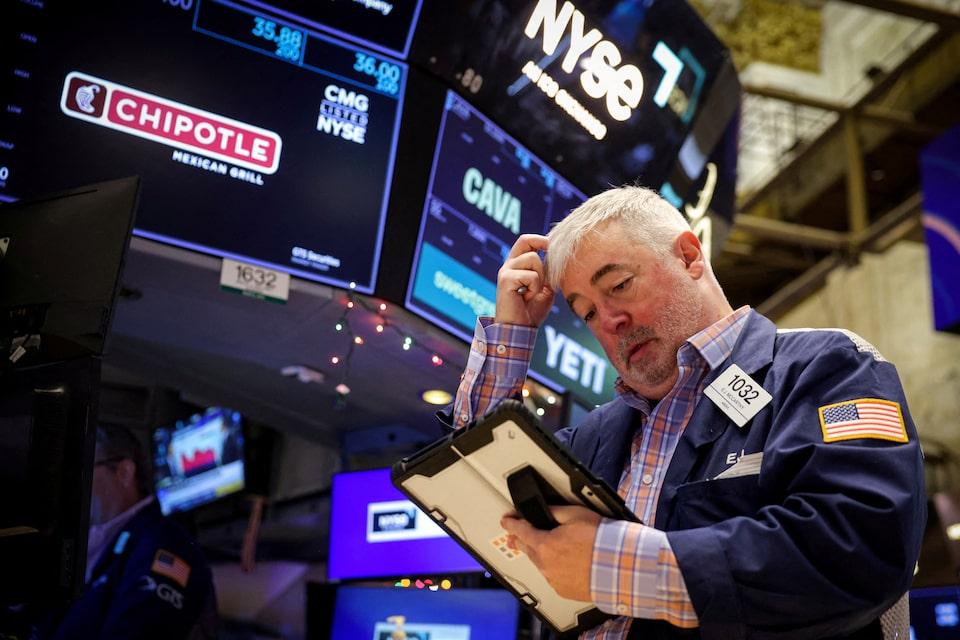
S&P 500 posts 3rd straight year of gains over 10% Strong, broader US earnings growth expected in 2026 AI momentum, Fed, US-China among potential swing factors NEW YORK, Dec 31 (Reuters) - The U.S. stock market is closing the books on a third straight year of double-digit percentage gains. A fourth stellar year in 2026 may be a tall order, requiring strong earnings, a dovish Federal Reserve and strong artificial intelligence spending. The bull market for U.S. stocks that started in October 2022 has been propelled by AI optimism, interest rate cuts and the economy continuing to grow despite fears of a recession. The gains were achieved during a rollercoaster year which saw shares dive after the Trump administration unveiled bigger-than-expected tariffs in April. The benchmark S&P 500 (.SPX) , opens new tab climbed more than 16% in 2025, after rising 23% in 2024 and 24% in 2023. Sign up here. For another year of strong double-digit percentage returns, markets need "everything firing on all cylinders," said Sam Stovall, chief investment strategist at CFRA. "A lot of headwinds indicate to me that while we could end up with a surprisingly good year, I don't think it will be another great year," said Stovall, who has a year-end 2026 price target of 7,400, which would be up 8% from current levels. Many market strategists foresee a strong 2026, with some S&P 500 targets equating to over 10% gains, including Deutsche Bank's target of 8,000, which is about 17% higher for the index. WILL EARNINGS AND AI PROVIDE A LIFT? Stock bulls point to the upbeat outlook for U.S. corporate profits. Earnings among S&P 500 companies are projected up over 15% in 2026, on the back of a solid 13% rise in 2025, according to Tajinder Dhillon, head of earnings research at LSEG. Earnings growth is expected to be driven by a broader swath of companies, as fiscal stimulus and easier monetary policy help shore up the economy and consumer spending, rather than confined to a small group of tech and tech-related behemoths. Those megacap companies, which include Nvidia (NVDA.O) , opens new tab, Apple (AAPL.O) , opens new tab and Amazon (AMZN.O) , opens new tab and are known as the "Magnificent Seven", posted 37% profit growth in 2024 compared to 7% for the rest of the S&P 500, according to LSEG's Dhillon. In 2026, that gap is poised to narrow significantly: the Mag 7 are expected to have earnings growth of 23% against 13% for the rest of the index. "An improvement in earnings growth for many of the 493 other stocks in the S&P 500 -- and we've seen some of that already -- that certainly would help the stock market get to double-digit returns next year," said Kristina Hooper, chief market strategist at Man Group. Profit growth will be critical because stock valuations will be hard-pressed to expand beyond lofty levels, investors said. One boost to valuations has been excitement over AI, including massive spending for infrastructure and expected voracious demand for its application. Recently, questions about the returns from the capital spending dented tech and other AI-linked shares, and will likely remain a critical theme in 2026. "If companies start to pull back on the capex that they have already guided to and the market loses confidence in the returns that the AI investment will generate...you're probably looking at more of a flat or even a modestly down year," said Jeff Buchbinder, chief equity strategist for LPL Financial. DOVISH FED, MIXED HISTORICAL SIGNALS AND WILDCARDS Another critical factor for a strong stock market year, investors said, is the economy softening enough to pave the way for calming inflation and more rate cuts, but not so much that it falls into a recession. Fed funds futures indicate investors expect at least two more quarter-point reductions in 2026 following 175 basis points of cuts in 2024 and 2025. "Probably the biggest driver I'd be looking for is the Fed maintaining a dovish stance," said Yung-Yu Ma, chief investment strategist at PNC Financial Services Group. Investors are watching President Donald Trump's choice of a Fed chair, expected early in 2026, as a sign the central bank will be more dovish but are concerned about its independence being tested. Historical data yields a mixed story about potential returns in 2026. On the plus side, of seven bull markets that made it to year four since 1950, the fourth year has averaged a gain of 12.8%, posting positive performance for the year in six of seven occasions, according to LPL Research. However, U.S. midterm election years, when the election of a new Congress injects uncertainty about the makeup of the federal government, tend to be subpar. The S&P 500 is up just 3.8% on average in midterm years, compared to an average 11% during the other three years of a presidential term, according to CFRA's Stovall. There are also a host of possible wildcards. For example, while tariffs receded as the dominant market issue after driving extreme volatility in early 2025, the relationship between the U.S. and China, the world's two largest economies, could sway stocks in 2026, said PNC's Ma. "There's actually a possibility for a breakthrough between the U.S. and China that could be a positive catalyst that is not baked into expectations," he said. https://www.reuters.com/business/ai-spending-strong-corporate-profits-fed-rate-cuts-seen-key-2026-stock-market-2025-12-24/
2026-01-01 08:57
BELGRADE, Jan 1 (Reuters) - The U.S. has granted Serbia's majority-Russian refiner NIS (NIIS.BEL) , opens new tab an operating licence until January 23, enabling it to resume production after a 36-day break, the energy minister said on Wednesday. The U.S. Treasury Department's Office of Foreign Assets Control imposed sanctions on NIS in October as part of broader measures against Russia's energy sector after granting a series of waivers since January. Sign up here. On Wednesday evening, Serbia's energy minister, Dubravka Djedovic Handanovic, wrote: "Great news for the end of the year. "NIS company has obtained the licence from the U.S. OFAC to operate until January 23. This means the refinery in Pancevo will resume work after a 36-day break." The sanctions had halted crude supplies via Croatia's JANAF (JANF.ZA) pipeline, shutting down production at the Pancevo refinery. JANAF said in a statement on Wednesday evening that it "has obtained a licence approving participation, until 23 January 2026, in activities that are customary and necessary for the transport of oil" for NIS. Last week, OFAC gave NIS until March 24 to negotiate the sale of its Russian owner's stake. Russia's Gazprom has an 11.3% stake in NIS, while its sanctioned oil unit Gazprom Neft (SIBN.MM) holds 44.9%. The Serbian government has 29.9%, with the remainder held by small shareholders and employees. Serbian President Aleksandar Vucic had said Gazprom is in talks with Hungary's MOL (MOLB.BU) over a possible sale of its majority stake in NIS. https://www.reuters.com/business/energy/serbias-nis-gets-us-approval-resume-production-its-refinery-2026-01-01/

2026-01-01 06:03
Jan 1 (Reuters) - Bulgaria became the 21st member of the euro zone on Thursday despite opposition from half its electorate, leaving only a handful of countries in the 27-member European Union yet to adopt the currency. Although public support for the euro is high in some of the remaining countries including Hungary, eurosceptic parties in governing coalitions and parliaments are likely to hold back further expansion of the currency zone for the foreseeable future. Sign up here. Here are the remaining countries. HUNGARY About 72% of the Hungarian public support adoption of the euro, according to an October to November survey by Eurobarometer conducted for the European Commission. This is the highest level of support among the remaining EU countries despite Prime Minister Viktor Orban's euroscepticism. Opposition leader Peter Magyar has said he would put the country on a course to adopt the euro if his centre-right party wins next year's election. However, Hungary has the EU's highest debt as a share of economic output outside the euro zone, while its deficit cuts since the COVID-19 pandemic have stalled amid heavy pre-election spending by Orban. Even if it meets all entry criteria, joining the euro zone will not be possible without a parliamentary supermajority as Orban, who is opposing deeper integration with the EU, has enshrined the forint as Hungary's national currency in the constitution. ROMANIA The Central European country is struggling to lower the EU's largest budget deficit, meaning it may take several years to stabilise its finances for it to have a realistic prospect of joining the euro zone. Public support for the euro is at 59%, the Eurobarometer survey showed. However, faced with high inflation, austerity measures and a buoyant far-right waiting in the wings ahead of a 2028 election, the subject has faded from public discussion. POLAND In Poland, where public support for the euro is at 45%, Finance Minister Andrzej Domanski has said Warsaw is not working on adopting the unit and the EU's largest economy outside the euro zone was "happy to have our own currency". Jaroslaw Kaczynski, leader of the biggest opposition party, Law and Justice, has said anyone striving to have the euro introduced was "a mortal enemy of Poland". CZECH REPUBLIC Czech public support for the euro is at 30%, according to the Eurobarometer survey, and the government has no plans to take steps to adopt it. Czech national debt levels are still much lower than in most euro zone countries, so for many, entry raises the risk of taking over responsibility for more indebted countries. Prime Minister Andrej Babis was pro-euro as a businessman and early politician but has since moved his party to national conservative and eurosceptic positions. He is now proposing enshrining the crown in the constitution. SWEDEN Only one small party is openly championing euro zone entry while the populist Sweden Democrats - the second biggest group in parliament whose support is crucial for the right-wing minority government - oppose it, meaning any debate about joining is likely to remain academic. Sweden joined the EU in 1995 but a referendum in 2003 rejected adopting the euro by a majority of 56% to 42%. Public support for the euro is at 39% based on the Eurobarometer survey, with opposition to adoption declining from more than 80% in the wake of the 2012-2013 euro zone debt crisis. DENMARK Denmark, which joined the EU in 1973, is the only member of the bloc with an opt-out of the euro, meaning it has the right to remain outside the currency area even when all entry criteria are met. Public support for euro adoption is at 33%. https://www.reuters.com/business/after-bulgaria-euro-expansion-faces-hurdles-remaining-eu-states-2026-01-01/

2026-01-01 05:47
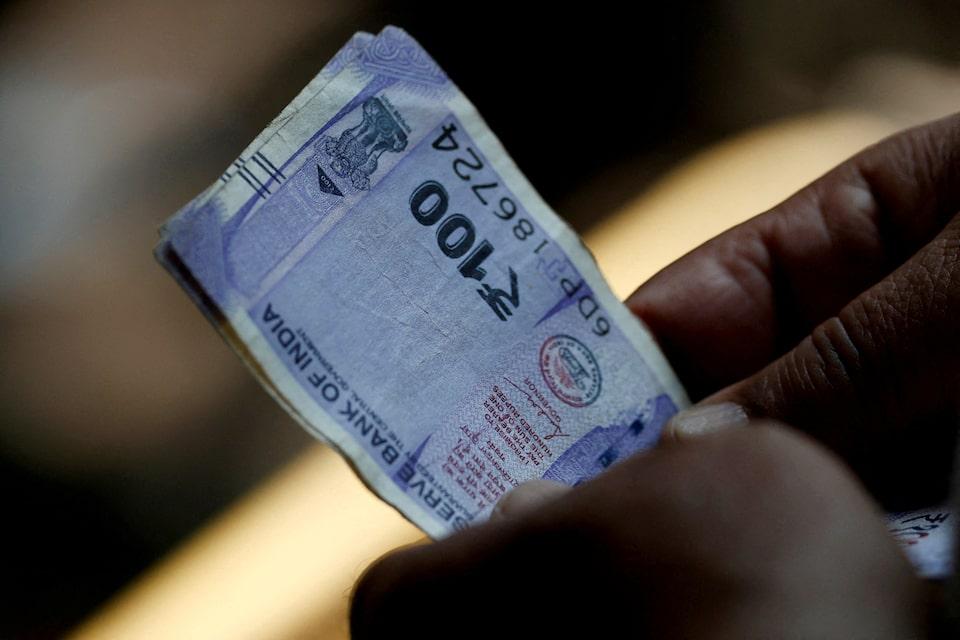
MUMBAI, Jan 1 (Reuters) - The Indian rupee welcomed 2026 with a marginal decline, weighed down by dollar demand from corporates, while thin volumes in the first trading of the New Year curbed any major movements, according to traders. The rupee opened lower at 89.9525 per U.S. dollar on Thursday, against Wednesday's close of 89.87. The currency moved in a narrow range before settling 0.1% down at 89.97. Sign up here. The rupee closed 2025 marking with a 4.72% decline for the year, its worst showing since 2022, when it dropped nearly 10%. Trading volumes were subdued due to New Year holidays in major markets, leaving routine flows as the primary driver for price action and Thursday's move reflects the broader pattern seen through much of 2025, where underlying demand–supply dynamics kept the rupee under pressure. "Until the 90 level is not broken, it is difficult to guess any firm direction for the currency," trader with a brokerage said. "The rupee enters 2026 with both challenges and cushions. While global uncertainty persists, India's strong macro base, ample reserves, and pragmatic policy framework provide stability," said Amit Pabari, managing director at FX advisory firm CR Forex. Progress on a pending India–U.S. trade deal remains a potential upside catalyst and could deliver a meaningful confidence boost if concluded, according to Pabari. The rupee is expected to trade in 89.30–90.20 range in the near term, with a mild bias toward strengthening he added. Over the near term market participants are monitoring equity flows to assess whether the year shapes up differently from 2025, when foreign investors pulled out record amounts from the local stock market. An improvement in equity flows would be key to alleviating dollar demand–supply pressures that hurt the rupee in 2025, traders said. https://www.reuters.com/world/india/rupee-traders-look-for-cues-after-rbi-dominates-recent-price-action-2026-01-01/
2026-01-01 03:33
Dec 31 (Reuters) - U.S. President Donald Trump signed a proclamation on Wednesday to delay increases in tariffs for upholstered furniture, kitchen cabinets and vanities for another year, the White House said. Sign up here. https://www.reuters.com/world/us/trump-delays-tariff-hike-upholstered-furniture-kitchen-cabinets-by-one-year-2026-01-01/