2026-01-01 03:06
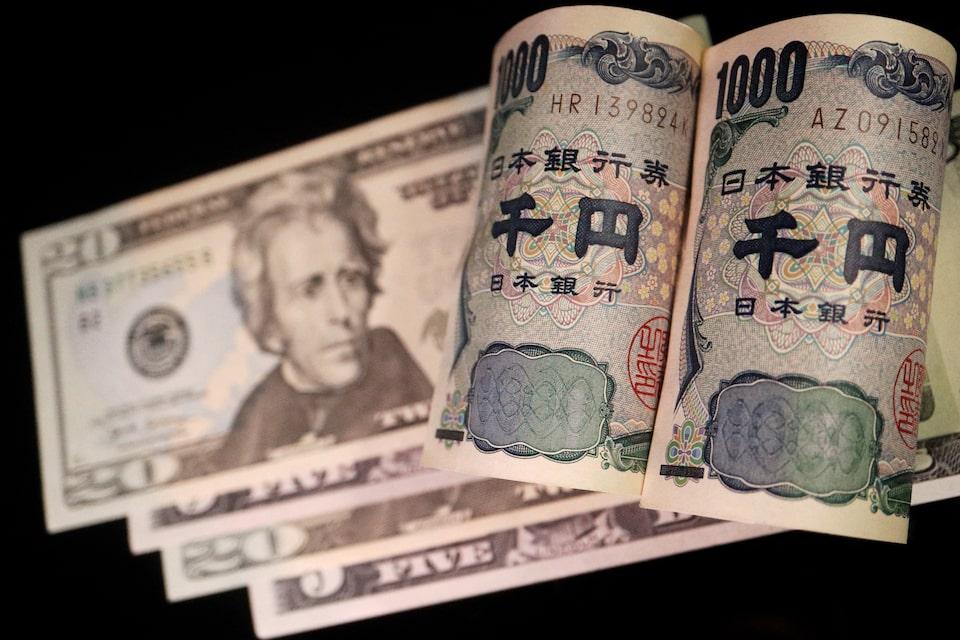
TOKYO, Jan 1 (Reuters) - Two major Japanese business lobbying groups called on the government to address the yen's weakness, which is inflating import costs and weighing on households and businesses, their chiefs told domestic media in separate interviews. Yoshinobu Tsutsui, head of Japan's biggest business lobby Keidanren, said in a group interview with multiple domestic media that the weak yen tends to be highlighted for its benefits, such as boosting profits for exporters. Sign up here. But from the perspective of national strength, "it would be better in the long run to adjust toward a stronger yen," he said, according to the media reports. The Japanese yen was one of the few currencies that failed to capitalize on the weak dollar in 2025, despite two rate hikes by the Bank of Japan (BOJ) during the year. The yen's recent declines and subsequent inflationary pressures helped the BOJ convince dovish Premier Sanae Takaichi's administration of the need for the rate increase last month, but uncertainty over the pace of further rate hikes has capped the yen's recovery. The yen finished the year around 157 per dollar, remaining relatively close to levels that prompted statements from officials in Tokyo about supporting the currency and increased market expectations of a possible intervention. Japan last stepped into markets to defend its currency in July 2024, buying yen after the currency hit a 38-year low of 161.96. In a separate interview with domestic media, Ken Kobayashi, chairman of the Japan Chamber of Commerce and Industry, noted that the cost of procuring raw materials for small and medium-sized firms is increasing due to the weak yen. As the weak yen has been a major factor behind inflation, the government and the BOJ "need to eliminate the sense of helplessness among small business owners that import materials from overseas," he said. https://www.reuters.com/world/asia-pacific/japan-business-lobby-chiefs-urge-government-tackle-weak-yen-media-reports-2026-01-01/
2025-12-31 23:58
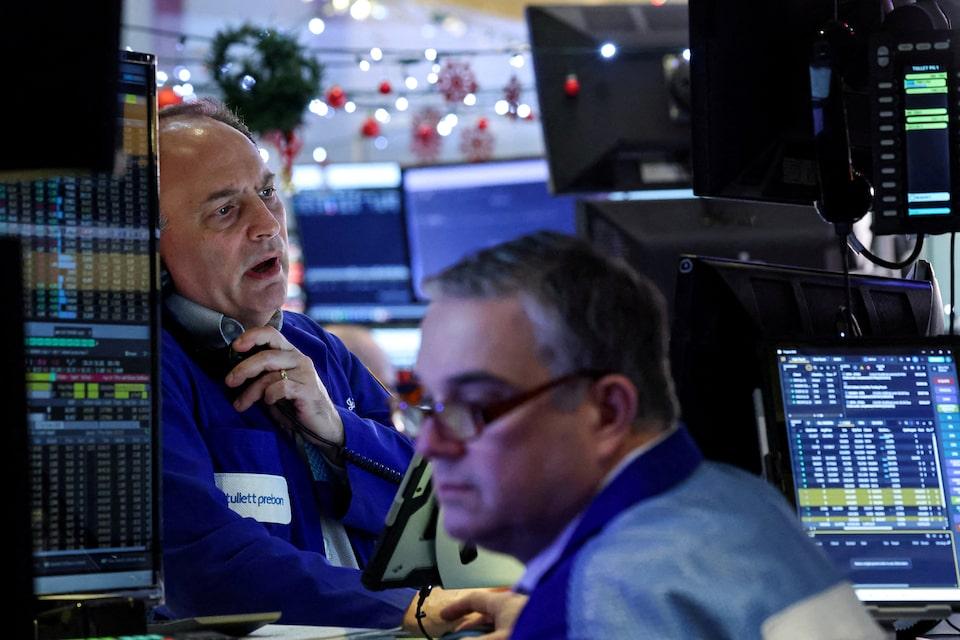
Indexes down: Dow 0.63%, S&P 500 0.74%, Nasdaq 0.76% All three indexes post yearly gains Nike up after CEO Hill buys stock worth $1 mln Vanda Pharma jumps after US FDA approves motion sickness drug NEW YORK, Dec 31 (Reuters) - Wall Street's major indexes ended lower in the final trading session of 2025, but notched big annual gains after a roller-coaster year dominated by President Donald Trump's tariff uncertainties and a euphoria around AI-focused stocks. The S&P 500 (.SPX) , opens new tab, Dow (.DJI) , opens new tab and Nasdaq (.IXIC) , opens new tab posted double-digit gains this year, their third consecutive year in the green, a run last seen during 2019-2021. Sign up here. The rally was bolstered by an insatiable appetite for artificial intelligence stocks that pushed all three indexes to record highs this year. The Dow also posted its eighth straight monthly gain, the longest such streak since 2017-2018. The S&P 500 had also been on track for its eighth straight monthly gain until just before the closing bell, and ended up closing with a monthly loss for December. The S&P 500 (.SPX) , opens new tab lost 50.74 points, or 0.74%, to 6,845.50 points, while the Nasdaq Composite (.IXIC) , opens new tab lost 177.09 points, or 0.76%, to 23,241.99. The Dow Jones Industrial Average (.DJI) , opens new tab fell 303.77 points, or 0.63%, to 48,063.29. On the day, energy stocks (.SPNY) , opens new tab and tech stocks (.SPLRCT) , opens new tab were among the major losers. Microsoft (MSFT.O) , opens new tab, which was among the biggest weights on the sector, was down 0.8%, and EQT Corp (EQT.N) , opens new tab fell 1.9%. "I do not expect that the last few days will have so much bearing on the performance of the next year, it's perfectly fine in any bull market to have moments of cost," said Giuseppe Sette, co-founder and president of Reflexivity, pointing to profit-taking opportunities when liquidity was low. Wall Street made a stellar comeback from April's lows when Trump's 'Liberation Day' tariffs sparked a meltdown in global markets, sent investors away from U.S. stocks and threatened growth by clouding the interest rate outlook. For the year, the S&P 500 gained 16.39%, the Nasdaq rose 20.36%, and the Dow climbed 12.97%. The Russell 2000 small cap index rose 11.26%. Still the benchmark S&P 500 index's annual gain trails some global indexes, especially the Asia-Pacific ex-Japan measure (.MIAPJ0000PUS) , opens new tab, which rallied nearly 27% in 2025, as stock investors diversified. "We expect this broadening of performance to deepen in 2026, both within the U.S. and across international markets," said Jitania Kandhari, Deputy CIO of the solutions and multi-asset group at Morgan Stanley Investment Management. "The era of narrow winners is giving way to a wider, more globally distributed opportunity set. Equal-weighted S&P looks good relative to cap-weighted S&P." Wall Street's fourth consecutive session of losses defied expectations for a "Santa Claus rally" in which the S&P 500 typically gains over the last five trading days of December and the first two in January, according to the Stock Trader's Almanac. Bellwether chipmaker Nvidia (NVDA.O) , opens new tab - up 39% year-to-date - has been one of the many AI trade beneficiaries, becoming the first publicly traded company to hit a $5 trillion market capitalization. The communication services index (.SPLRCL) , opens new tab emerged as the top performer on the S&P 500 this year, powered by a 65% jump in Alphabet . Storage-chip makers such as Micron Technology (MU.O) , opens new tab, Western Digital (WDC.O) , opens new tab and Seagate (STX.O) , opens new tab outperformed their S&P 500 peers, having more than tripled in value in 2025. On the flip side, FMC Corp (FMC.N) , opens new tab and Fiserv (FISV.O) , opens new tab were big losers for the year, declining 71.5% and 67% respectively. The Federal Reserve's monetary policy trajectory will set the tone for global markets in 2026, after recent economic data and expectations of a new dovish Fed chair prompted investors to price in further reductions. Nike (NKE.N) , opens new tab gained 4% after CEO Elliott Hill reported that he bought about $1 million worth of shares recently. Vanda Pharmaceuticals (VNDA.O) , opens new tab surged after the U.S. Food and Drug Administration approved its drug for the prevention of motion-induced vomiting. Trading volumes remained thin in the holiday-shortened week, with markets closed on Thursday for New Year's Day. Volume on U.S. exchanges was 11.17 billion shares, compared with the 15.8 billion average for the full session over the last 20 trading days. Declining issues outnumbered advancers by a 3.22-to-1 ratio on the NYSE. There were 91 new highs and 116 new lows on the NYSE. On the Nasdaq, 1,528 stocks rose and 3,164 fell as declining issues outnumbered advancers by a 2.07-to-1 ratio. The S&P 500 posted 3 new 52-week highs and no new lows while the Nasdaq Composite recorded 29 new highs and 218 new lows. https://www.reuters.com/business/us-stock-futures-inch-down-thin-trading-wall-street-eyes-yearly-gains-2025-12-31/
2025-12-31 23:54
Soybean farmers face financial challenges despite aid Specialty crop and sugar farmers await details on $1 billion aid Payments expected by February 28, USDA Secretary Rollins states CHICAGO, Dec 31 (Reuters) - The U.S. Department of Agriculture released details on Wednesday about how much row crop farmers will receive next year from a $12 billion aid program, but soybean growers say such payments fall short of helping those hurt by low crop prices and trade disputes. The Farmer Bridge Assistance program is expected to distribute $11 billion in one-time payments to farmers, who will be paid on a per-acre rate if they planted one of the 19 commodity crops identified as being eligible for the program, USDA said in a statement , opens new tab on Wednesday. Sign up here. U.S. farmers produced massive corn and soybean harvests this fall amid a global glut of grain, and lost billions of dollars amid falling crop prices. Soybean farmers were particularly hard hit by the loss of soybean sales to China, by far the world's top buyer, when it turned to South American suppliers during stalled trade talks. While the aid is expected to help farmers prepare for the next planting season, growers and agricultural economists say the payments are a fraction of farm losses and will not rescue the sagging U.S. farm economy. The highest per-acre payments will be paid to rice farmers, who could receive $132.89 an acre; cotton farmers, at $117.35 an acre; and oat farmers, at $81.75 an acre. Meanwhile, farmers are eligible for a payment of $44.36 per corn acre, $30.88 per soybean acre and $39.35 per wheat acre. The payments are calculated using 2025 planted acres, cost-of-production data, and market conditions, USDA said. “Due to significant trade losses this year, the payment rate for soybeans will likely not be enough for soybean farmers to keep their operations financially solvent as we move into the next planting season,” said Scott Metzger, an Ohio farmer and president of the American Soybean Association, a trade group that represents nearly a half-million soybean producers. Sorghum growers are set to receive more than soybean growers at $48.11 per acre, and see the payments as a welcome help even as export demand has improved recently, said Tim Lust, chief executive officer of the National Sorghum Producers. Other crops that qualify include peanuts, sorghum, barley, canola, sunflower, lentils, peas, mustard, safflower, flax, large and small chickpeas, and sesame. The payments are expected to be received by February 28, USDA Secretary Brooke Rollins said in a statement. U.S. President Donald Trump initially unveiled the $12 billion aid package for American farmers on December 8, as farm groups and Republican farm-state lawmakers have sought the aid in part to support farmers with purchases of seeds, fertilizer and other expenses. The remaining $1 billion of the $12 billion aid package is being reserved for specialty crop and sugar farmers, USDA said, but how that money will be distributed, and the timing of such payments, is still being determined. https://www.reuters.com/world/us/usda-details-12-billion-farm-aid-package-favoring-rice-cotton-soy-farmers-warn-2025-12-31/

2025-12-31 20:30
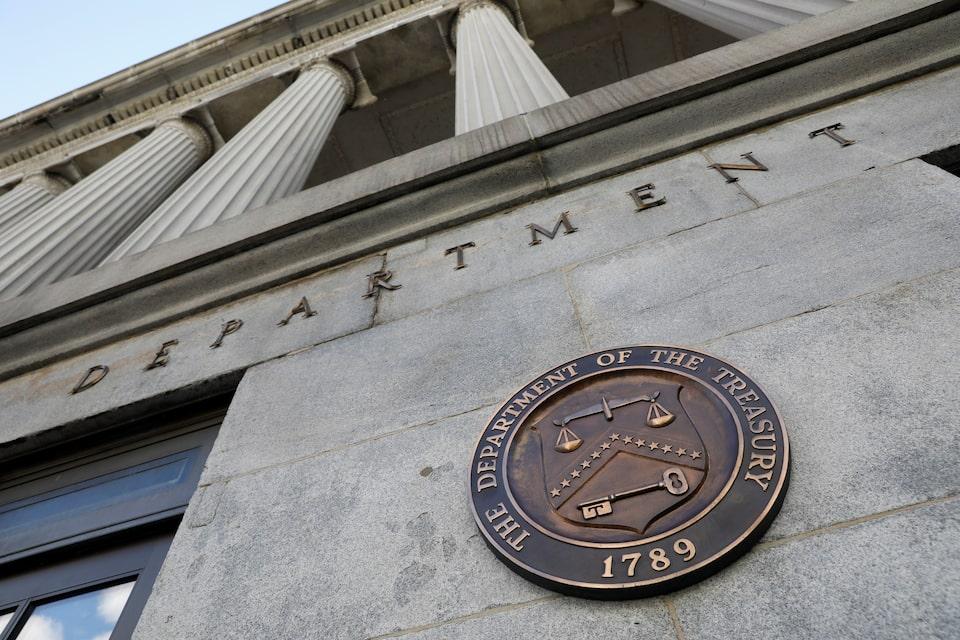
Sanctions mark latest action in Trump's pressure campaign US targets four companies it says operated in Venezuela’s oil sector Sanctions also target four vessels WASHINGTON/HOUSTON, Dec 31 (Reuters) - The United States on Wednesday imposed sanctions on four companies it said were operating in Venezuela’s oil sector as well as associated oil tankers, as President Donald Trump's administration increases pressure on Venezuelan President Nicolas Maduro. The sanctions mark the latest action in Trump's pressure campaign against Maduro, which has included a ramped-up U.S. military presence in the region and more than two dozen strikes on vessels allegedly involved in trafficking drugs in the Pacific Ocean and Caribbean Sea. Sign up here. Earlier this month, Trump announced a blockade of all sanctioned vessels going in or out of Venezuelan waters as part of a strategy to pressure Maduro, a move that has helped knock down Venezuela's oil exports this month to about half of their November levels. The U.S. Treasury Department said in a statement it imposed sanctions on oil traders engaged in sanctions evasion for Maduro's government. Among the targets were four tankers, some of which the Treasury accused of being part of the so-called "shadow fleet". The "shadow fleet" refers to ships that carry oil that is under sanctions. They are typically old, their ownership opaque and they sail without top-tier insurance cover to meet international standards for oil majors and many ports. "Today’s action further signals that those involved in the Venezuelan oil trade continue to face significant sanctions risks," the Treasury said in the statement. The Venezuelan communications ministry, which handles all press queries for the government, did not immediately respond to a request for comment. Panama-flagged Nord Star, Guinea-flagged Lunar Tide and Hong Kong-flagged Della - all hit with sanctions on Wednesday - have transported Venezuelan crude or fuel this year to destinations in Asia and the Caribbean, according to internal documents from Venezuela's state energy company PDVSA and ship tracking information. Hong Kong-flagged supertanker Valiant, which is also owned by one of the sanctioned companies, Aries Global Investment LTD, has not carried Venezuelan crude, according to PDVSA's records. The supertanker Della, which was scheduled to load crude at Venezuela's Jose port this month, made a u-turn on December 21 after the U.S. Coast Guard tried to intercept two more Venezuela-related vessels in the Caribbean Sea, and is now on its way to Asia, the tracking data showed. The sanctions on the four vessels come after Washington earlier this month designated six Venezuela-related tankers. "President Trump has been clear: We will not allow the illegitimate Maduro regime to profit from exporting oil while it floods the United States with deadly drugs," Treasury Secretary Scott Bessent said in the statement. Maduro and his government have vehemently denied involvement in criminal activity and says the U.S. is pursuing regime change to take control of Venezuela's vast oil reserves. The U.S. blockade stopping sanctioned tankers going in and out of Venezuela has kept the country's exports almost paralyzed, and the accumulation of residual fuel inventories at Venezuela's onshore tanks is forcing state company PDVSA to resort to extreme solutions to avoid the shutdown of refining units, Reuters reported earlier on Wednesday. https://www.reuters.com/business/energy/us-targets-crude-oil-tankers-firms-new-venezuela-related-sanctions-treasury-2025-12-31/
2025-12-31 20:01
Bitcoin soars in early 2025 on election of crypto-friendly President Trump, drop later in year on tariff news Analysts cite correlation between bitcoin and risk assets like equity markets Crypto awaits Trump administration decisions on industry regulation Dec 31 (Reuters) - Bitcoin is on track to post its first annual loss since 2022, as macroeconomic pressures and fading momentum weighed on the world's largest cryptocurrency. Despite reaching a fresh record high this year, bitcoin has struggled to regain its footing since October, and last month experienced its biggest monthly drop since mid-2021. Now, it is on track to end the year more than 6% lower, after posting yearly gains the previous two years. It was last trading at $87,474.2. Sign up here. After soaring earlier this year with the election of crypto-friendly U.S. President Donald Trump, cryptocurrencies - along with stocks - plummeted in April on his tariff announcements. They quickly rebounded, with bitcoin hitting an all-time peak above $126,000 in early October. But just days later, on October 10, the market plunged again when Trump announced a new tariff on Chinese imports and threatened export controls on critical software. That sparked more than $19 billion worth of liquidations across leveraged crypto market positions, the largest liquidation in crypto history. The world's main stock benchmarks have also had a turbulent year, repeatedly hitting record peaks and then pulling back as worries over tariffs, interest rates and a possible AI bubble whipsawed markets. "In 2025, the market showed that bitcoin increasingly exhibits the characteristics of a risk asset within the global financial system, with a notable correlation to the U.S. equity market during multiple periods," said Linh Tran, a senior market analyst at XS.com. Analysts say bitcoin's gyrations in 2025 increasingly tracked stock market sentiment as traditional retail and institutional investors jumped into cryptocurrencies, which next year may be even more closely tethered to factors driving stocks and other risk assets, such as monetary policy shifts and nervousness over the lofty valuations of AI-related stocks. Historically, bitcoin and stocks did not move in tandem because crypto was seen as an alternative investment. But with broader crypto adoption by traditional retail investors and some institutions, the correlation looks to be strengthening, analysts said. WINS IN WASHINGTON The crypto industry notched major regulatory wins in the U.S. under the first year of the Trump administration, including the Securities and Exchange Commission's swift move to dismiss Biden-era lawsuits against Coinbase (COIN.O) , opens new tab, Binance and others, as well as the passage of a landmark law creating federal rules for dollar-pegged crypto tokens. But crypto market structure legislation and carve-outs from SEC rules that should fix core, longstanding problems for the industry are yet to come, threatening to sap the industry's celebratory mood, according to multiple industry executives. Trump courted industry cash pledging to be a "crypto president," and his family's own crypto ventures have helped to propel the sector into the mainstream, say executives. Crypto companies and executives donated more than $245 million in the 2024 election cycle to promote pro-crypto candidates including Trump, according to Federal Election Commission data. https://www.reuters.com/business/bitcoin-set-first-yearly-loss-since-2022-macro-trends-weigh-crypto-2025-12-31/

2025-12-31 17:57
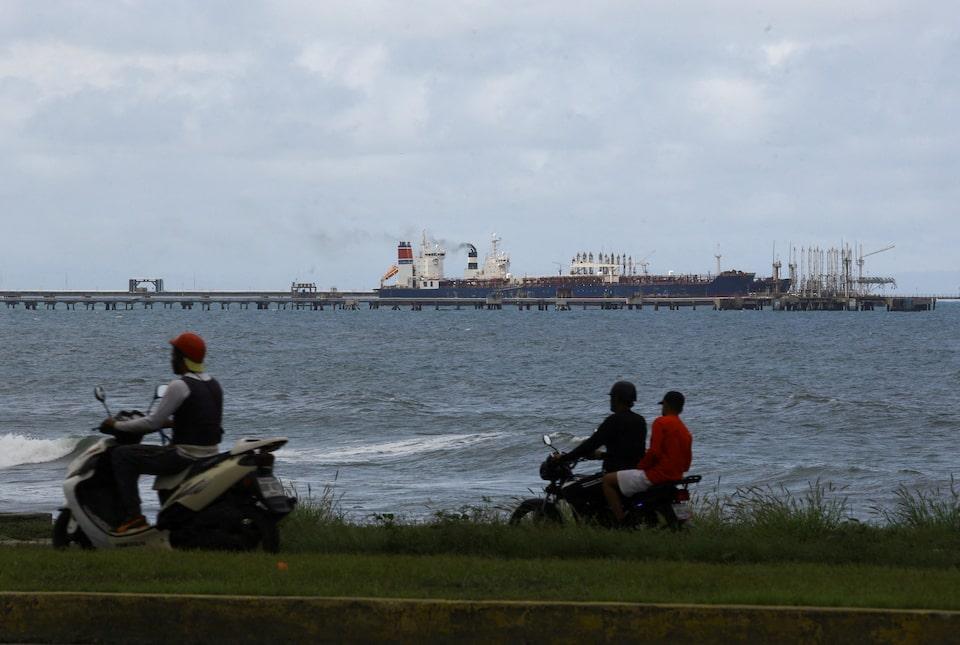
US blockade has reduced residual fuel exports Some 25 million barrels of residuals in onshore, floating storage PDVSA to reopen idled tanks, send fuel to oil waste pools Dec 31 (Reuters) - The accumulation of residual fuel inventories in Venezuela's onshore tanks is forcing state energy company PDVSA to resort to extreme solutions to avoid shutting down refining units, as a U.S. blockade stopping tankers that are under sanctions from entering and leaving the country cuts exports to a minimum, four sources said. Some tankers have entered Venezuelan waters in recent days and a couple of China-flagged vessels are approaching the coast. But most ships bound for Venezuelan ports for December and early January cargo deliveries have made U-turns, as the blockade spooks even vessels not under sanctions. Sign up here. Washington's pressure campaign, a bid to oust Venezuelan President Nicolas Maduro, is triggering the most severe operational crisis for PDVSA since the U.S. Treasury Department imposed sanctions on the company's main trading partners in 2020, forcing it to switch to intermediaries to allocate its oil in China. Those intermediaries have been using ships under sanctions and a "shadow fleet" of tankers that disguise their locations to carry sanctioned oil from countries including Venezuela. RESIDUAL FUEL DESTINED FOR ASIA Because it mostly produces extra-heavy crude that needs to be diluted for transportation and processed in complex refineries, Venezuela also produces high volumes of residual fuel, particularly high-sulfur fuel oil, which is typically exported to Asia. But the U.S. blockade has reduced those shipments to a minimum in the last two weeks, according to company documents and shipping data. After nearly filling onshore tanks, PDVSA has been storing crude and fuel oil in tankers as part of a floating storage strategy. But with some 25 million barrels of residuals already in storage, the company is running out of capacity, one of the sources said. "They have nowhere else to store," the person said. "Without tanker departures, the situation is getting ugly." PDVSA is now trying to reopen idled tanks and has begun sending residual fuel to oil waste pools in the country's western region, an extreme solution to avoid shutdowns of operational units at the country's 955,000-barrel-per-day Paraguana Refining Center, another source said. PDVSA did not reply to a request for comment. Venezuela's Oil Ministry and Maduro have said the country will keep producing and exporting its oil. The U.S. has continued pursuing tanker seizures after intercepting two fully loaded cargoes of Venezuelan crude earlier this month. Venezuela's oil exports in December fell to about half the 950,000 bpd they averaged in November, according to preliminary figures. Ships chartered by PDVSA's main partner, U.S.-based Chevron (CVX.N) , opens new tab, are among the few setting sail to carry oil exports since mid-December. https://www.reuters.com/business/energy/residual-fuel-tops-off-venezuelas-tanks-exports-remain-almost-paralyzed-sources-2025-12-31/