2024-12-30 04:42
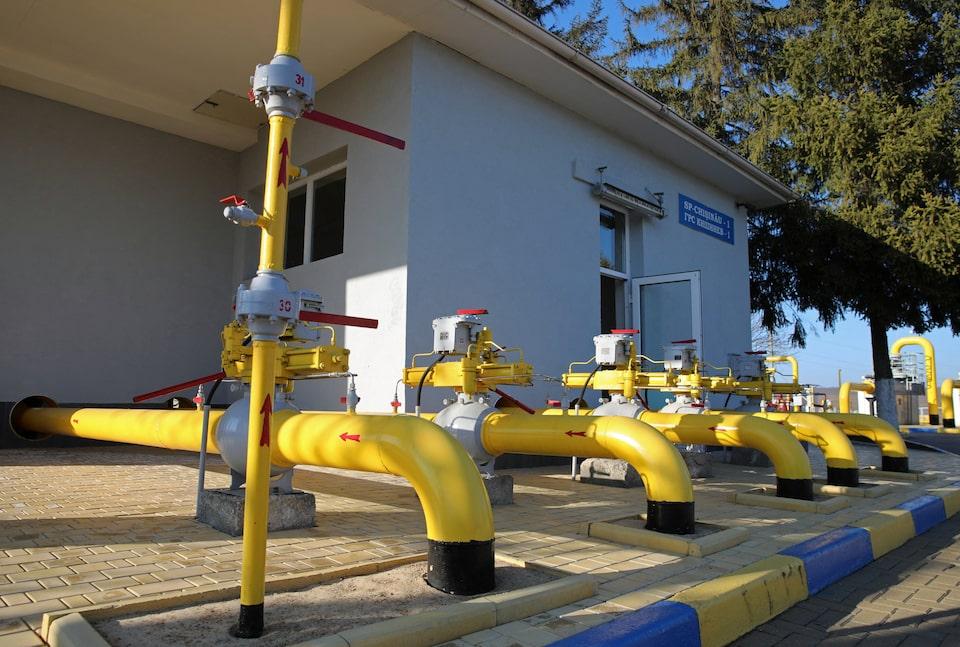
Cold weather forecasts to lift natural gas, diesel demand US diesel near two-month high, natgas at highest since Jan 2023 US crude oil stockpiles fell last week - Reuters poll Investors await release of China, US economic data NEW YORK, Dec 30 (Reuters) - Oil prices settled higher on Monday in thin late-year trade as investors bet on a drop in temperatures across the U.S. and Europe over the coming weeks to boost diesel demand. Brent crude futures rose 22 cents, or 0.3%, to settle at $74.39 a barrel. The more active March contract settled at $73.99 a barrel, up 20 cents. U.S. West Texas Intermediate crude gained 39 cents, or 0.6%, to settle at $70.99 a barrel. U.S. ultra-low sulfur diesel futures settled 2.5% higher at $2.30 a gallon, the highest since Nov. 5. "Diesel prices are leading the energy complex," fuel distributor TACenergy's trading desk wrote on Monday. Concerns of colder weather in the weeks ahead are boosting diesel as a substitute for natural gas in space heating, TACenergy wrote. Heating degree days, a measure of energy demand for space heating, are expected to rise to 499 over the next two weeks in the U.S., compared with 399 estimated on Friday, according to LSEG. Meteorologists at the firm also anticipate temperatures turning colder in Europe in January. U.S. natural gas futures surged 17% to their highest level since January 2023, boosted by the weather forecasts and rising export demand. Further support for oil prices could come from declining U.S. crude stockpiles, which are expected to have fallen by about 3 million barrels last week, a preliminary Reuters poll showed on Monday. Both Brent and WTI rose about 1.4% last week buoyed by a larger-than-expected drawdown from U.S. crude inventories in the week ended Dec. 20 as refiners ramped up activity and the holiday season boosted fuel demand. Investors are also waiting for China's PMI factory surveys, due on Tuesday, followed by U.S. ISM survey on Friday, to gauge the economic health of the top oil-consuming nations. A weak Chinese economy could cause oversupply in oil markets next year, said Alex Hodes, analyst at brokerage firm StoneX. Chinese authorities have agreed to issue a record 3 trillion yuan ($411 billion) in special treasury bonds in 2025 to revive economic growth, Reuters reported last week. Oil-market participants are also speculating that U.S. President-elect Donald Trump will cut Iranian crude oil exports to below 500,000 barrels per day through sanctions, taking over 1 million barrels of daily crude oil supply off the global market, Hodes said. Sign up here. https://www.reuters.com/business/energy/oil-inches-lower-thin-trade-investors-eye-china-us-data-2024-12-30/
2024-12-30 02:59
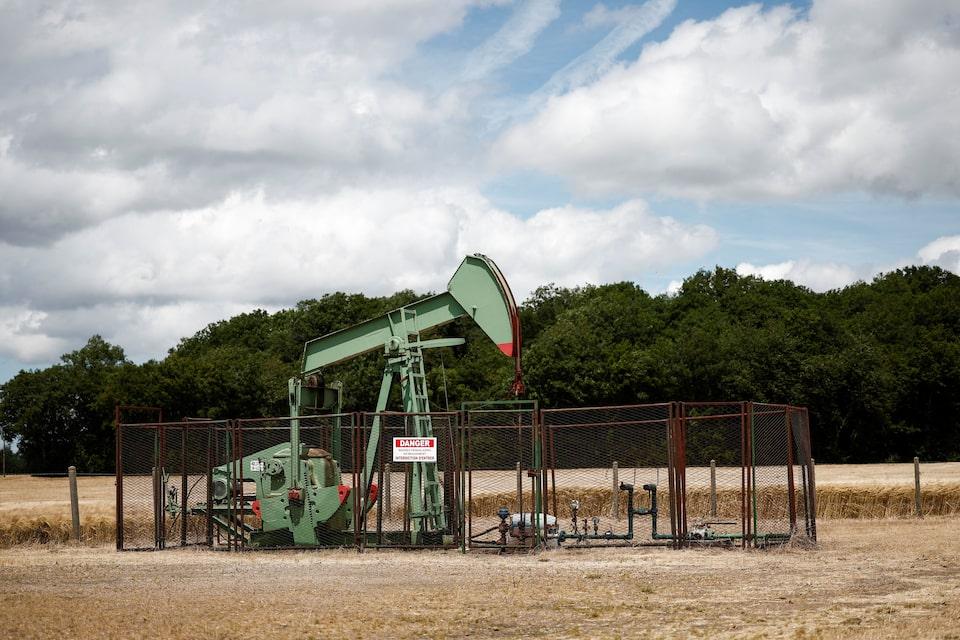
MUMBAI, Dec 30 (Reuters) - The Indian rupee is poised to rise on Monday, building on the momentum from the previous session in which the central banks' interventions prompted the exit of speculative dollar-long positions. The one-month non-deliverable forward indicated the rupee will open at 85.40-85.42 to the U.S. dollar, compared with its close of 85.5325 in the previous session. The rupee catered to a lifetime low of 85.8075 on Friday, leading to heavy dollar sales by the Reserve Bank of India. On the back of what a trader said "was a very busy intervention", the speculative dollar-long positions booked profits. "The excessive positions are being flushed out now that the RBI has intervened with intent," a currency dealer at a mid-sized private bank said. "This corrective downward move (on dollar/rupee) likely extends to 85.30 at best, not beyond that. I see this dip an opportunity to buy." The rupee has been struggling for several weeks due to dollar demand in the non-deliverable forward market, the weakness in Asian peers on concerns over U.S. President-elect Donald Trump's trade policies, the rally in U.S. Treasury rates and the dip in India's growth rate. The RBI has been intervening to slow the pace of the currency's decline, although its dollar sales have been a big factor in driving India's forex reserves to a seven-month low. HIGH US YIELDS TO KEEP RUPEE IN CHECK The 10-year U.S. yield last week climbed to its highest level since late April amid expectations that Trump's trade and immigration policies would lift inflation and his planned tax cuts would add to the U.S. debt load. The jump in yields is keeping the dollar index well supported. "Unless the trajectory of U.S. yields turns, the rupee will have it difficult," the currency dealer said. KEY INDICATORS: ** One-month non-deliverable rupee forward at 85.70; onshore one-month forward premium at 28 paisa ** Dollar index at 108 ** Brent crude futures up 0.1% at $74.2 per barrel ** Ten-year U.S. note yield at 4.63% ** As per NSDL data, foreign investors sold a net $186.7 mln worth of Indian shares on Dec. 26 ** NSDL data shows foreign investors bought a net $4 mln worth of Indian bonds on Dec. 26 Sign up here. https://www.reuters.com/markets/currencies/rupee-set-extend-recovery-rbi-motivated-dollar-long-liquidation-2024-12-30/
2024-12-30 00:29
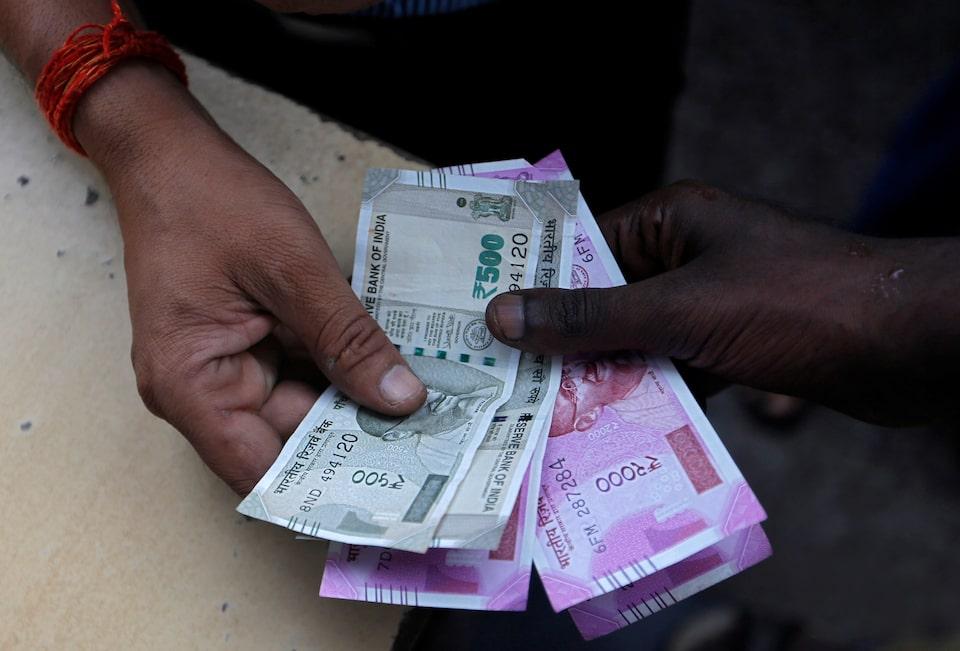
U.S., European stocks fall Dollar up broadly but weaker vs yen 10-year U.S. Treasury yield falls but holds above 4.5% All 11 S&P 500 sectors lower NEW YORK, Dec 30 (Reuters) - Global stocks dropped for a third straight session on Monday as the recent bout of elevated U.S. Treasury yields prompted profit-taking at the end of a strong year for equities. On Wall Street, all three major U.S. indexes closed with sharp losses in a broad selloff, with each of the 11 major S&P 500 sectors closing in negative territory led by declines in consumer discretionary (.SPLRCD) , opens new tab stocks. The benchmark 10-year U.S. Treasury yield's recent push above the 4.5% mark after the Federal Reserve on Dec. 18 signaled it would take a slower interest rate cut path has fueled concerns about elevated stock market valuations. "The bond market has somewhat taken its cue from what's happening in the equities market," said Jim Barnes, director of fixed income at Bryn Mawr Trust in Berwyn, Pennsylvania. "Investors did some profit-taking in equities and maybe re-deployed to fixed income. At this point, the bond market is compelling given the recent rise in bond yields over the past weeks." The Dow Jones Industrial Average (.DJI) , opens new tab fell 418.48 points, or 0.97%, to 42,573.73, the S&P 500 (.SPX) , opens new tab fell 63.90 points, or 1.07%, to 5,906.94 and the Nasdaq Composite (.IXIC) , opens new tab fell 235.25 points, or 1.19%, to 19,486.79. The 1% drop for the S&P 500 marked the first time the index has had two daily declines in the last five trading days of the year since at least 1952, according to Bespoke Investment Group. In a Sunday note, Julian Emanuel, senior managing director leading equity, derivatives and quantitative strategy at Evercore ISI in New York, said rising bond yields are the biggest challenge to the current cyclical bull market, with key levels for the 10-year yield at 4.5%, 4.75% and 5%. U.S. stocks have rallied this year with the S&P 500 up about 24%, buoyed by growth expectations surrounding artificial intelligence, expected rate cuts from the Fed, and more recently, the likelihood of deregulation policies from the incoming Trump administration. But the recent economic forecast from the Fed, along with worries that President-elect Donald Trump's policies such as tariffs may prove to be inflationary, have sent yields higher, with the 10-year reaching its highest level since May 2 at 4.641% last week. U.S. yields were lower on Monday, however, and briefly extended declines after data showed business activity in the U.S. Midwest contracted more than expected in December. Other data showed U.S. pending home sales rose more than expected in November, in a fourth straight month of gains, as buyers took advantage of better inventory despite elevated mortgage rates. MSCI's gauge of stocks across the globe (.MIWD00000PUS) , opens new tab lost 7.33 points, or 0.86%, to 844.29, but was still up more than 16% on the year. Trading volumes were muted ahead of the New Year holiday on Wednesday. Stock markets in Germany, Italy and Switzerland will be closed on Tuesday, while those in the UK and France have a half-day trading session. European stocks were also weaker due to elevated yields, with the 10-year German bund yield holding near six-week highs. The pan-European STOXX 600 (.STOXX) , opens new tab index closed down 0.46%, its first decline after three straight sessions of gains. Bond investors may also be wary of increasing supply as Trump has promised tax cuts with little in the way of details for restraining government spending. The yield on benchmark U.S. 10-year notes fell 7.6 basis points to 4.543%. Widening interest rate differentials have boosted the appeal of the U.S. dollar. The dollar index , which measures the greenback against other major currencies, is up 6.5% on the year. On Monday, the index edged up 0.07% to 108.06, with the euro down 0.25% at $1.0401. The single currency is down nearly 6% on the year versus the greenback. Against the yen , the dollar weakened 0.64% to 156.81 but was still holding at levels which recently prompted an intervention in the currency by Japanese officials. U.S. crude settled up 0.55% to $70.99 a barrel, and Brent settled at $74.39 per barrel, up 0.3% on the day. To read Reuters Markets and Finance news, click on https://www.reuters.com/finance/markets For the state of play of Asian stock markets please click on: Sign up here. https://www.reuters.com/markets/asia/global-markets-wrapup-1-2024-12-30/
2024-12-30 00:24
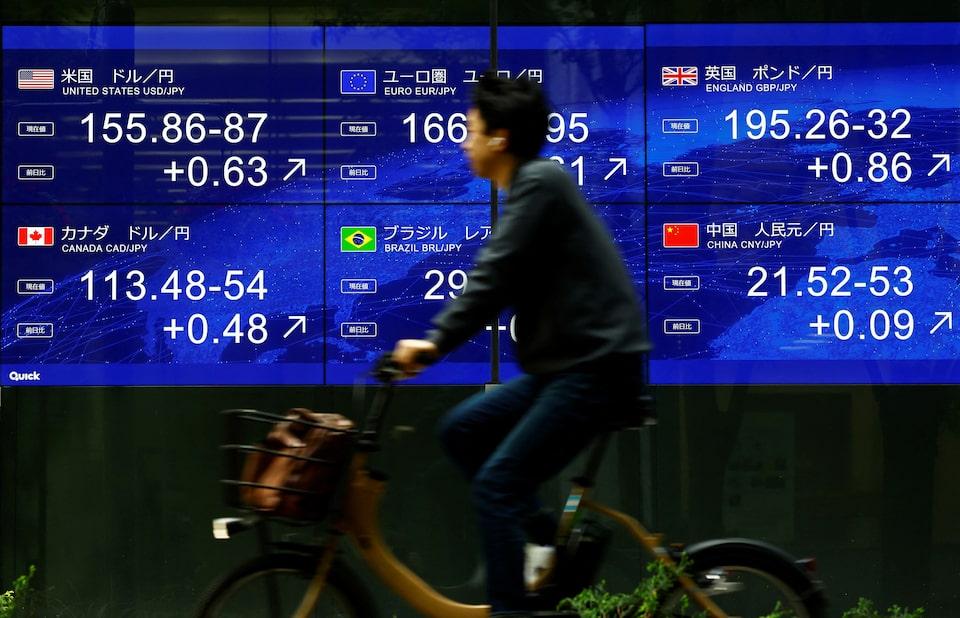
NEW YORK, Dec 27 (Reuters) - After closing the books on a banner year for U.S. stocks, investors expect to ride seasonal momentum into mid-January when a slew of economic data and a transition of power in Washington could send markets moving. The S&P 500 (.SPX) , opens new tab rose roughly 25% in 2024 through Dec. 27, while the technology-heavy Nasdaq Composite index <.IXIC >, which surpassed 20,000 for the first time in December, is up over 31%. On Friday, however, stocks sold off amid some profit taking and questions about how markets could perform in January, according to analysts and traders. "There are concerns that maybe the first part of (next) year can involve some repositioning and reallocation of funds and those that are trading today and next week are probably just trying to get a little bit ahead of that," said Robert Pavlik, senior portfolio manager at Dakota Wealth. Stocks tend to do well in the last five trading days of December and into the first two days of January, a phenomenon dubbed the Santa Claus rally, which has driven S&P gains of an average of 1.3% since 1969, according to the Stock Trader's Almanac. Despite the Friday selloff, for the last five trading sessions, the S&P rose 1.77%, while the Nasdaq was up 1.8%. Just how long upward momentum lasts will depend on several forces that could help drive markets in 2025. Monthly U.S. employment data on Jan. 10 should give investors a fresh view into the health and strength of the U.S. economy. Job growth rebounded in November following hurricane- and strike-related setbacks earlier in the year. The market's strength will be tested again shortly after, when U.S. companies start reporting fourth-quarter earnings. Investors anticipate a 10.33% earnings per share growth in 2025, versus a 12.47% expected rise in 2024, according to LSEG data, although excitement over President-elect Donald Trump's policies is expected to boost the outlook for some sectors like banks, energy and crypto. "There's the hope that taxes and regulations will be lowered or reduced next year, that will help support corporate profits, which are what drive the market in the first place," said Michael Rosen, chief investment officer at Angeles Investments. Trump's inauguration on Jan. 20 could also throw the markets some curve balls. He is expected to release at least 25 executive orders in his first day on a range of issues from immigration to energy and crypto policy. Trump has also threatened tariffs on goods from China and levies on products from both Mexico and Canada, as well as to crack down on immigration, creating costs that companies could ultimately pass on to consumers. Helen Given, associate director of trading at Monex USA, said a new administration always brings with it a large degree of uncertainty. There is also a good chance the impact of the Trump administration's expected trade policies is far from fully priced into global currency markets, she added. "We're looking ahead to see which of those proposed policies actually are enacted, which might be further down the pipeline," Given said, adding she expected a big impact on the euro, Mexican peso, the Canadian dollar, and the Chinese yuan. The conclusion of the Federal Reserve's first monetary policy meeting of the year in late January could also present a challenge to the U.S. stocks rally. Stocks tumbled on Dec. 18 when the Fed implemented its third interest-rate cut for the year and signaled fewer cuts in 2025 because of an uncertain inflation outlook, disappointing investors who had expected lower rates to boost corporate profits and valuations. Still, that could be good for alternative assets like cryptocurrencies. The incoming crypto-friendly Trump administration is adding to a number of catalysts that are boosting crypto investors' confidence, said Damon Polistina, head of research at investment platform Eaglebrook Advisors. Bitcoin surged above $107,000 this month on hopes of friendlier Trump policies. Sign up here. https://www.reuters.com/markets/us/wall-st-week-ahead-trumps-first-actions-job-data-test-market-january-2024-12-27/

2024-12-30 00:03
LAUNCESTON, Australia, Dec 30 (Reuters) - It may pay to be a contrarian in 2025, as the upcoming year has the potential to be one of the most volatile in recent memory, particularly in commodities. There is the return of U.S. President-elect Donald Trump, who is threatening to disrupt global trade flows with a wall of tariffs on imports into the United States. With an incoming Republican-led Congress, he will have little to restrain him this time around. There is also still considerable uncertainty over the economic trajectory of China, the world's second-biggest economy and largest buyer of commodities. And the future of the global energy transition has become much hazier because of Trump's climate change scepticism, the increasing influence of right-wing political parties in Europe, and increasing public wariness of the costs they may be forced to shoulder as the world shifts away from carbon-based energy. All of the above could create an environment in which contrarian ideas turn into realities. Below I outline five such scenarios. To be clear, these are not my base case expectations for 2025. Rather they are possibilities worth keeping an eye on. 1. Trump is way better than expected In this scenario, virtually everything goes right for the incoming Trump administration. The threat of tariffs is enough to force concessions from major trading partners, resulting in the implementation of only a few small trade barriers. The United States remains the global economic standout, and the rest of the world essentially rides on its coattails. Inflation eases, monetary policy is relaxed, and China leads an Asian economic recovery as Beijing's stimulus efforts finally bear fruit. In turn, commodity prices are pushed upward, apart from crude oil, which would probably struggle from too much supply, especially if U.S. producers increase output significantly as Trump is demanding. There may also be a peace dividend if Trump helps to broker ceasefires in Ukraine and the Middle East, even if the former requires giving into some of Russian President Vladimir Putin's demands. This would be bullish for commodities exposed to global growth, such as copper, but potentially bearish for crude and natural gas if Russian supplies return to the market. 2. Trump is way worse than feared The new Trump administration follows through on his most extreme threats, erecting massive trade barriers and withdrawing from, or undermining, international pacts and treaties, including the Paris climate deal and the North Atlantic Treaty Organisation. If this happens, expect the global economy to suffer as countries battle to re-order trade flows and supply chains. Inflation would probably rise globally, and monetary policy may be tightened in many major economies as a result. Commodities exposed to global growth, such as copper and iron ore, would weaken, as would crude oil and LNG as demand softens. A preview of this is copper's reaction to Trump's election victory, with London contracts dropping 7.7% in the following week. It is also likely that bond vigilantes would punish Treasuries in response to Trump's policies, especially if he combines huge tariffs with deficit-boosting tax cuts. And U.S. equities may ultimately turn bearish if Wall Street realises that the sugar high from tax cuts will not outweigh the economic damage from tariffs. 3. China comes roaring back Many Western analysts now hold the view that China is the sick man of Asia, meaning a rebound in its economy would come as a big surprise. But it is possible that 2024 will be remembered not as a moment of decline but as the year Beijing cleaned up the troubled parts of its economy, such as the poor financial state of housing developers and local governments. These efforts could start to bear fruit in 2025, allowing Beijing to focus more on boosting consumer sentiment and spending. If China is also able to successfully navigate the new Trump administration's policies, it could change tack to engage more constructively with Europe and build better partnerships with the global south, finding new markets to exploit its leadership in energy transition technologies and products. A revitalised China would be a boon for commodities such as copper, iron ore, liquefied natural gas and coal, but perhaps not as much for crude oil, given its ongoing and rapid switch to electric vehicles. 4. OPEC+ starts to fracture The remarkable cohesion of OPEC and its allies, the group known as OPEC+, has been a defining feature of crude oil markets in recent years. This collective export body has used output cuts to anchor crude prices in a range around $75 a barrel for the past two years. That may not be as strong as some members would like, but is still considerably higher than would likely have been the case without the production discipline. However, the ongoing demand softness and the new Trump administration's aims to further boost U.S. output may place more pressure on the bloc's unity. Some members, such as the United Arab Emirates, may take the view that it is best to monetise reserves sooner rather than later, especially if they start to believe that the China-led switch to electric vehicles (EVs) has become a juggernaut that could upend global energy markets. 5. The energy transition accelerates, but the United States is left behind One way China can counteract any U.S. trade barriers is to boost its engagement with the rest of the world, and one of the best ways of doing this is by expanding trade in manufactured goods such as EVs, solar panels, batteries and wind turbines. The energy transition could accelerate on the back of cost-competitive Chinese goods, coupled with a willingness among buyers outside the United States to move away from expensive fossil fuels. In this scenario, the United States gets further left behind as Trump's "America First" policy effectively becomes America alone. If the energy transition does accelerate, it will be positive for copper, lithium and a host of minor metals. Silver may also benefit, given its use in making solar panels. Overall, the first part of 2025 is likely to be defined by a period of uncertainty, followed by markets adapting to whatever new realities unfold. Past experience suggests that initial price and volume volatility does not last and commodity markets are remarkably adept at adjusting. The views expressed here are those of the author, a columnist for Reuters. Sign up here. https://www.reuters.com/markets/commodities/top-five-contrarian-commodity-scenarios-2025-russell-2024-12-30/

2024-12-29 22:14
Separatist Moldovan region starts cutting gas supplies Deal for gas transit through Ukraine ends at New Year Moldova denies Russian allegation of arrears for gas supplies CHISINAU, Dec 29 (Reuters) - Authorities in Moldova's separatist Transdniestria region on Sunday cut off gas supplies to several state institutions as a deal allowing Russian gas to transit through Ukraine comes to an end at the close of the year. The cutoff was imposed two days before the transit deal runs out, following Ukraine's refusal to extend it in wartime. It has sparked fears of mass New Year power cuts in Moldova, an ex-Soviet state between Ukraine and Romania. The company that distributes gas in the pro-Russian separatist region, Tiraspoltransgaz, said 12 state institutions were cut off around the towns of Dubasari and Bender, on the border with government controlled-areas of Moldova. They included four education establishments and a medical facility as well as a police station and a prosecutor's office. The cuts were imposed a day after Russian energy giant Gazprom GAZP.MM said it would suspend gas exports to Moldova from 0500 GMT on Jan. 1 due to unpaid debt by Moldova. Moldova disputes the allegations of arrears for past gas shipments and accuses Russia of destabilising the country. Russia supplies Moldova with about 2 billion cubic metres of gas per year, which has been piped via Ukraine to pro-Russian separatist Transdniestria, where a thermal plant produces cheap power that is sold to government-controlled parts of Moldova. "The Kremlin's real goal here is to destabilise Moldova and plunge it into chaos," former Energy Minister Victor Parlicov told Radio Moldova. Parlicov was dismissed for failing to tackle the energy crisis after meeting the head of Gazprom last month. Moscow denies all such allegations. Both government-controlled Moldova and Transdniestria have imposed economic states of emergency, including measures to reduce power consumption at peak hours. Parlicov dismissed Gazprom's claim Moldova had accumulated arrears of $709 million, saying that since 2022 all gas shipped to Moldova had been directed straight to separatist Transdniestria. The country has since diversified its sources and secured gas supplies from Romania and other countries. Moldova says an international audit of its transactions with Gazprom puts the payment arrears at $8.6 million. Moldovan Prime Minister Dorin Recean has condemned Gazprom's decision ahead of the total shutdown of Russian gas exports via Ukraine, also intended for Slovakia, Austria, Hungary and Italy. Moldova has urged Gazprom to consider other routes to supply the country, particular through the Turkstream pipeline in Turkey and from there through Bulgaria and Romania. Slovak Prime Minister Robert Fico, who met Russian President Vladimir Putin in the Kremlin last week, has criticised Ukraine for refusing to extend the deal. His foreign minister, Juraj Blanar, on Sunday rejected Ukrainian President Volodymyr Zelenskiy's suggestion Fico opened a "second energy front" against Kyiv. Sign up here. https://www.reuters.com/world/europe/moldovas-separatist-region-cuts-gas-ukraine-transit-deal-runs-out-2024-12-29/