2024-12-27 03:03
HANOI, Dec 27 (Reuters) - Vietnam will impose an anti-dumping levy of 97% on wind towers originating from China following a 15-month investigation, the trade ministry said. The tariff is expected to take effect 15 days from the date of signing and will be in place for five years, the ministry said in a statement dated December 24. In September 2023, Vietnam launched an investigation into the sector after domestic producers claimed the dumping of Chinese-made towers was damaging them. "Based on the collected evidence, wind towers imported from a number of Chinese enterprises were dumped and caused significant damage to the domestic manufacturing industry," the trade ministry said in a statement. The authorities concluded that domestic manufacturers were capable of producing high-quality wind towers that could be exported. The measures will apply on almost all Chinese firms, with an exception for Jiangsu Zhenjiang New Energy Equipment Co Ltd as it was not found to have in dumping during the investigation period, the ministry said. Sign up here. https://www.reuters.com/world/asia-pacific/vietnam-says-impose-97-anti-dumping-duty-chinese-wind-towers-2024-12-27/

2024-12-27 01:07
European majors slow clean energy investments Investors rewarding oil and gas focus New Trump U.S. presidency among big factors in 2025 LONDON, Dec 27 (Reuters) - Major European energy companies doubled down on oil and gas in 2024 to focus on near-term profits, slowing down - and at times reversing - climate commitments in a shift that they are likely to stick with in 2025. The retrenchment by oil majors comes after governments around the world slowed the rollout of clean energy policies and delayed targets as energy costs soared following Russia's full-scale invasion of Ukraine in 2022. Big European energy companies that had invested heavily in the clean energy transition found their share performance lagging U.S. rivals Exxon (XOM.N) , opens new tab and Chevron (CVX.N) , opens new tab, which had kept their focus on oil and gas. Against this backdrop, the likes of BP (BP.L) , opens new tab and Shell (SHEL.L) , opens new tab this year sharply slowed their plans to spend billions on wind and solar power projects and shifted spending to higher-margin oil and gas projects. BP, which had aimed for a 20-fold growth in renewable power this decade to 50 gigawatts, announced in December it would spin off , opens new tab almost all its offshore wind projects into a joint venture with Japanese power generator JERA. Shell, which once pledged to become the world's largest electricity company, largely stopped investments in new offshore wind projects, exited power markets in Europe and China and weakened carbon reduction targets. Norway’s state-controlled Equinor (EQNR.OL) , opens new tab also slowed spending on renewables. "Geopolitical disruptions like the invasion of Ukraine have weakened CEO incentives to prioritise the low-carbon transition amid high oil prices and evolving investor expectations," Rohan Bowater, analyst at Accela Research, told Reuters. He said BP, Shell and Equinor reduced low-carbon spending by 8% in 2024. Shell told Reuters it remained committed to becoming a net zero emissions energy business by 2050 and continues to invest in the energy transition. Equinor said: "The offshore wind segment has been through demanding times in the last couple of years due to inflation, cost increase, bottlenecks in the supply chain, and Equinor will continue to be selective and disciplined in our approach." BP did not respond to a request for comment. TOUGH CLIMATE The oil companies' retrenchment is bad news for efforts to mitigate climate change. Global heat-trapping carbon emissions are forecast to climb to a new high in 2024, which will be the warmest year on record. And 2025 is shaping up to be another tumultuous year for the $3 trillion energy sector, with climate-sceptic Donald Trump returning to the White House. China, the world's biggest crude oil importer, is trying to revive its faltering economy, potentially boosting oil demand. Europe faces continued uncertainty over the war in Ukraine and political turmoil in Germany and France. All those tensions were laid bare at the annual United Nations climate conference in Baku in Azerbaijan in November, when the host country's President Ilham Aliyev, hailed oil and gas as "a gift from God". That summit yielded a global climate finance deal but disappointed climate advocates who had hoped governments would coalesce around a phase-out of oil, gas and coal. The energy companies will be watching to see if Trump follows through on promises to repeal President Joe Biden's landmark green energy policies, which have spurred investments in renewables across the United States. Trump has vowed to remove the United States from global climate efforts, and has appointed another climate sceptic, oil executive Chris Wright, as his energy secretary. OIL DEMAND There are potential pitfalls in the energy majors' renewed emphasis on oil and gas. Demand growth in China, which has driven global prices for two decades, is slowing, with growing signs that its gasoline and diesel consumption is plateauing. At the same time, OPEC and top oil producing allies have repeatedly delayed plans to unwind supply cuts as other countries, led by the United States, increase oil output. As a result, analysts expect oil companies to face tighter financial constraints next year. Net debt for the top five western oil giants is expected to rise to $148 billion in 2024 from $92 billion in 2022, based on LSEG estimates. Sign up here. https://www.reuters.com/business/energy/big-oil-backtracks-renewables-push-climate-agenda-falters-2024-12-27/

2024-12-27 00:42
SAO PAULO/BRASILIA, Dec 26 (Reuters) - A justice on Brazil's top court on Thursday suspended a law from the country's top soy-producing state that would end tax breaks for firms following an agreement to not purchase soy from deforested areas of the Amazon rainforest. Justice Flavio Dino suspended the law from the western state of Mato Grosso from going into effect on Jan. 1 until a final decision is made by the court. WHY IT'S IMPORTANT Brazil is the world's largest soy producer and exporter, and Mato Grosso is the top-producing state. The "Amazon soy moratorium" agreement, praised by scientists and conservationists, was voluntarily signed by global commodity giants in the mid-2000s, which pledged to stop buying soy from farms in the rainforest that were deforested after 2008. Under Brazil's forestry rules, Amazon landowners can clear up to 20% of their property. But an early 2000s deforestation surge sparked calls for action by companies that feared a wider ban. KEY QUOTES Dino wrote that the state law "seems to violate the principle of free enterprise" as it creates an uneven environment for the companies that voluntarily decide to adhere to the agreement. He also said the law "presents signs of misuse of purpose, as it uses tax rules as an punitive instrument." THE RESPONSE Mato Grosso will appeal the decision, Governor Mauro Mendes said in a video published on his social media accounts on Thursday. He said if the appeal is not accepted, additional measures will be taken. "We can't accept that companies, national or foreign ones, come to Brazil and make demands that are not in the Brazilian law," he said. ADDITIONAL CONTEXT Earlier this month, soybean farm lobby Aprosoja-MT, based in Mato Grosso, formally asked Brazil watchdog CADE to end the moratorium, saying it fostered "a purchasing cartel" and harmed farmers who strictly comply with the South American nation's forestry code. Sign up here. https://www.reuters.com/world/americas/brazil-court-suspends-law-cutting-tax-breaks-firms-with-deforestation-soy-2024-12-27/
2024-12-27 00:36
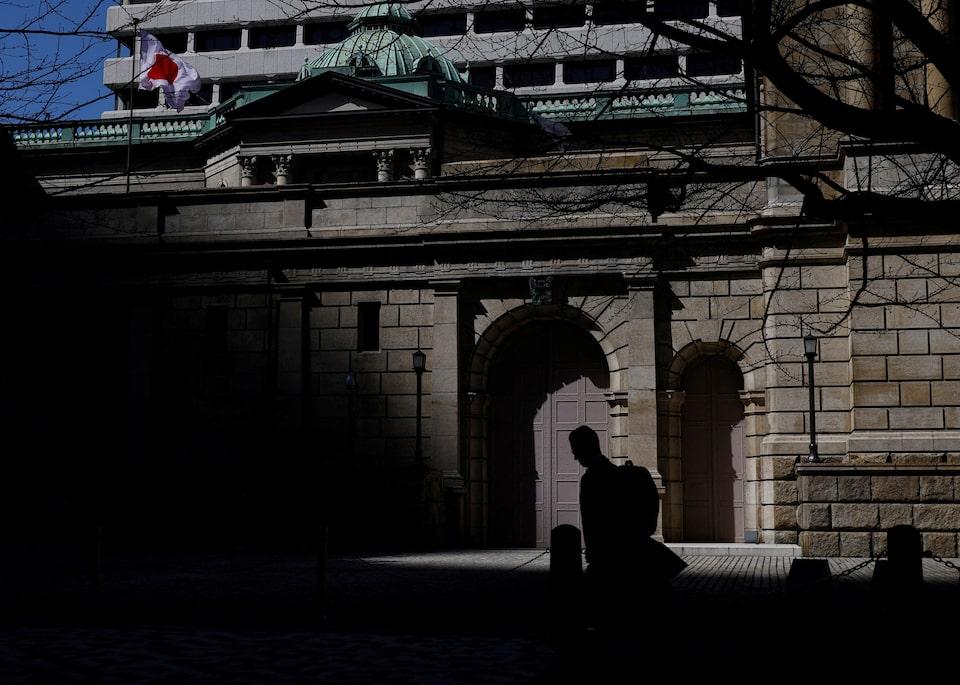
BOJ 'likely to hike in near future,' one member says Some called for hiking rates in preemptive, timely fashion Others warned of soft consumption, U.S. uncertainties BOJ next meets for rate review on Jan. 23-24 TOKYO, Dec 27 (Reuters) - Some Bank of Japan policymakers saw conditions falling into place for an imminent rate hike with one predicting a move "in the near future," a summary of opinions at the bank's December meeting showed, keeping alive the chance of a January hike. The BOJ held interest rates steady at 0.25% at this month's meeting, a move governor Kazuo Ueda explained as aimed at scrutinising more data on next year's wage momentum and clarity on the incoming U.S. administration's economic policies. "There are high uncertainties over the course of discussions on tax and fiscal policy in Japan and over the policy stance of the new U.S. administration taking office at the beginning of 2025," one member was quoted as saying in the summary in calling for keeping policy steady at the Dec. 18-19 meeting. Another opinion also voiced concern over still-weak profitability of smaller firms in Japan and high uncertainty over the overseas economy, the summary showed on Friday. But others signalled that conditions for raising interest rates were falling into place. While stressing the need to monitor uncertainty over the U.S. economy for now, one member said the BOJ "will likely decide to raise the policy interest rate in the near future," the summary showed. "While there remain uncertainties regarding overseas economies, Japan's economy is in a state where the degree of monetary accommodation can be adjusted," another opinion showed. HAWK-DOVE DIVIDE The BOJ ended negative interest rates in March and raised its short-term policy target to 0.25% in July. It has signalled a readiness to hike again if wages and prices move as projected. All respondents in a Reuters poll taken earlier this month expected the BOJ to raise rates to 0.50% by end-March. The BOJ next meets for a policy review on Jan. 23-24. While the summary was closely watched by markets for any hints on the chance of a January rate hike, the nine-member board appeared divided between those who favoured acting soon, and others who fretted about slow wage growth and soft overseas demand. A member in the hawkish camp said the BOJ must raise rates in a "forward-looking, timely and gradual manner" as risks to prices have become skewed to the upside, the summary showed. Another opinion said the BOJ should raise rates in a preemptive manner as renewed rises in import prices, driven largely by a weak yen, will likely accelerate inflation further. At the October meeting, board member Naoki Tamura proposed unsuccessfully to raise interest rates to 0.5%. Among the doves, one member said there was no pressing need to hike rates now with import costs stabilising and wage growth still not catching up with the pace of inflation. "It will take some time for wage hikes to push up services prices," due to soft consumption, another opinion showed. Japan's economy expanded an annualised 1.2% in the three months to September, slowing from the previous quarter's 2.2% growth, with consumption up a feeble 0.7%. BOJ policymakers hope that workers' regular pay, which recently has been rising at an annual pace of 2.5% to 3%, keeps increasing and supports consumption. There are growing signs that companies are keen to continue hiking pay due to intensifying labour shortages. But slowing demand in China and uncertainty over U.S. president-elect Donald Trump's policies could weigh on corporate profits. The BOJ's report on regional economies, due on Jan. 9, will offer clues on whether wage hikes are broadening out and taking root among smaller firms. BOJ Deputy Governor Ryozo Himino will also deliver a speech and hold a news conference on Jan. 14, which may offer further hints on whether the bank will raise rates next month. Sign up here. https://www.reuters.com/markets/asia/boj-board-divided-how-soon-hike-rates-december-summary-shows-2024-12-27/
2024-12-27 00:22
Weekly jobless claims at 219,000, below estimates Crypto stocks fall tracking losses in bitcoin Yield on U.S. 10-year Treasuries hits highest since May Indexes: Dow up 0.07%, S&P 500 down 0.04%, Nasdaq off 0.05% Dec 26 (Reuters) - The Dow Jones Industrial Average (.DJI) , opens new tab closed fractionally higher on Thursday, stretching its winning streak to five sessions despite light trading volumes and rising U.S. Treasury yields weighing on some of the dominant technology megacaps. While the Nasdaq Composite (.IXIC) , opens new tab and the S&P 500 (.SPX) , opens new tab were broadly unchanged, the indexes both finished slightly in negative territory. This snapped the Nasdaq's four-session run of higher closes, and ended the S&P 500's own run at three sessions. On a day of few catalysts, investors responded to yields on U.S. government bonds inching higher, including the yield on the benchmark 10-year Treasury note hitting its highest since early May at 4.64% earlier in the session. A strong auction of seven-year notes early in the afternoon though helped yields come off slightly, with the 10-year note at 4.58% in late-afternoon trade. Higher yields are traditionally seen as negative for growth stocks, as it raises the cost of their borrowing to fund expansion. With markets increasingly dominated by the megacap technology stocks known as the Magnificent Seven, crimping their performance - especially in lieu of other market catalysts - will put downward pressure on benchmark indexes. The S&P 500 (.SPX) , opens new tab slipped 2.45 points, or 0.04%, to 6,037.59 points, while the Nasdaq Composite (.IXIC) , opens new tab lost 10.77 points, or 0.05%, to 20,020.36. The Dow Jones Industrial Average (.DJI) , opens new tab rose 28.77 points, or 0.07%, to 43,325.80. Six of the megacaps fell, with Tesla (TSLA.O) , opens new tab leading decliners with a 1.8% fall. The outlier was Apple (AAPL.O) , opens new tab, rising 0.3% and continuing to edge closer to becoming the first company in the world to hit a market value of $4 trillion. The megacap tech stocks came off somewhat in the summer, as investors sought to rotate some capital into other sectors offering more value. Since the U.S. elections in November though, they have resumed their drive upwards and have outperformed the equal-weighted version of the S&P 500, said Adam Turnquist, chief technical strategist for LPL Financial. "As a technician, what you want to see is breakouts in absolute terms and relative terms and the Mag 7 is checking the boxes there, so very constructive leadership going into the year-end," he said. The three main indexes have hit multiple record highs this year on hopes of a lower interest rate environment and the prospects of artificial intelligence boosting corporate profits. However, U.S. stocks have hit a speed bump in the final month of the year following an election-led rally in November as investors assess the Federal Reserve's projection of fewer interest rate cuts in 2025. Looking ahead, LPL Financial's Turnquist said the last few weeks have seen significant reliance on the Magnificent Seven stocks driving markets higher, and we may be starting to see the cracks in this momentum. Therefore, to see further benchmark index increases, we will need to see input from other sectors of the economy. One data release on Thursday showed the number of Americans filing new applications for jobless benefits dipped to the lowest in a month last week, consistent with a cooling but still healthy U.S. labor market. Markets are in a seasonally strong period - called the "Santa Claus rally" - a pattern attributed to low liquidity, tax-loss harvesting and investing of year-end bonuses. The S&P 500 has gained an average of 1.3% in the last five trading days of December and the first two days of January since 1969, according to the Stock Trader's Almanac. Cryptocurrency-related stocks were down after Bitcoin declined 3.9%. MicroStrategy (MSTR.O) , opens new tab, MARA Holdings (MARA.O) , opens new tab and Coinbase Global (COIN.O) , opens new tab all fell between 1.9% and 4.8%. Among the 11 S&P sectors which traded lower were consumer discretionary (.SPLRCD) , opens new tab, off 0.6%, and the energy index (.SPNY) , opens new tab, which slipped 0.1% as it tracked marginal weakness in U.S. crude prices. Sign up here. https://www.reuters.com/markets/us/futures-lower-holiday-thinned-trading-2024-12-26/
2024-12-26 23:48
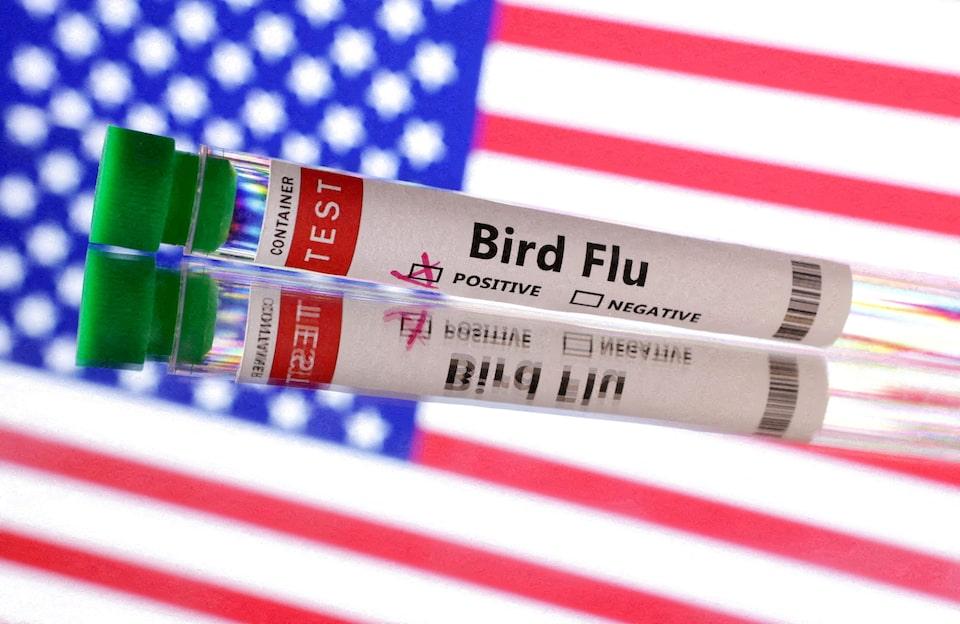
Dec 26 (Reuters) - The U.S. Centers for Disease Control and Prevention said on Thursday its analysis of samples from the first severe case of bird flu in the country last week showed mutations not seen in samples from an infected backyard flock on the patient's property. The CDC said the patient's sample showed mutations in the hemagglutinin (HA) gene, the part of the virus that plays a key role in it attaching to host cells. The health body said , opens new tab the risk to the general public from the outbreak has not changed and remains low. Last week, the United States reported its first severe case of the virus, in a Louisiana resident above the age of 65, who was suffering from severe respiratory illness. The patient was infected with the D1.1 genotype of the virus that was recently detected in wild birds and poultry in the United States, and not the B3.13 genotype detected in dairy cows, human cases and some poultry in multiple states. The mutations seen in the patient are rare but have been reported in some cases in other countries and most often during severe infections. One of the mutations was also seen in another severe case from British Columbia, Canada. No transmission from the patient in Louisiana to other persons has been identified, said the CDC. (This story has been refiled to add the dropped words in the name of the government body, in paragraph 1) Sign up here. https://www.reuters.com/business/healthcare-pharmaceuticals/bird-flu-virus-shows-mutations-first-severe-human-case-us-cdc-says-2024-12-26/