2024-12-24 12:16
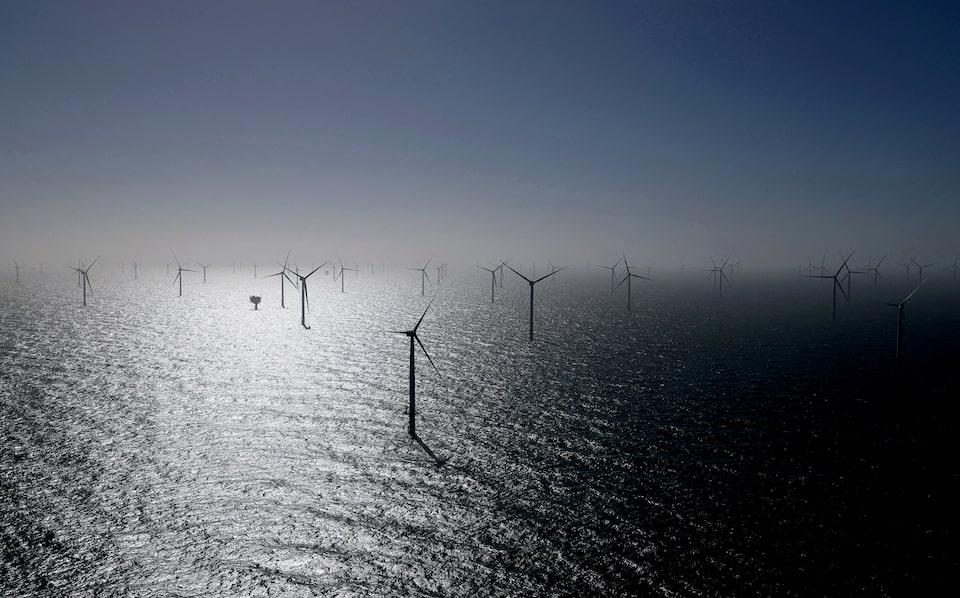
TOKYO, Dec 24 (Reuters) - Japan's industry and land ministries on Tuesday selected two consortiums, one including energy major BP (BP.L) , opens new tab, as operators for two offshore wind blocks in a third major round of public auctions. The results of this round held under a law promoting wind power development, were closely watched by domestic and international energy companies weighing the advantages of renewable exposure, industry analysts said. Japan aims to accelerate offshore wind development as part of its decarbonisation strategy, targeting 10 gigawatts (GW) of offshore wind farm deals by 2030, and up to 45 GW by 2040. A consortium of JERA, Green Power Investment, and Tohoku Electric Power (9506.T) , opens new tab won the 615 megawatts (MW) wind farm on the southern side of the Japan Sea off Aomori prefecture, near Tsugaru city and the town of Ajigasawa. Another consortium, including Marubeni (8002.T) , opens new tab, Kansai Electric Power (9503.T) , opens new tab, BP's unit BP IOTA, Tokyo Gas (9531.T) , opens new tab and local firm Marutaka secured the 450 MW wind farm off the coast of Yamagata prefecture near the Yuza town. Both bottom-fixed projects are scheduled to begin operations in June 2030, with turbines supplied by Spain's Siemens Gamesa, a government statement said. In a previous auction round, Spanish utility Iberdrola IBE.MC and Germany's RWE RWEG.DE were among the winning consortiums of a separate offshore block. Earlier this month, BP and JERA agreed to join forces to form one of the world's largest offshore wind operators, highlighting a trend of Japanese firms partnering with western players for expertise and growth, while foreign companies seek entry into Japan's expanding renewable energy market. Japan's government conducted its third round of offshore wind tenders from mid-January to mid-July, as it strives to meet its 2050 carbon-neutral target. A draft revised energy plan envisions renewables accounting for up to 50% of its electricity mix by fiscal 2040. However, surging development costs, supply chain issues and inflation have weighed on the offshore wind sector. Sign up here. https://www.reuters.com/business/energy/japan-selects-two-groups-third-offshore-wind-power-round-2024-12-24/
2024-12-24 12:04
BHUBANESWAR, India, Dec 24 (Reuters) - Indian Oil Corporation (IOC.NS) , opens new tab will invest 610 billion rupees ($7 billion) to establish a naphtha cracker project in Paradip in the eastern state of Odisha, the state government said on Tuesday. India's top refiner is expected to sign an initial agreement with the state government in January, the Odisha chief minister's office said in a statement. IOC operates a refinery in Paradip with a capacity of 300,000 barrels per day. ($1 = 85.1160 Indian rupees) Sign up here. https://www.reuters.com/world/india/indian-oil-corp-invest-610-bln-rupees-naphtha-cracker-project-odisha-state-2024-12-24/

2024-12-24 11:43
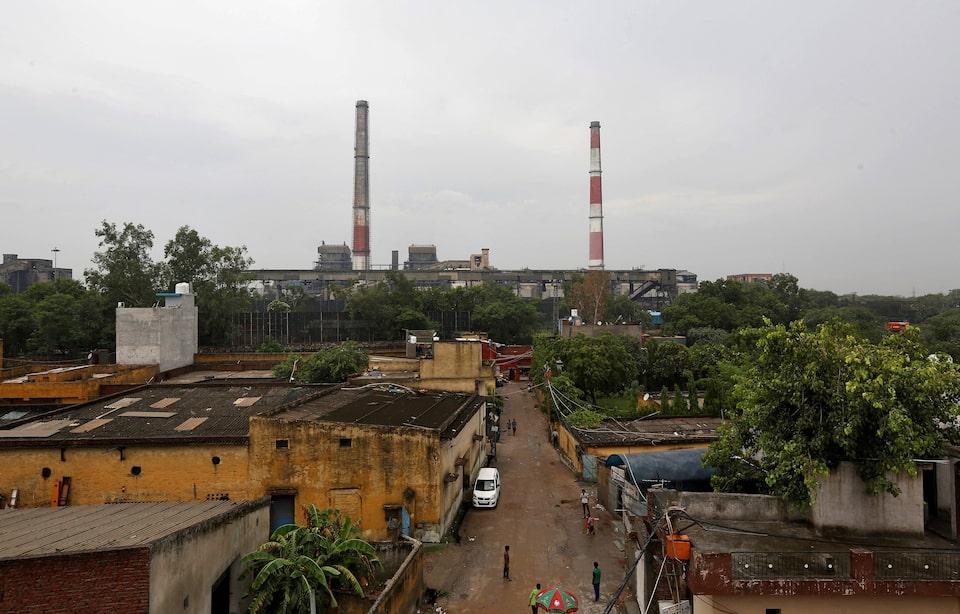
Current mandate is to install sulphur-cutting equipment by 2026 Most companies have yet to install costly equipment Government meeting discusses installing local, cheaper system Power ministry seeks deadline extension as discussions continue NEW DELHI, Dec 24 (Reuters) - India is reviewing a decade-old $30 billion programme requiring coal-fired power plants to install equipment to cut sulphur emissions after government-backed studies showed they had little impact on curbing pollution, according to a document reviewed by Reuters. Nearly 540 power plant units were required by 2026 to install flue-gas desulphurization (FGD) systems that remove sulphur from the plants' exhaust gases, but only about 8% have done so, including those run by state-run NTPC (NTPC.NS) , opens new tab and privately held JSW Power. The government previously said expensive foreign technology and manpower were some of the hurdles in achieving the target. But with cities like New Delhi and Kanpur some of the most polluted in the world, India's government is under pressure to reduce the impact of the sector's emissions. Instead of FGDs, government officials have proposed deploying locally made electrostatic precipitators, according to a document from the Office of the Principal Scientific Advisor to the government summarising a Nov. 13 meeting between it and the ministries of power, coal and the environment. The precipitators, which remove fine particles such as dust and smoke from emissions, are one-fifth of the cost of an FGD system. Representatives of the ministries and Ajay Kumar Sood, the principal scientific adviser who chaired the meeting, did not immediately respond to requests seeking comment. The document showed several of the attendees agreed Indian power plants would be better off focusing on cutting emissions of tiny particulate matter that can lodge deep in the lungs rather than on sulphur reductions. It cited a study by the National Institute of Advanced Studies (NIAS) that said Indian coal, which is used to generate 92% of the country's thermal power, has a sulphur content of only 0.5%. Sulphur content is 0.9% on average for coal imported into India and more than 1% for coal used in China, where FGDs developed by companies like GE and Mitsubishi Power are common, said R. Srikanth, head of the engineering school at NIAS. "There was really never any case for having FGDs in India, in every place, every thermal power plant in the country," Srikanth, who attended the meeting, told Reuters on Tuesday. "All our cities actually suffer from high particulate-matter pollution, not from sulphur dioxide pollution," he said. 'SMOKESCREEN' Srikanth said more than 200 FGDs are currently waiting to be installed in India because companies are reluctant to shut down their power plants for nearly 45 days for the purpose. The NIAS study said Indian coal's high ash content was a bigger problem for power plants, and high-efficiency electrostatic precipitators would be better at curbing that pollution. The document also cited government-backed studies by the Indian Institute Of Technology (IIT) Delhi and National Environmental Engineering Research Institute that showed plants with the FGD systems showed negligible improvement in air quality. An FGD system costs 12 million rupees ($141,000) per megawatt of capacity. Insisting on FGDs could hamper India's goal of increasing coal-fired capacity by 37% by 2032 to meet surging power demand, it said. A decision will be made based on further consultations, the document showed. India's government policy think tank, NITI Aayog, earlier this year proposed halting FGD installations. The document also showed that while the government is working on its decision, the power ministry last month asked the environment ministry to extend the deadline for FGD installation by another three years beyond 2026. The original deadline was 2017. Environmental groups say coal-fired plants account for about 80% of industrial emissions of sulphur and nitrogen oxides in India, which cause lung disease and acid rain. According to a 2019 Greenpeace report, India was the world's largest emitter of sulphur dioxide, with most coming from coal-fired power plants. "The installation of FGD systems and carbon capture technologies should not be used as a smokescreen to justify the continued power generation from these unsustainable, CO2-intensive sources," IIT Delhi said in its report. Sign up here. https://www.reuters.com/world/india/india-reviews-30-bln-sulphur-cutting-programme-coal-plants-2024-12-24/
2024-12-24 11:18
Ship was en route to Vladivostok, says owner Was reported to be carrying port cranes, ice-breaker parts 14 crew rescued, two still missing Cause of engine room explosion unknown so far MOSCOW, Dec 24 (Reuters) - A Russian cargo ship called Ursa Major sank in the Mediterranean Sea overnight after an explosion ripped through its engine room and two of its crew are still missing, the Russian Foreign Ministry said on Tuesday. The vessel, built in 2009, was controlled by Oboronlogistika, a company that is part of the Russian Defence Ministry's military construction operations, which had previously said it was en route to the Russian far eastern port of Vladivostok with two giant port cranes lashed to its deck. The Foreign Ministry's crisis centre said in a statement that 14 of the ship's 16 crew members had been rescued and brought to Spain, but that two were still missing. It did not say what had caused the engine room explosion. Russia's embassy in Spain was cited by the state RIA news agency as saying it was looking into the circumstances of the sinking and was in touch with the authorities in Spain. Oboronlogistika and SK-Yug, a company LSEG lists as part of the group and the ship's direct owner and operator, declined to comment on the sinking. Both entities were placed under sanctions by the United States in 2022 for their ties to Russia's military as was the Ursa Major itself. Unverified video footage of the ship heavily listing to its starboard side with its bow much lower down in the water than usual was filmed on Dec. 23 by a passing ship and published on Russia's life.ru news outlet on Tuesday. Spain's Maritime Rescue Service said it had received a distress signal from the Ursa Major on Monday when it was located about 57 miles off the coast of Almeira. It said it had contacted a ship nearby which had reported bad weather conditions, a lifeboat in the water, and said the Ursa Major was listing to the starboard side. Two vessels and a helicopter had been sent to the scene and the 14 surviving crew members taken to the Spanish port of Cartagena. It cited the crew as saying that the ship had been carrying empty containers as well as the two port cranes on deck. A Russian warship had later arrived on the scene, it said, and taken charge of rescue operations. SINKING Oboronlogistika, the ship's ultimate owner, said in a statement on Dec. 20 that the ship, which LSEG data showed was previously called Sparta III among other names, had been carrying specialised port cranes due to be installed at the port of Vladivostok as well as parts for new ice-breakers. Two giant cranes could be seen strapped to the deck in the unverified video footage. LSEG ship tracking data shows the vessel departed from the Russian port of St. Petersburg on Dec. 11 and was last seen sending a signal at 2204 GMT on Monday between Algeria and Spain where it sank. On leaving St. Petersburg it had indicated that its next port of call was the Russian port of Vladivostok, not the Syrian port of Tartous which it has called at in the past. Separately, Ukraine's HUR military intelligence service - which tracks Russian ship movements - had said in a post on its official Telegram channel on Monday that a different Russian cargo ship, called Sparta, had temporarily run into technical problems off the coast of Portugal. HUR said in an update that the Sparta's crew had fixed the problem however and that the ship was en route for Syria to collect military equipment and ammunition after the fall of close Russian ally Bashar al-Assad. Reuters could not verify the HUR's assertions about the Sparta's destination or mission. Sign up here. https://www.reuters.com/world/russian-cargo-ship-sank-mediterranean-sea-with-two-crew-missing-russian-foreign-2024-12-24/

2024-12-24 10:25
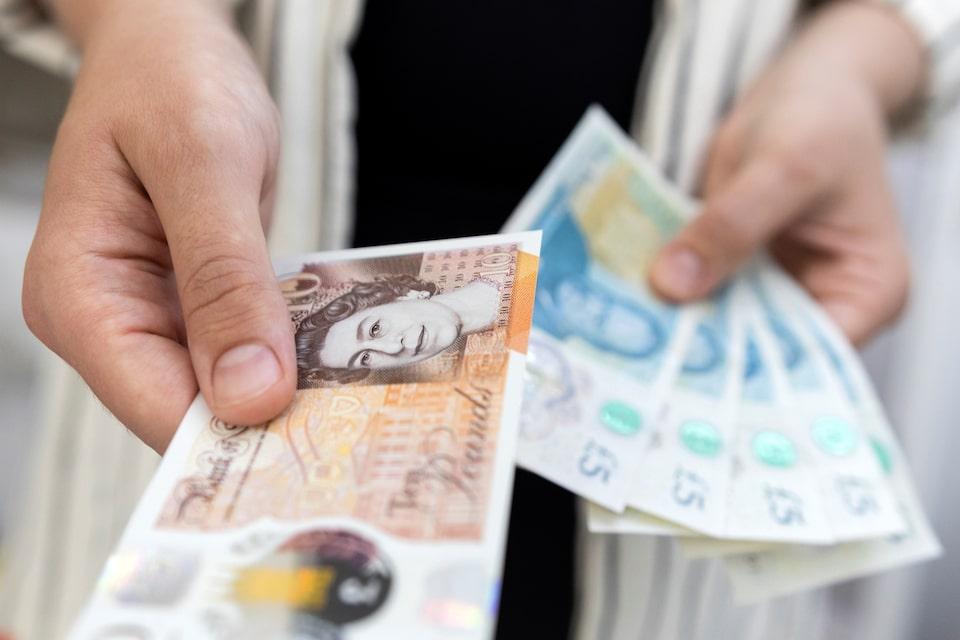
LONDON, Dec 24 (Reuters) - The British pound strengthened modestly in a holiday-shortened trading session on Tuesday, but could face a more uncertain path next year as global monetary policy diverges, analysts said. Sterling was last up 0.1% at $1.2544, set for a 1.6% loss in December, marking a third successive monthly loss. Against the euro the pound was up 0.14% at 82.92 pence per euro. Sterling has gained more than 4% against the euro so far in 2024 and is back to roughly where it was at the time of the Brexit vote in late June 2016. The winner of 2024 in the currency market has been the U.S. dollar, which has been lifted by ongoing evidence of the resilience of the economy, and by the diminishing scope for the Federal Reserve to cut interest rates much further. For much of the year, the pound was the only major currency to show a gain versus the dollar, but that has now unwound, leaving sterling down 1.5% so far this year. Even so, it is still the best-performer among the G10 universe. The runner-up, the Chinese offshore yuan is down 2.5%, while the biggest laggard is the Norwegian crown , which has lost nearly 12% in value. Part of the pound's appeal has been the prospect of the Bank of England taking longer to lower interest rates than other large central banks, including the Fed. The imminent return of Donald Trump to the White House, with his electoral pledges to impose tariffs on the major trading partners of the United States, deliver tax cuts and enact mass deportations of migrants, looks set to create a more inflationary environment that would support the dollar. In Britain, the government's budget that contains billions of pounds in increased taxes, spending and borrowing looks set to drag on economic growth, which could switch things up for sterling, according to City Index market strategist Fiona Cincotta. "Sterling has been supported across 2024 by the BoE cutting rates at a slower pace than the Federal Reserve and by the expectation that this trend would continue in 2025," she said. "However, Donald Trump's victory in the U.S. election, combined with the Labour government’s budget, means that the outlook for both economies has changed, potentially impacting the direction of monetary policy in 2025 for both central banks and sterling," she added. The BoE met last week and kept interest rates unchanged at 4.75%. With the exception of the Norges Bank, the BoE has cut rates less this year than any other major central bank, with just a half-point reduction in borrowing costs, compared with a full percentage point from the Fed and 175 bps from the Bank of Canada. Sign up here. https://www.reuters.com/markets/currencies/sterling-edges-up-holiday-thinned-trading-2024-12-24/
2024-12-24 10:10
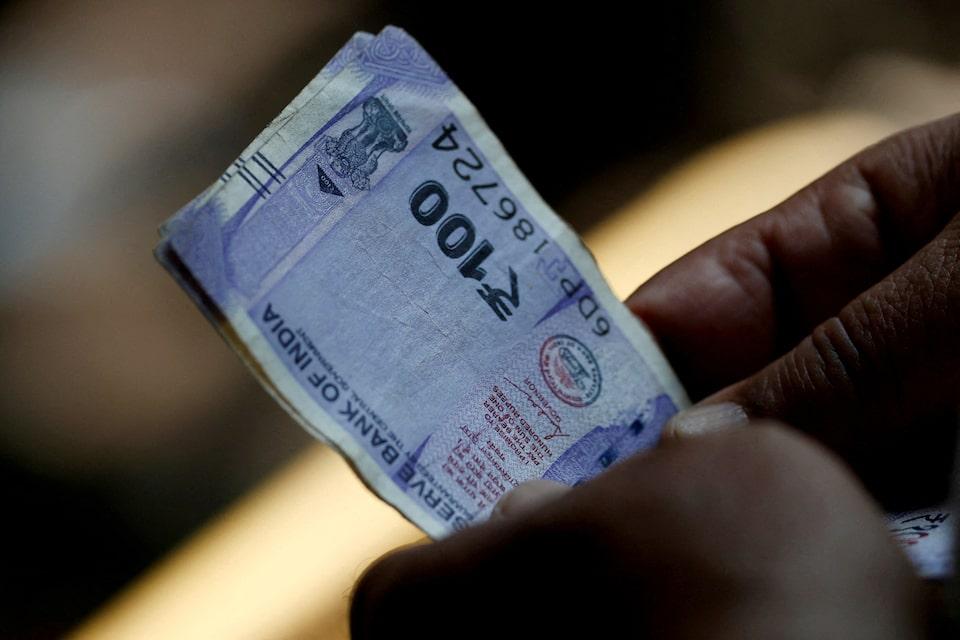
MUMBAI, Dec 24 (Reuters) - The Indian rupee weakened to its all-time low for the sixth consecutive trading session on Tuesday as a rise in U.S. bond yields boosted the dollar and strong demand for the greenback from importers added to the lingering pressure on the local currency. The rupee declined to 85.2075 against the U.S. dollar, eclipsing its previous record low of 85.12 hit on Monday. It ended the session at 85.20, down 0.1% on the day. The Reserve Bank of India's intervention, likely via dollar sales, again helped limit the rupee's losses, traders said. However, the "RBI doesn't seem to defending any level right now but is just curbing volatility, which signals steady rupee depreciation will continue," a trader at a state-run bank said. A multitude of factors have hurt the rupee this quarter, including tepid capital flows, a widening of India's trade deficit, concerns about slowing economic growth and, most recently, a hawkish shift in the Federal Reserve's outlook for benchmark interest rates. The dollar, already boosted by the anticipation of U.S. President-elect Donald Trump's return to the White House in January, has climbed further, alongside U.S. bond yields, after the Fed scaled back its projected rate cuts over 2025 at its December meeting. The 10-year U.S. Treasury yield rose to a near seven-month high of 4.59% on Monday and was little changed in Asia trading. The dollar index was up slightly at 108.2 and has risen over 2% so far this month, on course for its third consecutive monthly rise. Given the host of negative global and domestic cues, "the rupee is likely to witness a slow and steady deprecation from these levels," said Dilip Parmar, a foreign exchange research analyst at HDFC Securities. Parmar expects the rupee to weaken to 85.50 over the next two weeks. Indian financial markets will be closed on Wednesday for the Christmas holiday. Sign up here. https://www.reuters.com/markets/currencies/rupee-hits-record-low-sixth-straight-session-broad-dollar-strength-persists-2024-12-24/