2024-12-20 19:00
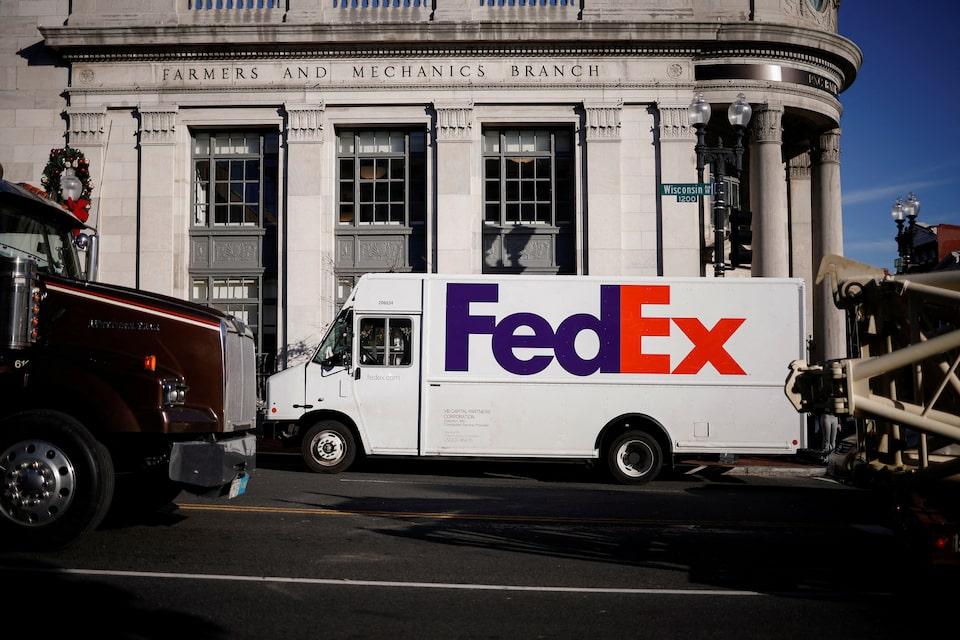
Shares rise less than 1% Stand alone FedEx Freight could be worth $30 bln-$35 bln - analyst Less-than-truckload market to benefit from spinoff Dec 20 (Reuters) - FedEx's (FDX.N) , opens new tab decision to spin off its freight trucking unit will strengthen that business while allowing the parcel delivery giant to better tackle challenges in its core operations, analysts said on Friday. FedEx shares eked out a less than 1% gain in early-afternoon trading on Friday after the bellwether for global trade also reduced annual profit forecast late on Thursday. FedEx Freight, the largest U.S. provider of less-than-truckload (LTL) services, could be valued between $30 billion and $35 billion, Citi estimated. "The decision to proceed with a full separation of the LTL segment has the potential to unlock significant value and is a welcomed holiday gift to FDX shareholders," BMO Capital Markets analyst Fadi Chamoun wrote in a note on Friday. Analysts have long argued that Freight was undervalued within FedEx, which has been slashing expenses and consolidating its express and ground operations to more profitably compete with delivery rivals like United Parcel Service (UPS.N) , opens new tab . FedEx disclosed in June it was weighing options for the LTL business, which involves carrying multiple shipments from different customers on a single truck. The spin-off will be completed within 18 months, which some analysts say will allow FedEx to cut risks and separate the business when freight demand is favorable. The resulting public company will also be the only one of its kind to offer priority service, analysts said. The separation will allow FedEx to sharpen its focus on addressing the impact of soft industrial shipping demand and a shift away from higher-priced deliveries among customers. FedEx also faces a $500 million hit from the loss of the United States Postal Service, its largest customer, earlier this year. FedEx shares were up 9.1% year-to-date as of Thursday, underperforming the S&P 500 index but better than rival UPS' 22% slump. LTL MARKET TO BENEFIT FedEx Freight had revenue of $9.4 billion in fiscal 2024. Some of its competitors in the U.S. include XPO Inc (XPO.N) , opens new tab and Old Dominion (ODFL.O) , opens new tab. "We believe FXF's (FedEx Freight's) investment in sales, service, and margin during the transition will be positive for the broader LTL industry," J.P. Morgan analyst Brian Ossenbeck said. FedEx said it has started building out a dedicated sales force for the business and expects to add over 300 specialists by the time of separation. As part of FedEx, Freight is trading at 13 times forward estimates, Edward Jones analyst Faisal Hersi said. "If you look at some of the LTL peers, they trade north of 20 times." "The Freight spin-off is a clear win for FDX shareholders on the valuation arbitrage opportunity alone," Susquehanna Financial Group analyst Bascome Majors said. Sign up here. https://www.reuters.com/business/autos-transportation/fedexs-freight-spinoff-plan-fortify-core-business-boost-industry-2024-12-20/
2024-12-20 18:43
Dec 20 (Reuters) - Northern Oil and Gas (NOG.N) , opens new tab has made an acquisition offer for Granite Ridge Resources (GRNT.N) , opens new tab, a smaller U.S. producer with operations in basins including the Permian and Eagle Ford, according to people familiar with the matter. Minneapolis, Minnesota-based Northern has submitted at least two offers for Granite Ridge, the sources said, adding the latest bid, made in recent weeks, was at a roughly 20% premium to the target's share price. While Granite Ridge's management has rebuffed the overtures so far, Northern remains interested in a deal and could sweeten its offer next year, the sources said, requesting anonymity as the discussions are confidential. Granite Ridge's shares closed more than 10% higher after the news on Friday, giving the company a market value of about $809 million. It also had debt net of cash of about $136 million as of the end of September this year, according to data from LSEG. Northern, which has a market capitalization of about $3.6 billion, reversed marginal gains and closed 1.2% lower. "The company frequently sends expressions of interest to acquire assets or businesses," Northern said in a statement. It said that many such requests are rejected, and it "is not currently engaged in formal negotiations to acquire Granite Ridge". Granite Ridge declined to comment. Granite Ridge is majority-owned by entities controlled by private equity firm Grey Rock Investment Partners, which was founded by Matt Miller and Griffin Perry, who also serve as co-chairmen of the Dallas-based company. The other co-founder of Grey Rock, Kirk Lazarine, also sits on the board. The company's shares, which have been trading in New York since its 2022 merger with a blank-check acquisition firm backed by former speaker of the U.S. House of Representatives Paul Ryan, had lost more than 40% of their value from the time of listing until Thursday's close. Both Northern and Granite Ridge specialize in so-called non-op production, which means they contribute a share of the drilling costs and other expenses to get a share of the revenue from the sale of hydrocarbons, while another producer is in charge of the day-to-day operations of the oil and gas wells. Northern is one of the largest non-op producers in the U.S. shale patch, and has grown in recent times through a variety of smaller acquisitions, partnerships and joint ventures. If it succeeds in clinching a deal for Granite Ridge, it would rank as Northern's largest ever acquisition. Northern and Granite Ridge operate across multiple shale basins, including the Permian Basin located in Texas and New Mexico, and the Williston formation in North Dakota. A takeover of Granite Ridge would also give Northern a presence in the Eagle Ford, Haynesville, and Denver-Julesburg basins. Sign up here. https://www.reuters.com/markets/deals/northern-oil-gas-bid-acquire-smaller-rival-granite-ridge-sources-say-2024-12-20/

2024-12-20 18:37
Canadian dollar gains 0.3% against the greenback For the week, the loonie loses 0.8% Retail sales rise increase 0.6% in October Bond yields fall across the curve TORONTO, Dec 20 (Reuters) - The Canadian dollar strengthened against its U.S. counterpart on Friday as investors cheered U.S. inflation data, with the loonie paring its weekly decline after it was pressured by a more hawkish Federal Reserve and domestic political turmoil. The loonie was trading 0.3% higher at 1.4350 to the U.S. dollar, or 69.69 U.S. cents, extending its recovery from the weakest intraday level in nearly five years at 1.4467 on Thursday. For the week, the currency was down 0.8%, its fourth straight weekly decline. "It's been a hard week for the CAD," Shaun Osborne, chief currency strategist at Scotiabank, said in a note. "Strong U.S. economic data and more hawkish-than-expected messaging from the Fed this week have supported broad gains in the USD and it's hard seeing that trend reverse any time soon." On Wednesday, the Fed signaled it would slow the pace of interest rate cuts. This followed the abrupt resignation on Monday of Canadian Finance Minister Chrystia Freeland. "Freeland's spectacular departure Monday raises clear question marks over PM Trudeau's position and the stability of the government at a time when the threat of U.S. tariffs requires strong leadership at home," Osborne said. Prime Minister Justin Trudeau looked set to lose power early next year after a key ally said he would move to bring down the minority Liberal government and trigger an election. Wall Street's main indexes jumped and the U.S. dollar (.DXY) , opens new tab fell against a basket of major currencies on a smaller-than-expected increase in the U.S. personal consumption expenditures (PCE) price index. Data showed that Canadian retail sales grew by 0.6% in October but a preliminary estimate for November was less upbeat, showing a flat reading. Canadian bond yields fell across the curve, tracking moves in U.S. Treasuries. The 10-year was down 7.8 basis points at 3.269%. Sign up here. https://www.reuters.com/markets/currencies/canadian-dollar-posts-fourth-straight-weekly-loss-amid-trudeau-uncertainty-2024-12-20/

2024-12-20 18:36
Dec 20 (Reuters) - The Biden administration approved its eleventh large-scale offshore wind farm on Friday, a project backed by European energy companies EDP Renewables (EDPR.LS) , opens new tab and ENGIE (ENGIE.PA) , opens new tab, as it seeks to cement its legacy in the formation of a new domestic energy industry. WHY IT'S IMPORTANT The approval of Ocean Winds' SouthCoast Wind comes a month before Biden's successor, President-elect Donald Trump, takes office. Trump, a Republican, during his campaign for the presidency pledged to stop the offshore wind industry's progress. Ocean Winds is a joint venture between Portugal's EDPR and France's ENGIE. KEY QUOTE "When we walked in the door of this Administration, there were zero approved, commercial-scale offshore wind projects in federal waters. Today, I am proud to celebrate our 11th approval, a testament to the commitment and enduring progress made by the hardworking public servants at the Department of the Interior," Interior Secretary Deb Haaland said in a statement. CONTEXT Despite the ambitious goals set by Biden's administration, the offshore wind industry has been struggling with soaring costs, supply chain challenges and a construction accident at the nation's first commercial-scale project. This new approval comes amid concerns that the industry may not hit its targets, which could leave a gap in renewable energy production. BY THE NUMBERS SouthCoast Wind is expected to generate up to 2.4 gigawatts of offshore wind energy, enough to power more than 840,000 homes. The project area covers about 127,388 acres and is located about 20 nautical miles south of the island of Nantucket, Massachusetts. The project will have 141 turbines and up to five offshore substation platforms. It aims to start construction next year and deliver power to New England by the end of this decade, according to the project website. Sign up here. https://www.reuters.com/sustainability/climate-energy/us-approves-major-massachusetts-offshore-wind-farm-2024-12-20/

2024-12-20 18:29
CFPB sues JPMorgan, Bank of America, and Wells Fargo over Zelle Banks failed to protect consumers, CFPB alleges Lawsuit driven by political factors, says Zelle's parent Dec 20 (Reuters) - The U.S. Consumer Financial Protection Bureau said on Friday it filed a lawsuit against JPMorgan Chase (JPM.N) , opens new tab, Bank of America (BAC.N) , opens new tab and Wells Fargo (WFC.N) , opens new tab for failing to protect consumers from alleged "widespread fraud" on payments platform Zelle. The lawsuit was initiated as the watchdog moves ahead with a bold agenda in the final weeks of Joe Biden's Democratic administration in a bid to advance consumer protections before President-elect Donald Trump overhauls the agency, Reuters reported last month. The moves defy congressional Republicans, who have called for agencies to cease rulemaking. The CFPB seeks to stop the alleged unlawful practices via Zelle, secure redress and penalties, and obtain other relief for consumers, it said in a statement. "What they built became a goldmine for criminals," making it easy for fraudsters to drain accounts, while providing insufficient protections for consumers or making them whole for losses, CFPB Director Rohit Chopra told journalists in a briefing. "These banks broke the law by running a payments system that made fraud easy, while refusing to help the victims." The CFPB said the banks violated federal law through critical failures, alleging they left the door open to scammers, allowed repeat offenders to hop between banks, ignored red flags that could have prevented fraud and abandoned consumers after fraud occurred. The proliferation of fraud and scams on Zelle has attracted attention from U.S. lawmakers, including Democratic Senator Elizabeth Warren and regulators concerned about consumer protection. "The CFPB’s attacks on Zelle are legally and factually flawed, and the timing of this lawsuit appears to be driven by political factors," said Early Warning Services, the company that operates Zelle and is jointly owned by banks. Customers of the three banks named in Friday's lawsuit have lost more than $870 million over the seven years since Zelle was introduced, the CFPB said. Federal rules require banks to reimburse customers for unauthorized payments, for instance if their accounts were hacked. But in some cases, banks have resisted paying back customers who were tricked into making the payments themselves. The consumer watchdog describes how hundreds of thousands of consumers filed fraud complaints and were largely denied assistance, with some being told to contact the fraudsters directly to recover their money. CFPB officials said it would press on with the Zelle enforcement action regardless of the new presidential administration and likely leadership changes at the agency, including the probable departure of director Rohit Chopra. Billionaire Elon Musk, a close Trump adviser who is leading an effort to curb bureaucracy, has called for abolishing the agency. "This is an issue that the CFPB has been looking into for a number of years, and we make decisions on when to bring an enforcement action based on case-specific assessments of the facts and legal violations," the CFPB's enforcement director, Eric Halperin, told journalists in response to a question about leadership changes in the incoming administration. Zelle is a payments network owned by seven banks, including JPMorgan and BofA. It has over 143 million American consumers and small businesses as customers. In 2023, despite a 27% increase in transaction volume, reports of scams and fraud decreased by nearly 50%, Early Warning said in a statement, citing its own data. In November 2023, banks on the payment app began refunding victims of imposter scams to address consumer protection concerns. The percentage of combined consumers who were reimbursed for transactions that were disputed as fraud fell to 38% in 2023 across JPMorgan, Bank of America and Wells Fargo, according to a U.S. Senate committee report. That fell from 62% in 2019. "As a last ditch effort in pursuit of their political agenda, the CFPB is now overreaching its authority by making banks accountable for criminals," a JPMorgan spokesperson said in an emailed statement to Reuters. "It’s a stunning demonstration of regulation by enforcement, skirting the required rulemaking process." JPMorgan CEO Jamie Dimon has been an outspoken critic of several major U.S. financial regulatory initiatives, including those from the CFPB, and he has vowed to oppose measures he said would not make banks safer. "We strongly disagree with the CFPB's effort to impose huge new costs on the 2,200 banks and credit unions that offer the free Zelle service to clients," a spokesperson for BofA said. Wells Fargo declined to comment. JPMorgan and BofA both signaled in filings earlier this year that they could sue the CFPB over the agency's investigations into Zelle. Wells Fargo disclosed that regulators have been probing its handling of customer disputes on Zelle. Sign up here. https://www.reuters.com/business/finance/cfpb-sues-top-us-banks-says-they-allowed-fraud-payment-platform-zelle-2024-12-20/

2024-12-20 18:27
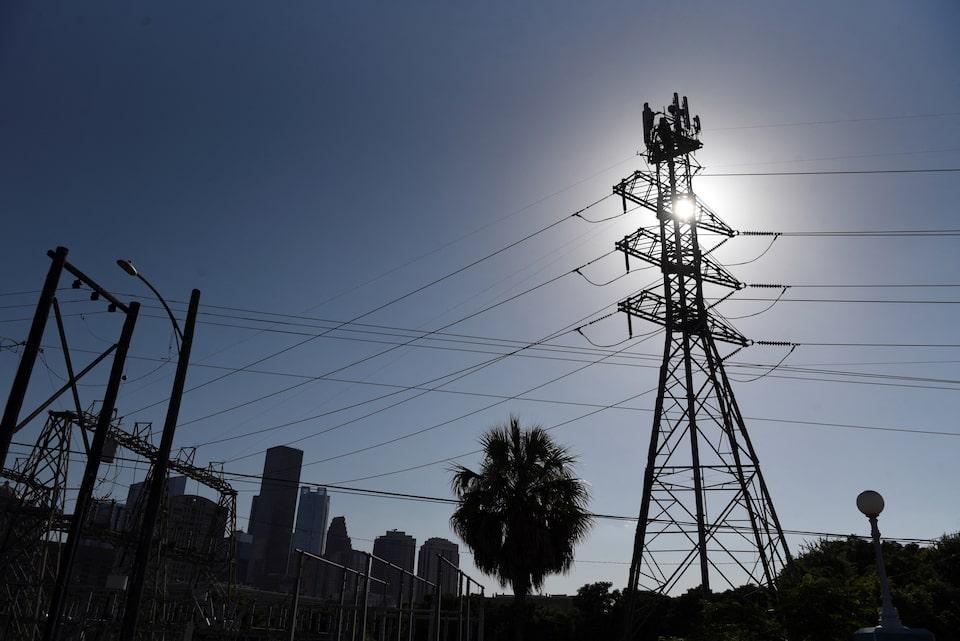
In three years, data centers could account for 6.7%-12% of US total electricity consumption Between 2017 and 2023, data-center power demand more than doubled with roll-out of more AI servers AI requires increasingly powerful chips and intense cooling systems, driving energy demand growth NEW YORK, Dec 20 (Reuters) - U.S. data-center power demand could nearly triple in the next three years, and consume as much as 12% of the country's electricity, as the industry undergoes an artificial-intelligence transformation, according to a Department of Energy-backed study that was first reported by Reuters on Friday. The Lawrence Berkeley National Laboratory produced the report as the U.S. power industry and government attempt to understand how Big Tech's data-center demand will affect electrical grids, power bills and the climate. By 2028, data centers' annual energy use could reach between 74 and 132 gigawatts, or 6.7% to 12% of total U.S. electricity consumption, according to the Berkeley Lab report. The report included ranges that depended partly on the availability and demand for a type of AI chip known as GPUs. Currently, data centers make up a little more than 4% of the country's power load. "This really signals to us where the frontier is in terms of growing energy demand in the U.S.," said Avi Shultz, director of the DOE's Industrial Efficiency and Decarbonization Office. Swelling data-center electricity needs are accompanied by rising power consumption from onshoring of U.S. manufacturing and electrification of buildings and transportation. Overall U.S. power demand peaked in 2024 and is expected to hit another record next year. "What this report is highlighting is what's actually growing the fastest, and the leading edge of demand growth in the U.S. is the very new growth in artificial-intelligence data centers," Shultz said. Findings may inform DOE efforts to increase the flexibility and resiliency of the grid, including construction of long-duration battery storage at data-center sites and commercialization of new technologies such as small nuclear reactors and advanced geothermal, Shultz said. POWER DOUBLING Starting in 2017, deployment of GPU-accelerated servers led to a more than doubling of the sector's power use over a six-year period, the report said. AI, which requires increasingly powerful chips and intense cooling systems, is the primary driver for the projected data-center growth. When the last report was released in 2016, AI servers in data centers accounted for about 2% of total server energy use. The report's lead researcher Arman Shehabi and his team recommend publishing the report annually, or biannually, to more closely track data-center trends. Estimates in the report are based on calculations of electricity use from installed GPUs and other data-center IT equipment, using publicly available information, market-research firms and reviews by power-sector and data-center executives. "By showing what the energy use is and, more importantly, what's causing the growth in energy use, it helps us think about what opportunities there are for efficiencies," Shehabi said. The report also makes suggestions to further research and develop energy-efficiency strategies for the country's booming AI data centers. New AI data centers are being built with power capacity as big as one gigawatt, enough to power all homes in Philadelphia. Sign up here. https://www.reuters.com/business/energy/us-data-center-power-use-could-nearly-triple-by-2028-doe-backed-report-says-2024-12-20/