2024-12-20 14:44
Benchmark 10-year Treasury yields at highest level in over 6 months 8 of the 11 S&P 500 sectors in negative territory in December S&P 500 trading on forward earnings estimates well above historical average NEW YORK, Dec 20 (Reuters) - With December so far delivering Scrooge-like returns in an otherwise stellar year for U.S. stocks, investors hope the tail end of 2024 offers some holiday cheer, but warn of potential headwinds. The benchmark S&P 500 (.SPX) , opens new tab is up more than 24% for 2024, even after a major stumble this week, and Wall Street has historically often enjoyed a strong annual close. Since 1969, the last five trading days of the year combined with the first two of the following year have yielded an average S&P 500 gain of 1.3%, a period known as the "Santa Claus Rally," according to the Stock Trader's Almanac. But this year, there are signs Santa Claus may disappoint. The S&P 500 on Wednesday suffered its biggest one-day drop since August after the Federal Reserve caught investors off guard by signaling fewer-than-expected interest rate cuts in 2025. The market also looks less healthy beneath the surface: Eight of the 11 S&P 500 sectors are in negative territory for December, while the equal-weight S&P 500 (.SPXEW) , opens new tab, a proxy for the average index stock, is down 7%. Another worry for stocks as the year winds down is rising Treasury yields, said Matt Maley, chief market strategist at asset manager Miller Tabak. Benchmark 10-year yields hit 4.55% on Thursday following the Fed meeting, their highest level in over six months. With the S&P 500 trading at 21.6 times forward earnings estimates, well above its 15.8 historical average, according to LSEG Datastream, that jump in yields will put more pressure on equity valuations. "We're ending the year with people finally facing the reality that the stock market is extremely expensive and the Fed is not going to be as accommodative as they had been thinking," Maley said. Still, this week's pullback could be positive because it eliminated some of the frothy sentiment in equities, "setting up the market for a rebound," said Chuck Carlson, chief executive officer at Horizon Investment Services. "If there is further follow through on the downside, that could be a little bit more dangerous to the bullish trend." The Santa Claus period, when combined with the following first five trading days of January and the performance of January overall, is a harbinger for the year: when those three indicators are positive, the year has ended higher more than 90% of the time in the past 50 years, according to the Almanac. But that seasonal strength may have come early this year, given the S&P 500 posted a blockbuster 5.7% return in November driven by Donald Trump's Nov. 5 presidential election victory, Carlson said. "It's been a strong year for the market, and you can make an argument that we kind of got the year-end rally in November instead of December," Carlson said. Signs that the market rally is increasingly narrow could also spoil any holiday cheer. A number of megacap stocks have performed well in December, including Tesla (TSLA.O) , opens new tab and Alphabet (GOOGL.O) , opens new tab, which are up 22% and more than 13% respectively so far this month. Broadcom (AVGO.O) , opens new tab shares are up 36% for December after the company this month predicted booming demand for its custom artificial intelligence chips, pushing its market value over $1 trillion. But such gains are increasingly sparse. The number of S&P 500 components that declined outpaced those that advanced for 13 straight sessions as of Wednesday, the longest such losing streak in LSEG data that stretches back to 2012. In another worrisome sign, the percentage of S&P 500 stocks trading above their 200-day moving averages declined to 56% as of Wednesday, a low for the year, according to Adam Turnquist, chief technical strategist for LPL Financial. "We recommend waiting for support to be established and for momentum to improve before stepping up to buy the dip," Turnquist said in a note following Wednesday's selloff. Sign up here. https://www.reuters.com/markets/us/wall-st-week-ahead-investors-hope-santa-claus-rally-stocks-lose-steam-2024-12-20/
2024-12-20 14:15
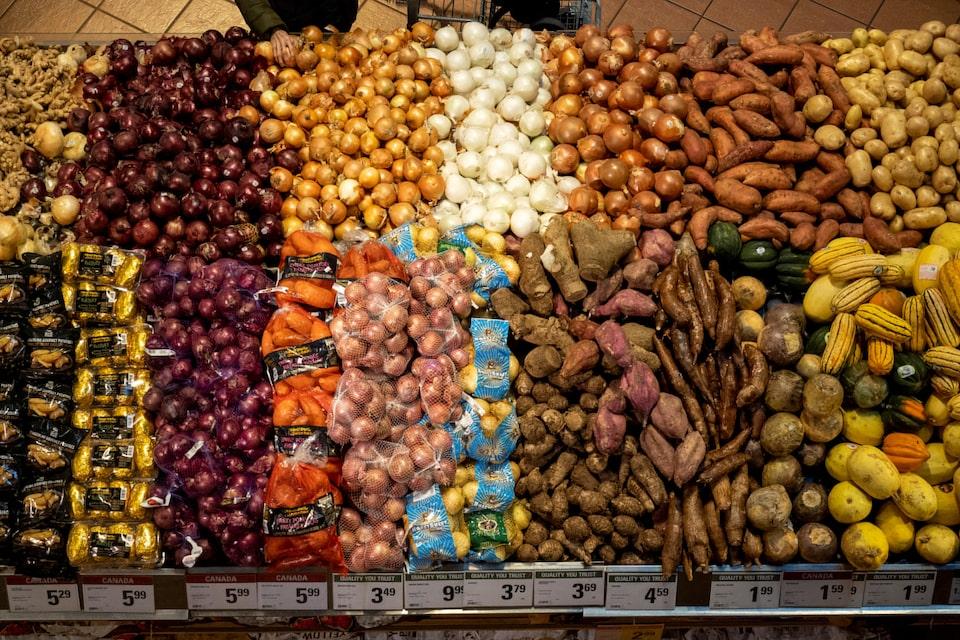
Dec 20 (Reuters) - Canadian retail sales grew by 0.6% in October from September at C$67.58 billion ($46.99 billion), led by higher sales at motor vehicle and parts dealers, Statistics Canada said on Friday. Sales were likely unchanged in November, the agency said in a flash estimate. In October, sales were up in five of nine subsectors, representing 52.6% of retail trade. In volume terms, retail sales were unchanged. (Percent changes) Oct Oct Sep(rev) Sep(prev) mo/mo yr/yr mo/mo mo/mo Total +0.6 +1.5 +0.6 +0.4 Excluding autos/parts +0.1 +0.7 +1.1 +0.9 NOTE: All figures are seasonally adjusted. ($1=$1.4382 Canadian) Keywords: CANADA ECONOMY/RETAIL Sign up here. https://www.reuters.com/markets/canada-october-retail-sales-up-06-autos-seen-flat-november-2024-12-20/

2024-12-20 13:35
Dec 20 (Reuters) - Canadian wholesale trade most likely fell 0.7% in November from October, largely driven by lower sales in the motor vehicle and motor vehicle parts and accessories, and the building material and supplies subsectors, Statistics Canada said in a flash estimate on Friday. The estimate was calculated based on a weighted response rate of 58.8%. The average weighted response rate for the survey over the previous 12 months has been 81.9%. NOTE: All figures are seasonally adjusted. Keywords: CANADA ECONOMY/WHOLESALE Sign up here. https://www.reuters.com/markets/canada-november-wholesale-trade-most-likely-down-07-statscan-flash-estimate-2024-12-20/
2024-12-20 13:25
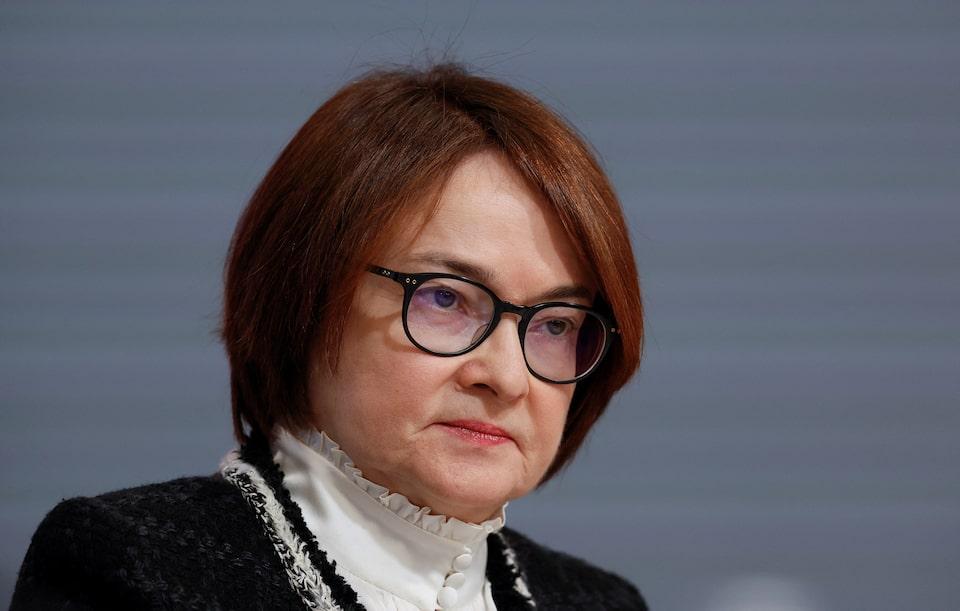
MOSCOW, Dec 20 (Reuters) - Russian Central Bank Governor Elvira Nabiullina and her deputy Alexei Zabotkin addressed a news conference on Friday after the central bank unexpectedly held its key rate at 21%. Nabiullina and Zabotkin spoke in Russian. The quotes below were translated into English by Reuters. NABIULLINA ON THE RATE DECISION: "We considered three options: (keeping the rate) unchanged; an increase to 22%; and an increase to 23%." "Based on the Board's discussion, the Board felt that, from a forward-looking policy perspective, the stronger signal was that credit growth was slowing. If this judgment is confirmed by the February meeting, it could be argued that we have achieved the required monetary tightness." ZABOTKIN ON THE RATE DECISION: "The decision to leave the rate at 21% was motivated by the fact that the data over the past six weeks, which describe both actual lending activity and the intention to grow loan portfolios further, demonstrate quite convincingly that it's very possible that the required tightness in monetary conditions needed to slow inflation has already been achieved." *NABIULLINA ON FIRST SIGNS OF DECLINE IN DEMAND FOR LABOUR "The labour market - really, its condition - is a very important factor now in assessing the possibilities of expanding production, and companies still continue to cite it as the main constraint... But we do see the first signs of a decline in demand for labour. This process will be uneven across the economy, flowing from one industry to another, from one enterprise to another. This process will have a significant impact on our assessment and decision-making, including monetary policy." *NABIULLINA ON THE BANK'S INTERACTIONS WITH THE GOVERNMENT: "As far as our interaction with the government is concerned, the principles of interaction remain the same... The frequency and density of exchange of information and views on what is happening in the economy in recent months is higher than usual, because this is a difficult period." *NABIULLINA ON CHALLENGES FOR THE BANKING SECTOR IN 2024 "If we talk about the challenges that the banking system faced this year, in the outgoing year already, well, probably, it is the series of sanctions on the Moscow Exchange, difficulties in organising cross-border settlements for clients." "Let me remind you that we have 129 banks under sanctions now, a year ago there were half as many. Approximately 95% of assets are under sanctions, banks that have 95% of the sector's assets." "(Banks) have coped, we see that they have coped, they are coping. This does not mean that there will be no more such risks, but in this regard, it is very important that the financial system remains stable." NABIULLINA ON THE IMPACT OF MONETARY POLICY: "Given the lags of different types of policy, we are now at the time of maximum impact of everything that has been done as a tightening of monetary policy since mid-23 on inflation..." "Our policy is aimed at avoiding extreme scenarios. That is, we can't let the economy overheat further, we need to let the overheating subside, and at the same time we need to avoid that there will be over-cooling. So we are watching this carefully." NABIULLINA ON CRITICISM OF TIGHT MONETARY POLICY: "Criticism of our policy stance escalates during periods of high rates and during periods of the rate hike cycle... We make our decision based on our assessment of the situation and our forecast, and in assessing this situation we have recently been quite actively engaged with both banks and the real sector of economy in order to understand what is happening in the economy." NABIULLINA ON THE EFFECTIVENESS OF A HIGH KEY RATE AND A 'PLAN B' FOR TAMING INFLATION: "I am convinced that the key rate is working; if it had not been raised, inflation would be much higher... But the task of monetary policy is not to reduce inflation at any cost. Our task is much more complicated: to slow down the growth of demand in such a way that it does not prevent the economy from building up its production capacity and potential. That is why we move gradually so as not to do any harm." "And now we see that under the influence of the interest rate, under the influence of bank regulation measures, lending has slowed down in all segments. And if such dynamics of lending continue, it will gradually affect both demand and inflation. Of course, we would all like the price growth to slow down as quickly as possible, but the economy is in an unusual situation. A lot of factors are making it difficult for our rate to have an impact on inflation, and we recognise that. So our plan B is, well, the key rate plus patience." NABIULLINA ON THE ROUBLE EXCHANGE RATE: "...We do not conduct currency operations based on the level of the exchange rate, or even on increased volatility. Why? Because we believe that the market should find an equilibrium. If we start intervening at such moments of even increased volatility, market participants will have a feeling that the exchange rate is artificial now, because it is supported by the Central Bank. If the Central Bank leaves, there will be additional weakening of the exchange rate. This fuels devaluation expectations and prevents stabilisation of the exchange rate at some level of equilibrium." "...We believe that the exchange rate should remain floating. And then there will be more confidence in its market nature." "We don't think (that today's rate decision will contribute to the rouble's weakening) because the exchange rate now depends to a greater extent on the trade balance." NABIULLINA ON CURRENCY EXCHANGES ON THE MARKET: "Our exchange rate is floating, we have no goal to maintain it at a certain level...We carry out currency interventions...if there are risks to financial stability... Now we do not see such risks". NABIULLINA ON CRYPTOCURRENCY: "We continue to believe that cryptocurrencies should not be used as a means of domestic payment. We do agree, support and promote projects related to the use of cryptocurrency for external payments, but for domestic payments - no." *NABIULLINA ON REPO OPERATIONS: "Our repo operations do not bear any additional inflationary pressure. This is an instrument that we have been using for a number of years...First, the Ministry of Finance accelerates borrowing, the purchase of OFZs, and then there are major budget expenditures, which are shifted to the end of December. "And when these liquidity fluctuations occur, our operations are aimed at providing liquidity to banks before the budget expenditures are received in the form of deposits of organisations that receive budget expenditures. And this reduces the volatility of rates in the money market, which ultimately contributes to achieving the inflation target." Sign up here. https://www.reuters.com/business/finance/russias-nabiullina-rate-decision-rouble-monetary-policy-2024-12-20/
2024-12-20 12:57
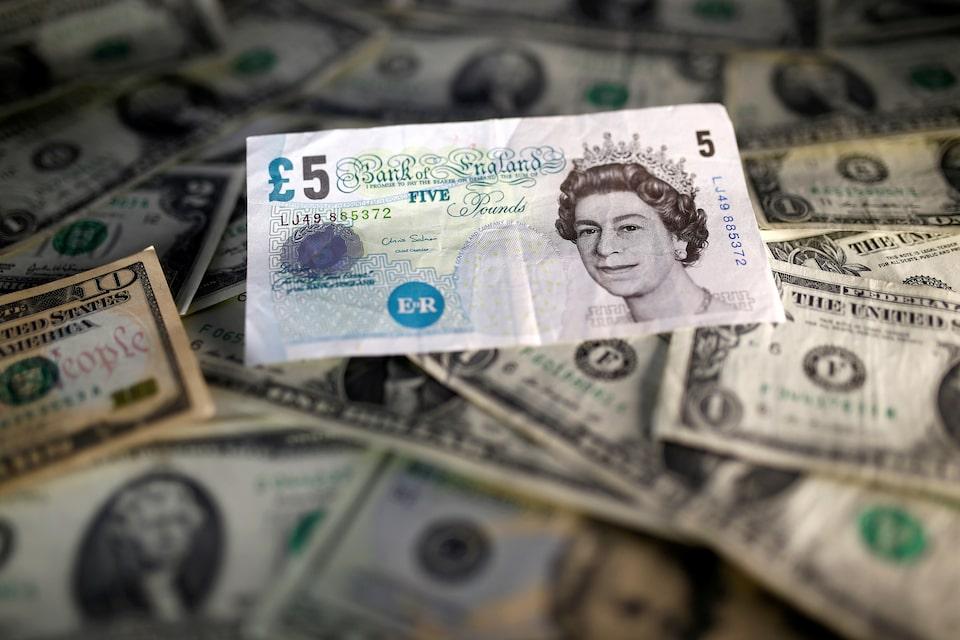
Dec 20 (Reuters) - Sterling held up against the dollar on Friday but was set to end the week lower after coming under pressure from divided Bank of England policymakers' views and a U.S. Federal Reserve that is now more reluctant to lower interest rates. The pound was flat against the dollar at $1.2500 , after it slipped to a one-month low of $1.2475 earlier in the day. Sterling was set for a 0.8% weekly fall, its second week of losses against the dollar. The BoE held its main interest rate unchanged at 4.75% on Thursday but policymakers had become more divided about whether rate cuts were needed to tackle a slowing economy. In a surprise to markets, three of the BoE's nine-person Monetary Policy Committee had voted for a quarter-point rate cut. Traders now price in roughly 60 basis points (bps) worth of British rate cuts next year, compared with around 45 bps just before the decision. The split decision dented the outlook for sterling, one of the year's best performing major currencies against the dollar, while bringing a reprieve to Britain's battered government bond markets. Pepperstone strategist Michael Brown saw further cuts as likely next year, given that service-sector inflation should cool and that there is a risk unemployment rises. "My expectation is that the BOE will probably deliver 100 basis points at a minimum, and maybe even more," he said. "I think the path of least resistance for the pound, against both the dollar and the euro, is lower. Certainly against the euro on a pure policy repricing, but against the dollar, you're looking at two very, very different economic outlooks," said Brown. Britain's economy shrank for a second month in a row in October, while U.S. Fed Chair Jerome Powell told reporters on Wednesday that the "the U.S. economy has just been remarkable, I feel very good about where the economy is." The dollar surged against almost all currencies on Wednesday after Fed policymakers signalled they now expect to only lower interest rates twice next year, down from a previous estimate of four cuts. Data on Friday showed British retail sales rose by a weaker-than-expected 0.2% in November. Sterling was 0.2% lower on the day against the euro at 82.99 pence. Sterling is trading at around its highest against the euro since early 2022, and striking distance of levels seen in June 2016. Sign up here. https://www.reuters.com/markets/currencies/sterling-set-end-week-red-against-dollar-outlooks-diverge-2024-12-20/
2024-12-20 12:18
AREZZO, Dec 20 (Reuters) - Italy's Iren (IREE.MI) , opens new tab said on Friday it inaugurated a plant to recover critical raw materials from electronic waste with a new technology that produces three time less carbon dioxide emissions than traditional processes. WHY IT'S IMPORTANT The Italian utility said the plant will use a mechanical disassembly process and specially designed hydrometallurgical treatment, capable of extracting non-noble metals to isolate and thus recover precious metals and critical raw materials. This is one of the first low-impact plants in Europe to recover critical raw materials, Iren said in a statement. BY THE NUMBERS The new plant is able to process more than 300 tonnes of circuit boards a year. It can recover some 200 kg of valuable metals annually, including gold, palladium and silver, as well as 57 metric tons of copper a year, Iren said at an event near the Italian city of Arezzo, where the factory is located. CONTEXT Earlier this year, the European Union launched a strategy to make sure the bloc can access raw materials it needs for the green transition, partly by raising its recycling capacity. Under its Critical Raw Materials Act (CRMA) the EU targets that by 2030 the bloc will mine 10% of its requirements for strategic minerals, process 40%, and meet 25% of demand from recycling. EU efforts to avoid foreign dependency have intensified since the Russian invasion of Ukraine, which highlighted the risks of being reliant on a single country for essential supplies. KEY QUOTES "Italy is a country with low raw materials... our greatest mine is waste," Italy's Energy Minister Gilberto Pichetto Fratin said at the event to inaugurate the plant. "We will recover from computers, cellular phones and other waste precious and rare raw materials that are critical for our industry," Chairman Luca Dal Fabbro said. Sign up here. https://www.reuters.com/markets/commodities/short-take-italys-iren-opens-low-carbon-critical-material-recycling-plant-2024-12-20/