2024-12-20 11:54
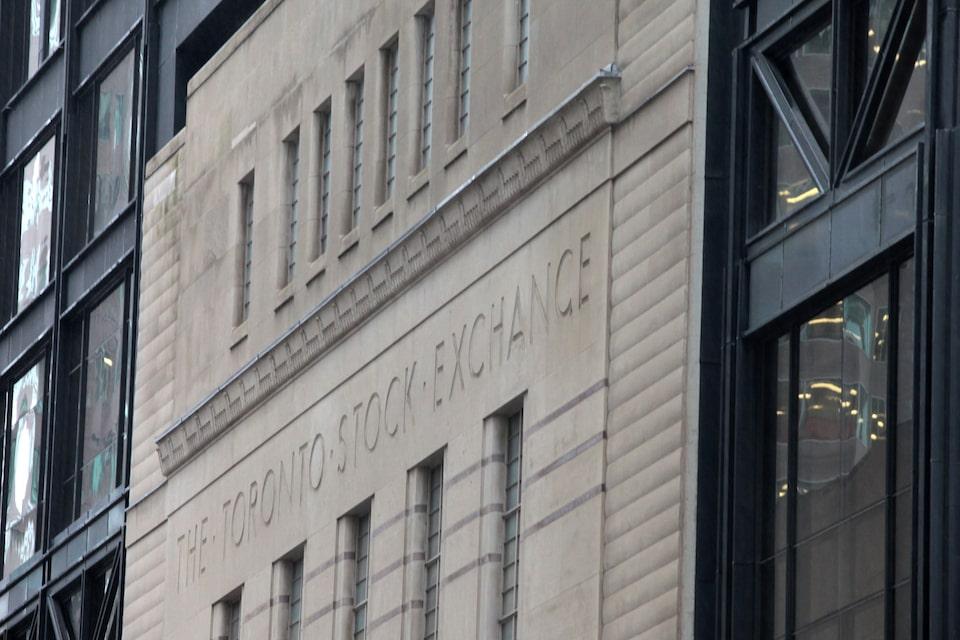
TSX ends up 0.8% at 24,599.48 For the week, the index falls 2.7% Materials group adds 1.3% as metal prices rise BlackBerry shares jump 23.1% Dec 20 (Reuters) - Canada's main stock index clawed back some of its large weekly decline on Friday, in a broad-based move as investors welcomed cooler-than-expected U.S. inflation data and looked past rising domestic political uncertainty. The Toronto Stock Exchange's S&P/TSX composite index (.GSPTSE) , opens new tab ended up 185.54 points, or 0.8%, at 24,599.48, after six straight days of declines. For the week, the index was down 2.7%, its second straight weekly decline and its biggest since September 2023. "Certainly a strong day today and a lot of that is because of what we learned south of the border here in the U.S.," said Angelo Kourkafas, senior investment strategist at Edward Jones in St. Louis, Missouri. U.S. stocks also rallied as a smaller-than-expected increase in the U.S. personal consumption expenditures price index eased worries about the path of interest rates. Recent signs of sticky inflation had on Wednesday contributed to the Federal Reserve signaling a slower pace of rate cuts. Canadian Prime Minister Justin Trudeau looked set to lose power early next year after a key ally said he would move to bring down the minority Liberal government and trigger an election. "I think 2025, the key thing is going to be political uncertainty in Canada and the U.S., with what's going to happen with trade and tariffs," Kourkafas said. "In the short term, some of the developments could create headlines and some market fluctuations but really it is long-term fundamental drivers that will determine the outcomes." All ten major sectors ended higher, including a gain of 1.3% for the materials group as a pull-back in the U.S. dollar (.DXY) , opens new tab boosted gold and copper prices. Consumer discretionary and technology also added 1.3%. The latter was helped by a 23.1% surge in the shares of BlackBerry Ltd (BB.TO) , opens new tab after the security software firm beat quarterly revenue estimates. Sign up here. https://www.reuters.com/markets/tsx-futures-fall-investors-await-key-economic-data-2024-12-20/
2024-12-20 11:47
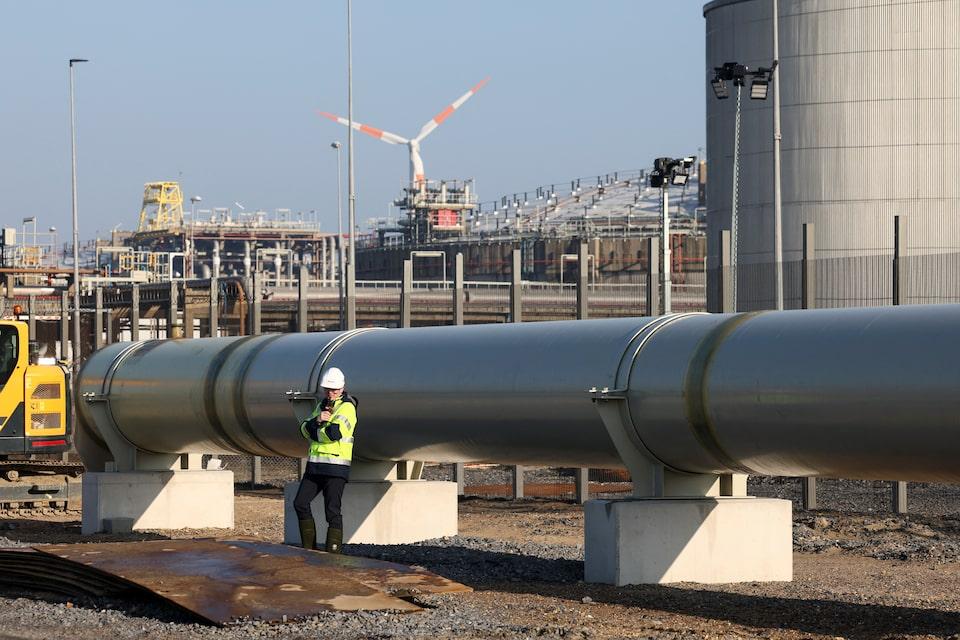
Germany passes law exempting foreign buyers from domestic gas levy Eastern neighbours said levy hampered efforts to cut out Russian gas Change to take effect from Jan. 1 2025 Dec 20 (Reuters) - Germany's parliament on Friday agreed to exempt countries transiting gas from a domestic gas levy, a move welcomed by eastern neighbours who argued the fee hampered their efforts to diversify away from Russian supplies. Germany agreed in May to scrap the tariff following heavy lobbying from Austria, the Czech Republic and Slovakia, who said the extra cost made alternatives to Russian gas imports too expensive. The levy, administered by operator Trading Hub Europe (THE) since 2022, was designed to help Germany recoup billions of euros it spent on filling its gas storage caverns to bolster Europe's gas supplies following Russia's invasion of Ukraine. It is charged to domestic gas consumers but as a side-effect also applied to buyers of gas at German cross-border points. But it has also been a reason why private traders were buying cheaper gas from the east, Czech Industry Minister Lukas Vlcek told Reuters in an emailed statement. "Now I believe that will change. Thanks to alternative supplies and capacity in LNG (liquefied natural gas) terminals that we have secured, there isn't any reason to be dependent on Russia," he said. Germany's lower house passed a change to the relevant energy law, effective from Jan. 1 2025, that will exempt buyers transiting gas from paying the levy, which from the new year is set to rise by 20% to 2.99 euros a megawatt hour (MWh). The levy will still apply to domestic gas buyers. The waiver also coincides with the expected end of Russian gas flows via Ukraine on Dec. 31. In Austria, Russian gas still accounted for 89% of imports in October, according to government data, although the country's biggest importer, OMV, has since ended its supply contract with Russian oil giant Gazprom (GAZP.MM) , opens new tab. Germany has 23 billion cubic metres of underground gas storage capacity, the largest in the EU. Sign up here. https://www.reuters.com/business/energy/germany-passes-waiver-gas-storage-fee-outside-country-jan-1-2025-2024-12-20/
2024-12-20 11:47
Markets had expected 2 percentage point increase to 23% Putin called publicly on Thursday for 'balanced' action Central bank had been heavily criticised by business Economy heavily skewed by conflict in Ukraine MOSCOW, Dec 20 (Reuters) - The Russian central bank kept its key interest rate on hold at 21% on Friday, surprising the market, which had expected a 2 percentage point increase, and saying recent tightening had created conditions for inflation to fall towards its target. The decision came a day after President Vladimir Putin in a nationwide phone-in publicly called for a "balanced" decision from the bank, which is having to manage the inflationary effects of the militarisation of the economy due to the conflict in Ukraine. Powerful business leaders had complained that soaring rates were stifling investment, but 23 of 27 economists in a Reuters poll had still expected a hike to 23%. "Given the notable increase in interest rates for borrowers and the cooling of credit activity, the achieved tightness of monetary conditions creates the necessary prerequisites for resuming disinflation processes and returning inflation to target," the central bank said in a statement. Inflation stands at 9.5%, far above the 4% target. But the central bank said its tightening had already slowed lending and dampened demand, and that it would assess the need for a hike at its next meeting on Feb. 14. The central bank is independent by law, and Putin has given governor Elvira Nabiullina a free hand in the past, but analysts said the pressure from business had become too strong to ignore. "The pressure ... worked, and the central bank decided to stop," said economist Evgeny Kogan. The current rate is still the highest since the early years of Putin's rule, when Russia was recovering from the economic chaos of the 1990s. For her part, Nabiullina denied caving in. "Criticism of our policy intensifies during periods of high rates and rate hike cycles," she said. "We make decisions based on our assessment of the situation and our forecast." RUSSIAN INFLATION FUELLED BY WAR AND ROUBLE WEAKNESS Russia's wartime economy, constrained by Western sanctions and the loss of men of fighting age, is running at the limits of its capacity, with growth expected at 4% in 2024. Inflation has been fuelled by military spending and a wage spiral as well as bouts of rouble weakness, including a plunge of about 15% against the dollar in November when U.S. sanctions disrupted payments for Russian energy. The bank said the balance of inflation was still significantly tilted to the upside but softened its signal on future tightening. Nabiullina said keeping the rate unchanged would not weaken the rouble, which lost 15% to the dollar in November following new U.S. financial sanctions, but warned that "geopolitical pressure" on Russia could increase further. Putin blamed Western sanctions and a bad harvest for high inflation, which has pushed up the prices for staple foods such as milk, butter and vegetables by double digits. During the phone-in, Putin jokingly called the central bank's board a "Komsomol cell" after the youth wing of the Soviet Communist Party, which usually took guidance from older comrades. Powerful business leaders such as oil czar Igor Sechin, CEO of Russia's biggest oil firm Rosneft, and Sergei Chemezov, head of the Rostec military-industrial conglomerate, both longtime friends of Putin, had criticised the central bank's policy. Sign up here. https://www.reuters.com/markets/europe/russian-central-bank-keeps-rates-hold-after-putins-call-balance-2024-12-20/

2024-12-20 11:44
Dec 20 (Reuters) - India's foreign exchange reserves (INFXR=ECI) , opens new tab fell by nearly $2 billion to an almost six-month low of $652.87 billion as of Dec. 13, data from the Reserve Bank of India (RBI) showed on Friday. The reserves had declined by $3.2 billion in the week of Dec. 6, and have declined by $52 billion from the record high of $704.89 billion hit on Sept. 27. Changes in foreign currency assets are caused by the central bank's intervention in the forex market as well as the appreciation or depreciation of foreign assets held in the reserves. The RBI intervenes on both sides of the forex market to curb undue volatility in the rupee. Last week, the rupee declined to its then all-time low of 84.88, pressured by weakness in the yuan and persistently strong dollar bids in the non-deliverable forwards market. The currency fell 0.1% last week. The domestic unit ended at 85.0150 on Friday, down for a seventh consecutive week. It hit a record low of 85.10 earlier in the day, after a hawkish turn in the Federal Reserve's future outlook on policy rates. The forex reserves also include India's reserve tranche position in the International Monetary Fund. FOREIGN EXCHANGE RESERVES (in million U.S. dollars) --------------------------------------------------------- Dec 13 Dec 06 2024 2024 --------------------------------------------------------- Foreign currency assets 562,576 565,623 Gold 68,056 66,936 SDRs 17,997 18,031 Reserve Tranche Position 4,240 4,266 ---------------------------------------------------------- Total 652,869 654,857 ---------------------------------------------------------- Source text: (https://www.rbi.org.in/scripts/BS_PressReleaseDisplay.aspx , opens new tab) ((India Headline News Team; +91 80 6749 1310)) Sign up here. https://www.reuters.com/world/india/indias-forex-reserves-dip-nearly-six-month-low-2024-12-20/
2024-12-20 11:25
MOSCOW, Dec 20 (Reuters) - The Kremlin said on Friday that any new G7 sanctions on Russia's oil industry would backfire and that it would act to minimise the consequences of any such move and adapt. Bloomberg News reported on Thursday that G7 countries are exploring options to toughen the price cap on Russian oil, including essentially replacing the mechanism with a full ban on handling Russian crude to lowering the price threshold from the current $60 to about $40. Kremlin spokesman Dmitry Peskov, asked about Russia's concerns if these scenarios materialise, said there would "certainly" be risks to the stability of international energy markets. "This will inevitably happen and will hit simultaneously those countries that make such decisions," Peskov told reporters. "We will do everything necessary to minimise the consequences of such decisions and ensure our economic interests". Sign up here. https://www.reuters.com/world/europe/kremlin-says-any-new-g7-oil-sanctions-would-backfire-it-will-adapt-2024-12-20/

2024-12-20 11:20
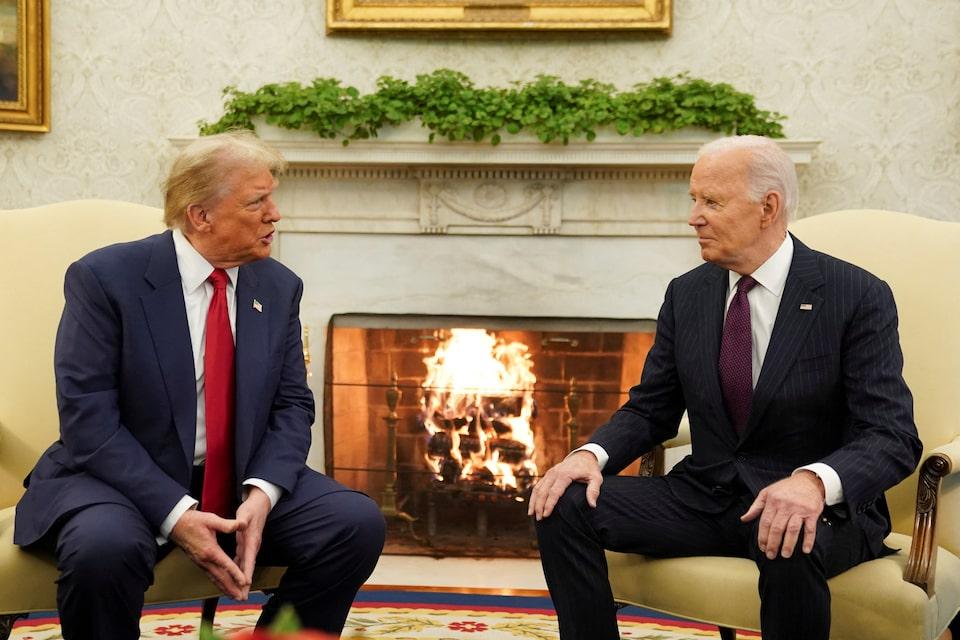
Trump has threatened to claw back unspent IRA money Electric vehicle rebates, gas emissions under fire Wind, solar may be untouched Dec 20 (Reuters) - President-elect Donald Trump has vowed to repeal Joe Biden's signature climate bill called the Inflation Reduction Act, which initially aimed at some $400 billion in new spending and tax cuts and credits at accelerating America's transition to a green energy economy. The Congressional Budget Office expects the cost to swell above $800 billion due to higher-than-expected demand for the tax credits; much of the direct funding has already been spent. Rescinding or revamping the bill, which was passed in August of 2022 without a single Republican vote, would likely require an act of Congress. Industry groups including utilities and some elected Republicans in Congress are pushing for clean energy credits and other provisions to be preserved, while the pharmaceutical industry is asking for tweaks. Trump advisers, meanwhile, have made a series of recommendations already that the Trump administration is expected to consider. Here's how industries and consumers could be impacted. ELECTRIC VEHICLES: UNDER THREAT The IRA provided $14.2 billion in incentives for purchasing emissions-free vehicles, such as electric vehicles, with income limits, and for installing alternative fueling equipment. It also created $2.9 billion in loans and grants for hybrid, electric and hydrogen cars. Trump advisers are recommending redirecting money now flowing to building charging stations and making EVs affordable into national-defense priorities. Trump plans to kill the $7,500 consumer tax credit for electric vehicle purchase. The IRA also established $2.9 billion in loans and grants for the production of hybrid, electric and hydrogen fueled cars. The IRA provided $3 billion for zero-emission U.S. postal mail trucks. The Trump team is considering canceling contracts to electrify the fleet. CLEAN FUEL AND EMISSIONS STANDARDS: UNCLEAR The IRA allocated $13.2 billion to promote clean hydrogen production and created $8.6 billion in new credits for low-carbon car and airplane fuels, and extended credits for biodiesel and other renewable fuels. Aviation officials fear the rollback of green jet fuel credits and the Biden administration has yet to finalize the rules for the credits and may not before Trump takes office on Jan. 20. WIND, SOLAR, NUCLEAR: UNCLEAR The IRA created $62.7 billion in new tax credits for emissions-free electricity sources and storage, including wind, solar, geothermal and advanced nuclear and extended $51.1 billion in existing tax credits for wind and solar power It also created $30 billion in tax credits to help existing nuclear reactors from closing. While Trump has expressed scepticism about wind and solar power, so far this part of the IRA has not been targeted with any specific recommendations. Jobs and economic benefits have been heavy in Republican-voting states, making serious changes unlikely. ENERGY INFRASTRUCTURE: UNCLEAR The IRA included billions aimed at updating the U.S.'s overloaded power grid and getting new forms of energy online. It spent $6.8 billion to update and expand lending programs aimed at boosting efficiency in energy generation and transmission, created $3.2 billion in tax credits for carbon capture and storage and provided $2.3 billion in loans and grants to finance electricity transmission, including for offshore wind energy generation. MANUFACTURING The IRA creates $37 million in new incentives for companies to manufacture clean energy technologies in the U.S. rather than abroad, through tax credits and the Defense Production Act. The U.S. Treasury has included related industries It also spent $5.3 billion to help reduce emissions from energy-intensive industries, such as concrete production. POOR, RURAL COMMUNITIES: UNCLEAR The IRA creates a $20 billion "Green Bank" for energy investments, with a focus on poor and disadvantaged communities and spends $14.8 billion monitoring and reducing pollution, and in grants for disadvantaged neighborhoods. It also includes $13.2 billion for investments in clean energy technology in rural areas. ENERGY-EFFICIENT BUILDINGS: UNCLEAR The IRA establishes $9 billion in rebates and grants for residential buildings and extends and increases $37 billion in tax credits for energy-efficient properties. AGRICULTURAL FUNDING: UNDER THREAT The bill provides $16.7 billion in new funding for agricultural practices that improve soil carbon, reduce nitrogen losses and decrease emissions. House Republicans have proposed rescinding $14.4 billion of this funding in a draft farm bill that would make the money available to a broader range of agriculture conservation practices. CLIMATE RESILIENCE: UNCLEAR The bill provides $4.8 billion to help reduce risk of wildfires, $4.6 billion to combat droughts and $4.6 billion in investments in coastal areas and weather forecasting resources It also spends $4.2 billion in federal research and funding for FEMA, DOE and Homeland Security. Sign up here. https://www.reuters.com/world/us/trump-aims-bidens-inflation-reduction-act-evs-clean-energy-manufacturing-2024-12-20/