2024-12-20 06:42
SINGAPORE, Dec 20 (Reuters) - Slowing inflation has created room for Singapore's central bank to ease monetary policy in January but it may wait until later in 2025 so it can assess incoming U.S. President Donald Trump's policies, analysts said ahead of key data next week. A Reuters poll found that November inflation data on Monday, which could be the last inflation read before the Monetary Authority of Singapore reviews policy next month, is expected to show the core rate steady at October's three-year low of 2.1%. The MAS has forecast core inflation would be around 2% in the fourth quarter. Analysts at DBS Bank expect core inflation to hold steady at 2.1% in November and average 1.8% in 2025, but said the MAS was unlikely to ease policy at its January review. "Chances are the MAS will want to mirror the U.S. Federal Reserve in basing its monetary policy decisions on U.S. President-elect Donald Trump's actual policies rather than speculating on potential changes before his inauguration," DBS economist Chua Han Teng said. Instead of using interest rates, Singapore manages monetary policy by letting the local dollar rise or fall against currencies of its main trading partners within an undisclosed band, known as the Singapore dollar nominal effective exchange rate, or S$NEER. It can adjust policy via three levers: the slope, mid-point and width of the policy band. A MAS survey of economists released last week found that even as inflation has moderated, the number expecting a January easing via a reduction in the slope of the S$NEER dropped to about one-third from half in the previous survey. Eugene Tan at Moody's Analytics expects the MAS to wait for core inflation to be below 2% for a few months before easing, and noted a later move would also give the central bank time to see the impact of Trump's trade policies. One of those expecting the MAS to reduce the slope of the S$NEER at the January review is Maybank economist Chua Hak Bin, who expects inflation to soon drop below 2% and sees growth moderating to 2.6% in 2025 from 3.6% in 2024. "Disruptions to global trade flows, and a diversion of China's excess capacity to the rest of the world because of Trump's tariffs will be a deflationary shock and reduce import prices for Singapore." Sign up here. https://www.reuters.com/markets/asia/singapores-low-inflation-not-enough-january-easing-analysts-say-2024-12-20/

2024-12-20 06:35
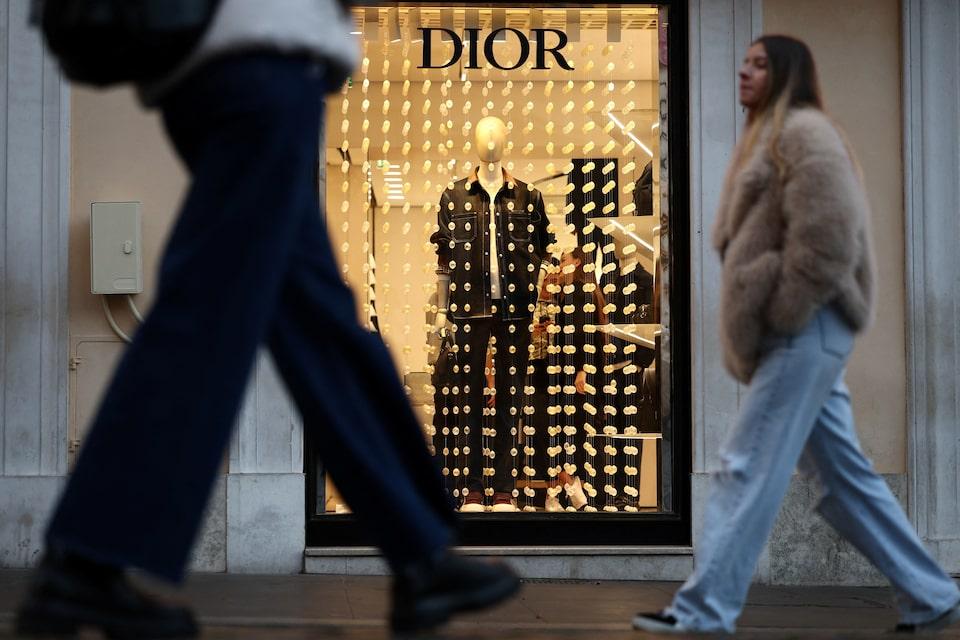
US spending on luxury brands down 6% on year Luxury demand "fragile" after US election Moves could erode profit margins PARIS, Dec 20 (Reuters) - Confronting a broad decline in demand for their usual fare, including $3,000-and-up handbags and $4,000-and-up cashmere jackets, major marketers of designer and luxury merchandise are broadening their product lines to emphasize scarves, belts, wallets and home goods priced at $500 and under. The companies' renewed focus on more affordable products is meant to appeal to middle-class aspirational customers who are more price sensitive, although the strategy may dent companies' typically fat profit margins. After more than two years of sharp price hikes -- with Chanel, Prada (1913.F) , opens new tab and LVMH's Dior raising handbag prices by over 50% in France in 2023 compared to 2020, according to the Wall Street analysts at Bernstein -- luxury labels are finding themselves at risk of alienating the middle class. U.S. spending on merchandise from top luxury brands fell 6% year on year in November, according to credit-card data from Citi, setting a dour tone to the early holiday shopping season for LVMH (LVMH.PA) , opens new tab, Kering (PRTP.PA) , opens new tab and other global purveyors of designer goods. LOGOS FOR UNDER $500 Kering label Gucci's decor and lifestyle gifts this season include a $440 pet leash and a box of sticky notes covered with the brand logo, priced at $200. Louis Vuitton, which belongs to LVMH, offers a $360 card holder and a $395 canvas and metal Monogram Double Spin bracelet for $395 on the gifts section of its e-commerce site. Burberry (BRBY.L) , opens new tab plans to change its store layout to emphasise "scarf bars" to drive sales of its cashmere scarves priced from $450 to $1,050. And Kering and Cartier's Richemont (CFR.S) , opens new tab seek to bring their perfumes and cosmetics lines back in-house while LVMH has been developing cafes and entertainment, said Jonathan Siboni, CEO of Luxurynsight. DEMAND FRAGILE AFTER US ELECTION Following the U.S. presidential election on Nov. 5, "luxury demand appears fragile, particularly with the aspirational clientele," analysts at Citi said, highlighting weak household employment in November following tepid U.S. hiring. The absence of this consumer is reflected in a decline in global luxury shoppers by 60 million to 355 million, analysts at RBC said. They cite pressures from inflation and growing interest in spending on experiences rather than products as key reasons for the drop-off. Global sales of luxury personal goods like clothing, accessories and beauty products, are expected to be flat at constant exchange rates during the holiday season, according to consulting firm Bain. Bain earlier forecast that global sales of personal luxury goods would drop 2% this year, one of the weakest on record, with a shrinking client base – especially the so-called aspirational shoppers, who are more price sensitive. CHINA DEMAND DAMPENED Appetite for high-end goods in China, one of the luxury goods industry's biggest markets and main source of growth in recent years, has been dampened by a property crisis and low youth unemployment, with analysts at JPMorgan predicting a "bumpy" outlook for the sector after a tough 2024, as ongoing macro challenges in China continue to weigh. In this context, luxury spenders are particularly selective. They do not want to buy things perceived as "lower quality or old styles," said Caroline Reyl, head of premium brands at Pictet Asset Management. Instead, brands can gain attention through marketing campaigns as well as expanded product categories, along with the shift toward more affordable product categories. “Still very high quality, but just cheaper in terms of price points,” Reyl added. Siboni, who combines information pulled from brand websites as well as the companies themselves, has seen an average increase of 8% of small leather goods such as wallets in proportion to full-size handbags compared to a year ago. In November, the average price of small leather goods at LVMH's Dior brand was down 21% year on year, according to Luxurynsight data. Meanwhile its Louis Vuitton label has increased the ratio of products in its small leather goods selection priced under 500 euros by 9% compared to the same period last year. PROFIT MARGIN EROSION LIKELY The emphasis on lower-priced products, while necessary to preserve relevance at a time when middle-class and even wealthy shoppers are balking at high-priced merchandise, is likely to erode the profit margins of players such as LVMH and Balenciaga-parent Kering, which are already facing pressure due to slowing sales. "What we are trying to do is to stretch the price range," Andrea Guerra, chief executive officer of industry outperformer Prada, told analysts at the end of October. Meanwhile, Burberry's new CEO Joshua Schulman, introducing his turnaround plan for the British luxury label, stressed the broadening of the assortment of entry-level priced products, noting that pricing was pushed "too high across the board." Industry bellwether LVMH, however, cautioned against the risk of veering too far off brand, which could damage a label’s exclusive aura. Chief Finance Officer Jean-Jacques Guiony said the group would steer away from introducing a new range of "very affordable product." “I think it would be a mistake,” he told analysts in October, stressing the importance of not entirely changing offerings with a “very short-term view.” Sign up here. https://www.reuters.com/business/retail-consumer/luxury-labels-bulk-up-lower-priced-goods-appeal-middle-class-shoppers-2024-12-20/
2024-12-20 06:33
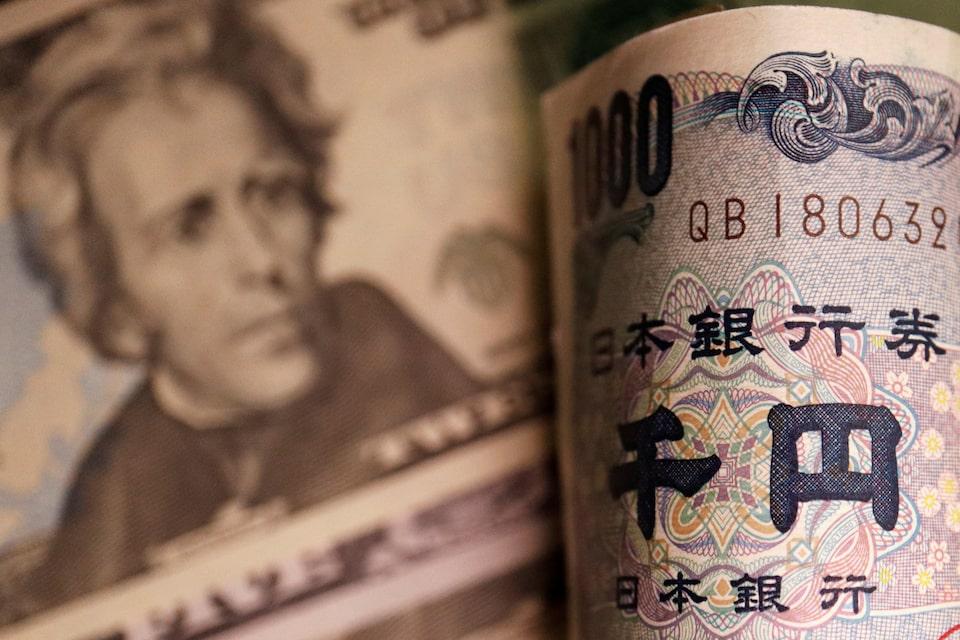
Dollar retreats from two-year high, but set for weekly gain US government faces partial shutdown if spending bill not passed Euro edges higher but set for third-straight weekly loss NEW YORK, Dec 20 (Reuters) - The U.S. dollar pulled back from a two-year high on Friday, but was heading for its third-straight week of gains, with data showing a slowdown in inflation two days after the Federal Reserve cut interest rates and indicated inflation was stubborn enough to scale back cuts in 2025. The dollar was down 0.72% against a basket of six other currencies at 107.64 after spiking as high as 108.54 - its highest level since November 2022. It was set to end the week 0.72% higher. Commerce Department data showed the personal consumption expenditures price index - the Fed's preferred inflation gauge - rose 0.1% in November after an unrevised 0.2% gain in October. But in the 12 months through November, the PCE price index advanced 2.4%, compared with a 2.3% increase in the year to October. The Fed cut interest rates by 25 basis points on Wednesday, with officials indicating that fewer cuts were coming in 2025 as inflation remained above the targeted range despite its recent downward trajectory. The yield on benchmark U.S. 10-year notes fell 6.2 basis points to 4.51%, after hitting a 6-1/2-month high following the Fed's rate decision. "The inflation numbers today were more benign than feared; the Fed tilted its focus back towards inflation in this week's meeting, and then the numbers weren't so worrisome," said Adam Button, chief currency analyst at ForexLive. "I think the market heard the words of the Fed and got worried about inflation. But then the numbers show that it's still slowing and certainly not at worrisome levels. The U.S. government will begin a partial shutdown if Congress does not extend a deadline for a spending bill backed by President-elect Donald Trump to pass by midnight on Friday. The bill failed to pass in the House of Representatives on Thursday. The dollar weakened 0.79% to 0.892 Swiss francs , on track for a weekly loss. The euro edged higher after dipping to a one-month low of $1.03435 on the session, on track for its third-straight week of losses, weighed down partly by Trump's comments that the European Union must purchase more U.S. oil and gas to make up for its "tremendous deficit" with the world's largest economy, or face tariffs. It was last up 0.76% at $1.044175. The dollar dropped to a five-month low of 157.93 Japanese yen after the Bank of Japan left interest rates unchanged. It was last down 0.89% at 156.01 yen. Sterling dipped to a one-month low of $1.2475 but was last up 0.77% at $1.25990, still on track for a third straight week of losses. The Bank of England kept interest rates on hold on Thursday. The dollar weakened 0.18% to 7.295 Chinese yuan on the offshore market. The Australian dollar weakened 0.43% to $0.6263, while New Zealand's dollar strengthened 0.53% to $0.566. "You basically have an interest rate play between Wednesday's Fed meeting and it's not so much what they did, but the catalyst was the change in the economic projections for the Fed funds rate next year," said Joseph Trevisani, senior analyst at FXStreet.com. "The market is seeing that the Fed is pulling back. I've long thought they would pause in January. I'm pretty sure they will." Sign up here. https://www.reuters.com/markets/currencies/dollar-set-end-week-high-yen-five-month-low-2024-12-20/
2024-12-20 06:28
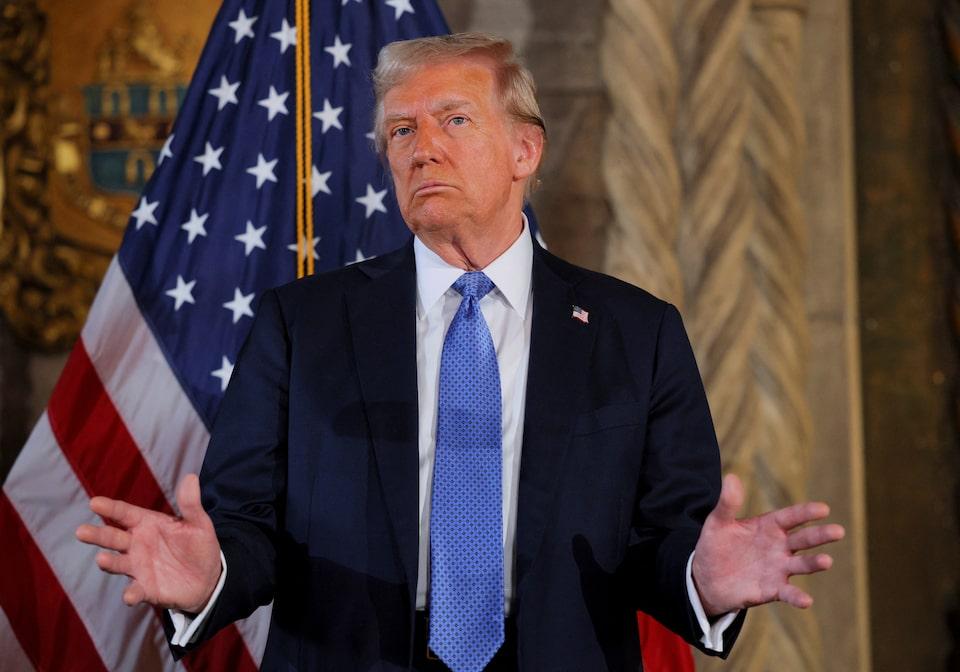
Trump says EU has tremendous trade deficit with the US Europe is already buying large chunk of US oil and gas US already exporting all the energy it doesn't consume at home EU says it is ready to discuss trade ties, including energy EU's trade surplus with U.S. is second largest after China Dec 20 (Reuters) - U.S. President-elect Donald Trump said on Friday the European Union should step up U.S. oil and gas imports or face tariffs on the bloc's exports that include goods such as cars and machinery. The EU already buys the lion's share of U.S. oil and gas exports, according to U.S. government data. No extra volumes are currently available as the United States is exporting at capacity, but Trump has pledged to further grow the country's oil and gas production. "I told the European Union that they must make up their tremendous deficit with the United States by the large-scale purchase of our oil and gas," Trump said in a post , opens new tab on Truth Social. "Otherwise, it is TARIFFS all the way!!!," he added. The European Commission said it was ready to discuss with Trump how to strengthen what it described as an already strong relationship, including in the energy sector. "The EU is committed to phasing out energy imports from Russia and diversifying our sources of supply," a spokesperson said. The United States already supplied 47% of the European Union's liquefied natural gas imports and 17% of its oil imports in the first quarter of 2024, according to data from EU statistics office Eurostat. TARIFF THREATS Trump, who takes office on Jan. 20, has vowed to impose tariffs of 10% on global imports into the U.S. along with a 60% tariff on Chinese goods - duties that trade experts say would upend trade flows, raise costs and draw retaliation against U.S. exports. The U.S. ran a $208.7-billion goods trade deficit with the EU in 2023, according to U.S. Census Bureau data. Although the U.S. runs a surplus with the EU on services, Trump has focused mainly on goods trade, frequently complaining about the bloc's car exports to the U.S. with few vehicles shipped east across the Atlantic. German and Italian car exports currently face a 2.5% U.S. tariff, which could quadruple if Trump makes good on his threats. Trump has also vowed to authorize hefty tariffs on the top three U.S. trading partners, Mexico, Canada and China, on his first day in office if they fail to stem illegal border crossings into the U.S. and trafficking of the deadly opioid fentanyl. William Reinsch, a trade expert at the Center for Strategic and International Studies, said the EU could negotiate its way out of Trump's tariffs. "This could be a win-win, telling them to buy something they want and need anyway," Reinsch said. However, most European oil refiners and gas firms are private and governments have little say on where their purchases come from unless authorities impose sanctions or tariffs. The owners usually buy their resources based on price and efficiencies. The U.S. is already producing and exporting record volumes of oil and gas and increasing those would require significant investment, especially for LNG export terminals. Reinsch noted that while there is demand in Europe now for U.S. oil and gas to replace shunned Russian supplies, long-term demand is unclear with the transition to renewable energy sources. Companies will be reluctant to invest if they think current demand is transitory, Reinsch said. BUYING MORE U.S. ENERGY The EU has steeply increased purchases of U.S. oil and gas following the block's decision to impose sanctions and cut reliance on Russian energy after Moscow invaded Ukraine in 2022. The United States has grown to become the largest oil producer in recent years with output of over 20 million barrels per day of oil liquids, or a fifth of global demand. U.S. crude exports to Europe stand at around 2 million bpd, representing over half of U.S. total exports, with the rest going to Asia. The Netherlands, Spain, France, Germany, Italy, Denmark, and Sweden are the biggest importers, according to the U.S. government data. "Europe is taking close to its maximum capacity for U.S. crude, meaning there is little scope for stronger imports next year," said Richard Price, oil markets analyst at Energy Aspects. He also said refinery closures in Europe in 2025 won't help increase imports. The United States is also the world's biggest gas producer and consumer with output of over 103 billion cubic feet per day. The U.S. government projects that U.S. LNG exports will average 12 bcfd in 2024. In 2023, Europe accounted for 66% of U.S. LNG exports, with the UK, France, Spain and Germany being the main destinations. U.S. oil production growth will likely be slow until 2030, according to the International Energy Agency. Gas output could meanwhile rise further to meet record U.S. domestic demand and LNG exports could also increase if the government approves more LNG terminals. The EU imported around 2 bcfd of Russian LNG in 2024 and it could move to ban those supplies and seek replacement from other sources, said Alex Froley, LNG analyst at ICIS. ($1 = 0.9623 euros) Sign up here. https://www.reuters.com/world/us/trump-says-eu-should-make-up-tremendous-deficit-with-us-by-purchasing-its-oil-2024-12-20/
2024-12-20 06:12
FRANKFURT, Dec 20 (Reuters) - Hitachi Energy, a Swiss-based supplier of power technology and electrification, said on Friday it has signed contracts worth more than $2 billion with German grid operator Amprion (RWEG.DE) , opens new tab for four converter stations. The stations for the high-voltage grid operator's Korridor B project contribute to Germany's energy transition, which requires the upgrading and building of power lines to prepare them for linking thousands of wind turbines and solar panels. Korridor B, a direct current link, will comprise of one 2 gigawatt (GW) power line to run between Heide and Polsum, and another 2 GW one from Wilhelmshaven to Hamm-Uentrop. It will bring wind power from the North to the populous industrial state of North Rhine-Westphalia by the early 2030s. In 2023, over 10% of wind power generated in northern Germany was curtailed due to grid limitations, a flaw in the transition that new point-to-point lines will help remedy. Hitachi Energy's high-voltage direct current (HVDC) converters are needed to link the new infrastructure to legacy, alternating, power distribution systems. Amprion, 25.1% owned by utility RWE, operates an 11,000 kilometre grid stretching from the North Sea to the Alps. Hitachi Energy said it project will create 2,100 direct and indirect jobs, with 80% located in Germany. Sign up here. https://www.reuters.com/business/energy/amprion-hitachi-energy-sign-over-2-bln-contract-german-converter-stations-2024-12-20/

2024-12-20 05:43
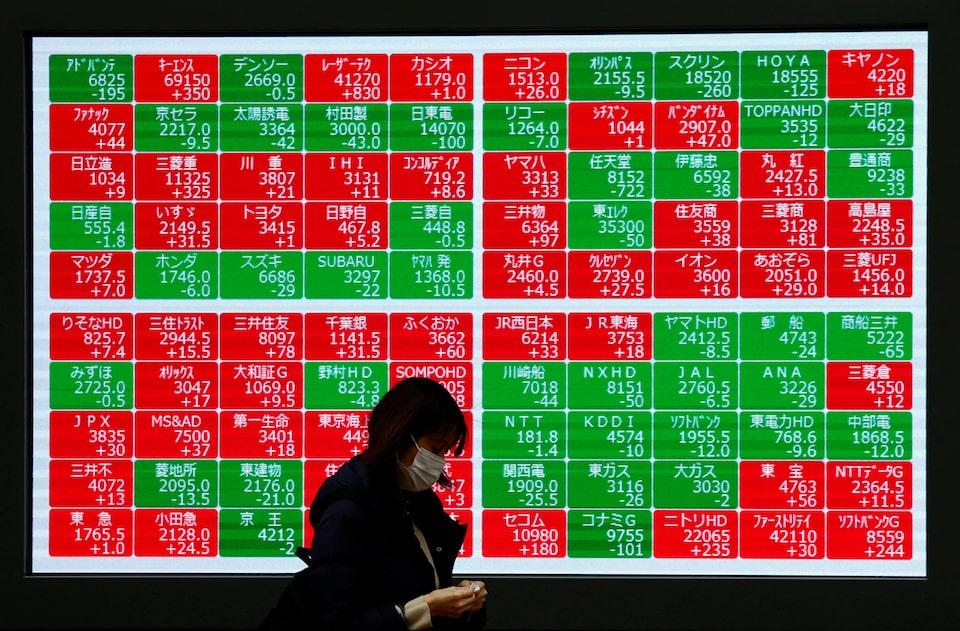
U.S. stocks turn higher after PCE report Lawmakers work to avoid partial government shutdown Gold rallies, dollar softens U.S. stock indexes on track for weekly losses NEW YORK, Dec 20 (Reuters) - Wall Street surged on Friday and the dollar softened as cooler-than-expected inflation data helped investors look past the possibility of a government shutdown and fresh tariff threats from U.S. President-elect Donald Trump. All three major U.S. stock indexes jumped more than 1%, gold surged and benchmark U.S. Treasury yields eased from multi-month highs. A report from the Commerce Department showed the PCE price index, the Federal Reserve's preferred inflation yardstick, came in cooler than analysts expected, supporting the narrative that price growth remains on a path toward achieving the U.S. central bank's 2% target. "The better-than-expected reading for PCE, which is the Fed’s favorite measure of inflation, allowed investors to breathe a sigh of relief because maybe inflation is not likely to be as much of a runaway situation as feared," said Sam Stovall, chief investment strategist of CFRA Research in New York. Equity markets came under pressure throughout a busy week for central banks, led by the U.S. Federal Reserve, which signaled it would slow the pace of interest rates in the coming year. Republican leaders in the U.S. House of Representatives said they would vote to keep the federal government operating beyond a midnight deadline and avert a damaging shutdown that could disrupt the Christmas holiday. "The focus of the market over the last several days has been on the Fed's announcement that while they were lowering interest rates by 25 basis points, that they were going to begin to rein (future rate cuts) in, and it certainly shook the markets," said Tim Ghriskey, senior portfolio strategist at Ingalls & Snyder in New York. "The potential government shutdown is the other big focus. Markets never like that." The S&P 500, the Nasdaq and the Dow were all on course for weekly percentage declines. The Dow Jones Industrial Average (.DJI) , opens new tab rose 497.22 points, or 1.17%, to 42,839.46, the S&P 500 (.SPX) , opens new tab rose 63.93 points, or 1.09%, to 5,931.01 and the Nasdaq Composite (.IXIC) , opens new tab rose 199.83 points, or 1.03%, to 19,572.60. European stocks registered their worst week in over three months as Trump's comments about potential tariffs on the European Union spooked investors. MSCI's gauge of stocks across the globe (.MIWD00000PUS) , opens new tab rose 8.20 points, or 0.98%, to 847.61. The STOXX 600 (.STOXX) , opens new tab index fell 0.88%, while Europe's broad FTSEurofirst 300 index (.FTEU3) , opens new tab fell 19.25 points, or 0.96%. Emerging-market stocks (.MSCIEF) , opens new tab fell 7.38 points, or 0.68%, to 1,074.38. MSCI's broadest index of Asia-Pacific shares outside Japan (.MIAPJ0000PUS) , opens new tab closed lower by 0.97%, to 567.00, while Japan's Nikkei (.N225) , opens new tab fell 111.68 points, or 0.29%, to 38,701.90. Treasury yields pulled back after cooler-than-expected inflation data bolstered expectations for two more rate cuts from the Federal Reserve in the coming year. The yield on benchmark U.S. 10-year notes fell 4.2 basis points to 4.528%, from 4.57% late on Thursday. The 30-year bond yield fell 2.2 basis points to 4.7194% from 4.741% late on Thursday. The 2-year note yield, which typically moves in step with interest rate expectations for the Federal Reserve, fell 0.4 basis points to 4.315%, from 4.319% late on Thursday. The two-year note yield, which typically moves in step with interest-rate expectations for the Federal Reserve, fell 1.1 basis points to 4.308%, from 4.319% late on Thursday. The dollar softened against a basket of world currencies, but remained on track for its third consecutive weekly advance. The dollar index , which measures the greenback against a basket of currencies including the yen and the euro, fell 0.59% to 107.79, with the euro up 0.64% at $1.0428. Against the Japanese yen , the dollar weakened 0.69% to 156.35. Bitcoin reversed its losses in the wake of the inflation data. In cryptocurrencies, bitcoin fell 0.88% to $96,462.00. Ethereum rose 0.72% to $3,440.32. Oil prices edged higher as the dollar eased from two-year highs and as PCE data bolstered expectations for two additional interest rate cuts from the Fed in 2025. U.S. crude gained 0.12% to $69.46 per barrel, while Brent settled at $72.94 per barrel, up 0.08% on the day. Gold surged after the inflation report but still appeared set for a weekly loss. Spot gold rose 1.11% to $2,622.62 an ounce. U.S. gold futures rose 1.41% to $2,628.70 an ounce. Sign up here. https://www.reuters.com/markets/global-markets-wrapup-1-2024-12-20/