2024-12-20 04:03
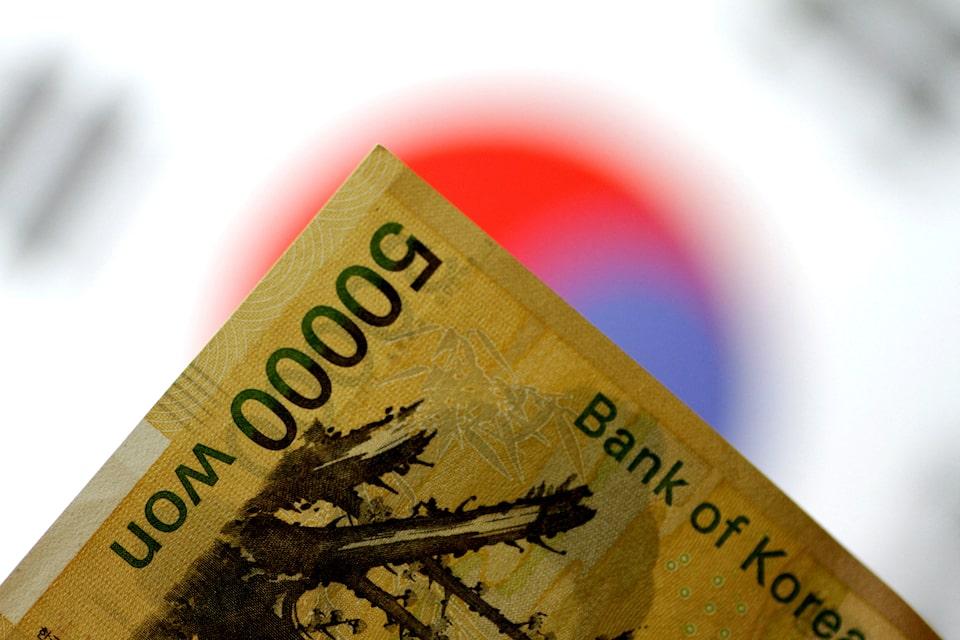
Won hit 15-year low on Thursday vs dollar Domestic political uncertainty, Fed rate path weigh New measures to face limits from US policy, China risks, says economist SEOUL, Dec 20 (Reuters) - South Korea's financial authorities said on Friday they would loosen foreign exchange regulations and allow more corporate borrowings abroad, in a bid to defend the won that is trading at a 15-year low with improved liquidity. "Strict regulations restrain the efficiency of foreign exchange management, and there is a need to take into account worsened foreign exchange liquidity conditions after recent events," the finance ministry said in a joint statement with the central bank and regulatory agencies. The South Korean won dropped on Thursday to its weakest level in 15 years, weighed down by risk-averse sentiment after the U.S. Federal Reserve's cautious stance on more interest rate cuts, as well as domestic political uncertainty stoked by President Yoon Suk Yeol's short-lived martial law order on Dec. 3 and his subsequent impeachment. According to the statement, measures include allowing companies to take out loans in foreign currencies and exchange the funds for the won, if they are used for investing in facilities such as equipment, property and land purchases. "It is a paradigm shift in foreign exchange policy, from regulating external debt, to inducing more foreign inflows," a finance ministry official told Reuters by phone. Traumatised by capital flight during the 1997-1998 Asian financial crisis and the 2007-2008 global financial crisis, South Korea has had a tight grip on foreign exchange borrowings even as it has encouraged overseas investments. At the end of September, the country held a record high of a net $977.8 billion in financial assets abroad, after turning a net creditor in 2014. "We will continue to loosen regulations on capital inflows from the private sector unless it affects external debt or credit ratings in a negative way," the official, who did not wish to be identified because the person was not authorised to speak to media, said. The ministry also said the ceiling of foreign exchange futures contracts would be raised to 75% of capital holdings for local banks and 375% for Seoul branches of foreign banks, from the current 50% and 250%, respectively. "They are clearly tools for controlling the weakening pace of the local currency by easing the strain in foreign exchange liquidity," said Park Sang-hyun, an economist at iM Securities. "But, there will be limitations, as unfavourable external conditions, from U.S. policy to China risks, are putting pressure on all emerging currencies, not just the won," Park said. The ministry said it would implement the measures in a swift manner and consider expanding them after reviewing the effects. Sign up here. https://www.reuters.com/markets/currencies/south-korea-ease-fx-regulations-improve-liquidity-conditions-2024-12-20/
2024-12-20 03:01
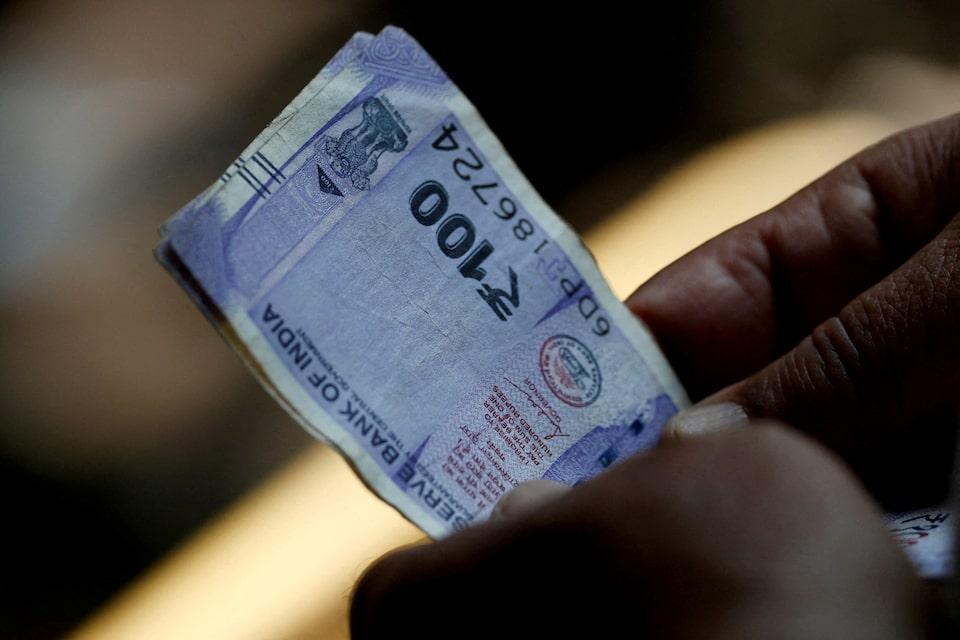
MUMBAI, Dec 20 (Reuters) - The Indian rupee is likely to hold near its all-time low at the open on Friday after robust U.S. data reinforced the view that the Federal Reserve will cut interest rates at a measured pace next year. The one-month non-deliverable forward indicated that the rupee will open at 85.06-85.08 to the U.S. dollar, near its lifetime low of 85.0850 hit on Thursday. The dollar index and U.S. yields extended their post-Fed rally on Thursday. The 10-year U.S. yield hit nearly 4.60%, the highest in more than six months, while the dollar index scaled a two-year peak. Data released on Thursday showed that U.S. third-quarter GDP grew at faster clip than expected and jobless claims declined more than anticipated. The data, which indicated that the economy is in good shape and the labour market is holding up, came a day after the Fed signalled fewer rate cuts in 2025 amid sticky inflation. "The U.S. data just basically provided one more reason to buy the dollar, if one was needed," a currency trader at a bank said. The rupee "just can't avoid" the impact of what is happening in the overall emerging market (EM) currencies space, and "honestly, it is good that it does not", he said. Investors dumped EM currencies on Thursday on worries that U.S. rates are likely to remain higher for longer, prompting their central banks to take steps to defend their currency. US INFLATION DATA ON TAP Core U.S. PCE data, due later on Friday, will provide cues on how inflation is shaping up. "With the Fed injecting some concern of inflation risk into the mix, the outcome of the U.S. core PCE print does have the potential to impact the USD," Chris Weston, head of research at Pepperstone, said. KEY INDICATORS: ** One-month non-deliverable rupee forward at 85.26; onshore one-month forward premium at 18.5 paise ** Dollar index at 108.44 ** Brent crude futures down 0.5% at $72.5 per barrel ** Ten-year U.S. note yield at 4.56% ** As per NSDL data, foreign investors sold a net $108.6 million worth of Indian shares on Dec. 18 ** NSDL data shows foreign investors sold a net $157 million worth of Indian bonds on Dec. 18 Sign up here. https://www.reuters.com/markets/currencies/no-relief-rupee-robust-us-data-supports-feds-hawkish-stance-2024-12-20/
2024-12-20 01:29
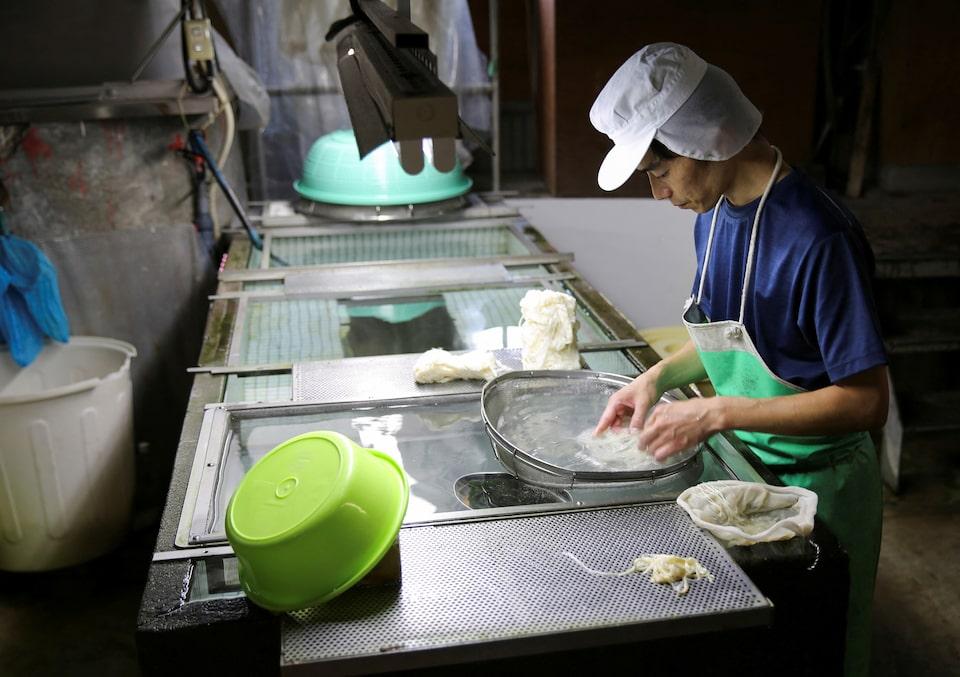
Labour shortage fuels increased bankruptcies among small Japanese firms Japan faces shortage of 3.4 million workers by decade's end, study shows Ishiba's rural revitalisation efforts challenged by ageing demographics INO, Japan, Dec 20 (Reuters) - Over the last decade, Masato Shiota brought his papermaking business back from the brink, paying down debt and buying machinery to automate some production. But he struggles to find workers to keep output at full capacity. "We have three machines but only have two running on any day," said Shiota, president of Wako Seishi, which produces tissues, disinfectant wipes and toilet paper in Ino, a town on the smallest of Japan's four main islands known for its paper industry. "If we don't have the people we can't make products and we can't turn a profit. We'll go under. This is the biggest problem for small and medium-sized companies." Shiota's experiences and those of several other Ino business owners show how a labour shortage is a growing threat to smaller companies that provide seven out of every 10 jobs in Japan. The country faces a deficit of 3.4 million workers by the end of this decade and 11 million by 2040, according to a 2023 study by Recruit Works Institute. In the first half of this year, a record 182 companies went under because of worker shortages, according to research firm Teikoku Databank, up 66% on a year earlier. Overall bankruptcies look set to surpass 10,000 this year, the highest since 2013, data from Tokyo Shoko Research showed this month. While labour shortage-related bankruptcies are a small portion of the total, the surge will ripple through to these companies' suppliers and customers, potentially causing a "chain of bankruptcies or mergers", according to Takayasu Otomo, a researcher at Teikoku Databank. Japan in March raised borrowing costs for the first time in 17 years, signalling the world's fourth-largest economy had turned a corner after years of stagnation. Yet Reuters interviews with 16 people, including business leaders in Ino, industry experts and officials, reveal challenges for Prime Minister Shigeru Ishiba's efforts to revitalise rural economies facing ageing and shrinking populations. While Japan is allowing more underperforming businesses to fail, the accounts suggest the worker shortage is threatening firms that are otherwise robust, including those that have invested in automation and creative hiring. Japan's Ministry of Economy, Trade and Industry did not respond to questions about the experiences of business owners in Ino. 'ECONOMIC METABOLISM' Shiota, who also heads the local papermaking association, has 42 employees and saw demand for disinfectant wipes surge during the pandemic. He has cut out unprofitable products and, with government support, invested 80 million yen ($520,000) to automate his lines. But Shiota said he has little ability to pay workers more beyond a recent increase in the minimum wage, which will rise again next year. Japan remains resistant to large-scale immigration, so some companies have plugged labour gaps by employing short-term workers from Vietnam and other Asian countries. But a weakening yen makes it harder to attract foreign workers. Some Japanese officials see bankruptcies triggered by labour shortages as an inevitable effect of what they call "economic metabolism" - whereby less-dynamic companies are swept away, allowing workers and capital to migrate to more productive ones. When asked about the rise in these bankruptcies, one senior official, granted anonymity to discuss a sensitive matter, said it was "natural" for such economic metabolism to take place. The bankruptcy rate remains low compared with some countries, the official said, adding that if such bankruptcies did not occur, workers would be stuck at low-wage companies. LEARNING TO ADAPT Nestled alongside the Niyodo river, Ino is known for traditional products such as "Tosa washi" paper, made by hand for 1,000 years and used in calligraphy and on "shoji" sliding doors. Given its population of 20,000 and location off the beaten track, Ino's papermakers have carved out niches to survive. Toyo Tokushi, owned by the Moriki family, diversified into adult diapers in 1970, which now account for 70% of sales. Faced with a staffing crunch, the company for the first time is considering hiring graduates straight out of high school, said Kei Moriki, the 32-year-old director. Even so, he said he isn't sure that the company can muster the resources to train employees with no work experience. Old trophies from an annual softball tournament held by the local paper manufacturers association adorn the company headquarters. Toyo Tokushi hasn't fielded a team in around 20 years, Moriki said, as his workforce has aged. Elsewhere in Ino, there are few izakaya pubs left and only one fish shop, down from a dozen in 2007, according to locals. Ishiba has given few details about how he plans to revitalise rural areas, but has promised to lay out a plan by early next year to raise the minimum wage by 42% by the end of the decade. Meanwhile, the government is on a push to help small and medium-sized enterprises raise prices so they can hike wages that lag the OECD average. Higher wages would also help smaller companies attract workers. But in Ino, business owners say it's not straightforward. Kashiki Seishi, a maker of washi paper, used to source everything from local farmers, according to chief executive Hiromasa Hamada. But since 2017 the six-person company has also depended on volunteers from a programme that allows people to work on farms in exchange for room and board. "I don't think it's healthy for a business to rely on volunteers," said the 44-year-old Hamada, a seventh-generation papermaker. But he appears to have little choice, as there are fewer farmers in the nearby ranges to collect wood and other materials he needs. In 10 years, he said, "there might be no one left in the mountains". Sign up here. https://www.reuters.com/world/japan/mind-labour-gap-worker-crunch-piles-pressure-small-town-japan-2024-12-20/
2024-12-20 01:16
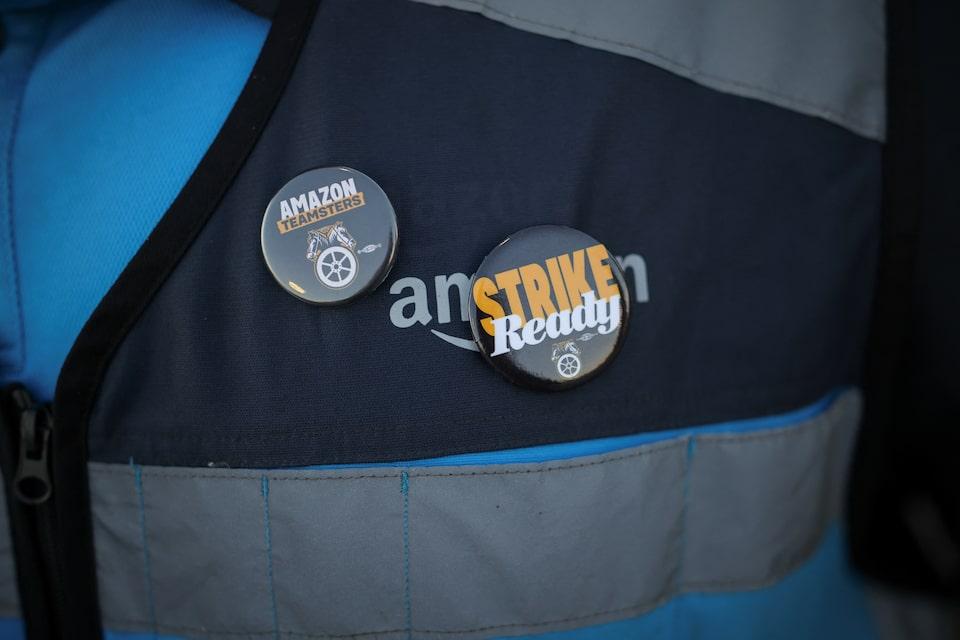
Teamsters call it largest-ever strike against Amazon Amazon claims no expected impact on operations Amazon disputes Teamsters' representation claims NEW YORK/SAN FRANCISCO, Dec 19 (Reuters) - Amazon.com (AMZN.O) , opens new tab workers at seven U.S. facilities walked off the job early on Thursday during the holiday shopping rush as workers protest what they say is the retailing giant's unfair treatment of its employees. Warehouse workers in cities including New York, Atlanta and San Francisco were taking part in what Teamsters officials called the largest-ever strike against Amazon - but which may cause barely a ripple in the company's extensive shipping operations. As the world's second-largest private employer after Walmart (WMT.N) , opens new tab, Amazon has long been a target for unions that say the company's emphasis on ever-faster speed and efficiency can lead to injuries. The company says it pays industry-leading wages and uses automation designed to reduce repetitive stress. Amazon shares were up 1.8% on Thursday afternoon. Workers told Reuters they want Amazon to come to the bargaining table and recognize the pressure to meet demands that affect their health. However, the strikers represent a small number of the 800,000-plus people employed by Amazon at more than 600 U.S. fulfillment centers, delivery stations and same-day facilities. “(Amazon) pretends there isn’t a quota system, but there’s a rigorous quota system that pushes people beyond their real physical limits in an unnatural way,” said Jordan Soreff, 63, who delivers about 300 packages a day for Amazon in the New York City boroughs of Queens and Brooklyn. “The more you do, the more you’re expected to do.” Soreff was one of about 100 people outside the Amazon facility in Queens, including many Teamsters members who do not work for Amazon. However, the facility was continuing to operate, with other drivers going in to work and then leaving in trucks, assisted by police, who were stopping protesters from blocking the drivers. The Teamsters have "intentionally misled the public" and "threatened, intimidated and attempted to coerce" employees and third-party drivers to join them, an Amazon spokesperson said. Amazon has multiple locations in many U.S. metropolitan areas, shielding it from potential disruptions. The company has said it does not expect any effect on operations during one of the busiest times of the year. In 2023, the company sold more than 500 million items from independent sellers on Black Friday and Cyber Monday. "It is possible there may be some isolated incidents of delay, I just do not think there will be a material impact," said Morningstar analyst Dan Romanoff. Earlier this year, Amazon announced a $2.1 billion investment to raise pay for fulfillment and transportation employees in the United States, increasing base wages for employees by at least $1.50 to around $22 per hour. The International Brotherhood of Teamsters had given Amazon a deadline of Dec. 15 to begin negotiations - but that day passed without talks. The Teamsters say they represent 10,000 workers at 10 Amazon facilities, but the e-commerce giant disputes this, saying there have been no elections or bargaining orders for the locations. RESISTANT TO UNIONS Labor actions have picked up pace across service industries following a period when workers at manufacturers in the automotive, aerospace and rail industries won substantial concessions from employers. U.S. port workers are due to potentially strike in mid-January if contract talks are not resolved. A union representing more than 10,000 Starbucks (SBUX.O) , opens new tab baristas authorized a potential strike earlier this week, after strikes roiled companies including planemaker Boeing (BA.N) , opens new tab earlier this year. Amazon has still not recognized the first-ever facility to vote to unionize in Staten Island, and has filed objections with the National Labor Relations Board over that 2022 union vote. In a federal lawsuit filed in September, Amazon challenged the constitutionality of the NLRB, formed during the Great Depression of the 1930s. In San Francisco, there were at least three dozen protesters at the Amazon facility, with a Teamsters organizer estimating that between 15 and 20 were warehouse employees. Janeé Roberts, a 30-year-old San Francisco resident who has worked at the facility for almost two years, said her main reason for supporting the strike was safety conditions. "Not only do I look at my coworkers and see how dog-tired and wear and tear it takes on their bodies, but we’re not even given proper benefits as part-timers,” Roberts said while holding a sign outside the gates. Amazon, whose businesses include grocery chain Whole Foods, will face other union actions in the months ahead. Workers at a Philadelphia Whole Foods in November filed to hold a union election, the first since Amazon acquired the business in 2017. Germany's United Services Union also announced strikes at Amazon warehouses across the country in solidarity with Teamsters, starting on Thursday. Sign up here. https://www.reuters.com/technology/amazon-workers-go-strike-us-ahead-christmas-rush-union-seeks-contract-talks-2024-12-19/
2024-12-20 00:36
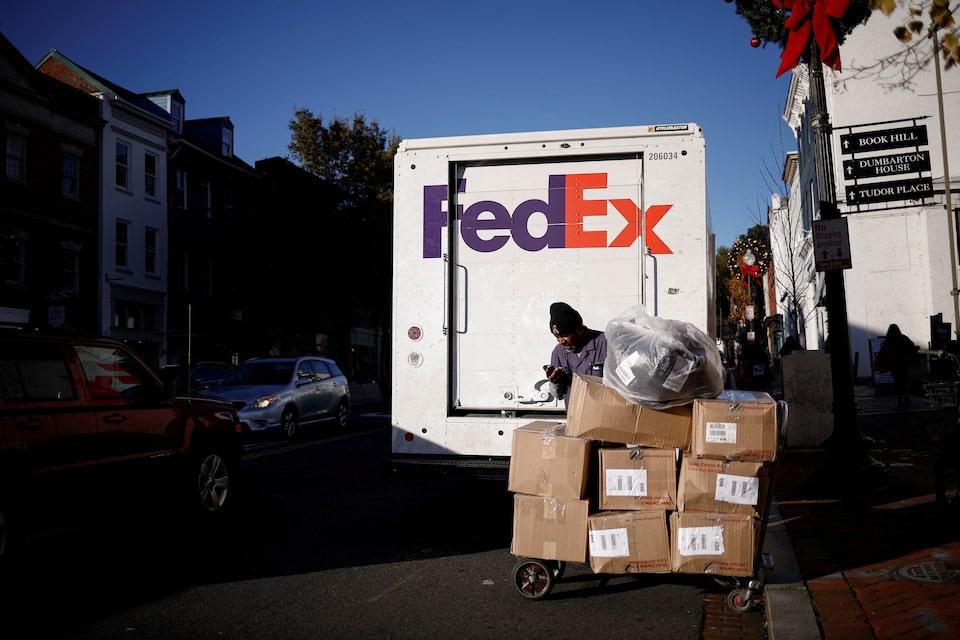
Dec 19 (Reuters) - FedEx (FDX.N) , opens new tab announced the much-anticipated spinoff of its freight trucking division on Thursday, as it restructures operations to focus on its core delivery business. Shares jumped 8% in after-hours trading, adding $5 billion to FedEx's market capitalization. Analysts believe the spinoff could unlock up to $20 billion in shareholder value, while clearing the way for FedEx management to zero in on merging operations of its separate Express and Ground units to boost profits. They say FedEx Freight assets were not fully appreciated within FedEx and that spinning off the trucking business as a publicly-held entity will provide an opportunity to expand and improve its operations. Freight is one of FedEx's most profitable businesses, said Edward Jones analyst Faisal Hersi. The company trades at a relative discount to its publicly held trucking rivals like XPO (XPO.N) , opens new tab and Old Dominion (ODFL.O) , opens new tab, meaning that making it an independent company will create value for investors, he said. "We are encouraged that the company listened to shareholder feedback and is pursuing this route," Stephens analyst Daniel Imbro said of the spinoff. FedEx Freight is the largest U.S. provider of less-than-truckload services, which involve carrying multiple shipments from different customers on a single truck; the shipments are then routed through a network of service centers where they get transferred to other trucks with similar destinations. The unit's revenue fell 11% to $2.17 billion during the fiscal second quarter ended Nov. 30. Executives said FedEx Freight lost some cost-conscious customers that it had picked up after the bankruptcy of rival Yellow Corp and that the business appeared to have bottomed during the most recent quarter. The after-hours rally in FedEx shares came despite its warning that 2025 revenue could be held back by a stubbornly challenging environment, with demand for its fastest and most lucrative deliveries from business customers remaining weak. As a result, Memphis-based FedEx lowered its profit outlook for the full year ending May 2025, calling for adjusted profit of $19 to $20 per share. In September, FedEx cut the top end of its full-year adjusted operating income to between $20 and $21 per share from its previous range of $20 to $22 per share. FedEx second-quarter adjusted profit fell to $0.99 billion, or $4.05 per share, from $1.01 billion, or $3.99 per share, a year earlier. Nevertheless, the result from the latest quarter topped analysts' average call for earnings of $3.90 per share, according to LSEG. FedEx Freight turned in lower-than-expected revenue and profit during the latest quarter, due to continued weakness in the U.S. industrial segment that includes manufacturing, metals and chemicals. That was mostly offset by ongoing cost-cutting at the company, which is slashing overhead and working to improve efficiency. The Express unit's adjusted results improved during the quarter, helped by expense reductions and more international export volume, FedEx said. That was partly offset by higher wage and lease rates, weak U.S. package delivery demand and the expiration of the U.S. Postal Service contract for air transportation services on Sept. 29, 2024. FedEx again warned that the loss of USPS, its largest customer, would create a $500 million headwind in the current fiscal year. The company and rivals like United Parcel Service (UPS.N) , opens new tab are in the throes of the U.S. holiday shipping season, when daily volumes can double. Thanksgiving fell later than normal this year, shortening the time the companies have to deliver gifts to shoppers and inventory to retailers. December volumes so far are ahead of FedEx's forecasts and picked up right after Cyber Monday - the first work day after Thanksgiving, when many people make online purchases. Carriers are still shouldered with excess capacity from the early COVID shipping boom, so experts say most holiday gifts should be delivered on time. Sign up here. https://www.reuters.com/business/fedex-spin-off-its-less-than-truckload-freight-business-2024-12-19/
2024-12-19 23:59
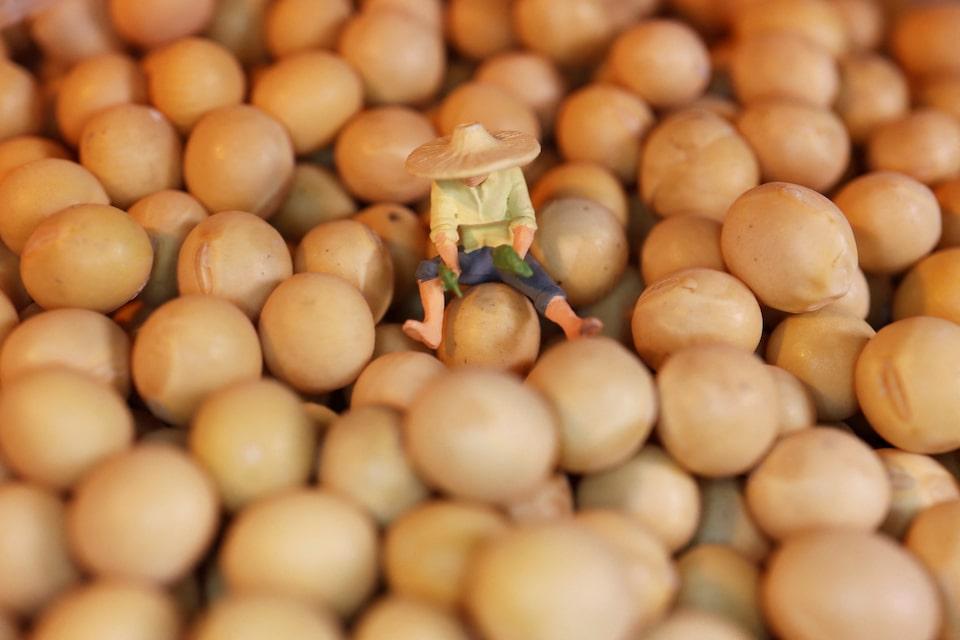
Sinograin buys 500,000 tons of U.S. soybeans for March-April, traders say Sinograin prefers U.S. beans for storage due to quality Deals come ahead of inauguration of Trump, who has promised hefty China tariffs Purchases may aim to replenish reserves, not political appeasement, analysts say CHICAGO, Dec 19 (Reuters) - China's Sinograin has bought nearly 500,000 metric tons of U.S. soybeans this week for shipment in March and April, paying more for U.S. supplies for state reserves rather than buying cheaper Brazilian beans, two U.S. traders familiar with the deals said. China is the world's top soy buyer and a crucial market for both U.S. and Brazilian farmers, who supply the bulk of China's imports. The industry is monitoring sales and trade flows to China closely ahead of President-elect Donald Trump's inauguration on Jan. 20, on concern that another round of tit-for-tat tariffs would erode the value of U.S. soybeans . Soy prices hit four-year lows this week on trade tensions and amid high U.S. stockpiles and a looming record harvest in Brazil. Sinograin's purchases this week follow deals China booked last week for around 750,000 tons for shipment from January to March. Those are modest volumes for Sinograin, China's state-run grains trader and strategic reserves manager, which typically buys millions of tons at a time, the traders said. Sinograin prefers U.S. beans when it is buying for storage because they are less prone to spoilage than those from Brazil, traders said. Sinograin did not immediately respond to a request for comment on Thursday. That would explain Sinograin paying more for U.S. beans, rather than buying cheaper Brazilian beans that will be abundant during the March-April delivery period, according to market analysts. Sinograin bought at around 90 cents a bushel over Chicago Board of Trade March futures and 80 cents over May futures on a free-on-board (FOB) basis, according to one trader, around 80 cents to $1 above Brazilian FOB prices for that period. The purchases come as overall Chinese agricultural imports have slowed. They also come as Brazil, China's top soy supplier, is preparing to harvest a record crop. Poor processing margins for turning soy into animal feed and oil are discouraging imports, and tariff threats by Trump have stoked tensions between the two economic powers. U.S. exporters have been racing to ship soybeans to China before Brazilian supplies hit the market early next year and before Trump takes office. Imports by private crushers could be subject to any tariffs imposed on U.S. supplies by China in response to Trump's mooted duties. That would make the soybeans costly. State-run importers, however, are more likely to receive tariff exemptions, traders said. Chinese purchases of the most recent U.S. soybean crop for shipment through next summer are running about 6% behind last year, compared with forecasts for a mere 2.6% drop in Chinese imports of soybeans, according to U.S. Department of Agriculture data. The purchases may be intended as an olive branch to trade hawks in the incoming U.S. administration, the traders said. But market analysts said they were more likely intended to replenish the country's strategic reserves, because the volumes were not big enough to score political points. "If the Chinese do it for political appeasement it's millions of metric tons, not a few tons here and there," said Dan Basse, president of Chicago-based AgResource Co. The recent purchases were much smaller than other deals viewed as political appeasement, such as the roughly 3 million metric tons purchased in a single week ahead of an APEC summit in November 2023 where relations between China, Taiwan and the U.S. were at the top of the agenda, he said. The price premium for U.S. beans also suggests China is looking to top off its reserves - and that the buying spree could be short-lived, Basse said. Volumes in China's state reserves are a closely guarded secret, although supplies are regularly auctioned off to domestic crushers then refilled with fresh supplies. "When South America is a dollar a bushel cheaper than the United States, it's hard to keep doing this," Basse said. Unlike private Chinese crushers which are more price sensitive, Sinograin tends to be more focused on soybean quality, said a veteran soy industry executive in China. "Brazil beans are so easily degraded in storage, never being considered for the reserve program," the executive said. "Only quantity will tell if the purchases are out of concerns over a possible trade war." Sign up here. https://www.reuters.com/markets/commodities/chinas-state-importer-books-us-soy-purchases-tariff-threat-looms-2024-12-19/