2024-12-19 06:07
Ukraine strikes Russia with 13 missiles Russia shoots down 84 Ukrainian drones Ukraine targets refinery in Rostov region Fire at Novoshakhtinsk refinery put out MOSCOW, Dec 19 (Reuters) - Ukraine struck Russian territory with at least 13 missiles and 84 drones, triggering a fire at an oil refinery in the southern Rostov region that burned for hours, Russian officials said on Thursday. As Russia advances at the fastest pace since the start of the war in 2022, Ukraine has repeatedly tried to strike Russia's oil infrastructure - which funds a significant chunk of the Russian war economy. Russian air defences shot down 84 drones over Russian regions, including 36 over Rostov region, according to the defence ministry. Rostov Acting Governor Yuri Slyusar said Ukraine had struck the region with at least 13 missiles and dozens of drones, triggering a fire at the Novoshakhtinsk oil refinery, which has repeatedly been targeted by Ukraine. At least one person was injured during the attack, Slyusar said. The fire was put out early on Thursday. It was not immediately clear which missiles Ukraine fired at Rostov, though Kyiv struck a Russian military airfield earlier this month with U.S.-made ATACMS missiles prompting a major Russian attack on Ukraine's energy infrastructure. After approval from the administration of U.S. President Joe Biden, Ukraine struck Russia with six U.S.-made ATACMS on Nov. 19 and with British Storm Shadow missiles and U.S.-made HIMARS on Nov. 21. Russian President Vladimir Putin, after those attacks, fired a new intermediate-range hypersonic ballistic missile known as "Oreshnik", or Hazel Tree, at Ukraine on Nov. 21. Andriy Kovalenko, the head of Ukraine's official Centre Against Disinformation, wrote on Telegram that the missile attack focused on the Kamensky chemical plant "which produces rocket fuel specialising in solid fuel components for rocket engines". Reuters could not independently verify battlefield accounts from either side. (This story has been refiled to fix a typo in the headline) Sign up here. https://www.reuters.com/world/europe/russia-repels-missile-attack-rostov-region-governor-says-2024-12-18/

2024-12-19 05:48
3Q US GDP revised up to 3.1% from 2.8% European, Asian stocks lower after Fed meeting Dollar gives back some gains; gold rebounds Treasury yield curve steepest in over two years NEW YORK, Dec 19 (Reuters) - Wall Street stumbled to a close Thursday, ending nearly flat after an earlier rally ran out of steam late in the session as investors continued to parse the Federal Reserve's hawkish outlook. Benchmark U.S. Treasury yields hit their highest level since May, crude prices dipped and gold advanced as investors grew accustomed to the reality that the central bank will take a slower, more measured approach to policy easing in the coming year. The cautious note struck by the Fed's economic projections and the expected slowdown of rate cuts prompted the steepest U.S. stock selloff in months on Wednesday. "Those larger moves indicate that some investors are worried that (Fed Chair Jerome) Powell’s comments suggest maybe the Fed is considering not cutting rates any more," said Bill Merz, head of capital market research at U.S. Bank Wealth Management in Minneapolis. "You saw the market reacting to specific words that Jerome Powell delivered during the press conference, which emphasizes the point that there’s a lot of speculation that occurs in real time, with investors trying to decipher what the Fed really means," Merz added. Other central banks wrapped up an eventful year of rate decisions, with the central banks of England, Japan, Norway and Australia holding firm, and Switzerland and Canada implementing cuts of 50 basis points. Sweden's Riksbank reduced its policy rate by 25 bps, as did the European Central Bank last week. On the economic front, an unexpected upward revision to third-quarter U.S. GDP, a dip in jobless claims and an upside surprise in existing home sales all underscored U.S. economic strength. "Generally speaking, what happened at the Fed was good news," said Thomas Martin, senior portfolio manager at GLOBALT in Atlanta. "They're on the job on inflation, the economy is strong, the final GDP number of 3.1% ain’t bad." The Dow Jones Industrial Average (.DJI) , opens new tab rose 15.37 points, or 0.04%, to 42,342.24, the S&P 500 (.SPX) , opens new tab fell 5.08 points, or 0.09%, to 5,867.08 and the Nasdaq Composite (.IXIC) , opens new tab fell 19.93 points, or 0.10%, to 19,372.77. European stocks took a dive, setting a course for their biggest percentage drop in five weeks as the Fed's hawkish signal sent investors fleeing riskier assets. MSCI's gauge of stocks across the globe (.MIWD00000PUS) , opens new tab fell 3.70 points, or 0.44%, to 841.74. The STOXX 600 (.STOXX) , opens new tab index fell 1.51%, while Europe's broad FTSEurofirst 300 index (.FTEU3) , opens new tab fell 30.90 points, or 1.51%. Emerging market stocks (.MSCIEF) , opens new tab fell 12.45 points, or 1.14%, to 1,082.86. MSCI's broadest index of Asia-Pacific shares outside Japan (.MIAPJ0000PUS) , opens new tab closed lower by 1.41%, to 572.84, while Japan's Nikkei (.N225) , opens new tab fell 268.13 points, or 0.69%, to 38,813.58. Yields on 10-year Treasuries jumped past 4.5% to the highest level since May and the yield curve steepened to its widest gap in more than two years in the face of the U.S. central bank's more measured approach to interest-rate cuts in the coming year. The yield on benchmark U.S. 10-year notes rose 7.2 basis points to 4.57%, from 4.498% late on Wednesday. The 30-year bond yield rose 8.6 basis points to 4.7456% from 4.66% late on Wednesday. The 2-year note yield, which typically moves in step with interest-rate expectations for the Federal Reserve, fell 4.1 basis points to 4.314%, from 4.355% late on Wednesday. The dollar reversed an earlier pullback and was last nominally higher against a basket of world currencies stalled as the market digested the Fed's cooler approach to easing. The dollar index , which measures the greenback against a basket of currencies including the yen and the euro, rose 0.11% to 108.38, with the euro up 0.12% at $1.0364. Against the Japanese yen , the dollar strengthened 1.69% to 157.41. Bitcoin extended its selloff in the aftermath of Wednesday's Fed decision. In cryptocurrencies, bitcoin fell 5.07% to $95,811.00. Ethereum declined 9.13% to $3,352.50. Oil lost ground as central bankers in the U.S., Europe and Asia sounded notes of caution over easing monetary policy, raising worries over dampening global demand. U.S. crude fell 0.95% to $69.91 per barrel, while Brent settled at $72.88 per barrel, down 0.69% on the day. Gold advanced but pared earlier gains after U.S. economic data reinforced expectations that the Fed will take a cautious approach to monetary policy in the coming year. Spot gold rose 0.35% to $2,596.60 an ounce. U.S. gold futures fell 1.69% to $2,592.00 an ounce. Sign up here. https://www.reuters.com/markets/global-markets-wrapup-1-2024-12-19/
2024-12-19 05:38
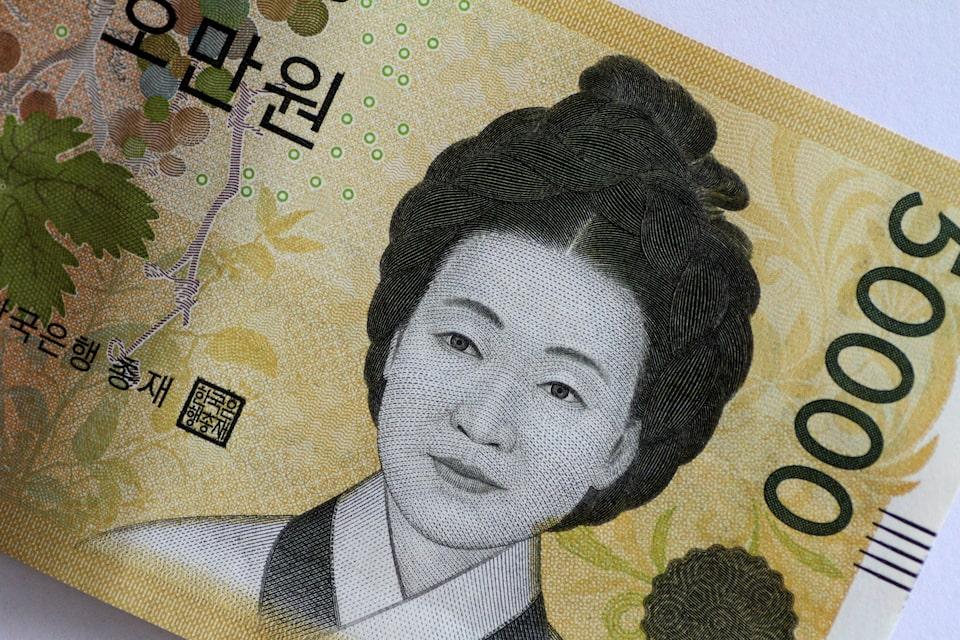
Korean won hits lowest level since March 2009 Currency under pressure from hawkish Fed, domestic politics Finance minister vows to respond to excessive volatility Authorities seek help from pension fund, commercial banks SEOUL, Dec 19 (Reuters) - The South Korean won dropped to its weakest level in 15 years on Thursday, weighed down by risk-averse sentiment after the U.S. Federal Reserve's cautious stance on more interest rate cuts, as well as domestic political uncertainty. The won was quoted at 1,448.9 per dollar in onshore trade as of 0518 GMT, after opening the session at 1,453.0 per dollar, 0.96% lower than the previous day and the weakest since March 16, 2009. The U.S. central bank cut interest rates on Wednesday, as expected, but Federal Reserve Chair Jerome Powell said more reductions in borrowing costs now hinged on further progress in lowering stubbornly high inflation. U.S. central bankers now project they will make just two quarter-percentage-point rate reductions next year, half a percentage point less than anticipated in September, with higher projections of inflation for the first year of the new Donald Trump administration. The hawkish stance pushed up the dollar and added to downward pressure on the won, which had already been weighed down by domestic political turmoil after impeached President Yoon Suk Yeol's short-lived martial law attempt earlier this month. Taking into account the negative economic impact of the Dec. 3 martial law order, the Bank of Korea flagged on Wednesday downside risks to its economic growth forecasts for this year and next year. So far in December, the won has weakened 3.9% against the dollar, extending losses for a third consecutive month. The won, down 11% year-to-date, is the worst performing emerging Asian currency of the year and is set to record its worst year since 2008. Prior to market open on Thursday, South Korea's finance minister said the government and the central bank would swiftly and boldly deploy measures to stabilise financial markets if volatility was seen as excessive. "It is suspected that authorities are defending the 1,450 figure, making it difficult to short the won around the level," one local currency trader said. To help ease pressure on the currency, the country's Financial Services Commission asked local banks to flexibly manage foreign exchange transactions and loans. The Bank of Korea expanded its foreign exchange swap line with the National Pension Service, a market stabilising tool absorbing dollar demand stemming from growing overseas investment by the world's third-largest pension fund. In the stock market, the benchmark KOSPI (.KS11) , opens new tab dropped as much as 2.5%, as foreigners sold local shares. Sign up here. https://www.reuters.com/markets/currencies/south-korean-won-hits-weakest-since-march-2009-hawkish-fed-2024-12-19/
2024-12-19 05:34
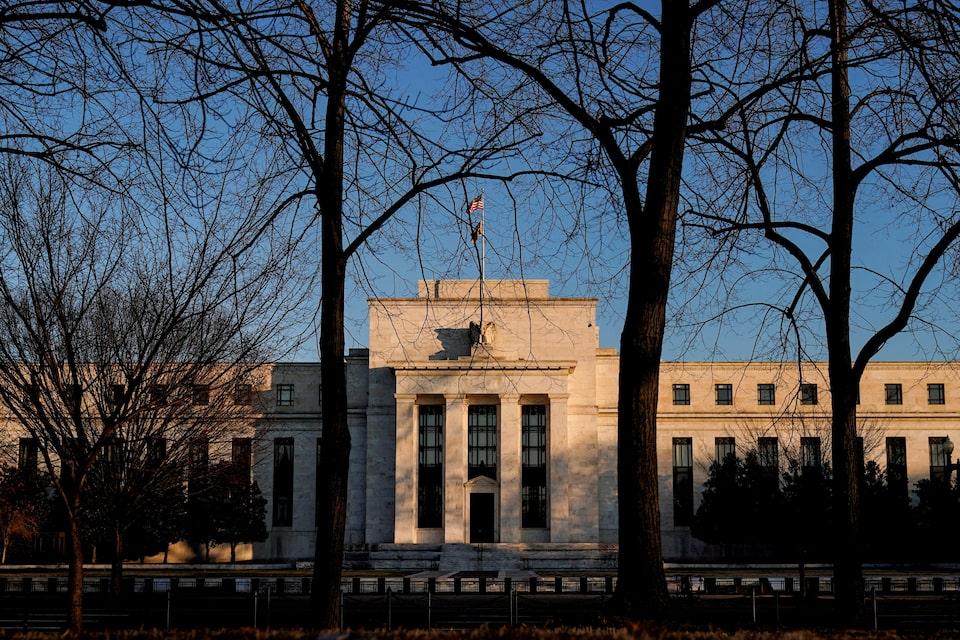
Stocks tumble, yields surge after Fed meeting US central bank signals two cuts in coming year Treasury yields hit level seen by some as challenge for equities NEW YORK, Dec 19 (Reuters) - The rally in U.S. stocks is encountering a fresh hurdle -- a potentially problematic rise in Treasury yields as the Federal Reserve signals fewer interest rate cuts for 2025. The central bank's rate outlook on Wednesday included only two cuts in the coming year, rather than the four previously penciled in, catching investors off guard, and sending stocks tumbling while driving up yields and the dollar. That overshadowed the Fed's widely expected decision to reduce its benchmark rate for a third straight meeting. The central bank lifted its forecast for expected inflation next year, paving the way for higher interest rates than it previously forecast. Concerns the policies of incoming president Donald Trump could further increase inflation are exacerbating the uncertainty for markets. Stocks have been buoyed by expectations of easier monetary policy and had previously mostly shaken off the steady rise in Treasury yields. But with benchmark yields rising sharply after the Fed meeting, the rate outlook threatens to undermine the momentum for stocks, which are trading at elevated valuations. The 10-year U.S. Treasury yield extended that rise on Thursday, hitting a 6-1/2 month high at 4.54% . "Rates are the biggest risk for markets from here on out," said Matthew Miskin, co-chief investment strategist at John Hancock Investment Management. "You had this period where the Fed had kind of declared a victory... and the reacceleration of inflation is causing them to really have to rethink all the progress." The Fed's more hawkish outlook immediately rippled through asset prices. The S&P 500 ended down nearly 3% on Wednesday, its biggest one-day drop since August, while the tech-heavy Nasdaq (.IXIC) , opens new tab slumped 3.6%. However, the indexes are still up 23% and 29%, respectively, this year. That selloff rippled across world markets with European stocks falling around 1.5% (.STOXX) , opens new tab on Thursday and MSCI's world stock index falling to its lowest in over six weeks (.MIWD00000PUS) , opens new tab. "The Fed played the role of Grinch today — taking back two rate cuts in 2025," said Jamie Cox, managing partner at Harris Financial Group in Richmond. In other assets, the dollar index soared to its highest level in two years following the meeting, while gold dropped about 2%. The trajectory of monetary policy is closely monitored by investors, as the level of rates influences bond yields and dictates borrowing costs. Treasury yields, which move in the opposite direction to prices, already were moving up in recent weeks ahead of the Fed meeting, as investors anticipated a "hawkish cut" in which the central bank might signal a pause in the easing cycle. Long-end bonds have also been shunned by some investors due to a deteriorating fiscal profile for the United States. But the reduction in projected interest rate cuts combined with a cautious tone by Fed Chair Jerome Powell in a press conference following the monetary policy statement left investors wary. "Markets are showing the Fed that they lost a lot of credibility here," said Jack McIntyre, portfolio manager at Brandywine Global. "They cut rates, but failed to make out a convincing case for doing so." Investors said that benchmark yields breaching a key 4.5% level could cause turbulence for stocks and benefit lower-risk alternatives. "Yields are going to become more of a problem," said Michael Mullaney, director of global markets research at Boston Partners, who projects the 10-year yield will rise to 5% next year. The S&P 500 was recently trading at 22 times earnings expectations for the next 12 months, well above its long-term average of 15.8 times, according to LSEG Datastream. "Since the beginning of 2023, the multiple on stocks has climbed quite a lot, making them not just sensitive but vulnerable to even small changes in" Treasury yields, said Jack Ablin, chief investment officer at Cresset Capital. Wednesday marked the last Fed meeting before Trump takes office as U.S. president next month. Investors are bracing for Trump's policies to improve economic growth but also be inflationary, including his plans to raise tariffs on trading partners, posing another challenge for the Fed's ability to cut rates. "His policies on paper are inflationary," Mullaney said. To be sure, plenty of investors remain bullish on the outlook for stocks, with an economy seen on solid footing and corporate profits expected to rise more than 10% next year. Jason Draho, head of asset allocation Americas at UBS Global Wealth Management, noted that the Fed still expects to cut rates, which is positive for equities. The firm has a S&P 500 price target of 6,600 by the end of next year, about 12% above Wednesday's closing level. "The Fed is still biased towards cutting," Draho said. "It's a direction that still is supportive for valuations, is still supportive for stocks to be higher." Sign up here. https://www.reuters.com/markets/us/us-stocks-face-headwind-rising-yields-after-fed-signals-fewer-rate-cuts-2024-12-19/
2024-12-19 05:32
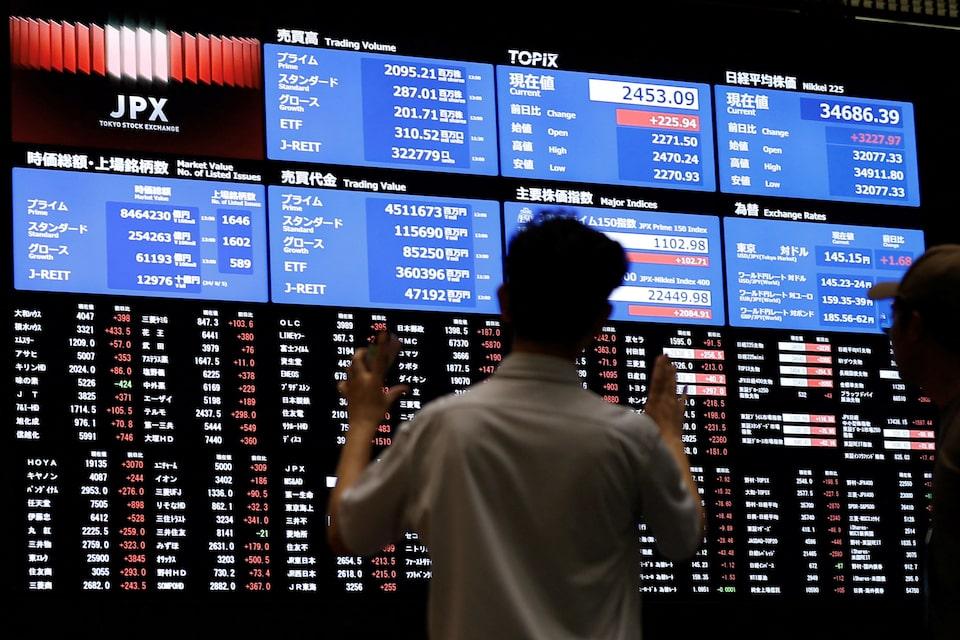
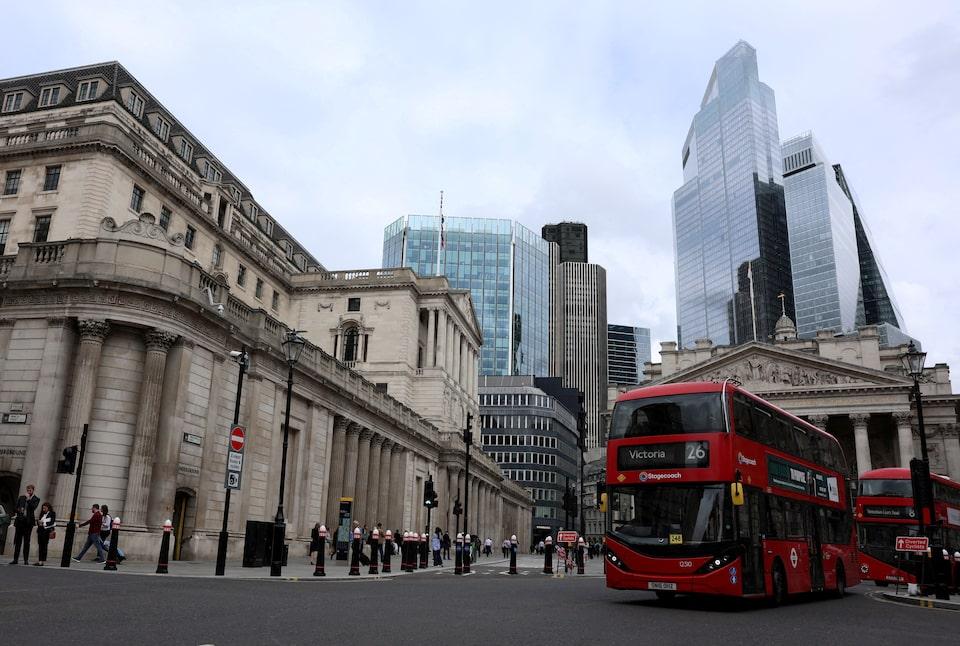
A look at the day ahead in European and global markets from Tom Westbrook The Bank of Japan left interest rates on hold, as expected, clearing the way for traders to sell the yen - which fell to a one-month low against the dollar - and then switch their focus to the Bank of England's decision later in the day. A cautious outlook from the Federal Reserve has already set stocks tumbling and the dollar soaring. It also forced investors to confront some of the risks - inflationary or otherwise - that could accompany an unpredictable U.S. administration as President-elect Donald Trump prepares to take office. Sterling may be ruffled next. Britain's currency has been supported by the relatively hawkish market expectations for BoE policy - its 1% fall for the year so far is the smallest of any G10 currency against the dollar. After hot UK wages data earlier in the week, markets are expecting rates to stay on hold at 4.75%. Fifty basis points of cuts are priced in to 2025, with the first 25 bp cut fully priced for May. That could shift if policymakers sound particularly hawkish. The Fed on Wednesday cut interest rates by a quarter of a percentage point, as expected, but signalled a slower pace of easing ahead. Fed officials raised their median projection of where they see the long-run neutral rate, significantly raised their 2025 inflation outlook, and continued to sketch out a path of further rate cuts next year. The dollar extended its gains in Asia, pushing South Korea's won to a 15-year low. Stocks fell. New Zealand data showed the economy sank into recession in the third quarter, bolstering the case for more aggressive rate cuts and sending the kiwi to a two-year low. Thursday also brings central bank meetings in Norway and Sweden. Norway's central bank, in contrast with other western central banks, will likely keep interest rates at their highest level since 2008, supported by economic growth, above-target inflation and a weak local currency. Sweden's central bank will likely cut its key rate by a quarter point, with further policy easing ahead early next year if inflation remains under control, a Reuters poll of economists showed. Key developments that could influence markets on Thursday: - Central bank decisions in Britain, Norway and Sweden Sign up here. https://www.reuters.com/markets/europe/global-markets-view-europe-2024-12-19/
2024-12-19 05:29
China's petroleum consumption to peak by 2027, Sinopec forecasts Trump administration's impact on China's energy industry uncertain Diesel and gasoline demand to weaken BEIJING, Dec 19 (Reuters) - Sinopec said on Thursday it expects China's petroleum consumption to peak by 2027 as diesel and gasoline demand weakens, while noting that the incoming Trump administration represented a major question mark for China's energy industry. The 2027 peak will be no more than 800 million metric tons or 16 million barrels per day, the state energy giant said. This is a clearer forecast than last year, when Sinopec put the peak at around 800 million tons between 2026 and 2030. That would be up from the 750 million tons consumed in 2024. This year's level was down about 10 million tons from last year and was the second annual decline in two decades, according to the company's outlook. Donald Trump's second term in office is key to watch for 2025, said Wang Pei, deputy general manager of the Sinopec Economics and Development Research Institute, adding that the biggest uncertainty for the market is how potential changes to the U.S. sanctions regime could affect Iran's 1.5 million barrels per day of oil exports. China is Iran's biggest buyer of oil, with most going to independent refineries. Changes to environmental policies, as well as trade and technology barriers, will affect China's economy and energy transition, she said, pointing to the significant impact of the last trade war. But Trump could also reduce tensions in Ukraine and the Middle East, removing some risk premium from markets, Wang added. Sinopec said broader use of LNG and electric vehicles would reduce demand for gasoline and diesel and that the petrochemical sector will ultimately consume more oil than the transport sector. Diesel demand is expected to fall 5.5% year on year to 174 million tons. LNG-fuelled trucks, which were 22% of the fleet in the first three quarters, displaced 49 million tons of diesel in 2024. Gasoline demand is set to decline 2.4% to 173 million tons in 2025. Electric vehicles will displace about 26 million tons or 15% of gasoline consumption. Of the three key refined products, only aviation fuel use is expected to grow, by 7% on the year to 45.5 million tons. The petrochemical sector is set to account for 55% of oil consumption in 2060, up from 22% in 2024, Sinopec said. China's crude oil output is expected to reach 215 million tons in 2025, with oil refining capacity at between 960 million and 970 million tons per annum. Crude oil output for January to November this year was 194.92 million tons, up 1.9% from a year earlier, according to government data. Sinopec also said China's natural gas consumption may peak earlier but at a higher level than it forecast last year. By 2030, China's natural gas consumption is expected to reach 570 billion cubic metres (bcm) and plateau at around 620 bcm between 2035 and 2040. In last year's forecast, Sinopec said China's natural gas consumption would plateau at 610 bcm by around 2040. Natural gas consumption is forecast at 458 bcm in 2025, up 6.6% year on year, Sinopec added. It also expects China's carbon emissions from energy-related activities to now peak at a higher level. Energy-related carbon emissions are expected to peak before 2030 at between 10.8 billion and 11.12 billion tons. By comparison, last year's forecast was for a peak at around 10.1 billion tons between 2026 and 2030. Sign up here. https://www.reuters.com/world/china/sinopec-forecasts-chinas-petroleum-consumption-peak-by-2027-2024-12-19/