2024-12-19 05:25
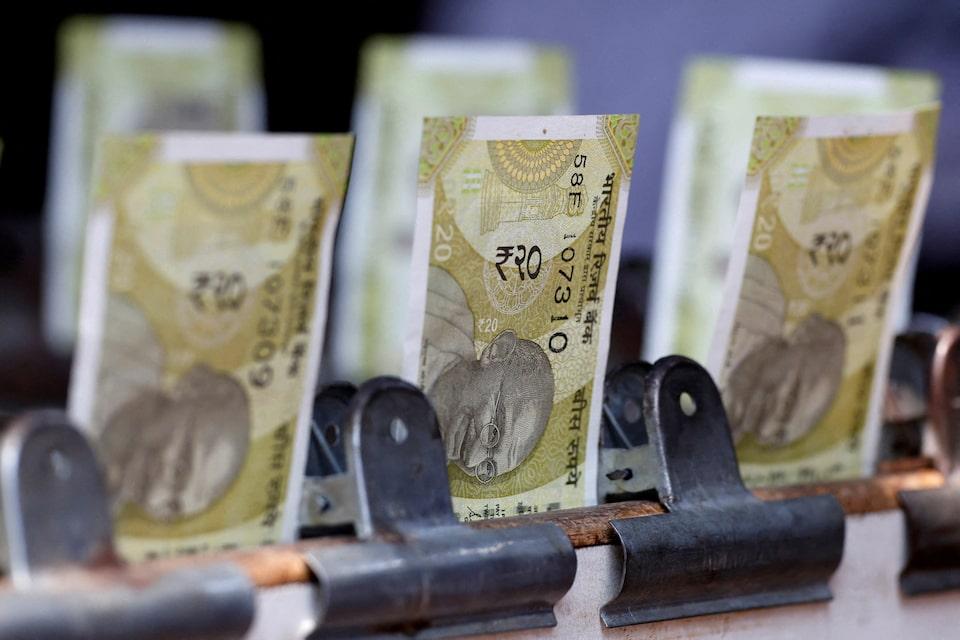
MUMBAI, Dec 19 (Reuters) - The Indian rupee declined past 85 to the U.S. dollar for the first time on Thursday after the Federal Reserve signalled fewer rate cuts next year, piling more pressure on a currency already struggling with tepid capital flows. The rupee hit a low of 85.0675 against the U.S. dollar, down from 84.9525 on Wednesday. The pace of the currency's fall to the 85 handle from 84 has been faster than prior declines of the same magnitude. The rupee's drop to 85 from 84 has taken place in about two months, while the decline to 84 from 83 took nearly 14 months. It took the currency 10 months to decline to 83 from 82. ASIA FX SLUMPS The rupee's Asian peers - the Korean won, the Malaysian ringgit, and the Indonesian rupiah - were down 0.8%-1.2% on the day. The selloff in Asia FX comes after the Fed dot plot indicated two rate cuts next year, half of what was signalled in September. "From here, it's a new phase and we're going to be cautious about further cuts," Fed Chair Jerome Powell said. The Fed's hawkish outlook on interest rates also put emerging market central banks on guard against currency volatility. The Reserve Bank of India intervened to support the rupee, Thailand's central bank said it will ensure that the baht is not too volatile while Indonesia's central bank said it is monitoring the situation and will undertake measures and timely currency stabilisation efforts. PERSISTENT HEADWINDS The Fed's hawkish turn comes at a time when the rupee has been facing several pressures. India's economic growth slowed to a seven-quarter low in July-September, the merchandise trade deficit is widening, and capital inflows are tepid. Persistent strength in the U.S. dollar due to incoming U.S. President Donald Trump's expected policies has further undermined the rupee. The Fed's latest rate forecasts will provide an additional fillip to the dollar. India's sharply slowing growth, necessitating the central bank to deliver rate cuts sooner rather than later, is an added factor that is weighing on the rupee, said Akshay Kumar, head of global markets at BNP Paribas India. "In the short term, we can expect upward pressure on USD/INR to remain," he said. Investors raised their short positions on the rupee to a two-year high in December, according to a Reuters poll. The rupee has weakened about 2% so far this year, and is in the middle of the Asia FX pack. Routine interventions by the central bank have kept the rupee's volatility low relative to its Asian peers. The muted volatility the rupee enjoyed in the last two years may not be repeated in 2025, analysts said. Sign up here. https://www.reuters.com/markets/currencies/rupee-weakens-past-85usd-hawkish-fed-outlook-compounds-bearish-bias-2024-12-19/
2024-12-19 05:22
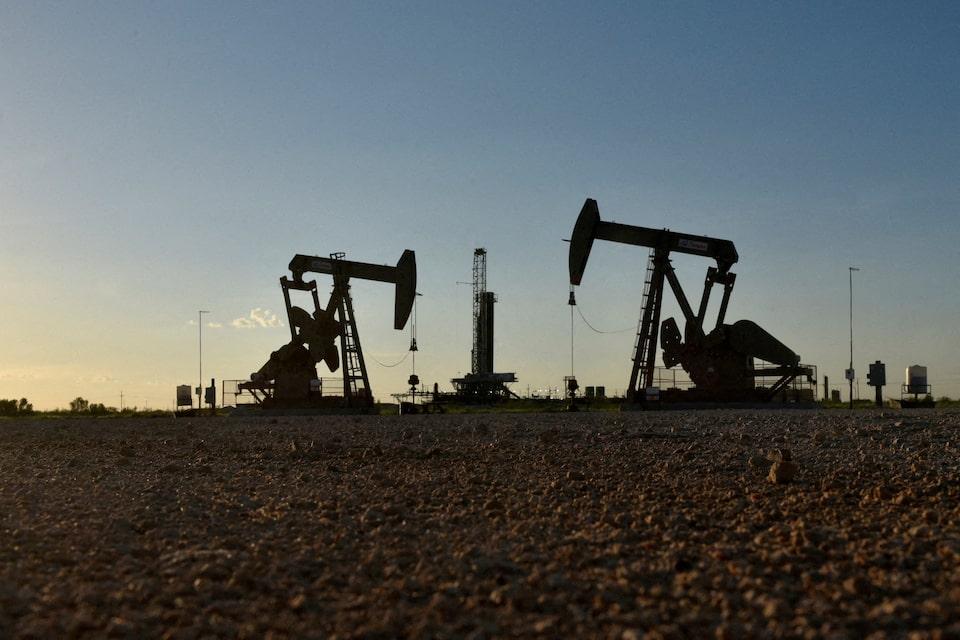
Brent, WTI futures fall nearly 1% Hawkish central banks weigh on oil demand outlook Global oil markets to be in surplus next year, analysts say China petroleum demand to peak by 2027, Sinopec says NEW YORK, Dec 19 (Reuters) - Oil prices fell on Thursday after central bankers in the U.S. and Europe signaled caution over further easing of monetary policy, fanning concerns that weak economic activity could dent demand for oil next year. Brent crude futures fell by 51 cents, or 0.7%, to settle at $72.88 a barrel. U.S. West Texas Intermediate crude futures for January delivery fell 67 cents, or 1%, to $69.91 per barrel and expired on settlement. The more active WTI February contract fell 64 cents to settle at $69.38 per barrel. The Federal Reserve cut rates by a quarter percentage point as expected on Wednesday, but Chair Jerome Powell warned that stubborn inflation would make the U.S. central bank more cautious about cutting rates next year. The U.S. dollar rose to a two-year high, making oil more expensive for buyers holding other currencies. "A less accommodative Fed in 2025 than initially expected has markets adjusting their expectations," Alex Hodes, analyst at commodities brokerage StoneX, said. In the UK, Bank of England policymakers held interest rates steady on Thursday, while officials disagreed over how to respond to a slowing economy. Also on Thursday, the Bank of Japan kept ultra-low interest rates as U.S. President-elect Donald Trump's vows to impose tariffs cast a shadow over the country's export-reliant economy. OIL IN SURPLUS NEXT YEAR Softening economic activity could deepen a slowdown in oil demand growth next year. Brent futures prices have shed more than 5% so far this year, setting up a second consecutive annual loss, as a faltering Chinese economy weighed heavily on crude oil demand. Energy transition measures have also hit demand sharply in China, the top oil importer. State-backed energy giant Sinopec on Thursday said it expects China's petroleum consumption to peak in 2027 as fuel demand weakens. The oil market is widely expected to be in a surplus next year, with J.P. Morgan analysts predicting that supply will outpace demand to the tune of 1.2 million barrels per day. Oil supply could tighten next year if Trump, a Republican, delivers on campaign promises of cracking down on Iranian oil exports. Democratic President Joe Biden's administration has also ramped up sanctions on Iranian entities, with three vessels involved in trading Iranian petroleum and petrochemicals sanctioned on Thursday. Such actions, however, have had little effect on oil prices, J.P. Morgan analysts noted, adding that Trump is unlikely to prioritize policies that would push energy prices higher. Brent crude prices are forecast to average around $73 a barrel in 2025, according to a Reuters tally of 11 brokerages that have issued price targets. Some support for the oil market came as U.S. crude stocks declined by 934,000 barrels in the week to Dec. 13. Still, that was smaller than the 1.6 million-barrel drawdown analysts had forecast in a Reuters poll. Sign up here. https://www.reuters.com/markets/commodities/oil-falls-demand-concerns-after-fed-signals-slower-easing-ahead-2024-12-19/
2024-12-19 05:19
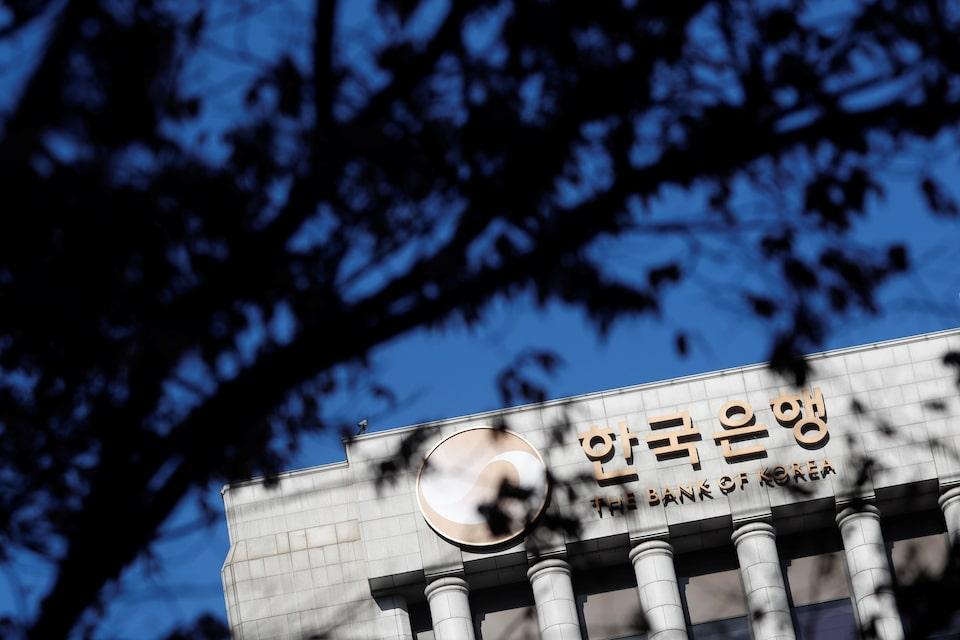
SEOUL, Dec 19 (Reuters) - South Korea's pension fund and central bank have agreed to expand their foreign exchange swap line and extend it by one year until the end of 2025, a move that comes as the won dropped to its lowest level in 15 years. The swap line, which allows the National Pension Service (NPS) to borrow from the central bank's foreign exchange reserves for overseas investment, will be expanded to $65 billion from the current $50 billion, the Bank of Korea said on Thursday. The programme, seen as a market stabilising tool, was first introduced in September 2022 and has since been expanded several times. "It is expected to help stabilise the foreign exchange market by absorbing the pension fund's demand to buy dollars in the spot market," the BOK said. The NPS will also keep its strategic foreign exchange hedging ratio at a maximum of 10% until the end of next year, the welfare ministry, which oversees the fund's investment policies, said after a policy review meeting. Sign up here. https://www.reuters.com/markets/asia/south-korea-pension-fund-central-bank-expand-fx-swap-line-won-drops-2024-12-19/
2024-12-19 04:48
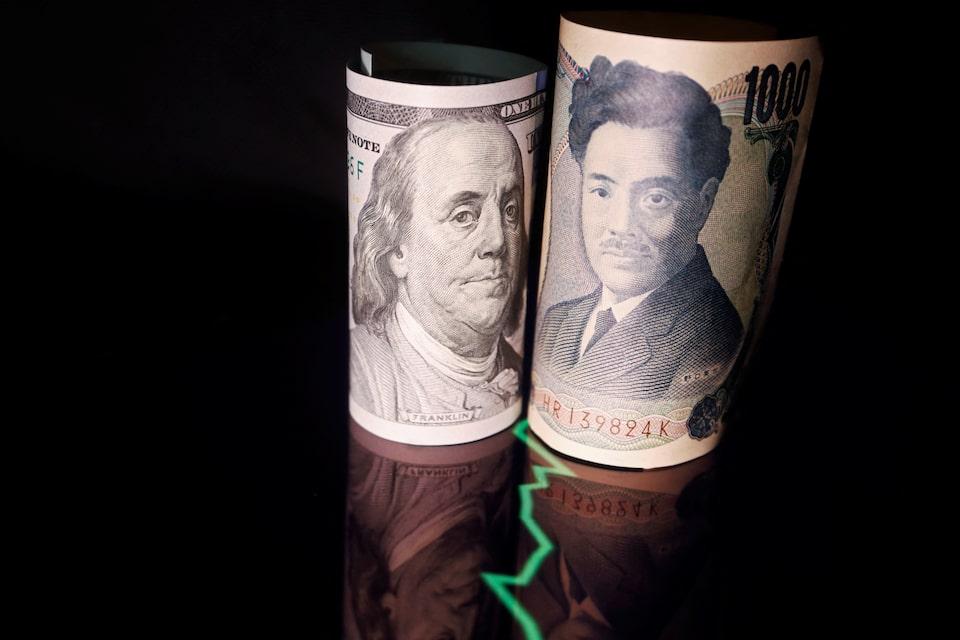
Dollar trades near Nov 2022 high Yen tumbles vs greenback after BOJ's Ueda stresses patience Strong US Q3 GDP data lends dollar support NEW YORK/LONDON/SINGAPORE, Dec 19 (Reuters) - The dollar hovered near its two-year high on Thursday after the Federal Reserve cut interest rates and signaled a much slower monetary policy easing trajectory in 2025, while the yen weakened against the greenback after the Bank of Japan held rates steady. The dollar edged higher from losses early in the session after a stronger-than-expected reading on U.S. third quarter GDP showed the economy grew at a 3.3% annual rate. The number validated the Federal Reserve's cautious new take-it-slow approach to easing, as did a bigger-than-expected fall in the number of applications for unemployment insurance to 220,000 last week. Currencies around the world tumbled on Wednesday after the Fed decision sent yields higher and boosted the dollar, although many rebounded on Thursday in choppy trading conditions with thin volumes ahead of the holiday period. The dollar index , which measures the greenback against six rival currencies, reached as high as 108.480 on the session, topping the 108.180 it reached in the prior session, which is its highest level since November 2022. It was last up 0.08% to 108.360. The week has been chock-a-block with the last central bank policy meetings of 2024. The BOJ kept interest rates steady as expected, but the yen fell sharply as Governor Kazuo Ueda gave little away in a post-meeting press conference. The dollar rose 1.63% against the yen to 157.55, trading at its highest levels since July. "The main focus has been on the central bank decisions, which were very dollar supportive overall. The Fed had a hawkish cut and the Bank of Japan delivered a dovish hold, and those were probably the main two drivers," said Vassili Serebriakov, FX strategist at UBS in New York. Investors had been looking out for hints of imminent BOJ tightening, particularly after the Fed struck a hawkish tone at its meeting a day earlier. But the governor reiterated that policymakers would need more time to assess incoming economic data and the implications of U.S. President-elect Donald Trump's policies. The fallout from the Fed continued to ripple across financial markets after traders heavily dialed back on easing expectations next year. The euro , which tumbled 1.34% on Wednesday, managed to claw back some losses and was last 0.16% higher at $1.036650. "Since the election interest rate expectations in the U.S. have gone up, but outside the U.S. they've gone down whether you look at ECB or you know most other central banks," said Ronald Temple, chief market strategist at Lazard in New York. "And that leads to dollar strengthening as those interest rate differentials widen in favor of the U.S. So I think you should expect more dollar strengthening because I don't believe the interest rate markets or the currency markets have fully priced in the implications of tariffs." The Bank of England held interest rates at 4.75% as expected on Thursday. Sterling dipped, weakening 0.58% to $1.25. The Canadian dollar sank to its lowest in more than four years at 1.44 per U.S. dollar. The South Korean won tumbled to its weakest level in 15 years. Fed Chair Jerome Powell said more reductions in borrowing costs now hinge on further progress in lowering stubbornly high inflation, sending global stocks plunging and bond yields spiking. The yield on benchmark U.S. 10-year notes rose 7.2 basis points to 4.57%. The Swedish and Norwegian crowns both rebounded against the dollar on Thursday, after Sweden's Riksbank cut rates but Norway's Norges Bank held them steady. The Swedish crown strengthened 1% versus the dollar to 11.026, while the Norwegian krone pared earlier gains and was down 0.58% to 11.45. The kiwi dropped to a two-year low before also ticking up. Data on Thursday showed that New Zealand's economy sank into a recession in the third quarter. The currency was last up 0.16% versus the greenback to $0.5632. Australia's dollar bottomed at $0.6199, a two-year low, but was last up around 0.37%. Sign up here. https://www.reuters.com/markets/currencies/dollar-charges-ahead-hawkish-fed-outlook-yen-awaits-boj-2024-12-19/
2024-12-19 00:37
LAUNCESTON, Australia, Dec 19 (Reuters) - Donald Trump's return to the U.S. presidency and China's spluttering economy will shape global commodity markets in 2025. With no predictable mould for how this will work, the only certainties will likely be volatility and numerous factors working in opposing directions. Making predictions about prices for major commodities such as crude oil, liquefied natural gas, iron ore, coal and metals like copper will therefore be more fraught than usual in 2025. For example, consider Trump's signature campaign promise: tariffs. The president-elect's array of threatened tariffs, including up to 60% on China and 20% on all other nations, could derail global economic growth, force a realignment of trade flows, boost inflation and lead to tighter monetary policy. But it's equally possible that none of these things will occur if the tariff threats turn out to be nothing more than negotiating tactics. In this scenario, Trump may forgo any damaging policy actions if he believes he has scored enough "wins" in his dealings with other countries. For commodities most exposed to the global economy, such as copper and iron ore, this means traders will likely take a wait-and-see approach. Price volatility based on daily news headlines is thus apt to be the norm until the broader policy picture becomes clearer. A lesson from Trump's first term in office is that it's more important to focus on what his administration actually does rather than the almost non-stop, and often confused, messaging from the president and his allies on social media. Trump's first term also showed that he typically considers the act of making a deal more important than the actual content of that deal. Just look at his first round of tariffs against China. He continues to champion them, even though they failed in almost every respect. They didn't lower the U.S. trade deficit with China, they didn't spark a manufacturing renaissance in the United States, they didn't raise much revenue, and China came nowhere near meeting its obligations to massively ramp up imports of U.S. crude, coal and LNG. It's possible that Trump's team has learnt from this experience, but if the lesson they've gleaned is that they need to take a harder line, then the risks of a trade war and the attendant global economic weakness will rise. Much has been made of the view that China is far less equipped to withstand a trade war with the United States now than it was in 2018, due to the slow growth of the world's second-biggest economy. There is an element of truth to this, but China also has a variety of tools available to help it successfully navigate a trade war. It could hurt the U.S. economy by disrupting supply chains, sell a massive amount of U.S. Treasuries, devalue its own currency, boost stimulus spending and advance its leadership in renewable energy technologies and installations. China may also seek to compensate for any loss of access to U.S. markets by boosting trade and investment in Europe and what's broadly termed the "global south". Again, it's far from certain that these tactics will be employed, with much depending on what actual policies Trump's administration puts in place once he is sworn in on Jan. 20. However, it's worth looking at the existing and likely trends that could play out in 2025. TARIFFS, STIMULUS First, it's almost certain that Trump will impose some form of tariffs on imports into the United States. Just how large and damaging they will be remains to be determined, but it's probably safe to say that any tariffs will be a negative for the global economy, and thus put downward pressure on commodities such as crude oil, iron ore, and LNG. Second, China's economy is showing some signs of improvement, with factory activity expanding at the fastest pace in five months in November. If Beijing keeps injecting stimulus in a measured way, the recovery is likely to continue. This would be positive for iron ore, copper and LNG. It may not be as positive for crude oil, given that China's rapid shift to electrification of light vehicles is cutting gasoline demand and its move to LNG for trucks is starting to hurt diesel demand. One trend that is very likely to continue is China's increasing price-sensitivity as a commodity buyer. This was evident this year in crude oil, as China's imports dropped 2.1% on a barrels per day basis in the first 11 months, despite expectations of strong demand growth by organisations such as OPEC and the International Energy Agency. While China's soft economy and increased electrification account for some of this decline, China's refiners also simply cut back on imports because of their view that OPEC+'s output cuts were keeping prices too high. The overall picture for 2025 is that the year starts with a high degree of uncertainty, which makes it vital to largely ignore Trump's rhetoric and focus on actual policies being implemented and what the data show. The views expressed here are those of the author, a columnist for Reuters. Sign up here. https://www.reuters.com/markets/commodities/where-will-trump-china-drive-commodities-2025-russell-2024-12-19/

2024-12-19 00:36
Dec 19 (Reuters) - Australia's Woodside Energy (WDS.AX) , opens new tab said on Thursday it had entered into a deal with Chevron (CVX.N) , opens new tab to exchange stakes in a number of energy projects, with the U.S. oil and gas giant making a cash payment of up to $400 million to Woodside. Under the terms of the deal, Woodside will acquire Chevron's 16.67% stake in the North West Shelf (NWS) Project, the NWS Oil Project and its 20% stake in the Angel Carbon Capture and Storage Project, all located in Western Australia. On the other hand, Woodside will transfer its 13% non-operated interest in the Wheatstone and its 65% operated interest in Julimar-Brunello Projects to Chevron. The deal comes a few days after Woodside Energy received environmental approval from the Western Australian state to prolong the North West Shelf liquefied natural gas project until 2070. "This transaction simplifies our portfolio, improving our focus and efficiency by consolidating our position in our operated LNG assets," said Woodside CEO Meg O'Neill. Apart from the rationale to streamline Woodside's Australian portfolio, focusing on its operated LNG assets and simplifying NWS joint venture ownership, the company's increased stake in the Angel CCS Project also promotes the future development of this large-scale, multi-user carbon capture and storage hub in Western Australia, Woodside said. "The asset exchange will suit both companies' interest for future development," said Brad Smoling, managing director at Smoling Stockbroking. "Focusing on some assets in their own respective backyards makes good common sense in these fluid times in the energy sector." The deal, which is expected to close in 2026, marks a significant shift in the energy landscape, with both companies reshaping their portfolios amid the global transition to cleaner energy sources. Shares of Woodside, however, fell about 2.3% to hit their lowest level since Jan. 11, 2022, by 1235 GMT. Sign up here. https://www.reuters.com/markets/deals/woodside-energy-partners-with-chevron-swap-stakes-various-energy-projects-2024-12-18/