2024-12-18 21:47
Dec 19 (Reuters) - A look at the day ahead in Asian markets. The Federal Reserve has spoken, and as far as investors are concerned, the message was clear - clearly hawkish. Now it's over to the Bank of Japan and Bank of England, the two biggest and most important of the clutch of central bank policy decisions on Thursday. This recent burst of central bank meetings reaches its crescendo with decisions on Thursday also coming from Norway and Sweden, and more importantly from an Asian perspective, Taiwan and the Philippines. Investors in Asia go into Thursday on the defensive after the Fed cut interest rates by a quarter of a percentage point as expected, but signaled a slower pace of easing ahead. Fed officials raised their median projection of where they see the long run neutral rate, significantly raised their 2025 inflation outlook, and continued to sketch out a path of further rate cuts next year. Higher inflation coupled with continued easing is a circle Fed Chair Jerome Powell struggled to square in his press conference. And as he spoke with reporters, the selloff in stocks and Treasuries accelerated and the dollar soared even higher. Wall Street ended the day sharply lower. The Nasdaq slumped more than 3%, the Dow fell for a tenth day - its longest losing streak in 50 years - the dollar jumped to a two-year high and bond yields rose across the curve. As Janus Henderson's Dan Siluk noted, there is potential for an "extended pause" next year, and the Fed is indicating that "we are in a structurally higher inflation and rates environment." Emerging market assets will almost certainly come under heavy pressure on Thursday. All eyes in Asia now turn to Tokyo. The BOJ is expected to keep interest rates on hold, leaving investors to take their cue from Governor Kazuo Ueda's remarks in his press conference. Japanese swap rates imply a 60% probability the BOJ will raise rates by 25 bps in January, down from around 70% a couple of weeks ago. A quarter-point hike is not fully priced until May, and only 45 bps of tightening in total is expected by December, the swaps curve shows. The Philippine central bank is expected to cut its key policy rate by a quarter point to 5.75%, according to a Reuters poll, with inflation under control and the economy weakening. Despite inflation rising for a second month in November to 2.5%, it is well within the central bank's 2%-4% target. This would be its third cut in a row, and economists expect a further three reductions next year. Policymakers in Taiwan, meanwhile, are expected to keep the key policy rate unchanged at 2% and hold it there throughout next year given the strong economy and inflation concerns. Here are key developments that could provide more direction to markets on Thursday: - Japan interest rate decision - Philippines interest rate decision - Taiwan interest rate decision Sign up here. https://www.reuters.com/markets/asia/global-markets-view-asia-graphic-2024-12-18/
2024-12-18 21:46
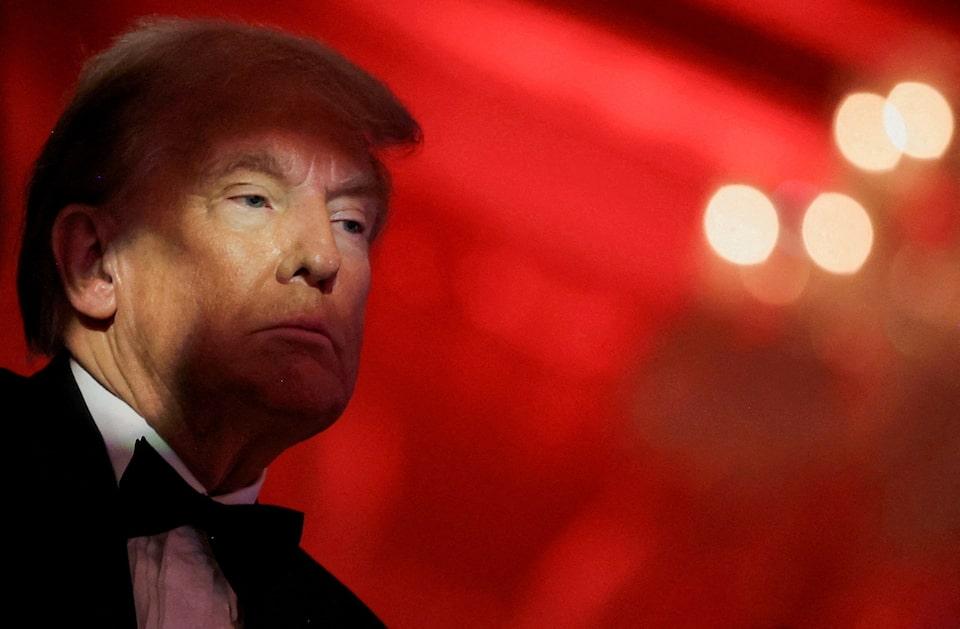
Trump asks Congress to raise debt ceiling and rewrite spending bill three days before funding expires Musk, world's richest person, sparked fresh wave of opposition to stopgap measure Government will begin partial shutdown on Saturday without congressional action WASHINGTON, Dec 18 (Reuters) - President-elect Donald Trump Wednesday disrupted bipartisan efforts to avert a government shutdown as he pressured his fellow Republicans in Congress to reject a stopgap bill to keep the government funded past the end of the week. Trump instead urged Congress to pass legislation that would tie up loose ends before he takes office next month by raising the government's borrowing authority -- a politically difficult task -- and extending government funding. He also said lawmakers should strip out elements backed by Democrats, whose support would be necessary for passage. Trump's attempt to influence Congress more than a month before he takes office could complicate efforts to avert a shutdown that would disrupt everything from air travel to law enforcement in the days leading up to the Dec. 25 Christmas holiday. He warned that Republicans who vote for the current legislative package could have trouble getting re-elected. "Any Republican that would be so stupid as to do this should, and will, be Primaried," Trump wrote on social media. It would be the first government shutdown since one that extended through December 2018 into 2019, during Trump's first four-year White House term. Democrats currently hold a majority in the Senate, and Democratic President Joe Biden remains in power until Trump takes office on Jan. 20. The current bill would fund government agencies at current levels and provide $100 billion for disaster relief and $10 billion in farm aid. It also includes a wide range of unrelated provisions, such as a pay raise for lawmakers and a crackdown on hidden hotel fees. Trump said Congress should limit the bill to temporary spending and disaster relief and also raise the national debt ceiling now before it comes to a head next year. "Unless the Democrats terminate or substantially extend the Debt Ceiling now, I will fight 'till the end," Trump said on his Truth Social site. Congress's next steps were unclear. Bipartisan agreement will be needed to pass any spending bill through the House of Representatives, where Republicans currently have a 219-211 majority, and the Senate. The stopgap measure is needed because Congress has failed to pass regular spending legislation for the fiscal year that began on Oct. 1. It does not cover benefit programs like Social Security, which continue automatically. The U.S. government has spent more money than it has taken in for more than 20 years, as Democrats have expanded health programs and Republicans have cut taxes. An aging population is projected to push up the cost of retirement and health programs in the years to come. Steadily mounting debt - currently $36 trillion - will force lawmakers to raise the debt ceiling at some point, either now or when borrowing authority runs out next year. Failure to act could shock bond markets with potentially severe economic consequences. MUSK WADES IN Trump's comments came after his ally Elon Musk pressured Congress to reject the bill and said those who back it should be voted out of office. The Tesla (TSLA.O) , opens new tab chief executive and world's richest person, who spent more than $250 million to help Trump get elected, has been tasked by Trump to prune the federal budget. Unless Congress acts, the federal government will run out of money to fund operations on Saturday. The deal reached on Tuesday would have extended funding through March 14. House Republicans huddled in the office of Speaker Mike Johnson late Wednesday to determine their next move. Even before Trump and Musk weighed in, some on the party's right flank had come out against the bill on the grounds that it spent too much money and included too many unrelated provisions. "The Speaker tried to get the votes and the necessary votes weren't there. And then we saw what happened on social media, and a lot of folks have, you know, had second thoughts. And so now we got to recalibrate,” Representative Kevin Hern told reporters outside Johnson's office. Republican Representative Mike Rogers said changes to the debt ceiling should not be included in the current negotiations. "It's complicated enough without that," he told reporters. Democrats said Republicans had walked away from a bipartisan deal. "House Republicans have been ordered to shut down the government and hurt everyday Americans all across this country," House Democratic Leader Hakeem Jeffries said at a news conference. "House Republicans will now own any harm that is visited upon the American people that results from a government shutdown.” Trump in the past has sometimes voiced support for government shutdowns, and the 2018-2019 one was the longest in U.S. history, lasting 34 days. Musk has emerged as one of the biggest spenders in U.S. politics this year, and his threat could resonate with some Republicans. It likely carries less weight with Democrats who represent solidly liberal areas, or senators from both parties who will not be up for reelection for another six years. Musk tried and failed in November to influence the outcome of the Senate Republicans' leadership contest. A wide range of government services would be disrupted if Congress does not act before Saturday, including agencies like the Pentagon and NASA that do business , opens new tab with Musk's companies. Sign up here. https://www.reuters.com/world/us/us-house-speaker-defends-stopgap-spending-some-republicans-musk-balk-2024-12-18/
2024-12-18 21:27
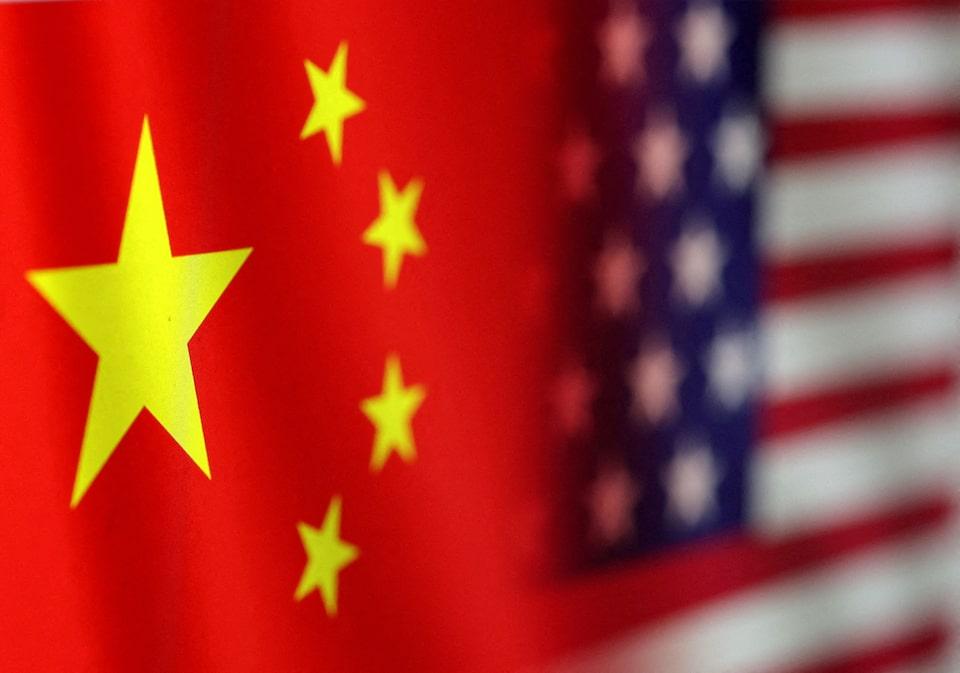
Dec 18 (Reuters) - North American graphite miners asked the U.S. government on Wednesday to impose a tariff as high as 920% on Chinese suppliers of the battery metal in order to counter what they describe as Beijing's "malicious trade practices." The move is the latest attempt by Western critical minerals suppliers to offset China's widespread control of the world's extraction and processing of the building blocks for electric vehicles and electronics. Graphite, the largest component by volume in an EV battery, can be synthetically produced or processed from naturally occurring sources. China is the largest producer of both types and earlier this month tightened exports of the metal to the U.S. The American Active Anode Material Producers, a group of U.S. and Canadian graphite producers, asked the U.S. Department of Commerce and the U.S. International Trade Commission (ITC) to "investigate whether China is exporting natural and synthetic graphite ... at unfair prices to the United States" and to impose the tariff rate. Chinese rivals operate at labor and environmental standards that allow them to rapidly boost production, the group said. An existing U.S. tariff of 25% on most Chinese graphite is "far too low" and can be absorbed easily by Chinese rivals, the group wrote to U.S. officials. The Commerce Department and the ITC did not immediately respond to an inquiry seeking comment. President-elect Donald Trump has threatened to impose tariffs on Chinese products broadly. Trump's advisers have also encouraged him to impose tariffs on all foreign critical minerals, including those tied to Beijing. Not all U.S. critical minerals companies support tariffs. Jervois Global (JRV.AX) , opens new tab, which had to close the only U.S. cobalt mine before it even opened due to Chinese competition, told Reuters last week it would prefer manufacturers be required to buy Western metals instead of blanket tariffs. Sign up here. https://www.reuters.com/markets/commodities/us-graphite-miners-ask-washington-impose-920-tariff-chinese-rivals-2024-12-18/
2024-12-18 21:18
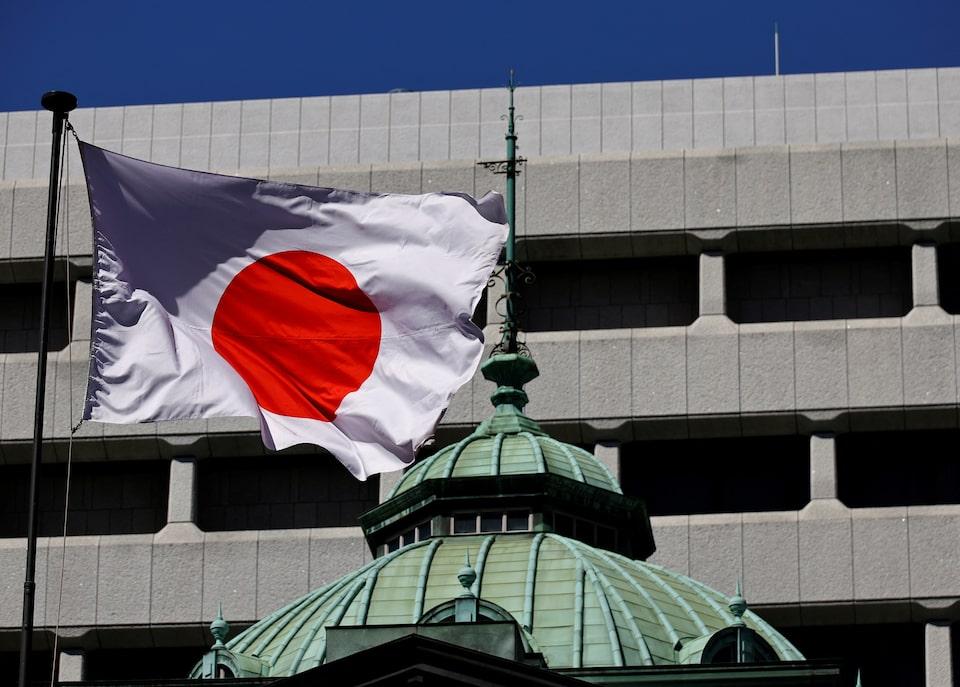
BOJ keeps short-term policy rate target at 0.25% Hawkish board member Tamura proposes raising rates to 0.5% BOJ maintains view on economy, consumption BOJ warns unconventional steps cannot substite rate policy TOKYO, Dec 19 (Reuters) - The Bank of Japan kept interest rates unchanged on Thursday but one dissenting board member's proposal to push up borrowing costs showed the bank remains on track to tighten policy early next year. As widely expected, the nine-member BOJ board voted 8-1 to keep its short-term policy rate unchanged at 0.25% in a sign policymakers preferred to tread cautiously amid uncertainty over U.S. president-elect Donald Trump's economic plans. However, dissenting board member Naoki Tamura, a known policy hawk, proposed raising interest rates to 0.5% on the view inflationary risks were building. His proposal was voted down. The BOJ's meeting concluded hours after the U.S. Federal Reserve cut interest rates but signalled a more cautious path of easing next year, sending global stocks sharply lower. BOJ Governor Kazuo Ueda said real interest rates remained very low but acknowledged fresh risks to the outlook from Trump's proposed trade policies. "If the economy and prices move in line with our forecast, we will continue to raise our policy rate," Ueda told a news conference. "As for the timing of adjusting the degree of monetary support, we need to scrutinise various data carefully in reaching a decision." The yen touched a one-month low of 155.48 per dollar after the BOJ's decision to hold rates. The currency is down more than 8% in 2024 against the dollar partly on expectations the BOJ will go slow in raising ultra-low rates. Market attention is now shifting toward whether the BOJ will raise interest rates at its next meeting in January, or hold off until March and beyond. "The decision to keep rates on hold was widely expected by investors, so I don't expect a big market reaction," said Ben Bennett, Asia-Pacific investment strategist at Legal and General Investment Management in Hong Kong. "That said, the hawkish Fed dot plot overnight gave the BOJ an option to increase rates, and there was one dissenting vote for a 25-bp hike, so it looks like rates will be going up early in 2025." Many market players see a declining yen among key incentives for the BOJ to hike rates or offer hawkish communication, as the currency's weakness pushes up inflation via higher import costs. STEADY RECOVERY In a statement announcing the policy decision, the BOJ said Japan's economy was recovering moderately albeit with some weakness. It maintained its assessment that consumption was increasing moderately as a trend. The BOJ also reiterated its warning that uncertainty surrounding Japan's economy and prices remained high. Aside from the rate decision, the BOJ released its findings of a review on the pros and cons of various monetary easing tools deployed during its 25-year battle with deflation. In the review, the BOJ warned of the side effects of various unconventional monetary easing measures that meant they cannot be a substitute to traditional tools like interest rate cuts. The BOJ ended negative interest rates in March and raised its short-term policy target to 0.25% in July. It has signalled a readiness to hike again if wages and prices move as projected. All respondents in a Reuters poll taken earlier this month expect the BOJ to raise rates to 0.50% by end-March, though they had been divided on whether the move would come in December, January or March. Japan's economy expanded an annualised 1.2% in the three months to September, slowing from the previous quarter's 2.2% increase, with consumption up a feeble 0.7%. BOJ policymakers hope regular pay, which has risen at a year-on-year pace of 2.5% to 3% recently, keeps increasing and supports consumption. There are growing signs companies are keen to continue hiking pay due to intensifying labour shortages, boding well for the BOJ's plan to keep raising interest rates gradually. But slowing demand in China and uncertainty over the fallout from Trump's policies could weigh on corporate profits and discourage some of them from boosting pay. Sign up here. https://www.reuters.com/markets/asia/boj-meets-final-rate-review-this-year-trump-risk-clouds-outlook-2024-12-18/
2024-12-18 21:18
CFIUS has not reached consensus on Nippon Steel deal Nippon has made 3 revamped proposals to save the deal since early Sept WASHINGTON, Dec 18 (Reuters) - Despite a steady stream of meetings and calls with U.S. officials, and three revamped proposals to assuage national security concerns, Nippon Steel (5401.T) , opens new tab has failed to garner approval from a powerful panel reviewing its $14.9 billion bid for U.S. Steel (X.N) , opens new tab, a letter seen by Reuters shows. The letter, sent Saturday, sets the stage for U.S. President Joe Biden, who has long opposed the deal, to block it. The Committee on Foreign Investment in the United States (CFIUS), which reviews deals for national security risks, has a Dec. 23 deadline to approve the deal, extend the review, or recommend Biden scuttle it. If the agencies that make up the panel remain at loggerheads, as the letter states, they will refer the matter to Biden to take action. The history of outreach since early September, including four in-person meetings with CFIUS, three phone calls, including one on Friday with the Treasury and Commerce department secretaries, as well as the three proposed mitigation agreements is contained in a letter dated Saturday sent to Nippon Steel by CFIUS that has not been previously reported. It shows the lengths the companies have gone to try to win approval on the controversial merger, even as the letter signals the deal is likely doomed. "The Committee has not yet reached consensus on whether the mitigation measures proposed by the Parties would be effective... or whether they would resolve the risk to U.S. national security arising from the Transaction," CFIUS writes in closing. "The President may take such action for such time as the President considers appropriate to suspend or prohibit a covered transaction that threatens to impair the national security," it adds. The White House did not immediately respond to a request for comment. The Commerce Department, which is co-leading the review of the deal, and Treasury, which leads CFIUS, declined to comment. Nippon Steel said it has "engaged in good faith with all parties to underscore how the transaction will bolster American economic and national security by countering the threats posed by China." U.S. Steel said in a statement that Nippon Steel provides, "by far, the brightest future for U.S. Steel," adding that no other party can make the billions in investments Nippon Steel has promised to make. "U.S. Steel will not-- and does not have the resources-- to do this on our own," it added. Shares of U.S. Steel fell 1% on the Reuters report. HIGH-LEVEL OPPOSITION The proposed tie-up has faced high-level opposition within the U.S. since it was announced a year ago, with both Biden and his incoming successor Donald Trump taking aim at it as they sought to woo union voters in the swing state of Pennsylvania, where U.S. Steel is headquartered. The president of the United Steelworkers Union opposes the tie-up. The merger appeared fast-tracked to be blocked after the companies received an Aug. 31 letter from CFIUS, seen by Reuters, arguing the deal could hurt the supply of steel needed for critical transportation, construction and agriculture projects. But Nippon Steel, countering that its investments, made by a company from an allied nation, would in fact shore up U.S. Steel's output, won a 90-day review extension. That gave CFIUS until after the November election to make a decision, fueling hope among supporters that the calmer political climate could underpin the deal's approval. But CFIUS' 29-page letter Saturday shows the hopes were likely unfounded. INVESTMENT PLEDGES IN THE CROSSHAIRS This time, CFIUS doubled down on concerns about Nippon Steel's promises to invest $1.3 billion to revamp U.S. Steel's aging steel production facilities — Mon Valley Works and Gary Works BF 14 — which it says would have to be idled without Nippon Steel's funding. The two facilities represent 26% of U.S. Steel's production capacity, raising questions about whether Nippon Steel would not invest in other facilities, CFIUS states. The committee also cast doubt on whether the Japanese firm, which has also announced an additional $1.6 billion in planned capital expenditure at U.S. Steel, would follow through on its investments. "If the market situation in the United States deteriorates, through a reduction in demand, decrease in investment incentives, or other reasons, Nippon Steel could decide to use the capital currently earmarked for improvement of U.S. Steel’s aging assets for an alternative investment," CFIUS argued in the letter. CFIUS lawyers, who were briefed on the contents of the letter by Reuters, said the investment issues raised by CFIUS are not tied to national security and could be resolved via a robust national security agreement. Tatiana Sullivan, a former CFIUS official at the Defense Department, said the concerns cited by CFIUS "rest on a generalized inability to predict future market forces, rather than a specific threat that Nippon would intentionally harm U.S. national security by taking specific action to reduce U.S.-steelmaking capabilities." In its latest Dec. 2 proposal to assuage national security concerns, which, if approved by CFIUS, would be enforceable, Nippon Steel commits to investments in both facilities and vows to maintain production capacity unless certain procedural and notice requirements are met, CFIUS states in the letter. Sign up here. https://www.reuters.com/markets/commodities/despite-revamped-proposals-nippon-steel-deal-track-be-blocked-letter-says-2024-12-18/

2024-12-18 21:16
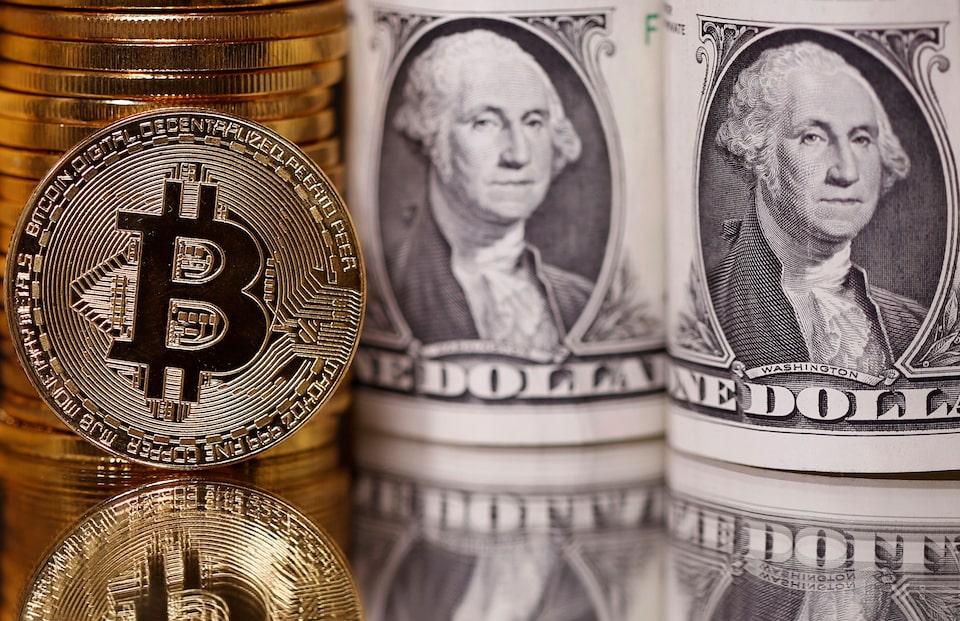
Fed chief says not seeking power to hold bitcoin at central bank There is growing momentum for government bitcoin reserve Fed officials have been skeptical about cryptocurrencies NEW YORK, Dec 18 (Reuters) - Federal Reserve Chair Jerome Powell said on Wednesday the U.S. central bank has no desire to be involved in any government effort to stockpile large amounts of bitcoin. "We're not allowed to own bitcoin," Powell said at a press conference following the Fed's latest two-day policy meeting, in which policymakers cut rates as expected while signaling a less certain path for monetary policy in the months ahead. In terms of the legal issues around holding bitcoin, "that's the kind of thing for Congress to consider, but we are not looking for a law change at the Fed," Powell said. The Fed chief was addressing the prospect of central bank involvement in the idea of the government building a so-called Strategic Bitcoin Reserve once President-elect Donald Trump takes office. Powell's comments on Wednesday dented the value of bitcoin, which has rallied sharply along with other crypto assets since Trump's victory in the Nov. 5 election on the prospect of a more hands-off government approach to a class of assets that rarely functions as actual money, but is instead largely used as a vehicle for speculation. Trump has suggested he will create a U.S. bitcoin strategic reserve - a concept that has also been widely rejected in Europe. The incoming president has not provided details on what such a reserve would entail, beyond saying its initial holdings could include bitcoin seized from criminals, a stockpile of about 200,000 tokens worth about $21 billion at current prices. Bitcoin has more than doubled this year to more than $100,000 on optimism over Trump's pro-crypto stance. The asset has proven volatile in its 15 years of existence, which analysts say reduces its utility as a store of value or a unit of exchange, key attributes of a reserve currency. Republican Senator Cynthia Lummis has introduced a bill to create such a reserve, under which the U.S. Treasury would buy 200,000 bitcoins annually until the stockpile reaches one million tokens. The purchases would be funded by Fed bank deposits and gold holdings. Funding a strategic bitcoin reserve would likely require the approval of Congress and the issuance of new Treasury debt, according to an analysis published this week by Barclays. Given the likely ways such a reserve could be created, "we suspect such a plan would face stiff resistance from the Fed," Barclays analysts said. EUROPE AGAINST BITCOIN RESERVES More broadly, Fed officials have been skeptical of securities such as bitcoin as they have also backed away from their own efforts to create a fully digital dollar in favor of allowing the private sector to innovate payments technologies. The Fed's main role regarding cryptocurrencies appears to center on how those assets might affect consumer and banking sector safety. "We regulate and supervise banks and we would want the interaction between the crypto business and the banks ... not to threaten the health and well-being of the banks," Powell said on Dec. 4. But he also noted at that time that when it comes to crypto assets, "we don't regulate it directly." The European Central Bank’s chief bank supervisor, Claudia Buch, on Tuesday also flagged up risks in the crypto market, including "excessive leverage, intransparency (and) conflict of interest", adding she was keeping a close eye on banks' exposure to that type of assets. Trump plans to appoint former PayPal executive David Sacks to the newly-created position of White House AI and Crypto Czar, and pro-crypto consultant Paul Atkins to lead the Securities and Exchange Commission. In Europe, a series of central bankers this week dismissed any suggestion of bitcoin becoming a reserve asset. Belgium’s central bank governor Pierre Wunsch saw little "appetite for having reserves in bitcoins" in an interview on Wednesday. Outside the euro zone, Hungary’s governor-designate Mihaly Varga said on Monday cryptocurrencies were just too volatile. "We are following the discussion, especially in the U.S. post-elections, closely," ECB policymaker Olli Rehn said on Tuesday. "But our view has not changed. Cryptos are assets, but they are not currency," the Finnish central bank governor added. Sign up here. https://www.reuters.com/technology/fed-cant-hold-bitcoin-not-seeking-change-that-powell-says-2024-12-18/