2025-12-30 23:05
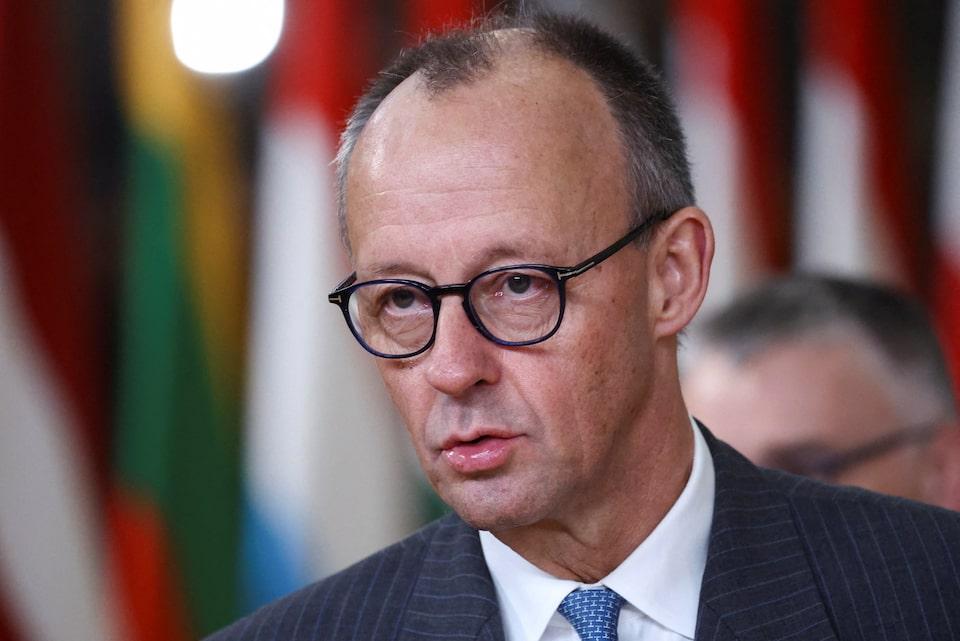
BERLIN, Dec 31 (Reuters) - Europe must assert its interests more strongly to ensure peace and prosperity in 2026 amid challenges from Russian aggression, global protectionism and changing ties with the U.S., German Chancellor Friedrich Merz said in his annual address. Since taking office in May, Merz has helped spearhead European efforts to support Ukraine against Russia's invasion. Berlin has also ramped up defence spending since 2023 in a bid to show it is ready to assume more responsibility. Sign up here. In his New Year's speech, Merz pulled no punches, saying the "terrible" war raging on Europe's doorstep posed a direct threat to continental freedom and security. "We are seeing more and more clearly that Russia’s aggression was and is part of a plan targeted against the whole of Europe," said Merz, adding that Germany faced sabotage, espionage and cyberattacks on a daily basis. He said a further challenge came from protectionism in the global economy, and that Europe's dependence on imported raw materials was increasingly being wielded as a political lever against it. Struggling to revive its export-oriented economy, Germany is trying to reduce reliance on China as it also grapples with global trade tensions and the effects of U.S. President Donald Trump's trade tariff policies. Europe's biggest economy has also been hit by what many economists say has been a lack of domestic reform and investment in recent years, and is expected to grow only modestly this year after two years of contraction. Merz also addressed a more difficult partnership with the United States, long the reliable guarantor of German and European security, since Trump returned to the White House in January 2025. "For us Europeans, this means that we must defend and assert our interests much more strongly by ourselves," said Merz. However, he said Europe must be guided by confidence, not fear, and must take matters into its own hands. "This can be a decisive year for our country and for Europe. It can be a year in which Germany and Europe, with new strength, reconnect with decades of peace, freedom and prosperity." https://www.reuters.com/world/china/germanys-merz-tells-europe-assert-itself-safeguard-peace-prosperity-2025-12-30/
2025-12-30 22:17
Dec 30 (Reuters) - Elon Musk said on Tuesday his artificial intelligence startup xAI has bought a third building to expand its infrastructure, aiming to boost training capacity to nearly 2 gigawatts of compute power. The latest expansion underscores xAI's ambitious push to compete more effectively with industry leaders OpenAI's ChatGPT and Anthropic's Claude by training increasingly advanced models. The company's supercomputer cluster in Memphis, Tennessee, known as Colossus, is touted as the largest in the world. Sign up here. "xAI has bought a third building called MACROHARDRR," Musk wrote on X, without disclosing its location. The term is potentially a play on Microsoft's (MSFT.O) , opens new tab name. The Information, which reported the development earlier in the day citing property records and a person familiar with the project, said the building for a third supersized data center is planned outside Memphis. xAI is planning to expand its supercomputer Colossus to house at least 1 million graphics processing units. The startup is planning to start turning the newly purchased warehouse into a data center in 2026, the Information reported, adding that both the new data center and Colossus 2 are close to a natural gas power plant that xAI is building in the area, as well as other power sources. The expansion of AI infrastructure, however, has drawn criticism from environmental activists as data centers consume large amounts of energy. xAI did not immediately respond to a Reuters request for comment. https://www.reuters.com/business/musks-xai-buys-third-building-expand-ai-compute-power-2025-12-30/

2025-12-30 20:16
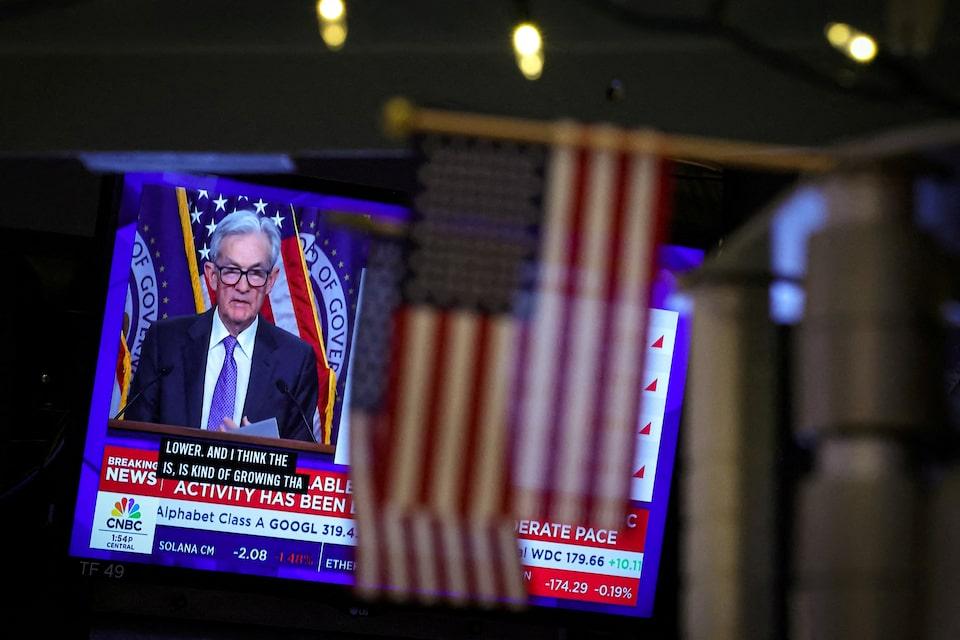
US bonds post best return since 2020 Fed's smaller rate cuts expected in 2026, impacting returns Long-term Treasury yields may rise due to fiscal stimulus Credit spreads may widen due to higher debt issuance in tech sector NEW YORK, Dec 30 (Reuters) - U.S. bond investors may face a tougher 2026, with some market-watchers forecasting slower returns as the Federal Reserve dials back rate cuts and potential fiscal stimulus complicates the outlook after a banner year. The cautious forecast comes after a strong 2025 for bondholders, when Fed easing and a supportive economy fueled the market's best performance since 2020. Investors are now weighing whether a less aggressive Fed and new fiscal policies could halt that momentum, posing a challenge for total returns. Sign up here. A rate-cutting Fed that trimmed rates by 75 basis points in 2025 fueled this year's bond rally, since lower policy rates push down yields and make older bonds, with their comparatively higher payouts, more valuable. On the corporate debt side, a resilient U.S. economy shored up companies' profits, keeping the extra yield investors demand to hold corporate bonds instead of U.S. Treasuries near historic lows. Total returns for the Morningstar US Core Bond TR YSD index, which tracks dollar-denominated securities with maturities greater than one year, were about 7.3% in 2025, the highest since 2020. The index includes investment-grade government and corporate bonds. Many expect market conditions to remain somewhat similar in 2026, but total returns, which include bond payouts and price fluctuations, could struggle to match 2025's performance. The Fed is largely expected to cut rates by a smaller amount than in 2025, with traders pricing some 60 basis points of easing in 2026 as of Monday. Additionally, fiscal stimulus coming from President Donald Trump's tax and spending policies, which are expected to boost economic growth in 2026, could prevent long-term Treasury yields from dropping as much as they did this year, some investors said. "I think next year will be trickier," said Jimmy Chang, chief investment officer of the Rockefeller Global Family Office. "Shorter-dated bond yields will continue to move lower, because the Fed will probably cut one or two more times at the minimum. At the same time, a re-accelerating economy may push longer-dated bond yields higher ... so that will potentially negatively impact the total returns," he said. DURATION DOUBTS Benchmark 10-year Treasury yields — a key gauge for government and private-sector borrowing costs — fell more than 40 basis points this year to about 4.1% as of Monday, as rate cuts and growing worries about the U.S. labor market fueled the rally. Few expect a repeat in 2026, with many market participants betting the 10-year yield will be at current levels or slightly higher by the end of next year. JPMorgan analysts see 10-year Treasury yields ending 2026 at 4.35%, while rates analysts at BofA Securities forecast 4.25%. Anders Persson, chief investment officer and head of global fixed income at Nuveen, said he expects the benchmark yield to decline to about 4%, but he is cautious about the performance of longer-dated bonds as rising government debt levels globally could push those yields higher. "We could see the long end (of the yield curve) being very much anchored and potentially drift higher," he said, adding he remains "underweight duration," meaning he is keeping a smaller share of longer-maturity bonds that would be hit harder by rising yields. WIDER CREDIT SPREADS? Investment-grade credit spreads - or the premium over U.S. Treasuries paid by high-rated companies to issue bonds - stood at about 80 basis points as of Monday, about the same level they were at the beginning of the year and close to their lowest since 1998. Total returns for investment-grade credit this year, as measured by the widely used ICE BofA US Corporate Index (.MERC0A0) , opens new tab, stood at nearly 8% as of Monday, up from 2.8% last year. Returns for so-called junk bonds, as measured by the ICE BofA US High Yield Index, were about 8.2%, similar to last year. JPMorgan has forecast investment-grade credit spreads could widen to 110 basis points next year partly on expectations of higher corporate debt issuance from tech companies, with total returns for high-grade debt declining to 3%. Others are more bullish. BNP Paribas expects spreads at 80 basis points by the end of next year. Emily Roland, co-chief investment strategist at Manulife John Hancock Investments, said she was optimistic on "high-quality" bonds for 2026, as she expects the economy to slow next year and the Fed to cut rates more aggressively than what the market is pricing. "The bond market is not sniffing out the disinflation and the weaker growth that we think is coming down the pipeline for 2026," she said. "Fundamentally, to us, bonds should be rallying more." https://www.reuters.com/business/us-bonds-shined-2025-returns-could-lose-altitude-next-year-2025-12-30/
2025-12-30 20:16
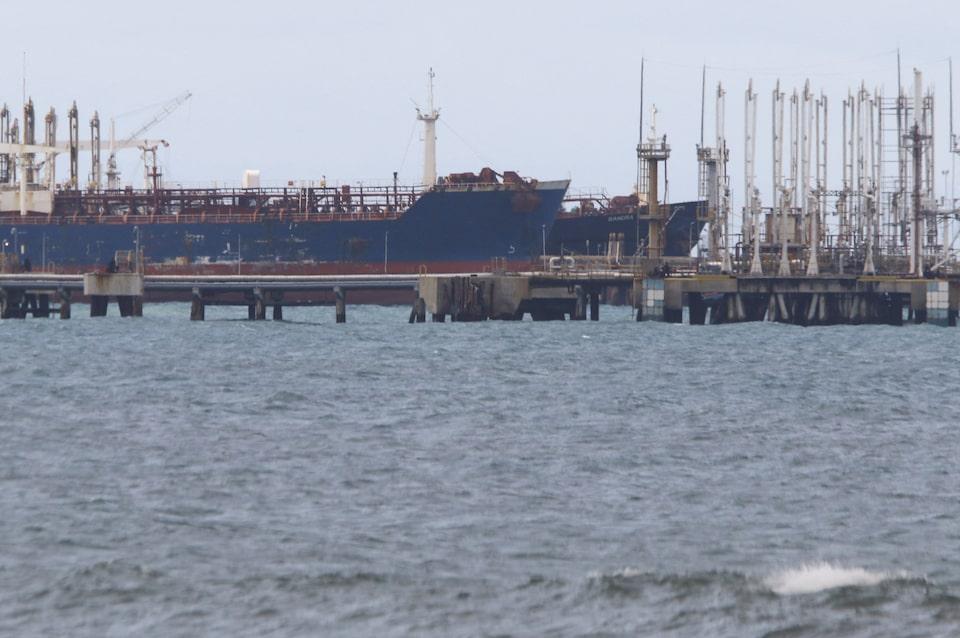
Vessels head toward Venezuela to take oil to China to pay debt service Volume of oil stored in tankers continues increasing PDVSA delivering cargoes at ports at slower pace Dec 30 (Reuters) - At least two oil tankers have made their way to Venezuela in recent days and others are navigating towards the country, a sign of state-run PDVSA's effort to expand floating storage and keep selling crude even as a U.S. blockade has reduced exports to a minimum. U.S. President Donald Trump this month announced a blockade of all sanctioned vessels going in or out of Venezuelan waters as part of a strategy to pressure Venezuelan President Nicolas Maduro. The U.S. move has cut oil exports this month to about half of their November level. Sign up here. The U.S. has seized two fully loaded cargoes of Venezuelan oil and its ships are patrolling the Caribbean Sea. The pressure has scared many vessel owners, prompting re-routings and u-turns. Only a fraction of ships have kept on course to the OPEC country. Some tanker owners have insisted. At least two ships under sanctions have arrived in Venezuela over the last few days and two more that are not under sanctions are approaching its coast, according to monitoring service TankerTrackers.com. As part of swaps and arrangements made since the country was first placed under U.S. energy sanctions in 2019, Maduro's administration pays for a long list of purchases and services with oil, including debt service to China. The two vessels approaching Venezuela are part of a fleet used by China and Venezuela to pay debt service with crude bound for Chinese ports. It was unclear whether China will press for a U.S. waiver to secure delivery of those cargoes. PDVSA did not reply to a request for comment. Venezuela's oil ministry and Maduro have said oil exports will continue. PDVSA has been negotiating price discounts and contract changes with customers this month to avoid cargo returns or crude production cut-backs. But many buyers are growing impatient as there are no real alternatives to get oil cargoes out of the country, even in non-sanctioned tankers, company sources said. A cyberattack forced PDVSA to shut down its centralized administrative system this month. The company is now delivering cargoes at its ports at a slower pace, both to fulfill loading windows for export and to store crude and fuel in ships, expanding its storage capacity. The only loaded vessels departing are Chevron's tankers, which continue setting sail for the U.S. under Washington's authorization, and small ships carrying oil byproducts and petrochemicals, shipping data and PDVSA documents showed. A similar situation in 2020, when Washington ramped up pressure on Maduro by imposing sanctions on PDVSA's main trading partners, forced the country to switch to little-known intermediaries to keep selling its oil to Chinese buyers. Those U.S. measures triggered oil output cuts, oilfield shutdowns and severe scarcity of motor fuel. It took Venezuela years to reach 1 million barrels per day (bpd) of output again, recover some refining capacity and stabilize exports. As of this week, almost two dozen tankers were visible from shore near the Jose port waiting for loading windows or for departure instructions. The volume of oil stuck in undeparted tankers increased to some 16 million barrels, from 11 million barrels in mid-December, according to the data and documents. https://www.reuters.com/business/energy/oil-tankers-still-arriving-venezuela-despite-us-blockade-data-shows-2025-12-30/
2025-12-30 20:15
Dec 30 (Reuters) - A CSX train derailment early on Tuesday near the Kentucky-Tennessee border sent 30 cars off the tracks, including one carrying molten sulfur that caught fire and led to a shelter-in-place order until officials determined the toxic threat had cleared, emergency officials said. The cause of the derailment in rural Trenton, Kentucky, a town of about 350 residents about 60 miles northwest of Nashville, Tennessee, was still under investigation, CSX and Todd County emergency officials said on social media. Sign up here. The wreck happened about 7 a.m. Firefighters fought a blaze from the rail car that carried liquid sulfur, commonly used in industrial applications, such as fertilizer production. It released toxic gases in the smoke, officials said. Todd County Emergency Management said the fire had been contained around noon. Air quality testing has confirmed that there is no further threat to the public, officials said. No injuries were reported. CSX shares were down just under 1% at $36.36. https://www.reuters.com/world/us/csx-train-with-toxic-sulfur-derails-near-kentucky-tennessee-line-2025-12-30/

2025-12-30 19:31
RIO DE JANEIRO, Dec 30 (Reuters) - Brazilian union Sindipetro-NF, one of the largest representing Petrobras (PETR3.SA) , opens new tab workers, accepted on Tuesday a counteroffer from the state-run oil company for a labor deal, suspending a strike launched earlier this month. STRIKE REMAINS IN SANTOS BASIN Sign up here. PETROBRAS SAYS NO IMPACT ON OUTPUT SEEN https://www.reuters.com/business/world-at-work/brazilian-union-accepts-petrobras-counteroffer-suspends-strike-2025-12-30/