2024-12-18 07:22
COPENHAGEN, Dec 18 (Reuters) - Denmark's Orsted (ORSTED.CO) , opens new tab said on Wednesday it would divest a 50% equity stake in three U.S. onshore projects to Energy Capital Partners for $572 million. The farm-downs include two solar farms in Texas, knpwn as Mockingbird Solar and Sparta Solar, as well as Eleven Mile Solar Center, a battery storage project in Arizona, Orsted said in a statement. The company will retain a 50% equity ownership interest in the three projects and will continue to operate the projects over their lifespan, it added. Sign up here. https://www.reuters.com/business/energy/orsted-divests-50-stake-three-us-onshore-projects-572-mln-2024-12-18/

2024-12-18 07:11
LONDON, Dec 18 (Reuters) - Stock market peaks typically coincide with troughs in cash holdings - but a regional skew to that picture may be messing with the signal for anyone still wary of U.S. equities. The overwhelming, almost unnerving, bullishness about Wall Street stocks for 2025 is now pretty clear. Not one of 16 annual outlooks collected by Reuters from top brokers and investors sees the S&P500 (.SPX) , opens new tab lower in 12 months' time, for example. And yet the vanishingly small number of "refuseniks" point to one significant reverse indicator to support their case - near historically low global allocations to cash. Bank of America's closely-watched survey of asset managers around the world this week spotlighted that average cash levels in portfolios fell below 4% in December for only the second time since June 2021, triggering what it considered another "contrarian" sell signal for equities. Pointing to 12 such signals since 2011 that resulted in an average global equity loss (.MIWD00000PUS) , opens new tab of more than 2% in the subsequent month, BofA underscored the finding by showing that net cash allocations relative to funds' benchmarks had plummeted by the most in five years to a record 14% underweight, versus 4% overweight in November. Underweight cash positions even close to this month's record were in the past marked by deflating equity markets in early 2002 and 2011. Tallying with nose-bleed levels of record U.S. equity exposure and economic optimism, where only 6% of funds see a "hard landing" over the next 12 months, the global rotation out of cash and into stocks in the month since the election of Donald Trump has been the biggest in more than 10 years. Nervous? Well, that alarming picture masks a number of factors that don't quite fit the bill. For a start, it seems to fly in the face of still swelling assets under management at cash-like U.S. money market funds, which at a record $6.77 trillion last week have jumped by a quarter of a trillion dollars since the election and are up a cool trillion over the past 12 months. While there may be a number of factors driving that persistent rise in money fund AUM - such as reinvested interest earnings or households' ongoing migration from lower-yielding commercial bank savings accounts - it hardly reflects the sort of drop seen in global funds' cash levels and allocations. What's more, the money fund coffers have continued to expand even since the Federal Reserve began reducing short-term interest rates in September - and amid expectations it will execute its third cut in the cycle on Wednesday. TRANSATLANTIC FLOW The clue lies in seemingly unshakeable faith among global investors in the "exceptional" U.S. economic and investment story - also clearly reflected in this month's BofA survey. The poll showed funds at their most overweight U.S. equities relative to euro zone stocks in 12 years - the nadir of the euro debt crisis. What's more, a subset survey cut of just European asset managers shows where the depth of the cash aversion really lies - with average cash levels among regional funds there almost a full point below global levels and near the lowest in more than a decade. That figures, given the speed and depth of European Central Bank and Swiss interest rate cuts compared with the relative foot-dragging at the Fed. The ECB and SNB have cut four times each already, with the latter now 160 basis points below the Fed's policy rate and the Swiss base rate almost back at zero. With the European economy set to lag the United States significantly again next year, exposed to Trump's promised trade wars and domestic political upheavals, and rates expected to tumble further as the Fed hesitates, cash appetite is bound to differ. But judged by the record 36% of European asset managers who report being overweight U.S. equities, and the 30% who expect U.S. stocks to be the best-performing global asset next year, that rundown of cash is heading straight across the Atlantic. That flow has likely been underway for months and explains much of outsize 6% surge of the dollar against the euro over the past three months, the parallel Wall Street outperformance against euro stocks and the 60-basis-point widening of the transatlantic 10-year debt spread. And those flows may have further to run. The key point is the low global cash level reflects the European picture more than the U.S. one. If the Fed stalls on further rate cuts after this week, then U.S. cash levels could well remain high while they are cut elsewhere in the world - leaving the apparently strange sight of rising U.S. stocks and cash levels intact. Only some revision to those extreme assumptions of U.S. exceptionalism - possibly involving some radical rethink of the stubborn Fed view - would start to balance that picture. Neither look likely early next year, but mid-2025 might throw a different light. The opinions expressed here are those of the author, a columnist for Reuters. Sign up here. https://www.reuters.com/markets/currencies/cash-appetites-go-separate-ways-us-europe-mike-dolan-2024-12-18/
2024-12-18 07:05
BANGKOK, Dec 18 (Reuters) - Thailand's central bank left its key interest rate unchanged on Wednesday, as widely expected, after delivering a surprise cut at its previous meeting in October. The Bank of Thailand's monetary policy committee voted unanimously to keep the one-day repurchase rate (THCBIR=ECI) , opens new tab at 2.25% at its final meeting of 2024. All but two of 30 economists in a Reuters poll had predicted the key rate would be held steady this week. The two outliers had expected a 25 basis-point cut on Wednesday. The median forecast in the poll was that rates would be cut by 25 basis points by mid 2025. Sign up here. https://www.reuters.com/markets/asia/thai-central-bank-holds-key-rate-steady-225-2024-12-18/
2024-12-18 06:48
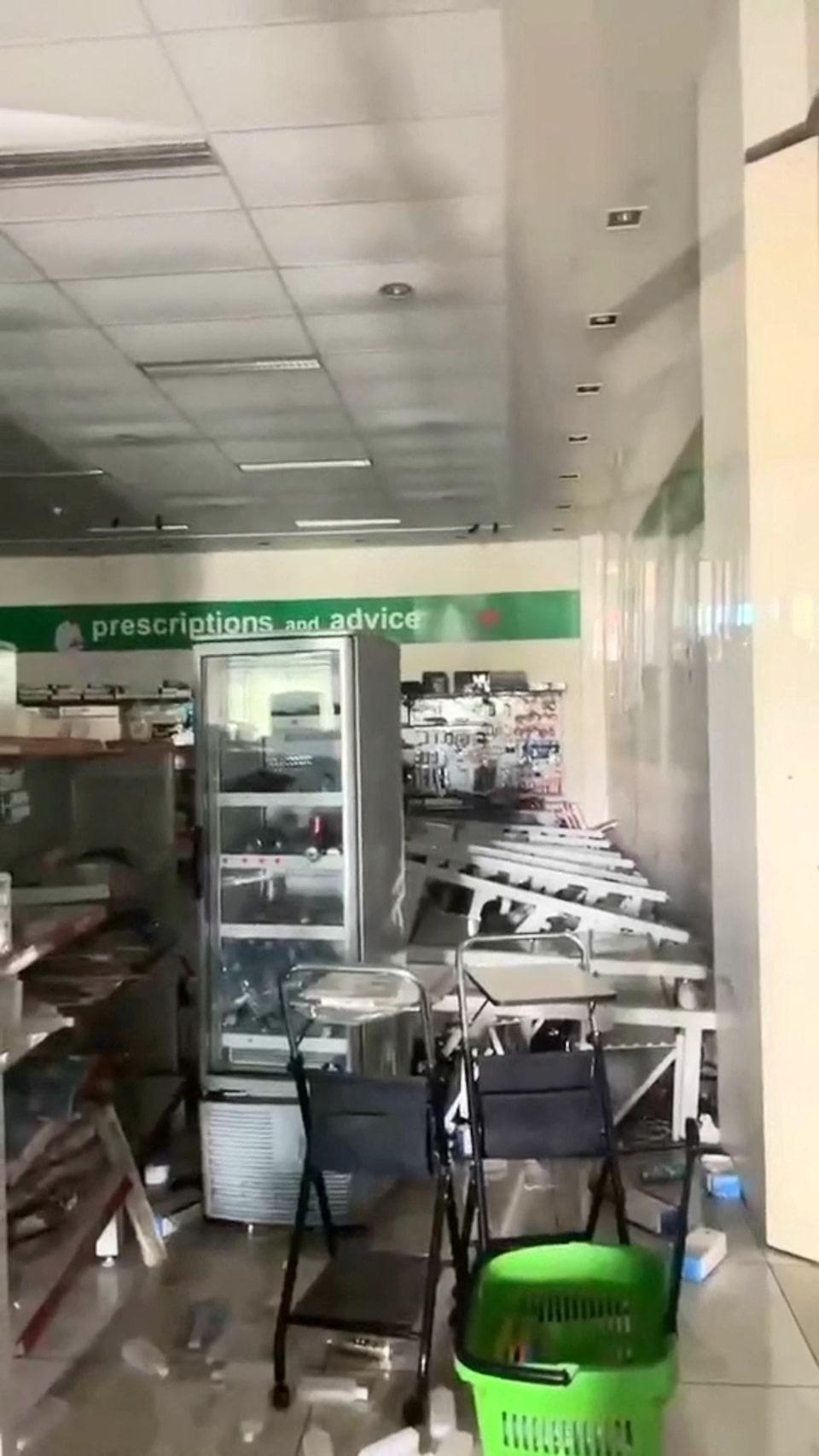
Police confirm 14 dead and 200 injured Aftershocks shake Vanuatu overnight People queue for fuel and essentials, footage shows US, Australia and France send aid, rescue teams Dec 18 (Reuters) - People remained trapped in a collapsed building in Vanuatu's capital Port Vila on Wednesday a day after a 7.4 magnitude earthquake struck the Pacific nation, killing 14 people including two Chinese nationals. Three people were communicating with rescue teams from beneath the rubble of one building, while two survivors had been pulled from the ruins of another, Police Commissioner Robson Iavro said. "We believe there are more stuck inside," Iavro said in a video message. As aftershocks continued to rattle the island nation of 330,000 people, footage posted on social media showed vehicles crushed under the debris, boulders strewn across a highway and landslides near Port Vila's international shipping terminal. National broadcaster VBTC showed people queuing for fuel and essentials as power, water and communications were disrupted. There were 14 confirmed deaths including four in one collapsed building, the National Disaster Management office said in a report. More than 200 people were injured, police said, and triage tents were set up outside Port Vila's hospital to manage the influx of patients. UNICEF Chief of Field Office in Vanuatu Eric Durpaire said water contamination was a major concern. "We already saw this morning an increase of children with diarrhea cases, meaning they have started to drink contaminated water because the water supply has been broken," he told Reuters in an interview. China's ambassador confirmed two Chinese nationals were among the dead. Vanuatu businessman Milroy Cainton said while rescue efforts had continued at the Billabong building, there had been no recovery of bodies at the larger Wong Store where two Chinese people and a local security guard were believed to have died. “The Wong building is piles and piles of concrete – that is a four-storey building,” he said in an interview with Reuters. Concrete pillars on a building hosting foreign missions in the capital, including the U.S., British, French and New Zealand embassies, also collapsed but there were no reported casualties. AFTERSHOCKS OVERNIGHT Several aftershocks, including one of magnitude 6.1, shook Vanuatu overnight. "Even just two minutes ago, we had another shock ... probably wouldn't even count how many. Loads and loads of aftershocks throughout the night," Australian Caroline Bird, who manages a resort in Port Vila, told ABC News on Wednesday. Caretaker Prime Minister Charlot Salwai said a national disaster committee has declared a state of emergency and imposed a curfew for seven days in the worst-affected areas. International assistance has been sought. The United States Agency for International Development said it was sending a team to Vanuatu, where it keeps relief supplies pre-positioned in Port Vila. Australia's government said a 64-person disaster response with two dogs to undertake urban search and rescue operations, as well as Australian Federal Police, would arrive on Wednesday. France's ambassador to Vanuatu, Jean-Baptiste Jeangène Vilmer, said a French military helicopter had arrived from New Caledonia with satellite communications and military engineers Port Vila's international airport would be closed to commercial airlines for 72 hours, to allow medical and emergency aircraft to land, Airports Vanuatu CEO Jason Rakau told VBTC. The UN Office for the Coordination of Humanitarian Affairs estimated 116,000 people, around one-third of the country's population, had been affected by the earthquake. The tropical island nation, located on the seismically active 'Pacific Ring of Fire', is ranked among the world's most at-risk countries for natural disasters and extreme weather events. (This story has been corrected to change eyewitness account to clarify that he did not see bodies being recovered, in paragraph 11) Sign up here. https://www.reuters.com/business/environment/vanuatu-earthquake-death-toll-rises-14-rescuers-continue-search-2024-12-17/
2024-12-18 06:25
Fed cuts rates by 25 bps Signals slower pace of rate cuts in 2025 Dow notches longest losing streak since 1974 Bitcoin tumbles after Powell says Fed has no desire to hold it NEW YORK, Dec 18 (Reuters) - Wall Street closed sharply lower on Wednesday, with the Dow falling over 1,100 points after the U.S. Federal Reserve delivered a rate cut as expected but signaled it will ease the pace of further cuts in the coming year. For the Dow it was its tenth consecutive daily loss, marking its longest losing streak since 1974 and its biggest daily percentage decline since early August. The Nasdaq and S&P 500 also logged their largest one-day drops in months. Benchmark Treasury yields moved higher on the news, and the dollar gained. "Let's not forget, you tend to get knee-jerk reactions on Fed Day and then cooler heads prevail the next day," said Ryan Detrick, chief market strategist at Carson Group in Omaha. "The reality is still we have a strong economy and a Fed that is by no means looking to hike any time soon. There are still cuts, likely coming just a little later in 2025." As expected, the Federal Open Market Committee (FOMC) cut the Fed funds target rate by 25 basis points at the conclusion of its final policy meeting of 2024. But the central bank also reduced the number of projected rate cuts in the coming year. The policymakers now expect two interest rate cuts by the end of 2025, down from four in September, and set up the likelihood of a pause in January. "The Fed didn't throw any curveballs, right? They cut as expected, and they're using language hinting at fewer cuts next year and into 2026," Detrick added. "The market was holding out hope that maybe there'd be a little more dovishness to the statement, but that wasn't the case." In his subsequent press conference, Fed Chair Jerome Powell offered assurances that the economy is strong, inflation has come closer to the 2% goal, and monetary policy is well-positioned to deal with risks. The Dow Jones Industrial Average (.DJI) , opens new tab fell 1,123.03 points, or 2.58%, to 42,326.87, the S&P 500 (.SPX) , opens new tab fell 178.57 points, or 2.95%, to 5,872.03 and the Nasdaq Composite (.IXIC) , opens new tab fell 716.37 points, or 3.56%, to 19,392.69. Earlier, European shares closed modestly higher, buoyed by technology stocks and French automaker Renault (RENA.PA) , opens new tab, but gains were held in check ahead of the Fed's rate decision. MSCI's gauge of stocks across the globe (.MIWD00000PUS) , opens new tab fell 8.93 points, or 1.03%, to 855.09. The STOXX 600 (.STOXX) , opens new tab index rose 0.15%, while Europe's broad FTSEurofirst 300 index (.FTEU3) , opens new tab rose 2.56 points, or 0.13%. Emerging market stocks (.MSCIEF) , opens new tab fell 0.39 points, or 0.04%, to 1,092.81. MSCI's broadest index of Asia-Pacific shares outside Japan (.MIAPJ0000PUS) , opens new tab closed lower by 0.05%, to 579.42, while Japan's Nikkei (.N225) , opens new tab fell 282.97 points, or 0.72%, to 39,081.71. Yields for 10-year U.S. Treasuries gained after the Fed flagged the slower pace of easing. The yield on benchmark U.S. 10-year notes rose 11.3 basis points to 4.498%, from 4.385% late on Tuesday. The 30-year bond yield rose 7.3 basis points to 4.6525% from 4.579% late on Tuesday. The 2-year note yield, which typically moves in step with interest rate expectations for the Federal Reserve, rose 10.5 basis points to 4.346%, from 4.241% late on Tuesday. The dollar extended its gains against a basket of world currencies as investors digested the Fed's revised outlook. The dollar index rose 1.09% to 108.09, with the euro down 1.13% at $1.037. Against the Japanese yen , the dollar strengthened 0.76% to 154.63. Bitcoin accelerated its losses after Powell said the Fed has no desire to hold the cryptocurrency amid debate over whether the incoming Trump administration might build a bitcoin reserve. Bitcoin fell 5.17% to $100,916.00. Ethereum declined 6.14% to $3,692.50. Oil prices settled higher in the wake of the Fed's decision. U.S. crude rose 0.71% to settle at $70.58 per barrel, while Brent settled at $73.39 per barrel, up 0.27% on the day. Gold fell in opposition to the greenback. Spot gold fell 1.94% to $2,594.24 an ounce. U.S. gold futures fell 2.05% to $2,590.20 an ounce. Sign up here. https://www.reuters.com/markets/global-markets-wrapup-1-2024-12-18/
2024-12-18 06:14
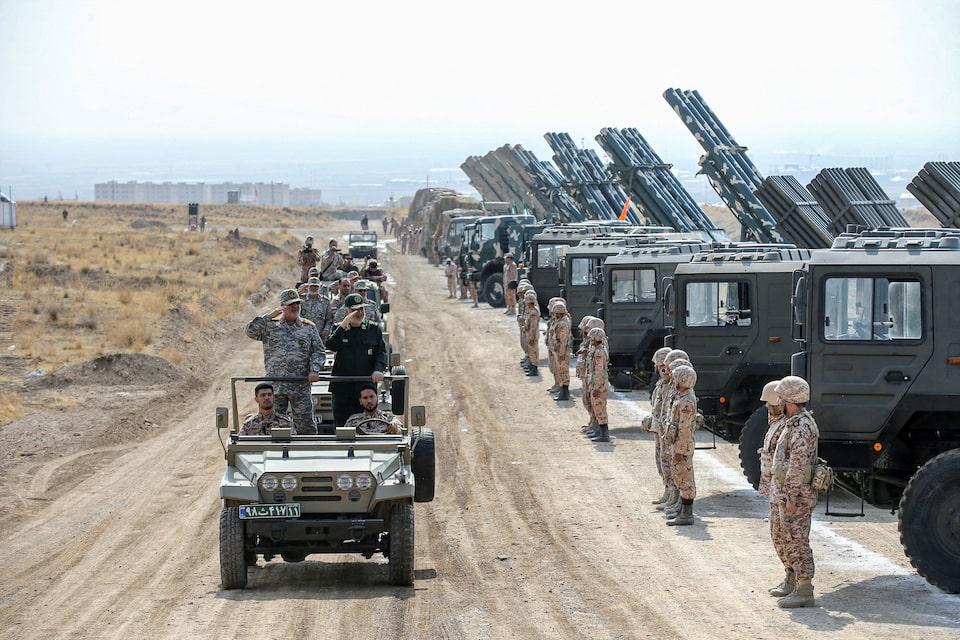
Guards get around half of Iran's oil export revenue, sources say China remains top buyer of Iranian oil, including from IRGC Oil trading network set up by late Quds Force boss Qassem Soleimani LONDON/DUBAI, Dec 18 (Reuters) - Iran's Revolutionary Guards have tightened their grip on the country's oil industry and control up to half the exports that generate most of Tehran's revenue and fund its proxies across the Middle East, according to Western officials, security sources and Iranian insiders. All aspects of the oil business have come under the growing influence of the Guards, from the shadow fleet of tankers that secretively ship sanctioned crude, to logistics and the front companies selling the oil, mostly to China, according to more than a dozen people interviewed by Reuters. The extent of the Islamic Revolutionary Guard Corps' (IRGC) control over oil exports has not previously been reported. Despite tough Western sanctions designed to choke Iran's energy industry, reimposed by former U.S. President Donald Trump in 2018, Iran generates more than $50 billion a year in oil revenue, by far its largest source of foreign currency and its principal connection to the global economy. Six specialists - Western officials and security experts as well as Iranian and trading sources - said the Guards control up to 50% of Iran's oil exports, a sharp increase from about 20% three years ago. The sources declined to be identified due to the sensitivity of the matter. Three of the estimates were based on intelligence documents about Iranian shipping while others derived their figures from monitoring shipping activity by tankers and companies linked to the IRGC. Reuters was unable to determine the exact extent of the IRGC's control. The IRGC's growing domination of the oil industry adds to its influence in all areas of Iran's economy and also makes it harder for Western sanctions to hit home - given the Guards are already designated as a terrorist organisation by Washington. Trump's return to the White House in January, however, could mean tougher enforcement of sanctions on Iran's oil industry. The country's oil minister said Tehran is putting measures in place to deal with any restrictions, without giving details. As part of their expansion in the industry, the Guards have muscled in on the territory of state institutions such as the National Iranian Oil Company (NIOC) and its NICO oil trading subsidiary, according to four of the sources. When sanctions hit Iran's oil exports years ago, the people running NIOC and the wider industry were specialised in oil rather than how to evade sanctions, added Richard Nephew, a former deputy special envoy for Iran at the U.S. State Department. "The IRGC guys were much, much better at smuggling, just terrible at oil field management, so they began to get a larger control of oil exports," said Nephew, who is now a researcher at Columbia University. The IRGC, NIOC, NICO and Iran's foreign ministry did not respond to requests for comment. RISK APPETITE The IRGC is a powerful political, military and economic force with close ties to Supreme Leader Ayatollah Ali Khamenei. The Guards exert influence in the Middle East through their overseas operations arm, the Quds Force, by providing money, weapons, technology and training to allies Hezbollah in Lebanon, Hamas in Gaza, Yemen's Houthis and militias in Iraq. While Israel has killed a number of senior IRGC commanders over the past year, the oil specialists in its ranks have been able to continue their operations, two Western and two Iranian sources said. The Iranian government began allotting oil, instead of cash, to the IRGC and Quds Force around 2013, according to Nephew. The government was under budgetary pressure then because it was struggling to export oil due to Western sanctions imposed over Iran's nuclear programme. The IRGC proved adept at finding ways to sell oil even under sanctions pressure, said Nephew, who was actively involved in tracking Iranian oil activities then. Iranian oil revenues hit $53 billion in 2023 compared with $54 billion in 2022, $37 billion in 2021 and $16 billion in 2020, according to estimates , opens new tab from the U.S. government's Energy Information Administration. This year, Tehran's oil output has topped 3.3 million barrels per day, the highest since 2018, according to OPEC figures, despite the Western sanctions. China is Iran's biggest buyer of oil, with most going to independent refineries, and the IRGC has created front companies to facilitate trade with buyers there, all the sources said. Oil export revenues are split roughly evenly between the IRGC and NICO, said one source involved in Iranian oil sales to China. The IRGC sells oil at a $1-$2 barrel discount to prices offered by NICO because buyers take a bigger risk buying from the Guards, the person said. "It depends on a buyer's risk appetite, the higher ones will go for the IRGC, which the U.S. designates as a terrorist group." Two Western sources estimated that the IRGC offered an even bigger discount, saying it was $5 per barrel on average but could be as much as $8. The oil is allocated directly by the government to the IRGC and Quds Force. It's then up to them to market and ship the oil - and work out a mechanism for disbursing the revenue, according to the sources and intelligence documents seen by Reuters. NIOC gets a separate allocation. CHINESE FRONT One of the front companies used is China-based Haokun. Operated by former Chinese military officials, it remains an active conduit for IRGC oil sales into China, despite Washington hitting it with sanctions , opens new tab in 2022, two of the sources said. The U.S. Treasury said China Haokun Energy had bought millions of barrels of oil from the IRGC-Quds Force and was sanctioned for having "materially assisted, sponsored, or provided financial, material, or technological support for, or goods or services to or in support of, the IRGC-QF". In one oil transaction dated March 16, 2021 involving Haokun and parties including Turkish company Baslam Nakliyat , opens new tab - which is under U.S. sanctions for its trading links to the IRGC - a payment was processed via U.S. bank JP Morgan and Turkish lender Vakif Katilim, according to the intelligence documents. The transaction took place before the companies were sanctioned. Reuters has no indication JP Morgan or Vakif Katilim were aware of the Iranian connection - highlighting the risks of companies getting inadvertently caught up in the shadow trade. JP Morgan declined to comment. Vakif Katilim said in a statement: "Our bank performs its activities within the framework of national and international banking rules." Haokun declined to comment. Baslam did not respond to a request for comment. 'GHOST FLEET' Quds Force commander Qassem Soleimani, who was killed in a U.S. strike in Baghdad in 2020, had set up a clandestine headquarters and inaugurated that year for the unit's oil smuggling activities, initially staffed by former oil minister Rostam Ghasemi, according to the intelligence documents. Reuters could not determine where all the oil money funnelled through the IRGC goes. The IRGC headquarters and day-to-day operations has an annual budget of around $1 billion, according to assessments from two security sources tracking IRGC activities. They estimated that the IRGC budget for Hezbollah was another $700 million a year. "Exact figures remain undisclosed, as Hezbollah conceals the funds it receives. However, estimates are that its annual budget is approximately $700 million to $1 billion. Around 70%-80% of this funding comes directly from Iran," Shlomit Wagman, former director general of Israel’s Money Laundering and Terrorism Financing Prohibition Authority, said separately. Hezbollah did not respond to a request for comment. The former Secretary General of Hezbollah, Sayyed Hassan Nasrallah, who was killed in an Israeli airstrike, said Iran provided the group's budget, including for salaries and weapons. Iran's main tanker operator NITC, which previously played a key role in exports, also now provides services to the IRGC. It executes ship-to-ship transfers of Iranian oil onto vessels operated by the IRGC to ship crude into China, according to sources and ship-tracking data. Such transfers are common practice to help disguise the origin of the oil tankers carry. NITC did not respond to a request for comment. In August, Israel's National Bureau for Counter Terror Financing, part of the country's defence ministry, imposed sanctions , opens new tab on 18 tankers it said were involved in transporting oil belonging to the Quds Force. In October, the U.S. Treasury slapped sanctions on 17 separate tankers , opens new tab it said formed part of Iran's "ghost fleet", outside of NITC vessels. It followed up with sanctions on a further 18 tankers , opens new tab on Dec. 3. Sign up here. https://www.reuters.com/world/middle-east/irans-revolutionary-guards-extend-control-over-tehrans-oil-exports-sources-say-2024-12-18/